Key Takeaways
Why Hit-and-Run Accidents Are Uniquely Complicated
A standard two-car accident is stressful enough. But when the at-fault driver disappears, the entire claims process shifts. Instead of pursuing their liability coverage, you're largely on your own — relying on your policy, the police, and whatever evidence you can gather in the first few chaotic minutes after impact.
Hit-and-run accidents account for roughly 1 in 5 crashes involving pedestrians and cyclists in the U.S., and they're not rare for vehicle-to-vehicle collisions either. The driver who flees may be uninsured, unlicensed, under the influence, or simply panicking. Their reason doesn't change your situation.
What does change your situation is how you respond. The steps outlined here are time-sensitive — delay in reporting, documenting, or notifying your insurer can weaken your claim or disqualify it entirely. Compare this with a typical collision scenario by reviewing our end-to-end accident guide — the contrast illustrates exactly why hit-and-run situations demand a different approach from the start.
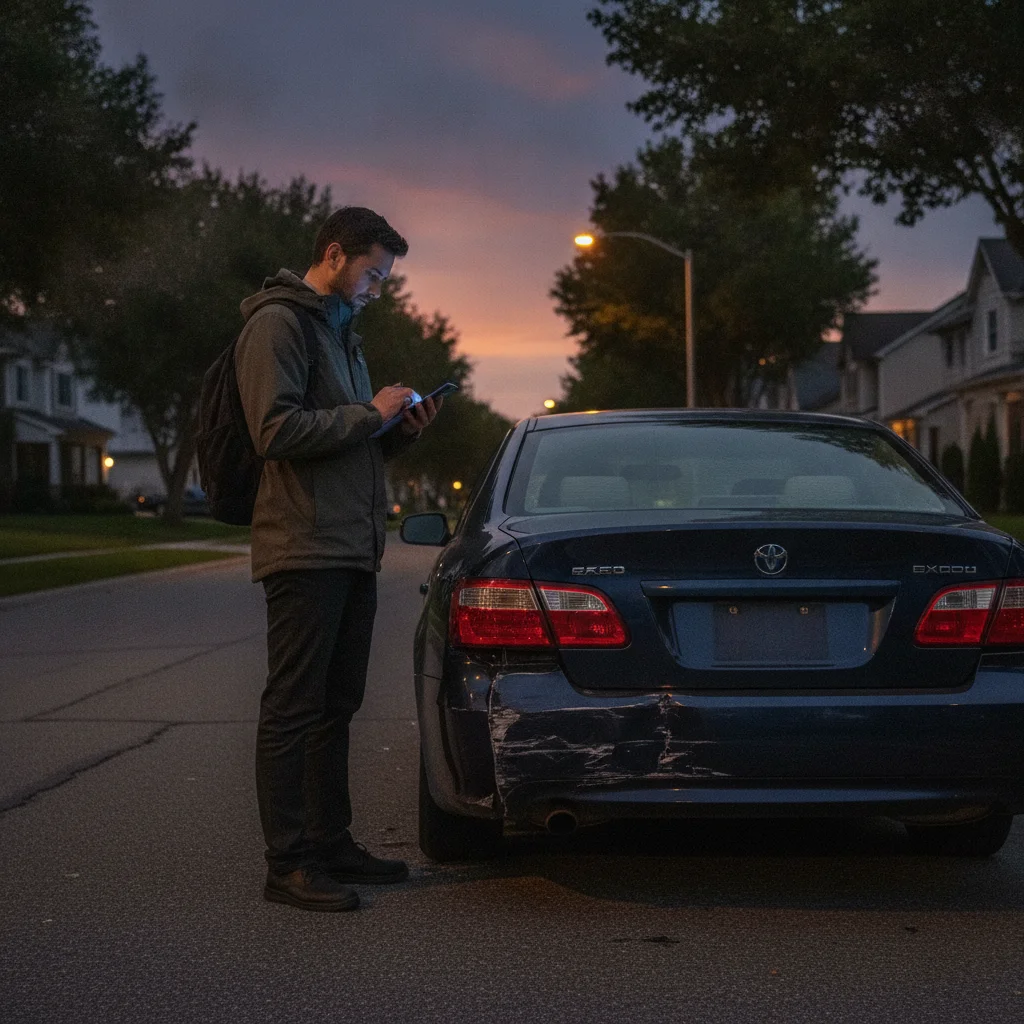
The good news: if you carry the right coverage and take the right steps, a hit-and-run doesn't have to leave you holding the entire financial burden.
What You'll Need Before You Start
Before you can pursue a claim, you need to have a few things in place — both in the moment and through your existing policy. Review the prerequisites and recommended tools below.
What you will need
Smartphone with camera
Photograph the scene, damage, and any identifying details of the fleeing vehicle.
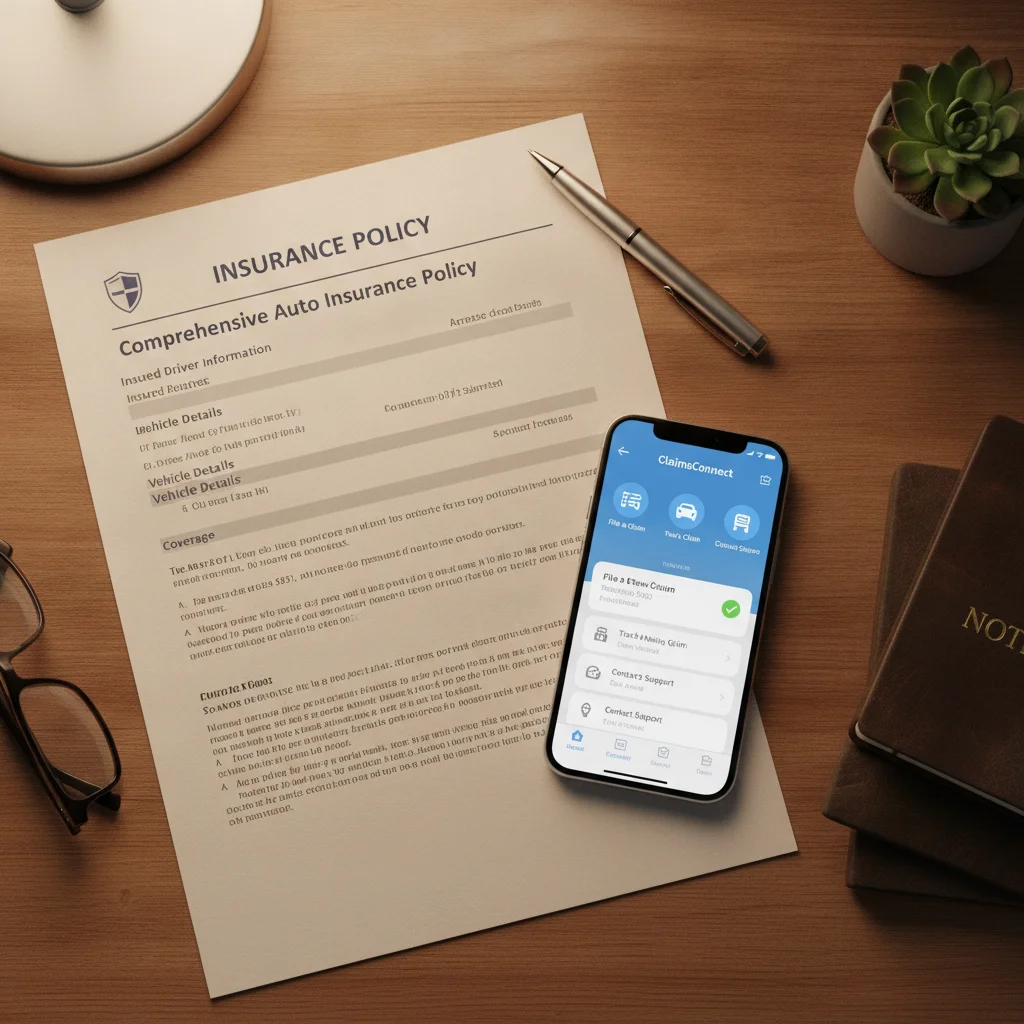
Insurance card or policy app
Provides your policy number and insurer's claims hotline needed to report the incident.
Pen and notepad
Record witness contact information, vehicle descriptions, and officer badge numbers.
Dashcam footage
May capture the license plate or vehicle description of the fleeing driver automatically.
Local non-emergency police number
Used to file an official police report, which most insurers require for hit-and-run claims.
Step-by-Step: From the Scene to Your Claim
The steps below follow the sequence you'll actually face — starting at the moment of impact and ending with your insurance claim. Don't skip or reorder them. Each step builds on the one before it.
Ensure Safety First — Then Stay Put
The moment you're hit, your first move is to assess injuries — yours, any passengers', and bystanders'. If the vehicle is drivable and it's safe to do so, move it out of active traffic lanes. Turn on your hazard lights immediately.
Do not pursue the fleeing driver by vehicle. Chasing creates a new accident risk and complicates your legal standing. Your job right now is to be a safe, credible victim at the scene.
Capture Every Detail of the Fleeing Vehicle
While the vehicle is still visible — or immediately after it disappears — note or photograph everything you can remember:
- License plate number (even partial plates are useful)
- Make, model, and color of the vehicle
- Any distinguishing features: dents, bumper stickers, roof racks, missing hubcaps
- Direction the vehicle traveled
- Approximate time of day and road conditions
If your dashcam recorded the incident, do not delete or overwrite the footage. Remove the SD card or note the timestamp so you can retrieve it later.
Look for Witnesses and Surveillance Cameras
Scan the immediate area. Approach anyone who saw what happened and ask for their name and phone number. Witnesses can corroborate your account to both police and your insurer, especially if you were unable to catch the plate number.
Also look around for potential video sources:
- Traffic signal cameras
- Nearby business security cameras (storefronts, gas stations, ATMs)
- Residential doorbell cameras
- Other drivers with dashcams who stopped or passed through
Note the exact location of any cameras — law enforcement can subpoena that footage, but only if they know where to look.
Photograph Your Vehicle and the Scene
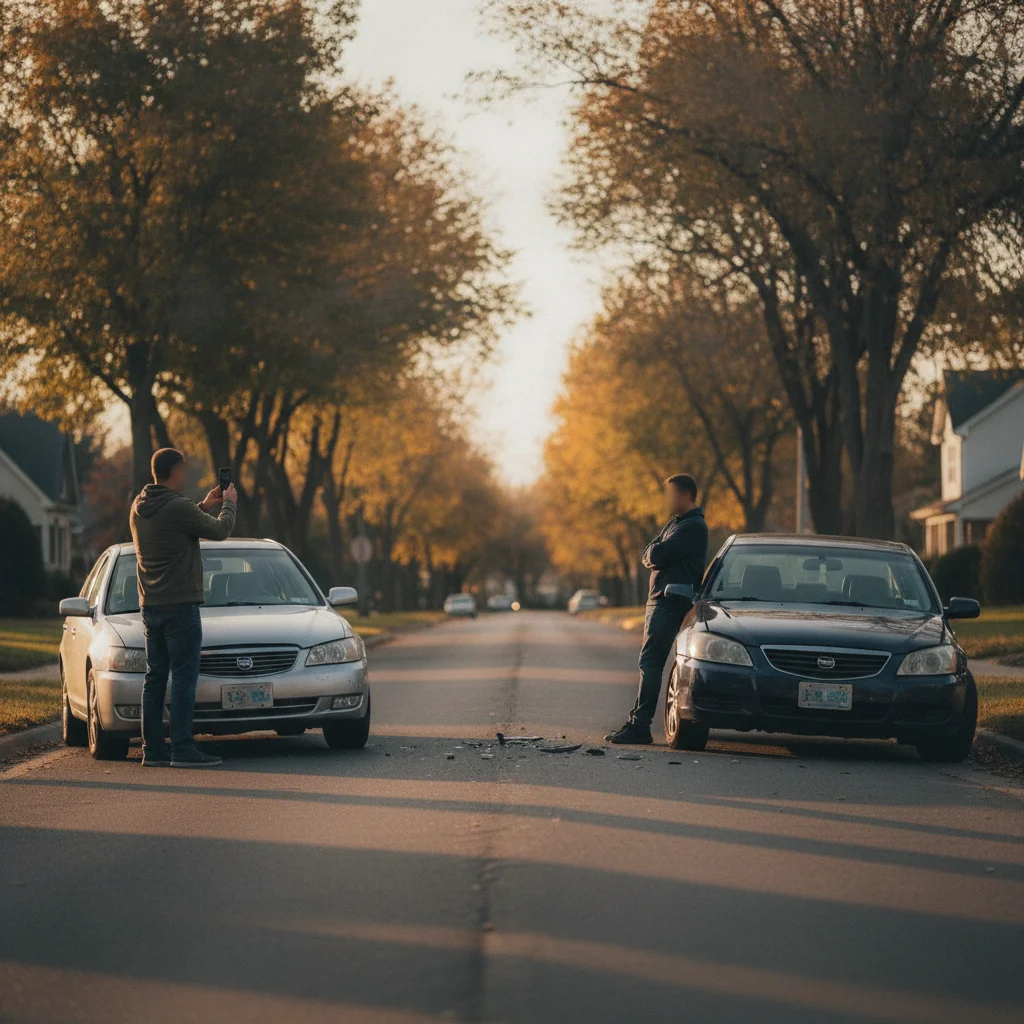
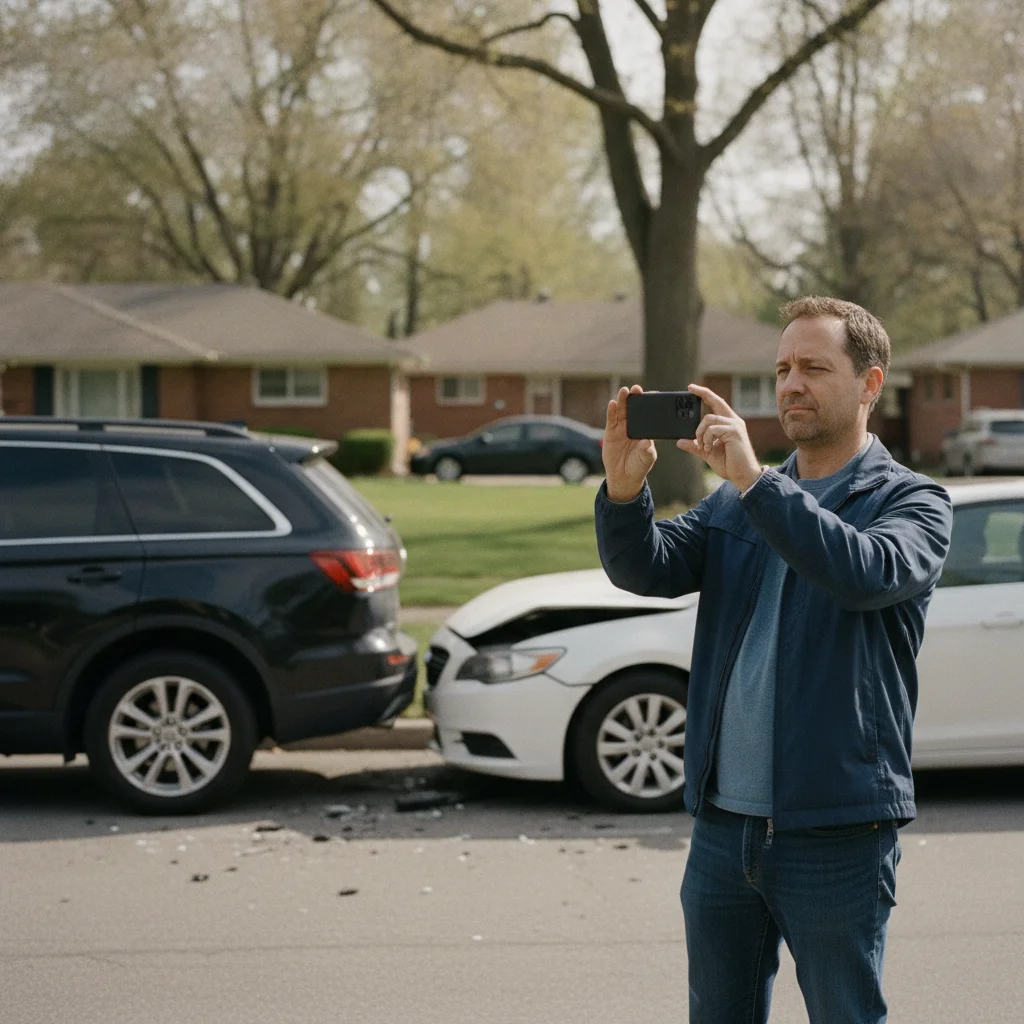
Before anything is moved or cleaned up, document all damage extensively. Photograph:
- All sides of your vehicle, not just the damaged areas
- Close-up shots of every impact point, scrape, or broken part
- The surrounding road: skid marks, debris, glass, paint transfer
- Street signs and landmarks to establish the exact location
- Any paint transfer on your vehicle (the fleeing driver's paint color is evidence)
Time-stamped photos strengthen your claim and establish that damage is consistent with the reported incident — not pre-existing.
Call the Police and File a Report
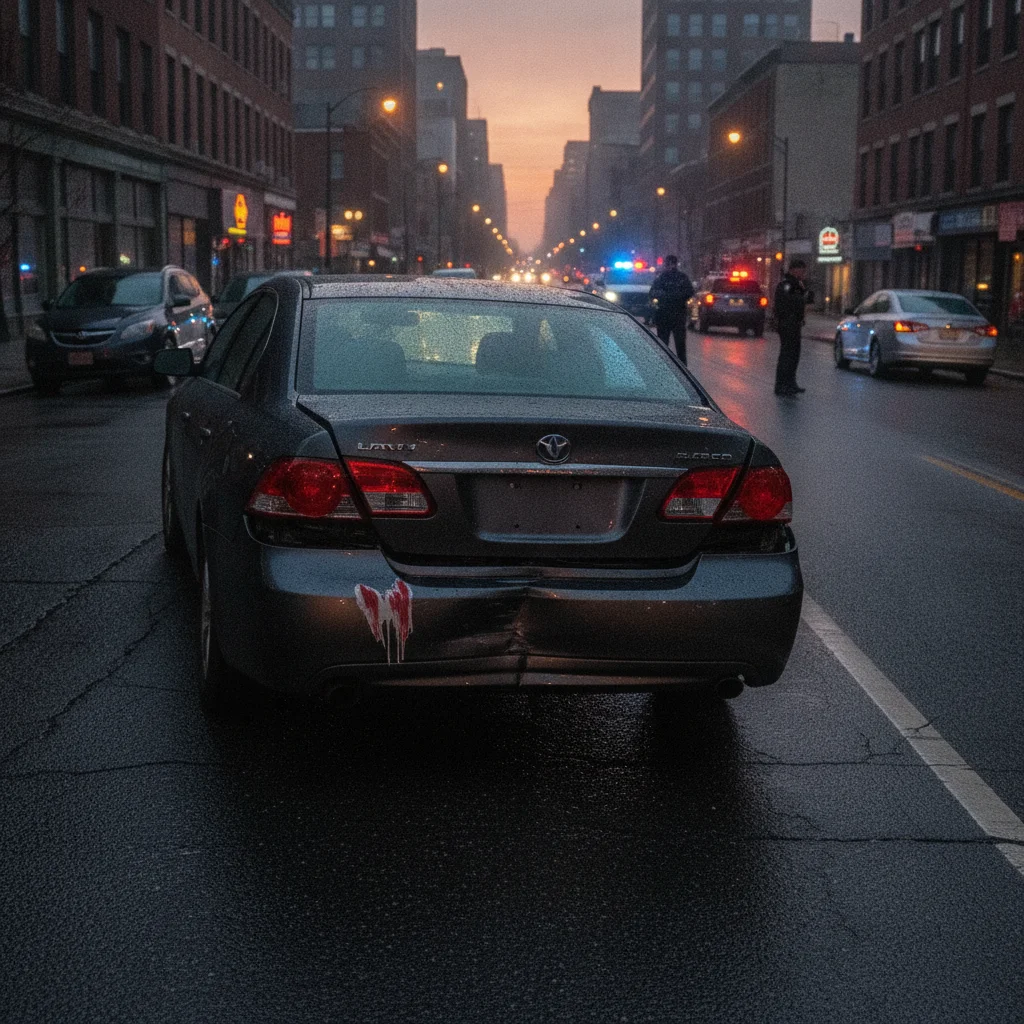
Even if injuries are minor and the vehicle damage seems modest, you must file a police report. This isn't optional for a hit-and-run claim — virtually every insurer requires one. Call 911 if there are injuries; call the non-emergency line if there are none.
When speaking with the officer:
- Provide all vehicle description details you captured in Step 2
- Share witness contact information
- Mention any surveillance cameras you spotted
- Get the officer's name, badge number, and the report number before they leave
In some jurisdictions, if police cannot respond to a non-injury accident, they'll direct you to file a report online or at the nearest precinct. Do so the same day.
Notify Your Insurance Company
Contact your insurer as soon as the police report is filed — or even while you're still at the scene if injuries require immediate medical attention. Be factual and thorough: give them the police report number, describe what happened, and share any vehicle identification details you have.
Ask specifically about:
- Whether your policy includes uninsured motorist (UM) coverage and what it covers
- Whether your collision coverage applies and what your deductible is
- Any deadlines for submitting documentation
- Whether they need an inspection before repairs begin
Don't speculate or editorialize — stick to what you directly observed. Inconsistencies between your account and the police report can create friction in the claims process.
Seek Medical Attention Even If You Feel Fine
Adrenaline masks pain. Whiplash, soft-tissue injuries, and even concussions may not present symptoms for 24 to 72 hours after an accident. If there's any chance you were physically affected by the impact, see a doctor — the same day if possible.
Keep records of every medical interaction: emergency room visits, urgent care, follow-up appointments, physical therapy, and prescriptions. Medical records directly support any bodily injury portion of your UM claim and any personal injury lawsuit if the driver is later identified.
Track All Expenses and Follow Up on the Investigation
From the day of the accident forward, keep a running log of all accident-related costs:
- Medical bills and co-pays
- Rental car expenses while your vehicle is repaired
- Lost wages if you miss work due to injuries
- Out-of-pocket repair costs before your claim is settled
Also follow up with the police department periodically. Investigations into hit-and-run drivers can take weeks. If new evidence surfaces — a witness comes forward, surveillance footage is reviewed — you want to know about it. Ask the officer assigned to your case for their direct contact information.
Never Chase the Fleeing Driver
Pursuing a hit-and-run driver in your vehicle is dangerous and can actually complicate your insurance claim. If you cause an accident while chasing them, you may bear liability for that secondary crash. Stay at the scene, note as much as you can, and let law enforcement handle the investigation.
Watch the Reporting Deadline
States vary on how long you have to report a hit-and-run to preserve your uninsured motorist claim — some require notice to your insurer within 24 hours, others within 30 days. Check your policy language and your state's requirements immediately after the accident, not a week later.
Dashcams Are Worth the Investment
A front-and-rear dashcam setup runs $80–$200 and can single-handedly resolve a hit-and-run claim by capturing the plate number or vehicle description. Many insurers even offer a small discount for verified dashcam use. If you don't have one, consider adding it before your next road trip.
Review Your Policy Before You Need It
Most drivers don't know what UM coverage limits they carry until they're filing a claim. Log in to your insurer's portal today and confirm your UM bodily injury and property damage limits, your collision deductible, and whether you have MedPay or PIP. Thirty minutes now prevents significant surprises later.
Your Insurance Coverage Options After a Hit-and-Run
When the at-fault driver is never identified, your financial recovery comes from your own policy. The specific coverages that apply depend on what you carry and your state's laws.
Uninsured Motorist (UM) Coverage
This is your most important coverage in a hit-and-run scenario. UM coverage steps in when the at-fault driver either has no insurance — or can't be identified at all. It typically covers bodily injury and, in some states, property damage. Note that in many states, a hit-and-run qualifies as an "uninsured" driver event, but you must have a police report to file a UM claim.
For more detail on how this coverage works and what it pays out, see what happens if the other driver has no insurance.
Collision Coverage
If your vehicle is damaged and the hit-and-run driver isn't found, collision coverage pays for repairs (minus your deductible) regardless of fault. You don't need to identify the other driver. The trade-off: you'll pay your deductible upfront, and a claim may affect your rates. See how to file a collision claim step by step for a detailed walkthrough of that process.
Medical Payments (MedPay) or Personal Injury Protection (PIP)
These coverages pay for your medical expenses regardless of fault and regardless of whether the other driver is identified. PIP, required in no-fault states, may also cover lost wages and rehabilitation. If you're injured in a hit-and-run, file under MedPay or PIP first — it's faster and doesn't require identifying the at-fault driver.
A Police Report Is Non-Negotiable
Nearly all insurers require an official police report to process a hit-and-run claim under uninsured motorist coverage. Without one, your insurer has grounds to deny the claim outright. File the report the same day — even if you have to submit it online or in person at the precinct because officers couldn't respond to the scene.
What Doesn't Cover You
Liability coverage on your own policy only covers damage or injuries you cause to others — it offers you zero protection in a hit-and-run. If you have only minimum state liability coverage and no UM or collision, your options for recovery are very limited. In that case, a personal injury attorney may be your best remaining path, particularly if you're injured and damages are significant.
For a broader look at your claim options in this scenario, review the full breakdown of hit-and-run claim options.
If the Driver Is Later Identified
Hit-and-run investigations do sometimes bear fruit. Surveillance footage, witness tips, and license plate databases have helped police identify fleeing drivers weeks or even months after the fact. If that happens in your case, the process changes significantly.
Once an at-fault driver is identified and has active liability insurance, you can pursue a traditional liability claim against their policy — here's how that claims process works from scene to settlement. You may also have grounds for a civil lawsuit, particularly if you sustained injuries, missed work, or incurred significant out-of-pocket expenses.
If you've already received a payout from your own UM or collision coverage, your insurer will typically pursue subrogation — meaning they'll try to recover the money they paid you from the at-fault driver or their insurer. You generally don't need to manage that process yourself, but you should cooperate fully if your insurer asks for documentation.

Your Legal Obligations During This Process
It's worth knowing that while the fleeing driver is clearly in the wrong, you also have legal duties after any accident. Failing to remain, report, or cooperate with law enforcement can create legal exposure for you, even as a victim. Review your legal obligations at the scene of a car accident to make sure you're covered on your end.
For comprehensive claims guidance beyond the hit-and-run context, the filing a claim hub covers all the standard procedures and insurer expectations you'll encounter.

All claims are backed by peer-reviewed research. Sources on request.