Key Takeaways
Why the First Two Minutes Matter Most
Most drivers spend those first few seconds after impact in shock — checking their own body, gripping the wheel, trying to process what just happened. That response is human. But those same two minutes are when accident scenes are statistically most dangerous. Secondary crashes — vehicles rear-ending the wreckage because drivers didn't see the stopped cars in time — account for a disproportionate share of crash fatalities on high-speed roads.
The good news is that a handful of deliberate actions can dramatically cut that risk. None of them require special training. What they require is knowing the sequence before you need it, so shock doesn't cost you critical seconds.
This guide walks you through exactly that sequence. It also covers the legal context you need: your legal duties at the scene — because failing to follow them isn't just unsafe, it can expose you to criminal liability. And if you're new to driving or want a broader overview, Car Accident Basics for First-Time Drivers is worth reading before you're ever in this situation.
What You'll Need at the Scene
You can't pull over and run to an auto parts store after a crash. The gear below should already live in your vehicle. Think of it as passive preparation — you spend five minutes assembling it once, and it's there when you need it most.
What you will need
Reflective Warning Triangles (set of 3)
Placed behind the crash scene to warn oncoming drivers at a distance before they reach the wreckage.
Road Flares or LED Safety Flares
Provide highly visible warning to approaching traffic, especially effective at night or in low-visibility conditions.
Reflective Safety Vest
Makes you visible to other drivers when you're standing outside your vehicle on or near the road.
First Aid Kit
Allows you to apply basic wound care — pressure bandages, gauze, gloves — while waiting for EMS to arrive.
Emergency Blanket (mylar)
Helps prevent shock-induced hypothermia in injured people waiting for emergency services.
Fire Extinguisher (automotive-rated)
Can suppress a small engine fire before it spreads, buying evacuation time.
Gloves (nitrile, disposable)
Protect you from bloodborne pathogens when rendering first aid to injured parties.
Portable Phone Charger / Power Bank
Ensures your phone stays charged long enough to coordinate with 911 and your insurer.
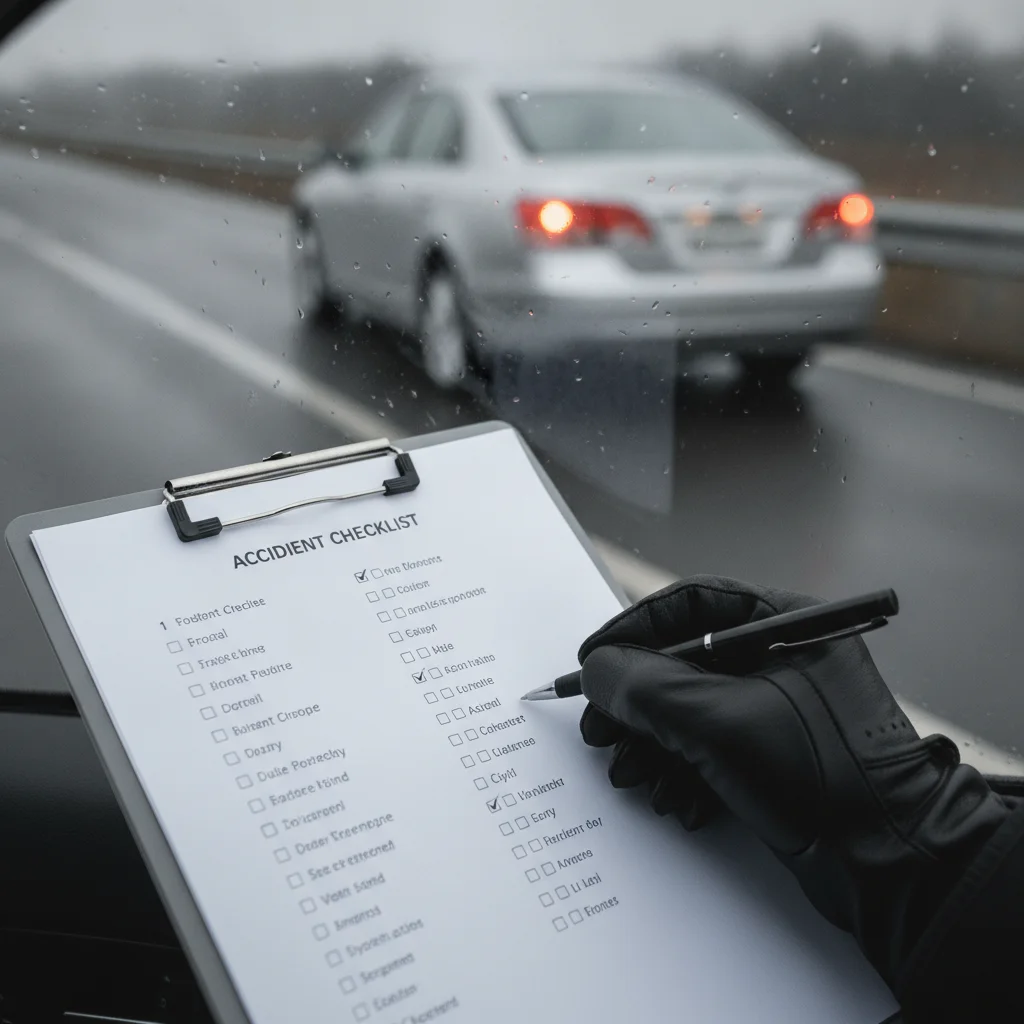
A printable post-accident checklist stored in your glove box alongside this equipment is also worth having. It removes decision fatigue when your adrenaline is running high.
Step-by-Step: Securing the Scene
Follow these steps in order. Sequence matters — a step done out of order can create new hazards while you're trying to control existing ones.
Check Yourself for Injury Before Anything Else
Before you open the door, do a rapid self-assessment. Adrenaline masks pain — a person can have a fractured rib or a concussion and feel fine for several minutes post-impact. Move your hands and feet, check for visible bleeding, and assess whether you feel dizzy or disoriented. If you are injured, stay in your vehicle with your seatbelt on (it provides structural protection) and call 911 immediately. Do not attempt the remaining steps if you are not physically able.
Activate Hazard Lights on All Involved Vehicles
Your hazard lights are the fastest signal you have. Activate yours immediately. If you can safely reach the other vehicle and its driver is incapacitated, activate theirs as well — most hazard switches are located on the center dashboard or steering column and are marked with a red triangle symbol. This step alone reduces rear-impact risk significantly on high-speed roads.
Move Vehicles Out of the Travel Lane If Safe to Do So
If the vehicles are drivable and no one appears to have a serious injury, move them to the shoulder or a nearby parking lot. This is both a safety measure and, in most states, a legal requirement — you can be cited for obstructing traffic unnecessarily. Before moving, take a quick mental note of the final resting positions of both vehicles; you'll want to capture this with photos before you move them if at all possible.
If a vehicle cannot be moved due to mechanical damage, turn the wheels toward the curb (to reduce the chance it rolls into traffic if struck again) and leave it in place.
Call 911 — Do Not Assume Someone Else Already Has
Make the call yourself. Bystander effect is real: in a crowd, everyone assumes someone else has already called. Give the dispatcher your location as precisely as possible — cross streets, mile markers, or your GPS coordinates from your phone's map app. Report: number of vehicles involved, whether there are injuries, whether anyone is trapped, and any fire or fuel hazard you've detected. Stay on the line until the dispatcher tells you it's okay to hang up.
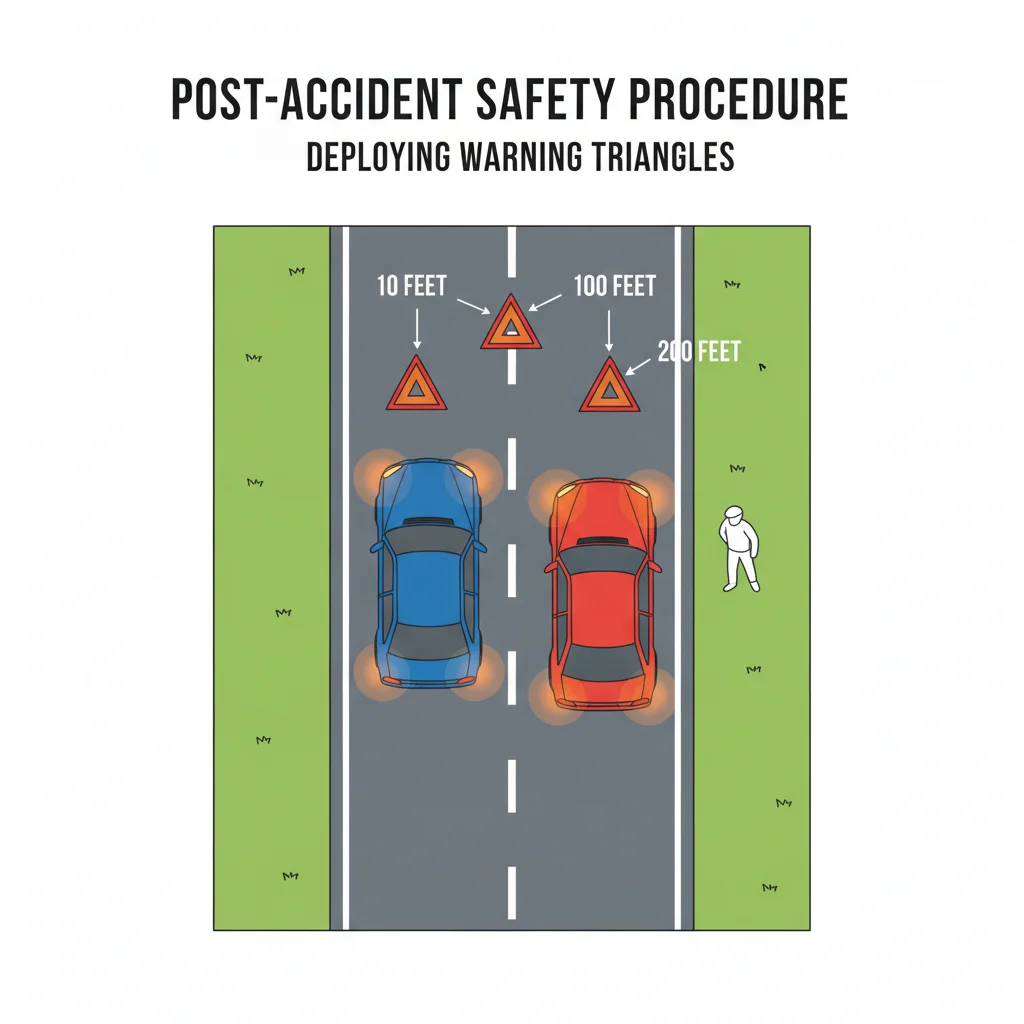
Deploy Warning Triangles or Flares Behind the Scene
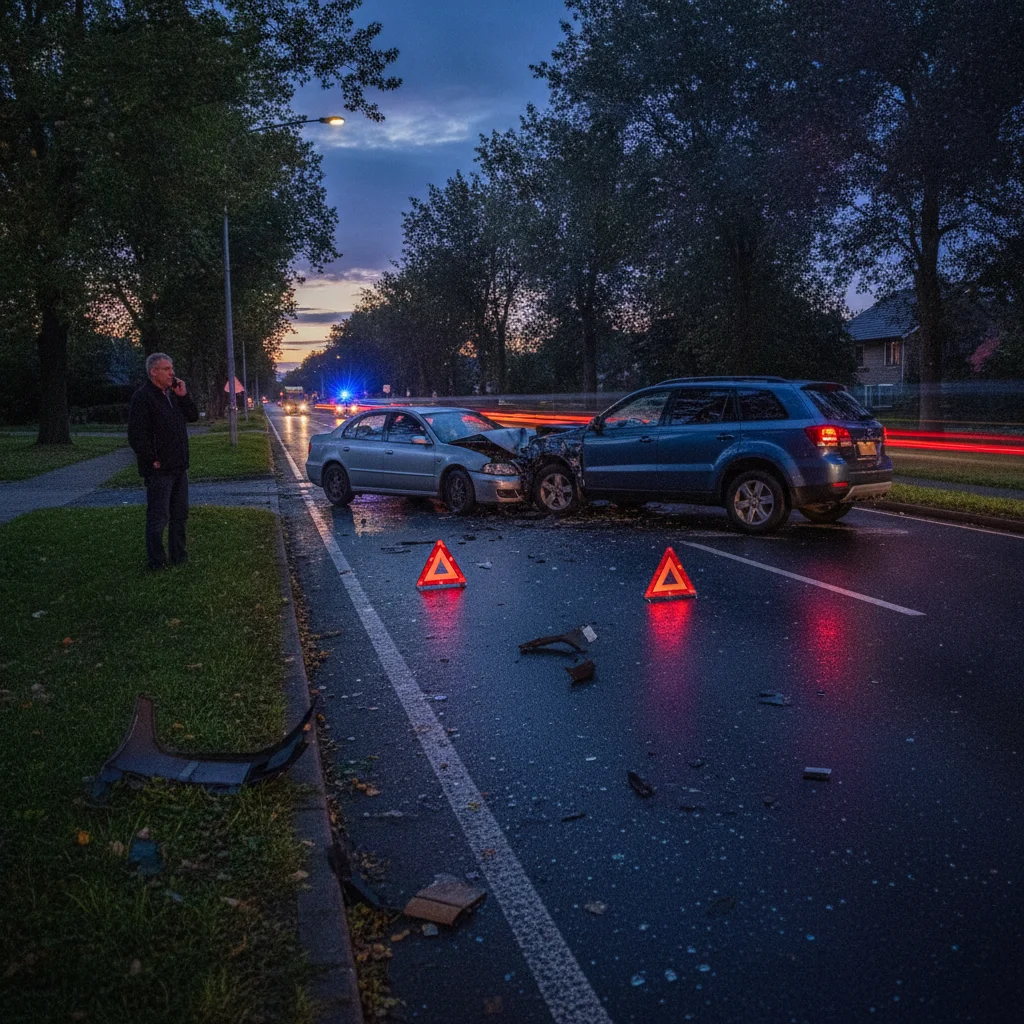
Once you're safely off the travel lane, place warning devices to alert approaching drivers at a safe stopping distance. General guidance from the Federal Motor Carrier Safety Administration (applicable to any driver as a best practice):
- First triangle: 10 feet behind the rear of your vehicle
- Second triangle: 100 feet behind the vehicle
- Third triangle: 200–300 feet behind the vehicle
On a curved road, place the farthest triangle just beyond the curve so drivers see it before the curve obscures the scene. At night or in fog, LED flares are more visible than reflective triangles and do not carry the fire risk of traditional road flares near a fuel leak.
Account for All Occupants and Move Everyone Away From Traffic
Check every vehicle for occupants, including rear seats and, in SUVs and minivans, the third row. Once you've confirmed everyone's location, guide mobile occupants to a position behind a guard rail, on a hillside, or otherwise out of the traffic lane. Standing directly behind a stopped vehicle on a road is one of the most dangerous places you can be — it puts you in the path of any secondary impact.
Keep people together and visible. Scattered individuals on or near a roadway increase the risk of being struck by distracted or speeding drivers.
Assess Injuries and Render Aid Within Your Capability
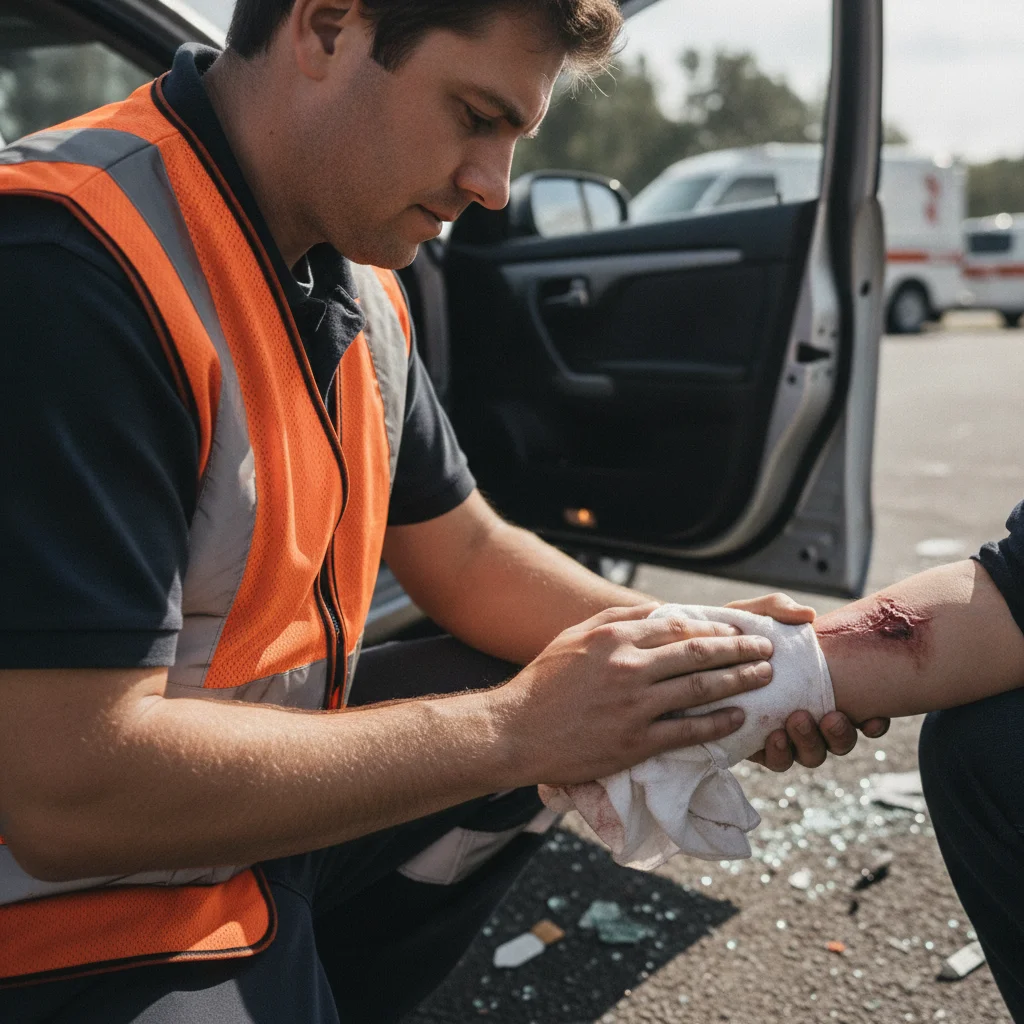
With the scene secured, assess injuries. Apply direct pressure to serious bleeding wounds using gloves from your first aid kit. Do not remove embedded objects — stabilize them in place. Keep conscious patients calm and still. If someone is unconscious but breathing, do not move them. If they are not breathing and you are trained in CPR, begin chest compressions and follow 911 dispatcher instructions.
Communicate your injury observations clearly to the 911 dispatcher — severity, location on the body, level of consciousness, whether victims are breathing — so they can dispatch the right level of care.
Begin Documentation While Waiting for Responders
Once the immediate safety needs are handled, start documenting the scene with your phone. Capture vehicle positions, damage on all sides, road conditions, skid marks, traffic controls, and any relevant environmental factors (ice, sun glare, construction). Take wide-angle establishing shots, then move to close-ups of impact points and damage. This photographic record is the foundation of your insurance claim and any legal proceeding that follows. See our full scene documentation guide for a prioritized photo checklist.
Secondary Crashes Kill: Never Stand Behind Stopped Vehicles
The most common post-accident fatality doesn't involve the original crash — it involves a second vehicle hitting the stopped cars or the people standing near them. Standing between or directly behind stopped vehicles on a live road is extremely dangerous. Move everyone to a guardrail, embankment, or other barrier-protected area as quickly as possible.
EV and Hybrid Fires Require Specialist Response
Lithium-ion battery fires cannot be extinguished with standard dry-chemical extinguishers and may reignite hours later. If an electric or hybrid vehicle is involved and you see battery warning lights, smoke from the floor or undercarriage, or a chemical smell, evacuate everyone immediately and tell the 911 dispatcher you have a potential EV battery fire. Keep bystanders at least 100 feet away.
Build Your Emergency Kit Now, Not Later
The best time to assemble a vehicle emergency kit is on a calm afternoon when you have twenty minutes and an Amazon cart open. Warning triangles, a reflective vest, gloves, an emergency blanket, and a basic first aid kit fit in a small bag that slides under any seat. If you wait until after an accident to think about this, you'll wish you hadn't.
LED Flares Over Pyrotechnic Flares Every Time
Traditional road flares burn hot and produce sparks — a serious ignition risk near fuel leaks. Modern LED safety flares are brighter, reusable, and battery-powered. They cost about the same and eliminate the fire risk entirely. Make the switch when you're stocking your kit.
Practice Locating Your Hazard Switch
Sounds trivial — it isn't. Under stress, people fumble for controls they haven't consciously thought about. Take ten seconds the next time you get in your car to locate your hazard light button without looking. That muscle memory pays dividends in a real emergency.
Assessing and Assisting Injured People
Once the scene is secured against incoming traffic, your attention shifts to the people involved. The instinct to help is right — but how you help determines whether you make things better or worse.
The Primary Rule: Do Not Move an Injured Person
Spinal injuries are invisible. A person can appear conscious and even alert while having a cervical fracture that movement could turn into permanent paralysis. Unless the vehicle is on fire, submerged in water, or there is another immediate life threat that cannot be mitigated any other way, keep injured people exactly where they are and wait for EMS.
What You Can Do While Waiting
- Talk to them. Verbal reassurance reduces panic and keeps them still. Ask their name, where they feel pain, and whether they can feel their extremities — share that information with the 911 dispatcher.
- Control visible bleeding. Apply firm, steady pressure with a clean cloth or article of clothing. Do not remove the cloth once blood soaks through — add more material on top and keep pressing.
- Keep them warm. Shock causes the body to lose heat rapidly. A jacket, emergency blanket, or even floor mats can prevent hypothermia while help is en route.
- Monitor breathing. If a person stops breathing and you are trained in CPR, begin compressions. If you are not trained, the 911 dispatcher can walk you through hands-only CPR in real time.
Never Move a Potentially Spine-Injured Person
Moving someone with an undiagnosed spinal injury can convert a survivable fracture into permanent paralysis. The only exceptions are immediate life threats — fire, flooding, or structural collapse — where the risk of staying exceeds the risk of movement. If you must move someone in those circumstances, support the head and neck in a neutral position and move them in a straight line. Communicate this to arriving EMS immediately.
Leaving the Scene Is a Crime in Every U.S. State
Even if you believe the accident was minor, leaving before police arrive and release you exposes you to hit-and-run charges — a criminal offense that can result in license suspension, fines, and jail time. The threshold varies by state, but the safe and legal default is always to remain at the scene. Review <a href="/maintenance-and-ownership/safety-legal/accident-procedures/your-legal-obligations-at-the-scene-of-a-car-accident">your full legal obligations</a> so you know exactly what's required of you.
Document what you observe about injuries — not to build a legal case, but to give responding EMTs accurate information. The more detail EMS has before they arrive, the faster they can act. This kind of scene documentation also matters later; see our guide on documenting an accident scene for what to capture and when.
Fire, Fuel Leaks, and When to Evacuate
Vehicle fires are rare, but when they happen they escalate quickly. Modern cars carry multiple ignition risks: fuel tanks, lithium-ion battery packs in hybrids and EVs, and pressurized components that can rupture in a collision. Knowing the warning signs — and having a threshold for evacuation — is non-negotiable.
Signs of Imminent Fire Risk
- Smell of fuel or burning plastic immediately after impact
- Visible liquid pooling under the vehicle (could be fuel, not just water from the AC drain)
- Smoke coming from the engine bay, wheel wells, or undercarriage
- Crackling or hissing sounds from a hybrid or EV battery pack
- Dashboard warning lights for battery or high-voltage systems
Evacuation Protocol
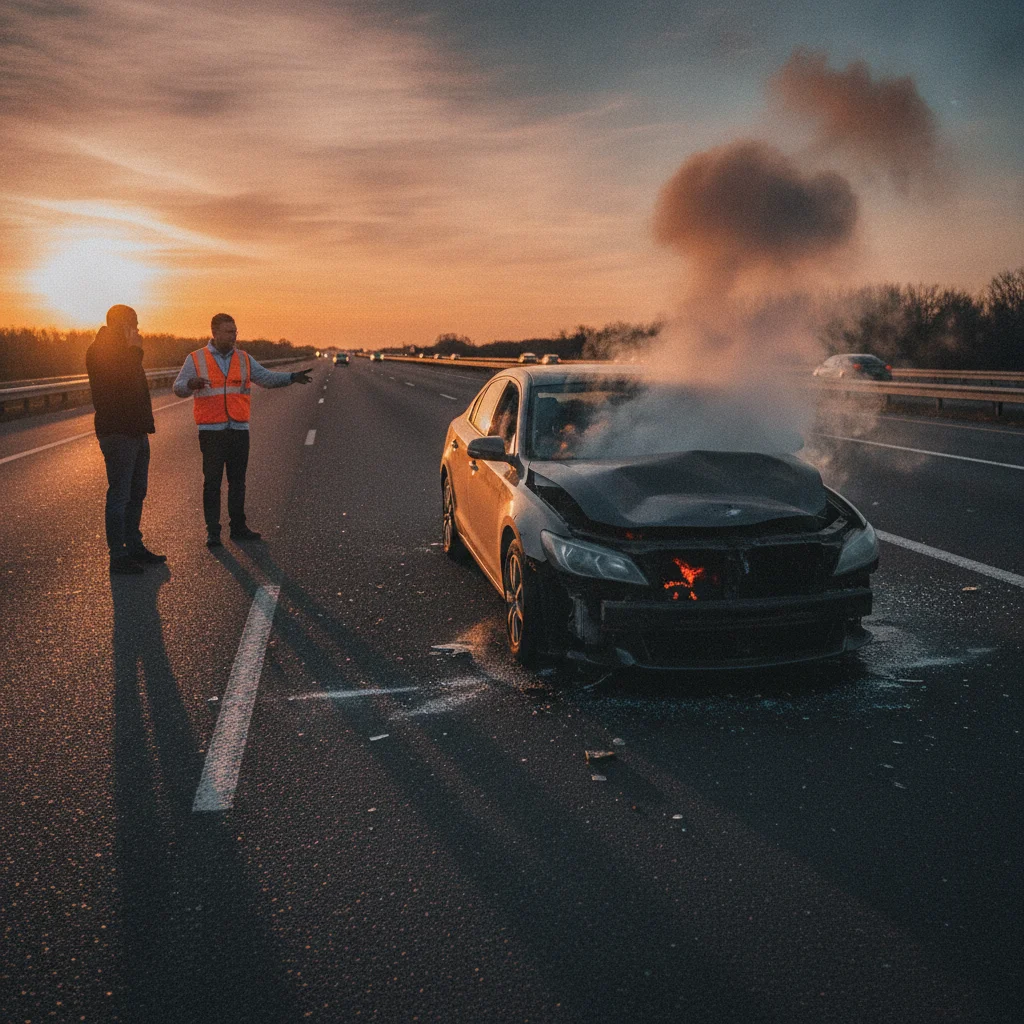
If you smell or see any of the above: get everyone out of both vehicles immediately, move at least 100 feet upwind of the scene, and do not return to retrieve belongings. Alert the 911 dispatcher that you suspect a fuel leak or battery fire — this changes the type of response units dispatched.
For EV and hybrid fires specifically, warn responders to keep their distance. Lithium-ion battery fires require specialized suppression and can reignite hours after they appear extinguished. Don't let bystanders — or yourself — assume the danger has passed.
After Evacuation: Keep the Area Clear
Once you've moved people away from a fire risk, your job is to keep everyone at a safe distance and out of traffic lanes. Prevent well-meaning bystanders from crowding back toward the vehicles. If you have a phone, photograph the scene from your safe distance — this documentation counts. For the full legal picture on what your duties are once you've left the immediate area, see your legal obligations at the scene.
Protecting Your Legal and Financial Position
Everything covered above is primarily about physical safety. But the actions you take in those first minutes also establish the record that your insurer, an attorney, or a court may scrutinize later. A few practical points:
Don't Admit Fault — Even Informally
Saying "I'm so sorry" to the other driver is a natural human response to a stressful situation. It is also a statement that can be used against you. Stick to factual, neutral language: ask if the other person is okay, tell them help is on the way, and leave liability assessment to the professionals.
Cooperate With Police, Not the Other Driver
Provide your license, registration, and insurance information to responding officers. Be truthful. But be equally careful about what you volunteer to the other driver and their insurer at the scene — you have no legal obligation to make a statement to anyone other than law enforcement.
Start Documenting Before Help Arrives
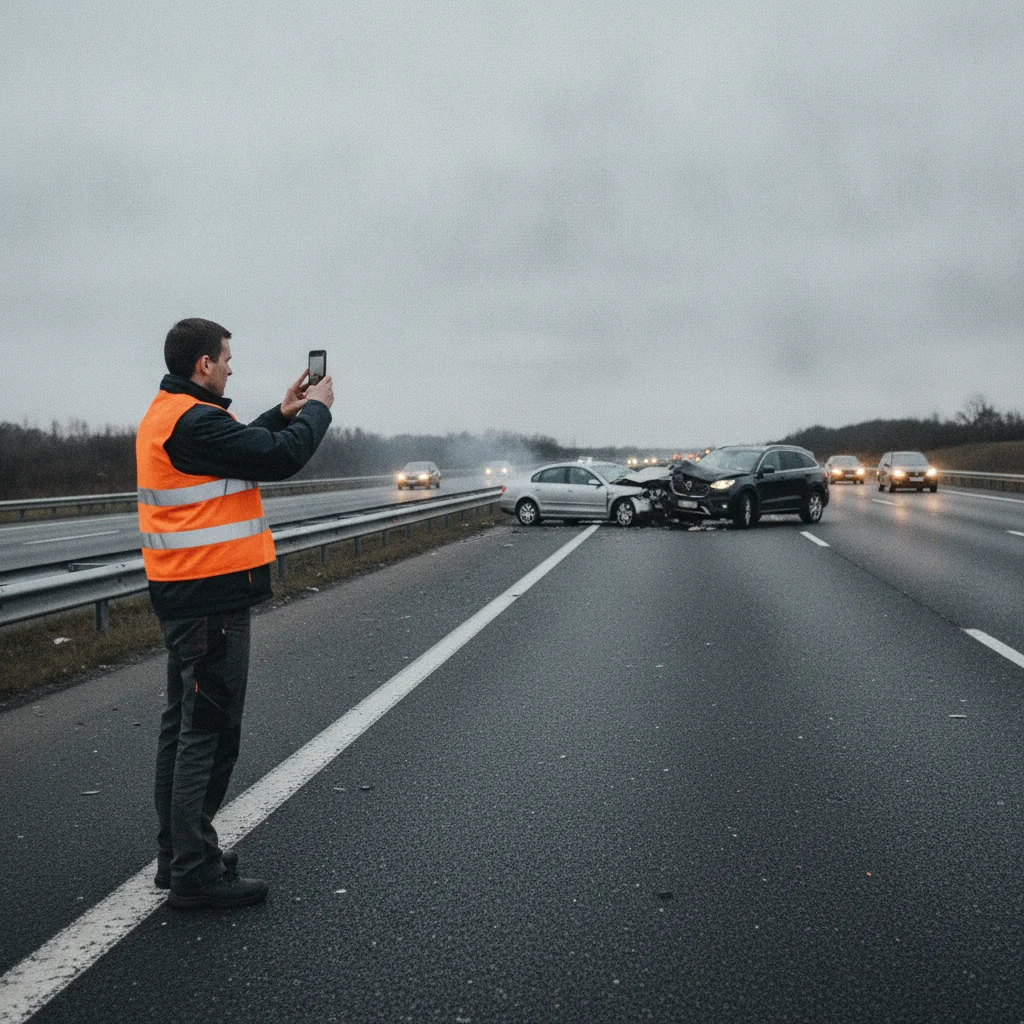
Once the immediate physical safety steps are done, use your phone to photograph vehicle positions, damage, road conditions, skid marks, traffic signals, and anything else relevant. The scene documentation guide covers exactly what to capture and in what order. After that, the next step is collecting the other party's information — see what information to exchange after a car accident for a complete rundown.
Stay at the Scene
Leaving before police arrive — even if you think the accident is minor — is a criminal offense in every U.S. state. The threshold for what counts as a reportable accident varies by state, but the safest default is always to stay, cooperate, and let responding officers make the determination. For more on evidence-based road safety practices that reduce your risk of ever being in this situation, our road safety hub is a useful ongoing resource.

All claims are backed by peer-reviewed research. Sources on request.