Key Takeaways
Why Your Registration Bill Looks Nothing Like Your Neighbor's
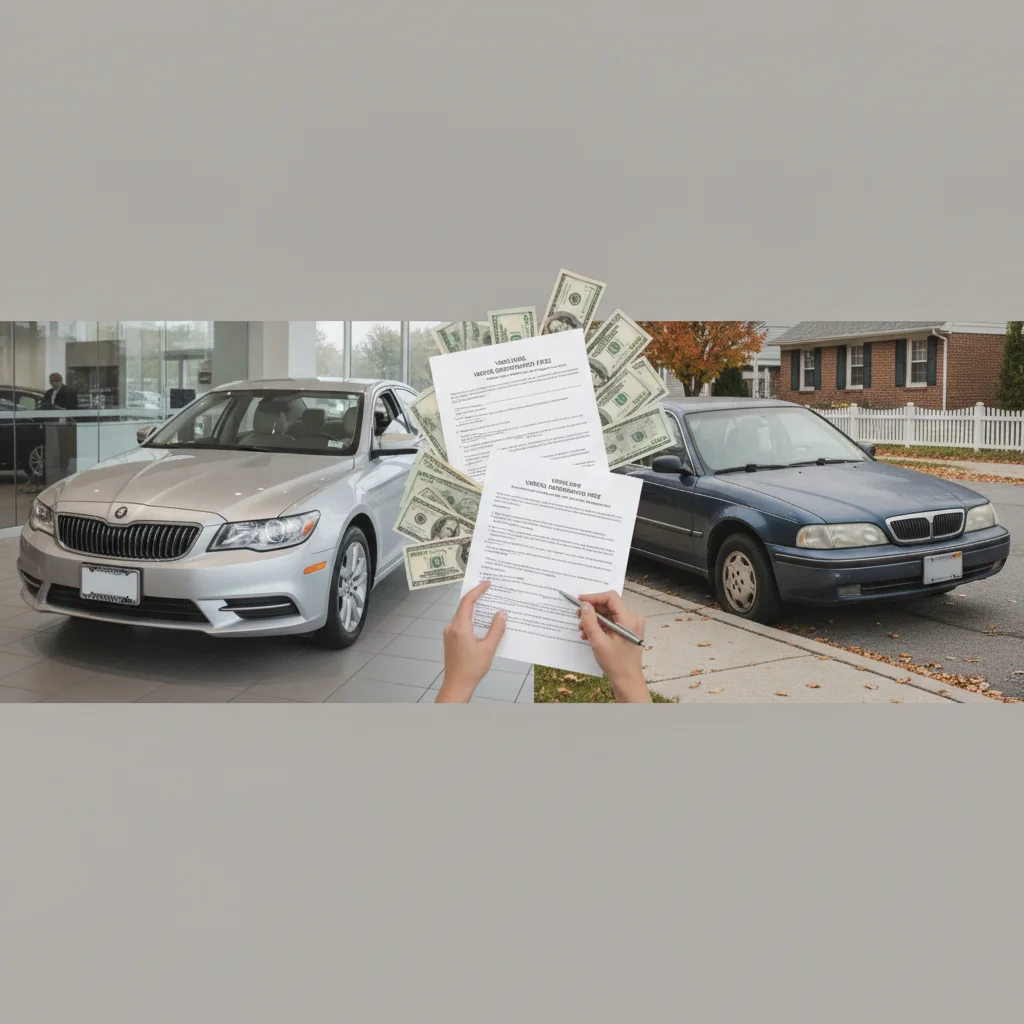
If you've ever compared notes with a friend in another state about car costs, you've probably run into a jarring discrepancy: they're paying $45 a year to register their pickup truck, and you're writing a check for $380. Both figures are completely normal — depending on where you live.
Registration fees are one of the most misunderstood recurring costs of car ownership. Unlike gas prices or insurance premiums, there's no national benchmark. Each state sets its own formula, and the differences are enormous. Some states charge a flat, low fee that barely changes over time. Others tie fees directly to your vehicle's current market value, meaning a $40,000 SUV costs far more to register than a $10,000 used sedan — and the fee drops as the car depreciates.
Then there are the add-ons: county surcharges, emissions testing fees, highway fund assessments, and specialty plate charges that can quietly inflate your annual bill. To get the full picture across all 50 states, see our state-by-state fee reference.
Below, we break down the states with the lowest and highest annual registration costs — and explain exactly why the numbers land where they do.

States With the Lowest — and Highest — Annual Registration Costs
Arizona — Flat Fee, Low Cost, Highly Predictable
Arizona charges vehicle owners based on a percentage of the vehicle's assessed value, but its rates are structured so aggressively in favor of rapid depreciation that most cars over five years old end up paying a very modest fee. For older or moderately priced vehicles, annual registration typically runs $9 to $60, making Arizona one of the most affordable states in the country for long-term vehicle ownership.
The state uses a fixed depreciation schedule — vehicles are assessed at a declining percentage of their original MSRP each year. By year five, the taxable value has dropped to around 16% of MSRP. By year ten, it's minimal. This structure strongly rewards keeping a car for the long haul, which is a real financial advantage for practical-minded owners.
Arizona also does not charge annual personal property tax on vehicles separately from registration — a distinction that matters when comparing apples-to-apples across states. The total annual government cost of car ownership in Arizona ranks among the lowest nationally.
Arizona's steep depreciation schedule means most cars over five years old cost under $60 to register annually.
Indiana — Flat-Rate Simplicity at a Low Price
Indiana keeps registration simple: most passenger vehicles pay a flat annual fee of $21.35, with some adjustment for vehicle weight class. There's no value-based calculation, no depreciation curve to track, and no surprise escalations when you buy a newer car. What you see is what you pay, year after year.
This flat-fee approach makes budgeting effortless and removes any financial penalty for owning a newer or more expensive vehicle. A $60,000 truck pays the same base registration fee as a $12,000 economy car. That consistency is genuinely valuable for households trying to plan multi-year ownership costs.
Indiana does add a county wheel tax in some jurisdictions, which can range from $7.50 to $40 depending on location — so your actual bill may be slightly higher than the base state fee. But even with county add-ons, total annual registration in Indiana rarely exceeds $80 for a standard passenger vehicle.
Indiana's flat $21.35 base registration fee makes ownership cost planning completely straightforward.
Mississippi — Among the Cheapest Flat Fees in the South
Mississippi charges a flat annual registration fee based primarily on vehicle weight and type, with most standard passenger cars falling in the $14 to $28 range. It's one of the lowest-cost states in the Southeast and consistently ranks near the bottom of national fee comparisons — which is a good thing for car owners.
[in_content_images:1]There's no vehicle value component to Mississippi's registration structure. The state does collect a title ad valorem tax at the time of purchase, but the annual renewal bill is straightforward and low. For owners of multiple vehicles — families with two or three cars on the road — that simplicity translates into meaningful annual savings compared to value-based states.
Mississippi's low registration costs are partly a reflection of the state's broader low-cost-of-living profile, and partly a deliberate policy choice to keep recurring government fees manageable for residents. Whatever the cause, the effect is real: car owners here pay some of the least in annual registration fees of any state in the country.
Mississippi's flat-rate structure keeps most passenger cars at under $30 per year in registration fees.
North Dakota — Low Fees With a Straightforward Structure
North Dakota calculates registration fees based on vehicle age and weight rather than market value, which produces reliably low annual costs. Most standard passenger vehicles pay between $49 and $74 per year, with the fee decreasing as the vehicle ages. By the time a car hits ten years old, annual registration costs drop further.
The age-based model is a reasonable middle ground: it acknowledges that older vehicles should cost less to register without requiring the DMV — or the owner — to track current market values. You know exactly when your fee will drop and by roughly how much, which makes multi-year planning workable.
North Dakota also doesn't impose separate personal property taxes on vehicles, so the registration fee represents the bulk of annual government-imposed car ownership costs. For a state with significant rural vehicle usage and long driving distances, keeping recurring fees low makes practical sense.
North Dakota's age-based fee structure gives owners a predictable, declining annual cost as their car ages.
Montana — Flat Fees but Watch the County Add-Ons
Montana charges flat registration fees that vary by vehicle age, starting at around $217 for vehicles less than 4 years old and dropping in tiers as vehicles age — down to roughly $28 for cars 11 years and older. For owners of older vehicles, Montana is genuinely cheap. For those driving a newer car, the initial years can be moderately expensive before fees step down.
What keeps Montana in the lower-cost column overall is the absence of a state sales tax and the complete lack of personal property tax on vehicles. The registration fee is the primary annual government cost, and it follows a clearly defined, publicly posted schedule — no surprises.
Montana is also notable as one of the few states with no vehicle inspection requirements, which eliminates an indirect ownership cost that other states impose. That said, county fees can add $10 to $30 depending on jurisdiction, so your actual bill may be modestly higher than the base state schedule suggests.
Montana vehicles 11 years and older pay as little as $28 annually, making older-car ownership especially affordable.
California — High Fees, High Stakes, Value-Based
California's Vehicle License Fee (VLF) is calculated as a percentage of the vehicle's current market value — starting at 0.65% annually. On a $45,000 SUV, that's roughly $292 in VLF alone before additional registration fees, county charges, and assessments stack on top. Total annual registration on a new vehicle in California routinely exceeds $400 to $600 in the first few years of ownership.
[in_content_images:2]As vehicles depreciate, the VLF component declines — but California also layers in a base registration fee, county fees, district fees, and smog abatement charges. Even a ten-year-old vehicle with a low VLF can end up with a total registration bill of $200 or more once all mandatory fees are tallied.
California's high cost of vehicle registration is effectively an annual property tax on your car, administered through the DMV. For multi-car households, the cumulative annual cost can be substantial. It's a significant — and often underestimated — component of the true cost of car ownership in the state.
A new $45,000 SUV in California can generate over $500 in total annual registration costs in its first year.
Virginia — One of the Highest Personal Property Tax Burdens
Virginia operates a dual-track system that makes it one of the most expensive states for vehicle ownership: a flat annual registration fee of $40.75 for most cars, plus a separate Personal Property Tax (PPT) assessed by each county or city at rates typically ranging from $3.50 to $5.00 per $100 of assessed value. On a vehicle valued at $35,000, that's $1,225 to $1,750 per year in personal property tax alone.
Unlike registration fees managed at the state level, Virginia's PPT is locally administered, which creates wide variation by jurisdiction. Fairfax County, Arlington, and other Northern Virginia localities have some of the highest effective rates in the state. Rural counties tend to be lower, but even moderate-rate localities produce substantial annual bills for vehicle owners.
Virginia does offer a state subsidy on the PPT for vehicles valued under $20,000, which cushions the cost for owners of modest cars. But for anyone driving a relatively new or higher-value vehicle, the combined registration and property tax burden places Virginia firmly among the most expensive states for annual government vehicle costs.
Virginia's county-level property tax on vehicles can exceed $1,200 per year on a $35,000 car, independent of registration.
Kansas — Moderate State, Significant County Variation
Kansas calculates annual registration fees based on vehicle age and horsepower — a somewhat unusual formula that produces moderate costs overall, but with meaningful variation depending on your specific vehicle. A newer, higher-horsepower vehicle might pay $100 to $175 per year; older or lower-powered cars drop to $35 to $75.
Kansas also imposes a vehicle property tax separately from registration, administered at the county level. Rates and assessed values vary by county, and in some jurisdictions the annual property tax bill can rival or exceed the registration fee. Combined annual government costs for a mid-range vehicle in Kansas typically land in the $150 to $350 range depending on age, location, and vehicle type.
The horsepower-based component is worth understanding if you're shopping for a vehicle. A fuel-efficient four-cylinder and a high-output V8 of similar age will carry meaningfully different registration costs — a practical financial nudge toward efficiency that's built directly into the state's fee structure.
Kansas ties registration fees partly to horsepower, meaning high-output vehicles cost more to register year over year.
New Hampshire — Low Registration But High Local Taxes
New Hampshire doesn't have a state income tax or sales tax, but it funds local government partly through vehicle registration taxes. The state charges a flat registration fee of about $31.20 for most passenger vehicles. However, each municipality also levies an annual municipal permit fee based on the vehicle's list price and age — which can range from $50 to over $300 depending on vehicle value and town.
The permit fee is calculated using a declining percentage of MSRP over the vehicle's life. In year one, the fee is 18‰ (18 per thousand) of list price — meaning a $40,000 car generates a $720 permit fee in its first year. The rate steps down in subsequent years, but early-year costs in New Hampshire are among the highest in the New England region.
For owners of older vehicles, New Hampshire becomes much more affordable — by year ten, the permit fee on most cars drops dramatically. But for new-car buyers, that first-year registration bill in New Hampshire can genuinely shock people who moved from a flat-fee state.
New Hampshire's first-year municipal permit fee can exceed $700 on a new $40,000 vehicle.
Oregon — High Base Fees and Escalating Surcharges
Oregon has steadily increased its vehicle registration fees in recent years to fund transportation infrastructure. As of recent biennials, the base registration fee for a standard passenger vehicle stands at $126 for a two-year registration period — or roughly $63 per year. That's above the national median for flat-rate states, but not extreme on its own.
Where Oregon's costs climb is in the layered surcharges: a vehicle privilege tax applies to new vehicle purchases, and counties may impose local registration fees. Oregon also imposes additional fees for vehicles with lower fuel economy, effectively penalizing less efficient vehicles. High-weight or low-MPG vehicles can face total biennial registration costs of $200 to $300 or more.
Oregon does not impose a general sales tax, which offsets some of the vehicle registration cost at time of purchase. But the recurring annual structure places it solidly in the above-average cost tier for ongoing ownership. For EV owners in Oregon, fee dynamics shift further — a topic covered in depth in our comparison of EV and gas car registration fees.
Oregon layers fuel-economy surcharges onto base registration fees, penalizing low-MPG vehicles at renewal time.
Check Your State's Full Fee Breakdown Before You Buy
Many DMV websites publish a registration fee estimator where you can enter a VIN or vehicle details and get a realistic renewal cost. Run this calculation before purchasing — especially if you're buying new in a value-based state where first-year fees can be substantially higher than renewal years. A $500 first-year registration bill is a real line item that deserves a place in your purchase budget.
Moving? Time Your Registration Strategically
If you're relocating to a new state, you'll typically have 30 to 90 days to re-register your vehicle. In value-based states, registering a newer vehicle means a higher fee — but you'll have already paid depreciation in your previous state. Check whether your new state prorates fees for partial-year registration, as some do. A few weeks of timing difference can occasionally shift you into a lower fee tier.
Registration Fees vs. Personal Property Taxes: Not the Same Thing
In some states — notably Virginia, Kansas, and several others — vehicles are subject to both an annual registration fee and a separate annual personal property tax. These are distinct charges, often collected by different government entities (state DMV vs. county treasurer). When comparing costs across states, make sure you're adding both figures together. Registration-fee-only comparisons significantly understate the true annual government cost in property-tax states.
Exemptions May Apply to Your Situation
Active-duty military members, disabled veterans, seniors, and drivers with qualifying disabilities may be eligible for reduced or waived registration fees in many states — but these programs are rarely advertised prominently. If you fall into any of these categories, it's worth asking your state DMV directly before assuming you owe full price. Our guide to <a href="/maintenance-and-ownership/ownership-costs/registration-taxes/vehicle-registration-exemptions-and-discounts-most-owners-dont-know-about">registration exemptions and discounts</a> outlines what to look for.
How to Use This Information as a Car Buyer
If you're choosing between states — whether for a relocation, a second home, or simply understanding your true cost of ownership — registration fees deserve a line in your budget. On a vehicle held for ten years, the difference between a flat-fee state and a value-based state can easily exceed $2,000 in cumulative registration costs alone. Our companion piece on the full lifetime cost of registering a car breaks that math down in detail.
Buying new versus buying used also changes the equation significantly. In value-based states, a brand-new vehicle carries its highest registration cost in year one — sometimes three to five times what you'd pay in year eight. If you're purchasing used, you may be stepping into a fee structure that's already depreciated substantially. See how that plays out in our article on registration fees across new vs. used ownership periods.
Finally, if you're an EV owner or considering going electric, be aware that many states levy additional flat surcharges on electric vehicles — sometimes $100 to $250 per year — to compensate for the gas tax revenue those vehicles don't generate. We compare total registration costs for EVs and gas vehicles side by side in our guide to EV vs. gas car registration fees.
And before you assume you're stuck paying full price: many states offer registration discounts or exemptions for military personnel, disabled drivers, seniors, and low-income owners. These programs are often underutilized simply because people don't know they exist. Our guide to vehicle registration exemptions and discounts covers what's available and how to ask for it.
Registration fees aren't glamorous — but over the life of a car, they're a real expense. Knowing where your state lands on the spectrum is the first step toward budgeting like a pro.

All claims are backed by peer-reviewed research. Sources on request.