Key Takeaways
Summary
22 items · 30–60 minutes to gather
Why This Checklist Exists (and Why Two-Trip DMV Visits Are So Common)
The DMV is nobody's favorite errand, but the number-one reason people end up making two trips is the same every time: a missing document. A lien release not in hand. An insurance card that expired last month. A title signed on the wrong line. Any one of these sends you home empty-handed, adding days to the gap between purchase and legal registration — and in most states, driving an unregistered vehicle is a ticketable offense.
This checklist is designed to close that gap. Whether you just bought a car from a dealer, picked one up at a private sale, inherited a vehicle, or relocated across state lines, the core set of documents you need overlaps far more than it differs. The variation between states is real but narrower than most people expect — it's usually limited to whether emissions testing is mandatory, whether a notary must witness the title transfer, and how odometer disclosures are handled.
For the full procedural walkthrough once you have your paperwork assembled, see our step-by-step registration guide. And if you recently moved, check our new-state registration checklist — deadlines there are easy to miss.
Below you'll find every document category broken out by type, with notes on what variants are accepted and where the common pitfalls hide.
What Tools and Resources You'll Need
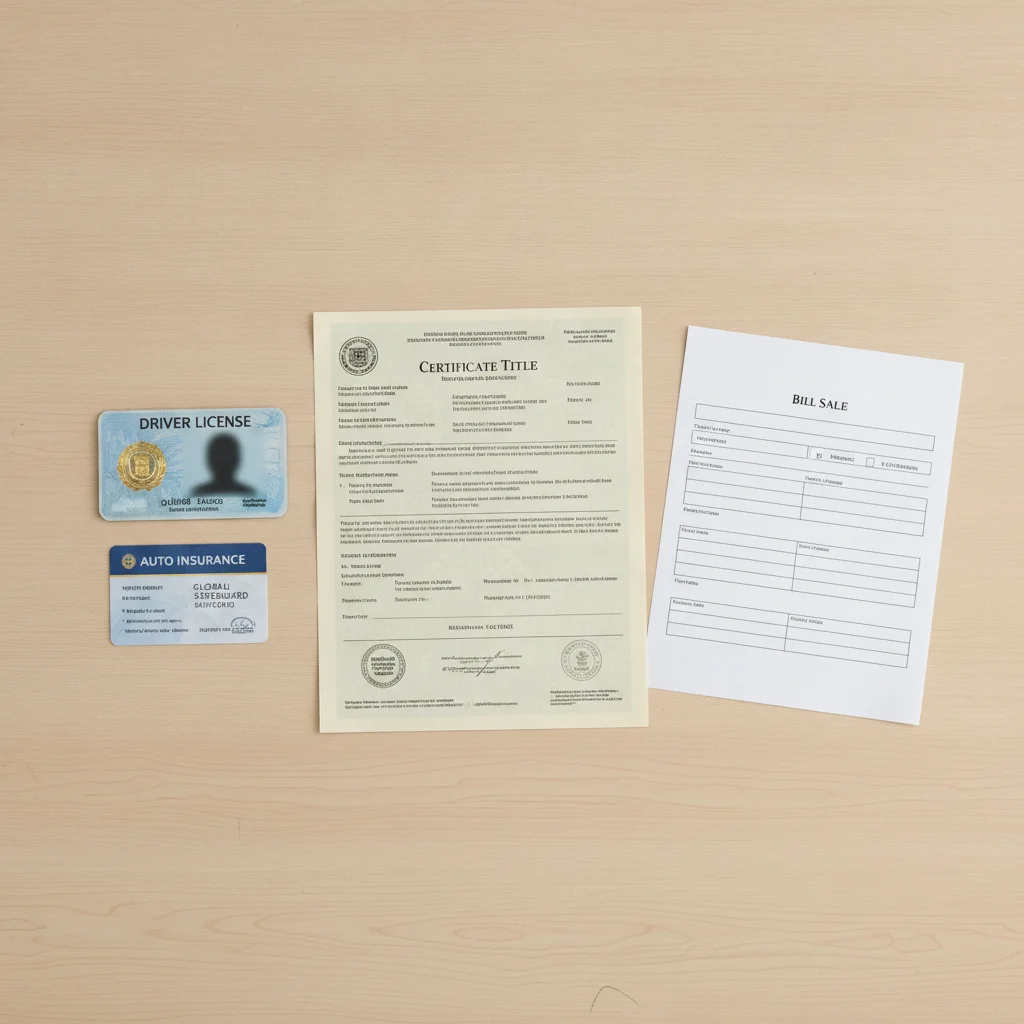
Before diving into the document list, take stock of what you'll need to locate, print, or obtain ahead of your DMV appointment. Some items are already in your glove box; others require a phone call to your lender or a visit to your insurer's app.
Vehicle Title (Original)
The primary proof of ownership required to transfer registration into your name.
State DMV Website
Used to download state-specific forms, confirm fee schedules, and schedule an appointment before your visit.
Auto Insurance App or Declaration Page
Provides current proof of insurance showing the vehicle's VIN, policy dates, and coverage levels.
Lien Release Letter
Documents that the vehicle's previous loan has been paid in full and no lender holds a claim on the title.
Emissions or Safety Inspection Certificate
Required in many states before registration can be processed; obtained from an authorized testing station.
Bill of Sale
Records the purchase price and date of sale, which the DMV uses to calculate sales or use tax owed.
Money Order or Certified Check
Accepted payment method at DMV offices that do not accept personal checks or credit cards.
Notary Public (if applicable)
Required in roughly a dozen states to witness and authenticate the title transfer signature.
The Complete Registration Document Checklist
Work through each group below before you leave for the DMV. Items marked must are non-negotiable in virtually every state. Items marked should are required in most states or are strongly advisable to prevent delays. Items marked nice to have can smooth the process or handle edge cases you may not anticipate.
Proof of Identity
Proof of Ownership (Title)
Lien Documentation
Proof of Insurance
Proof of Purchase and Sale
Inspection Certificates
Proof of Residency
Payment and Forms
Titles With Corrections or Alterations Are Often Rejected
If the seller crossed out a mistake on the title and wrote a correction, many states will reject it. A title is a legal instrument and most DMVs will not accept any alterations, even minor ones. If you notice a correction before completing the sale, request that the seller obtain a duplicate title from their state DMV before transferring the vehicle to you.
Don't Let Your Temporary Tag Expire Before You Register
Most dealers issue a 30- or 60-day temporary operating permit while registration is pending. If you miss that window — because of a document problem or simply losing track of time — you are technically driving an unregistered vehicle and can be cited. Set a calendar reminder for two weeks before the temp tag expires so you have time to resolve any paperwork issues.
Private Sales: Verify There's No Active Lien Before You Buy
In a private-party transaction, it's your responsibility to confirm the title is free and clear. You can check lien status by running the VIN through your state's DMV database or a title search service. Buying a car with an undisclosed lien means you may be unable to register it in your name until the lien is resolved — a process that can take weeks and require legal intervention.
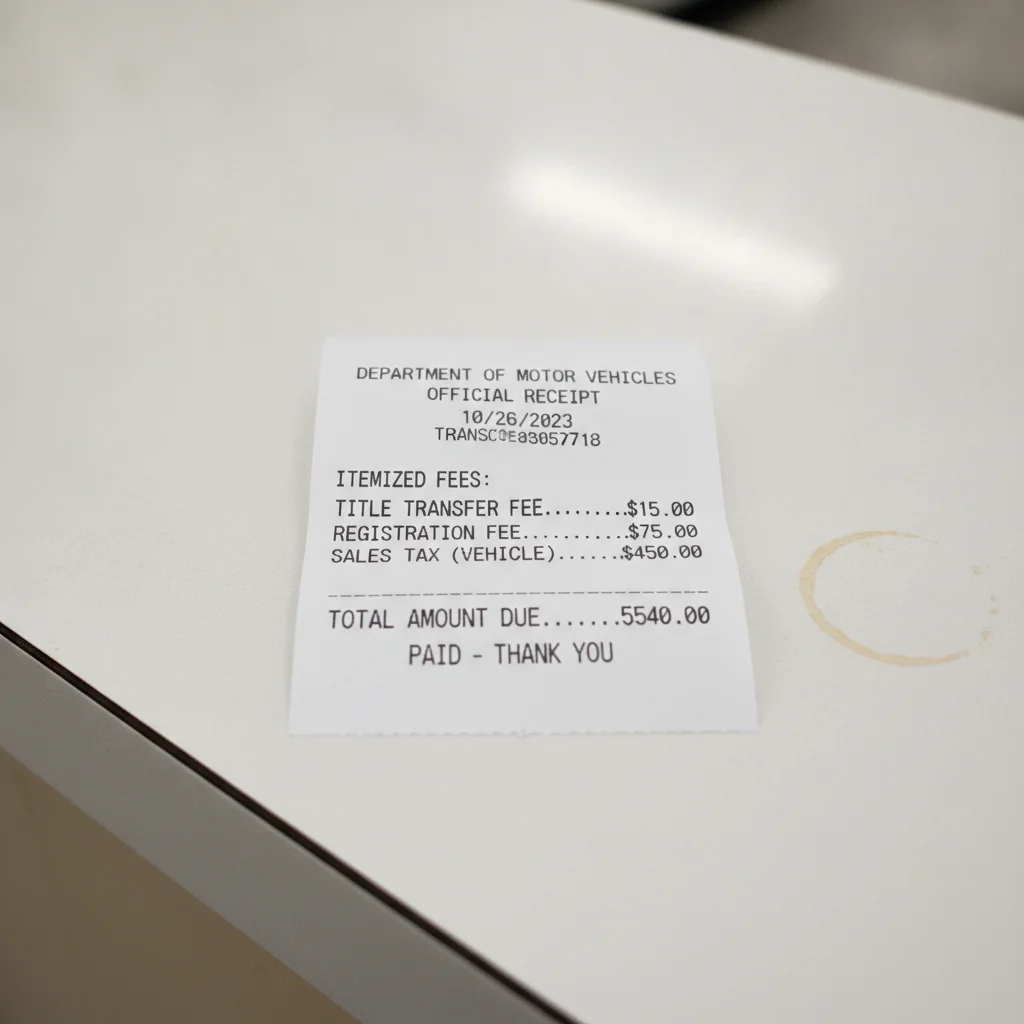
Understanding the Fees and Taxes That Come Due at Registration
Here's where a lot of first-time buyers get surprised: registration isn't just a flat fee. It's a stack of line items that varies by state, county, vehicle age, weight, and sometimes fuel type. Understanding what you're about to pay matters both for your budget and for verifying you're being charged correctly.
Title Transfer Fee
This is the fee the state charges to record a change of ownership on the vehicle title. It typically runs $15–$100 depending on the state. If you're buying from a dealer, this is usually handled as part of closing. Private-party buyers pay it directly at the DMV.
Registration Fee
The base annual registration fee covers your license plates and registration sticker. In many states, this fee scales with vehicle weight or MSRP. Some states charge a flat fee; others use a tiered schedule. Budget $50–$200 for most passenger cars.
Sales or Use Tax
Most states collect sales tax on vehicle purchases at the point of registration, not at the dealership. The rate varies widely — from zero in Oregon, Montana, New Hampshire, and Delaware to over 9% in some California counties. This is usually the largest single line item at the DMV window, often running into hundreds or even thousands of dollars on a higher-priced vehicle.
Ad Valorem or Property Tax
Some states — Virginia, Georgia, and several Southern states — levy an annual property tax on vehicles. In Virginia, this is called the Personal Property Tax and is collected locally, not at the DMV. Understanding this structure matters because you may owe money to your county separate from what you pay the state DMV.
Emissions and Inspection Fees
If your state requires a safety or emissions inspection, that test is typically conducted at an independent station and costs $20–$75. The resulting certificate is then submitted as part of the registration application.
For broader context on the paperwork and contracts involved in car ownership, including purchase agreements and financing docs, our hub covers the full spectrum of what you'll sign as a buyer.
Sales Tax Is Due at Registration, Not at Purchase
In most states, vehicle sales tax is collected by the DMV at the time of registration — not by the seller at the point of sale. This means you may owe a significant tax payment on top of registration fees the day you visit the DMV. On a $25,000 vehicle in a state with 7% sales tax, that's $1,750 due at the window. Budget for this amount before your appointment and bring an accepted form of payment.
Special Situations: Inherited Vehicles, Liens, and Out-of-State Titles
Standard registration is straightforward once you know the list. These scenarios add a layer of complexity that catches people off guard.
Inherited or Gifted Vehicles
If you received a vehicle through an estate, you'll typically need a copy of the death certificate, the probated will or letters of administration, and sometimes an affidavit of heirship (many states have a simplified form for this). A vehicle gifted between family members may be exempt from sales tax in some states — but you must file the correct gift affidavit to claim it.
Vehicles With an Active Lien
If the previous owner still had a loan on the car, the lender holds a lien on the title. That lien must be formally released before the title is clean enough to transfer. The lender issues a lien release letter or a satisfaction of lien document once the loan is paid in full. Some states allow simultaneous payoff and title transfer if the transaction is handled through a dealer or escrow, but private-party buyers should verify lien status before any money changes hands. Our state-by-state notarization guide is a useful companion here, since lien releases in some states must be notarized.
Out-of-State Titles
Titles from other states are generally accepted, but some states require a VIN inspection to verify the physical vehicle matches the title before issuing a new in-state title. This is especially common for vehicles coming from states with different odometer disclosure rules. Bring the original out-of-state title — not a copy — and expect the process to take slightly longer than a routine in-state transfer.
New Vehicles From a Dealer
Brand-new cars don't have a traditional title yet. Instead, the manufacturer issues a Manufacturer's Certificate of Origin (MCO), also called a Manufacturer's Statement of Origin (MSO). The dealer typically handles the title application on your behalf, but if you're registering yourself, you'll need the MCO in hand. Confirm with the dealer whether they're handling DMV submission or whether you're responsible.
If you're on the selling side of a transaction and want to compare what documentation sellers must assemble, see our guide on every document needed before listing a car for sale. There's significant overlap — but also some critical differences in what the seller retains versus what transfers to the buyer.
Before You Go: A Final Check
Run through this quick final check the night before your DMV appointment to avoid last-minute surprises.
- Is your proof of insurance current? An expired card — even by a day — may be rejected. Print or screenshot your current declaration page or insurance card from your insurer's app.
- Is the title signed in the correct places? The seller signs on the back in the transfer section. If there's a co-owner, both signatures are required. Correction fluid or crossed-out signatures on a title are a red flag and may require a replacement title from the issuing state's DMV.
- Have you confirmed which forms of payment the DMV accepts? Many DMV offices don't accept personal checks or credit cards. Bring a money order or certified check if in doubt.
- If your vehicle needs an inspection, is the certificate in date? Some states require the inspection to have been performed within a specific window — often 90 days — prior to registration.
- Does your state require a notarized title? Roughly a dozen states do. Check our notarization requirements by state if you're unsure.
One last thing worth knowing: the documents required to register a car share significant overlap with — but are not identical to — what you'll need to sell a car privately. If you're on the selling end of a future transaction, our private party sale documents guide is the companion piece to bookmark now.

Registration is one of those tasks that rewards preparation far more than speed. Take the hour to gather everything on this list, and your DMV visit becomes a formality — not a frustration.

All claims are backed by peer-reviewed research. Sources on request.