Key Takeaways
Why Record-Keeping Is a Hidden Ownership Cost
Most drivers think about registration fees as a grudging annual expense — write the check, stick the sticker, move on. What they don't think about is the second layer of cost that bad record-keeping creates: late fees, duplicate title fees, replacement registration fees, and the hours spent at the DMV untangling paperwork problems that a simple filing habit would have prevented entirely.
Consider what a single misplaced title costs. Depending on your state, a duplicate title application runs between $15 and $85 in fees — and in some states, the process requires a notarized application, a lien release from a lender, and a 2–6 week wait. If you're trying to sell the car quickly, that wait kills deals. If you're trading in, dealers may discount their offer to account for the title risk.
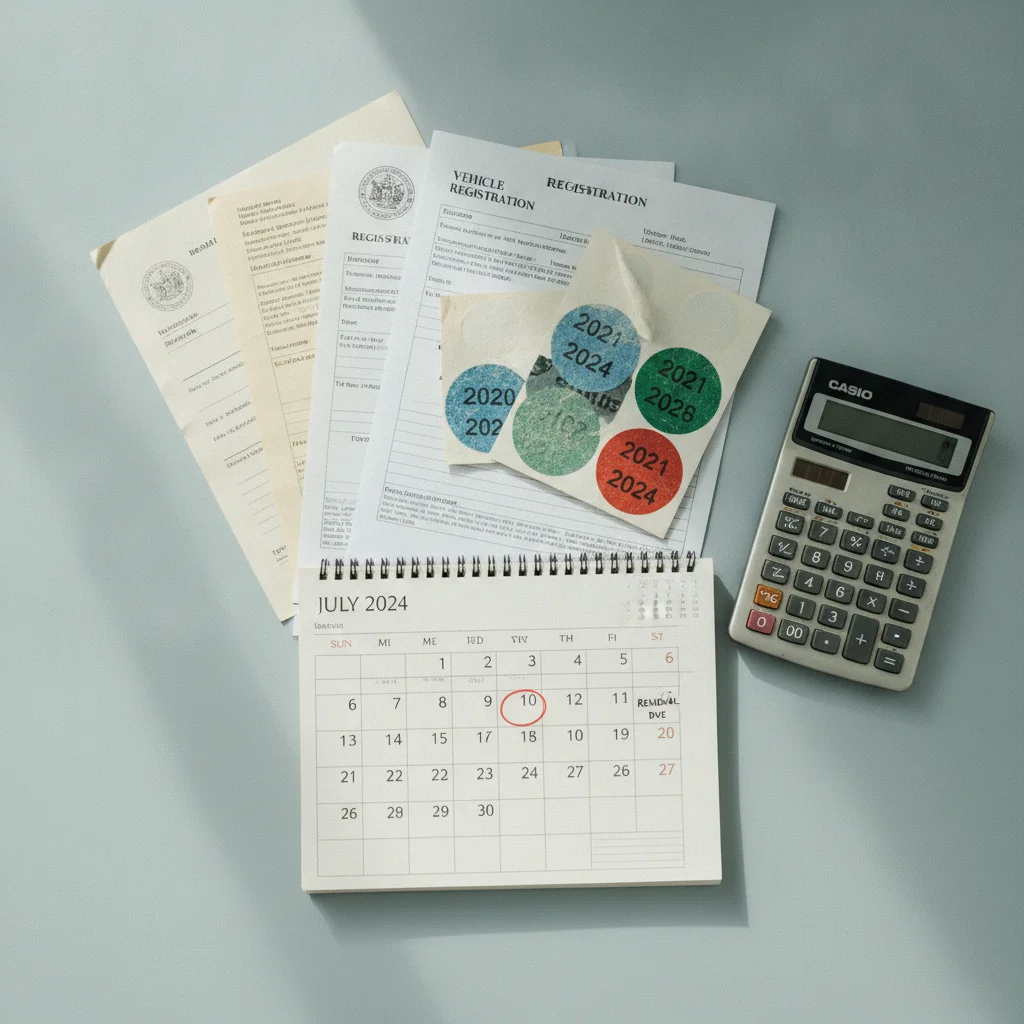
The registration side isn't any kinder. Driving on an expired registration — even by a day — is a moving violation in most states, carrying fines from $25 to over $200. Some jurisdictions add a penalty percentage to the renewal fee itself for every month you're late. As our guide to the full lifetime cost of registering a car explains, these incremental fees compound into a surprisingly large number over a vehicle's lifespan.
None of that cost is mechanical. It's entirely administrative — and entirely avoidable with a consistent recordkeeping system.
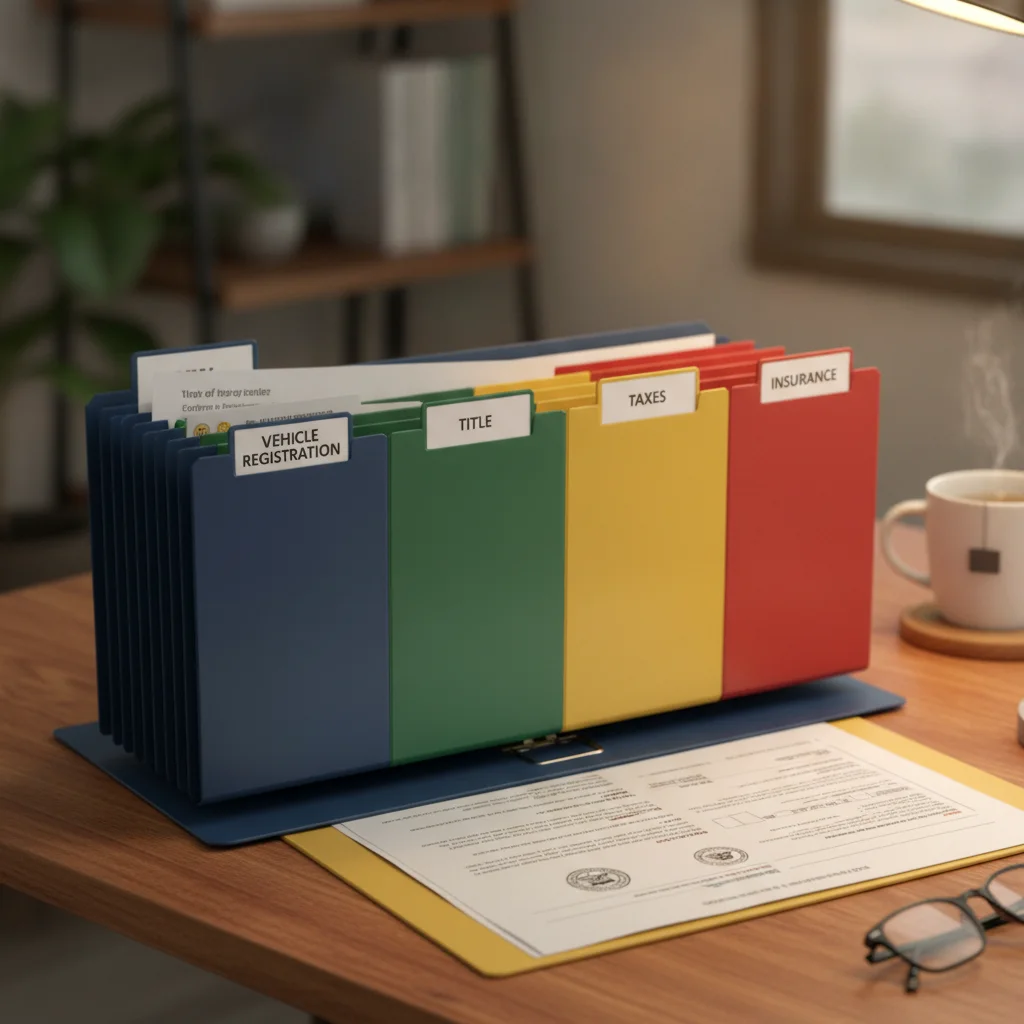
The Core Documents Every Car Owner Must Keep
Before you can organize your records, you need to know exactly which documents belong in that system. Here's the complete list for a registered vehicle in the United States:
- Certificate of Title: The legal proof of ownership. Keep the original; never fold it tightly or store it anywhere it could get wet.
- Current Registration Card: Must travel with the vehicle at all times in most states. Keep the active card in the glove box and archived copies at home.
- Annual Renewal Notices: Even after you pay, keep the notice as proof of the fee amount assessed — useful if you're ever billed incorrectly.
- Payment Receipts: Whether you renewed online, by mail, or in person, retain the confirmation or receipt for at least three years.
- Sales Tax Receipt: Issued at purchase or by the DMV when you title the vehicle. Critical for your personal tax records and for understanding the full tax timeline of a car purchase.
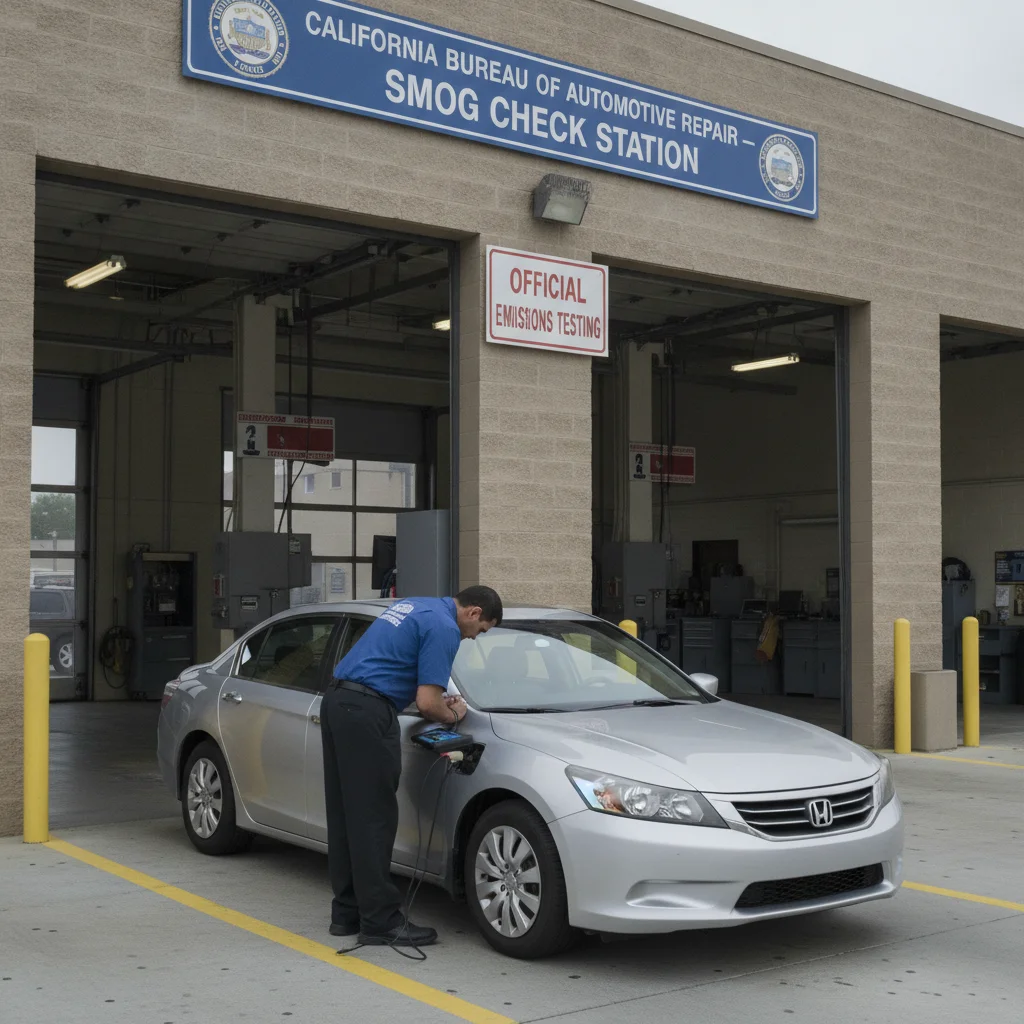
- Emissions Test Certificates: Required in many states to complete renewal. Emissions testing connects directly to your renewal eligibility in over 30 states, so keep passing certificates on file.
- Lien Release Documents: Once you pay off a car loan, the lender must release the lien. This document is essential for selling or re-titling the vehicle — and people routinely lose it.
- Bill of Sale: Your original purchase document. Useful for sales tax disputes, insurance claims, and resale documentation.
Digital Copies Are Reference Tools, Not Legal Substitutes
A photograph or scanned copy of your title is useful for reference purposes — confirming a VIN, checking the lienholder name, or sharing information remotely — but it is not legally valid for title transfers, lien releases, or sale transactions in any U.S. state. Always preserve original physical titles in a secure home location. Digital copies supplement your records; they do not replace them.
Grace Periods Vary Significantly by State
Some states offer a 30-day grace period after the registration expiration date before issuing fines, while others begin enforcement on the first day of expiration. A handful of states also add a percentage penalty to the renewal fee itself for each month overdue. Never assume a grace period exists — check your state DMV's specific policy and treat the expiration date as your firm deadline.
If you've owned the vehicle for years and realize you're missing some of these documents, start the recovery process now — not when you're urgently trying to sell. Ordering a duplicate title from a relaxed position takes the same time but creates far less stress.
Best Practices for Organizing Your Vehicle Records
Once you know what to keep, the next question is how to keep it. These practices are drawn from what I've seen work for car owners over the long haul — simple enough to actually maintain, thorough enough to protect you when something goes wrong.
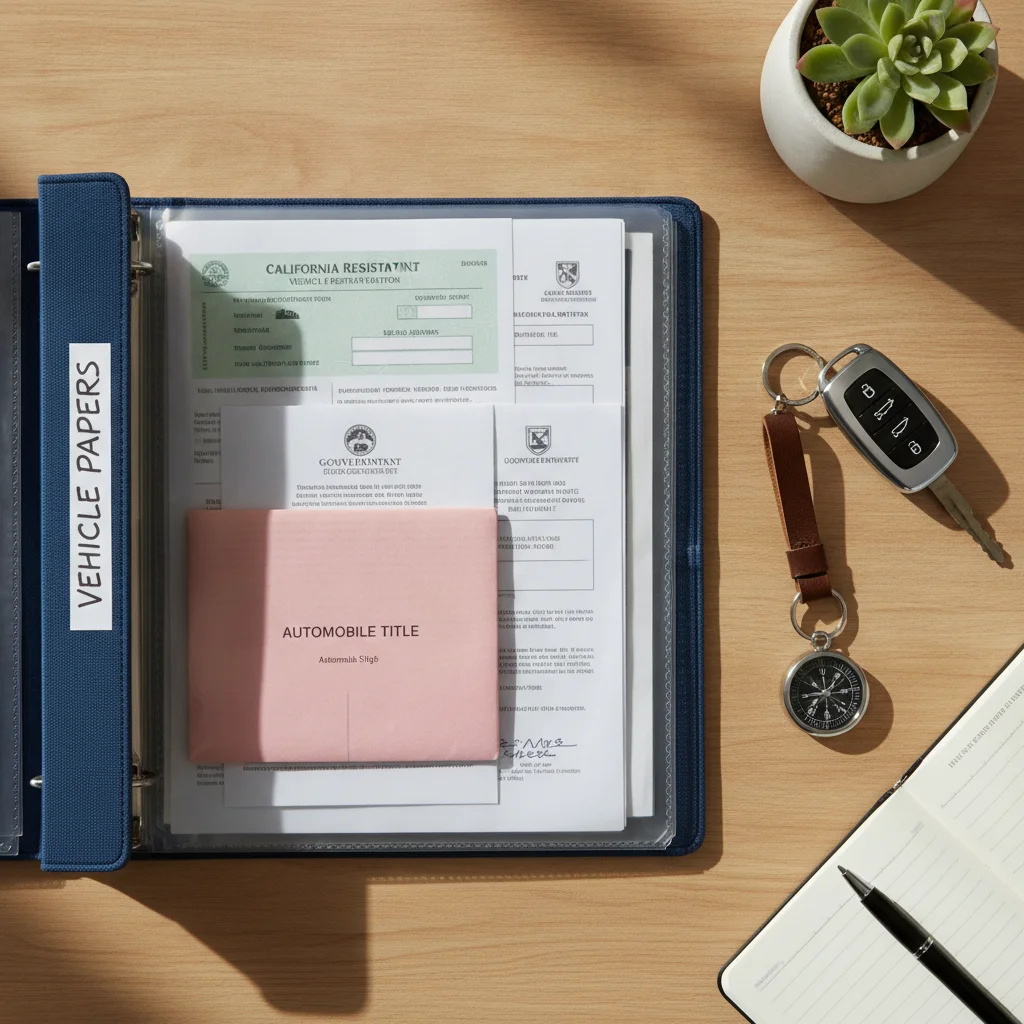
Create a dedicated physical home for all vehicle documents the day you buy a car.
Documents that don't have an assigned home get scattered — in glove boxes, kitchen junk drawers, and shoeboxes. When you need the title or a registration receipt urgently, a dedicated folder or binder eliminates the panic search and ensures nothing gets accidentally discarded. This is the single highest-leverage organizing habit you can build.
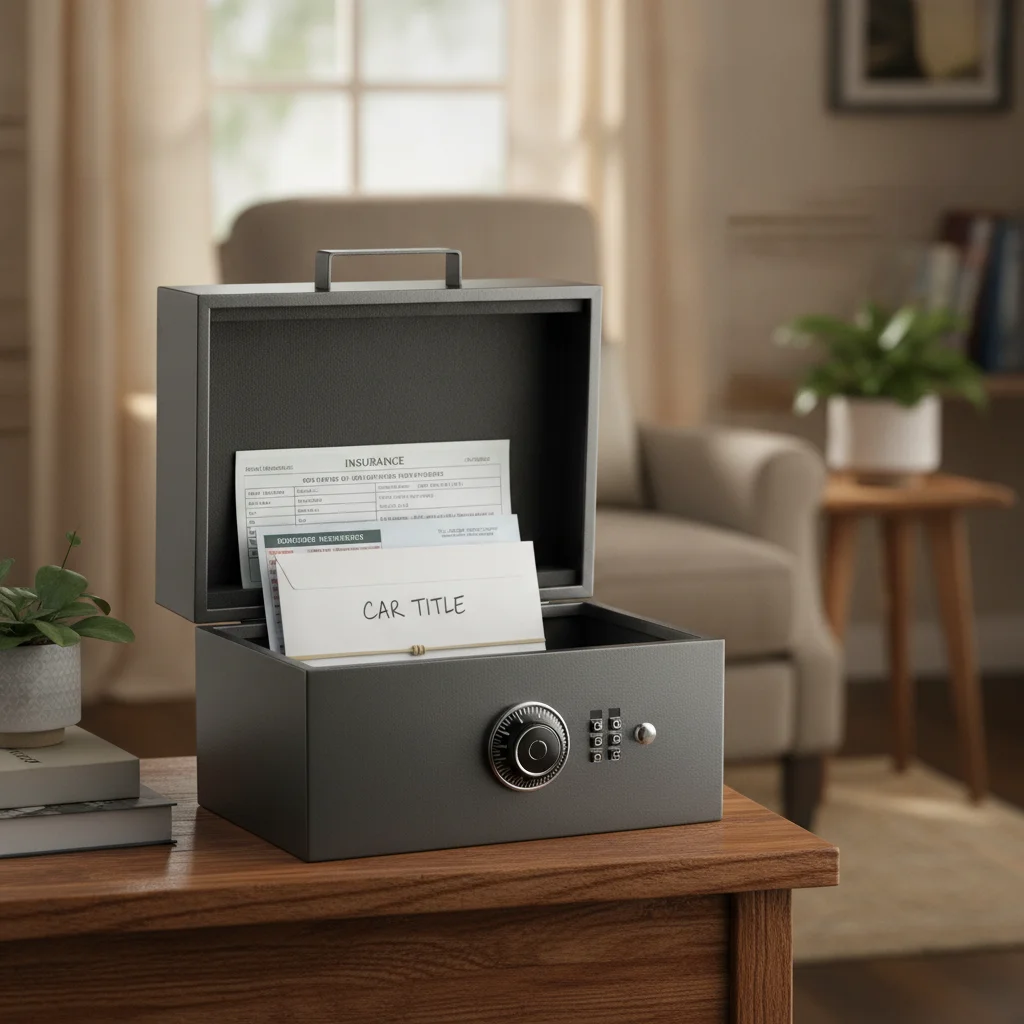
Store your vehicle title flat, in a dry, fireproof location — never folded in a glove box.
Titles can be rendered unusable by water damage, tearing along fold lines, or ink fading. More critically, a title stored in the vehicle is vulnerable to theft — and a stolen title in the wrong hands can be used in fraudulent sales schemes. The title lives at home, period.
Retain all registration payment receipts for a minimum of three years.
Registration fee disputes, insurance claims, and proof-of-compliance situations can arise long after the renewal year ends. A receipt showing you paid on time is your only defense against an erroneous late fee assessment or a compliance question from law enforcement. Three years covers most statutes of limitation for administrative disputes.
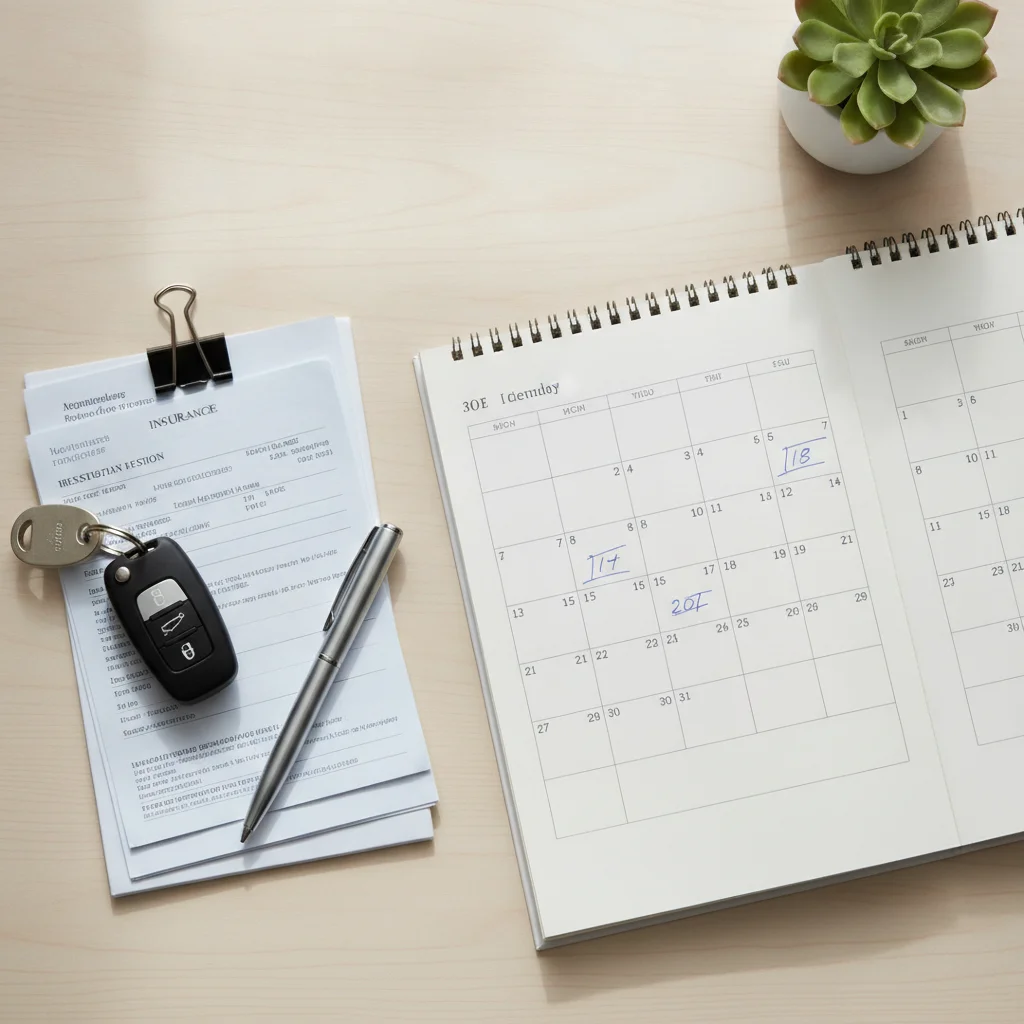
Set a recurring calendar reminder 45 days before your registration expiration date each year.
Forty-five days gives you enough runway to handle complications — a failed emissions test, a lost renewal notice, or a change of address update — without missing the deadline. Waiting until the notice arrives puts you at the mercy of mail delays and processing times.
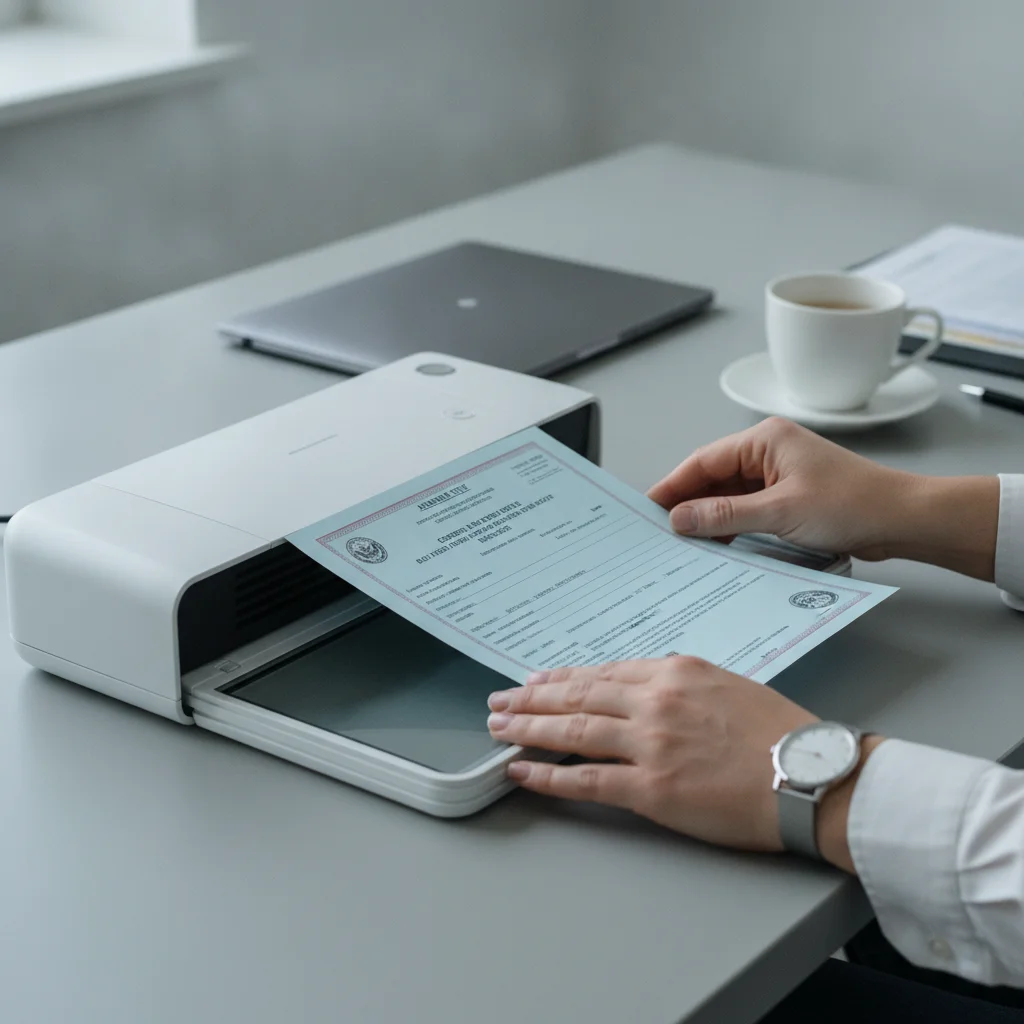
Photograph every document immediately upon receipt, before filing the original.
Physical documents can be destroyed, lost in a move, or simply misfiled. A digital photograph created the moment you receive a document ensures you always have a reference copy, can verify details quickly, and can share information with an insurance company or DMV remotely without locating the original.
Update your address with the DMV every time you move, before your next renewal cycle.
Renewal notices sent to an old address mean you may miss your deadline without ever knowing the clock is running. In most states, it's the owner's legal responsibility to maintain a current address on file — and an expired registration due to a missed notice is not a valid legal defense for driving unregistered.
One important nuance: the registration card that lives in your glove box should always be the current year's card. Many people layer new stickers on the plate but forget to swap the card — leaving an expired card in the vehicle that can confuse an officer during a stop. Set a simple annual ritual: when the new card arrives, put it in the glove box immediately and move the old one to your home file.
Building a Digital Backup System That Actually Works
Paper is irreplaceable for legal originals — titles must exist as physical documents — but digital backups of everything else serve as a powerful safety net. The goal isn't to eliminate paper; it's to ensure that a flood, fire, or simple disorganization doesn't leave you starting from scratch.
Use a Password Manager to Store DMV Login Credentials
Most state DMVs now offer online portals for renewals, address updates, and record access. Storing your DMV account login in a password manager means you can access your records from anywhere — which is particularly useful if a renewal notice is lost in the mail and you need to pull up your expiration date quickly. Set up your state portal account before you need it urgently.
Label Folders by Vehicle, Not by Document Type
If you own or have owned multiple vehicles, organizing by vehicle first — then by document type within each folder — prevents dangerous cross-filing. A lien release mistakenly placed in the wrong vehicle's folder is effectively lost when you need it. Use the vehicle's year, make, and last four of the VIN as your folder label for foolproof identification.
A practical digital filing system for vehicle records looks like this:
- Scan or photograph every document when you first receive it. Don't wait. A phone photo is better than nothing; a flatbed scan is better for legibility.
- Store files in a cloud service (Google Drive, iCloud, Dropbox) in a clearly labeled folder:
VehicleRecords >. Subfolders for Registration, Title, Tax, and Emissions keep things findable. - Name files descriptively:
2024_RegistrationRenewal_Paid.pdfis infinitely more useful thanscan001.pdfthree years from now. - Set access from your phone. If you're ever pulled over and can't find the physical card, a digital copy may help an officer verify your record while you locate the original — though it is not a legal substitute in most states.
- Back up annually each time you renew. Delete the prior year's renewal confirmation to keep the folder clean.
$15–$85
Duplicate title fee range by state
State DMV fee schedules nationwide show replacement title costs averaging $26, with outliers reaching $85 in certain jurisdictions.
30+ states
States requiring emissions testing for renewal
The EPA and state environmental agencies report that over 30 states operate emissions inspection programs that gate registration renewal approval.
$200+
Maximum late registration fine in some states
Traffic enforcement data shows expired registration fines exceed $200 in several states when compounded with vehicle code violation charges.
2–6 weeks
Typical duplicate title processing time
Most state DMVs process duplicate title applications in 2–6 weeks by mail, with expedited in-person processing available in some jurisdictions for additional fees.
For the title specifically: photograph or scan it for reference, but understand clearly that photo copies are not legally valid for transfers or lien releases. Keep that original somewhere dry, flat, and fireproof — a home safe or fireproof document box is worth the $30–$50 investment if you own a vehicle.
Tracking Deadlines So You Never Pay a Late Fee Again
Late fees are the most preventable registration cost there is — yet they're also among the most common. The reason is simple: renewal notices often arrive during busy stretches of the year, get set aside, and get forgotten. Here's how to take the friction out of staying current.
It's also worth noting that your fee amount can change year to year. Factors including your vehicle's depreciated value, local transportation levies, and state legislative adjustments can all shift what you owe. Our article on what changes each year at renewal time breaks down exactly which variables affect your bill. When your renewal notice arrives, compare the fee to last year's receipt before paying — billing errors do occur, and catching one before payment is far easier than disputing a charge after the fact.
Digital Copies Are Reference Tools, Not Legal Substitutes
A photograph or scanned copy of your title is useful for reference purposes — confirming a VIN, checking the lienholder name, or sharing information remotely — but it is not legally valid for title transfers, lien releases, or sale transactions in any U.S. state. Always preserve original physical titles in a secure home location. Digital copies supplement your records; they do not replace them.
Grace Periods Vary Significantly by State
Some states offer a 30-day grace period after the registration expiration date before issuing fines, while others begin enforcement on the first day of expiration. A handful of states also add a percentage penalty to the renewal fee itself for each month overdue. Never assume a grace period exists — check your state DMV's specific policy and treat the expiration date as your firm deadline.
How Good Records Pay Off When You Sell
Every document you've filed away during ownership becomes a selling asset the day you decide to move on. Buyers — especially private-party buyers — are deeply sensitive to paperwork gaps. A seller who hands over a clean title, a complete registration history, and tax receipts from purchase signals trustworthiness in a way that no sales pitch can replicate.

The title is the single most important document at the point of sale. Errors on a title — even small ones — can make it legally unusable for transfer. Our guide on paperwork errors that void a title walks through the most common mistakes and how to avoid them. If you've kept your title stored flat in a dry location as recommended, you're already ahead of most sellers.
Beyond the title, a complete registration history serves as indirect proof that the vehicle was legally on the road every year — not sitting unregistered in someone's driveway after an accident or mechanical failure. Combined with a documented service history (see our companion article on keeping your service records and why it pays off), organized ownership records are one of the most cost-effective things you can do to protect resale value.
“The biggest hidden cost in car ownership isn't mechanical — it's administrative neglect. Buyers walk away from cars when the paperwork is messy, and sellers lose money because of documents they should have kept for years.”
— Chip Hanlon, Automotive transaction consultant and former dealership finance manager
Special Situations That Require Extra Documentation
Beyond the annual registration cycle, a handful of ownership events generate documents that are easy to lose in the moment but critical to have later. Flag these situations and make filing a deliberate step in each process.
Moving to a New State
When you relocate, most states give you 30–90 days to re-register your vehicle locally. You'll need your current out-of-state title, prior registration, proof of insurance, and often a vehicle identification number (VIN) verification. Keep a dedicated subfolder for the transfer process, including any temporary operating permits issued during the transition.
Paying Off a Car Loan
When your final payment clears, your lender is legally obligated to send you a lien release and — in some states — a clean title. Follow up within 30 days if you haven't received these documents. File the lien release immediately; it's required for every future title transfer and some states require it for registration renewals as well.
Inheriting or Gifting a Vehicle
Title transfers for gifts and inheritance involve paperwork that varies significantly by state, but they universally require an original title without errors or corrections. If you're gifting a vehicle, consult the paperwork and title requirements for your state before attempting to sign anything over.
Purchasing an Older or Rebuilt Vehicle
Salvage titles, rebuilt titles, and bonded titles come with additional documentation requirements that must be preserved throughout ownership. These documents directly affect insurability, registration eligibility, and resale — treat them as your most important papers, not an afterthought.
Use a Password Manager to Store DMV Login Credentials
Most state DMVs now offer online portals for renewals, address updates, and record access. Storing your DMV account login in a password manager means you can access your records from anywhere — which is particularly useful if a renewal notice is lost in the mail and you need to pull up your expiration date quickly. Set up your state portal account before you need it urgently.
Label Folders by Vehicle, Not by Document Type
If you own or have owned multiple vehicles, organizing by vehicle first — then by document type within each folder — prevents dangerous cross-filing. A lien release mistakenly placed in the wrong vehicle's folder is effectively lost when you need it. Use the vehicle's year, make, and last four of the VIN as your folder label for foolproof identification.
A Simple Annual Records Audit to Stay on Top of Everything
The most sustainable record-keeping systems aren't complex — they're regular. Once a year, at renewal time, spend 15 minutes auditing your vehicle records against a simple checklist. This single habit prevents the slow accumulation of gaps that turns into a real problem when you need documents urgently.
Your Annual Vehicle Records Checklist
| Document | Where It Should Be | Action If Missing |
|---|---|---|
| Certificate of Title | Home safe or fireproof box | Apply for duplicate at DMV immediately |
| Current Registration Card | Vehicle glove box | Request replacement from DMV |
| Last 3 Years' Renewal Receipts | Home file or digital folder | Print from DMV online portal if available |
| Sales Tax Receipt | Home file (permanent) | Request copy from DMV or dealer |
| Lien Release (if applicable) | Home safe or fireproof box | Contact prior lender for duplicate |
| Emissions Certificates | Home file — last 2 years | Testing station may reprint; DMV has records |
| Bill of Sale | Home file (permanent) | Contact dealer; for private sales, limited recourse |
If you find gaps during this audit, address them now. The process of recovering lost documents is always easier when there's no deadline pressure. Think of the annual audit as a 15-minute investment that buys you months of peace of mind — and potentially hundreds of dollars in avoided fees and complications down the road.

All claims are backed by peer-reviewed research. Sources on request.