Key Takeaways
Summary
22 items · 30–60 minutes
Why Your MPG Dropped — and How to Find Out
When your fuel economy drops noticeably, the natural reaction is either to shrug it off or assume something expensive is wrong. The reality is usually somewhere between those two extremes. A sudden MPG decline almost always has a specific cause — and most of those causes are well within the reach of a careful, methodical driver to diagnose at home before spending a dollar at a shop.
The key word is systematic. The biggest mistake most drivers make is guessing — replacing one thing, seeing no improvement, and then feeling stuck. This checklist is designed to move you through the most common culprits in a logical order, from the simplest and cheapest checks to the more technical investigations. By the time you've worked through it, you'll either have found the problem or have enough information to hand a mechanic a precise shortlist rather than an open-ended complaint.
Before you start, it's worth understanding that not every MPG decline signals a mechanical problem. Seasonal changes, driving pattern shifts, and even fuel blend variations at the pump can all move the needle. See our companion guide on how cold and heat change your MPG for a sense of how much weather alone can account for. And if you're not yet tracking your fuel economy in a structured way, tools and methods for accurate MPG tracking will help you get a reliable baseline before you diagnose anything.
That said — let's get to work.
Start Here: Establish a Real Baseline
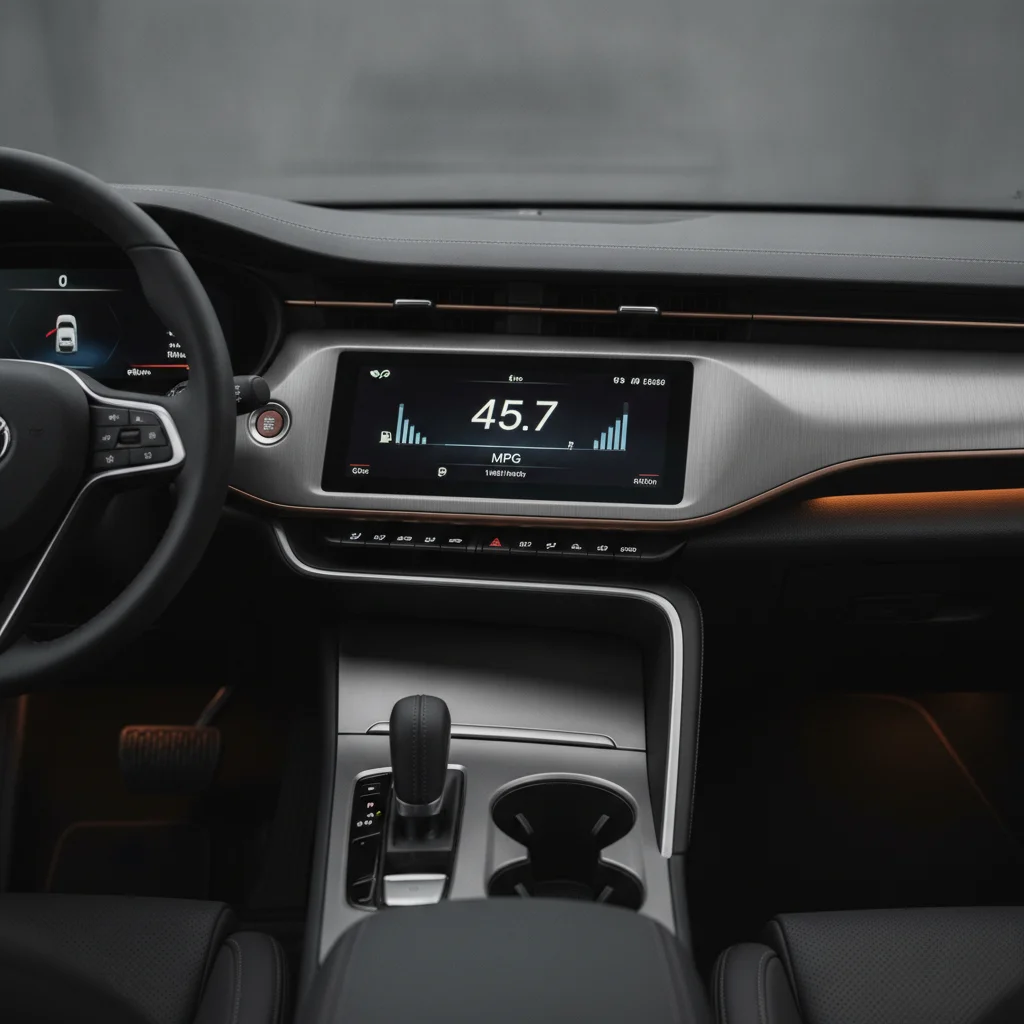
Your vehicle's built-in fuel economy display is a useful reference point, but it's not a precise measurement instrument. For a reliable diagnosis, you need a manual calculation: fill up completely, reset the trip odometer, drive normally for a full tank, fill up again, and divide the miles driven by the gallons it took to refill. Do this across two or three consecutive tanks to smooth out single-tank variation.
That number is your working baseline. Compare it against your historical fill-up data if you have it, or against the EPA combined estimate for your vehicle as a rough reference point. (Keep in mind that real-world MPG typically runs below the EPA sticker — if you're not sure why, why your MPG is lower than the EPA sticker says has the full explanation.) What you're looking for here is a meaningful departure from your own recent norm — not a comparison to an idealized number.
One Tank Is Never Enough Data
Don't panic — or dismiss — an MPG reading based on a single tank. Fuel station pump calibration, how fully you fill the tank, recent driving conditions, and even the ethanol content of that specific batch of fuel can create legitimate single-tank variation of 5–10%. Confirm the drop persists across at least two to three consecutive tanks before investing time in deeper diagnosis.
Once you have a confirmed, consistent MPG reading that's clearly lower than your recent norm, you're ready to start working through the checklist below. Think of this audit as moving from the outside of the car in — tires first, then engine maintenance items, then sensors and fuel systems.
The Checklist: Work Through These Systematically
The items below are grouped into logical categories. Work through each group in order rather than jumping around — the early checks are the most common causes and the fastest to resolve. Don't skip the baseline group even if you're confident the drop is real; confirming your measurement method matters.
Establish a Baseline
Check Tires First
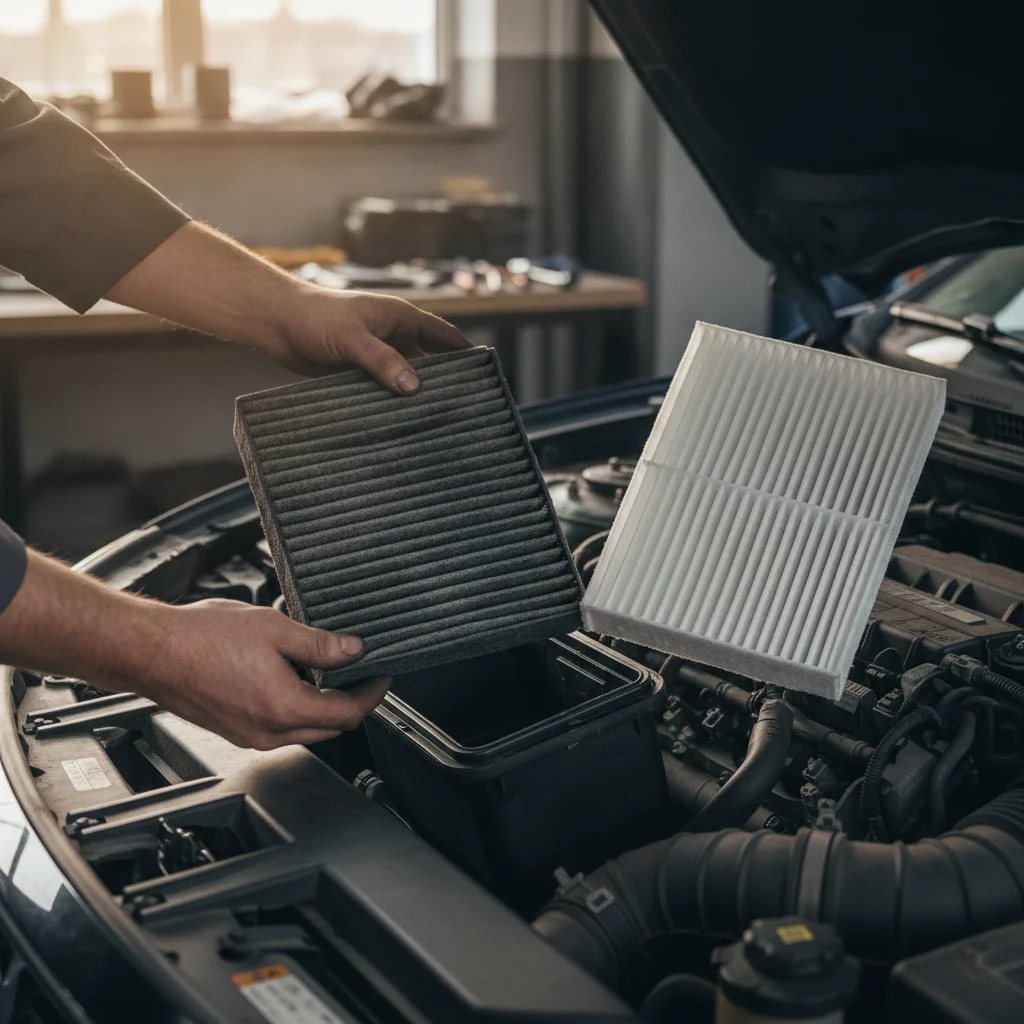
Inspect Engine Maintenance Items
Scan for Fault Codes
Evaluate Driving Conditions and Habits
Investigate Fuel Quality and System Issues
Don't Ignore a Check Engine Light
A glowing check engine light means your vehicle's ECU has logged at least one fault code that's actively affecting engine management. Running a vehicle with an undiagnosed fault can turn a minor efficiency problem into a catalytic converter failure or engine damage. Scan the codes before assuming the drop is minor, even if the car feels and drives normally.
Wrong Fuel Grade Can Quietly Cost You
Using regular unleaded in a vehicle that requires premium causes the engine's knock sensors to retard ignition timing, reducing both power and efficiency. If your owner's manual says 'required premium' — not just 'recommended' — consistently using regular can cause a noticeable MPG drop alongside long-term engine wear.
Tools You'll Need
Most of these checks require only a few basic items you may already own. The one investment worth making if you don't have it yet is an OBD-II adapter — either a standalone scanner or a Bluetooth dongle that pairs with a smartphone app. For around $20–$40, it gives you direct access to your vehicle's diagnostic system and is genuinely the most powerful tool in this audit for anything beyond basic maintenance items.
Quality Tire Pressure Gauge
Accurately measures tire PSI to identify underinflation that saps fuel economy.
OBD-II Scanner or Bluetooth OBD Adapter
Reads stored and pending fault codes and live fuel trim data to pinpoint engine efficiency issues.
OBD Live-Data App (e.g., Torque Pro, OBD Fusion)
Pairs with a Bluetooth OBD adapter to monitor real-time fuel trim, O2 sensor readings, and MAF values.
Flashlight or Shop Light
Helps you inspect the air filter and examine engine bay components clearly.
Vehicle Owner's Manual
Confirms correct oil viscosity, spark plug type, tire pressure specs, and maintenance intervals for your exact vehicle.
Maintenance Log or App
Tracks when filters, plugs, and fluids were last serviced so you can identify what's overdue.
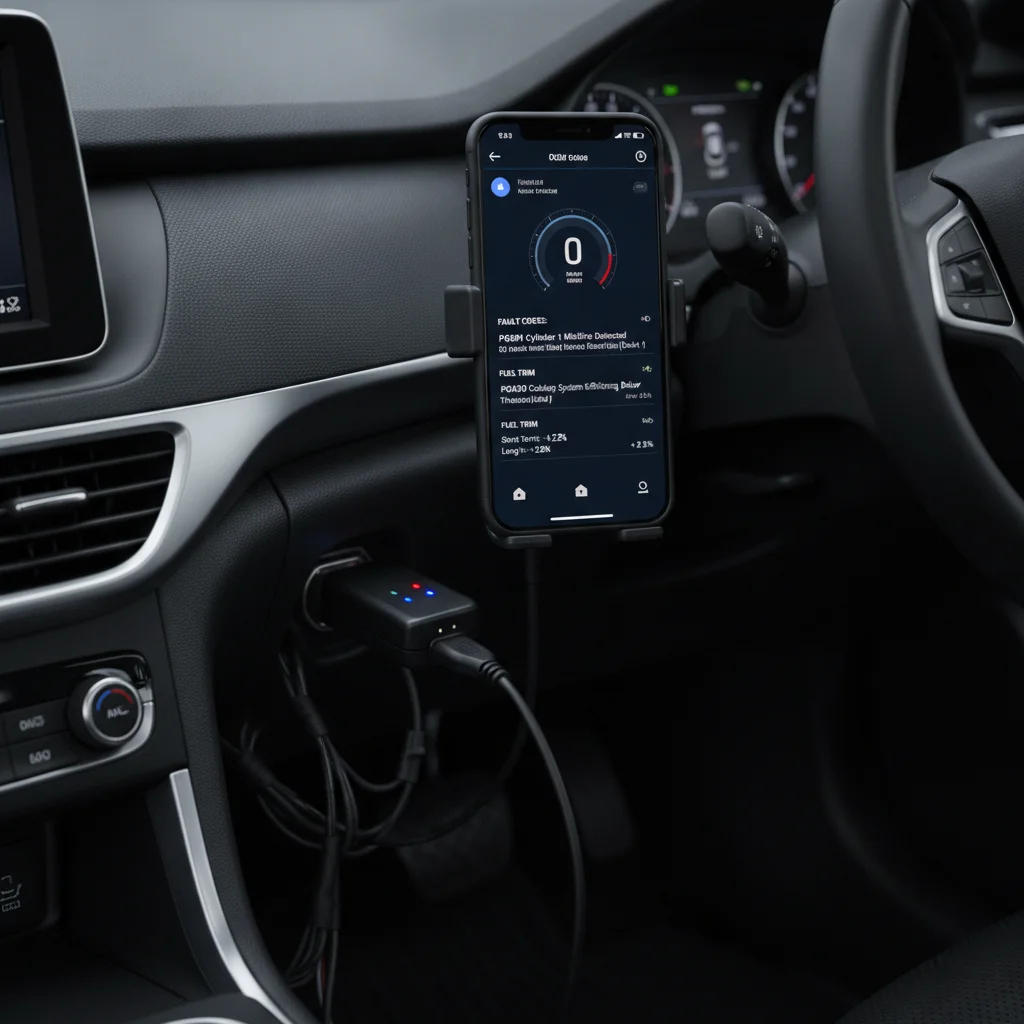
For the fuel trim and oxygen sensor checks, a live-data OBD app like Torque Pro or OBD Fusion adds meaningful depth to what a basic code scanner can tell you. These apps display real-time sensor values that can help you spot a lean or rich condition even when no fault code has been formally triggered yet.
The Most Overlooked Causes (and What Makes Them Easy to Miss)
Once drivers have checked tires and replaced the air filter, they often assume they've covered the basics. But two culprits consistently slip through that first pass: oxygen sensors and driving habit drift.
Oxygen Sensor Degradation
A failing O2 sensor doesn't always trigger a check engine light right away. In its early stages, it sends slightly inaccurate readings to the engine control unit, causing the ECU to add more fuel than the engine actually needs. The result is a rich-running condition — you can sometimes detect this by a faint fuel smell from the exhaust, but often there's no obvious symptom at all. Your OBD scanner's fuel trim readings will tell you what your nose can't: if long-term fuel trim is consistently negative (meaning the ECU is pulling fuel back), a degraded O2 sensor is a strong candidate.
Habit Drift
This one is uncomfortable to confront, but it's surprisingly common. Driving habits shift gradually — we accelerate a little harder, brake a little later, let the car idle longer at pick-up lines or drive-throughs — and we don't notice because the change is incremental. Driving habits that hurt fuel economy most ranks the behaviors that drain MPG by actual impact — it's worth an honest read to see if any apply to your recent driving.
If your audit points to maintenance items that are overdue, maintenance tasks with the biggest fuel economy impact will help you prioritize which services are actually worth your money at the pump.
When to Hand It to a Professional
This checklist will resolve the problem for most drivers. But there are a few situations where a shop visit is the right next step:
- Fault codes you can't interpret or clear — Some codes require specialized testing equipment or a manufacturer-specific scan tool to fully diagnose.
- Fuel injector issues — Testing injectors properly requires a flow bench or professional cleaning equipment. A general-purpose mechanic can usually handle this, but it's not a DIY job without specialized tools.
- Persistent rich or lean codes after basic maintenance — If you've replaced filters, plugs, and confirmed good tire pressure but fuel trim readings are still way off, a mechanic needs to pressure-test the fuel system and check for vacuum leaks with a smoke machine.
- MPG drop accompanied by other symptoms — Hard starting, rough idling, hesitation under acceleration, or a noticeable loss of power alongside reduced MPG suggests an engine management or mechanical issue that's moved beyond routine maintenance territory.
Bringing a mechanic your OBD fault codes, your fuel trim readings, and your documented MPG history gives them an enormous head start. You're not walking in with a vague complaint — you're walking in with data. That typically means a faster diagnosis and a lower labor bill. The audit you've done isn't wasted effort even when the fix ends up happening at a shop.

All claims are backed by peer-reviewed research. Sources on request.