Key Takeaways
Why Suspension Problems Are So Easy to Miss
Your suspension system is one of the hardest-working assemblies on your vehicle, absorbing thousands of impacts every mile while keeping your tires in contact with the road. It's also one of the easiest systems to ignore — because it degrades so slowly that your brain simply recalibrates to the new normal.
That squeak you've been hearing for three months? You've stopped noticing it. The car that now requires a little extra steering input on the highway? You've adjusted unconsciously. This gradual accommodation is exactly why suspension problems are so frequently dismissed as "just how the car drives now" — until something catastrophic forces the issue.
The cost difference between catching a failing ball joint early versus waiting until it separates can be the difference between a $250 part swap and a $2,000 emergency tow plus full lower control arm replacement. In some cases, a separated ball joint causes loss of vehicle control entirely — making this a safety issue, not just a financial one.
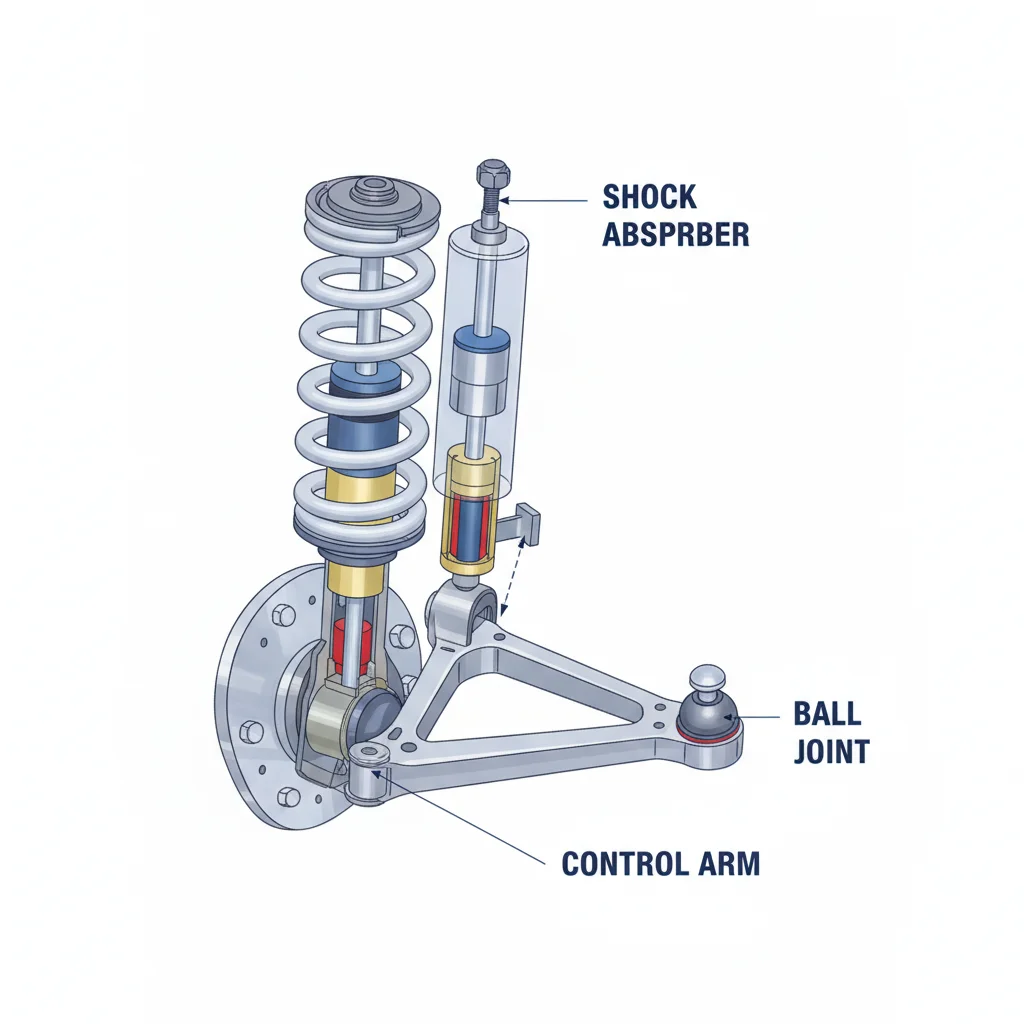
This article identifies the most common mistakes drivers make when interpreting suspension symptoms — and gives you the tools to act before a manageable repair becomes a crisis. For a broader look at vehicle warning signs that go beyond dashboard lights, see our guide to non-dashboard warning signals.
The Mistakes Drivers Make With Suspension Symptoms
Each of the following errors represents a pattern I've seen repeatedly in the shop — a driver who noticed something, rationalized it away, and returned six months later with a significantly larger bill. Learn to recognize these thought traps before they cost you.
Attributing a bouncy or floaty ride to 'road conditions' rather than worn shocks or struts.
Why it happens: Shock absorber degradation is so gradual that drivers adapt to the worsening ride quality without realizing it. What feels like a bumpy road is often the car failing to control wheel rebound.
Ignoring a clunking or knocking noise over bumps because the car 'still drives fine.'
Why it happens: Drivers naturally associate 'drivability' with safety. If the car steers and stops, they assume the noise is cosmetic — perhaps a loose heat shield or something trivial.
Dismissing uneven tire wear as a tire brand or quality issue rather than a suspension alignment problem.
Why it happens: Tires are visible and easy to blame. Drivers often rotate or replace tires repeatedly without addressing the underlying suspension geometry problem causing the wear pattern.
Assuming that a car pulling to one side is just a tire pressure or brake issue.
Why it happens: Tire pressure imbalance and brake caliper sticking are common causes of pulling, so drivers check those first — and when they find nothing obvious, they stop investigating.
Treating steering wheel vibration at highway speed as purely a wheel balance problem.
Why it happens: Wheel balance is the standard first fix for highway vibration, and it works often enough that drivers assume it's always the answer. A rebalance provides temporary relief even when worn tie rods or a failing wheel bearing is the real cause.
Skipping a post-impact inspection after hitting a large pothole or curb.
Why it happens: If the car continues to drive without obvious drama immediately after impact, drivers assume nothing was damaged. Suspension damage from impact often appears gradually over the following days or weeks.
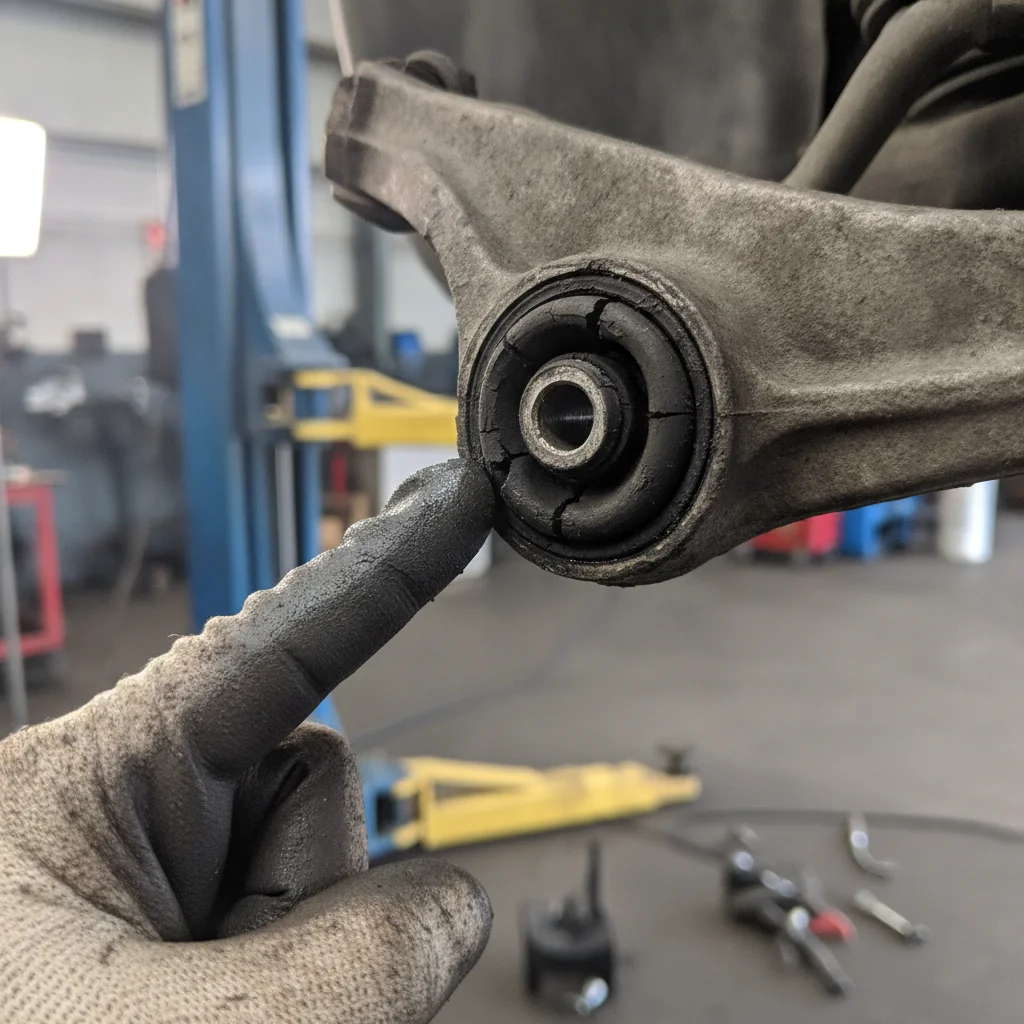
It's also worth noting that suspension problems rarely travel alone. A worn strut assembly affects steering geometry, which accelerates tire wear, which increases braking distances. One neglected component creates a cascade. That's why some suspension symptoms qualify as genuine driving emergencies — not inconveniences to schedule around.
Don't Confuse Suspension and Brake Symptoms
Pulling to one side, vibration, and noise on deceleration can each be caused by either suspension wear or brake system failure — or both simultaneously. Diagnosing the wrong system first wastes time and money. If you're experiencing pulling combined with a pulsating brake pedal, read <a href="/maintenance-and-ownership/vehicle-maintenance/warning-signs/brake-feel-has-changed-whats-normal-and-whats-a-red-flag">our brake diagnosis guide</a> alongside this article before assuming it's purely a suspension issue.
Cheap Shocks Are a False Economy
Budget-tier replacement shocks and struts from unknown brands may cost 40–60% less than OEM or quality aftermarket parts, but they typically wear out in 20,000–30,000 miles versus 50,000–80,000 miles for quality parts. You'll pay installation labor twice within the same ownership period. Choose a reputable brand and install both sides of an axle simultaneously.
Suspension Problems Accelerate Brake Wear
A worn shock absorber that allows excessive wheel bounce effectively reduces your tire-to-road contact during braking, increasing stopping distances by as much as 20% in some test scenarios. This means degraded suspension doesn't just make the ride uncomfortable — it actively compromises your ability to stop in an emergency.
Reading the Noise: What Different Sounds Actually Mean
Sound is your suspension system's primary language. Learning to translate it saves money. Here's a practical reference for what different noises typically indicate:
| Sound | When It Occurs | Most Likely Cause | Urgency |
|---|---|---|---|
| Clunk or knock | Over bumps or dips | Worn sway bar end links or ball joints | High |
| Creaking or squeaking | Slow turns, parking lot speeds | Dry or cracked control arm bushings | Medium |
| Thud (single, heavy) | Large pothole or dip | Bottomed-out shock absorber | Medium-High |
| Rattling (loose) | Rough road or acceleration | Loose heat shield or worn strut mount | Medium |
| Grinding (metallic) | Turning + bumps | Failed CV joint or worn wheel bearing | Very High |
| Popping (sharp) | Full-lock turns | Worn CV axle or boot | High |
A few of these — particularly the grinding and popping sounds — overlap with symptoms you'd find in the braking and drivetrain systems. If you're hearing grinding while turning, compare notes with our brake feel diagnosis guide to rule out caliper or rotor involvement before assuming it's suspension alone.
$3,000+
Average cost of deferred suspension repair
AAA estimates that drivers who delay suspension and steering repairs pay an average of three times more than those who address issues at first diagnosis.
1 in 3
Vehicles with unsafe suspension components
A CAR CARE COUNCIL vehicle health inspection study found that approximately one-third of vehicles inspected had worn or damaged suspension components needing immediate attention.
5%
Fuel economy loss from misalignment
The U.S. Department of Energy estimates that a vehicle with significant wheel misalignment — often caused by suspension wear — can experience up to a 5% reduction in fuel efficiency.
43,000
Annual crashes linked to tire/suspension failure
NHTSA data indicates that tens of thousands of U.S. crashes each year involve tire and suspension-related failures as contributing factors.
Tire Wear Patterns as a Diagnostic Tool
Tires are the most honest reporters in your vehicle. Their wear patterns reveal alignment problems, worn components, and inflation issues that your seat simply can't communicate — but only if you know how to read them.
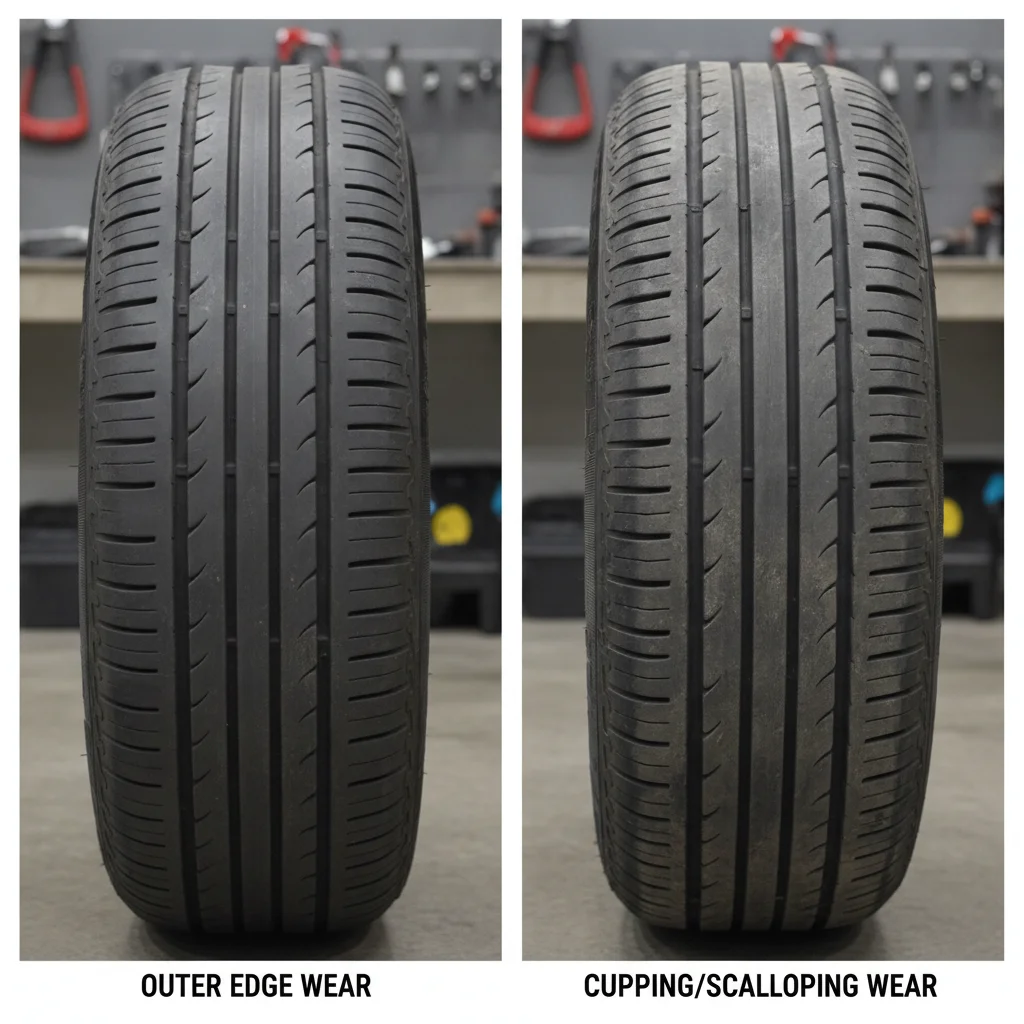
Here's what to look for when you crouch down beside each tire:
- Wear on one shoulder only (inside or outside edge): Classic camber misalignment. Often caused by a bent strut, worn control arm bushing, or a collapsed spring that has altered the geometry. This is not a tire rotation fix — it's a suspension fix.
- Cupping or scalloping (wavy, uneven patches around the circumference): This pattern — where the tread dips and rises in a rhythmic pattern — is the textbook signature of a worn shock absorber or strut that can no longer control wheel bounce. The tire is literally hopping along the road surface.
- Feathering (smooth on one side of each tread block, sharp on the other): Points to a toe alignment issue, which can be caused by worn tie rod ends or degraded steering rack bushings.
- Rapid center wear: Usually overinflation, but in combination with other symptoms, can indicate that a strut is too stiff and no longer absorbing impact properly.
Check each tire individually, not just a cursory glance during a fill-up. Run your hand across the full tread width. Irregular wear you can feel before you can clearly see it is your earliest possible warning. For a deeper walk-through of what to feel for before you even buy a vehicle, this guide to suspension feel from the driver's seat is an excellent complement.
Ball Joint Failure Is a Loss-of-Control Event
A worn ball joint doesn't gradually fail — it can separate suddenly and completely, causing the wheel to fold under the vehicle at any speed. This is not a 'monitor it' situation. If a technician identifies a ball joint with measurable play or a torn boot allowing contamination, it should be replaced before the vehicle is driven further. The repair cost ($150–$400 per joint) is trivial compared to the alternative.
Always Align After Suspension Repairs
Replacing struts, control arms, tie rods, or any geometry-affecting component without a four-wheel alignment immediately afterward is a significant mistake. Even new parts installed correctly will cause rapid, uneven tire wear and compromised handling if alignment angles are not corrected. Budget alignment into every suspension repair — it is not optional.
When to Inspect Immediately vs. Schedule Soon
Not every suspension symptom demands that you pull over right now. But some absolutely do. Here's a practical triage framework based on urgency:
- Stop driving — inspect immediately
- Vehicle pulls severely to one side without input. Steering wheel has significant play or feels loose. A loud bang occurred followed by new handling symptoms. The car sags visibly on one corner. These symptoms suggest structural failure or component separation — conditions where driving further risks loss of control.
- Schedule within 48–72 hours
- Persistent clunking over bumps. New vibration through the steering wheel at highway speed. Nose-dives heavily during moderate braking. Car takes multiple bounces to settle after a dip. These indicate worn components that have not yet failed completely but are deteriorating.
- Address at next service appointment (within 2–4 weeks)
- Mild creaking at low speed. Very slight pulling that corrects easily. Tire wear that appears uneven but is still within safe depth. These deserve attention and should not be deferred indefinitely, but they don't represent immediate safety risks.
The mistake most drivers make is treating the middle category like the last one. "Schedule within 48–72 hours" items tend to become emergency repairs if left another two months. Suspension components don't stabilize on their own — they continue to wear and often begin affecting adjacent components.
For issues that bleed into other systems — particularly if you're noticing delayed shifts or odd drivetrain behavior alongside your suspension symptoms — it's worth reviewing these transmission warning signs to ensure you're not dealing with two separate developing problems.
The Real Cost of Waiting: A Financial Perspective
Let's put concrete numbers to the "I'll get it looked at eventually" approach, because this is where the financial reality of deferred suspension maintenance becomes undeniable.
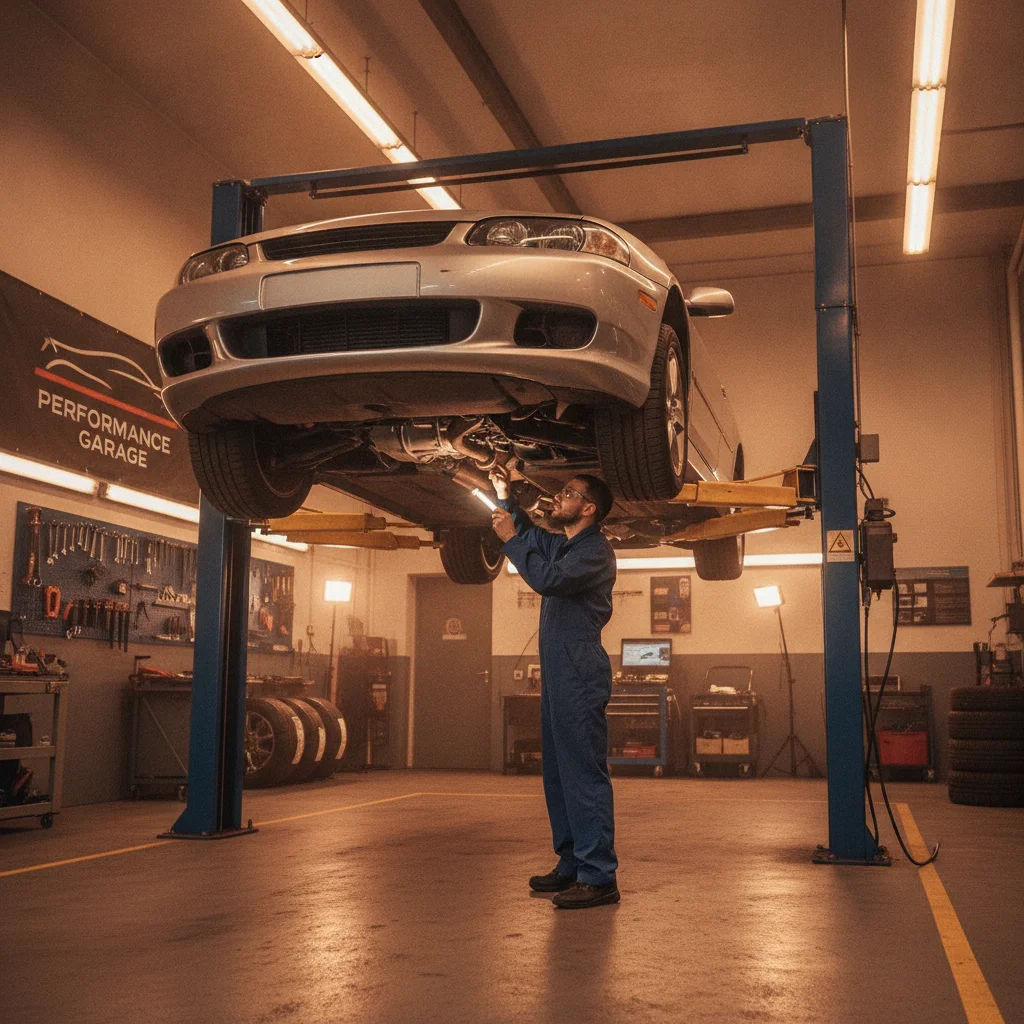
Consider a typical strut replacement scenario on a mid-size sedan:
- Caught early (strut worn but intact): Replace both front struts — approximately $450–$700 parts and labor, plus a $100 alignment. Total: $550–$800.
- Caught after strut fully fails and damages strut mount and spring: Replace struts, mounts, and springs — approximately $900–$1,400. Add premature tire replacement due to cupping: $400–$600. Add alignment: $100. Total: $1,400–$2,100.
- Caught after ball joint failure causes tire to fold under the car: Tow, ball joint, control arm (often damaged), wheel alignment, potential rim and tire replacement — $2,000–$3,500+.
The math is consistently the same: each stage of neglect roughly doubles the bill. And that's before factoring in the compounding effect of suspension misalignment on tire wear, fuel economy (misaligned vehicles can consume 3–5% more fuel), and brake wear caused by unpredictable handling.
Your suspension doesn't ask for much — periodic inspection, an alignment check every 12,000–15,000 miles, and your honest attention when something changes about how the car drives. Give it that, and it will give you predictable, safe, economical miles in return.
Ball Joint Failure Is a Loss-of-Control Event
A worn ball joint doesn't gradually fail — it can separate suddenly and completely, causing the wheel to fold under the vehicle at any speed. This is not a 'monitor it' situation. If a technician identifies a ball joint with measurable play or a torn boot allowing contamination, it should be replaced before the vehicle is driven further. The repair cost ($150–$400 per joint) is trivial compared to the alternative.
Always Align After Suspension Repairs
Replacing struts, control arms, tie rods, or any geometry-affecting component without a four-wheel alignment immediately afterward is a significant mistake. Even new parts installed correctly will cause rapid, uneven tire wear and compromised handling if alignment angles are not corrected. Budget alignment into every suspension repair — it is not optional.

All claims are backed by peer-reviewed research. Sources on request.