Key Takeaways
Why the Yellow Light Is Traffic Law's Most Misread Signal
Ask a hundred drivers what a yellow light means and most will say something like, "it means hurry up before it turns red." That answer is wrong — legally wrong — and it's the kind of assumption that generates citations, raises insurance rates, and contributes to some of the most dangerous intersection crashes on record.
The yellow signal has a precise legal definition in virtually every state, and that definition consistently points toward stopping, not accelerating. The problem is that decades of informal driving culture have replaced the legal standard with a more convenient interpretation. This article dismantles the most persistent myths about yellow lights, replaces them with what the law actually says, and explains what the real-world consequences are when drivers get it wrong.
Yellow-light behavior also intersects with broader right-of-way misunderstandings. If you're fuzzy on intersection rules in general, our piece on right-of-way rules most drivers misread at intersections gives useful context.
The Myths and the Legal Reality
Below are the most common assumptions drivers carry about yellow lights — each one checked against actual traffic statutes and enforcement realities. These aren't technicalities. They're the difference between a clean driving record and a citation that follows you to your next insurance renewal.
Myth
A yellow light legally means 'speed up to get through before it turns red.'
Fact
Virtually every state statute defines yellow as a warning to stop if it can be done safely — not a cue to accelerate.
The Uniform Vehicle Code, which forms the basis of traffic law in most states, defines the yellow signal as a warning that the signal is about to change to red and that drivers who can stop safely should do so. The operative word is warning — it's a deceleration cue, not a green-light extension.
Some states use language like "do not enter the intersection" when yellow is displayed if stopping is practicable. Others phrase it as "proceed with caution only if stopping would be unsafe." In neither case does the law authorize acceleration. The cultural assumption that yellow means "gun it" has no statutory basis — it's a habit that traffic courts regularly reject as a defense.
Myth
If the light is still yellow when I enter the intersection, I can't get a ticket.
Fact
You can still be cited if a reasonable driver in your position could have stopped safely before the intersection.
The legal standard isn't just about the color of the light at the moment your front bumper crosses the stop line. Officers and courts apply a reasonableness test: given your speed and distance when the light turned yellow, could you have stopped without creating a hazard?
If the answer is yes and you instead accelerated, you may be cited even if the light was technically still amber when you entered. This is how the "I beat the red" defense fails in traffic court — the violation can occur during the yellow phase based on driver behavior, not just the signal color at the exact moment of entry.
Myth
Yellow lights are too short for me to stop in time — the timing is designed to make violations inevitable.
Fact
Federal guidelines set minimum yellow-light durations based on approach speed, and properly timed signals give adequate stopping distance.
The Institute of Transportation Engineers (ITE) publishes guidelines for yellow-light timing that account for approach speed, intersection grade, and perception-reaction time. A signal on a 45 mph road should have a longer yellow phase than one on a 25 mph street. Most jurisdictions follow these guidelines for federally funded intersections.
Studies have shown that lengthening yellow phases by even one second reduces red-light violations significantly — which tells us the violations happening now aren't primarily due to timing traps. They're due to drivers choosing not to brake. If you feel consistently surprised by short yellows at a specific intersection, that's worth reporting to your local traffic engineering department — but it doesn't retroactively legalize proceeding when braking was feasible.
Myth
Running a yellow light doesn't affect my insurance because it's not a real violation.
Fact
A yellow-light citation is a moving violation in most states and can raise your insurance premium at renewal.
Insurance companies don't distinguish between "technically legal" violations and serious ones — they look at risk signals. A moving violation for failing to stop on yellow tells an underwriter that you make aggressive decisions at intersections. That's a statistically meaningful risk factor, particularly in combination with any prior claims history.
Premium surcharges for a single moving violation typically range from 10–25% depending on the carrier, state regulations, and your existing record. If the yellow-light incident involved an accident, the at-fault accident surcharge stacks on top of the violation surcharge — the combined impact on your annual premium can be substantial and may persist for three to five years depending on the state's lookback period.
Myth
Yellow-light rules are the same everywhere — what's legal in my state is legal anywhere I drive.
Fact
State statutes on yellow-light behavior vary meaningfully, and enforcement intensity and camera rules differ significantly across jurisdictions.
While the general principle — stop if you can, proceed only if stopping is unsafe — is broadly consistent, the specifics diverge. Some states have explicit statutory protection for drivers caught in the dilemma zone (too close to stop, not yet in the intersection). Others have no such provision. Camera enforcement is banned in several states and actively used in others. Penalty structures — fines, points, diversion programs — also vary.
A driver accustomed to lax enforcement at home may be surprised by automated ticketing in a state that runs camera programs at major intersections. The ticket arrives by mail, there's no officer to negotiate with, and contesting it requires either appearing in the jurisdiction or hiring local counsel. Traffic law differences across state lines is a topic worth reviewing before any significant road trip.
Myth
It's safer to speed through a yellow light than to brake hard and risk a rear-end collision.
Fact
While hard braking does carry rear-end risk, accelerating through a stale yellow statistically produces more severe crashes than controlled stopping.
The rear-end-collision-if-I-brake argument is real in some situations — following distance and traffic density matter. But it's often used to justify acceleration in scenarios where it doesn't actually apply. If traffic behind you is at a normal following distance, a smooth, firm brake application at a yellow light is what every driver behind you should anticipate and accommodate.
The crashes that occur when drivers accelerate through late yellows tend to be angle crashes — also called T-bone or broadside collisions — which are among the most dangerous types due to limited lateral protection in most vehicles. A rear-end collision at 15–20 mph is rarely fatal; a broadside at intersection speeds frequently is. The risk calculus does not favor acceleration as a safety measure in most real-world scenarios.
~800
Annual U.S. fatalities at signalized intersections from red-light running
According to the Insurance Institute for Highway Safety (IIHS), red-light running — including late-yellow-to-red entries — kills roughly 800 people per year in the U.S.
1 sec
Yellow phase extension that cuts violations significantly
Research published by the ITE found that adding just one second to a yellow light phase can reduce red-light violations at that intersection by up to 50%.
35%
Drivers who admit to accelerating on yellow
A national driving behavior survey cited by the AAA Foundation found that approximately 35% of drivers report intentionally speeding up when they see a yellow light.
10–25%
Typical insurance surcharge for a moving violation
Industry data from Quadrant Information Services shows that a single moving violation raises average annual auto insurance premiums by 10–25% at renewal.
How Yellow-Light Violations Are Actually Documented
One reason so many drivers feel confident bending yellow-light rules is that they assume no one is watching closely enough to prove anything. That assumption is increasingly outdated.
Red-Light and Intersection Cameras
Modern automated enforcement systems don't just capture red-light violations. Many are configured to log a vehicle's speed and position during the amber phase, then document whether the driver accelerated or decelerated. If a car enters the intersection after the light has turned red — or if the system determines the driver had sufficient distance to stop safely but chose not to — the camera may flag it as a violation regardless of the color at the moment of entry.
Officer Observation
A traffic officer positioned at or near an intersection can observe both the signal phase and a driver's speed response. Accelerating visibly as a light turns amber is exactly the kind of behavior that draws a stop. Officers are trained to note whether braking was attempted, and some departments specifically target intersection enforcement during high-accident periods.
Accident Reconstruction
If a collision occurs at an intersection, investigators will look at skid marks, vehicle speed estimates, and signal timing data — most modern traffic lights are networked and log phase changes with timestamps. If reconstruction shows you were still several car lengths back when the light turned yellow and you made no attempt to brake, that data can be used against you in both a traffic court proceeding and a civil liability case.
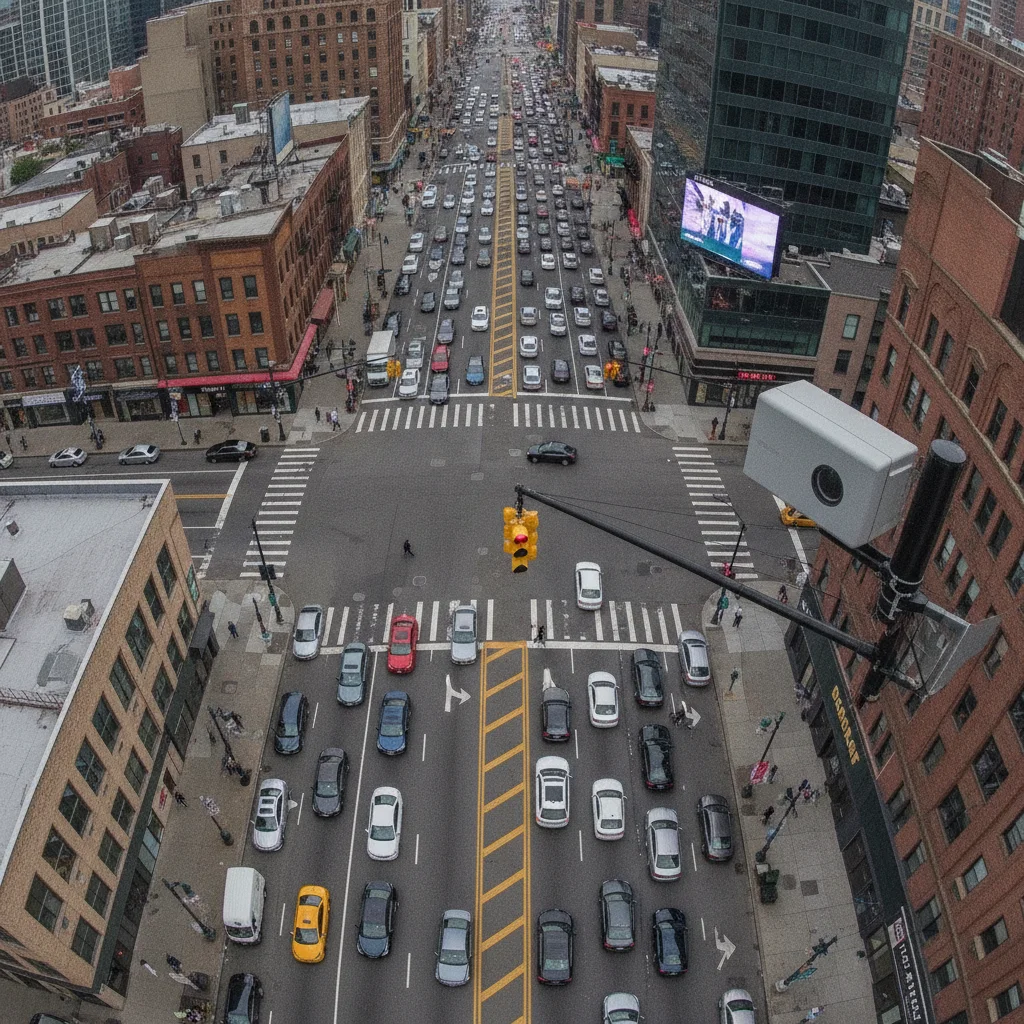
Camera Tickets Travel Across State Lines
If you receive an automated yellow- or red-light camera citation in another state and ignore it, the issuing state can report the unpaid violation to your home state's DMV. Depending on interstate compact agreements, this can result in license suspension or renewal holds at home. Don't assume an out-of-state camera ticket is safe to ignore.
Wet or Slippery Roads Change Your Stopping Calculations
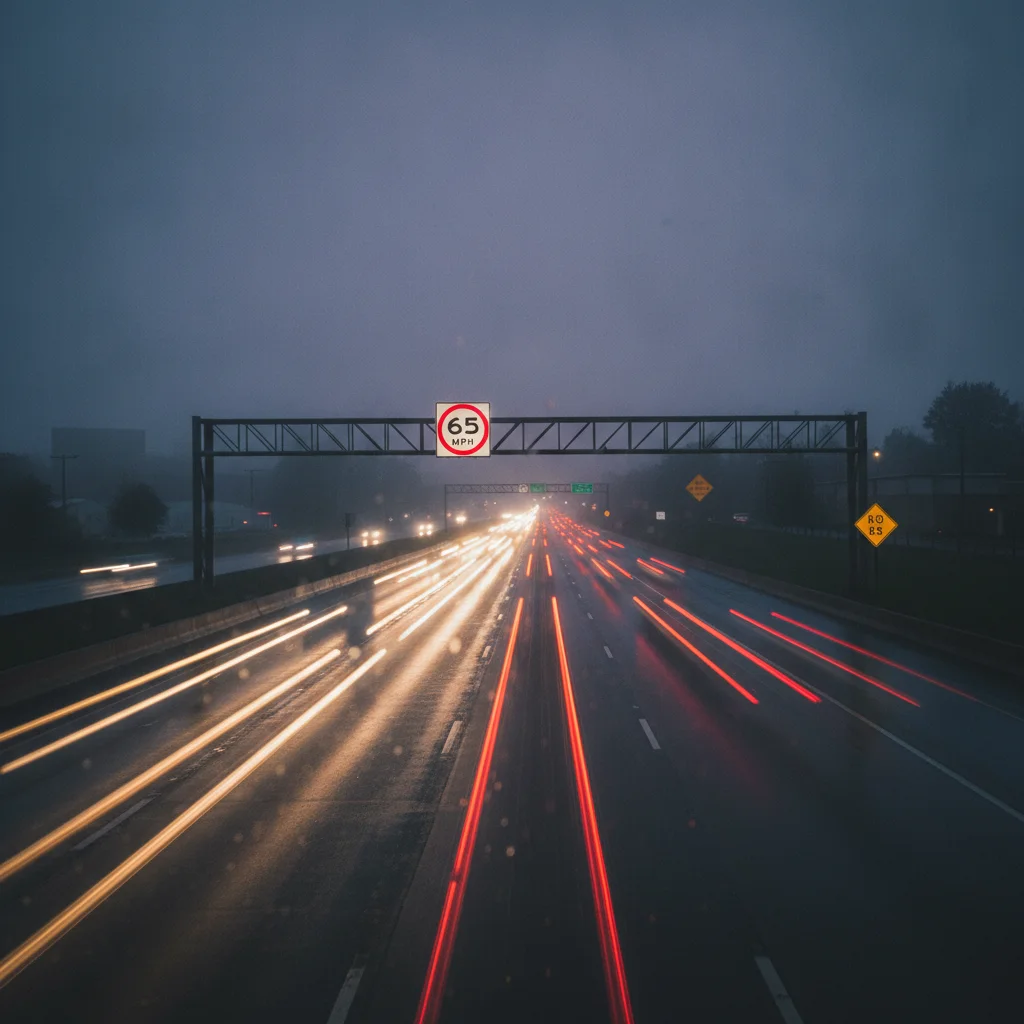
The 'I can stop in time' judgment that the law applies to dry pavement doesn't translate directly to wet, icy, or debris-covered roads. If conditions are poor, your effective stopping distance increases significantly — the legal standard of 'can you stop safely' becomes harder to meet at normal speeds, which means you should be braking earlier, not later, when a light turns yellow.
Yellow-light behavior connects directly to speed decisions. Understanding how speed interacts with stopping distance is critical — our guide on speed limit vs. safe speed explains why your speedometer reading at the moment a light turns yellow matters more than you might think.
Insurance and License Consequences You Might Not Expect
A yellow-light citation is not a parking ticket. Depending on your state and the circumstances, it can carry moving violation status, add points to your license, and trigger a premium review with your insurer.
Points and License Impact
Many states classify running a yellow light — particularly when defined as entering after the signal is no longer safe to proceed — as a moving violation. Points systems vary: some states assign one to two points per offense, others treat it as a minor infraction only on the first occurrence. Accumulate enough points and you're looking at mandatory defensive driving courses, license suspension, or higher scrutiny at renewals.
Insurance Rate Effects
Insurers pull your motor vehicle record at renewal. A moving violation for a yellow-light infraction signals elevated risk, and carriers may apply a surcharge — typically 10–20% on your base rate, though the range varies by insurer and state regulation. A violation that coincides with an at-fault accident claim compounds the damage significantly.
Fault Assignment in Accidents
If you accelerated through a stale yellow and hit a vehicle that had entered the intersection from the cross street — or struck a pedestrian — fault will likely land on you. The legal standard isn't "the light was still yellow when I entered." It's whether a reasonable driver could have stopped safely. If the answer is yes and you didn't try, you're liable.
This connects to broader liability questions around signals and driver obligations. See our explainer on when failing to signal becomes more than a minor infraction for how small signal decisions cascade into serious legal exposure.
At-Fault Yellow-Light Accidents Have Lasting Insurance Consequences
If you're found at fault in an accident that occurred because you accelerated through a yellow light, your insurer may classify it as a preventable at-fault collision. This can trigger a surcharge that stays on your record for three to five years, affect your eligibility for certain discounts, and in some cases result in non-renewal. The legal and insurance outcomes compound each other — a traffic citation plus an at-fault accident claim is one of the most costly combinations a driver can generate from a single intersection decision.
State-by-State Variation: The Rules Are Not Uniform
One of the least-appreciated facts about yellow-light law is that states don't all use identical statutory language. Most follow the Uniform Vehicle Code's general framework — yellow means stop if you can do so safely — but the specifics differ enough that what gets you ticketed in one state might be handled differently in another.
Key Variations to Know
- Stale yellow standards: Some states explicitly define the yellow phase duration minimums and require that signal timing accounts for intersection approach speeds. Others leave it entirely to officer discretion.
- Dilemma zone rules: A handful of states have codified the concept of the "dilemma zone" — the point at which a driver is too close to stop safely but hasn't yet entered the intersection. Some statutes explicitly protect a driver who proceeds through in this scenario; others are silent on it.
- Camera enforcement rules: Several states prohibit or limit automated camera enforcement entirely, which affects whether a yellow-light violation can be documented without an officer present.
- Pedestrian interaction rules: In states with strict pedestrian-first statutes, accelerating through a yellow at a marked crosswalk occupied by a pedestrian carries additional penalties. See our breakdown of pedestrian and crosswalk laws for more detail.
If you're planning a long drive through multiple states, the legal environment you're used to may not apply. Our guide on traffic law differences across state lines covers this in practical terms.
What to Actually Do When the Light Turns Yellow
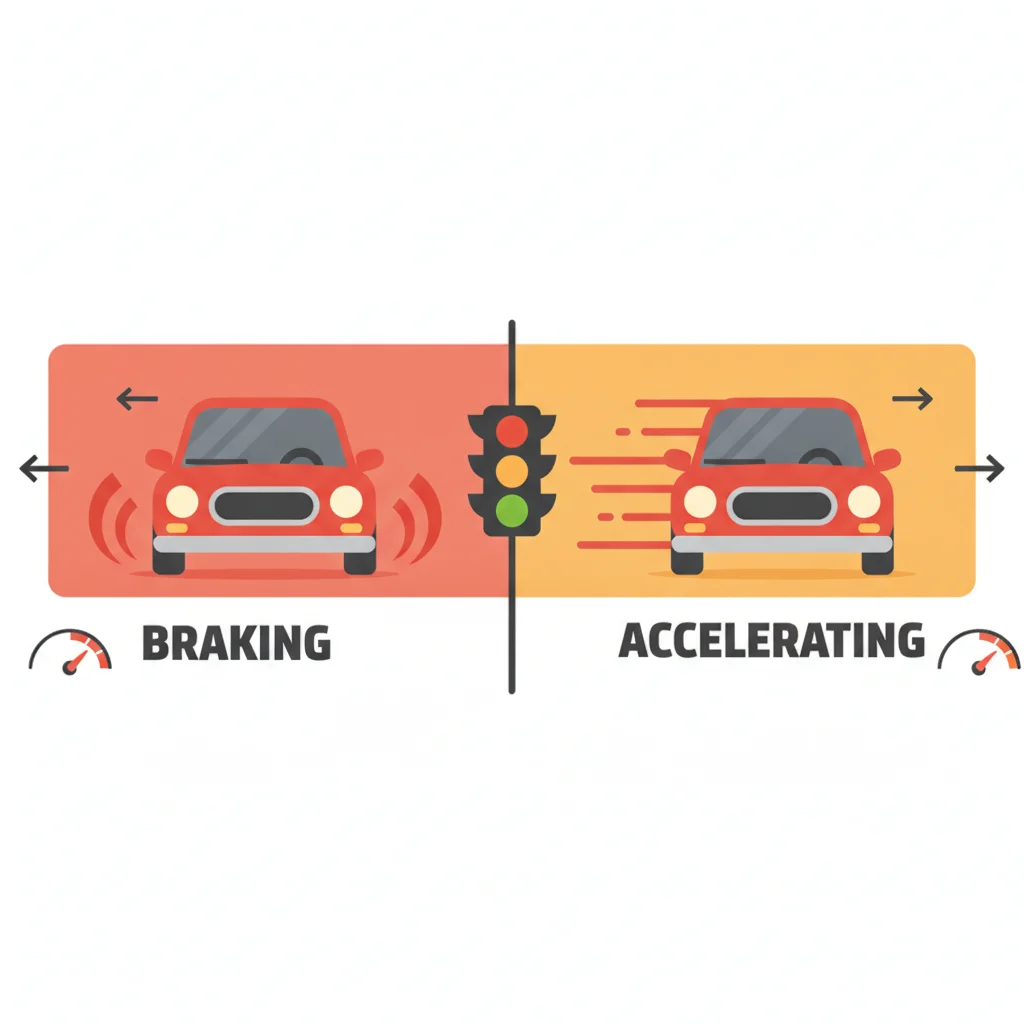
The legal and practical answer is simpler than drivers often make it: prepare to stop unless doing so would create a greater hazard than proceeding. Here's how to apply that in practice.
The Two-Second Rule for Yellow Lights
At most signalized intersections, you can use a rough two-second check: if you're less than two seconds from the stop line when the light turns yellow, proceeding through is reasonable and consistent with most state statutes. If you're further back than two seconds, the legal — and safe — choice is to brake. This isn't a guaranteed legal shield, but it aligns with the "can you stop safely" standard that traffic courts apply.
Don't Accelerate Into It
Increasing your speed to clear the intersection before it turns red is the specific behavior that both law enforcement targets and that creates liability exposure in accidents. The light turning red while you're mid-intersection because you accelerated is categorically different from being caught in the intersection because you couldn't safely stop.
Watch for Cross Traffic and Pedestrians
Even if you're legally in the intersection on a late yellow, cross-street drivers may anticipate their green and start moving early. Pedestrians may start crossing. Treating a yellow light as a clearance signal puts you in conflict with everyone who's correctly waiting for their turn — and courts will not be sympathetic.
Brush up on what speed limit signs don't tell you — because your approach speed heading into an intersection is just as legally relevant as what you do when the light changes.
The bottom line: yellow lights are not a personal timing challenge. They're a legal signal with defined meaning, real enforcement mechanisms, and liability consequences that can follow you for years. Treat them accordingly.

All claims are backed by peer-reviewed research. Sources on request.