Key Takeaways
Night Driving Visibility
Night driving visibility refers to how much of the road and its surroundings a driver can actually see after dark. It is determined by the range and quality of headlights, the driver's own visual acuity in low light, road conditions, and the presence of oncoming glare. Most drivers significantly overestimate how far they can see — and how quickly they can react — after dark.
The human eye's peripheral sensitivity and contrast detection both degrade in low-light conditions due to reduced cone cell activity, making hazard detection at night physiologically different from daytime driving.
The Gap Between What Drivers Think They Can See and Reality
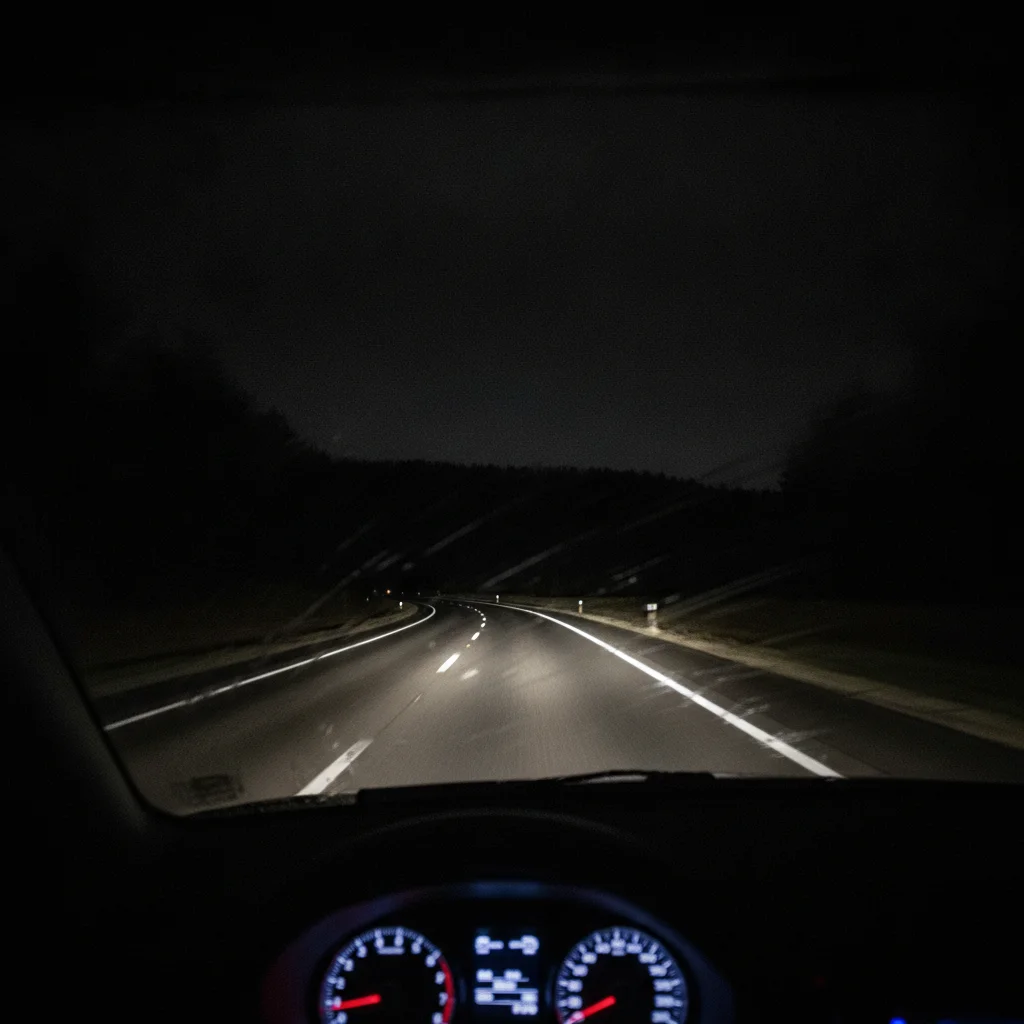
Ask most drivers how far their headlights reach and they'll gesture confidently into the distance. The actual answer — roughly 160 feet on low beam for a typical vehicle — tends to surprise people. At 60 mph, 160 feet translates to about 1.8 seconds of visibility ahead. Stopping distance from 60 mph in ideal conditions is approximately 180 to 200 feet. That math creates a problem: you are regularly driving at speeds that would prevent you from stopping in time to avoid a hazard that only becomes visible in your headlight zone.
This phenomenon has a name in traffic safety research: overdriving your headlights. It's one of the most pervasive and underappreciated risks on American roads after dark. According to the National Highway Traffic Safety Administration (NHTSA), about 49% of all fatal crashes occur at night — despite nighttime accounting for far less than half of total driving. When adjusted for miles driven, the fatal crash rate at night is roughly three times higher than during the day.
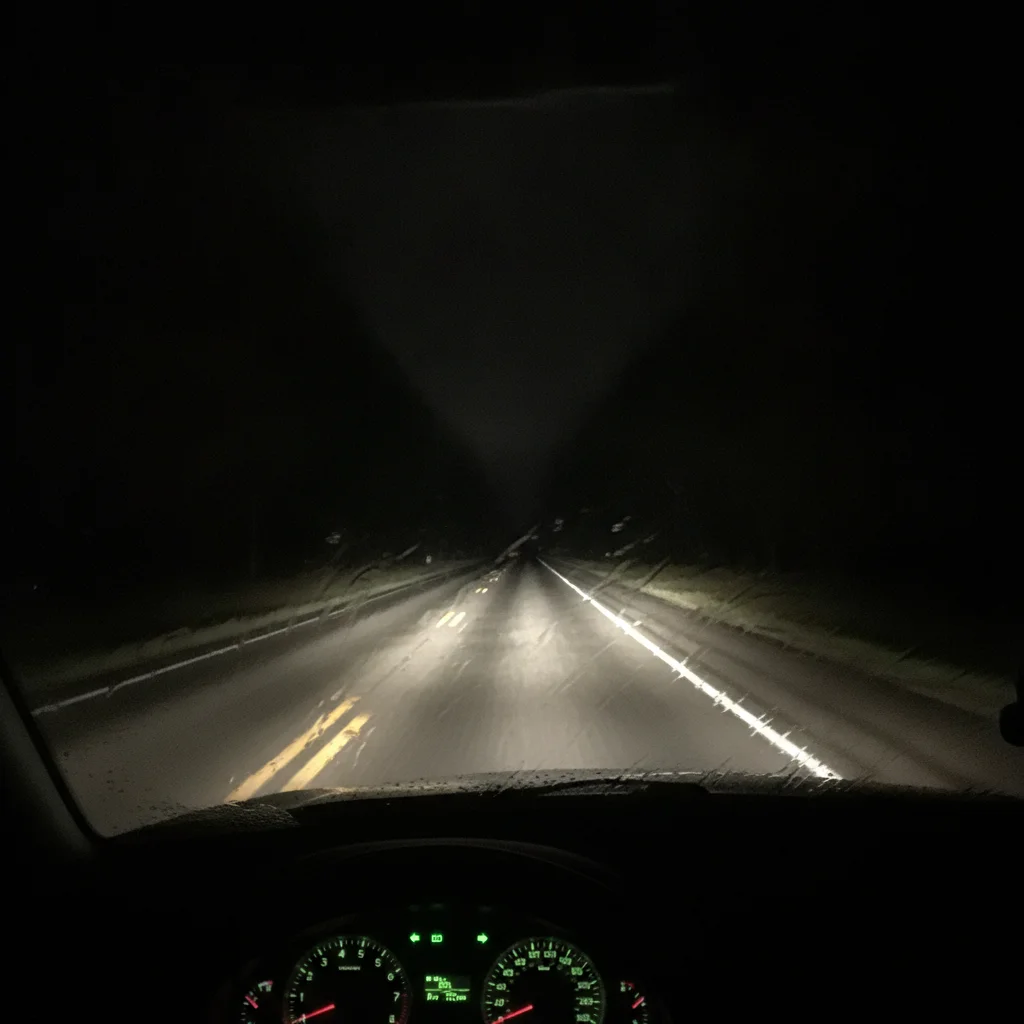
Yet most drivers don't modify their behavior after dark the way that risk profile demands. A combination of overconfidence, habit, and a fundamental misunderstanding of how headlights work keeps millions of Americans driving at speeds and following distances suited for daylight — in conditions where their eyes and their vehicles simply aren't equipped to match it.
This is also a visibility problem that is made worse by driver overconfidence — a well-documented pattern in crash behavior research. Drivers who believe they are being safe are often the least likely to recalibrate when conditions demand it.
49%
Of fatal crashes occur at night
According to NHTSA fatality analysis data, despite nighttime accounting for a minority of total driving hours.
3×
Higher nighttime fatal crash rate per mile
When adjusted for vehicle miles traveled, nighttime driving is roughly three times more deadly than daytime driving.
160 ft
Typical low-beam headlight range
Standard low-beam headlights on most production vehicles illuminate approximately 160 feet of road ahead — less than a stopping distance at highway speed.
76%
Of pedestrian fatalities happen at night
NHTSA data consistently shows pedestrians face dramatically higher fatality risk after dark than during daylight hours.
80%
Potential light output loss from hazy lenses
Severely oxidized polycarbonate headlight covers can reduce effective light output by up to 80%, according to automotive lighting researchers.
Why Your Eyes Are Not Built for Night Driving
The human visual system evolved for daylight. After dark, the eye shifts from cone-based vision — which is sharp, color-sensitive, and fast — to rod-based vision, which is better suited to detecting motion in low contrast, but dramatically less precise. The practical consequences for drivers are significant and worth understanding.
Reduced Contrast Sensitivity
Detecting a dark-clothed pedestrian against a shadowed roadside requires strong contrast sensitivity. At night, that capacity falls sharply. Studies published in the journal Ophthalmic and Physiological Optics show that contrast sensitivity can drop by as much as 80% under nighttime conditions for average adults. A hazard that would be obvious in daylight can be effectively invisible until a driver is nearly upon it.
The Role of Glare Recovery
Oncoming headlights cause temporary glare, and the time it takes the eye to recover — called glare recovery time — increases significantly with age. A 20-year-old may recover in about two seconds. A 60-year-old driver may need five or more. In those seconds of reduced vision at highway speed, a vehicle can travel hundreds of feet essentially blind.
Tunnel Vision After Dark
Our peripheral vision relies almost entirely on rod cells, which are sensitive to motion but poor at detecting stationary objects in low contrast. At night, many drivers experience a narrowing of effective visual attention toward the lit road surface directly ahead — reducing awareness of hazards at the road's edge, crosswalks, and intersections.
Night Vision Glasses: Limited Evidence
Yellow-tinted "night driving glasses" are marketed as a visibility aid, but optometric research does not support their effectiveness. The American Academy of Ophthalmology notes that yellow lenses actually reduce the amount of light reaching the eye, which can worsen low-light performance. Anti-reflective coatings on prescription lenses, by contrast, do have meaningful evidence for reducing glare impact on vision.
The Most Dangerous Hours Are Predictable
NHTSA crash data consistently identifies midnight to 6 a.m. as the highest-risk window for nighttime driving, driven by the convergence of peak fatigue, reduced traffic enforcement presence, and maximum biological pressure toward sleep. If your schedule allows any flexibility, delaying or splitting drives that would otherwise fall in this window represents a genuine risk reduction — not just a precaution.
Older drivers are disproportionately affected. The American Optometric Association notes that a 50-year-old needs roughly twice as much light to see as clearly as a 30-year-old, and glare sensitivity increases steadily after age 40. This doesn't mean older drivers should avoid night driving — but it does mean they have greater reason to reduce speed and following distance after dark.
Headlight Performance: The Hardware Problem Most Drivers Ignore
Even before the driver's eyes enter the equation, many vehicles are working against themselves. Headlight performance varies enormously across makes, models, and headlight conditions — and the results of independent testing are often alarming.
The Insurance Institute for Highway Safety (IIHS) has evaluated headlights on new vehicles since 2016. In recent testing cycles, a significant portion of tested vehicles received ratings of "poor" or "marginal" — meaning their headlights performed substantially worse than the best available systems. The specific failure modes include insufficient range, excessive glare to oncoming drivers, and uneven beam patterns that leave road edges in darkness.
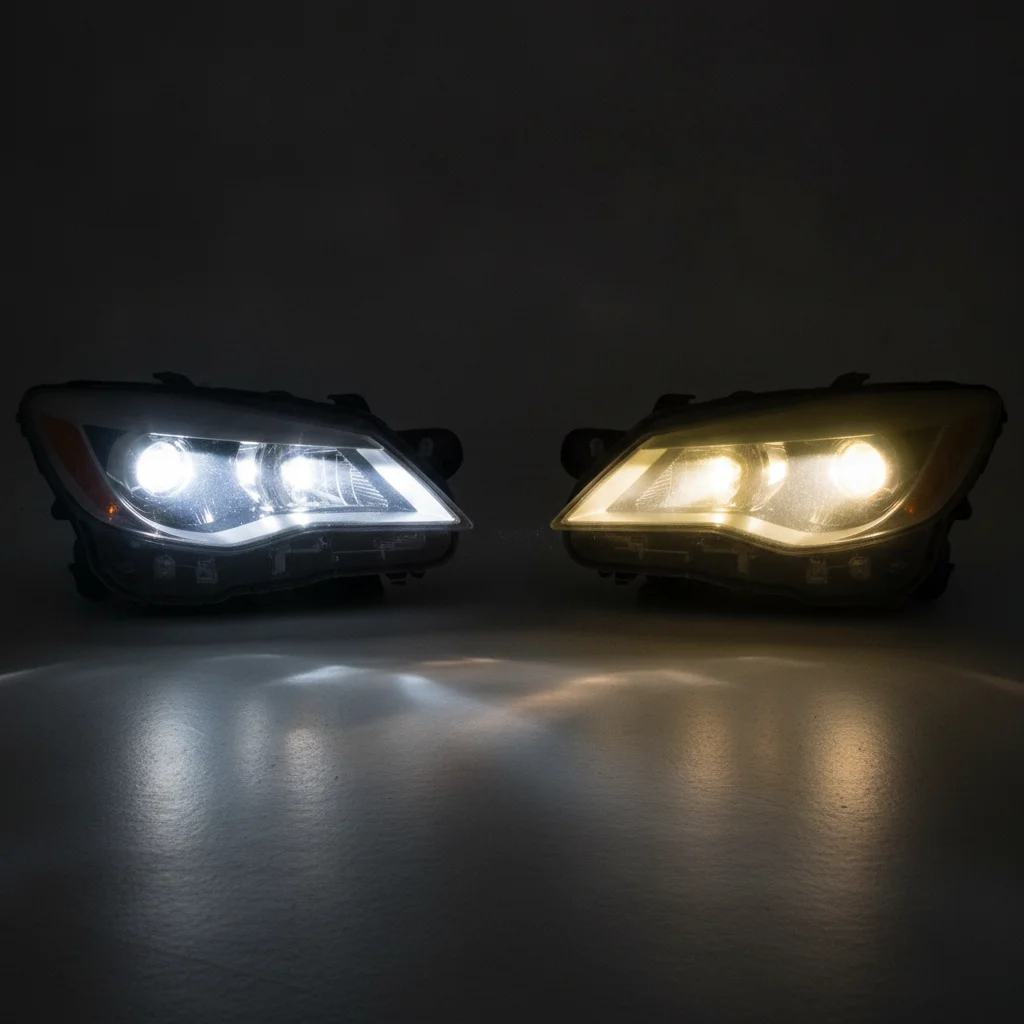
Beyond the factory specification, real-world headlight performance degrades over time in ways most owners don't notice:
- Yellowed or hazy lenses: Polycarbonate headlight covers oxidize with UV exposure, reducing light output by up to 80% in severely degraded cases. Many vehicles more than five years old have measurable lens clouding.
- Misaligned beams: Headlight aim drifts over time due to road vibration, minor impacts, and suspension wear. Even a small downward tilt can dramatically reduce forward range.
- Burned or dim bulbs: Halogen bulbs dim gradually before they fail completely. Drivers rarely notice the creeping reduction in output, and replacement is often deferred until a bulb dies entirely.
- Dirty lenses: Road film, insects, and grime on the headlight exterior can reduce effective output by 20–30% in a single long trip.
The practical fix for many of these issues costs very little. Headlight restoration kits can recover meaningful output from hazy lenses for under $30. Beam alignment checks are typically included in most shop inspections. Replacing both halogen bulbs proactively — rather than waiting for failure — costs under $50 at most auto parts stores and restores output consistency.
Clean Your Headlight Lenses Before Night Trips
A damp microfiber cloth run over headlight lenses before a long night drive can remove road grime and insects that reduce output by 20–30%. For vehicles with hazy or yellowed lenses, a polycarbonate restoration kit — available at any auto parts store for under $30 — can recover substantial light output. Make lens condition part of your pre-trip check the same way you'd check tire pressure.
Use High Beams on Dark Rural Roads
Many drivers habitually leave low beams on even on completely unlit rural roads. High beams extend your visibility from roughly 160 feet to 350–500 feet — more than doubling your reaction time window. Switch to high beams whenever no oncoming traffic or leading vehicles are within a quarter mile. If your vehicle has automatic high-beam assist, enable it and let the system manage the transitions.
Dim Your Interior Displays After Dark
A bright infotainment screen or instrument cluster creates subtle windshield glare that impairs distance vision at night. Most vehicles allow independent brightness control for the cluster and screen — reduce both to the dimmest comfortable setting once it's fully dark. Cleaning the interior of your windshield also helps: interior grime scatters light into a blinding haze that worsens with every oncoming headlight.
Overdriving Your Headlights: The Math Behind the Risk
The concept of overdriving your headlights is simple but counterintuitive: it means traveling at a speed where your stopping distance exceeds the distance illuminated by your headlights. If something appears in your low-beam zone — a deer, a stopped vehicle, road debris — you cannot stop in time to avoid it.
Here's how the numbers break down at common highway speeds:
| Speed (mph) | Stopping Distance (dry pavement) | Low-Beam Range (typical) | Visibility Deficit |
|---|---|---|---|
| 45 | ~125 ft | ~160 ft | Marginal margin |
| 55 | ~175 ft | ~160 ft | ~15 ft deficit |
| 65 | ~245 ft | ~160 ft | ~85 ft deficit |
| 75 | ~310 ft | ~160 ft | ~150 ft deficit |
These figures use standard stopping distances under ideal conditions — dry pavement, alert driver, well-maintained brakes. Add any fatigue, wet pavement, or delayed reaction and the deficit grows further. High-beam headlights extend range to approximately 350–500 feet for most vehicles, which is why their use on unlit roads is so important — and so frequently neglected.
Following distance calculations that apply in wet or foggy daytime conditions apply equally at night on clear roads — because your effective visibility is similarly compressed. A minimum three-second following gap after dark, extended to four or five seconds at highway speed, gives you more of the hazard reaction time that darkness has stripped away.
“Overdriving your headlights is one of the most common and dangerous mistakes drivers make. Most people have no idea that at highway speeds on low beams, they're essentially flying blind past the edge of what they can stop for.”
— David Zuby, Former Executive Vice President of Research, Insurance Institute for Highway Safety
Fatigue Compounds Every Night Visibility Risk
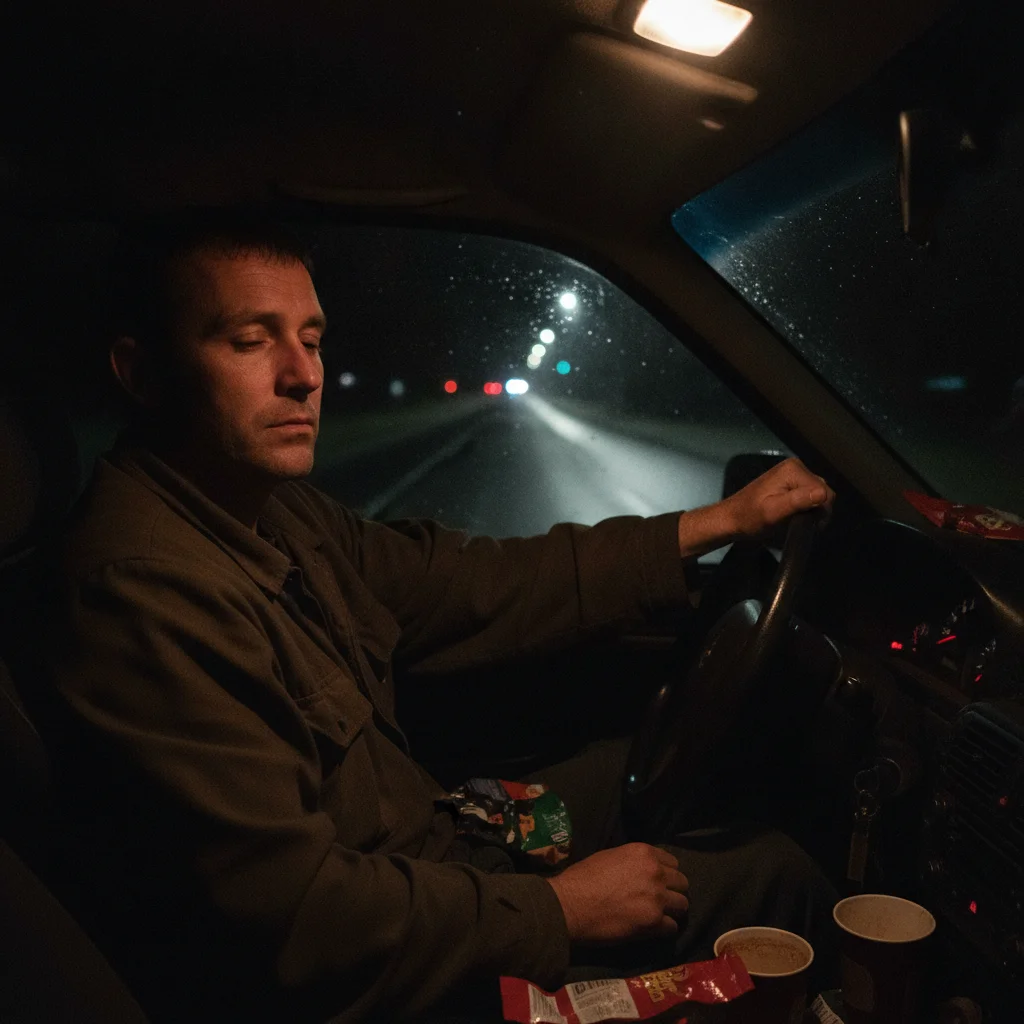
Night driving and drowsy driving are not merely co-occurring risks — they amplify each other in ways that make the combination particularly dangerous. Fatigue slows reaction time, reduces peripheral scanning, and impairs the ability to detect low-contrast hazards, all of which are already stressed by darkness.
The NHTSA reports that drowsy driving contributes to more than 100,000 crashes annually, with the risk peaking between midnight and 6 a.m. — the same hours when visibility is at its worst and traffic is lightest, which can create a false sense of safety due to empty roads.
The relationship works in the other direction too. Dim, monotonous visual environments — exactly what night highway driving provides — accelerate the onset of fatigue. The absence of visual stimulation and the sustained low-light environment both contribute to reduced alertness faster than drivers typically expect.
For a detailed look at the warning signs that precede sleep-impaired driving, see our coverage of drowsy driving warning signs. Microsleep episodes — brief involuntary sleep lasting one to four seconds — are common in fatigued night drivers and often go unremembered. At 65 mph, a four-second microsleep carries a vehicle approximately 380 feet with no driver input at all.
Night Vision Glasses: Limited Evidence
Yellow-tinted "night driving glasses" are marketed as a visibility aid, but optometric research does not support their effectiveness. The American Academy of Ophthalmology notes that yellow lenses actually reduce the amount of light reaching the eye, which can worsen low-light performance. Anti-reflective coatings on prescription lenses, by contrast, do have meaningful evidence for reducing glare impact on vision.
The Most Dangerous Hours Are Predictable
NHTSA crash data consistently identifies midnight to 6 a.m. as the highest-risk window for nighttime driving, driven by the convergence of peak fatigue, reduced traffic enforcement presence, and maximum biological pressure toward sleep. If your schedule allows any flexibility, delaying or splitting drives that would otherwise fall in this window represents a genuine risk reduction — not just a precaution.
Practical Habits That Measurably Reduce Night Driving Risk
The good news is that night driving risk responds well to deliberate, consistent habits. None of the following require expensive equipment or specialized skills — they require awareness and routine.
Speed and Following Distance
Reduce speed by 10 to 15 mph below your daytime pace on unlit roads. The marginal time cost on most trips is minimal. Extend your following gap to at least three to four seconds after dark, more in areas with wildlife, curves, or pedestrian activity. On rural two-lane highways, where animal crossings and narrow shoulders are common, treat any speed above 50 mph as a judgment call, not a default.
High Beams — Use Them Correctly
On unlit roads with no oncoming traffic within about a quarter mile, high beams should be on. Most drivers leave them off far too often out of habit or inertia. Modern high-beam assist systems, available on many vehicles built after 2015, toggle beams automatically based on oncoming traffic — enabling more consistent high-beam use without driver attention.
Manage Interior and Exterior Light
Dashboard brightness is a frequently overlooked factor. A bright infotainment display or instrument cluster creates a glare effect on the windshield and reduces the eye's adaptation to darkness outside the cabin. Dim interior lights to the lowest comfortable setting after dark. Clean the inside of the windshield regularly — interior grime scatters oncoming light into a diffuse haze that significantly worsens glare.
Headlight Maintenance as a Safety Priority
Schedule headlight inspection as part of any routine service. Clean lenses before night driving on trips. If your vehicle is more than five years old, have beam alignment verified — most shops will check it for free during an oil change. Consider upgrading halogen bulbs to quality LED or HID replacements if your vehicle's headlight ratings are poor.
Compensate for Peripheral Blind Spots
Night driving reduces effective peripheral vision. This makes proper mirror use even more important than usual. Our guide on vehicle blind spots and mirror adjustment covers how to set mirrors for maximum coverage — a technique that pays dividends especially after dark when physical head checks become harder to execute confidently at speed.
Clean Your Headlight Lenses Before Night Trips
A damp microfiber cloth run over headlight lenses before a long night drive can remove road grime and insects that reduce output by 20–30%. For vehicles with hazy or yellowed lenses, a polycarbonate restoration kit — available at any auto parts store for under $30 — can recover substantial light output. Make lens condition part of your pre-trip check the same way you'd check tire pressure.
Use High Beams on Dark Rural Roads
Many drivers habitually leave low beams on even on completely unlit rural roads. High beams extend your visibility from roughly 160 feet to 350–500 feet — more than doubling your reaction time window. Switch to high beams whenever no oncoming traffic or leading vehicles are within a quarter mile. If your vehicle has automatic high-beam assist, enable it and let the system manage the transitions.
Dim Your Interior Displays After Dark
A bright infotainment screen or instrument cluster creates subtle windshield glare that impairs distance vision at night. Most vehicles allow independent brightness control for the cluster and screen — reduce both to the dimmest comfortable setting once it's fully dark. Cleaning the interior of your windshield also helps: interior grime scatters light into a blinding haze that worsens with every oncoming headlight.
What Research Tells Us About Night Crash Patterns
Understanding where and how night crashes cluster helps drivers direct their attention and caution more precisely. NHTSA fatality analysis data reveals several consistent patterns:
- Rural roads account for a disproportionate share of nighttime fatalities. Rural roads are darker, have higher speed limits, are less likely to have guardrails or shoulders, and are more likely to have wildlife or pedestrians without reflective gear. Nearly 70% of nighttime fatalities occur on rural roads despite lower rural vehicle miles traveled.
- Unlit intersections are a major hazard point. The transition from illuminated driving to a dark intersection is where contrast sensitivity failures most often cause crashes. Approaching unlit intersections at night demands a speed reduction, not a maintained approach speed.
- Pedestrian fatalities spike sharply after dark. According to NHTSA data, pedestrians account for roughly 76% of pedestrian fatalities during nighttime hours. Dark clothing, absence of reflective gear, and reduced driver contrast sensitivity make pedestrian detection genuinely difficult — particularly at speeds above 35 mph.
- Single-vehicle crashes dominate the nighttime fatal crash profile. Running off the road, striking fixed objects, and rollover events — all consistent with limited visibility and overdriving headlights — make up the majority of nighttime fatalities.
These patterns underscore that night driving risk is not evenly distributed. Rural, unlit, high-speed environments with fatigued drivers represent the highest-risk combination — and that combination is common enough in American driving patterns to warrant serious behavioral adjustment, not just abstract awareness.
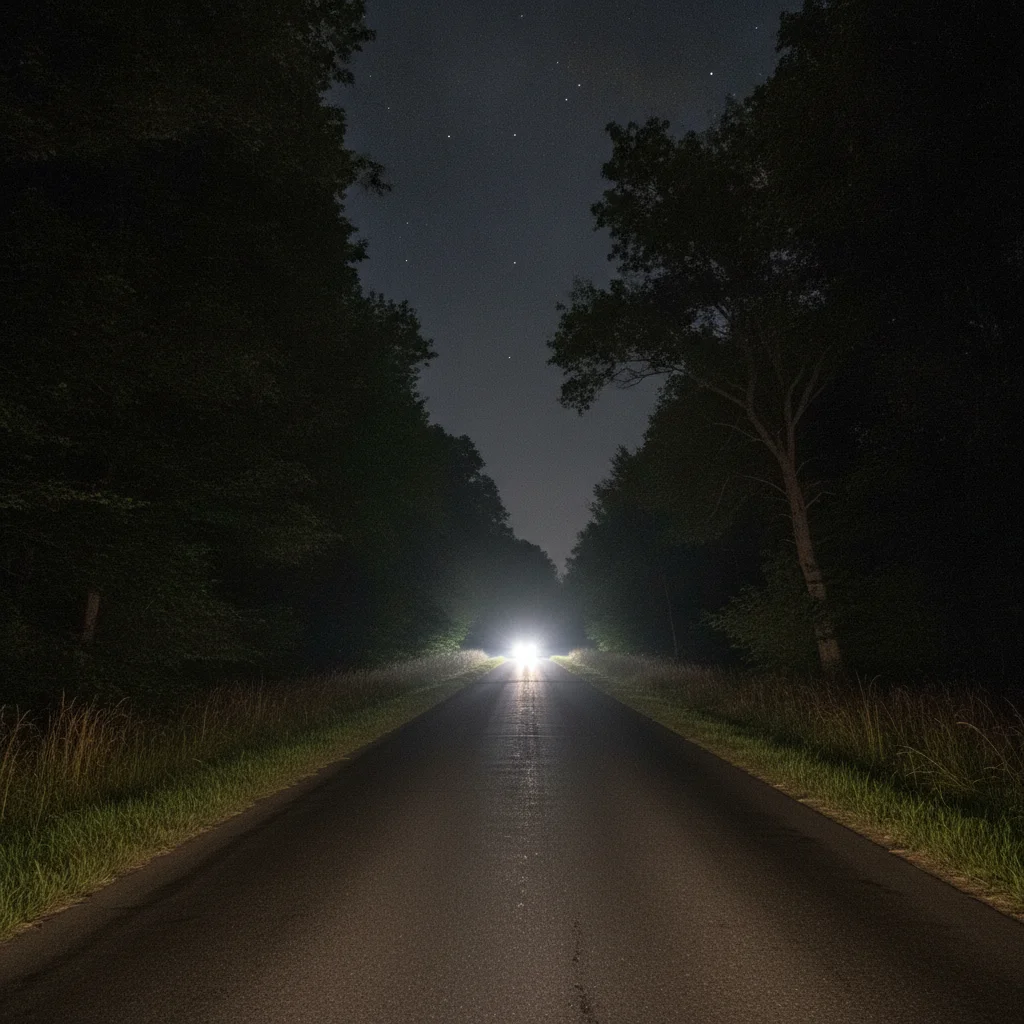
The research also reinforces that night driving safety is not purely a hardware problem — better headlights help, but the behavioral gap between how most drivers drive at night and how they should drive is the larger lever. Closing that gap is available to every driver, at no cost, right now.

All claims are backed by peer-reviewed research. Sources on request.