Key Takeaways
Why Fatigue Is One of the Most Underreported Crash Causes in America
When federal crash investigators ask drivers what caused a collision, fatigue is consistently underreported. There's a simple reason: most people who fall asleep at the wheel don't remember doing it. According to the NHTSA, drowsy driving is officially associated with more than 100,000 police-reported crashes each year, resulting in roughly 1,550 deaths and 71,000 injuries — and those numbers are broadly considered undercounts because fatigue leaves no chemical trace in a post-crash investigation the way alcohol does.
What makes drowsy driving particularly insidious is that its warning signs can be subtle, easily rationalized, or confused with boredom. A driver who's drifting between lanes might blame road hypnosis. Someone who misses a highway exit might blame distraction. But both are textbook early indicators of fatigue-related impairment. Research from AAA's Foundation for Traffic Safety found that going 18–20 hours without sleep produces impairment comparable to a blood alcohol concentration of 0.05% — the legal limit in many European countries.
This article translates the research into observable, actionable warning signs — the kind you can recognize in yourself or a passenger before a crash becomes the wake-up call. Understanding which driving behaviors precede crashes is the first step toward changing the outcome.

Warning Signs of Driving Fatigue You Shouldn't Dismiss
Frequent, involuntary blinking or heavy eyelids
Heavy eyelids are one of the most recognizable signs of fatigue, but most drivers dismiss them as temporary. The physiological reality is more serious: when your eyes begin to droop involuntarily and each blink feels like an effort, your brain is already operating in a degraded state. The muscular control that keeps your eyes open is among the first systems affected by sleep deprivation.
What's deceptive about this sign is that drivers frequently experience a brief second wind after noticing it — a rebound moment of alertness that fools them into thinking the danger has passed. Researchers at the University of Pennsylvania found that this perceived recovery doesn't reflect actual cognitive restoration. Reaction times and lane-keeping ability remain impaired even when a driver feels more alert.
If you find yourself fighting your eyelids, your body has already been sending distress signals for some time. This is not a stage at which willpower or cold air from a cracked window constitutes a remedy.
Heavy eyelids signal that your brain has already entered a degraded state — not a warning of what's coming.
Drifting out of your lane without realizing it
Lane drift is one of the most dangerous physical manifestations of driving fatigue because it often happens without the driver's conscious awareness. Fatigue disrupts the continuous, micro-corrective steering inputs that experienced drivers make automatically. The result is a gradual, unintended drift toward lane markings or shoulders — sometimes corrected only when the rumble strip vibrates beneath the tires.
In many cases, drivers who experience this attribute it to inattention or a momentary distraction rather than fatigue. But repeated lane drift, especially on straight, familiar roads, is a documented behavioral marker for drowsiness. The NHTSA specifically identifies it as a high-confidence precursor to drowsy-driving crashes.
Modern lane-departure warning systems can flag this behavior, but they shouldn't be treated as a solution. They're a symptom detector, not a fatigue remedy. If your lane discipline is failing, the vehicle is telling you what your body already signaled minutes ago.
Repeated lane drift on familiar, straight roads is a high-confidence sign of drowsy impairment, not just inattention.
Missing exits or failing to recall the last several miles
One of the clearest cognitive symptoms of driving fatigue is what researchers sometimes call "highway amnesia" — arriving somewhere, or realizing you've passed a landmark, with no clear memory of the intervening stretch of road. This experience is widely normalized among drivers who treat it as mind-wandering, but it is frequently a sign of micro-sleep episodes.
Micro-sleeps are brief, involuntary losses of consciousness lasting anywhere from one to thirty seconds. At 65 mph, a four-second micro-sleep means your vehicle travels roughly 380 feet — over the length of a football field — with no driver input at all. During that window, your eyes may remain partially open, which is why many drivers don't realize it happened.
Missing an exit is, in this context, a relatively benign outcome. The same episode of micro-sleep on a winding road, near a construction zone, or during a lane change can be catastrophic. See also how high-demand environments compound this risk: construction zones already pose elevated crash risk even for alert drivers.
A four-second micro-sleep at highway speed sends your car nearly 400 feet with no driver at the wheel.
Difficulty maintaining consistent following distance
Maintaining a steady following distance requires ongoing spatial judgment and attention — exactly the cognitive functions that fatigue degrades earliest. A drowsy driver tends to let following distance shrink without noticing, or to allow it to vary widely from moment to moment because the sustained attention required to monitor it has lapsed.
Traffic safety researchers at the Virginia Tech Transportation Institute found that fatigue significantly degrades "time-to-collision" awareness — the subconscious sense of how quickly you're approaching a vehicle ahead. This doesn't mean drivers feel less cautious; it means their actual perception of distance and closure rate has become unreliable.
If you find yourself repeatedly braking harder than intended because the car ahead seems to have suddenly appeared closer, or if passengers are noticeably bracing, treat that as a warning. Inconsistent following distance in an experienced driver who normally doesn't exhibit it is a behavioral red flag worth acting on.
Fatigue degrades your brain's time-to-collision awareness before you feel tired enough to stop driving.
Increased irritability or emotional reactivity behind the wheel
Road rage and aggressive driving are often attributed to personality or stress, but research increasingly links emotional dysregulation to sleep deprivation. The prefrontal cortex — the brain region responsible for impulse control, risk assessment, and emotional regulation — is disproportionately impaired by fatigue. What remains more active is the amygdala, the brain's threat-detection center, which becomes hyperreactive without adequate sleep.
The practical result is that a fatigued driver is more likely to perceive other drivers as hostile, react to minor traffic frustrations with disproportionate anger, or make aggressive maneuvers they'd normally suppress. This isn't a personality observation — it's a documented neurological consequence of sleep debt.
If you notice yourself unusually short-tempered, muttering at other drivers, or tempted toward aggressive lane changes on a trip where you'd normally feel composed, that emotional shift can itself be a fatigue signal worth taking seriously. It complements the physical signs and reflects the same underlying impairment.
Unusual irritability behind the wheel can reflect the same neurological impairment as heavy eyelids — just in a different system.
Slower-than-normal reaction time to brake lights or traffic changes
Reaction time is often thought of as fixed — something you either have or don't. But it's highly sensitive to sleep deprivation. The AAA Foundation for Traffic Safety documented that drivers who had slept only five to six hours in the previous 24-hour period had crash rates nearly twice those of drivers who slept seven or more hours. At four to five hours of sleep, the rate was 4.3 times higher.
The subjective experience of slowed reaction time is hard to detect from the inside — impaired drivers rarely feel slow. They may notice it second-hand: realizing they braked later than usual, or that a passenger's sharp intake of breath preceded their own recognition of a hazard. These external cues matter and should be treated seriously rather than defensively dismissed.
On highways, where brake events can chain-react through traffic quickly, slowed reaction time dramatically compresses the safety margin that normal following distance provides. This is one reason why drowsy driving crash rates are disproportionately high on interstates and rural highways — the very roads that feel monotonous and "easy."
[in_content_images:2]Drivers sleeping only five to six hours have nearly double the crash rate of those who sleep seven or more hours.
Yawning repeatedly or rubbing your eyes while driving
Yawning is one of the body's most reliable physiological signals of sleepiness, and repeated yawning behind the wheel — especially paired with eye-rubbing — is the nervous system broadcasting that it needs rest. Drivers often treat yawning as something to push through, particularly when the destination is close or the schedule is tight.
The mechanism matters here: yawning increases oxygen intake and stretches the eardrums, temporarily promoting alertness. It is a compensatory response, not a sign that the fatigue is resolving. Each yawn is evidence that the fatigue is significant enough to trigger a physiological coping mechanism — not a reason to continue driving.
Rubbing the eyes, a companion behavior, is similarly compensatory. The pressure stimulates the vagus nerve and can briefly slow the heart rate, which some people find momentarily calming. Neither behavior addresses the underlying deficit. A driver who is yawning and rubbing their eyes at the wheel should be planning their next stop, not their next mile.
Repeated yawning is a physiological distress signal, not a temporary inconvenience to push through.
Difficulty holding your head up or nodding off momentarily
Head nodding — the involuntary drop of the head toward the chest followed by a startled recovery — is among the most acute and unambiguous warning signs a driver can experience. By the time this is happening, the driver has already been experiencing micro-sleeps, and the gap between this symptom and a loss of vehicle control may be measured in seconds.
Many drivers who experience head nodding at the wheel report that they immediately feel more alert after the jolt of the nodding-and-recovery cycle, and use that alertness to justify continuing. Neurologically, that response is similar to the brief wakefulness induced by a loud sound — it's a startle response, not restored capacity.
Head nodding is the point at which continuing to drive is no longer a matter of poor judgment — it is an emergency. The appropriate response is the same as it would be for any other safety emergency: find the nearest safe place to stop. This falls in the same category of urgency as the vehicle symptoms covered in our guide to warning signs you should never ignore while driving.
Head nodding at the wheel is an in-progress emergency — the margin between this symptom and a crash is measured in seconds.
Try a Coffee Nap Before Rejoining Traffic
Drink a cup of coffee, then immediately take a 20-minute nap in a safe, parked location. Caffeine takes roughly 20 minutes to absorb into the bloodstream, so it begins working just as you wake. Research published in <cite>Psychophysiology</cite> found this combination reduces driving errors more effectively than either caffeine or a nap alone. Set an alarm so you don't sleep longer than 30 minutes — deeper sleep can cause grogginess upon waking.
Plan Around Your Body's Peak Fatigue Windows
Circadian research identifies two daily fatigue peaks regardless of your sleep history: 2:00–4:00 a.m. and 1:00–3:00 p.m. If possible, avoid scheduling long drives during these windows. If you must drive during them, shorten trip segments and plan stops accordingly. These aren't just times when you feel tired — they are periods when physiological alertness is objectively lower and crash risk measurably higher.
Who Faces the Highest Drowsy Driving Risk
Certain populations are statistically more vulnerable to fatigue-related crashes. Shift workers — particularly those on rotating or overnight schedules — face significantly disrupted circadian rhythms that impair alertness during non-peak hours. Commercial truck drivers are regulated for this reason, with federal Hours of Service rules limiting continuous driving. Young male drivers ages 16–25 are disproportionately represented in NHTSA drowsy driving crash data. And adults with undiagnosed obstructive sleep apnea — affecting an estimated 26% of Americans between 30 and 70 — experience chronic sleep fragmentation that compounds daily fatigue regardless of time in bed.
Why Caffeine Has Real Limits
Caffeine works by blocking adenosine receptors — the molecules that accumulate in the brain and signal the need for sleep. It delays the subjective sensation of tiredness but does not reduce actual sleep debt or restore the cognitive functions that fatigue has already degraded. As adenosine builds up, increasingly larger doses of caffeine are needed to maintain the same level of suppression. Once caffeine clears the system, the accumulated sleepiness returns rapidly — sometimes called a "caffeine crash." For drivers, this means caffeine should be viewed as a short-term delay measure, not a substitute for genuine rest.
What to Do When You Recognize the Signs
Identifying fatigue while driving is only useful if you act on it. The temptation — especially when you're close to your destination — is to push through. Research shows this is precisely when decisions become most impaired. The fatigue-impaired brain is notably poor at accurately assessing its own level of impairment, a phenomenon sometimes called the "sleepiness blind spot."
The most evidence-backed remedy is a short nap combined with caffeine. A study published in Psychophysiology found that drinking coffee immediately before a 20-minute nap — sometimes called a "nap-a-latte" or "coffee nap" — reduced driving errors more effectively than either strategy alone. The caffeine begins absorbing into the bloodstream just as the nap ends, producing a brief window of meaningfully improved alertness.
Beyond the immediate fix, trip planning matters. If you're driving more than two hours, build in a 15-minute stop. Avoid driving between 2:00–4:00 a.m. and 1:00–3:00 p.m. — circadian research identifies these as the body's two peak fatigue windows, regardless of how much sleep you got the night before. And if you regularly feel drowsy behind the wheel, talk to a physician: undiagnosed obstructive sleep apnea affects an estimated 26% of American adults between ages 30 and 70, and it is one of the leading correctable causes of chronic driving fatigue.
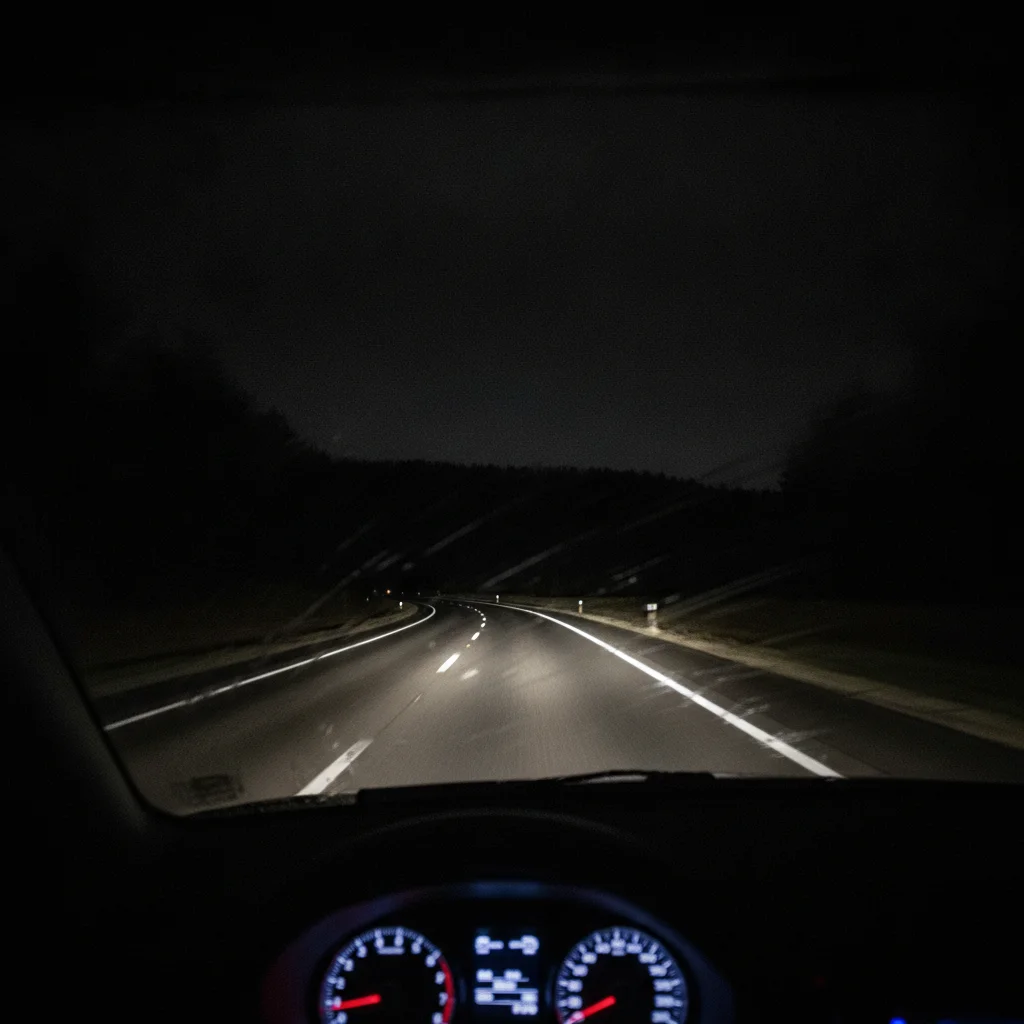
Fatigued driving often compounds other hazards. At night, when visibility is already compromised — your low beams illuminate only about 160 feet of road — fatigue lengthens the reaction time you need to respond to what those beams reveal. Similarly, high-demand environments like construction zones become far more dangerous for a drowsy driver. Work zone crashes kill over 800 people annually, and a fatigued driver is far less equipped to handle sudden lane shifts, flaggers, and reduced speed changes.
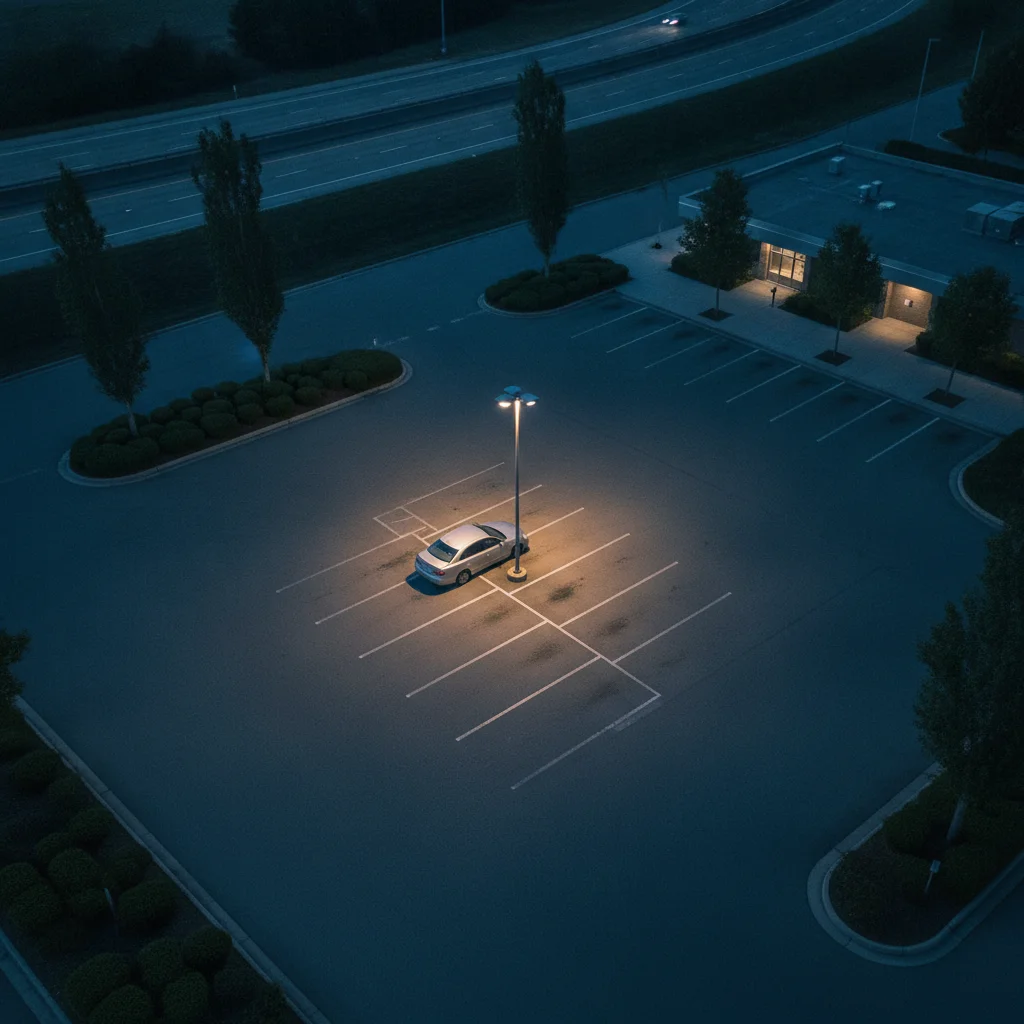
Fatigue is not a character flaw — it's a physiological state with measurable consequences. Treating its warning signs with the same urgency you'd give a critical vehicle warning isn't overcaution. It's just accurate risk assessment.
The Bottom Line on Drowsy Driving
Every year, tens of thousands of crashes occur not because of mechanical failure, bad roads, or reckless speed — but because someone behind the wheel was simply too tired to be there. The frustrating truth is that most of those drivers thought they were fine. The warning signs covered in this article are not hypothetical edge cases; they're the documented precursors that crash investigators find time and again when reconstructing fatigue-related collisions.
Knowing what to look for changes your odds. If you notice your eyes losing focus, your steering becoming reactive instead of deliberate, or your memory of the last few miles going blank — take that seriously. Pull off safely. Rest. If you're traveling with a passenger who can drive, swap. The destination will still be there.
For a broader picture of the subtle behaviors that set the stage for crashes — including ones that drivers are often unaware they're exhibiting — see our coverage of crash-causing driving behaviors that feel safe in the moment. And if you want to understand how warning signs of all kinds — from your dashboard to your driving behavior — should trigger your response, the Warning Signs hub is a useful starting point.

All claims are backed by peer-reviewed research. Sources on request.