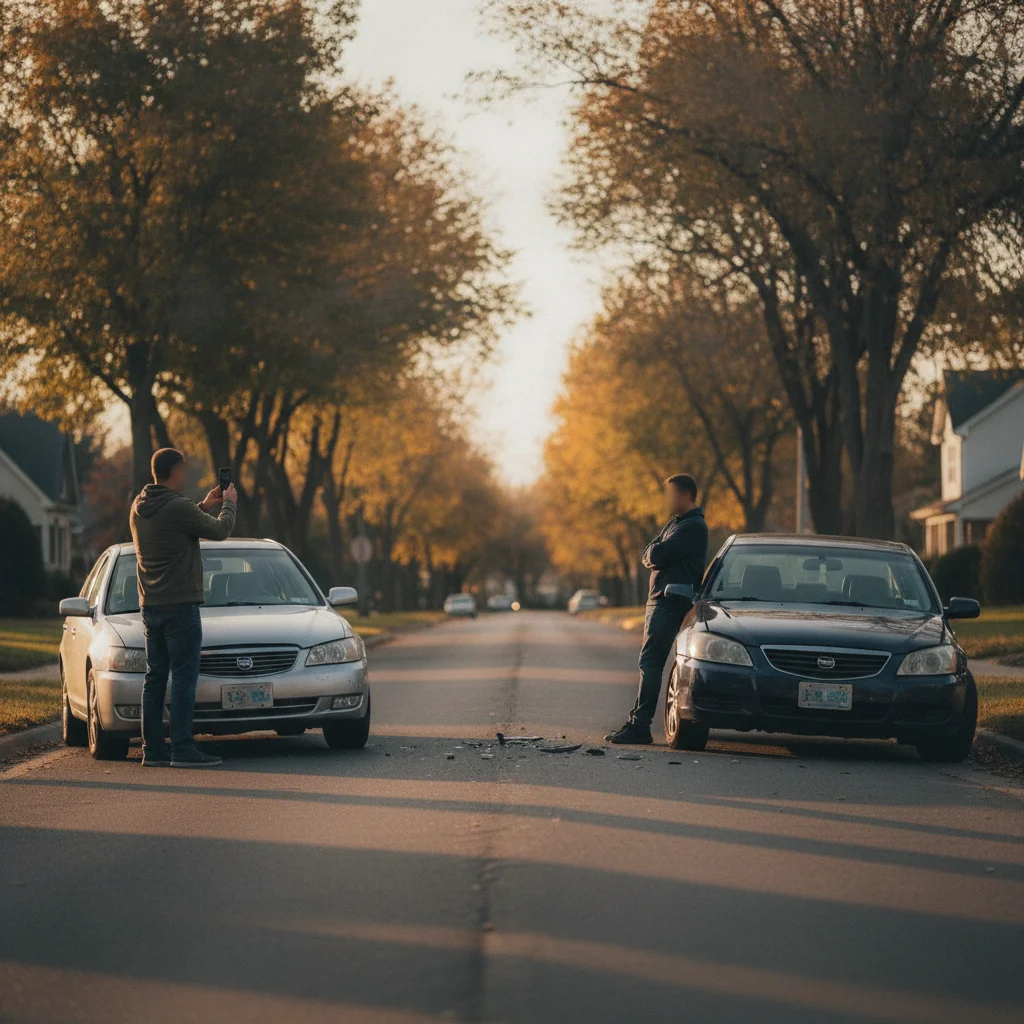
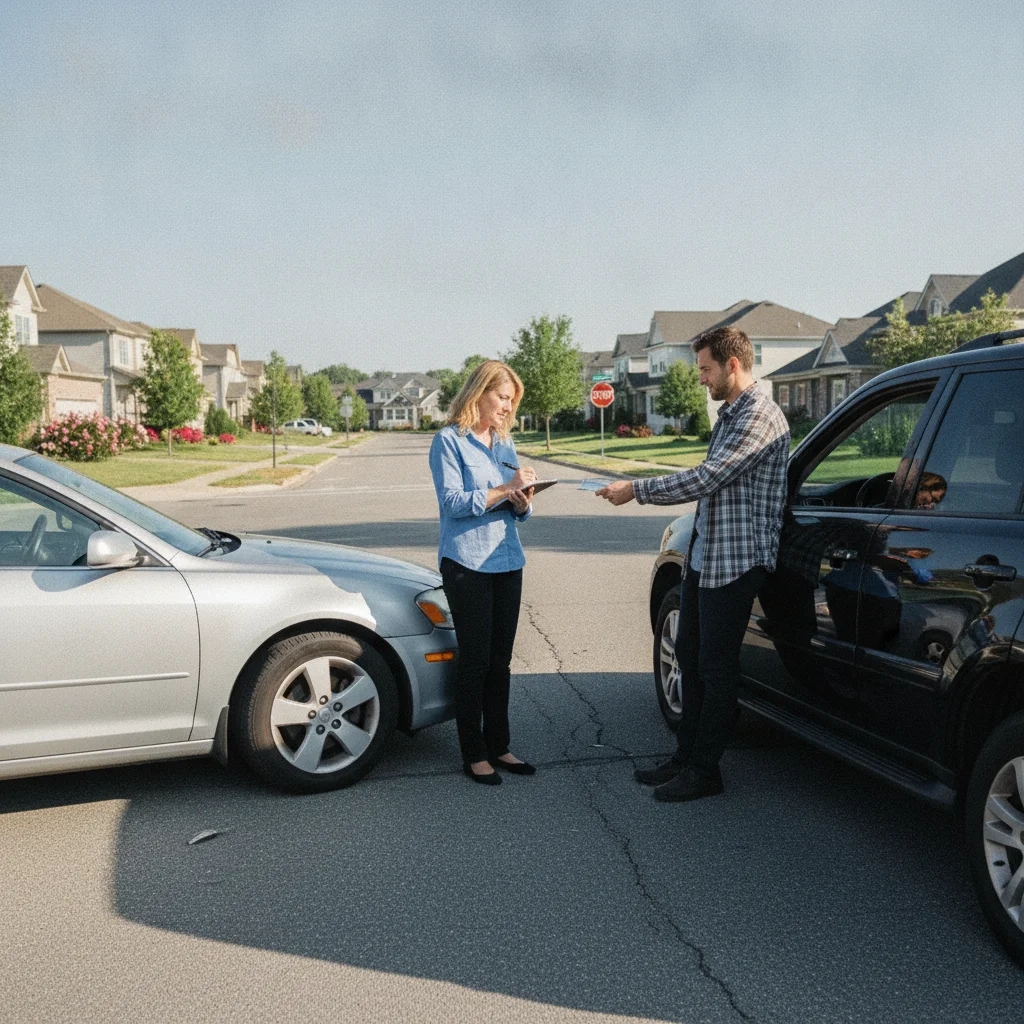
Key Takeaways
Option A
Settling Privately
The faster, off-the-books resolution.
Best for: Minor, low-cost fender-benders where both drivers trust each other and damage is immediately visible and clearly limited.
Option B
Going Through Insurance
The protected, documented route.
Best for: Any accident involving injury, disputed fault, significant damage, or uncertainty about hidden vehicle or medical costs.
If the accident is a true minor fender-bender with no injuries and clear, limited damage
Settling Privately
When damage is cosmetic, both drivers agree on fault, and repair costs are comfortably within your budget, a private exchange can save time. Still document everything in writing before anyone leaves.
If there is any injury — even one that feels minor at the scene
Going Through Insurance
Soft-tissue injuries and concussions often don't present symptoms for 24–72 hours. Insurance creates a formal record that protects both parties if medical claims surface later.
If fault is disputed or the other driver's story changes
Going Through Insurance
Insurers have trained adjusters and access to accident reconstruction resources. Trying to resolve a disputed-fault situation privately almost always ends badly for at least one driver.
If you're worried about a premium increase after a not-at-fault accident
Going Through Insurance
Many states restrict insurers from raising rates on drivers who weren't at fault. File the claim, protect your legal position, and review your policy terms — the rate impact may be far smaller than you fear.
If the other driver asks you not to involve insurance and offers to pay out of pocket
Going Through Insurance
This is one of the most common setups for post-accident fraud. People who seem cooperative at the scene sometimes file injury claims days later. Document everything through official channels first.
Why This Decision Matters More Than It Looks
At the scene of a minor accident, a private settlement can feel like the rational choice. Nobody wants the hassle of claims adjusters, repair estimates, and the nagging worry that their premium is about to climb. So when the other driver says, "Let's just handle this between us," it's tempting to shake hands and move on.
The problem is that what looks simple at the curb often gets complicated later. Hidden structural damage shows up at the body shop. The other driver's neck starts hurting two days later. Or they simply change their mind and file a claim anyway — leaving you without documentation, without a formal record, and potentially on the wrong end of a disputed liability case.
This isn't a decision to make on the spot based on gut feel. It's a decision that deserves a clear-eyed look at what each path actually costs and protects. See our complete accident walkthrough for the full end-to-end process from crash to settlement.
Before you decide anything, there's one thing you should always do regardless of which route you choose: exchange information. Driver's license numbers, insurance cards, vehicle registration, and contact details. Know exactly what to collect before you leave the scene — even if you ultimately decide not to file a claim.
How Each Approach Actually Works
Understanding the mechanics of each option helps you weigh the trade-offs with a clear head rather than a stress-clouded one.
Private Settlement
A private settlement means both drivers agree to resolve the accident without involving their insurance companies. Typically, the at-fault driver pays the other driver directly — either cash at the scene or a payment shortly afterward — in exchange for an informal agreement not to file a claim.
There is no standard legal process for this. No adjuster, no formal estimate, no binding contract unless you specifically draft one. The biggest risk is that a verbal agreement at the scene carries almost no legal weight. The other driver can accept your cash, go home, and still file a claim with their insurer the next morning. You'd have little recourse.
Going Through Insurance
Filing through insurance activates a formal process. You notify your insurer (and ideally the other driver's insurer), an adjuster is assigned, damage is assessed, and liability is determined. Your insurer handles negotiation with the other party's insurer.
This route creates a documented record: police reports, photos, recorded statements, repair estimates. That paper trail is your protection if the situation escalates. It also means professional representation — your insurer's adjusters do this every day and understand how to push back on inflated claims or disputed liability.
See the full claims filing process for a step-by-step breakdown of what happens after you notify your insurer.
| Criterion | Settling Privately | Going Through Insurance |
|---|---|---|
| Speed of resolution | Immediate — same day | Days to weeks depending on complexity |
| Legal protection | Minimal — no formal record | Strong — documented paper trail |
| Cost if situation escalates | Potentially unlimited out-of-pocket | Capped by your policy limits |
| Injury claim exposure | High — delayed injuries unprotected | Protected through liability coverage |
| Hidden damage risk | You absorb all additional costs | Professional estimate covers full damage |
| Effect on premium | None — if deal holds | Possible increase if at-fault |
| Binding agreement | Rarely enforceable without legal drafting | Formal settlement releases liability |
| Best suited for | Cosmetic, low-cost, no-injury incidents | Any injury, disputed fault, or complex damage |
The Real Risks of Settling Privately
Private settlements aren't inherently wrong. But the risks are specific, predictable, and worth taking seriously.
Hidden Damage You Can't See at the Scene
Modern vehicles have complex structures. A rear-end collision that looks like a minor bumper scuff can involve bent frame rails, compressed crumple zones, and damaged sensor arrays that only show up during a professional inspection. Body shop estimates routinely come in two to three times higher than what the damage looks like on the surface.
If you've already settled privately for the amount visible at the scene, you have no recourse for the costs that emerge later. The other driver's insurance company has no obligation to pay, and your own insurer may have grounds to deny coverage if you failed to report the accident promptly.
Delayed Injury Claims
This is the scenario that blindsides drivers most often. Whiplash, soft-tissue injuries, and even mild traumatic brain injuries frequently don't produce noticeable symptoms until 24 to 72 hours after the collision. The other driver feels fine at the scene, accepts your private offer, and then wakes up two days later in significant pain.
At that point, they have every right to pursue their own claim — and without a formal record of the accident, your version of events is harder to establish. Delaying documentation is one of the most damaging mistakes drivers make after a crash.
Policy Notification Requirements
Most auto insurance policies contain a cooperation clause that requires you to notify your insurer of any accident "promptly" or "as soon as practicable." Failing to do so — even when you intend to handle things privately — can give your insurer grounds to deny coverage if a claim surfaces later. Read your policy language before deciding not to report.
Check Your Policy's Notification Clause
Most auto insurance policies require you to report any accident "promptly" — sometimes within 24 hours, sometimes within a few days. This requirement applies even if you plan to settle privately. Failing to notify your insurer can void your coverage for any claim that emerges later from the same incident. Pull out your policy's declarations page and look for the cooperation or reporting clause before making a final decision at the scene.
A Signed Note Is Not a Legal Release
Drivers sometimes believe that getting the other party to sign a piece of paper at the scene provides full legal protection. In most states, it doesn't. A valid release of liability requires specific legal language, consideration (an exchange of value), and often notarization to be enforceable. If you're serious about a private resolution, consult an attorney before finalizing any agreement — especially if more than a few hundred dollars is involved.
No Legal Binding at the Scene
An informal handshake deal is not a legal release of liability in most states. Even a signed note scribbled on the back of a receipt is unlikely to hold up if the other driver decides to pursue a formal claim. A true release of liability requires specific legal language and ideally should be drafted by an attorney — not negotiated in a parking lot.
52%
Accidents with non-obvious injury symptoms
According to the National Highway Traffic Safety Administration, roughly half of injury-producing crashes involve symptoms that are not immediately apparent at the scene.
3x
Body shop estimate vs. visible damage
Insurance industry data consistently shows that professional repair estimates average two to three times higher than informal at-scene assessments for rear-end and side-impact collisions.
1 in 8
Drivers with no liability insurance
The Insurance Research Council estimates that approximately 12.6% of U.S. drivers are uninsured, which is a critical factor when considering whether a private deal with an unknown driver is safe.
What Insurance Actually Costs You — and What It Protects
The fear of a premium increase is the primary reason drivers consider going private. It's a legitimate concern, but it's often overstated.
When Premiums Actually Increase
Rate increases after an accident are driven primarily by fault, not by the act of filing a claim. Most states have regulations limiting insurers' ability to raise rates on not-at-fault drivers. If you were rear-ended and the other driver is clearly at fault, filing a claim is unlikely to affect your rate at renewal.
If you were at fault — even partially — a surcharge is more likely. But the increase is typically a percentage of your existing premium, spread over one to three years, and it needs to be weighed against the cost of paying for all damage and potential injury claims out of pocket.
What Your Policy Actually Covers
Going through insurance gives you access to your full policy's protections. Collision coverage handles your vehicle repairs. Liability coverage protects you if the other driver pursues injury claims. If your state requires personal injury protection or you carry medical payments coverage, those kick in for your own injury costs regardless of fault. See how MedPay and PIP differ in the claims process for more on those coverages.
You also have the option to file directly with your own insurer or through the at-fault driver's policy. Understanding which route fits your situation can affect both your timeline and your deductible exposure.
Your Deductible Is Not the End of the Story
Paying a $500 or $1,000 deductible feels like a loss, but if the other driver later claims $15,000 in medical expenses and your insurer wasn't notified, you could be paying that entire amount — plus legal fees — out of pocket. The deductible is often the smaller number in the calculation.
If you're concerned about a settlement offer being too low after filing, that's a negotiable situation. Learn how to push back effectively on a first offer before accepting any payout.
When Private Settlement Is Actually Reasonable
There are genuine scenarios where bypassing insurance is defensible. The criteria are narrow but real.
- Damage is cosmetic and immediately quantifiable: A parking lot door ding with no structural impact and a repair estimate under $300 is a reasonable candidate for a private exchange. You can see the full extent of the damage, and there's no structural complexity involved.
- No injuries of any kind: Both drivers get out of their vehicles feeling completely fine, and neither has any history of prior neck or back conditions that could complicate a future claim.
- Fault is unambiguous and both parties agree: If one driver clearly rear-ended the other and both acknowledge it, there's no ambiguity that could surface later.
- You document it properly: Photos of all damage, a written agreement signed by both parties, and ideally a formal release of liability drafted with legal guidance. At minimum, you exchange full contact information as you would for any claim.
Even in this best-case scenario, consider notifying your insurer of the incident without filing a formal claim. Some policies allow this. It creates a record without triggering the claims process — giving you a safety net if the situation changes. First-time drivers especially should understand this option before committing to a private resolution.
Review your current policy carefully before making any decision. The right policy structure can also affect how much you have to lose by going through formal channels.
The Documentation Minimum — Regardless of Your Choice
Whether you ultimately file a claim or settle privately, there's a set of steps you should complete at the scene before any agreements are made. Skipping these is one of the fastest ways to end up in a difficult position later.
- Photograph everything — all vehicle damage, road conditions, skid marks, traffic signals, license plates, and the surrounding area. Take more photos than you think you need.
- Exchange full information — name, address, phone number, driver's license number, insurance company, policy number, and vehicle registration. See the full list of what to collect at the scene.
- Get witness contact information — independent witnesses are invaluable if fault becomes disputed later.
- Note the time, location, and conditions — weather, lighting, road surface, speed limits, and any contributing factors.
- Do not admit fault — even an offhand apology can be used against you in a liability determination. Stick to factual descriptions of what happened.
If you do decide to settle privately, put the agreement in writing at the scene. Include the agreed amount, what it covers, the date, both signatures, and a clear statement that the payment resolves all claims related to the incident. Understand that without proper legal language, this document may not fully protect you — but it's better than nothing.
The post-accident period is also when certain behaviors can seriously undermine your position. Avoid the most common post-accident mistakes that weaken claims and complicate liability.

All claims are backed by peer-reviewed research. Sources on request.