Key Takeaways
Why Buying Out of State Feels Like a Bargain — Until It Isn't
The logic is simple enough: you find the exact trim level and color you want, the price is $2,000 less than anything within 100 miles, and the seller is just across the border. You shake hands, sign the paperwork, and drive home feeling clever. Then the letters start arriving from your state DMV.
Cross-state car purchases happen constantly — buyers chase inventory shortages, better pricing, or simply find the right car online before worrying about geography. What most buyers underestimate is that the purchase price is only the beginning. The cost of registering, titling, and taxing that vehicle in your home state follows its own rulebook, completely independent of whatever deal you struck at the dealership or with a private seller two states away.
The good news: none of these traps are unavoidable if you know what to look for. The mistakes below are the ones I see derail buyers most often — each one preventable with a phone call or a little advance research.

Before you even schedule a test drive across state lines, it's worth understanding how dramatically ownership costs can diverge. Our companion article on why identical cars in different states carry wildly different ownership costs breaks down the fee structures and tax bases driving those gaps.
The Most Costly Mistakes Out-of-State Car Buyers Make
These aren't edge cases. They're the predictable errors that stem from assuming your home state plays by the same rules as the state where you bought the car. Work through each one before you sign anything.
Assuming you pay sales tax in the state where you buy the car, not where you live.
Why it happens: Buyers naturally associate the transaction with the physical location of the sale and don't realize their home state's use tax will apply at registration.
Paying sales tax to an out-of-state dealer without proper documentation, then losing the credit at home.
Why it happens: Some dealers, especially smaller lots, collect what they call 'sales tax' informally or lump it into miscellaneous fees without specifying it on the bill of sale.
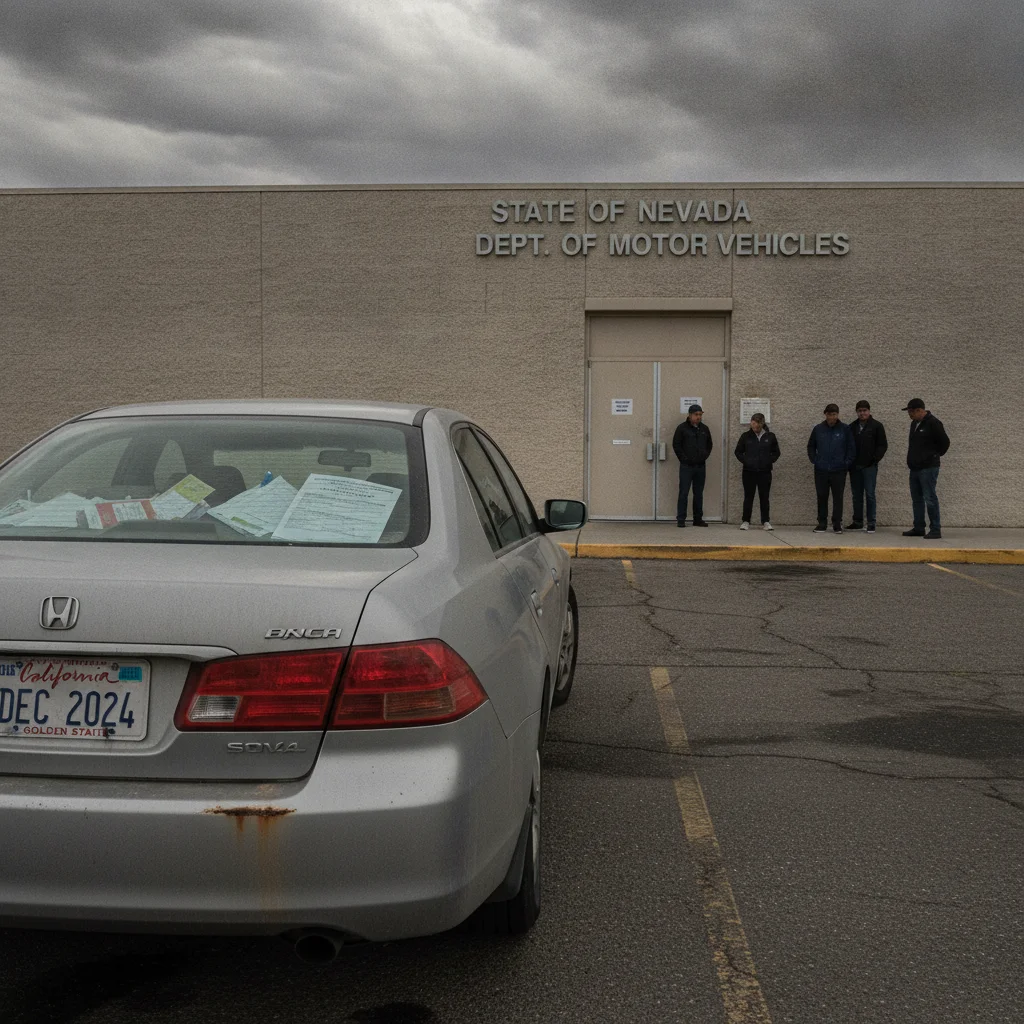
Letting a temporary operating permit expire before completing home-state registration.
Why it happens: Buyers underestimate how long title transfer, lien release, and DMV processing take, and assume the temporary tag gives them all the time they need.
Buying a vehicle that isn't emissions-certified for your home state.
Why it happens: Buyers focus on mechanical condition and price, not on the federal vs. state-specific emissions certification label, which isn't prominently advertised in listings.
Failing to verify that the title is free of liens before driving home.
Why it happens: Private sellers sometimes sell a vehicle while still making payments, and buyers don't think to request a lien check in the excitement of closing a deal.
Ignoring the home state's safety inspection requirement for out-of-state vehicles.
Why it happens: Buyers assume a car that passed inspections in another state will automatically satisfy their home state's requirements — but inspection standards and categories differ.
Using the purchase price alone to compare the out-of-state deal against local options, without adding home-state taxes and fees.
Why it happens: The sticker price is the most visible number. Total cost of ownership — including registration fees, use tax, inspection costs, and the time and travel involved — is harder to calculate and easy to ignore.
Assuming your home state's lemon law protects you if the out-of-state purchase turns out to be defective.
Why it happens: Most buyers are unaware that lemon law jurisdiction typically follows the state where the sale occurred, not where the buyer lives.
Some States Use Book Value, Not Purchase Price, for Tax
A handful of states — including Connecticut and Massachusetts — assess use tax based on the vehicle's book value (typically NADA or Kelley Blue Book), not the actual purchase price. If you got a great deal on a higher-value car, you may still owe tax on the full book value. Call your home state DMV and ask specifically how they calculate the taxable amount for out-of-state purchases before you assume a low sale price means low tax exposure.
Expired Temporary Tags Are a Real Traffic Stop Risk
Driving on an expired temporary operating permit is treated the same as driving an unregistered vehicle in most states — a citable offense that can include fines and, in some jurisdictions, vehicle impoundment. Don't let the pace of DMV processing lull you into complacency. If your registration is taking longer than expected, contact your home DMV proactively and ask about interim options.
Out-of-State Dealer Financing Can Complicate Your Title
When you finance through an out-of-state dealer or their affiliated lender, the lien is recorded in the selling state's system. Your home state DMV must acknowledge that lien and issue a title with the lienholder noted — a process that can take weeks longer than a standard title transfer. Some lenders are slow to release paperwork across state lines. Confirm the lender's interstate title process before signing the financing agreement.
For a complete picture of what your state charges for title, registration, and annual fees, the state-by-state tax and fee reference is the fastest way to look up what's waiting for you at your home DMV.
Sales Tax, Use Tax, and the Risk of Paying Twice
This is the area where buyers lose the most money, and it's entirely preventable once you understand the mechanics.
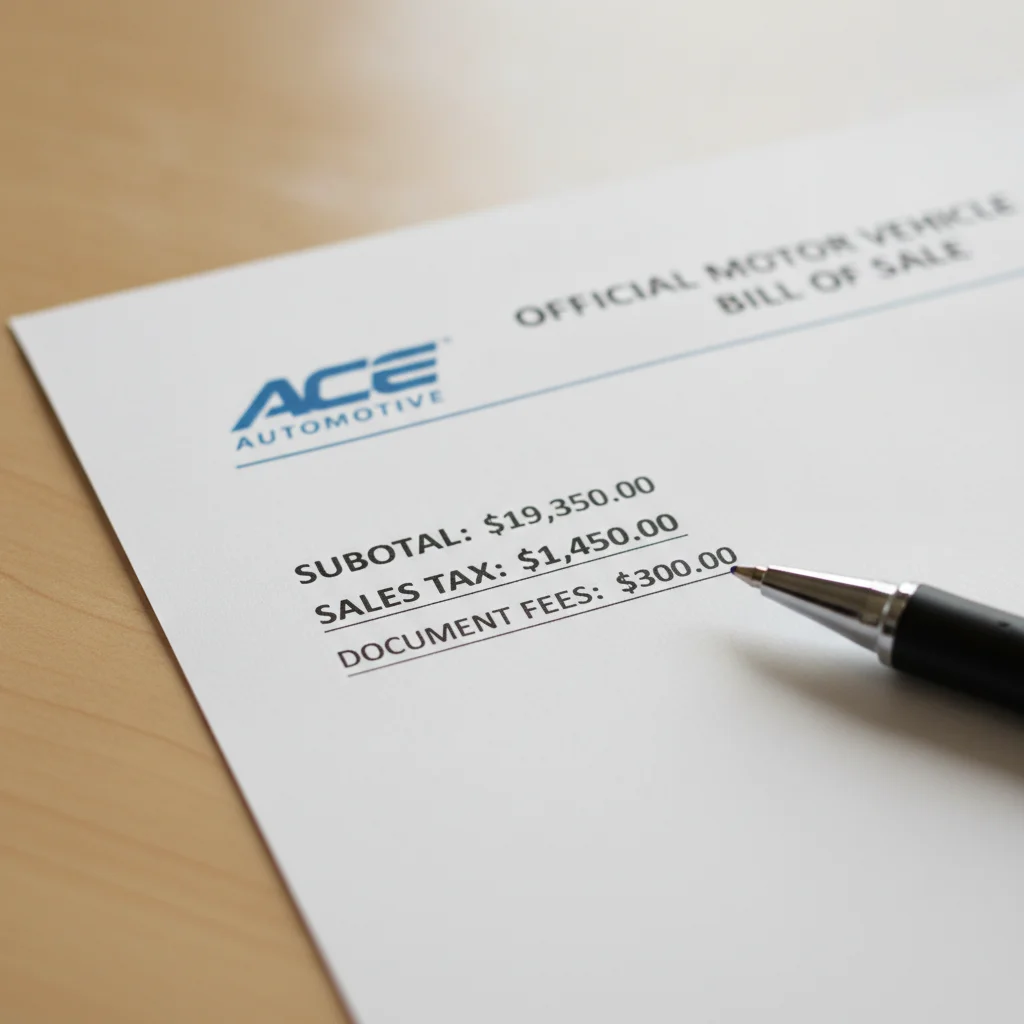
Every U.S. state with a sales tax has a corresponding use tax — the mechanism that captures revenue when a taxable item is purchased elsewhere and brought home. For vehicles, this is enforced at registration. When you walk into your home DMV to register an out-of-state purchase, the clerk will assess use tax based on your state's rate applied to the vehicle's purchase price (or sometimes its book value — more on that below).
The complication arises when a dealer in the selling state also collects sales tax. Reputable dealers typically know better — they'll collect a deposit or documentation fee but skip state sales tax on vehicles they know are leaving the state. But not every dealership gets this right, especially smaller independent lots unfamiliar with multi-state transactions.
Double Taxation Is Possible — and Hard to Reverse
If a dealer collects out-of-state sales tax improperly and your home state also assesses use tax, you may pay tax twice on the same vehicle. Recovering improperly collected sales tax from an out-of-state dealer requires filing a refund claim in that state — a process that can take months and is not guaranteed to succeed. The safest approach is to verify with the selling dealer before purchase that they understand the vehicle is leaving the state and will not collect sales tax.
CARB Non-Compliance Can Make a Car Permanently Unregisterable
If you purchase a vehicle that is not CARB-certified and bring it into a CARB-compliance state, you may not be able to register it at all — and retrofitting a vehicle to meet CARB standards is often technically impossible or cost-prohibitive. This isn't a fee you can pay your way through. Confirm emissions certification before purchase if you live in California, Massachusetts, New York, or any of the other states that follow California's standards.
Most states offer a credit for sales tax legitimately paid to another state, so you're not taxed twice on the full amount. But that credit only applies to tax actually owed and properly documented. If a dealer collects tax informally or it appears on your bill of sale without proper documentation, getting that credit at your home DMV can become a battle. Always request a separate, itemized receipt for any tax collected at the point of sale.
Private-party purchases carry their own version of this trap. A private seller in another state won't collect any tax — that's expected. But buyers sometimes assume that means no tax is due. Wrong. Your home state will still assess use tax when you register. Budget for it upfront.
If you're buying online and the vehicle is being shipped to you, the rules get even more layered. The state-specific rules for online car purchases article covers how delivery method and platform type affect your tax exposure.
Temporary Permits, Title Timelines, and Driving Legally Between States
When you drive a freshly purchased car across state lines, you're operating a vehicle that isn't yet registered in your home state and may have surrendered plates from the seller's state. That's a compliance gap that requires a temporary operating permit — and managing it correctly matters more than most buyers realize.
45
States with a sales or use tax on vehicles
According to the Tax Foundation, 45 states plus Washington D.C. impose some form of sales or use tax on vehicle purchases, each with different rates and bases.
13
States following California CARB emissions standards
As of 2024, thirteen states have adopted California's stricter CARB emissions certification requirements, affecting which out-of-state vehicles can be legally registered.
30–90
Days typical temporary operating permit window
Temporary tag validity varies by state, with some states issuing only 30-day permits — a narrow window when lender title processing averages six to ten weeks.
$400–$1,200+
Typical combined home-state registration and title fees
Based on DMV fee schedules across high-fee states like California, Florida, and Texas, buyers can expect several hundred to over a thousand dollars in registration-related costs alone.
Dealers are generally experienced at issuing temporary tags, but the rules vary. Some states issue 30-day permits; others give you 60 or 90 days. The permit is typically issued by the selling state, but your obligation to register in your home state begins from the moment you establish residency with the vehicle — not from the permit's expiration date.
The practical danger: buyers who take their time, wait for paperwork, deal with a lender's title process, or simply procrastinate can find themselves operating on an expired temporary tag without realizing their home-state clock started running weeks earlier. A traffic stop in that window can result in a citation for operating an unregistered vehicle.
Some States Use Book Value, Not Purchase Price, for Tax
A handful of states — including Connecticut and Massachusetts — assess use tax based on the vehicle's book value (typically NADA or Kelley Blue Book), not the actual purchase price. If you got a great deal on a higher-value car, you may still owe tax on the full book value. Call your home state DMV and ask specifically how they calculate the taxable amount for out-of-state purchases before you assume a low sale price means low tax exposure.
Expired Temporary Tags Are a Real Traffic Stop Risk
Driving on an expired temporary operating permit is treated the same as driving an unregistered vehicle in most states — a citable offense that can include fines and, in some jurisdictions, vehicle impoundment. Don't let the pace of DMV processing lull you into complacency. If your registration is taking longer than expected, contact your home DMV proactively and ask about interim options.
Out-of-State Dealer Financing Can Complicate Your Title
When you finance through an out-of-state dealer or their affiliated lender, the lien is recorded in the selling state's system. Your home state DMV must acknowledge that lien and issue a title with the lienholder noted — a process that can take weeks longer than a standard title transfer. Some lenders are slow to release paperwork across state lines. Confirm the lender's interstate title process before signing the financing agreement.
Title delays are a related problem. If you financed the purchase, the lender holds the title until the loan is paid. Your home DMV still needs to register the vehicle and issue plates — but doing so with a lienholder title from another state creates a paperwork chain that can take six to ten weeks to resolve. Start that process immediately after purchase, not after your temporary tag has nearly expired.
If you're uncertain what to inspect before finalizing the deal, our guide on test drives and inspections covers what to look for before you commit to any out-of-state vehicle.
Emissions, Safety Inspections, and the Car That Can't Be Registered
This is the trap that stings hardest because it can make an otherwise clean purchase completely unusable in your home state.

Emissions standards vary significantly by state. California maintains the strictest standards under its own Air Resources Board certification (often called CARB compliance), and about a dozen states have adopted California's rules. If you live in a CARB-compliant state and buy a vehicle certified only to federal EPA standards — which is perfectly legal to sell in most other states — you may not be able to register it at home.
The converse also bites buyers: someone living in a state without emissions testing buys from a state with strict requirements and assumes the car is in excellent shape mechanically. It may well be — but that history of passing strict emissions tests doesn't automatically satisfy your home state's safety inspection requirements, which are separate from emissions.
Before purchasing any out-of-state vehicle, call your home state's DMV or motor vehicle agency and ask two questions explicitly: Is this vehicle's emissions certification accepted in this state? and What inspection is required to register an out-of-state purchase? The answers will tell you whether you're looking at a registration-ready vehicle or a project that needs modifications before it can legally hit your local roads.
Double Taxation Is Possible — and Hard to Reverse
If a dealer collects out-of-state sales tax improperly and your home state also assesses use tax, you may pay tax twice on the same vehicle. Recovering improperly collected sales tax from an out-of-state dealer requires filing a refund claim in that state — a process that can take months and is not guaranteed to succeed. The safest approach is to verify with the selling dealer before purchase that they understand the vehicle is leaving the state and will not collect sales tax.
CARB Non-Compliance Can Make a Car Permanently Unregisterable
If you purchase a vehicle that is not CARB-certified and bring it into a CARB-compliance state, you may not be able to register it at all — and retrofitting a vehicle to meet CARB standards is often technically impossible or cost-prohibitive. This isn't a fee you can pay your way through. Confirm emissions certification before purchase if you live in California, Massachusetts, New York, or any of the other states that follow California's standards.
How to Protect Yourself Before, During, and After the Purchase
The mistakes covered in this article share a common root: buyers treat the transaction as complete when they hand over the money and receive the keys. In a cross-state purchase, the transaction isn't complete until the vehicle is legally registered and titled in your home state. That last mile takes planning.
Here's a practical checklist before you commit:
- Call your home DMV first. Confirm what taxes, fees, and inspections you'll owe on an out-of-state purchase. Ask specifically about use tax rates and whether your state offers credit for out-of-state sales tax paid.
- Research the title situation. Is the title clean and in the seller's name? Are there any liens? A lienholder release must accompany the title if the seller still has an outstanding loan.
- Verify emissions certification. Check the vehicle's certification label (usually on the driver's door jamb) against your home state's requirements.
- Get itemized documentation of any taxes collected. If a dealer charges any tax, get a receipt that names the tax specifically and the amount collected.
- Understand the temporary tag timeline. Confirm the permit's expiration and plan to complete home-state registration before it lapses.
- Budget the full ownership cost. Add your home state's registration fees, use tax, any required inspection fees, and title transfer costs to the purchase price before you decide the out-of-state deal is worth the effort.
Cross-state purchases are also governed by different consumer protection laws. If something goes wrong with a dealer transaction, your home state's lemon law may not cover you — the selling state's law applies. The title transfer complications in cross-state sales article is worth reading from the seller's perspective too — understanding both sides of the paperwork equation helps you ask better questions before signing.
If you're shopping new and considering whether to buy locally or pursue a cross-state deal, the new car buying hub covers the full dealership process so you know exactly what's negotiable and what isn't, wherever you buy.
The bottom line: an out-of-state purchase can absolutely be the right financial decision. But the savings need to survive the full accounting — purchase price plus every tax, fee, and compliance cost that follows you home.

All claims are backed by peer-reviewed research. Sources on request.