Key Takeaways
True Cost of Used Car Ownership
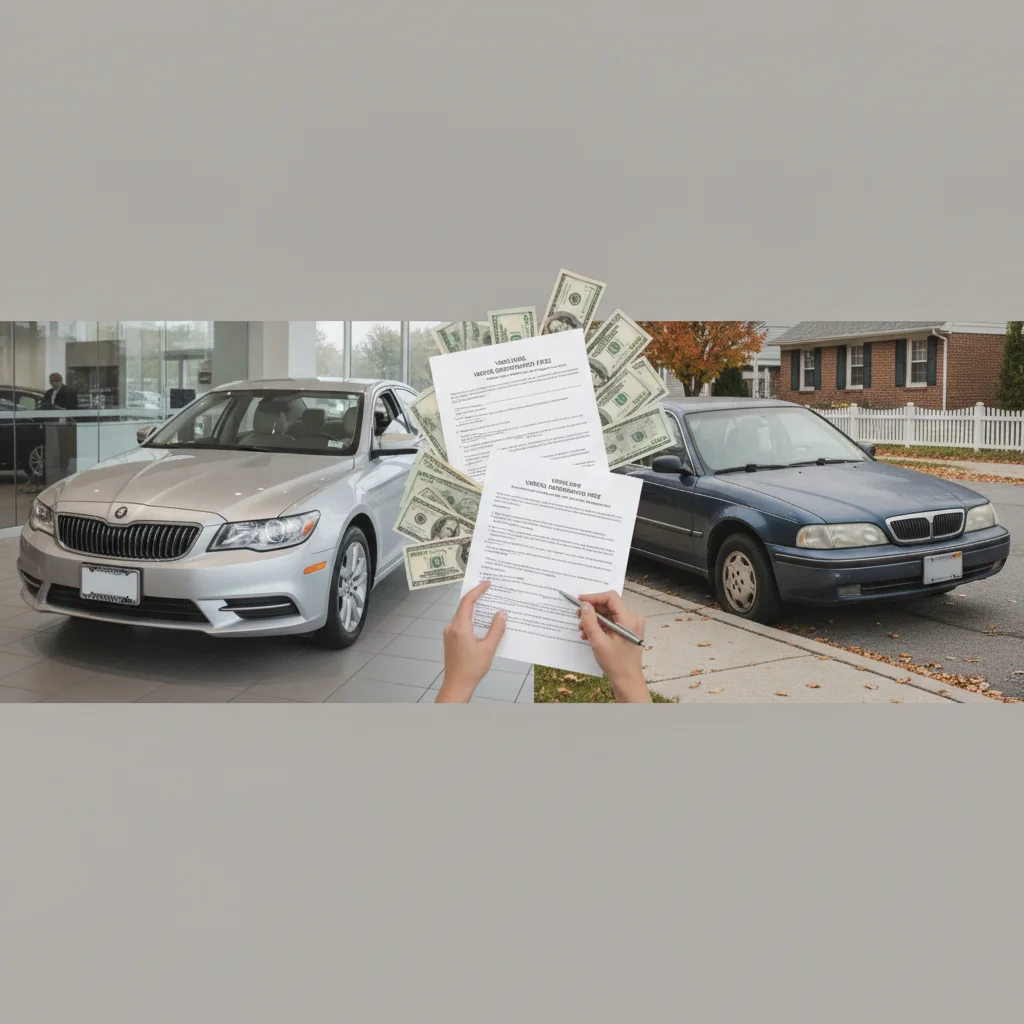
The true cost of owning a used car includes every dollar you spend beyond the purchase price — insurance premiums, loan interest, registration fees, fuel, routine maintenance, unexpected repairs, and depreciation. Most buyers focus on the sticker price or monthly payment, but those figures can represent less than half of what the vehicle will actually cost you over the ownership period. Calculating the full picture before you buy prevents budget shortfalls and lets you compare vehicles on an equal footing.
Automotive industry analysts typically model total cost of ownership (TCO) over five years, factoring in depreciation curves, average insurance rate tiers, regional fuel costs, and manufacturer-published maintenance schedules. Used vehicles have already absorbed the steepest depreciation drop, which changes the cost profile substantially compared to buying new.
Why the Sticker Price Is Just the Starting Point
When most people shop for a used car, they anchor on a single number: the asking price. It feels concrete, easy to compare, and simple to evaluate against a budget. The problem is that the purchase price typically represents only 40–55% of what you will actually spend on that vehicle over five years of ownership. The rest — insurance, fuel, maintenance, repairs, registration, and financing costs — arrives in smaller installments that are easier to ignore until they start hurting.
This isn't unique to used cars. But used vehicles carry specific cost dynamics that differ meaningfully from new car purchases, and those differences cut both ways. You avoid the brutal first-year depreciation hit that new car buyers absorb. You also lose the factory warranty safety net, face higher loan interest rates, and may be buying into a vehicle with deferred maintenance or hidden mechanical issues.
The goal of a true cost of ownership (TCO) calculation is to collapse all of those future expenses into a single comparable number — one that lets you evaluate a $12,000 economy car against a $18,000 compact SUV on an honest footing. That $6,000 price difference can look very different once you account for insurance premiums, fuel economy, and likely repair frequency.

Before we walk through each cost category, one ground rule: do this math before you fall in love with a specific vehicle. It's far easier to walk away from a car that fails the TCO test before you've sat in it, driven it, and negotiated a price.
Financing Costs: What the Loan Really Costs You
Used car loans carry higher interest rates than new car loans — sometimes significantly higher. While new car buyers with good credit might secure financing at 5–6%, used car buyers with similar credit profiles often pay 7–12%, and buyers with subprime credit can face rates of 15–24%. That spread adds up fast.
Consider a $15,000 used car financed over 60 months. At 7%, total interest paid is approximately $2,800. At 12%, it's roughly $5,100. At 18%, you're paying over $8,000 in interest on a $15,000 car — more than half the vehicle's value. The monthly payment difference might seem manageable ($287 vs. $380 per month), but the five-year cumulative cost is dramatically different.
7–12%
Typical used car loan interest rate range
According to Experian's State of the Auto Finance Market report, used car loan rates average significantly higher than new car rates across all credit tiers.
$5,100
Total interest on $15K loan at 12% over 60 months
Compared to $2,800 at 7%, a 5-point rate difference costs nearly $2,300 more in interest on the same principal over a standard loan term.
$8,500
Average annual used car ownership cost
AAA's annual Your Driving Costs study estimates total annual ownership expenses for used vehicles including insurance, fuel, maintenance, and financing.
40–55%
Share of TCO represented by purchase price
Industry TCO modeling consistently shows that the sticker price represents less than half of five-year ownership costs when all expense categories are included.
$4,000
Five-year fuel cost difference (22 vs. 34 MPG)
Based on 13,000 annual miles and $3.50/gallon fuel — a common scenario for average U.S. drivers, illustrating how fuel economy compounds over time.
This is why financing strategy belongs in your TCO calculation, not as an afterthought. If your credit score is below 680, consider spending 3–6 months improving it before buying. Even a 2-point rate reduction on a $15,000 loan saves you roughly $900 over five years. For a deeper breakdown of how loan terms affect total cost, see our guide on calculating your true monthly auto loan cost.
Shop for a Loan Rate Before You Shop for a Car
Get pre-approved through your bank or credit union before you set foot on a lot or contact a private seller. Knowing your rate gives you a baseline to compare against dealer financing offers. Credit unions routinely beat bank and dealer rates by 1–3 percentage points on used car loans — a gap that translates to hundreds or thousands in interest savings over the loan term.
Always Get Insurance Quotes Before Making an Offer
Insurance premiums should factor into your vehicle choice, not just your ownership budget. Call your insurer or use an online quote tool with the exact year, make, model, and trim of the vehicle you're considering. If the quote comes back $400+ higher than your current vehicle's premium, factor that difference into your total cost comparison before negotiating price.
Price Out the Next Service Interval Before Buying
Look up the manufacturer's recommended maintenance schedule for the mileage band the vehicle is entering. Get shop quotes on those specific services — particularly if a timing belt replacement or major fluid service is due. If the seller can't document recent service history, assume those items are overdue and price them into your offer or walk away.
Loan term matters too. Stretching a used car loan to 72 or 84 months lowers the monthly payment but increases total interest paid and creates a risk of being underwater — owing more than the car is worth — for the first two to three years. Used cars depreciate, sometimes quickly, and a long loan term accelerates negative equity.
Insurance: The Cost That Varies Most by Vehicle
Insurance is often the second-largest annual cost of used car ownership after depreciation, and it's one of the most variable. Two vehicles with identical sticker prices can carry insurance premiums that differ by $600–$1,200 per year. Yet most buyers never check insurance costs before choosing a vehicle.
What drives used car insurance rates?
- Vehicle category: Sports cars, performance trims, and luxury SUVs cost more to insure due to higher repair costs and theft rates.
- Vehicle age and value: Older, lower-value cars may not warrant comprehensive and collision coverage, which significantly reduces premiums.
- Safety ratings: Vehicles with strong IIHS or NHTSA safety scores often attract lower liability and medical payment premiums.
- Theft rates: Some models are disproportionately targeted — check the NICB's hot list before buying.
- Your location: Urban ZIP codes, states with high litigation rates, and areas prone to weather events all push premiums higher.

The actionable step here is simple: get an insurance quote for the specific vehicle — year, make, model, and trim — before you make an offer. Most major insurers provide online quotes in under five minutes. If the premium is $400–$600 more per year than you expected, that's $2,000–$3,000 more over five years, enough to meaningfully change whether that vehicle fits your budget.
Also reassess coverage levels relative to vehicle value. If a used car is worth $8,000, carrying a $500 deductible on comprehensive and collision might cost $700–$900 per year. Do the math on whether that coverage makes financial sense, or whether a higher deductible or liability-only policy is the more rational choice.
Maintenance and Repairs: Where Used Cars Get Unpredictable
This is the cost category that surprises used car buyers most often. New cars come with factory warranties and predictable, low-cost maintenance schedules for the first 3–5 years. Used cars — especially those outside CPO programs — come with uncertainty. And uncertainty costs money.
Break maintenance costs into two buckets:
- Scheduled maintenance
- Oil changes, tire rotations, brake inspections, air filters, spark plugs, transmission fluid, coolant flushes — these are predictable and you can price them out before buying. Pull the manufacturer's maintenance schedule for the specific mileage band you're entering and get shop quotes. A 75,000-mile service interval that includes a timing belt replacement can run $600–$1,200 on many four-cylinder engines.
- Unscheduled repairs
- This is where budgeting gets difficult. A used vehicle with 80,000 miles might need nothing for two years or might need a water pump, a wheel bearing, a catalytic converter, and a set of struts in year one. Reliability data from Consumer Reports and J.D. Power can give you probability estimates by model, but no model is immune.
CPO Vehicles Change the Maintenance Math
Certified pre-owned (CPO) vehicles sold through franchised dealerships typically include extended powertrain warranties and have passed a multi-point inspection. This shifts the repair risk profile closer to a new car purchase, though CPO premiums often add $1,500–$3,000 to the purchase price. Factor the warranty coverage period and deductible into your TCO estimate when comparing CPO to non-CPO vehicles.
Private Party vs. Dealer Purchases Affect Fees Differently
Buying from a private seller typically eliminates dealer documentation fees ($50–$800 depending on state and dealership), but you still owe sales tax and title/registration fees in most states — they're just collected at the DMV rather than the dealership. Some states exempt private party transfers from sales tax; check your state's DMV website before assuming you'll save on taxes by buying privately.
Your TCO Estimate Is a Comparison Tool, Not a Contract
No TCO estimate will be perfectly accurate — repair costs in particular are inherently uncertain. The value of the exercise is consistency: if you run the same estimate framework on three vehicles, the relative comparison is reliable even if the absolute numbers aren't perfect. Use TCO to identify which vehicle is the better financial choice, not to predict exactly what you'll spend.
A general rule of thumb: budget $1,000–$1,500 per year in an unscheduled repair reserve for a used vehicle with 60,000–100,000 miles on a mainstream brand. For European luxury vehicles in the same mileage range, that reserve should be $2,500–$4,000. If you don't spend it, it rolls over. If you do need it, you're not going into debt to fix your car.
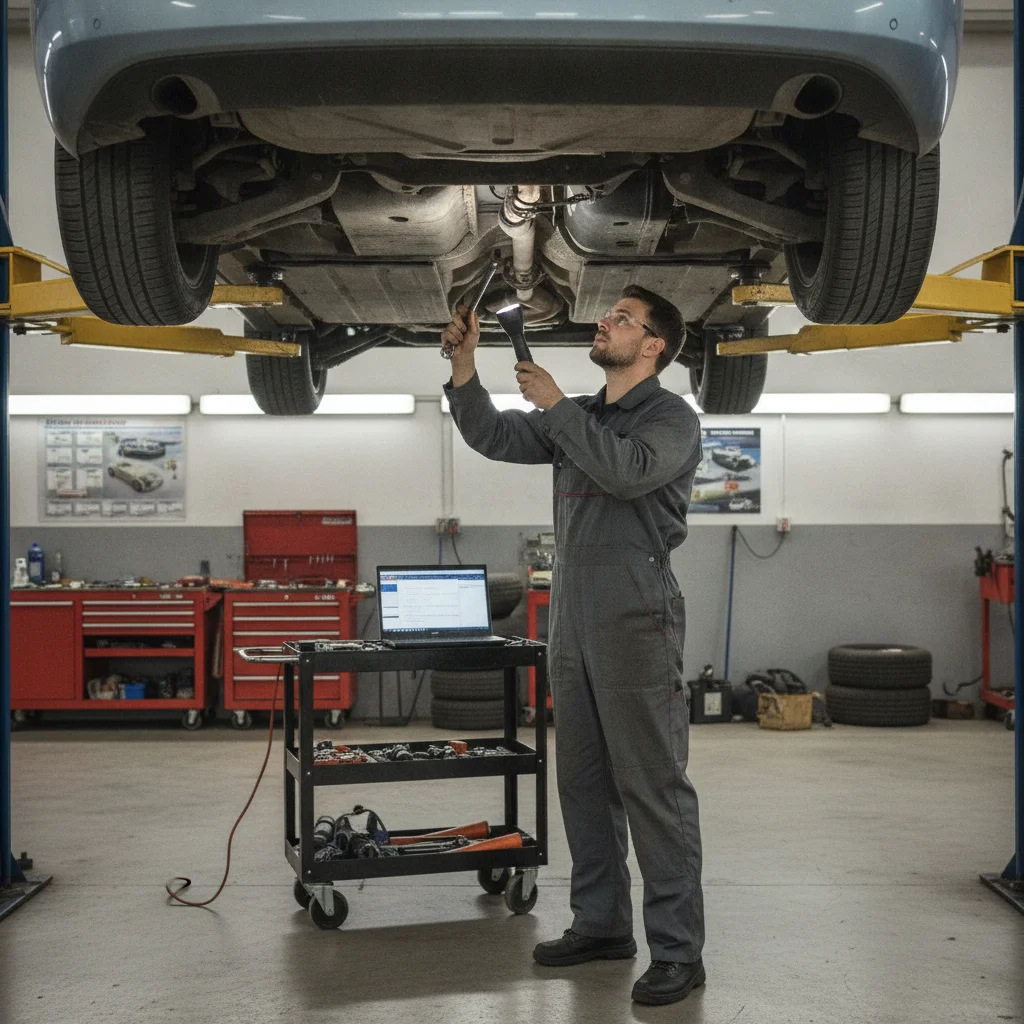
A pre-purchase inspection (PPI) from an independent mechanic — not the seller's shop — is the single best $100–$150 you can spend before buying a used car. It won't catch every future problem, but it identifies existing issues and gives you negotiating leverage or a reason to walk away. Any seller who refuses a PPI is showing you something important about the vehicle.
Fuel, Registration, and the Costs Nobody Budgets For
Fuel is the most consistent ongoing cost of vehicle ownership and one of the easiest to estimate accurately. Check the vehicle's EPA fuel economy rating on fueleconomy.gov, estimate your annual mileage (the U.S. average is approximately 12,000–15,000 miles), and apply current local fuel prices. A vehicle that gets 22 MPG costs roughly $800 more in fuel per year than one that gets 34 MPG, assuming 13,000 miles annually at $3.50/gallon. Over five years, that's $4,000.
This is where comparing vehicles with different sticker prices can flip the obvious choice. A $14,000 SUV with 22 MPG might cost more over five years than a $16,000 sedan with 35 MPG, once fuel savings are factored in.
Registration and taxes deserve more attention than most buyers give them. In most states, you'll pay:
- Sales tax at the point of purchase — typically 4–10% of the vehicle's price. On a $15,000 car, that's $600–$1,500 due at signing.
- Title transfer fees — usually $15–$100 depending on the state.
- Annual registration fees — which in value-based states can run $200–$600 per year for a newer used vehicle, declining as the car ages.
The good news for used car buyers: in most value-based states, registration fees are substantially lower than on an equivalent new vehicle, since they're calculated on current market value rather than MSRP. For a detailed look at how this plays out over time, see our comparison of registration fees for new vs. used vehicles across an ownership period.
Also factor in: parking costs, tolls, car washes, and any recurring subscriptions the vehicle requires (connected services, satellite radio, navigation updates). Individually minor, collectively they add $300–$700 per year for many owners.
“The payment is what you see. The cost is what you pay. Most buyers optimize for the first number and get surprised by the second.”
— Phil Reed, Senior consumer advice editor, Edmunds.com
Depreciation: The Biggest Cost That Doesn't Feel Like One
Depreciation is the difference between what you pay for a vehicle and what you sell it for — and it's typically the largest single cost of ownership, even on used cars. The common belief that used cars avoid depreciation losses isn't quite right. Used cars just start further along the depreciation curve, where the rate of value decline has slowed but hasn't stopped.
A used car purchased for $20,000 that sells for $12,000 five years later has cost you $8,000 in depreciation — $1,600 per year. That's real money, even if you never wrote a check for it. And unlike a repair bill, depreciation arrives silently, only becoming visible when it's time to sell or trade.
The vehicles that hold value best are generally those with strong resale demand, limited production, or reputation for longevity. Full-size trucks and certain Japanese nameplates consistently outperform the market on resale. Luxury sedans and domestic full-size cars often underperform — which means buying one used is a better deal than buying new, but selling one in five years may still leave you with thin equity.
For a full analysis of how depreciation compares to out-of-pocket costs like fuel and insurance, see our breakdown of depreciation vs. out-of-pocket costs. Understanding which cost dominates for the specific vehicle you're considering changes how you should think about the purchase decision.
To estimate a vehicle's likely depreciation, use tools from KBB or Edmunds to compare the current value of models that are 3 and 5 years older than the one you're buying — that gives you a real-world resale trajectory to work with. Our valuation tools guide explains how to get accurate estimates from these sources.
Building Your Total Cost of Ownership Estimate
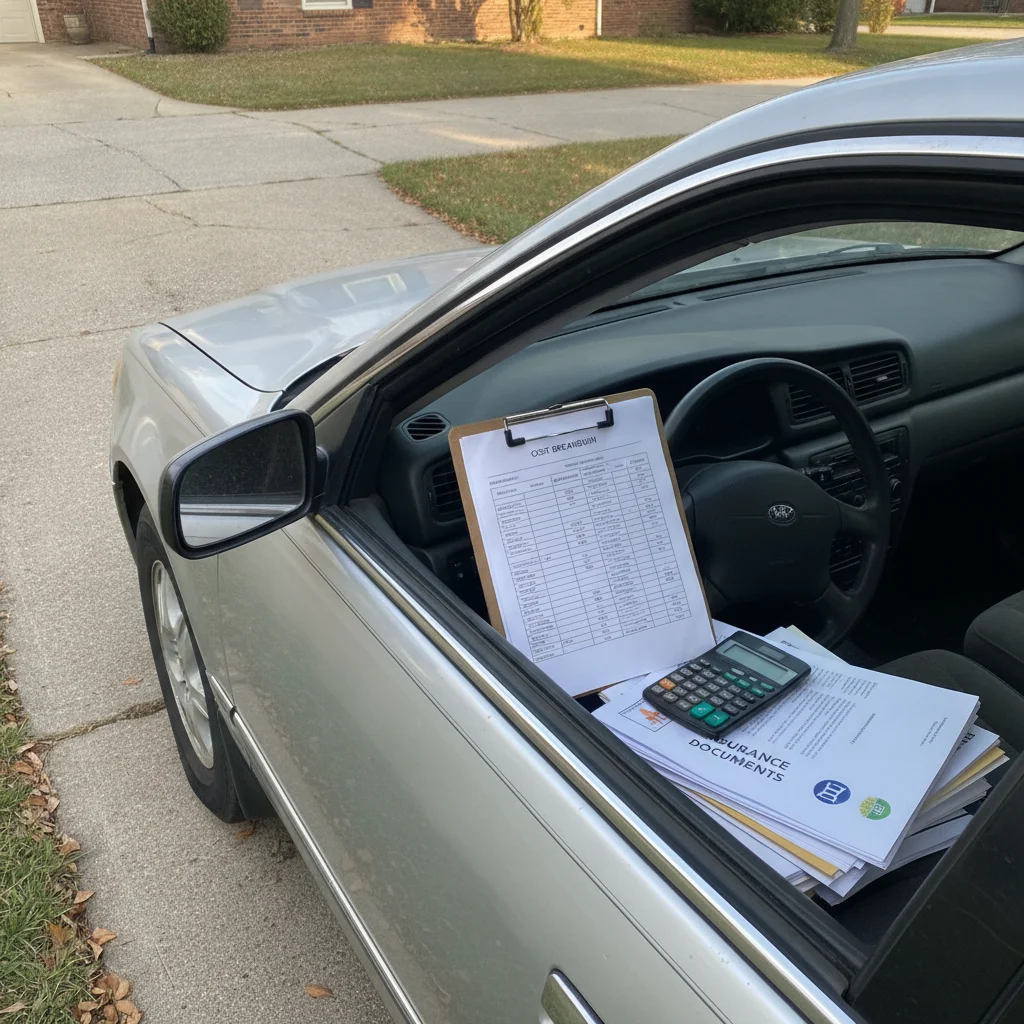
Once you understand each cost category, assembling a TCO estimate is straightforward. Here's a simple framework to use before committing to any used vehicle purchase:
- Purchase price + day-one fees: Add sales tax, title, registration, and any dealer documentation fees. Use our guide on calculating taxes and fees to estimate your state's specific charges.
- Financing cost: Total interest paid over the loan term. Get a rate quote before you shop, not after you've chosen a vehicle.
- Annual insurance × years owned: Get a real quote on the specific vehicle before making an offer.
- Fuel cost: (Annual miles ÷ MPG) × price per gallon × years owned.
- Scheduled maintenance: Pull the manufacturer schedule and price out the next 2–3 service intervals.
- Repair reserve: $1,000–$4,000 per year depending on vehicle age, mileage, and brand reliability.
- Registration renewals: Annual registration × years owned.
- Depreciation: Estimated purchase price minus projected resale value at end of ownership period.
Add those figures together and divide by your planned ownership period in months. That's your true monthly cost of ownership — a far more useful number than the loan payment alone. For more on this calculation, see calculating your true monthly auto loan cost.
If you're comparing this used car to a new car purchase, the same framework applies — the numbers just fall differently. New cars benefit from lower repair costs and interest rates; used cars benefit from lower purchase prices, registration fees, and slower depreciation. See how the numbers play out in our contrast of new car ownership costs in year one.
CPO Vehicles Change the Maintenance Math
Certified pre-owned (CPO) vehicles sold through franchised dealerships typically include extended powertrain warranties and have passed a multi-point inspection. This shifts the repair risk profile closer to a new car purchase, though CPO premiums often add $1,500–$3,000 to the purchase price. Factor the warranty coverage period and deductible into your TCO estimate when comparing CPO to non-CPO vehicles.
Private Party vs. Dealer Purchases Affect Fees Differently
Buying from a private seller typically eliminates dealer documentation fees ($50–$800 depending on state and dealership), but you still owe sales tax and title/registration fees in most states — they're just collected at the DMV rather than the dealership. Some states exempt private party transfers from sales tax; check your state's DMV website before assuming you'll save on taxes by buying privately.
Your TCO Estimate Is a Comparison Tool, Not a Contract
No TCO estimate will be perfectly accurate — repair costs in particular are inherently uncertain. The value of the exercise is consistency: if you run the same estimate framework on three vehicles, the relative comparison is reliable even if the absolute numbers aren't perfect. Use TCO to identify which vehicle is the better financial choice, not to predict exactly what you'll spend.
The buyers who get the best deals on used cars aren't necessarily the ones who negotiate the hardest on price — they're the ones who understand the full cost picture and use it to choose the right vehicle in the first place. A $2,000 discount on the wrong car is still a bad deal.

All claims are backed by peer-reviewed research. Sources on request.