Key Takeaways
Good Student Discount
A good student discount is a reduction in auto insurance premiums offered to young drivers — typically high school or college students — who maintain a qualifying academic record. Insurers offer it because research links academic performance to lower crash risk. If you or a dependent driver on your policy meets the GPA threshold, you can usually claim a discount of anywhere from 5% to 25% off certain coverage types.
The discount typically applies to the liability and collision portions of the premium rather than the entire policy. Eligibility thresholds and documentation requirements vary by insurer, so check your carrier's specific criteria.
What Is a Good Student Discount and Why Do Insurers Offer It?
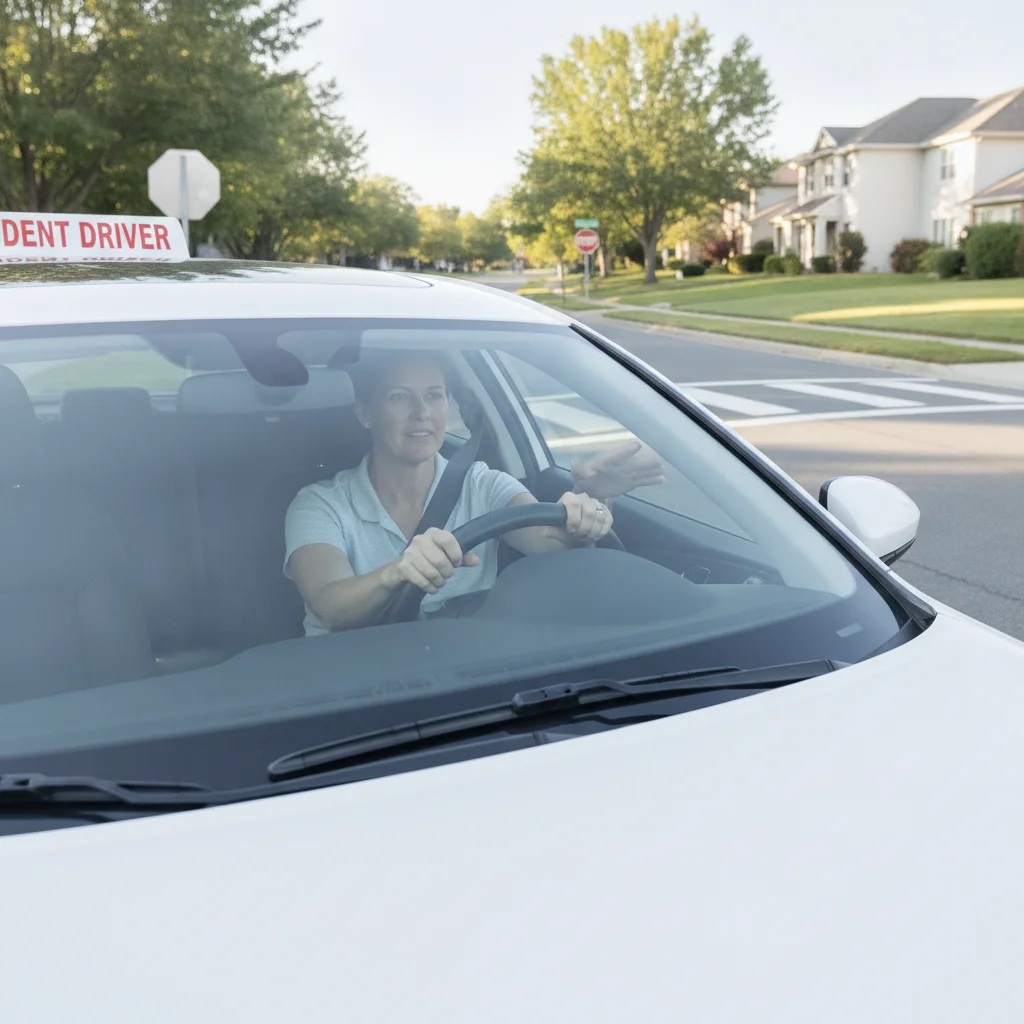
Car insurance pricing is fundamentally a risk calculation. Insurers look at every data point they can find to predict how likely a driver is to file a claim. Young drivers — particularly those aged 16 to 25 — sit at the top of the risk chart, which is why their premiums are so much higher than older adults. But within that high-risk group, insurers have found a statistical signal they trust: academic performance.
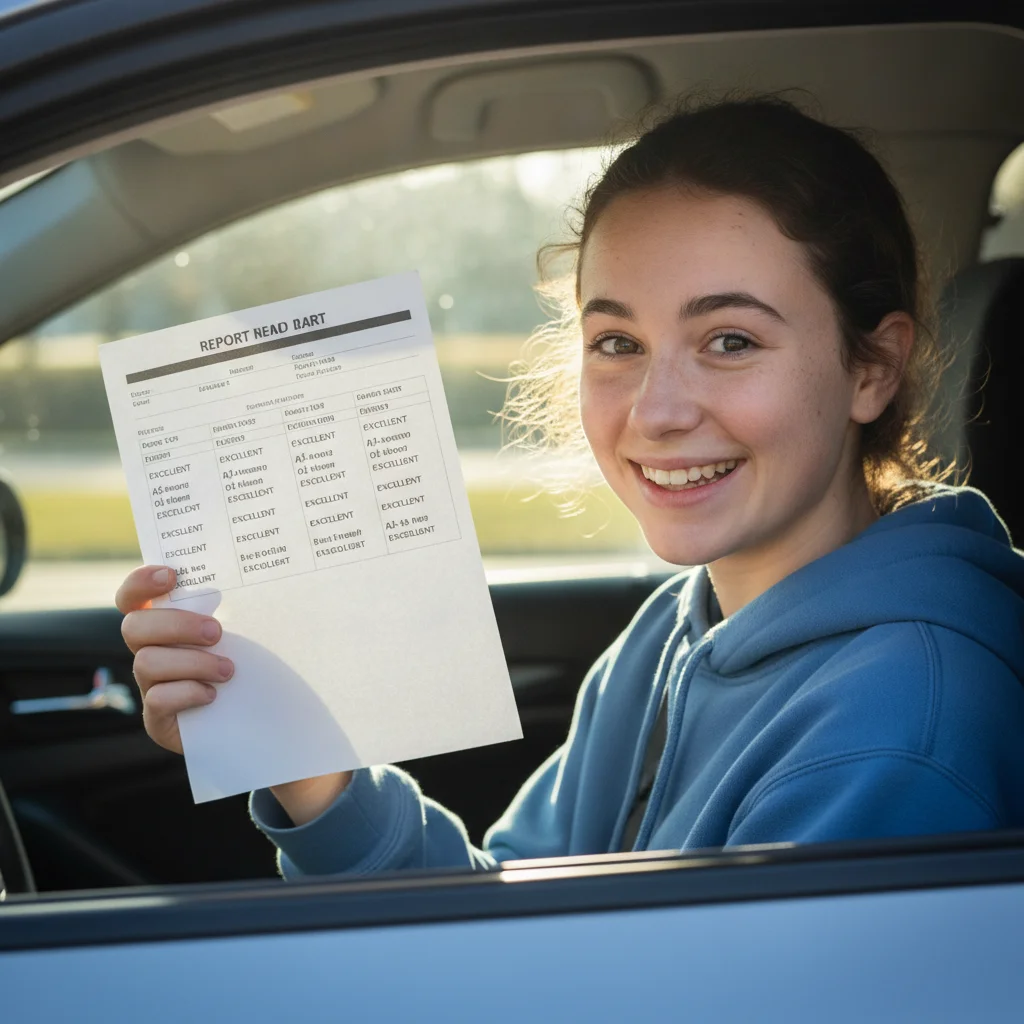
Carriers cite internal and industry-wide data suggesting that students who maintain strong grades tend to demonstrate the same qualities behind the wheel — attentiveness, responsibility, and lower likelihood of risky behavior. The result is the good student discount, a targeted reduction offered to qualifying young drivers who can document their academic standing.
This isn't a marketing gimmick. It's a real, actuarially grounded discount that most major carriers — including State Farm, Geico, Progressive, Allstate, and Nationwide — offer in some form. Yet it remains one of the most underused savings available to families with young drivers on their policy.
To understand how it fits into the broader picture of rate factors, it helps to know that age is one of the single biggest variables in premium pricing. See the rate factors hub for a full breakdown of how age, driving history, and other variables interact to set your premium.
Who Qualifies: Age, Enrollment, and GPA Requirements
Eligibility for a good student discount hinges on three things: how old the driver is, whether they're enrolled as a full-time student, and what their grades look like. Here's what most carriers require:
- Age: Typically under 25. Some insurers cap eligibility at 23. The discount is designed for drivers in the statistically riskiest age bracket.
- Enrollment status: Must be a full-time student at an accredited high school, college, or university. Part-time enrollment usually doesn't qualify.
- Academic performance: A minimum 3.0 GPA (B average) is the most common benchmark. Alternatives may include top 20% class ranking or honor roll / dean's list status.
Some carriers are more flexible on the GPA requirement — a handful accept a 2.5 GPA — while others are stricter. If your student is close to the cutoff, it's worth calling a few carriers to compare thresholds before assuming you don't qualify.
Home-Schooled Students Are Often Eligible
Many insurers extend the good student discount to home-schooled students. Documentation typically consists of a standardized test score in the top percentile or a signed statement from the parent-educator. Policies vary by carrier, so ask directly if your student is home-schooled.
The Discount Applies to the Rated Driver, Not the Policy Owner
Even if the student isn't the policyholder, the discount attaches to the rate associated with them as a listed driver. Parents who hold the policy on behalf of a teen or college student can still claim it — just make sure the student is correctly listed as a rated driver on the policy.
Home-schooled students are eligible at many carriers as well, typically verified through a standardized test score or a signed statement from the parent-educator. Ask your insurer specifically how they handle home-school documentation.
It's also worth noting that the student doesn't need to be the primary policyholder. In most cases, a parent or guardian holds the policy, and the qualifying student is listed as a rated driver. The discount applies to the rate associated with that driver.
5%–25%
Typical good student discount range
Most major U.S. auto insurers offer a good student discount within this range, applied to eligible coverages such as liability and collision.
3.0 GPA
Most common minimum qualifying GPA
A B average is the standard threshold at carriers including State Farm, Geico, Progressive, and Allstate, though some carriers accept lower minimums.
Under 25
Maximum age for eligibility at most carriers
The discount is designed for the highest-risk driver age group; most carriers cap eligibility between ages 23 and 25.
$1,500–$3,000
Annual premium increase for adding a teen driver
Industry estimates suggest adding a 16-year-old to a family policy raises the annual premium by this amount, making percentage-based discounts especially valuable.
How Much Can You Actually Save?
The range across major insurers runs from about 5% to 25% off eligible coverages. That's a wide band, so the actual dollar value depends on your carrier, your state, and what coverages the discount applies to.
To put that in perspective: teen drivers are often the most expensive rated drivers on a family policy. Adding a 16-year-old to a parent's policy can increase the premium by $1,500 to $3,000 per year, depending on location and vehicle. A 15% good student discount on that added cost is $225 to $450 annually — real money over multiple years of high school and college.
“The good student discount is one of the clearest examples of an insurer rewarding demonstrated low-risk behavior. Students who maintain strong grades are statistically less likely to be involved in serious accidents — and insurers price that in.”
— J. Robert Hunter, Former Director of Insurance, Consumer Federation of America
Because the discount typically applies to liability and collision rather than the full premium, the savings won't equal the stated percentage applied to your total bill. It will be a percentage of the portion attributable to those coverages. Still, for most families, it's the single easiest discount to claim that requires no behavior change — just documentation.
For a complete view of what other savings might be available on top of this one, see every auto insurance discount worth knowing about. Stacking the good student discount with, say, a multi-car discount and a safe-driver credit is where the real savings add up.
Stack Discounts for Maximum Savings
The good student discount can usually be combined with other credits — multi-car, distant student, defensive driving, and telematics programs. Don't treat discounts as mutually exclusive. Ask your insurer explicitly which ones can be stacked, and request an updated quote with all applicable discounts applied simultaneously.
Ask Every Time You Shop
Every time you get a new insurance quote — whether you're switching carriers or adding a driver — mention the good student discount upfront. Some agents don't ask proactively. A few seconds of disclosure during the quote process ensures the discount is factored into the comparison from the start.
How to Claim the Discount: Step-by-Step
This discount almost never applies automatically. You have to ask for it and provide proof. Here's the process at most major carriers:
- Call your insurer or log into your online account. Ask specifically whether a good student discount is available and what their exact GPA threshold is.
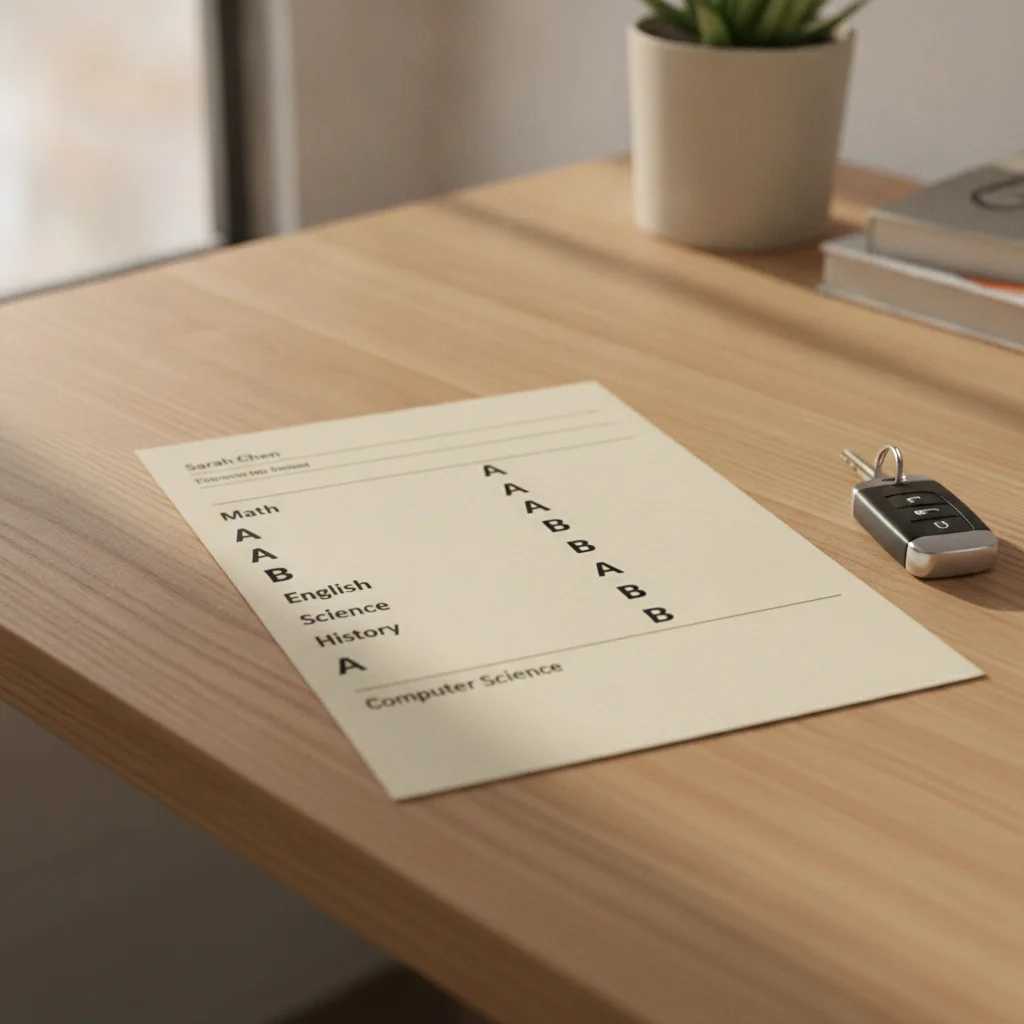
- Gather documentation. A recent official transcript, a printed report card, or a letter from the school registrar on letterhead are the most commonly accepted forms. Honor roll or dean's list certificates may also work.
- Submit the documentation. Most carriers accept a photo upload, email, or fax. Some have an online form in the customer portal specifically for discount verification.
- Confirm the discount is applied. Check your updated declarations page or premium summary to verify the discount shows up. Don't assume it was processed without verifying.
- Set a reminder to renew. Most carriers require updated documentation every 12 months. If you let it lapse, the discount may be quietly removed at renewal.

If you're shopping for a new policy rather than updating an existing one, mention the good student discount during the quote process and ask each carrier what documentation they require. Not every insurer weights it the same way, and comparing quotes with the discount applied is the only way to get an apples-to-apples comparison.
Also check whether your current policy has any other overlooked savings. Discounts hiding in plain sight on your auto policy covers several credits that many policyholders qualify for but never claim.
How the Good Student Discount Stacks With Other Young-Driver Savings
The good student discount doesn't exist in isolation. Young drivers have access to several other targeted savings, and combining them is where the strategy pays off.
- Distant student discount: If a full-time college student lives more than 100 miles from home and doesn't have regular access to the insured vehicle, many carriers offer an additional reduction. This can be combined with the good student discount at most insurers.
- Defensive driving course discount: Completing an approved course can earn a separate credit. See defensive driving courses that actually reduce your premium for what to look for in a qualifying program.
- Good driver discount: Once a young driver accumulates a clean record for three to five years, they may qualify for a safe-driver credit. Good driver discounts explained covers exactly what carriers look for.
- Telematics / usage-based programs: Programs like Snapshot (Progressive) or DriveEasy (Geico) monitor driving behavior via app. Young drivers who drive safely can earn significant discounts — often 10%–30% — and this stacks with the good student credit at most carriers.
For a focused look at which discounts actually make the biggest dent in young-driver premiums, young drivers and insurance savings: which discounts actually move the needle is worth reading alongside this article.
Stack Discounts for Maximum Savings
The good student discount can usually be combined with other credits — multi-car, distant student, defensive driving, and telematics programs. Don't treat discounts as mutually exclusive. Ask your insurer explicitly which ones can be stacked, and request an updated quote with all applicable discounts applied simultaneously.
Ask Every Time You Shop
Every time you get a new insurance quote — whether you're switching carriers or adding a driver — mention the good student discount upfront. Some agents don't ask proactively. A few seconds of disclosure during the quote process ensures the discount is factored into the comparison from the start.
Common Mistakes That Leave This Discount on the Table
Given how straightforward the good student discount is, it's surprising how often families miss it. Here are the most common reasons it goes unclaimed:
- Assuming the insurer already applied it
- Carriers don't proactively verify your student's GPA. If you never told them, you're not getting the discount.
- Not renewing documentation annually
- This is the most common way to lose a discount that was previously applied. Set a calendar reminder tied to your policy renewal date.
- Assuming it's not available because the student is in college
- Many parents associate the discount only with high schoolers. College students under 25 enrolled full-time almost always qualify.
- Not asking when switching carriers
- Every new policy is a fresh opportunity. Always ask about the good student discount during the quote process.
- Accepting a carrier's first answer without verifying alternatives
- If one carrier's threshold is 3.0 and your student has a 2.8, another carrier may have a 2.5 threshold. It's worth shopping around.
Home-Schooled Students Are Often Eligible
Many insurers extend the good student discount to home-schooled students. Documentation typically consists of a standardized test score in the top percentile or a signed statement from the parent-educator. Policies vary by carrier, so ask directly if your student is home-schooled.
The Discount Applies to the Rated Driver, Not the Policy Owner
Even if the student isn't the policyholder, the discount attaches to the rate associated with them as a listed driver. Parents who hold the policy on behalf of a teen or college student can still claim it — just make sure the student is correctly listed as a rated driver on the policy.
The bottom line: this discount rewards academic achievement that's already happening. Claiming it takes about 10 minutes and a transcript. There's no good reason not to.

All claims are backed by peer-reviewed research. Sources on request.