Key Takeaways
Insurance Discount Rate Variation
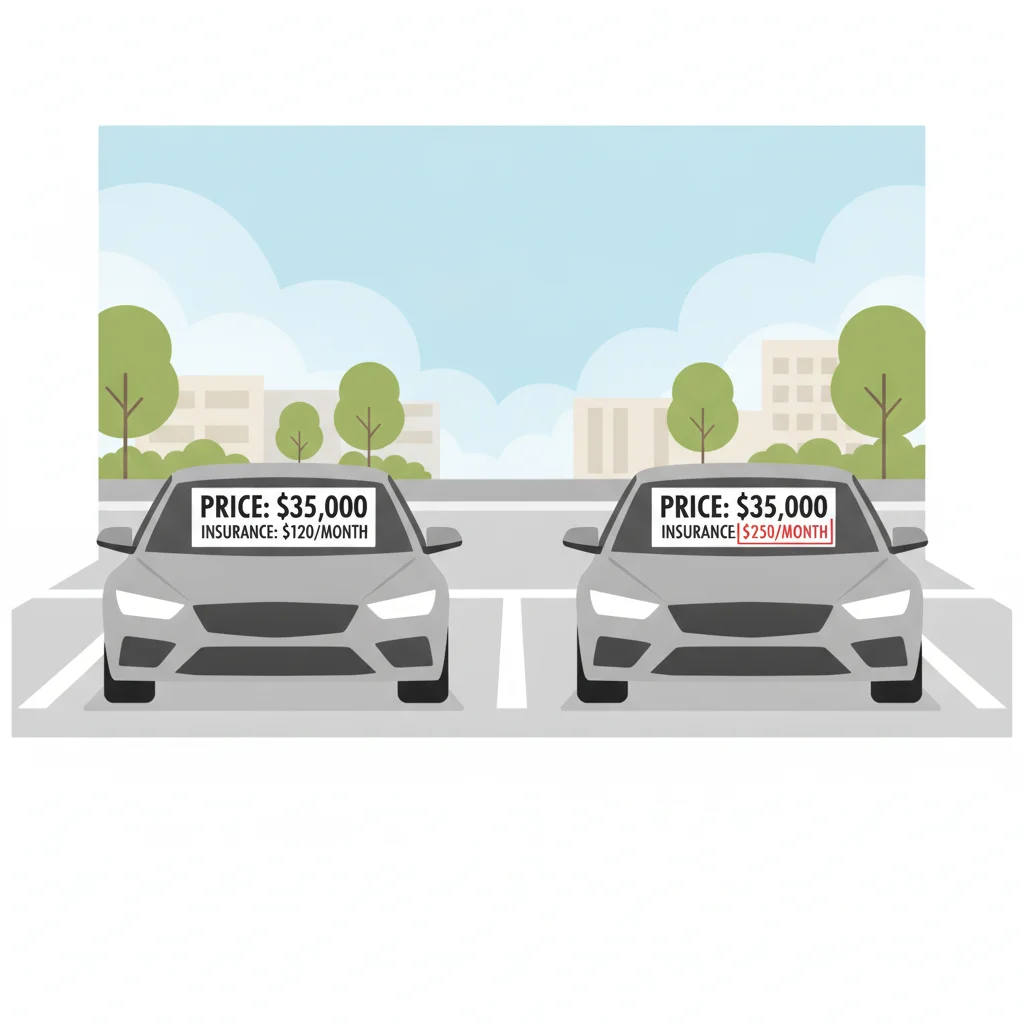
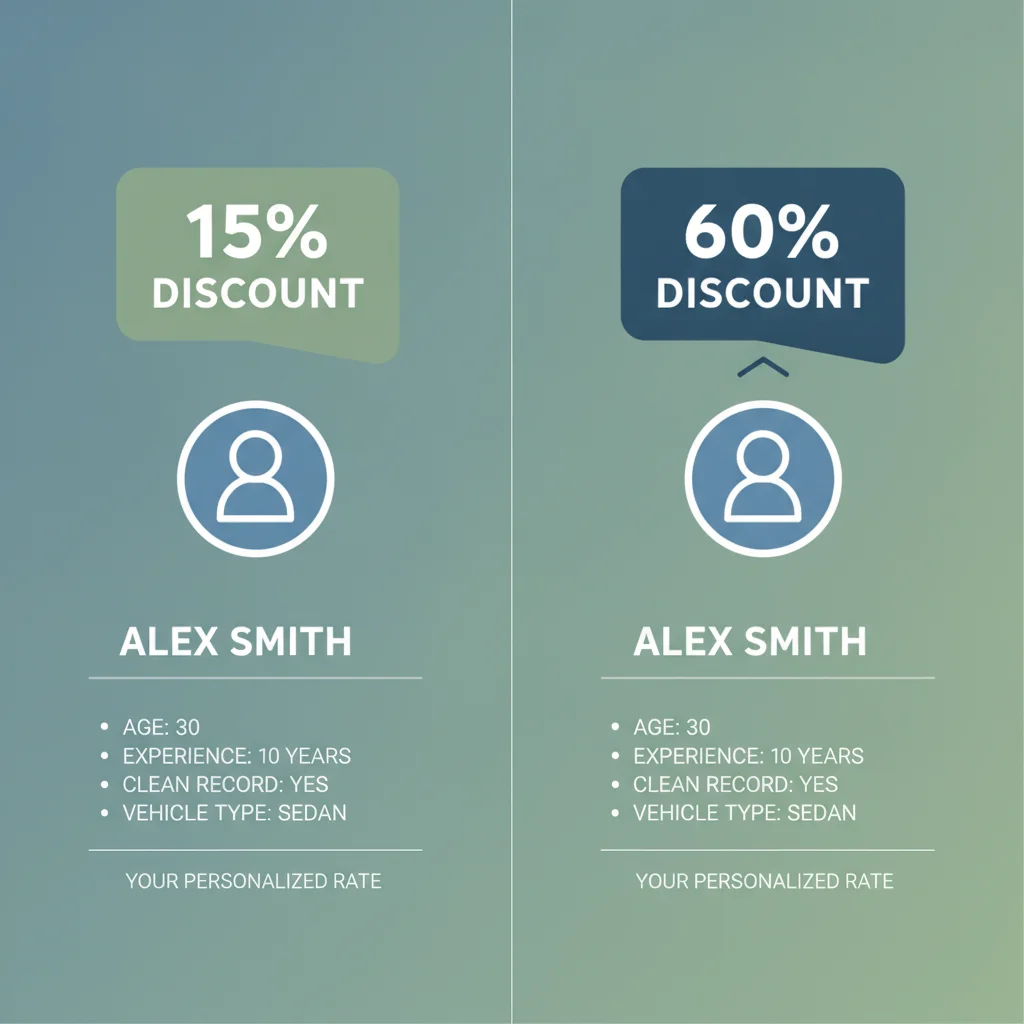
Insurance discount rate variation refers to the phenomenon where two drivers with identical profiles — same age, same vehicle, same driving record — receive materially different discount amounts from different insurers. This happens because each insurer builds its own discount structure based on proprietary actuarial data, target customer segments, and state-approved rating plans. The result is that the "discount" you receive is not a universal number but a function of how a specific company has chosen to price risk and reward loyalty.
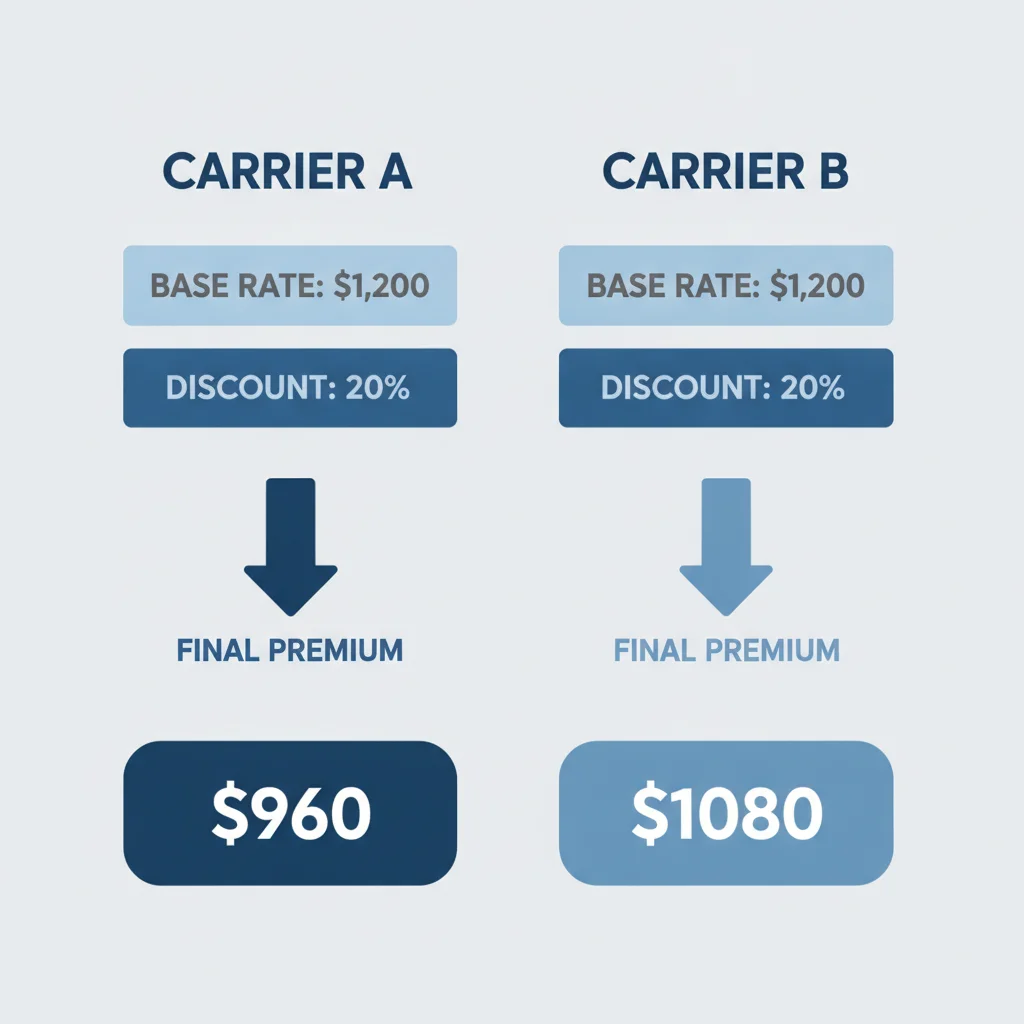
Insurers file their rating plans, including discount schedules, with each state's department of insurance. Those filings are public record but are rarely reviewed by consumers. Discount percentages are applied to base rates that already differ between carriers, meaning a 10% discount at Carrier A may save more in absolute dollars than a 15% discount at Carrier B.
The Discount Is Only Part of the Equation
Most drivers think of a discount as a straightforward benefit — the insurer shaves a percentage off your premium, and you save money. The reality is more complicated, and misunderstanding it costs drivers real money every year.
Here's the key insight: discounts are applied to base rates, and base rates differ significantly between carriers. A 15% safe driver discount at one company might save you $120 annually. The same nominal discount at a competitor with a higher base rate for your zip code might save you $210. Conversely, a carrier with a lower base rate might offer only a 10% discount but still deliver a cheaper final premium.
This is why comparing discounts in isolation — or worse, bragging about a discount percentage without checking the final number — is one of the most common mistakes car owners make when shopping for insurance.
The discount structure is also shaped by state regulation. Each insurer submits a rating plan to the state's department of insurance that specifies exactly which discounts it offers, how they're calculated, and what documentation is required. Those plans differ carrier by carrier, state by state. What Progressive offers in Ohio is not what it offers in California, and neither matches what GEICO offers in either state.
For a deeper look at how individual rating factors layer on top of discounts, see our Rate Factors hub, which covers how age, history, location, and vehicle type all interact with your final premium.
Why Insurers Build Different Discount Structures
Insurance companies are not in the business of giving money away. Every discount they offer exists because their actuarial teams believe it predicts lower claims costs — or because it helps them acquire and retain a profitable customer segment. That's it. The discount is a business tool, not a consumer benefit offered out of goodwill.
Proprietary Loss Data
Large national carriers have decades of claims data on millions of policyholders. A company like State Farm or Allstate can observe exactly how much its telematics-enrolled drivers differ in claims frequency versus non-enrolled drivers — and price the discount accordingly. A regional carrier with a smaller book of business may have less confidence in that number and either offer a smaller telematics discount or not offer one at all.
Target Customer Strategy
Insurers actively choose which types of drivers they want to insure. A carrier targeting young urban drivers will build discount structures that attract that demographic — good student discounts, low-mileage discounts, app-based telematics. A carrier focused on long-tenured homeowner families will weight bundling and loyalty discounts more heavily. The same 35-year-old driver with a clean record looks like a different customer to each of these companies.
“Insurance companies don't price risk the same way — they price risk the way their data tells them to. Two carriers looking at the same driver are essentially running two different models with two different datasets. The discount is just the visible tip of that iceberg.”
— J. Robert Hunter, Former Federal Insurance Administrator and Director of Insurance at the Consumer Federation of America
Competitive Positioning
In states with heavy price competition, insurers sometimes inflate nominal discount percentages while adjusting base rates upward to maintain margins. This is entirely legal, and it's why the headline "save up to 25%" in an advertisement is largely meaningless without knowing what you're saving 25% from.
Auto insurance discount myths that cost drivers money explains several of these marketing traps in detail — worth reading before you take any insurer's discount claim at face value.
Ask for the Discount Breakdown in Writing
When you receive a quote, ask the carrier to itemize every discount applied and its percentage. This lets you compare apples to apples across carriers and spot discounts you're receiving with one company but not another. It also gives you a negotiating reference point if you decide to ask your current insurer to match a competitor's offer.
Review Telematics Terms Before Enrolling
Before signing up for a telematics program, confirm whether your driving score can raise your rate as well as lower it. Programs that only reward good driving are essentially free money if your habits are solid. Programs with two-way rate adjustment require more careful consideration, particularly if you drive at night or in high-traffic urban areas frequently.
The Most Variable Discounts — and Why They Differ
Not all discounts are equally variable. Some — like the safe driver discount — are nearly universal but differ in magnitude. Others exist at some carriers and don't exist at all at others. Here's where the biggest gaps tend to appear.
$947
Average annual spread between cheapest and most expensive auto insurance quote
According to a 2023 analysis by the Insurance Information Institute and independent rate-tracking services, the gap between the lowest and highest quotes for the same driver profile regularly exceeds $900 per year.
Up to 40%
Maximum telematics discount advertised by leading carriers
Several major insurers including Progressive and State Farm advertise telematics discounts of up to 30–40% for top-performing drivers, though average realized discounts are significantly lower.
5–25%
Typical range for bundling home and auto discount
Industry surveys show bundling discounts range from as little as 5% to as much as 25% depending on the carrier, state, and relative value of the policies being combined.
1 in 3
Drivers who never shop their auto insurance at renewal
A 2022 J.D. Power insurance shopping survey found that approximately one-third of auto insurance customers do not obtain competitive quotes before renewing their existing policy.
8–25%
Good student discount range across major carriers
The good student discount for eligible young drivers varies from approximately 8% at some carriers to 25% at others for the same GPA qualification, according to carrier rate filings.
Telematics and Usage-Based Insurance
This is the single most variable discount category. Programs like Progressive's Snapshot, Allstate's Drivewise, and State Farm's Drive Safe & Save all use app or device data to monitor braking, acceleration, speed, and mileage. But the discount calculation differs dramatically. Some carriers offer a guaranteed discount just for enrolling. Others adjust your rate up or down based on your actual driving behavior — meaning you could end up paying more if your driving patterns score poorly.
The ceiling on telematics discounts also varies wildly: some carriers cap the benefit at 10%, others advertise up to 30% or 40% for their best-performing drivers. What counts as "good driving" is also carrier-specific. One insurer may penalize late-night driving; another may not track that factor at all.
Bundling Discounts
Bundling home and auto insurance is one of the most heavily marketed discounts in the industry, but the actual savings vary enormously. A carrier that dominates in homeowners insurance has strong incentive to offer a generous bundle discount — it keeps both policies in house. A carrier that primarily sells auto may offer a minimal bundle discount because it doesn't care much about retaining the home policy.
The absolute dollar value of a bundle discount also depends on what your home insurance costs. Bundling a $1,200 homeowners policy and a $1,800 auto policy at 15% off saves you $450. Bundling a $600 renters policy with the same auto policy at 15% saves $360. Same discount rate, different outcomes.
Loyalty and Tenure Discounts
These are the most opaque. Carriers rarely advertise their exact loyalty discount schedules. Some carriers offer meaningful tenure discounts — 5% after one year, growing to 15% after five years. Others offer a flat nominal amount that hasn't kept up with premium inflation. And research consistently shows that some long-term policyholders actually pay more than new customers after the insurer raises base rates while keeping the loyalty discount fixed.
This is sometimes called "price optimization," and it's one reason that loyalty to a single insurer is not automatically a financially smart strategy.
Affinity and Group Discounts
Many employers, alumni associations, credit unions, and professional organizations have negotiated group rate agreements with specific carriers. These affinity discounts can range from trivial (2–3%) to genuinely significant (10–15%). The problem is that most drivers don't know they qualify — or don't know to ask. If you're a member of USAA, a federal credit union, certain professional associations, or even alumni groups, it's worth an explicit inquiry to your insurer about group eligibility.
State Rules Limit What Insurers Can Charge — But Not What They Offer
State insurance regulators can prohibit certain rating factors (for example, California bans the use of credit scores in auto insurance pricing) and require that filed rates be actuarially justified. However, states generally do not mandate which discounts an insurer must offer or how large those discounts must be. That means the discount menu is almost entirely at the insurer's discretion within the bounds of their approved filing.
Your Credit Score Affects More Than Your Loan Rate
In most states, your credit-based insurance score is a significant rating factor that can influence your base premium — and therefore the absolute dollar value of any discount applied. A higher credit score typically means a lower base rate, which means even a modest discount produces meaningful savings. If your credit score has improved significantly since you last shopped, that alone is a strong reason to re-quote. For context on how credit scores affect auto financing rates, see <a href="/auto-loans/credit-and-approval/credit-score-impact/why-two-buyers-get-different-rates-on-the-exact-same-car">why two buyers get different rates on the same car</a>.
Good Student and Distant Student Discounts
Good student discounts are near-universal for carriers that write policies for young drivers, but the qualifying GPA threshold and discount percentage differ. Some carriers require a 3.0 GPA; others require a B average or class ranking in the top 20%. The discount itself might be 8% at one carrier and 25% at another for the same student. Distant student discounts — for students attending school more than 100 miles from home without a car — also vary significantly in structure and magnitude.

How Insurers Decide Which Discounts to Offer You
Here's something most drivers don't realize: insurers are not required to proactively tell you about every discount you qualify for. You may be leaving money on the table simply because no one asked you the right questions — and you didn't ask them either.
Discount eligibility is typically triggered one of two ways: the carrier asks a qualifying question during the quote process, or you self-report and provide documentation. For a telematics discount, you have to enroll. For a good student discount, you typically need to submit a transcript or report card. For an affinity discount, you need to identify the affiliated group.
Online quote tools are especially prone to missing discounts. A 10-minute online quote form may not surface every discount you qualify for because the form is optimized for speed, not completeness. Calling an agent — or explicitly asking "what discounts am I not yet receiving?" — can sometimes surface savings that the automated process missed.
This ties back to a broader point about how rating inputs drive pricing differences. If you want to understand how the same driver can receive entirely different premium quotes from different carriers, what drives price differences within a single carrier is a useful companion piece. The logic at work inside one carrier also applies across carriers — just amplified by entirely different base rate structures.
How to Actually Find Your Best Discount Stack
Shopping for the best discount isn't just about finding the carrier with the longest list of discount names. It's about finding the carrier whose base rate, discount structure, and eligibility rules combine to produce the lowest final premium for your specific profile. Here's how to approach it systematically.
Start with Your Full Driver Profile
Before you request a single quote, write down every potentially discount-relevant fact about yourself: your annual mileage, your occupation, any memberships or affiliations, your home ownership status, whether you have other insurance policies, your vehicle's safety features, and whether you've completed a defensive driving course. Many drivers forget about memberships or affiliations that qualify them for group discounts.
Quote Across at Least Three to Five Carriers
There is no shortcut here. The only way to discover how differently carriers price your profile is to get multiple quotes. Use a mix of direct carriers (GEICO, Progressive, USAA if eligible) and agent-accessed carriers (Travelers, Chubb, Erie). The spread in final premiums for the same driver can easily be $500 to $1,000 per year.
See our guide to comparing policies for a framework on evaluating quotes side by side — not just on premium, but on coverage terms, deductibles, and claims service reputation.
Ask Explicitly About Discounts You Haven't Seen
When you're on a quote call or reviewing an online quote, ask: "What discounts are applied here, and what discounts am I not currently receiving that I might qualify for?" A good agent will walk through the list. An online form usually won't.
Run the Telematics Math Before You Commit
If a carrier offers a telematics program, find out whether your rate can go up as well as down. If the program has upside-only risk (discount for good behavior, no penalty for bad), it's worth enrolling. If your rate can be surcharged for poor driving scores, evaluate whether your typical driving patterns are likely to score well before you sign up.
Ask for the Discount Breakdown in Writing
When you receive a quote, ask the carrier to itemize every discount applied and its percentage. This lets you compare apples to apples across carriers and spot discounts you're receiving with one company but not another. It also gives you a negotiating reference point if you decide to ask your current insurer to match a competitor's offer.
Review Telematics Terms Before Enrolling
Before signing up for a telematics program, confirm whether your driving score can raise your rate as well as lower it. Programs that only reward good driving are essentially free money if your habits are solid. Programs with two-way rate adjustment require more careful consideration, particularly if you drive at night or in high-traffic urban areas frequently.
Revisit Your Discounts at Renewal
Discount eligibility changes. A teenager on your policy graduates — the good student discount goes away, but a student-away-at-school discount might kick in. Your annual mileage drops because you started working from home — a low-mileage discount may now apply. Your spouse takes a defensive driving course — a new discount may be available. Treat renewal as an active opportunity to re-audit your discount stack, not a passive event where you accept whatever number arrives in the mail.
Also worth understanding: why two drivers with clean records can pay completely different premiums. The variables that matter beyond your driving history are the same variables that make certain discounts more or less valuable to you.
State Rules Limit What Insurers Can Charge — But Not What They Offer
State insurance regulators can prohibit certain rating factors (for example, California bans the use of credit scores in auto insurance pricing) and require that filed rates be actuarially justified. However, states generally do not mandate which discounts an insurer must offer or how large those discounts must be. That means the discount menu is almost entirely at the insurer's discretion within the bounds of their approved filing.
Your Credit Score Affects More Than Your Loan Rate
In most states, your credit-based insurance score is a significant rating factor that can influence your base premium — and therefore the absolute dollar value of any discount applied. A higher credit score typically means a lower base rate, which means even a modest discount produces meaningful savings. If your credit score has improved significantly since you last shopped, that alone is a strong reason to re-quote. For context on how credit scores affect auto financing rates, see <a href="/auto-loans/credit-and-approval/credit-score-impact/why-two-buyers-get-different-rates-on-the-exact-same-car">why two buyers get different rates on the same car</a>.
The Bottom Line on Discount Variation
Discount rate variation between insurers is not a bug in the system — it's a direct result of how actuarial science, competitive strategy, and state regulation interact. Every insurer is essentially running its own experiment on which discounts predict profitable customers and pricing them accordingly.
For you as a consumer, the practical implication is straightforward: never evaluate a discount in isolation, never assume the insurer is showing you everything you qualify for, and never let loyalty substitute for active shopping.
The driver who shops across five carriers, asks explicit discount questions, and revisits those questions at every renewal will consistently outperform the driver who picks an insurer once and stays. The gap in lifetime insurance costs between these two behaviors can run into the thousands of dollars.
If you're also trying to understand how pricing varies on the loan side of a car purchase — because the same logic of different risk models producing different rates applies there too — why two buyers get different rates on the exact same car walks through how lenders make those calls.
And if you want to stress-test your understanding of what actually moves insurance rates versus what doesn't, rate factor myths that cost drivers real money is required reading before your next renewal conversation.

All claims are backed by peer-reviewed research. Sources on request.