Key Takeaways
Quote Price Variation
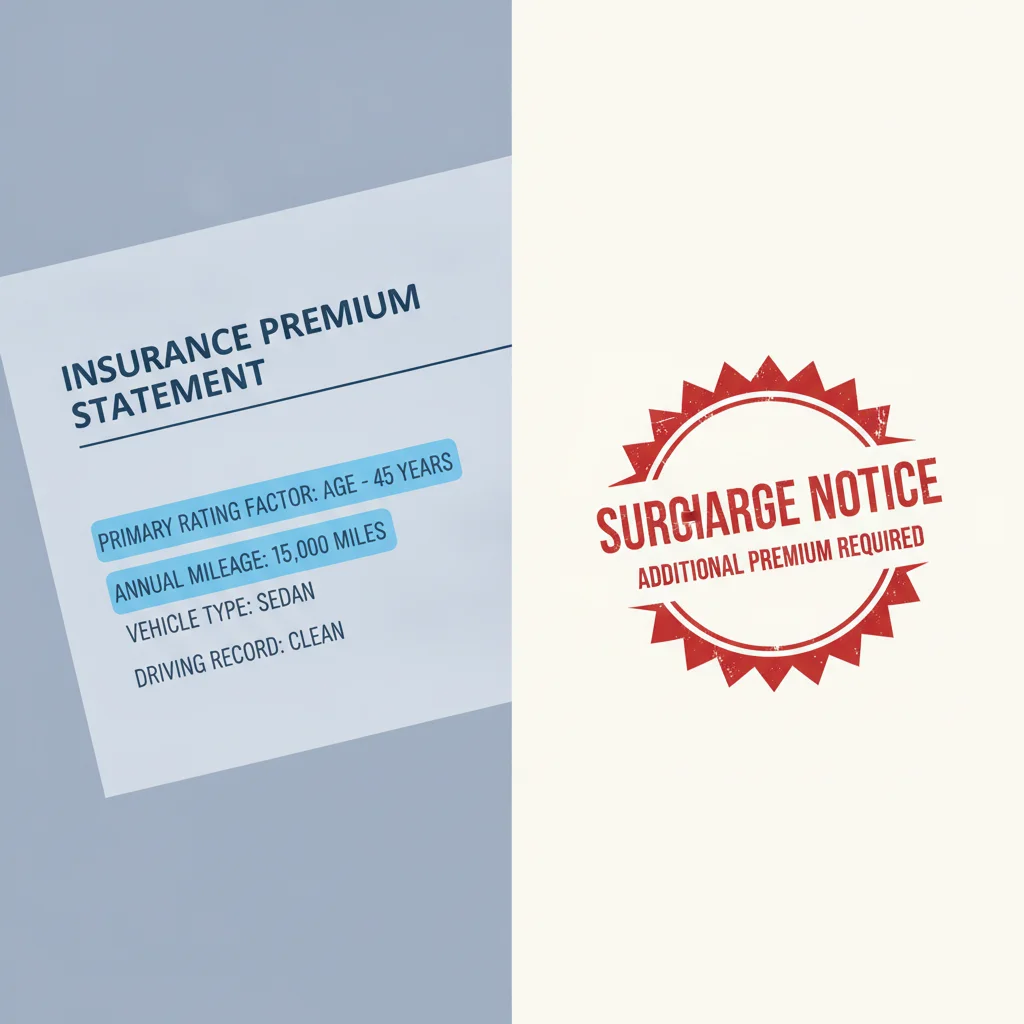
Quote price variation refers to the difference in premium amounts generated by the same insurance carrier when different inputs — coverage levels, deductibles, vehicle details, or driver information — are entered into the same rating system. The carrier uses a pricing formula that responds to dozens of variables, meaning two quotes from the same company can look nothing alike. This isn't inconsistency; it's the rating engine doing exactly what it was designed to do.
Insurance carriers file their rating algorithms with state regulators. Changes to any filed rating factor — ZIP code, garaging address, primary use, or coverage tier — trigger a mathematically distinct premium calculation under the same approved rate filing.
The Rating Engine Doesn't Care About Fairness — It Cares About Variables
When you pull two quotes from the same carrier and see different numbers, your first instinct might be that something went wrong. It didn't. Every major insurer runs its pricing through a rating engine — a rules-based system that takes your specific inputs and runs them through a formula approved by your state's insurance regulator. Change one input, and the output changes. Sometimes dramatically.
This matters because drivers often treat a quote like a fixed price tag on a car. It isn't. It's more like a calculator result. The formula is constant, but every number you feed into it shifts the answer. The carrier isn't being arbitrary — it's applying the same algorithm to different data points and getting a mathematically different result each time.
The practical upside: if you understand which inputs move the needle most, you have real leverage. You can make informed trade-offs between coverage quality and cost rather than just accepting whatever number appears on screen. See our explainer on rating factors vs. surcharges to understand the two distinct mechanisms carriers use to adjust your premium.
Coverage Limits and Deductibles: The Biggest Levers You Control
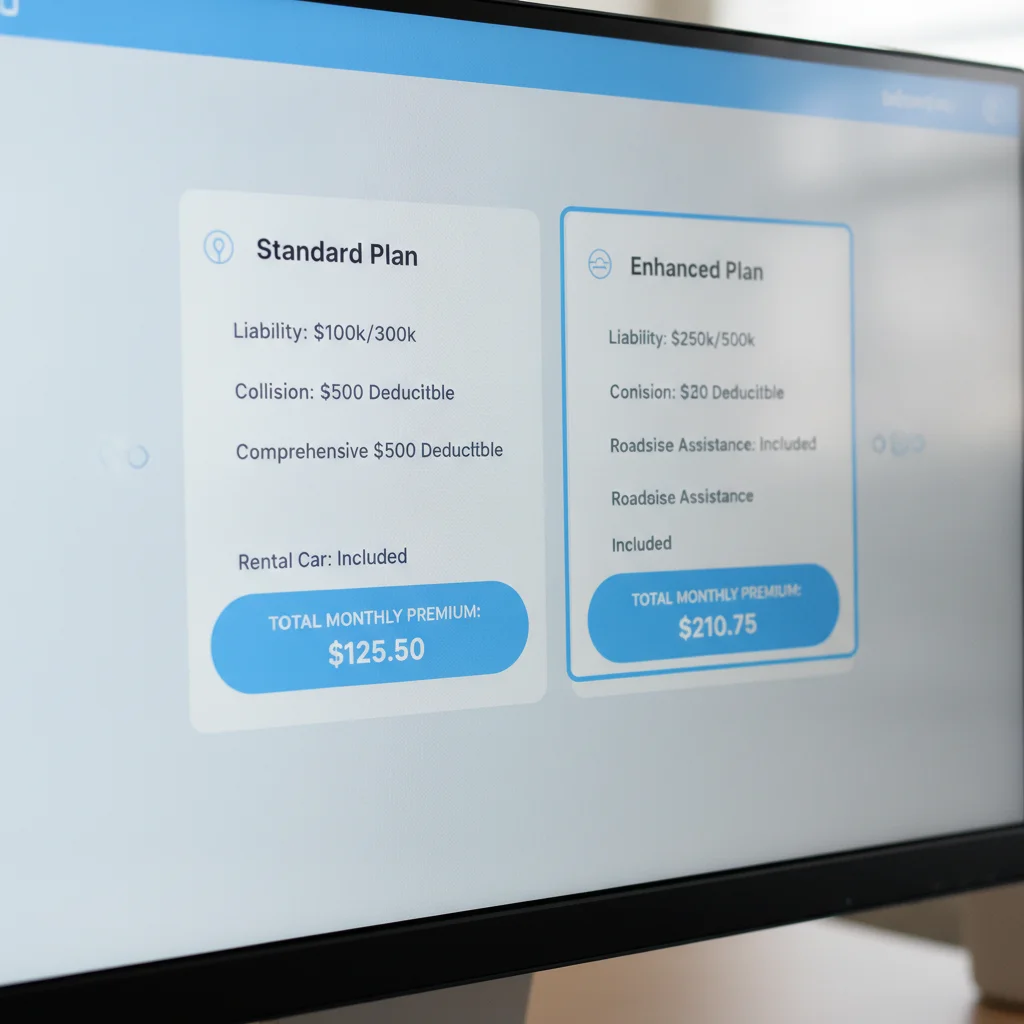
No single input swings a quote faster than your coverage selections. Two quotes from the same carrier can differ by hundreds of dollars annually — not because anything changed about you, your car, or your location — but because one quote carries 100/300/100 liability limits while the other carries 25/50/25 state minimums.
Liability Limits
Liability coverage pays for damages you cause to others. Higher limits mean the carrier takes on more maximum exposure per incident. Higher exposure equals higher premium — straightforwardly. The gap between minimum limits and robust limits can be $200–$600 per year depending on your state, carrier, and risk profile.
Comprehensive and Collision Deductibles
Your deductible is the amount you pay out-of-pocket before the carrier pays the rest on a covered claim. A $500 deductible quote will cost meaningfully more than a $1,500 deductible quote from the same carrier on the same vehicle. The carrier's modeled loss cost drops when you absorb more of the first-dollar risk.
Optional Coverages
Roadside assistance, rental reimbursement, gap coverage, and new car replacement are all add-ons that stack price onto a base quote. A quote built with all of these will look nothing like a stripped-down quote — even from the identical carrier, on the same vehicle, for the same driver.
“Insurance pricing is not a negotiation — it's a calculation. Every input you provide either increases or decreases the carrier's modeled expected loss. Understanding that makes you a far more effective buyer.”
— Robert Hartwig, Clinical Associate Professor of Finance and former president of the Insurance Information Institute
Before concluding that one quote is cheaper, confirm that you're comparing coverage structures, not just totals. Our companion piece on policies with identical premiums but different protection walks through exactly how to make that comparison.
Vehicle Inputs: Year, Trim, Use, and Mileage All Feed the Formula
The vehicle being insured is a primary rating factor in every state. But it's not just the make and model — the carrier's system is looking at a specific configuration of inputs that collectively define the risk profile of that vehicle.
28%
Average premium gap by ZIP code within the same metro area
Analysis of carrier rate filings by the Consumer Federation of America found urban-to-suburban ZIP code differences of up to 28% within the same major metro, holding all other variables constant.
Up to 40%
Premium difference from deductible changes alone
Moving from a $250 comprehensive/collision deductible to a $1,500 deductible can reduce those coverage premiums by 30–40% depending on vehicle value and carrier, according to industry rate data.
3–5 years
How long at-fault accidents typically affect your rate
Most carriers apply accident surcharges for three to five years post-incident, meaning a quote generated just after an incident and one generated six years later can differ substantially at the same carrier.
97%
Of U.S. states permit credit-based insurance scoring
Only California, Hawaii, Massachusetts, and Michigan restrict or prohibit credit-based insurance scoring in auto underwriting, meaning this input affects quotes in nearly all U.S. markets.
Model Year and Trim Level
A three-year-old base trim and the current-year sport trim of the same nameplate can generate significantly different quotes. The newer vehicle carries a higher actual cash value, which raises comprehensive and collision exposure. The sport trim may have higher-cost parts, a more aggressive driver profile in actuarial data, or reduced safety ratings compared to a base trim. All of these feed into the carrier's rate calculation.
Annual Mileage
Carriers use annual mileage as a proxy for exposure — the more miles you drive, the more opportunity there is for an accident or loss. A quote built on 15,000 annual miles will typically price higher than one built on 8,000 miles for the same vehicle and driver. Some carriers now verify mileage through telematics programs, making accuracy especially important.
Primary Use
How you use the vehicle changes its risk classification. A vehicle listed as used for commuting is exposed to more traffic than one used for pleasure driving. Business use — particularly if the vehicle is driven for deliveries or client visits — can trigger commercial-use provisions that alter the quote substantially. If you're insuring an EV, usage classifications can matter even more; the EV insurance guide covers how EV-specific factors layer on top of standard rating criteria.
For a broader look at how the car itself shapes what you pay, see how your vehicle profile drives your insurance cost.
Location Inputs: Your ZIP Code Does More Work Than You Think
Garaging address is one of the most powerful location-based inputs in any carrier's rating system. Two identical drivers with identical vehicles can receive quotes that differ by 30–50% based on ZIP code alone. The carrier is pricing the environment where the vehicle lives — not just where it occasionally travels.
What Location Actually Prices
- Accident frequency: Denser urban areas see more accidents per insured vehicle than rural areas.
- Theft and vandalism rates: Comprehensive losses are geographically concentrated, and carriers model this at the ZIP level.
- Weather and catastrophe exposure: Hail corridors, flood zones, and hurricane tracks all influence comprehensive pricing by geography.
- Medical cost environment: Bodily injury and PIP claims are resolved through local medical systems. Markets with higher healthcare costs produce higher bodily injury claim settlements, which the carrier prices into liability rates.
- Attorney representation rates: States and metro areas with higher rates of represented claimants tend to see higher liability losses, which flows into pricing.
State Regulation Limits What Carriers Can Factor In
Not every rating factor is available in every state. Some states prohibit or restrict the use of credit scores, gender, occupation, or education level in auto insurance pricing. If you move across state lines, the same carrier may generate a noticeably different quote simply because the state permits or restricts different rating inputs. This isn't the carrier behaving differently — it's the carrier complying with state-specific rate filings.
Quotes Are Not Guaranteed Until Bound
An online quote is a pricing estimate based on the information you provide. When the policy is underwritten — meaning the carrier verifies the inputs against third-party data sources like MVR reports, CLUE reports, and vehicle databases — the final premium may differ. Discrepancies between what you entered and what the carrier verifies are the most common cause of quote-to-bind price changes.
This is why a quote generated with a downtown address will look different from one using a suburban address — even if both are in the same metro area and the same county. The ZIP-level data the carrier uses is granular, and small geographic moves can produce meaningful price differences.
Driver Inputs: Who's on the Policy and What They Bring to It
The driver profile — or household driver pool — is another major input category that causes quotes from the same carrier to diverge. Adding, removing, or modifying listed drivers changes the risk composition the carrier is pricing.
Age and Experience
Drivers under 25 carry actuarially higher accident rates. Their presence on a policy raises the household risk profile and increases the premium. Conversely, removing a young driver from a policy (because they've moved out and have their own policy) can reduce the premium noticeably.
Driving History
A quote generated with a clean driving record versus one with a recent at-fault accident or moving violation will produce dramatically different numbers from the same carrier. Surcharges for incidents vary by carrier and by the severity and recency of the event. Some carriers apply a surcharge for three years; others for five. Even clean-record drivers can see significant variation based on factors beyond their history.
Credit-Based Insurance Score
In most states, carriers use a credit-based insurance score — distinct from your credit score — as a rating factor. This score predicts the likelihood of filing a claim. Two quotes generated at different points in time, or with different named insureds, can differ substantially based on this input alone. (A handful of states prohibit its use entirely.)
Lock Down Your Inputs Before Quoting
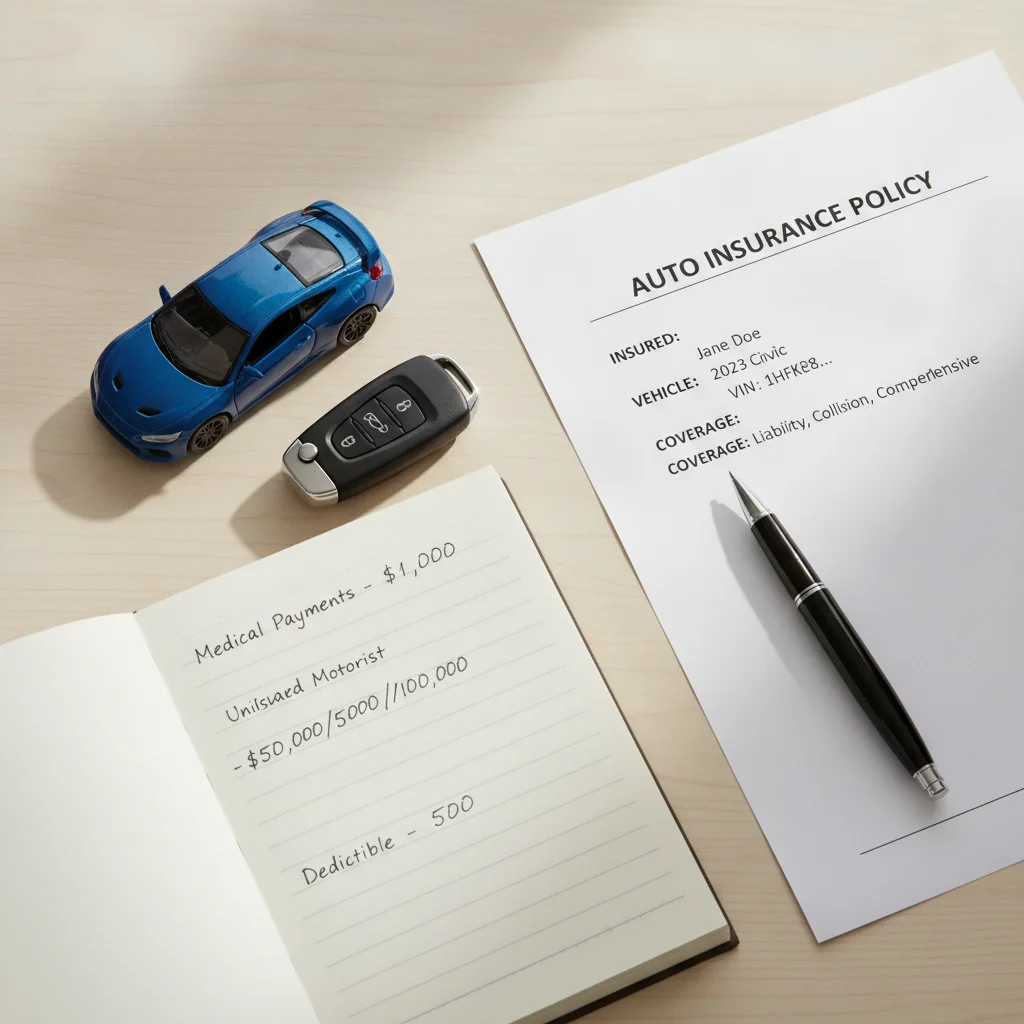
Before you pull a second quote from the same carrier, write down every input you used in the first: coverage limits, deductibles, annual mileage, vehicle trim, listed drivers. Changing any single variable invalidates an apples-to-apples comparison. Consistency in inputs is the only way to see whether the carrier's base pricing is actually moving.
Ask the Agent What Changed
If a carrier generates a renewal quote that's materially different from your current premium, ask specifically which rating factors changed. Carriers are required to provide adverse action notices for significant premium increases. Knowing whether the increase is from a rate filing, a surcharge, or a change in your profile tells you whether there's anything actionable to do.
Price the Coverage You'd Actually File a Claim Against
When deciding between a lower-deductible and higher-deductible quote, model the actual financial outcome: How many years of the premium savings would it take to cover one deductible payment at the higher level? If the answer is more than two to three years, the higher deductible may make financial sense — but only if you can comfortably absorb that out-of-pocket cost in the event of a claim.
Understanding how individual driver characteristics compound across a household helps explain why the rate factors hub covers such a wide range of variables — because carriers are pricing a complex, multi-variable risk, not a single number.
Discounts and Their Absence: The Invisible Price Adjusters
Two quotes can be built on identical base inputs and still diverge because one was generated with available discounts applied and one wasn't. Discounts are credits applied against the base premium — and they don't always apply automatically. Some require the customer to ask; others require proof.
Commonly Missed Discounts
- Multi-policy (bundling): Adding a home or renters policy to an auto policy frequently triggers a discount on the auto premium. A standalone auto quote won't reflect this.
- Telematics/usage-based: Opting into a carrier's driving behavior program can unlock a discount at enrollment and an additional discount based on measured driving behavior. Not automatically included in a standard quote.
- Paid-in-full discount: Some carriers reduce the premium when it's paid annually rather than monthly. A quote showing monthly installments may not surface this.
- Vehicle safety features: Anti-lock brakes, automatic emergency braking, and other active safety systems can reduce comprehensive or collision pricing — but only if the features are correctly entered into the quoting system.
The flip side is also true: a quote that appears lower may simply be missing applicable surcharges that will appear at bind or renewal. Discount structures vary significantly between carriers, which is why a lower number from one carrier doesn't automatically beat a higher number from another.
State Regulation Limits What Carriers Can Factor In
Not every rating factor is available in every state. Some states prohibit or restrict the use of credit scores, gender, occupation, or education level in auto insurance pricing. If you move across state lines, the same carrier may generate a noticeably different quote simply because the state permits or restricts different rating inputs. This isn't the carrier behaving differently — it's the carrier complying with state-specific rate filings.
Quotes Are Not Guaranteed Until Bound
An online quote is a pricing estimate based on the information you provide. When the policy is underwritten — meaning the carrier verifies the inputs against third-party data sources like MVR reports, CLUE reports, and vehicle databases — the final premium may differ. Discrepancies between what you entered and what the carrier verifies are the most common cause of quote-to-bind price changes.
How to Use This Knowledge When Shopping
The goal isn't to get the lowest quote — it's to get the right coverage at a price that reflects your actual risk profile. Here's how to put this framework to work.
Standardize Your Inputs Before Comparing
When pulling multiple quotes from the same carrier (or different carriers), use identical inputs: same vehicle configuration, same coverage limits, same deductibles, same listed drivers. Any variation in inputs will produce variation in outputs that has nothing to do with the carrier's actual pricing competitiveness.
Identify Which Input Is Driving a Difference
If two quotes from the same carrier differ, change one variable at a time to isolate the driver. Is it the deductible? The added driver? The annual mileage? Carriers' online tools often allow this kind of iterative quoting. Use it deliberately.
Don't Optimize Price by Reducing Protection
A lower quote built on state-minimum liability limits, a high deductible, and no optional coverages is a worse deal than a higher quote with robust limits and appropriate deductibles — especially if the premium difference is modest. Before deciding that a lower number is better, verify what you're giving up to get there.
Lock Down Your Inputs Before Quoting
Before you pull a second quote from the same carrier, write down every input you used in the first: coverage limits, deductibles, annual mileage, vehicle trim, listed drivers. Changing any single variable invalidates an apples-to-apples comparison. Consistency in inputs is the only way to see whether the carrier's base pricing is actually moving.
Ask the Agent What Changed
If a carrier generates a renewal quote that's materially different from your current premium, ask specifically which rating factors changed. Carriers are required to provide adverse action notices for significant premium increases. Knowing whether the increase is from a rate filing, a surcharge, or a change in your profile tells you whether there's anything actionable to do.
Price the Coverage You'd Actually File a Claim Against
When deciding between a lower-deductible and higher-deductible quote, model the actual financial outcome: How many years of the premium savings would it take to cover one deductible payment at the higher level? If the answer is more than two to three years, the higher deductible may make financial sense — but only if you can comfortably absorb that out-of-pocket cost in the event of a claim.
For a parallel look at how the same dynamic plays out in loan pricing — where lender inputs produce different rates for different buyers — see why two buyers get different rates on the exact same car. The principle is the same: same institution, different inputs, different outcome.


All claims are backed by peer-reviewed research. Sources on request.