Key Takeaways
Our Verdict
If you drive fewer than 10,000 miles a year and avoid hard braking and late-night driving, telematics programs are one of the fastest legitimate ways to cut your premium. State Farm Drive Safe & Save tends to reward low-mileage drivers most aggressively, while Progressive Snapshot is the most transparent about exactly what it measures. Allstate Drivewise is the most lenient because it cannot raise your rate — but its maximum discount is also capped lower at most policy tiers.
| Best for | Recommended |
|---|---|
| Low-mileage commuters or remote workers | State Farm Drive Safe & Save |
| Drivers who want full transparency into scoring criteria | Progressive Snapshot |
| Drivers worried about potential rate increases | Allstate Drivewise |
| Young drivers seeking maximum possible discount | Progressive Snapshot |
What Telematics Programs Actually Measure
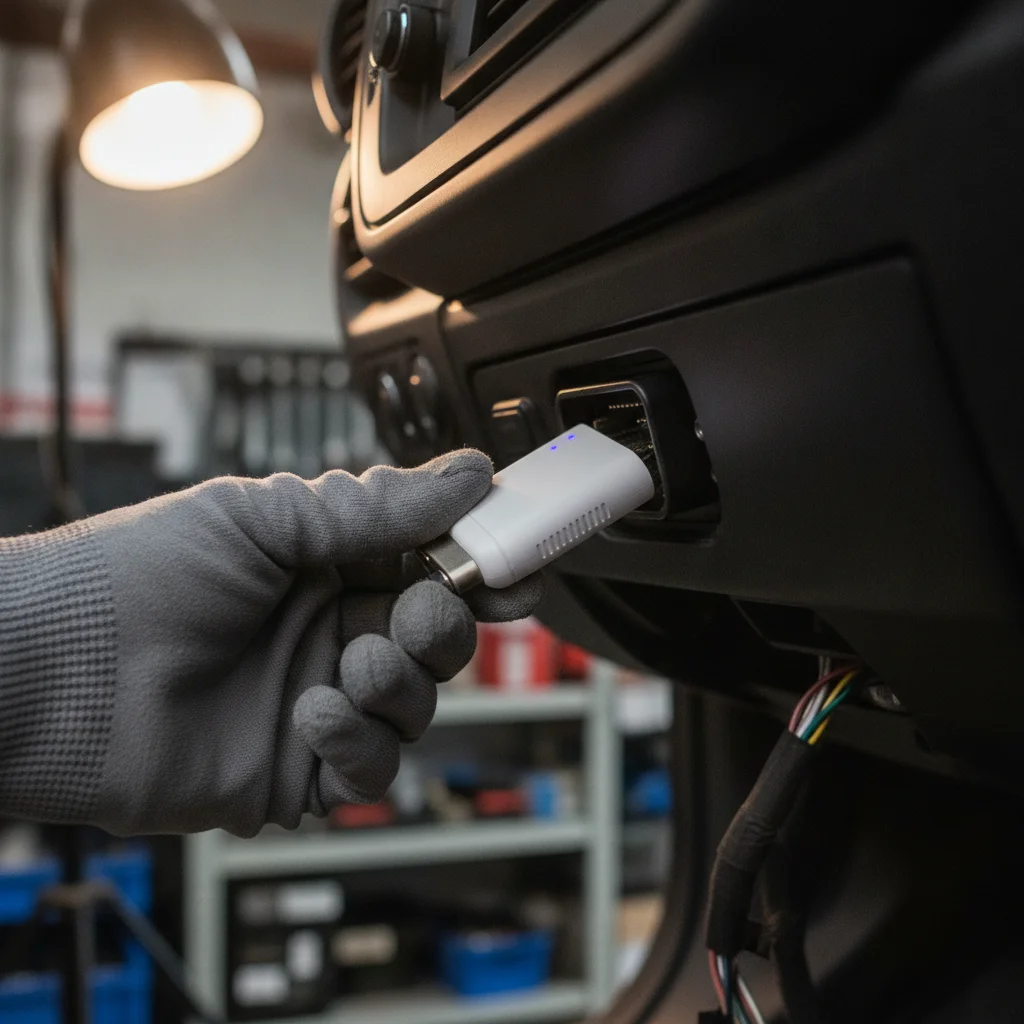
Safe driver programs — also called telematics or usage-based insurance (UBI) programs — collect real driving data to price your policy based on how you actually drive rather than solely on demographic proxies like age, ZIP code, or credit score. The core technology is either a small OBD-II dongle that plugs into your car's diagnostic port beneath the dashboard, or a smartphone app that uses the phone's GPS and accelerometer.
Across all major insurers, the measured variables fall into a handful of categories:
- Hard braking: Sudden deceleration events, typically defined as dropping more than 7–10 mph per second. This is the single most heavily weighted negative factor in most programs.
- Rapid acceleration: Jackrabbit starts that signal aggressive driving patterns.
- Speeding: Time spent above posted limits, often measured in increments — how much over, and for how long.
- Time of day: Miles driven between midnight and 4 a.m. are weighted negatively; late-night driving correlates strongly with higher crash rates.
- Phone distraction: App-based programs can detect phone handling while the vehicle is moving. This factor has grown in importance as distracted driving claims have risen.
- Mileage: Total miles driven during the monitoring period. Fewer miles means lower exposure, which most programs reward directly.
Not every program measures every variable. That distinction matters, and it is covered in detail in the program-by-program breakdown below. For a broader look at how these programs compare to standard policies, see how usage-based insurance compares to traditional coverage.
Progressive Snapshot: The Pioneer, and Still the Most Detailed
Progressive introduced Snapshot in 2008, making it the oldest telematics program among major U.S. carriers. It is available as both a plug-in device and a mobile app. Progressive is also the most explicit about its scoring model, publishing the specific behaviors it tracks and how they affect your rate.
How Snapshot Scores You
Snapshot measures hard braking events, night driving (11 p.m. to 4 a.m.), total mileage, and — in the app version — phone distraction. Speeding above 80 mph is also tracked. Hard braking is the most impactful negative variable. Progressive calculates a "Snapshot Score" ranging from roughly 0 to 100, and your discount (or surcharge) corresponds to that score.
Discount Range and Rate Risk
Enrollment in Snapshot typically earns an immediate discount of around $25–$50. After the monitoring period — which lasts six months — your rate is adjusted based on your score. Progressive is one of the few programs that can increase your rate if your driving score is poor. The maximum advertised discount is 30%, but in practice most good drivers land in the 10–20% range. The maximum surcharge is capped by state regulation and varies.
Best Fit
Snapshot is best for drivers who are already confident in their habits and want maximum potential savings. It is also a strong option for young drivers chasing meaningful discounts, since the scoring is behavior-based rather than age-based — a 20-year-old who drives smoothly and rarely drives late can genuinely out-score a 45-year-old with poor habits.
Check Your Score Mid-Period
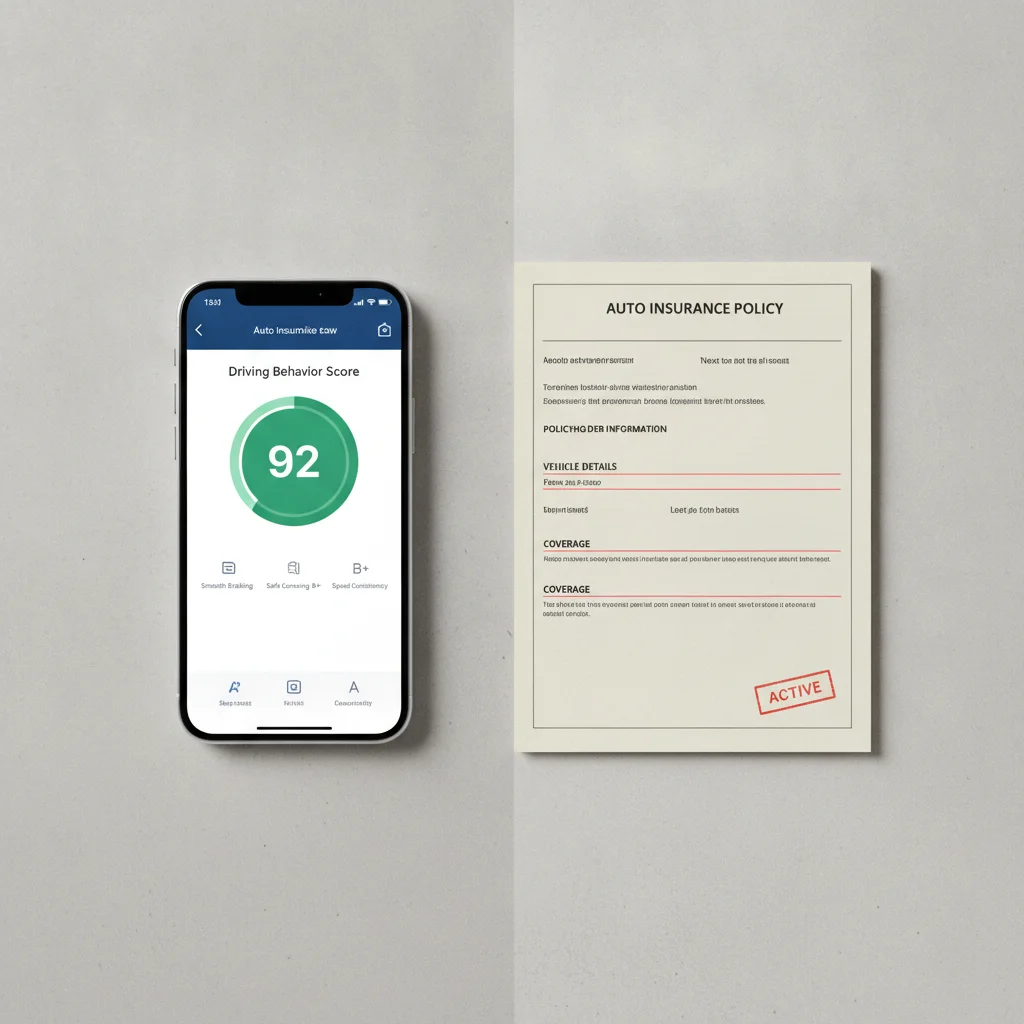
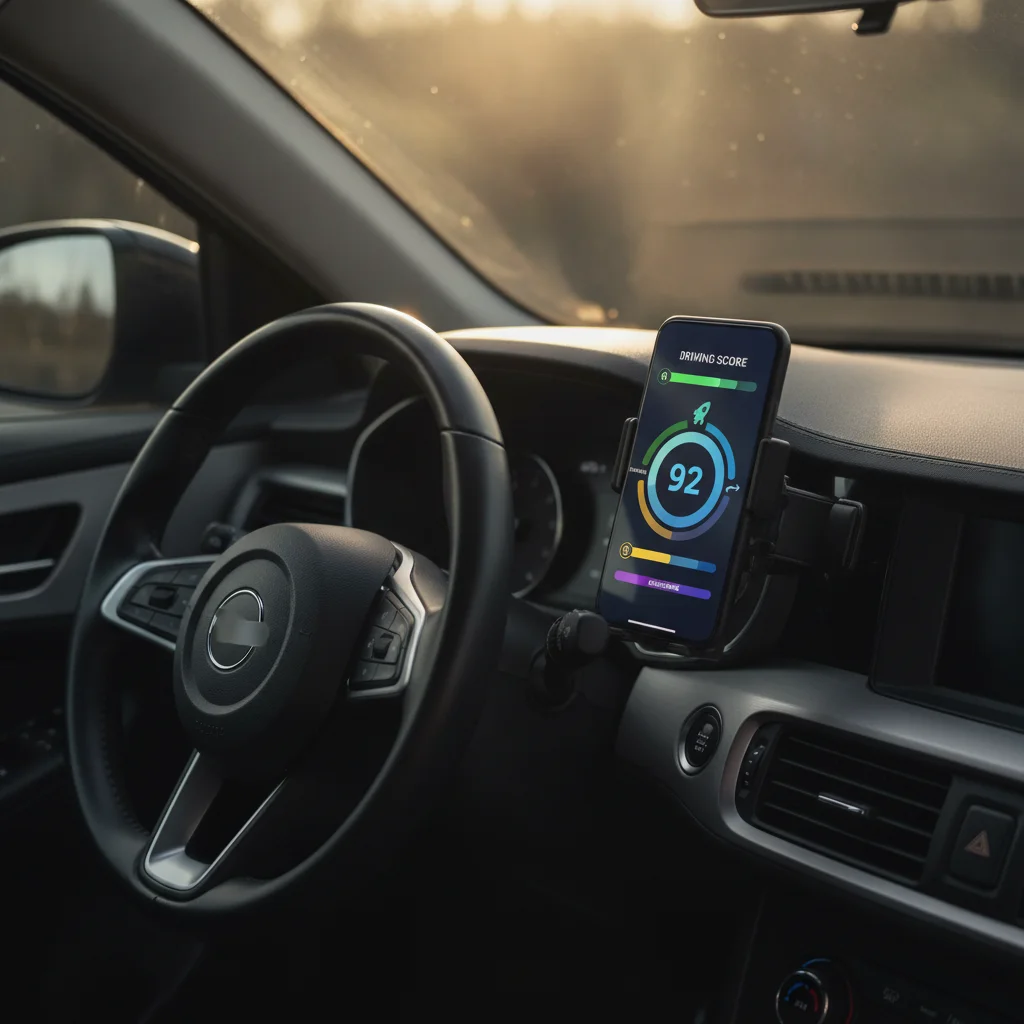
Progressive, State Farm, and Allstate all provide in-app dashboards where you can review your running score before the monitoring period ends. Check it at the one-month mark. If your score is already poor due to hard braking events, you have time to adjust your driving style and improve the final number. Waiting until the period closes leaves no room to course-correct.
Read the Telematics Privacy Addendum
Your standard auto policy is not the controlling document for telematics data — most carriers issue a separate telematics privacy addendum or rider. Request it before you enroll and look specifically for language around claims investigation use and data retention timelines. This is a 2–3 page document, not a dense contract; it is worth five minutes of your time.
Set a Calendar Reminder for Renewal
Your telematics discount is reassessed at each renewal, not locked in permanently. Set a reminder 45 days before your renewal date to log into the program dashboard and review your score. If your discount has dropped, you have time to call your insurer and discuss whether other available discounts — bundling, defensive driving courses, or mileage changes — can offset the difference.
State Farm Drive Safe & Save: Mileage as the Core Lever
State Farm's Drive Safe & Save program leans more heavily on mileage than its competitors, which gives it a distinct profile. The program runs through the mobile app (or through OnStar for eligible GM vehicles). State Farm uses data from the app combined with mileage verified through your vehicle's connected systems where available.
What State Farm Measures
Drive Safe & Save tracks mileage, smooth acceleration and braking, speed, and phone use while driving. However, the mileage component carries more weight relative to behavior than in competing programs. State Farm openly states that driving fewer miles is the fastest path to the largest discounts under this program.
Discount Range and Rate Risk
State Farm offers an enrollment discount of up to 5% just for signing up. After the first policy period, discounts can reach up to 30% for very low-mileage, clean-behavior drivers. State Farm's program does not explicitly advertise the ability to raise rates based on telematics alone — changes typically come at renewal through normal underwriting rather than a direct telematics surcharge. This makes it a relatively lower-risk program to join than Snapshot.
Best Fit
Drive Safe & Save delivers its best results for drivers who put on fewer than 7,500 miles per year — remote workers, retirees, or households with a secondary vehicle that rarely leaves the garage. If you drive a lot, the mileage component limits how much you can save regardless of how cleanly you drive. Pair this program with the broader habit-building strategies covered in proactive habits for managing your auto insurance year-round to capture compounding savings at renewal.
Allstate Drivewise: The No-Penalty Option
Allstate's Drivewise program takes a different philosophical stance: it rewards safe behavior but does not penalize unsafe behavior by raising your rate. This "reward only" structure removes the financial downside risk that makes some drivers hesitant to enroll in Snapshot.
What Drivewise Measures
Drivewise tracks speed (miles driven over 80 mph), hard braking, and time of day (midnight to 4 a.m.). It does not currently factor mileage into the discount calculation the same way Drive Safe & Save does, and it does not measure rapid acceleration. Phone distraction detection depends on the app version and state.
Discount Range and Rate Risk
Drivewise offers an enrollment discount, and ongoing participation earns cash back rewards — currently advertised as up to 40% back on premiums at the top tier, though real-world results for typical drivers are generally in the 10–25% range. The key structural advantage is that Drivewise cannot raise your base rate based on telematics data alone. Your rate can still change at renewal through standard underwriting factors, but your Drivewise score does not create a direct surcharge.
Best Fit
Drivewise is the right call for drivers who are uncertain about their driving habits or who commute in stop-and-go traffic conditions that generate hard braking events through no real fault of their own. If you drive in a congested urban environment, the no-penalty structure protects you from being punished for traffic realities outside your control.
Congested Commutes Can Hurt Your Score
Stop-and-go traffic in dense urban areas will generate hard braking events even for attentive, safe drivers. If you commute daily on congested expressways or city streets, you may score worse on telematics than your actual risk level warrants. In this situation, a reward-only program like Allstate Drivewise limits your exposure — or you may be better served by non-telematics discounts.
Rate Increases Are Real with Some Programs
Progressive Snapshot and some other programs have the contractual ability to increase your rate after the monitoring period if your driving score is poor. This is not theoretical — it happens. Before enrolling in any program, ask your insurer directly: 'Can my rate go up as a result of this program?' Get the answer in writing or in a documented chat transcript.
Side-by-Side: How the Three Programs Compare
The table below summarizes the key structural differences across the three largest telematics programs. Note that specific discount ranges vary by state, policy tier, and individual driving behavior — treat the ranges as general benchmarks rather than guarantees.
| Progressive Snapshot | State Farm Drive Safe & Save | Allstate Drivewise | |
|---|---|---|---|
| Tracking Method | Plug-in device or app | Mobile app (or OnStar) | Mobile app |
| Enrollment Discount | ~$25–$50 upfront | Up to 5% at signup | Small discount at enrollment |
| Maximum Discount | Up to 30% | Up to 30% | Up to 40% cash back |
| Can It Raise Your Rate? | Yes — directly | Indirectly at renewal | No — reward only |
| Mileage Weighting | Moderate | High — primary factor | Low |
| Phone Distraction Tracked | Yes (app version) | Yes | Varies by state/version |
| Monitoring Period | ~6 months | Ongoing per policy term | Ongoing per policy term |
| Night Driving Penalty | 11 p.m. – 4 a.m. | Yes, tracked | Midnight – 4 a.m. |
Beyond the three programs above, other major carriers run their own telematics offerings: Nationwide SmartRide, Liberty Mutual RightTrack, and GEICO DriveEasy are notable examples. All share the same general structure — enrollment discount, monitoring period, behavior-based adjustment — with variations in which factors they weight most heavily. If you are shopping across carriers, ask specifically whether the program can raise your rate and how mileage is weighted; those two questions will tell you most of what you need to know. See our guide to comparing auto insurance policies for a framework to evaluate the full package, not just the telematics component.
20%
Average telematics discount for good drivers
Industry analyses from the Insurance Information Institute suggest good-scoring telematics participants typically save 10–20% on their premium.
52%
U.S. drivers open to telematics enrollment
A 2023 J.D. Power survey found roughly half of auto insurance customers said they would consider enrolling in a telematics program for potential savings.
27%
Share of auto insurance policies using telematics
According to LexisNexis Risk Solutions' annual telematics study, approximately one in four U.S. personal auto policies now includes some form of telematics.
7–10 mph/sec
Hard braking threshold in most programs
Most major telematics programs define a hard braking event as a deceleration exceeding 7–10 mph per second — roughly equivalent to sudden panic-stop braking.
Privacy Tradeoffs You Should Understand Before Enrolling
Telematics programs are data-collection programs. Before you plug in a device or grant an app location permissions, it is worth understanding exactly what you are sharing and how it may be used.
What Data Is Collected
At minimum, these programs collect GPS location, speed, and time-of-day data for every trip. App-based programs also access your phone's accelerometer and, in some cases, can detect when your phone is being handled. This is granular data — your insurer will know where you drove, when, and at what speed, for every trip during the monitoring period.
How the Data Can Be Used
Insurers' privacy policies vary, but most reserve the right to use telematics data in claims investigations. If you are in an accident and have an active telematics program, the data from that trip may be reviewed. Some carriers also share aggregate (anonymized) data with third parties for research purposes, though individual-level data sharing is generally more restricted.
Data Retention
Most programs retain trip-level data for 30–90 days and retain summary scoring data for longer periods. State regulations in California and a few other states impose additional restrictions on data retention and use. Check your carrier's telematics privacy addendum — it is a separate document from the standard policy, and it governs this data specifically.
Check Your Score Mid-Period
Progressive, State Farm, and Allstate all provide in-app dashboards where you can review your running score before the monitoring period ends. Check it at the one-month mark. If your score is already poor due to hard braking events, you have time to adjust your driving style and improve the final number. Waiting until the period closes leaves no room to course-correct.
Read the Telematics Privacy Addendum
Your standard auto policy is not the controlling document for telematics data — most carriers issue a separate telematics privacy addendum or rider. Request it before you enroll and look specifically for language around claims investigation use and data retention timelines. This is a 2–3 page document, not a dense contract; it is worth five minutes of your time.
Set a Calendar Reminder for Renewal
Your telematics discount is reassessed at each renewal, not locked in permanently. Set a reminder 45 days before your renewal date to log into the program dashboard and review your score. If your discount has dropped, you have time to call your insurer and discuss whether other available discounts — bundling, defensive driving courses, or mileage changes — can offset the difference.
If privacy is a significant concern, you may still qualify for meaningful savings through other routes. Vehicle safety ratings and ADAS features can unlock discounts without any data collection, and the good driver discount is awarded based on your MVR history — no app required.
How to Maximize Your Discount During the Monitoring Period
The monitoring period — typically 90 to 180 days depending on the program — is where your discount is actually earned. Most drivers underperform their potential simply because they do not adjust their behavior with the specific scoring criteria in mind.
Practical Steps That Move the Score
- Increase your following distance: The single most effective way to eliminate hard braking events is to leave more space between you and the car ahead. Three to four seconds of following distance at highway speeds largely eliminates the need for sudden stops.
- Anticipate stops: Watch traffic signals ahead and ease off the accelerator early rather than braking hard at the last moment. This is worth practicing even outside the monitoring period — it saves fuel and reduces brake wear.
- Avoid driving between midnight and 4 a.m.: If you regularly work a late shift, this may not be controllable. But if you have flexibility, shifting late-night social trips or errands to other hours will improve your score noticeably.
- Put the phone down completely: App-based programs are increasingly sophisticated at detecting phone handling. Even picking up the phone at a red light may be flagged. Use Do Not Disturb while driving mode for the entire monitoring period.
- Minimize mileage strategically: If the program weights mileage, combine errands, use alternative transportation where available, and avoid unnecessary driving during the monitoring window.
These habits align closely with the safety behaviors that research shows actually reduce crash risk — so the discount is a byproduct of genuinely safer driving, not gaming a system.

After the Monitoring Period
Once your initial monitoring period ends and your discount is locked in, most programs continue to monitor your driving on a rolling basis and adjust your discount at each renewal. This means the habits you build during the monitoring period need to be sustainable. A driver who scores well for six months and then returns to aggressive driving habits may see the discount erode at the next renewal cycle.
Check Your Score Mid-Period
Progressive, State Farm, and Allstate all provide in-app dashboards where you can review your running score before the monitoring period ends. Check it at the one-month mark. If your score is already poor due to hard braking events, you have time to adjust your driving style and improve the final number. Waiting until the period closes leaves no room to course-correct.
Read the Telematics Privacy Addendum
Your standard auto policy is not the controlling document for telematics data — most carriers issue a separate telematics privacy addendum or rider. Request it before you enroll and look specifically for language around claims investigation use and data retention timelines. This is a 2–3 page document, not a dense contract; it is worth five minutes of your time.
Set a Calendar Reminder for Renewal
Your telematics discount is reassessed at each renewal, not locked in permanently. Set a reminder 45 days before your renewal date to log into the program dashboard and review your score. If your discount has dropped, you have time to call your insurer and discuss whether other available discounts — bundling, defensive driving courses, or mileage changes — can offset the difference.
Is a Telematics Program Right for Your Situation?
Safe driver programs are not universally beneficial. Before enrolling, run through this honest assessment of your situation.
Enroll If:
- You drive fewer than 12,000 miles per year and your driving is mostly local or highway during daylight hours.
- You are currently paying a high premium due to age or a brief lapse in coverage, and telematics gives you a path to demonstrate actual low-risk behavior.
- You have confidence in your driving habits and want to use behavior data to offset unfavorable demographic pricing factors.
- You are already with a carrier that offers a reward-only program like Drivewise and there is no downside to participation.
Think Carefully Before Enrolling If:
- You commute through heavy stop-and-go traffic daily — hard braking events will accumulate regardless of how good your intentions are.
- You regularly drive late at night for work or other unavoidable reasons.
- You are with a carrier like Progressive whose program can directly surcharge your rate if your score is poor.
- You have strong privacy concerns about location and behavior data being retained by your insurer.
The rate factors that drive your premium extend well beyond telematics — vehicle type, coverage levels, deductible choices, and bundling discounts often offer savings with no behavioral monitoring required. A telematics program should be one tool in a broader strategy, not the only lever you pull.

All claims are backed by peer-reviewed research. Sources on request.