Key Takeaways
Telematics-Based Insurance Pricing
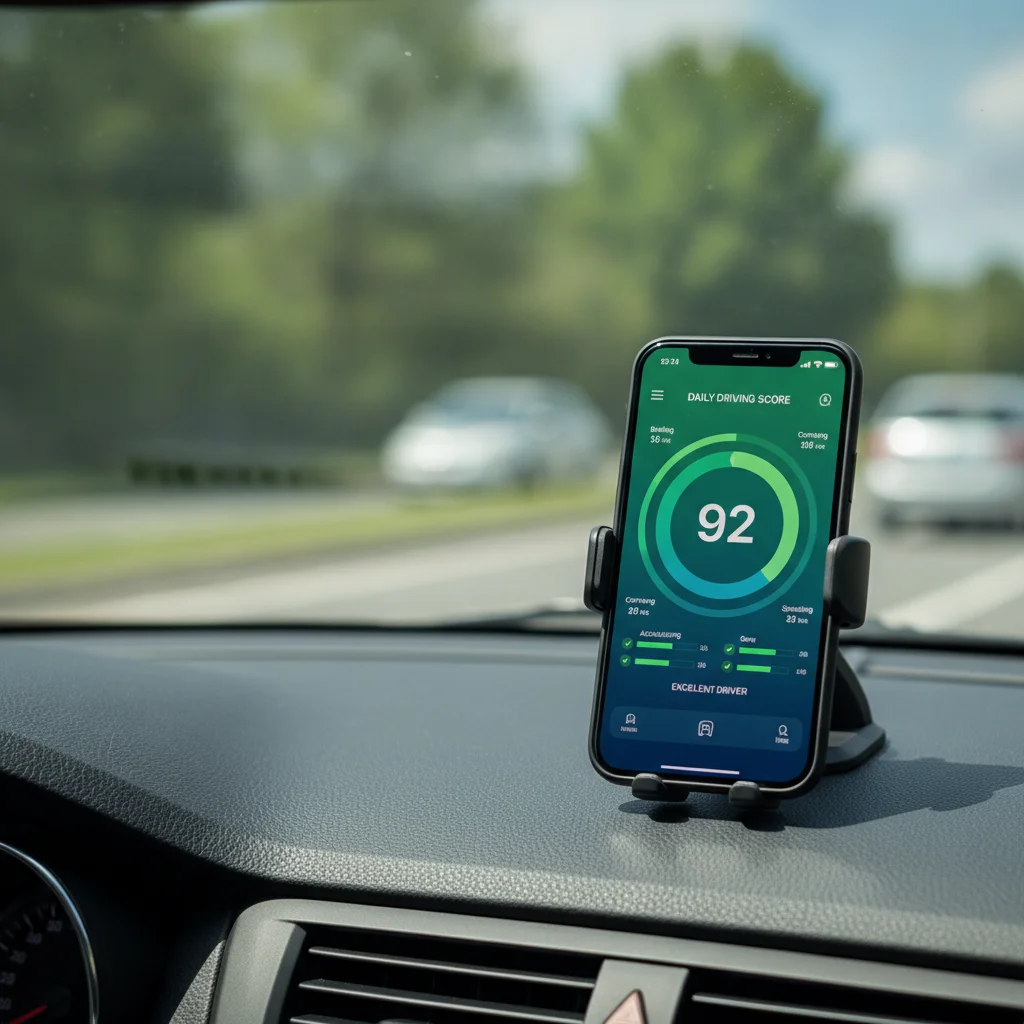
Telematics-based insurance pricing is a method insurers use to set or adjust your auto insurance premium based on actual driving behavior rather than demographic proxies alone. A device or smartphone app collects data points — such as how hard you brake, when you drive, and how many miles you log — and feeds that information into a scoring model. Drivers who demonstrate low-risk behavior typically receive a discount; those flagged for risky habits may see their rates stay flat or increase at renewal.
Insurers typically apply a generalized linear model (GLM) or machine-learning algorithm to telematics variables, weighting each factor by its actuarial correlation with claim frequency and severity before producing an individualized rate multiplier.
What Telematics Actually Collects — and Why Insurers Want It
For most of auto insurance's history, pricing was indirect. Insurers had no way to observe your driving, so they relied on proxy variables — your age, ZIP code, credit score, and prior claims — as statistical stand-ins for risk. Telematics changed that by giving insurers access to the real thing: your actual behavior behind the wheel.
A telematics program delivers data through one of three collection methods: a plug-in OBD-II dongle that reads your car's onboard diagnostics port, a dedicated app on your smartphone that uses the phone's accelerometer and GPS, or embedded telematics hardware built directly into newer vehicles. Each method captures overlapping but sometimes different data streams.
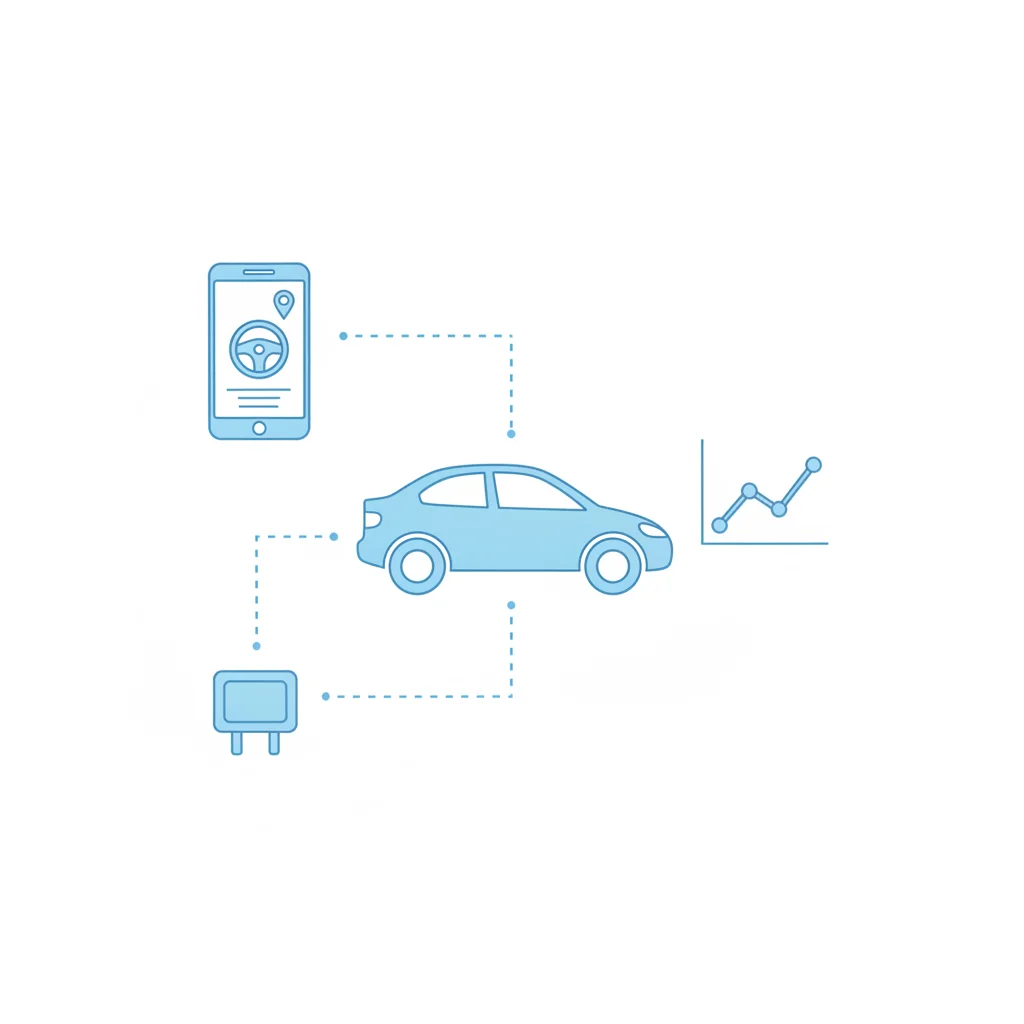
The core data categories collected across most programs include:
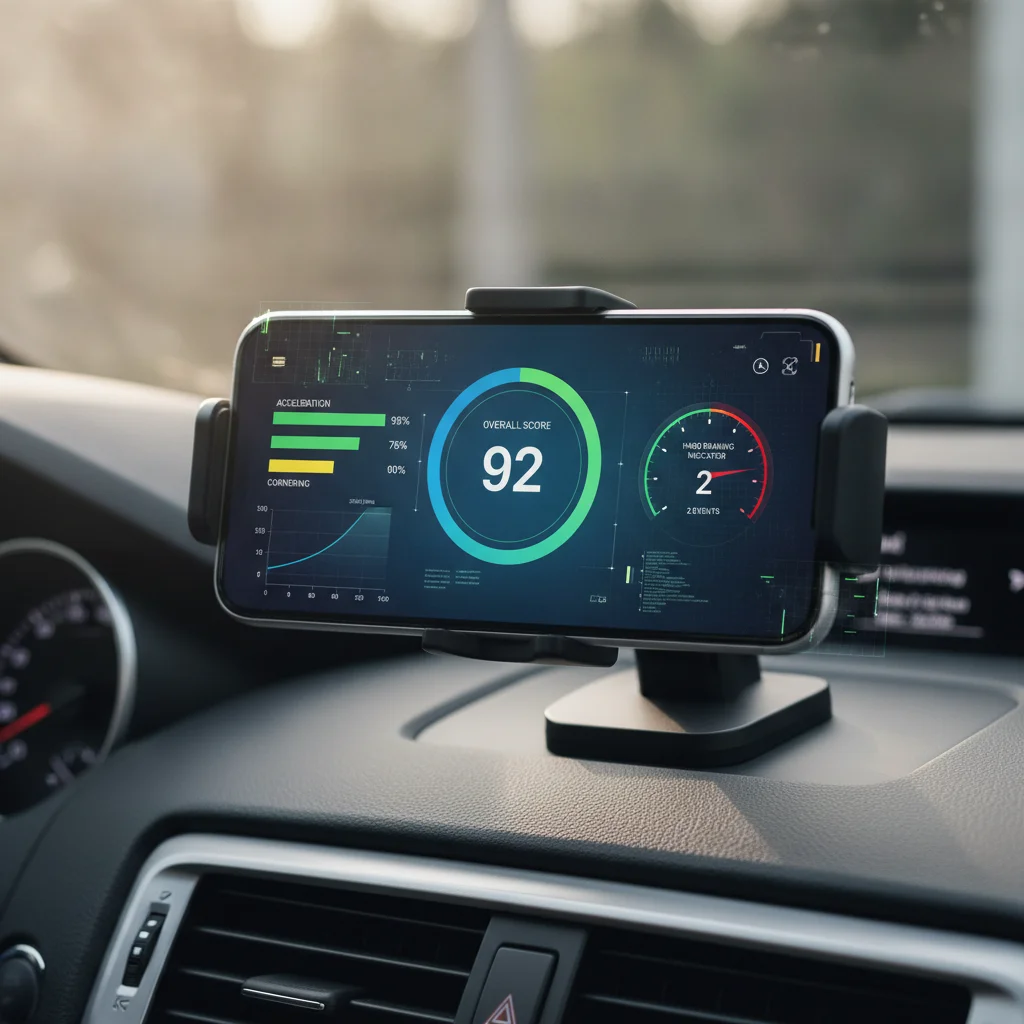
- Longitudinal behavior: Hard braking events and rapid acceleration, measured in g-force or miles-per-hour-per-second thresholds
- Lateral behavior: Sharp cornering, detected through gyroscope or GPS heading changes
- Speed: Both absolute speed and speeding relative to posted limits, where GPS coverage allows
- Time of day: The specific hours during which you drive, particularly late-night windows associated with elevated crash risk
- Mileage: Total distance traveled per day, week, or policy term
- Phone use: Detected through motion inconsistencies or app-level permission monitoring on smartphone-based programs
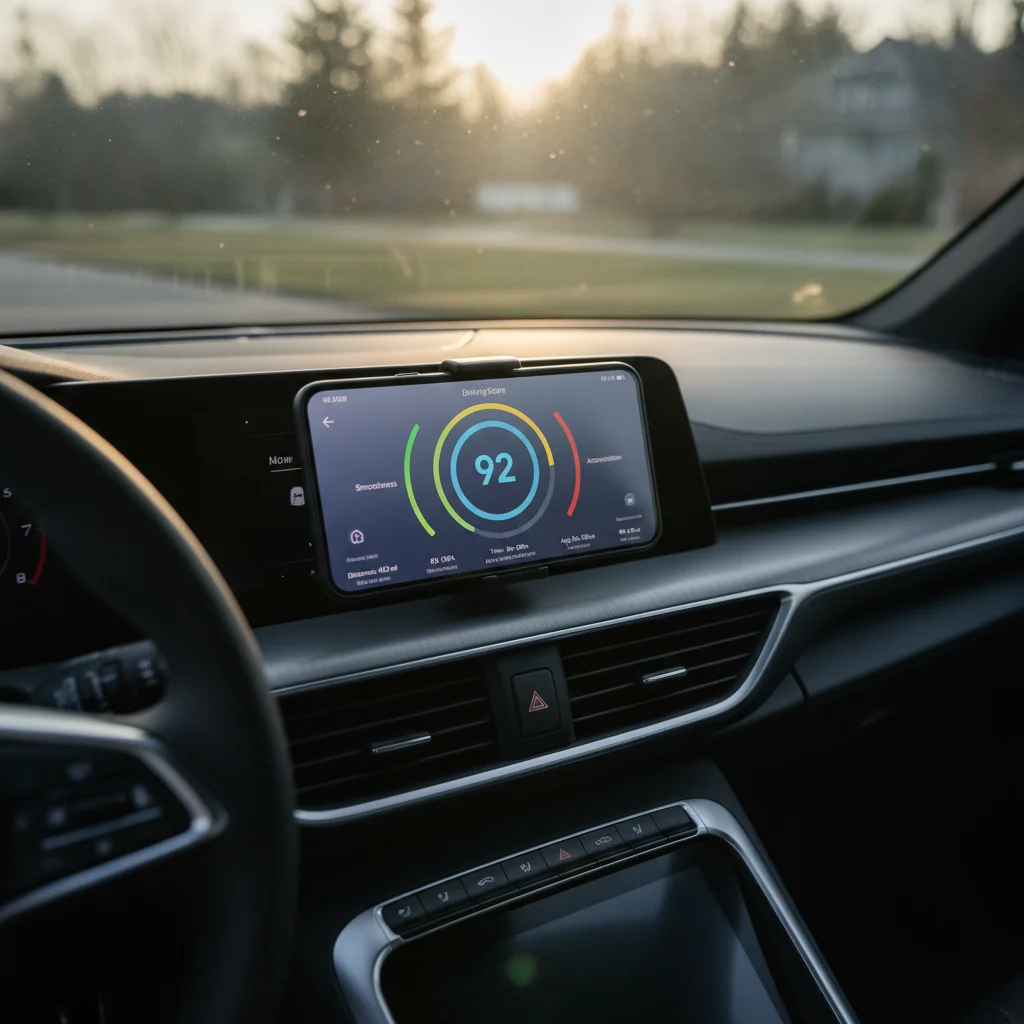
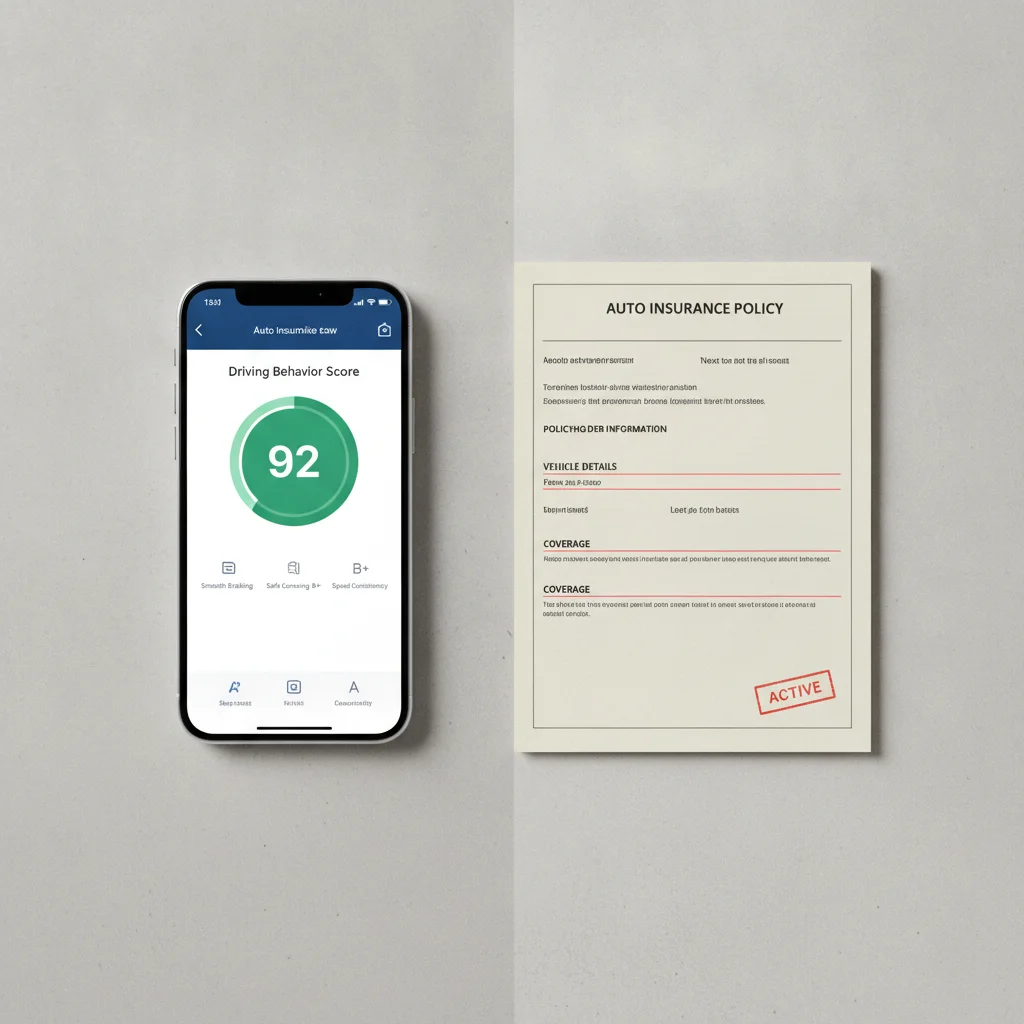
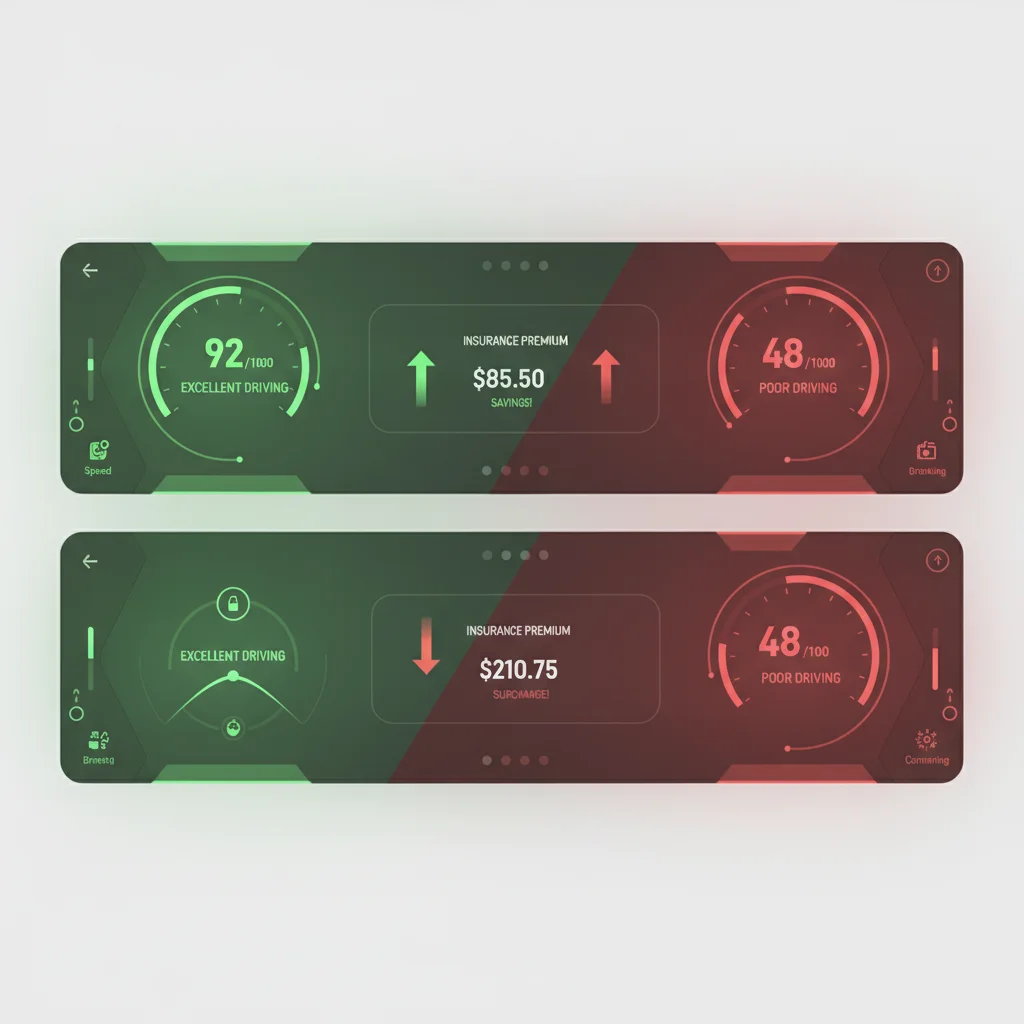
Each variable is logged, aggregated, and fed into a scoring model. The output is typically a composite driving score — often on a scale of 0–100 or a letter grade — that summarizes your relative risk as a driver compared to others in the program. That score is then translated into a rate adjustment at your next policy renewal.
See our breakdown of what each telematics signal means for your rate for a closer look at how individual behaviors are scored.
Telematics Is Not the Same Across All Insurers
The variables collected, how they're weighted, and whether a poor score can raise your rate differ substantially between carriers and even between programs offered by the same company. Progressive Snapshot, State Farm Drive Safe & Save, and Allstate Drivewise each use proprietary scoring models. There is no industry-wide standard for what a 'hard brake' or a 'nighttime trip' means in scoring terms.
Claims and Telematics Data: Know Your Rights
Some insurers explicitly reserve the right to access telematics data during a claims investigation. This is typically disclosed in the program's terms and conditions. If your policy includes this provision, data from your device could be introduced as evidence of your speed, location, or behavior at the time of an accident — for or against your claim.
How Driving Scores Translate Into Premium Adjustments
Understanding that a telematics program scores your driving is one thing. Understanding exactly how that score becomes a dollar figure on your renewal declaration page is another — and the mechanics matter enormously if you're considering enrollment.
Most programs operate in two phases. During an initial enrollment window — typically 90 days to six months — the insurer monitors your driving and builds your score profile. At the end of that window, your score is locked and a rate factor is applied at the next policy renewal. Some carriers, including Allstate's Drivewise and State Farm's Drive Safe & Save, have moved toward continuous monitoring, meaning your score updates regularly and can influence each subsequent renewal term.
5%–40%
Typical telematics discount range
Most major insurer programs advertise potential savings in this range, with median real-world discounts clustering around 10%–20% for average participants.
3x
Higher fatal crash rate at night vs. daytime
According to NHTSA data, fatal crashes per mile traveled are approximately three times higher during nighttime hours, which is why time-of-day is heavily weighted in telematics models.
20%
U.S. drivers enrolled in telematics programs
Industry estimates suggest roughly one in five U.S. auto insurance policyholders now participates in some form of usage-based or telematics-monitored program.
90 days
Typical initial monitoring window
Most telematics programs collect scoring data for 90 days to six months before locking in a rate adjustment at the first renewal.
7–9 mph/sec
Hard-braking detection threshold
Most telematics programs flag deceleration events at or above 7–9 miles per hour per second as hard-braking incidents that negatively affect your score.
The translation from score to premium varies by carrier, but the general framework follows actuarial logic: each scored variable has an associated rate relativity — a multiplier above or below 1.0 that reflects how much riskier or safer that behavior pattern is compared to the average policyholder. Those relativities are combined, weighted, and applied to your base premium.
A simplified version might look like this:
| Behavior Factor | Your Score | Rate Relativity |
|---|---|---|
| Hard braking frequency | Excellent | 0.88 (12% reduction) |
| Nighttime driving | Poor | 1.15 (15% increase) |
| Mileage | Low | 0.92 (8% reduction) |
| Rapid acceleration | Good | 0.95 (5% reduction) |
The factors compound — they don't simply add or subtract — so a driver with excellent braking but frequent late-night driving could still end up near neutral or slightly above their pre-enrollment rate. This is why understanding the weighting of each variable matters before you opt in.
Usage-based insurance programs can offer real savings, but the final discount is highly dependent on which behaviors your insurer weights most heavily.
“The beauty of telematics is that it replaces actuarial stereotyping with individual evidence. A 22-year-old who drives 5,000 miles a year and never touches the brakes hard is a fundamentally different risk than the statistical average 22-year-old — and now we can price that difference.”
— Donald Light, Director, North America Property/Casualty Insurance Practice, Celent Research
The Variables That Move the Needle Most
Not all telematics factors carry equal weight. Insurers have spent years building actuarial models that correlate specific behaviors with claim likelihood, and some signals have proven far more predictive than others.
Hard Braking
Hard braking — typically defined as decelerating more than 7–9 mph per second — is one of the strongest individual predictors of future accidents in telematics datasets. It reflects reactive rather than anticipatory driving. Frequent hard-braking events suggest a driver is consistently too close to other vehicles or failing to account for changing road conditions.

Time of Day
The hours between midnight and 4 a.m. represent a dramatically elevated crash risk environment. Fatigue, reduced visibility, and a higher proportion of impaired drivers on the road all converge during those hours. Insurers weight nighttime driving heavily because the data is unambiguous: fatal crash rates per mile traveled are significantly higher at night than during daytime hours, according to NHTSA data.
Mileage
More miles equal more exposure. Pay-per-mile programs like Metromile (now part of Lemonade) price almost entirely on mileage. Traditional telematics programs treat it as one factor among several, but it remains a reliable baseline risk predictor. A driver who logs 20,000 miles annually has roughly twice the statistical exposure of one who drives 10,000.
Rapid Acceleration and Cornering
Aggressive acceleration and sharp cornering indicate a driving style that reduces reaction time and vehicle stability margins. While these factors are weighted less heavily than braking in most models, they contribute meaningfully to composite scores and can tip a borderline driver from a discount into a neutral or negative adjustment.
Phone Handling
Distracted driving detection is the newest widely-deployed telematics variable. Programs using smartphone apps can detect when a phone is in motion while the vehicle is moving and whether the user appears to be interacting with it. Some programs flag this explicitly as a penalty event; others incorporate it into an overall distraction sub-score.
Avoid Late-Night Driving During the Scoring Window
If you can schedule long trips or errands to avoid the midnight-to-4 a.m. window during your telematics monitoring period, do it. Nighttime driving is typically the single highest-weighted negative factor in most scoring models, and even a handful of late-night trips can meaningfully drag down an otherwise strong score.
Increase Following Distance to Reduce Hard-Braking Events
The easiest way to improve your braking score is to increase your following distance — aim for three to four seconds of space between your vehicle and the car ahead. Anticipating slowdowns earlier gives you time to decelerate gradually rather than triggering the hard-braking threshold. This habit also reduces your real-world accident risk.
Program Designs Vary: Discount-Only vs. Two-Way Pricing
One of the most practically important distinctions in telematics programs is whether your insurer can use a poor score to raise your premium, or whether the program can only reward good behavior with a discount. This is sometimes called the difference between "discount-only" and "two-way" pricing models.
Discount-only programs cap the downside: even if you score poorly, your rate stays where it would have been without the program. The upside is limited but the risk is low. These are often better for drivers who are uncertain about their habits.
Two-way programs can adjust rates in either direction. Progressive's Snapshot is among the most well-known examples — drivers with poor scores can face a rate increase at renewal. The upside discount potential is typically higher with these programs, but so is the risk for drivers who drive frequently at night or have reactive braking habits.
Some programs also offer an immediate enrollment discount just for signing up — typically 5%–10% off your current rate — before any driving data is collected. This initial discount is yours to keep regardless of your score; the behavioral score then determines what happens at renewal. It's worth asking your insurer whether this structure applies before you enroll.
For a side-by-side evaluation, see how usage-based insurance stacks up against standard policies.
Privacy Considerations and What You're Agreeing To
Enrolling in a telematics program is a data-sharing agreement, and the scope of that agreement varies meaningfully by insurer. Before opting in, it's worth reviewing exactly what data is collected, how long it's retained, whether it's shared with third parties, and what happens if you file a claim.
GPS location data is collected by many — though not all — telematics programs. Some insurers use location to verify route types (highway vs. urban surface streets), to correlate with local accident hotspots, or to confirm the accuracy of mileage figures. Others, particularly OBD-II-only programs, collect vehicle sensor data without precise location tracking.

The more significant concern for many drivers is data use in claims investigations. Some insurers reserve the right to use telematics data — including speed and location at specific timestamps — in the event of an accident claim or coverage dispute. This can cut both ways: the same data that shows you were driving cautiously before a crash can also confirm you were speeding.
Telematics Is Not the Same Across All Insurers
The variables collected, how they're weighted, and whether a poor score can raise your rate differ substantially between carriers and even between programs offered by the same company. Progressive Snapshot, State Farm Drive Safe & Save, and Allstate Drivewise each use proprietary scoring models. There is no industry-wide standard for what a 'hard brake' or a 'nighttime trip' means in scoring terms.
Claims and Telematics Data: Know Your Rights
Some insurers explicitly reserve the right to access telematics data during a claims investigation. This is typically disclosed in the program's terms and conditions. If your policy includes this provision, data from your device could be introduced as evidence of your speed, location, or behavior at the time of an accident — for or against your claim.
State regulations governing telematics data use are still evolving. California, for instance, has restrictions on how insurers can use certain telematics variables in pricing that don't apply in other states. It's worth checking whether your state has enacted any telematics-specific consumer protections before enrolling.
If you're driving an EV, the privacy calculus takes on additional dimensions — your vehicle may already be sharing data with the manufacturer. Learn how telematics intersects with EV ownership and whether pairing the two makes financial sense.
How to Approach Telematics Enrollment Strategically
Telematics programs reward drivers who are aware of what's being measured and when. That's not gaming the system — it's understanding it. The variables being scored are the same behaviors that reduce crash risk, so performing well on a telematics score and driving more safely are largely the same goal.
The monitoring period is where the score is built. During this window, a few specific habits will determine your outcome more than anything else: avoiding driving between midnight and 4 a.m., maintaining smooth following distances to reduce hard-braking events, and keeping rapid acceleration to a minimum in start-stop traffic.
Avoid Late-Night Driving During the Scoring Window
If you can schedule long trips or errands to avoid the midnight-to-4 a.m. window during your telematics monitoring period, do it. Nighttime driving is typically the single highest-weighted negative factor in most scoring models, and even a handful of late-night trips can meaningfully drag down an otherwise strong score.
Increase Following Distance to Reduce Hard-Braking Events
The easiest way to improve your braking score is to increase your following distance — aim for three to four seconds of space between your vehicle and the car ahead. Anticipating slowdowns earlier gives you time to decelerate gradually rather than triggering the hard-braking threshold. This habit also reduces your real-world accident risk.
It's also worth knowing that most programs exclude certain types of trips from scoring or handle them differently. Emergency situations, for example, generally don't count against you in a significant way. And some programs allow you to opt out of specific trips — a setting that can matter if you know you're about to drive in conditions that will produce unavoidable hard-braking events, like navigating an icy road.
If you're not sure your driving habits are telematics-friendly, there's a practical pre-enrollment step: many of the same insurer apps that run telematics scoring will show you a practice score or a dry-run estimate before your data is formally submitted. Use that as a baseline to understand where you stand.
For a full tactical guide, read our guide to participating in telematics programs without hurting your rate.
Finally, remember that opting out of telematics doesn't mean escaping data-driven pricing — it just means your insurer reverts to the traditional model, pricing you as a statistical category rather than an individual driver. For drivers with genuinely low-risk habits, that traditional model is often the worse deal. Comparing your policy options side by side is the best way to know for certain which approach puts more money back in your pocket.

All claims are backed by peer-reviewed research. Sources on request.