Key Takeaways
What Telematics Programs Actually Measure
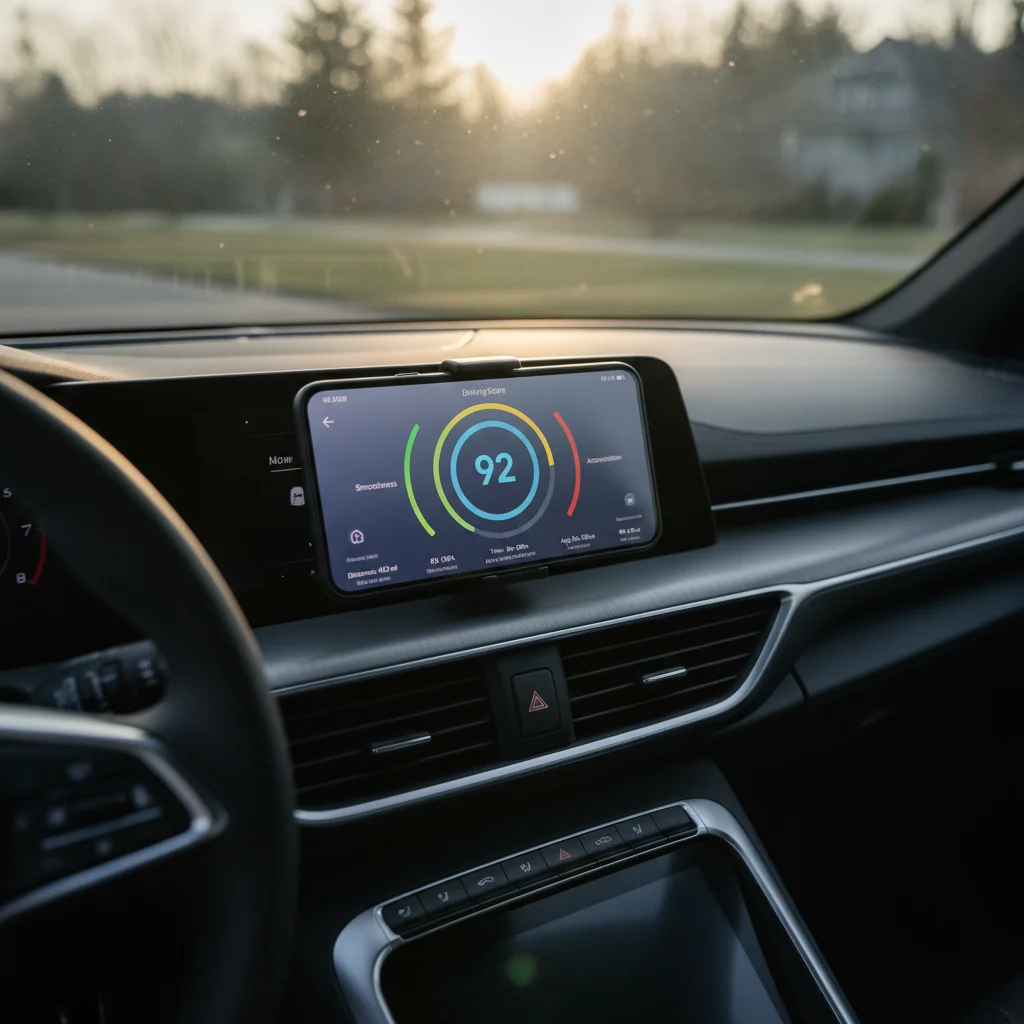
Before you plug in a device or download an app, you need a clear picture of what's being watched. Most usage-based insurance (UBI) programs track a consistent set of variables, but the relative weight each insurer assigns to those variables can differ dramatically. Assuming you know what matters because you've heard the general pitch is one of the most common ways drivers end up with a worse rate than they started with.
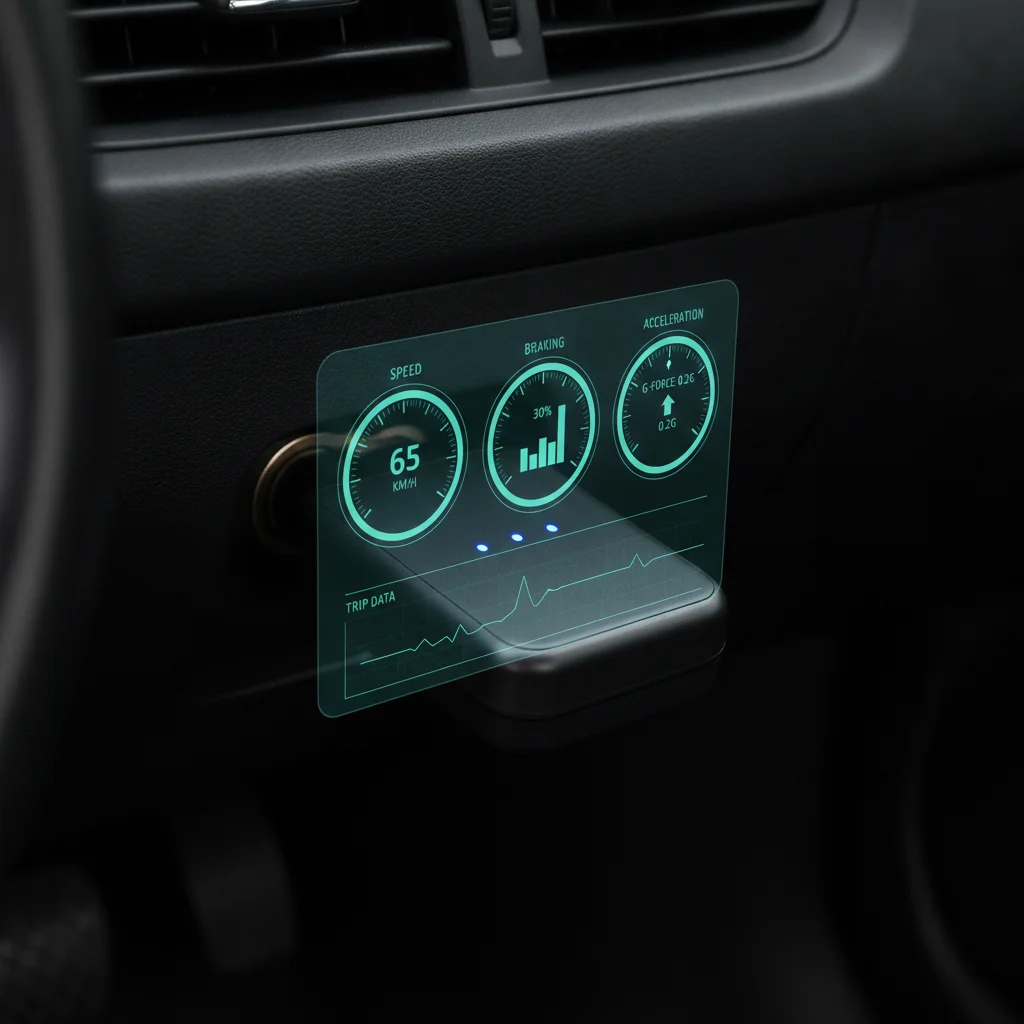
The core metrics captured by virtually every major telematics program include:
- Hard braking events — sudden deceleration beyond a set threshold (typically 7–9 mph per second)
- Rapid acceleration — aggressive throttle application, especially from a stop
- Speeding — time spent above posted limits, often broken into tiers (e.g., 1–10 mph over vs. 11+ mph over)
- Time of day — nighttime driving windows, usually midnight to 5 a.m., carry higher risk weighting
- Phone distraction — detected via device motion or app permissions; some programs score this heavily
- Miles driven — total distance is often a factor, though its weight varies
Less commonly tracked but worth knowing: some programs flag cornering behavior, whether you consistently follow distances from the vehicle ahead, and even the routes you habitually take. If your daily commute runs through a statistically high-accident corridor, that geographic risk can influence your score.
For a deeper look at how these programs are structured and what the typical enrollment process looks like, see how telematics and usage-based insurance work before you commit to a program.
The Scoring Traps Most Drivers Don't See Coming
Here's where the gap between perception and reality does real financial damage. Many drivers enroll expecting their already-cautious driving style to translate into a meaningful discount, then are surprised when the score comes back mediocre. The problem is usually one of a few specific blind spots.
40%
Potential premium discount for top-scoring telematics drivers
Major carriers including Progressive and Allstate advertise up to 40% savings for drivers who achieve top scores in their usage-based programs.
20–30%
Average realized discount across all UBI participants
Industry data from the Insurance Information Institute suggests the average participating driver saves between 10% and 30%, with many falling in the 15–20% range.
90 days
Typical initial monitoring period length
Most major carriers use a 90-day evaluation window to establish an initial scored rate adjustment, though some run continuous scoring at each renewal.
12–20%
Score impact from nighttime driving alone
Telematics program analyses by independent insurance researchers suggest time-of-day scoring can account for 12–20% of a driver's total composite score weighting.
Hard Braking Is the Most Common Score Killer
You might consider yourself a smooth driver, but if you're used to urban driving — stop-and-go traffic, pedestrians stepping off curbs, traffic signals with short yellow phases — your brake pedal use will register as hard events more frequently than you realize. The threshold sensors use is lower than most people expect. Practicing longer following distances so you're coasting more and braking less is the single most reliable way to reduce hard-brake events.
Nighttime Driving Carries Hidden Weight
If your job requires late shifts, you're a caregiver, or you regularly drive home from evening social events, your time-of-day score will be penalized regardless of how smoothly you drive during those hours. Some programs let you review time-band data in your app so you can quantify exactly how much those late trips are costing your score. If nighttime driving is unavoidable for you, UBI may not be the right discount vehicle — consider comparing other policy discounts instead.
Speed Scoring Is Nuanced, Not Absolute
Most telematics programs don't simply flag any driving above the speed limit. They use graduated bands — a few mph over a rural highway limit typically scores better than sustained high-speed driving on an urban arterial. But some programs also score based on the speed relative to surrounding traffic, which introduces variables you can't fully control. Know your program's specific speed model before assuming your highway cruising at 72 in a 70 is fine.
“Telematics data doesn't lie, but it also doesn't explain context. A hard brake that avoided a child running into the street looks identical in the data to one caused by following too closely. Programs reward patterns, not individual events — so the goal is to make safe patterns your default, not to avoid any single incident.”
— Robert Hartwig, Risk and Uncertainty Management Center Director, University of South Carolina
Phone Interaction Detection Varies Widely
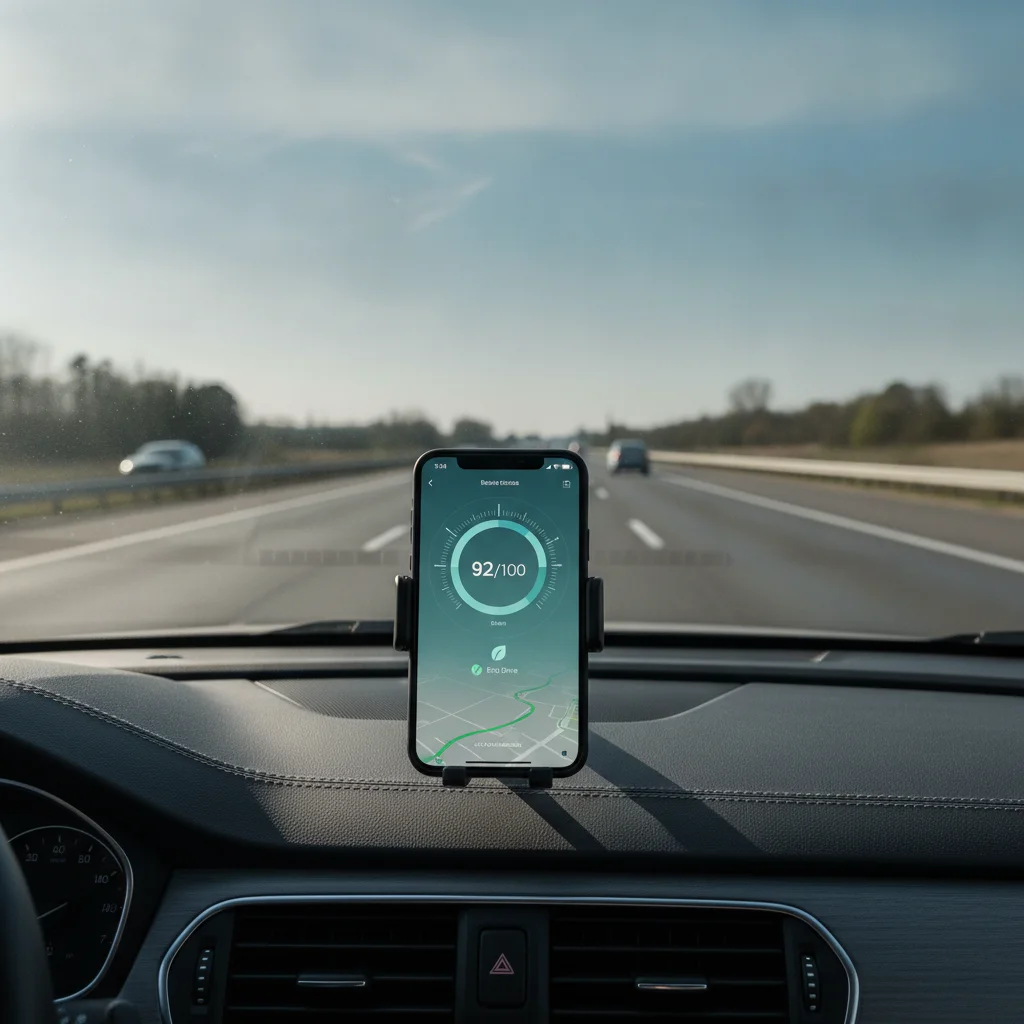
Some programs detect phone use through gyroscope and accelerometer data within the app itself. Others rely on Bluetooth or screen-on signals. If you use your phone for navigation with it mounted and fully visible, some scoring models will still flag interaction events. Understanding exactly how your insurer detects distraction — and whether hands-free navigation counts against you — is worth a direct call to their customer service line before you start your monitoring period.
Best Practices for Maximizing Your Telematics Score
These aren't tricks to game the system — they're legitimate behavioral adjustments grounded in what the data actually rewards. The programs are designed to reduce accident risk, and the habits that lower your score happen to be the same ones that make you a statistically safer driver.
Extend your following distance to at least three seconds in normal conditions
Hard braking is the most heavily weighted negative factor in most telematics programs. Increasing following distance gives you more time to decelerate gradually, virtually eliminating hard-brake events from traffic. It also genuinely reduces your accident risk, which is the whole point.
Put your phone in Do Not Disturb mode before starting any trip during the monitoring period
Phone distraction scoring is increasingly prominent in modern telematics programs, and even brief screen interactions during a trip can register as events. A simple habit change eliminates this risk entirely without any sacrifice in safety.
Review your telematics app after every trip during the first two weeks
Most programs provide near-real-time trip feedback. Checking your app frequently early in the monitoring period surfaces your actual scored behaviors — not your perceived behaviors — and lets you correct course before the data accumulates against you.
Minimize driving during the midnight-to-5 a.m. window throughout the monitoring period
Night driving carries disproportionate weight in most scoring models because the statistical accident risk during those hours is meaningfully higher. Reducing or eliminating late-night trips during your evaluation window has an outsized positive effect on your overall score.
Understand your insurer's specific speed thresholds before the monitoring period begins
Speed scoring is not uniform across carriers. Some programs flag driving above the posted limit entirely; others use graduated bands with significant tolerance. Not knowing your specific program's thresholds means you may be inadvertently penalized during what you consider normal highway driving.
Aggregate your low-mileage days strategically if you have schedule flexibility
If your program weights total miles driven, concentrating lower-mileage periods within your monitoring window improves that component of your score. This is most relevant for people who can work from home part-time or have variable schedules.
Timing Your Enrollment Strategically
When you enroll matters almost as much as how you drive. Most telematics programs have a defined monitoring window — commonly 90 days — after which your rate adjustment is calculated and locked in. Some programs run on a continuous scoring model that adjusts at each renewal, while others do a single evaluation. Knowing which model you're in shapes your entire strategy.

Enroll During Your Lowest-Risk Period
If you have a predictable period of low-mileage, lower-stress driving ahead — a vacation stretch where you're working from home, a season with longer daylight hours, or a period where your daily commute is temporarily shorter — that's your window. You're not misrepresenting your driving to the insurer; you're choosing when to be evaluated, which is fully within the program rules.
Understand the Opt-Out Consequences First
Read your policy documents carefully before enrolling. Some insurers guarantee you can't be charged more than your current rate if you participate, regardless of your score — Progressive's Snapshot program has offered this protection historically. Others will apply a surcharge if your score reflects above-average risk. Opting out mid-program may or may not undo a bad scoring period depending on the carrier. Don't assume — ask directly or read the program terms.
Ask for a Soft-Start Trial Period
Some carriers, including Progressive, offer a preliminary monitoring phase where data is collected but not scored toward your rate — letting you see how your driving profile looks before committing to the evaluation period. Call your insurer and ask specifically whether this option exists. If it does, always take it.
Check Whether Your Renewal Cycle Aligns
If your renewal is two months away and the monitoring period is 90 days, your score may not be final before your next renewal. Understand how your insurer handles that timing gap. Starting enrollment immediately after a renewal gives you the maximum runway to build a strong score before it affects your premium.
EV Drivers and Telematics: A Different Calculus
If you drive an electric vehicle, your car is already generating significant driving data through its own systems. That creates a distinct set of considerations when layering on a telematics insurance program.
On one hand, EV driving naturally supports better telematics scores: regenerative braking reduces hard-braking events, single-pedal driving smooths out acceleration patterns, and many EV drivers tend to be commuter-oriented with predictable, lower-risk driving profiles. On the other hand, some telematics apps have calibration issues with EVs — regenerative braking can sometimes register as a hard-brake event on systems calibrated for conventional friction braking.
Before enrolling, check with your insurer about EV-specific scoring adjustments. Some carriers have updated their algorithms to account for regenerative braking; others haven't. For a full assessment of whether UBI makes financial sense specifically for electric vehicle owners, read the detailed EV telematics guide before enrolling.
EV Regenerative Braking May Skew Your Score
Regenerative braking decelerates a vehicle more abruptly than engine braking on a conventional car, and some telematics algorithms haven't fully adapted to this. If you drive an EV and your app shows frequent hard-braking flags despite smooth driving, report it to your insurer. Several carriers have issued algorithm corrections for this issue after driver complaints, and you may be able to request a manual score review.
Data Retention Policies Vary by Carrier
Your driving data collected during a telematics program doesn't automatically disappear after the monitoring period ends. Carriers have different data retention and usage policies — some keep the data for underwriting purposes for years; others delete it after your rate is set. If data privacy is a concern, ask your insurer for their written data retention policy before enrolling. It's a legitimate question and any reputable carrier will answer it.
Quick Wins Before Your Monitoring Period Starts
Before the tracking clock starts, there are several zero-cost, immediate adjustments you can make to set yourself up for the best possible score. These take minutes to implement and can meaningfully influence your outcome.
When to Skip Telematics Entirely
Usage-based insurance is a genuinely good deal for the right driver profile. It is a bad deal for several others. Being honest with yourself here protects your wallet.
Skip telematics if any of these apply to you:
- You regularly drive between midnight and 5 a.m. — shift workers, healthcare workers, nightlife frequenters. The time-of-day penalty is often large enough to negate any behavioral discount you'd earn.
- You drive high annual mileage in stop-and-go urban environments. — Higher exposure creates more scoring opportunities to go wrong, and urban braking patterns work against you.
- You've already qualified for significant non-telematics discounts. — If you're already getting multi-policy, good driver, and loyalty discounts, the marginal gain from UBI may not justify the data trade-off or the behavioral constraint.
- Your insurer doesn't offer rate protection. — If a poor score can result in a surcharge and you're not confident in your driving profile across all scored metrics, the downside risk exceeds the upside potential.
In those cases, your time is better spent systematically comparing policy quotes across carriers to find the best base rate for your profile.

The bottom line: telematics is a tool, not a universal discount. Use it when the math and your driving profile align — and skip it when they don't.

All claims are backed by peer-reviewed research. Sources on request.