
Key Takeaways
What a Declarations Page Actually Is
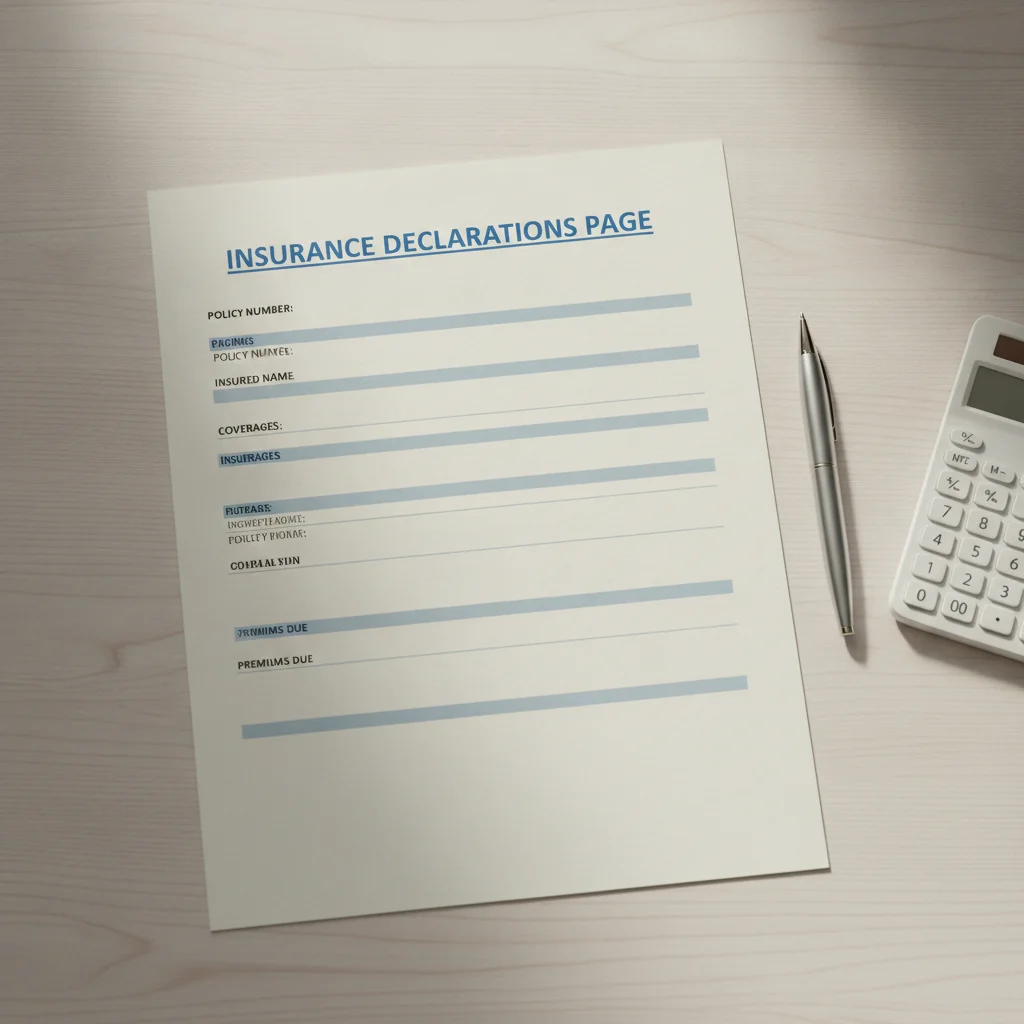
The declarations page — often called the dec page — is the first document in your auto insurance policy packet. It's the insurer's condensed summary of the agreement: who is covered, what vehicles are covered, under what circumstances, and for how much. Think of it as the table of contents and the scorecard combined into one or two pages.
Most drivers glance at it when they get a new policy, confirm the premium looks right, and file it away. That's a mistake. The dec page is actually the most useful document you have for understanding what you bought — and it becomes essential when you're shopping around and trying to determine whether a competitor's lower rate is genuinely comparable or just cheaper because it covers less.
Reading your auto insurance declarations page in detail helps you understand every section so nothing catches you off guard at claim time. This guide builds on that foundation by showing you specifically how to use it as a comparison tool.
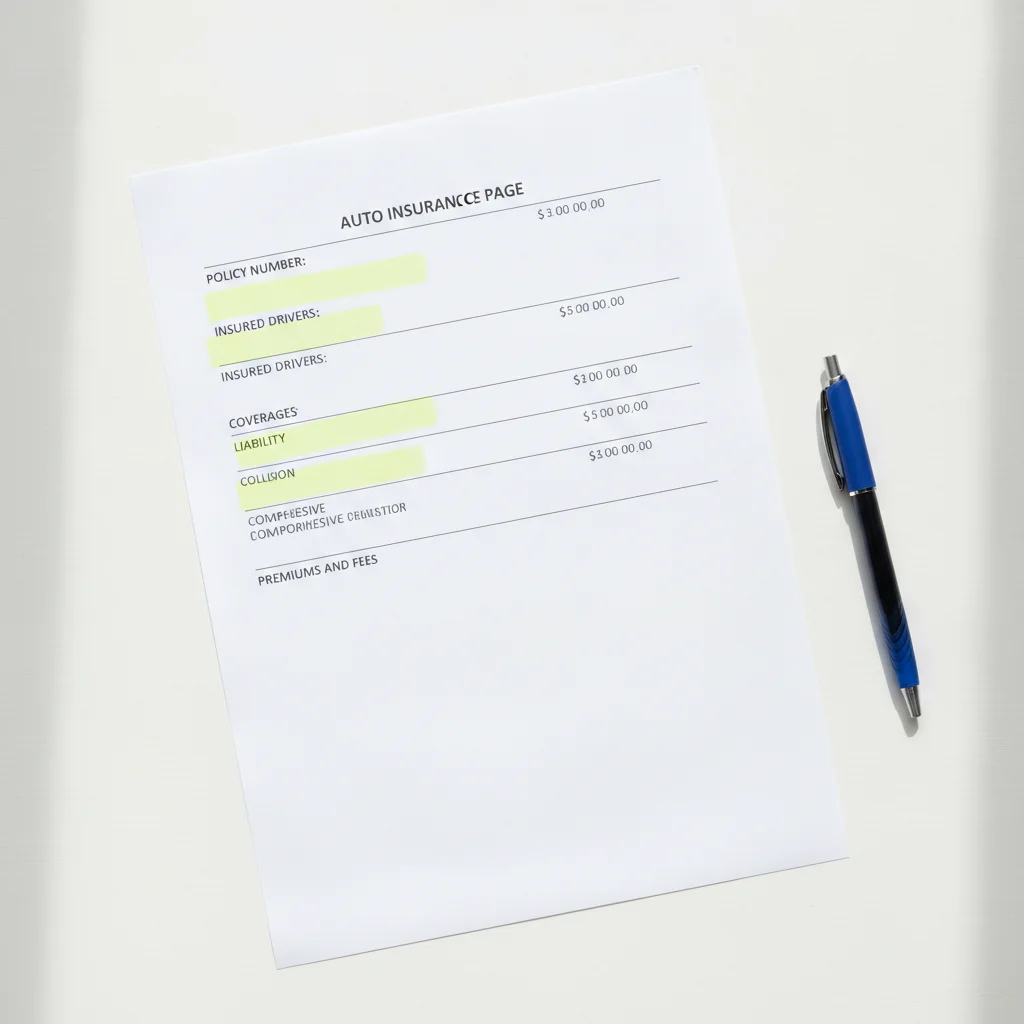
Before you can compare two policies, you need to know exactly what your current dec page is telling you. Here's a breakdown of every standard section you'll find on it.
Named Insured and Household Drivers
The top of the page lists the named insured — the policyholder — and typically the address of record. Many policies also list additional drivers in the household. This matters because unlisted drivers may face coverage restrictions or full denials at claim time depending on your insurer's rules. When comparing a competitor's quote, confirm whether they require all household drivers to be listed and how that affects the rate you're seeing.
Policy Period
This is the effective start and end dates of coverage — usually six or twelve months. When comparing policies mid-term, note that you may owe a short-rate cancellation fee from your current insurer. Factor that into your savings calculation.
Vehicles Covered
Each vehicle on the policy is listed with its year, make, model, and VIN. Coverage and premium can vary by vehicle. If you're comparing quotes, make sure the competitor's quote includes the same VIN or at least the same vehicle specs — differences in trim level can affect comprehensive and collision premiums.
Coverage Summary Table
This is the core of the declarations page. It lists every coverage type you carry, the limit for each, any applicable deductible, and the premium allocated to that coverage. This table is what you'll use to do a true apples-to-apples comparison. We'll walk through how to use it in the steps below.
Endorsements and Riders
Listed at the bottom of many dec pages, endorsements are add-ons that modify the base policy — things like rental reimbursement, gap coverage, or roadside assistance. These are easy to overlook but can represent significant value differences between two otherwise similar-looking policies. Always check this section when comparing.
What the Coverage Limits and Numbers Mean
The biggest source of confusion on any declarations page is the limit structure. You'll see numbers formatted in different ways depending on the coverage type, and misreading them is one of the most common errors drivers make when comparing policies.
Split Limits vs. Combined Single Limits
Liability coverage is usually expressed as either split limits or a combined single limit (CSL). Split limits look like 100/300/100 — three numbers separated by slashes. What those three numbers mean is something every driver should understand before shopping: the first is the per-person bodily injury cap, the second is the per-accident bodily injury cap, and the third is the property damage cap, all in thousands of dollars.
A CSL policy instead lists a single number — say, $300,000 — that can be applied to any combination of bodily injury and property damage claims from one accident. CSL policies tend to offer more flexible protection but can be harder to compare directly to split-limit policies. If one insurer quotes split limits and the other quotes CSL, you need to translate both into a meaningful comparison before drawing any conclusions.

Deductibles
Deductibles appear on your comprehensive and collision coverage lines. A higher deductible lowers your premium but increases your out-of-pocket cost when you file a claim. This is one of the most common levers insurers use to make a quote look attractively priced. If a competitor's premium is notably lower, check whether they've raised your deductible — even a jump from $500 to $1,000 can represent a significant cost shift in the event of a claim.
Uninsured and Underinsured Motorist Coverage
UM/UIM limits are listed separately and should match or exceed your liability limits in most cases. Some insurers stack this coverage (meaning it applies per vehicle), while others do not. If stacking is available in your state and your current policy includes it, confirm whether a competitor's quote does the same before assuming the coverage is equivalent.
Auto insurance terms you need to know — including deductibles, exclusions, and endorsements — are covered in detail in our plain-language reference guide. Review it before diving into a side-by-side comparison if any of the terminology on your dec page is unfamiliar.
Lower Premiums Often Mean Reduced Coverage
A 15–20% premium reduction from a competing insurer almost never comes for free. It typically reflects higher deductibles, lower liability limits, stripped endorsements, or reduced UM/UIM coverage. Go into any comparison assuming the cheaper policy covers less until your line-by-line review proves otherwise. Optimism is expensive when the claim arrives.
How to Request the Documents You Need
You can't do a meaningful comparison without both declarations pages in hand. A quote sheet from a competitor is not the same thing as a dec page — quotes frequently omit exclusions, list minimum limits that you'd need to upgrade, or bundle items in ways that obscure what you're actually getting.
Here's how to make sure you have the right documents before you start comparing:
- Your current dec page: Log into your insurer's online portal or contact your agent. You should be able to download it immediately as a PDF. If you're having trouble, requesting policy documents from your insurer is straightforward — insurers are legally required to provide them upon request.
- A competitor's specimen dec page: Before you bind a new policy, ask the competing insurer for a specimen declarations page that reflects the exact coverage and limits in the quote. A reputable insurer will provide this. If they won't, treat that as a red flag.
- The full policy document: The dec page is a summary. Exclusions, conditions, and definitions live in the full policy language. For major coverage decisions, pull both documents.
Once you have both dec pages in hand, you're ready to run a structured comparison. The steps below walk you through that process systematically.
Current Auto Insurance Declarations Page
Serves as the baseline document listing all your existing coverage types, limits, deductibles, and premiums.
Competitor Specimen Declarations Page
Provides an accurate coverage summary for the competing policy — more reliable than a quote sheet for comparison purposes.
Spreadsheet or Comparison Table
Used to organize a line-by-line comparison of coverage limits, deductibles, and premiums from both policies.
State Insurance Department Website
Allows you to verify an insurer's license, complaint history, and financial standing before switching.
A.M. Best or Standard & Poor's Rating Lookup
Provides financial strength ratings that indicate an insurer's ability to pay claims.
Step-by-Step: Comparing Two Declarations Pages
Work through these steps in order. Skipping ahead to the premium comparison before completing the coverage analysis is how drivers end up underinsured after switching.
Print or display both declarations pages side by side
Open your current dec page and the competitor's specimen dec page simultaneously — either printed or in two browser windows. You'll be moving between them repeatedly, and having them visible at the same time prevents errors. If either document is only available as a PDF, use your device's split-screen feature or print both.
Confirm the covered vehicles and drivers match
Before comparing any dollar figures, confirm that both policies cover the same vehicles (same VIN or vehicle specs) and the same drivers. A competitor quote that excludes a young driver in your household is not a fair comparison — that driver exclusion is why the premium is lower, and removing it will change the quote.
Compare liability limits line by line
On each dec page, find the bodily injury and property damage liability limits. Write them down in a simple table:
| Coverage | Current Policy | Competitor Policy |
|---|---|---|
| Bodily Injury (per person) | $___ | $___ |
| Bodily Injury (per accident) | $___ | $___ |
| Property Damage | $___ | $___ |
If one policy uses split limits and the other uses a CSL, convert them to a common format before drawing conclusions.
Compare comprehensive and collision limits and deductibles
For each vehicle on the policy, note the deductible amounts for both comprehensive and collision coverage. Record the premium allocated to each. A policy with a $1,000 collision deductible versus one with a $250 deductible will show a meaningful premium difference — but that difference represents risk you're absorbing yourself, not savings.
Compare uninsured and underinsured motorist coverage
Find the UM and UIM lines on both dec pages. Note the limits and whether the coverage is stacked or non-stacked (where stacking is permitted by your state). Also confirm whether medical payments (MedPay) or personal injury protection (PIP) are included and at what limits — these vary significantly by state and insurer.
Review all endorsements and add-ons
Scroll to the endorsements section of both dec pages. Make a list of every add-on your current policy includes — rental reimbursement, roadside assistance, gap coverage, new car replacement, accident forgiveness — and check whether each one appears on the competitor's specimen dec page. Note which are absent and what it would cost to add them.
Calculate the true cost difference
Now and only now should you compare premiums. Add up:
- The competitor's six- or twelve-month premium
- The cost of any endorsements you'd need to add to make coverage equivalent
- Any short-rate cancellation fee from your current insurer
- Any gap in coverage during the transition period
Subtract that total from your current premium to determine the actual savings. If the number is still meaningful, move on to verifying the competitor's claim service reputation before binding.
When you've completed the comparison, use the auto insurance comparison checklist to verify claim service quality, financial ratings, and discount eligibility before making a final decision to switch.
Common Traps That Make a Cheaper Policy Look Equal
Even experienced drivers get caught by these. Know what to look for before you're convinced a lower-premium policy is equivalent coverage.
Minimum State Limits Packaged as Standard
Some direct-to-consumer insurers default to your state's minimum liability limits unless you specifically request higher ones. The quote looks low because the coverage is minimal. Always cross-reference the limits on the competitor's dec page against your current policy — not against the state minimum, which is a floor, not a recommendation.
Rental Reimbursement and Roadside Assistance Quietly Dropped
These endorsements often don't appear in headline comparisons. They're small-dollar items individually, but their absence means you're paying out of pocket for a rental car while your vehicle is being repaired after a covered claim. Check the endorsements section of both dec pages explicitly.
Higher Deductibles Across All Coverages
A competitor may quote comprehensive at a $1,000 deductible when yours is $250. The premium difference looks like savings until a rock chips your windshield. Confirm deductibles on every coverage line, not just collision.
Gap Coverage Exclusions
If you're financing or leasing a vehicle, gap coverage protects the difference between your car's actual cash value and what you still owe the lender. Some policies exclude gap coverage entirely or require a separate endorsement. If your current policy includes it and a competitor's doesn't, add the cost of standalone gap coverage to the competitor's effective premium before comparing.

One-Sided Premium Allocation
Some insurers weight their quoted premium heavily toward comprehensive coverage (which covers theft and weather damage) and lightly toward collision (which covers accidents). This can make the overall premium look competitive while leaving you underprotected in the scenarios most likely to produce a claim. Look at the per-coverage premium breakdown on both dec pages, not just the total.
Ask About Discounts Before Finalizing the Comparison
Not all discounts are automatically applied to a competitor's initial quote. Multi-vehicle discounts, good driver discounts, and professional association discounts sometimes require documentation or a separate request. Before concluding that the competitor's rate is as low as it can go, ask an agent to apply every discount you qualify for. <a href="/car-insurance/rates-and-savings/discounts-and-deals">Discounts drivers commonly overlook</a> can shift the comparison meaningfully in either direction.
Also check whether discounts you currently receive — multi-vehicle, good driver, loyalty — are reflected in the competitor's quote. Common insurance discounts are often applied selectively, and a quote generated before the insurer has verified your driving history may not include all the discounts you'd qualify for. Confirm this before binding.
Making the Final Call: Is the Switch Worth It?
After completing a line-by-line comparison, you'll be in one of three situations:
- The coverage is genuinely equivalent and the premium is lower.
- This is the ideal scenario. Confirm the competitor's financial strength rating (A.M. Best or Standard & Poor's), read recent claims reviews, and check whether your state insurance department has any actions on file against them. If everything checks out, the switch is likely worth making.
- The coverage differs but the premium difference is large.
- Decide whether the coverage differences are material to your situation. If the competitor has lower UM/UIM limits but you live in a state with high rates of insured drivers, that trade-off may be more acceptable. Make the decision consciously, not by default.
- The coverage is worse and the premium is only marginally lower.
- This is the most common outcome when drivers don't do a structured comparison. A $20/month savings that comes with a $500 higher deductible and dropped rental coverage is not a good deal. Stay put, or go back to the competitor and ask them to match your current coverage structure at a better price.
Before finalizing any switch, confirm whether your current insurer has a short-rate cancellation penalty and when your renewal date falls. In many cases, waiting until your policy renews to switch eliminates that fee entirely and gives you time to complete the comparison properly.
The dec page is not exciting reading. But treating it as a working document — something you pull out and annotate when comparing coverage — turns it from a formality into one of the most useful tools you have as a policyholder.

All claims are backed by peer-reviewed research. Sources on request.