Key Takeaways
Car Insurance Deductible
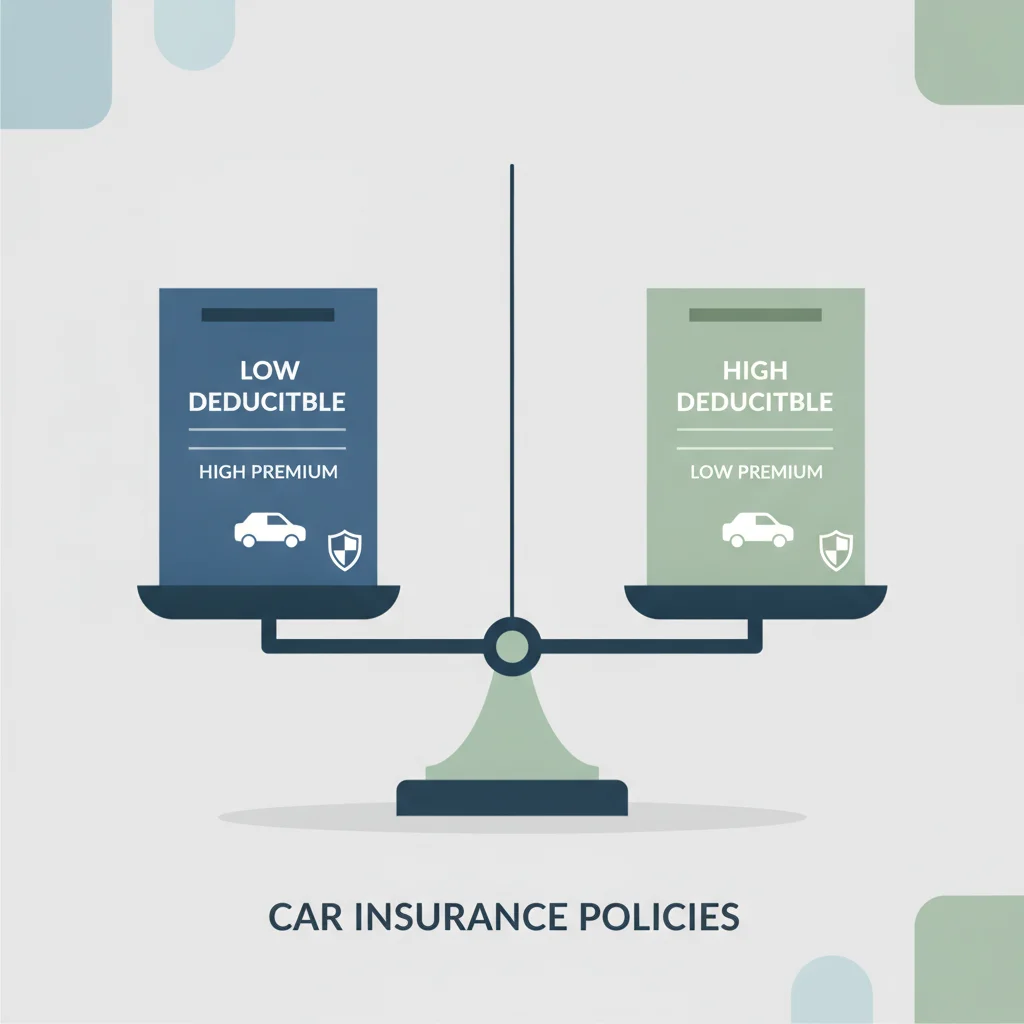
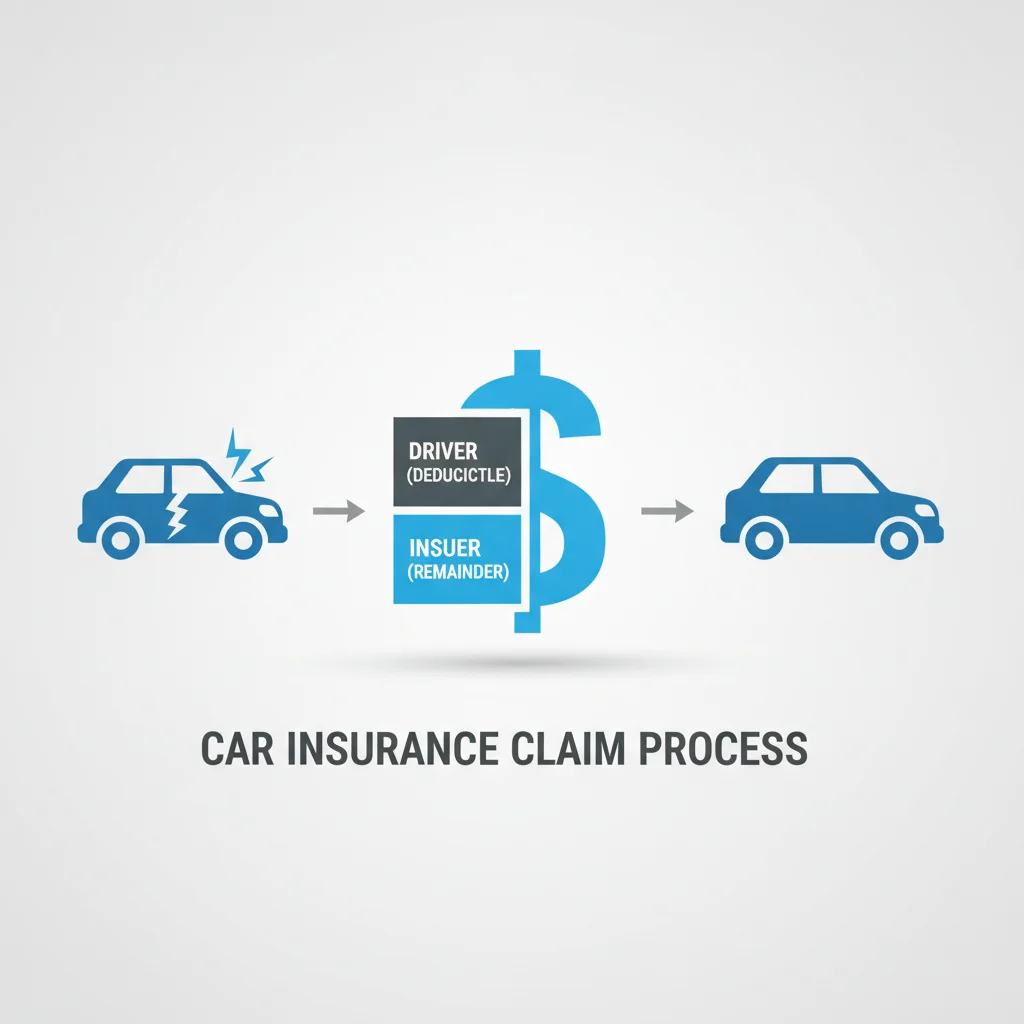
A car insurance deductible is the dollar amount you agree to pay out of pocket before your insurer covers the rest of a claim. For example, if your car sustains $3,000 in damage and you have a $500 deductible, you pay $500 and your insurer pays $2,500. The deductible applies per claim, not per year, meaning every covered loss triggers it independently. Choosing a higher deductible lowers your monthly premium; choosing a lower one raises it.
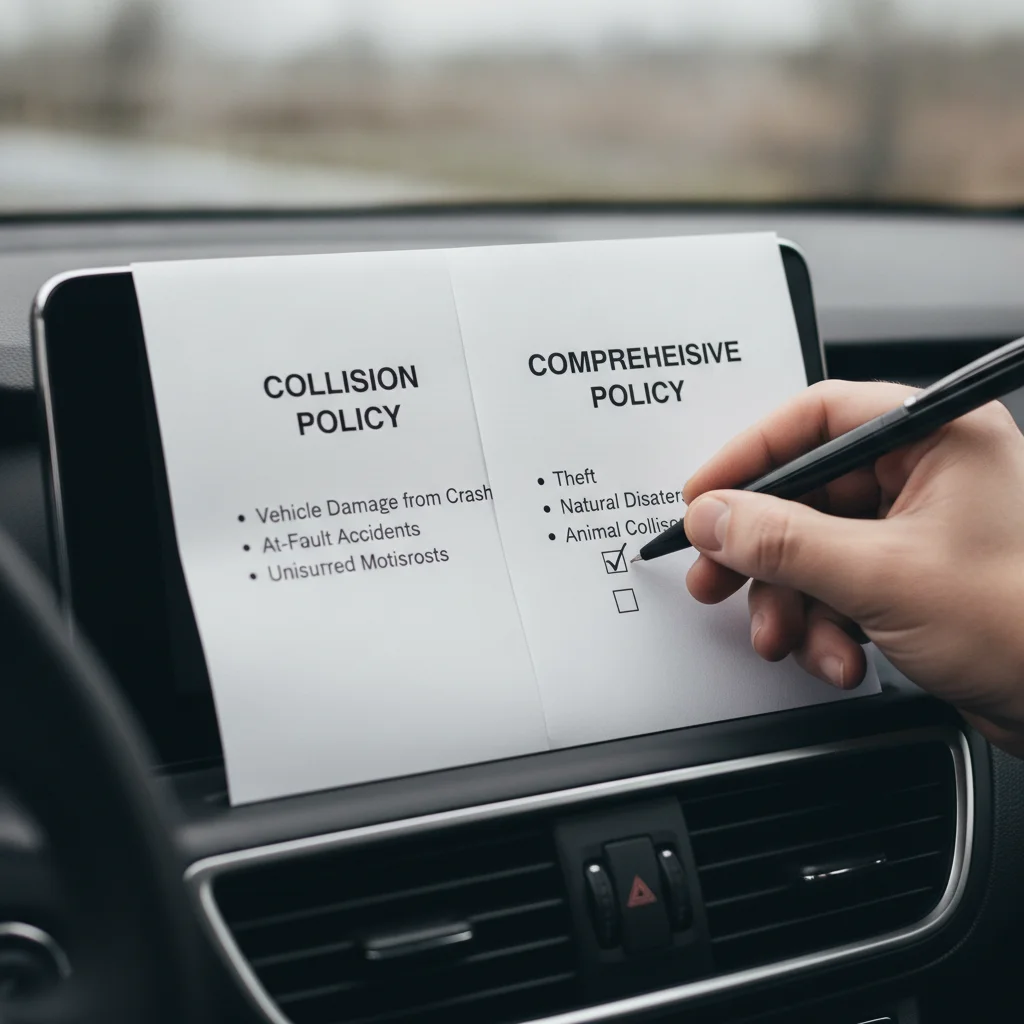
Deductibles apply specifically to physical damage coverages — collision and comprehensive — not to liability coverage, which has no deductible since it pays third parties, not you.
What Your Deductible Is Actually Doing to Your Policy
Most drivers pick a deductible during the quote process and never revisit it. That's a mistake. Your deductible isn't a static formality — it's a dynamic lever that redistributes financial risk between you and your insurer every time you sign a policy or renew one.
Here's the mechanism: when you agree to a higher deductible, you're telling your insurer that you'll absorb more of the initial loss from any covered claim. In exchange, they reduce your premium because their expected payout per claim shrinks. When you choose a low deductible, the insurer takes on more first-dollar exposure, and you pay more monthly to compensate them for that risk.
This tradeoff isn't inherently good or bad — it depends entirely on your financial situation, your claim history, and how long you plan to hold the vehicle. What matters is that you make the choice deliberately, with real numbers, not just gut instinct.
One clarification that trips up a lot of drivers: deductibles only apply to collision and comprehensive coverage. Your liability coverage — the portion that pays other people when you're at fault — carries no deductible. Neither does uninsured motorist property damage in most states. This distinction matters because it means your deductible decision only affects claims where your own vehicle is damaged.
Liability Coverage Has No Deductible
Many drivers assume their deductible applies to every type of claim. In reality, deductibles only apply to collision and comprehensive — the coverages that pay for your vehicle's physical damage. Liability coverage, which pays for damage and injuries you cause to others, has no deductible. This means your deductible choice has no effect on third-party claims or your legal exposure after an at-fault accident.
The Math Behind the Tradeoff
Let's put real numbers on this. Suppose you're comparing two collision coverage options on the same vehicle:
| Deductible | Annual Premium | Annual Cost Difference | Break-Even (Years Without a Claim) |
|---|---|---|---|
| $250 | $820 | — | — |
| $500 | $720 | $100 saved/year | 2.5 years |
| $1,000 | $590 | $230 saved/year | 3.3 years |
The break-even period tells you how many claim-free years you need before the premium savings offset the higher out-of-pocket cost. In the example above, moving from a $250 to a $1,000 deductible saves $230 per year. But if you file a collision claim 18 months in, you've paid an extra $750 out of pocket while only banking $345 in premium savings — a net loss of $405.
17–18 yrs
Average years between collision claims
According to Insurance Research Council data, the average driver files a collision claim approximately once every 17 to 18 years.
15–30%
Premium reduction from raising deductible
The Insurance Information Institute estimates that raising a collision deductible from $200 to $500 can reduce collision coverage cost by 15–30%.
$500
Most common U.S. auto deductible chosen
Industry data consistently shows $500 as the most frequently selected deductible tier among American personal auto policyholders.
40%
Drivers who never revisit their deductible
A J.D. Power survey found roughly 40% of auto insurance customers have not reviewed their coverage terms — including deductible levels — in the past two or more years.
The math only rewards the high-deductible choice if you go enough years without a claim. According to data from the Insurance Research Council, the average driver files a collision claim roughly once every 17–18 years. At that frequency, the $1,000 deductible almost always wins on pure math. But averages mask individual risk — a daily commuter in a congested metro faces very different odds than a suburban driver with a short, low-traffic route.
The other variable: what happens when you do file a claim. If the damage is only $800 and your deductible is $1,000, your insurer pays nothing. You've absorbed the entire loss and may have triggered a surcharge on future premiums for filing — a double penalty. This is why small-damage claims are often better handled out of pocket regardless of your deductible level. See why low-deductible policies can cost more than they save for a closer look at this dynamic.
Run the Break-Even Calculation Before You Choose
Before locking in any deductible, do this quick calculation: divide the additional out-of-pocket cost (the deductible increase) by the annual premium savings. The result is your break-even period in years. If your personal claim history or driving exposure suggests you'll likely file a claim within that window, the higher deductible may not save you money. If you're a low-mileage, careful driver with a solid emergency fund, the math usually favors going higher.
Review Your Deductible at Every Renewal
Your financial situation, driving habits, and vehicle value all change over time — and your deductible should reflect those changes. Set a calendar reminder to review your deductible terms every time your policy renews. Comparing current options takes 10 minutes and can surface savings or misalignments you'd otherwise miss for another year.
Your Emergency Fund Is the Real Deductible Anchor
The single most practical factor in setting your deductible isn't your claim history or your vehicle's age — it's the size of your emergency fund. Your deductible should never be set above what you can realistically write a check for today, without borrowing.
If you have $2,000 in liquid savings, a $1,000 deductible is workable. If your savings account has $300 in it, a $500 deductible is already stretching. Setting a $1,000 deductible when you couldn't cover it without credit card debt defeats the purpose of the premium savings — you'd just be trading insurer debt for personal debt, likely at a worse interest rate.
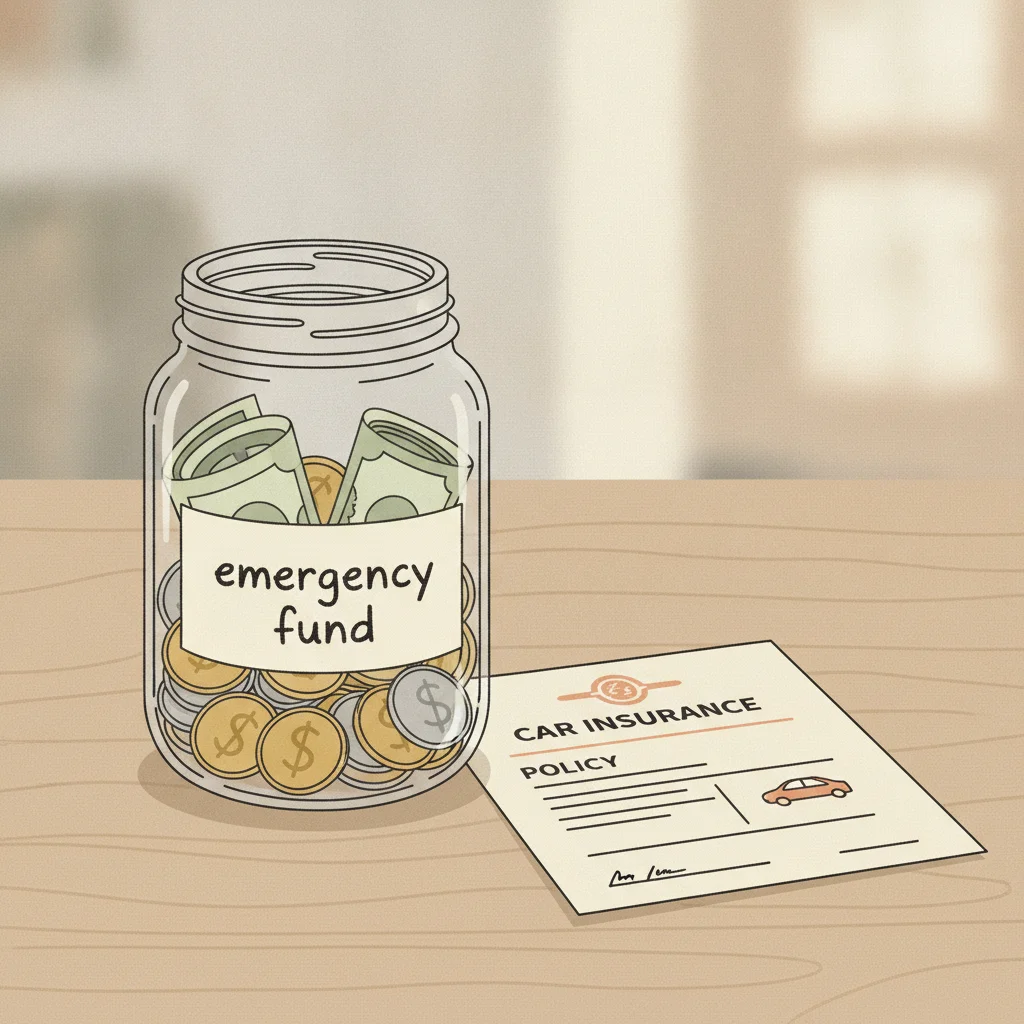
Here's a tiered decision framework based on emergency fund liquidity:
- Under $500 liquid: Choose a $250 or $500 deductible. The premium difference is small enough that protection from financial shock matters more than savings.
- $500–$1,500 liquid: A $500 deductible is a solid anchor. A $1,000 deductible is viable only if you're disciplined about rebuilding savings quickly after any other large expense.
- $1,500–$3,000+ liquid: A $1,000 deductible makes strong mathematical sense, especially if you're also saving on comprehensive premiums.
- $3,000+ liquid and claim-averse: Consider a $1,500 or $2,000 deductible if your insurer offers it and your vehicle is worth enough to warrant physical damage coverage at all.
Your vehicle's actual cash value (ACV) matters here too. If your car is worth $6,000, carrying a $2,000 deductible means the insurer's maximum payout in a total loss is only $4,000. That's a meaningful reduction in coverage value relative to premium cost. Underinsuring your vehicle by setting the wrong deductible is one of the most avoidable physical damage mistakes drivers make.
“The deductible is the most underused tool in personal finance. People obsess over the premium and ignore the fact that they've essentially taken a loan from themselves — one they'll have to pay back the moment something goes wrong.”
— J. Robert Hunter, Former Federal Insurance Administrator and Director of Insurance, Consumer Federation of America
Separate Deductibles for Collision vs. Comprehensive: Why It Matters
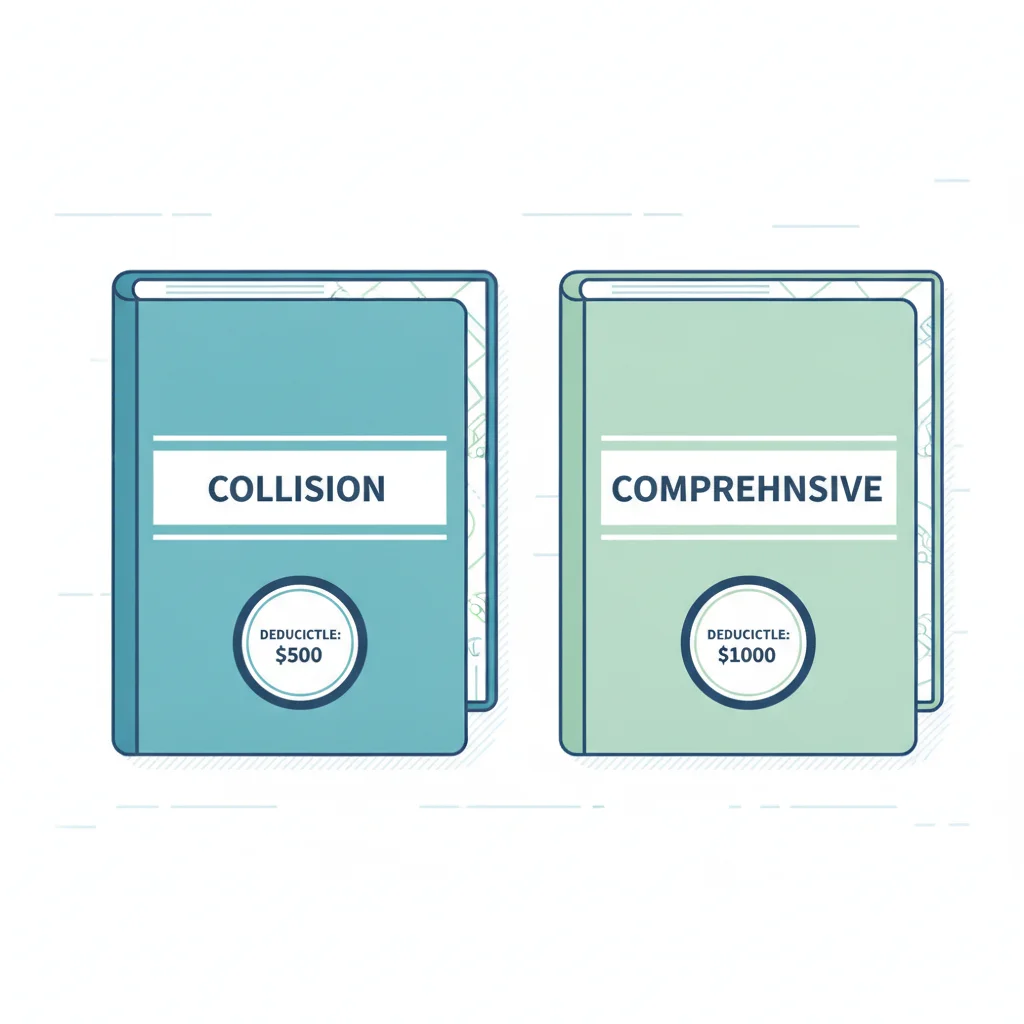
Many drivers don't realize that collision and comprehensive deductibles can be set independently. This matters because the risk profiles of these two coverages are very different.
Collision covers damage from accidents involving another vehicle or object. These claims are more frequent and more expensive, and the driver often has some control over their likelihood through careful driving. Because the risk is higher, premiums are higher — and a higher deductible here has a bigger premium impact.
Comprehensive covers non-collision events: theft, vandalism, weather events, animal strikes, and similar incidents. These are generally lower-probability for most drivers but can still be costly. Premiums for comprehensive are typically lower than collision, so the dollar savings from raising the deductible are more modest.
A common and sensible strategy: set your collision deductible at $500–$1,000 to capture meaningful premium savings, and set your comprehensive deductible at $250–$500 because the premium difference is smaller and the risk events are largely outside your control. If a hailstorm totals your windshield, you want to keep your out-of-pocket exposure manageable.
For a full breakdown of how to calibrate each separately, see deductibles for collision and comprehensive — how to choose the right amount.
Diminishing Deductibles and Other Alternatives Worth Knowing
If the standard high-deductible tradeoff doesn't sit well with you — maybe you want premium savings but don't love the exposure — some insurers offer diminishing deductible programs as a middle path. These programs reduce your deductible by a set amount for each claim-free year you maintain, sometimes down to $0.
The mechanics vary: one common structure reduces your deductible by $100 per claim-free year, starting at $500. After five clean years, your deductible hits zero. You pay a small additional premium for this feature — typically $30–$60 per year — and the value depends entirely on how long you go without a claim.
Understanding how diminishing deductible programs actually work is worth doing before you pay extra for one. In many cases, the math doesn't favor drivers who have a claim within the first two to three years — the premium surcharge often equals or exceeds what the program saves.
Separately, raising your deductible isn't the only lever for reducing premiums. Stacking discounts — multi-policy bundling, telematics programs, good driver discounts — can achieve similar or better savings without increasing your out-of-pocket risk. Comparing raising your deductible against stacking discounts helps you decide which approach makes more sense for your profile.
The broader set of rate factors — your driving record, location, vehicle age, and credit score in states that allow it — also affect your premium independent of deductible. Adjusting your deductible is one tool, but it works best alongside a full review of your coverage structure.
When to Revisit Your Deductible
Your optimal deductible isn't fixed. It should shift as your financial situation and vehicle value change. Here are the clearest signals that it's time to reassess:
- Your car's value has dropped significantly. If your vehicle is now worth less than $6,000–$7,000, the math on carrying full physical damage coverage — let alone a low deductible — starts to break down. At some point, you may be better off dropping collision entirely and self-insuring for physical damage.
- Your savings have grown. If your emergency fund has doubled since you last set your deductible, you may now be able to comfortably absorb a higher deductible in exchange for meaningful premium savings.
- Your commute or driving patterns have changed. A switch from daily highway driving to remote work reduces your collision exposure substantially. That changes the break-even calculus in favor of a higher deductible.
- You've gone several years without a claim. A long clean record suggests you're a lower-risk driver, and the statistical argument for carrying a lower deductible weakens over time.
- Your insurer raised your premium at renewal. Before accepting a rate hike, check whether increasing your deductible partially offsets the increase without leaving you dangerously exposed.
Run the Break-Even Calculation Before You Choose
Before locking in any deductible, do this quick calculation: divide the additional out-of-pocket cost (the deductible increase) by the annual premium savings. The result is your break-even period in years. If your personal claim history or driving exposure suggests you'll likely file a claim within that window, the higher deductible may not save you money. If you're a low-mileage, careful driver with a solid emergency fund, the math usually favors going higher.
Review Your Deductible at Every Renewal
Your financial situation, driving habits, and vehicle value all change over time — and your deductible should reflect those changes. Set a calendar reminder to review your deductible terms every time your policy renews. Comparing current options takes 10 minutes and can surface savings or misalignments you'd otherwise miss for another year.
Make it a habit to review your deductible at every policy renewal — not just when something changes dramatically. A 10-minute review once a year is enough to confirm you're still on the right setting, or to catch a misalignment before it costs you.

All claims are backed by peer-reviewed research. Sources on request.