Key Takeaways
Multi-Car Discount
A multi-car discount is a premium reduction an auto insurer applies when two or more vehicles are insured under the same policy or the same household account. Instead of treating each vehicle as a standalone risk, the insurer bundles them together and passes a portion of the administrative savings back to the policyholder. The discount is applied per vehicle, so every car on the policy typically costs less than it would if insured separately.
Insurers price multi-car policies partly on the assumption that household members share driving time across vehicles, lowering each car's individual exposure hours — a concept actuaries call reduced utilization risk.
Why Insurers Offer Multi-Car Discounts in the First Place
Insurance is fundamentally a numbers game. The more policyholders an insurer can group under predictable, manageable risk profiles, the more efficiently it can price coverage. Multi-car households offer something valuable from an underwriting standpoint: consolidated data, reduced administrative overhead, and — in many cases — a more stable risk pool.
When a household insures two vehicles with the same company, the insurer gains a fuller picture of that household's risk. They can see driver records, vehicle types, and usage patterns together, rather than pricing each car in isolation. That visibility has real economic value, and insurers share a piece of it back as a discount.
There's also a retention argument. A customer with two or three vehicles on one policy is far less likely to shop around aggressively — switching carriers becomes more complicated when multiple cars are involved. Insurers bake a loyalty component into multi-car pricing, which is why the discount can be surprisingly generous at 10% to 25% per vehicle.
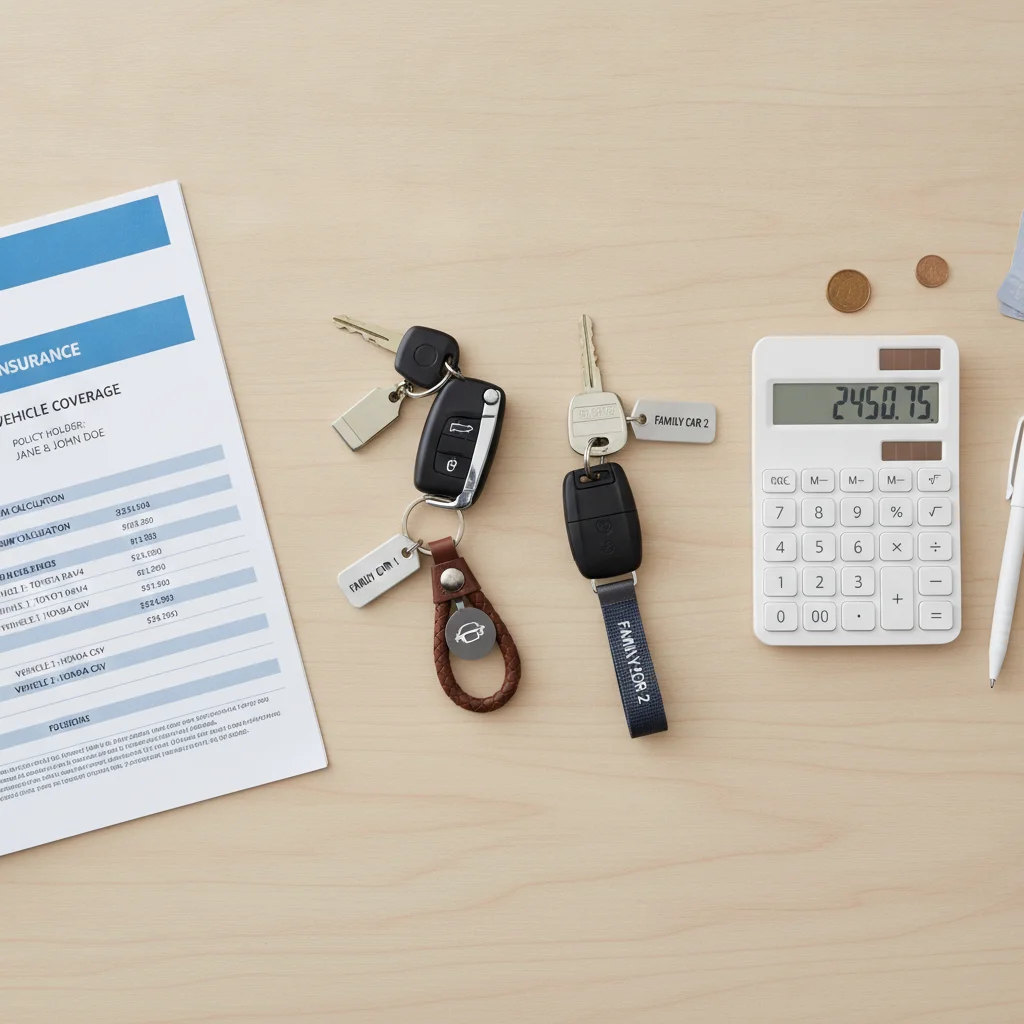
From an actuarial standpoint, multi-car households also tend to spread driving across vehicles. A family with a commuter sedan and a weekend SUV isn't driving either car as much as a single-vehicle household might drive its only car. Lower individual mileage generally means lower claim frequency, which justifies a lower per-vehicle rate.
How the Math Actually Works
The most common misconception about multi-car discounts is that only the second car gets cheaper. In reality, most insurers apply the discount to every vehicle on the policy, including the first. Here's a simplified example:
| Scenario | Vehicle A Premium | Vehicle B Premium | Annual Total |
|---|---|---|---|
| Separate policies, no discount | $1,400 | $1,100 | $2,500 |
| Multi-car policy, 15% discount each | $1,190 | $935 | $2,125 |
In that example, consolidating saves $375 per year without changing a single coverage limit. The percentage discount is applied to each vehicle's base premium, which is calculated using the standard factors — driver age, driving record, vehicle value, location, and coverage selections.
10–25%
Typical multi-car discount range per vehicle
Most major U.S. auto insurers, including State Farm, GEICO, and Progressive, advertise multi-car discounts in this range as of 2024.
64%
U.S. households with two or more vehicles
According to the U.S. Bureau of Transportation Statistics, nearly two-thirds of American households own multiple vehicles, making multi-car discounts broadly applicable.
$300–$500
Average annual savings for two-car households
Industry estimates from J.D. Power and consumer finance research suggest typical two-car households save in this range by consolidating to a single multi-car policy.
4–6
Maximum vehicles on most standard policies
Standard personal auto policies at most major carriers cap coverage at four to six vehicles; commercial or fleet policies are required above that threshold.
One important nuance: the discount doesn't flatten the rate differences between vehicles. A new luxury SUV will still cost significantly more to insure than a paid-off economy sedan, even on the same multi-car policy. The discount is proportional, so higher-premium vehicles see larger absolute dollar savings, while lower-premium vehicles see smaller ones.
Stack Multi-Car and Bundling Discounts Together
If your insurer also writes home or renters coverage, ask specifically whether both the multi-car discount and the bundling discount can apply simultaneously. Many policyholders claim one but not the other simply because they didn't ask. Stacking both can push total auto premium savings past 30% in some cases.
Set a Calendar Reminder to Re-Shop at Renewal
Multi-car pricing shifts as insurers adjust base rates and discount structures. What was the most competitive price two years ago may not be today. Set a reminder 30 to 45 days before your renewal date to get competing multi-car quotes — that's enough lead time to switch without a coverage gap if you find a better deal.
Also worth knowing: each vehicle can carry different coverage levels on a multi-car policy. You don't have to give both cars identical coverage. A newer vehicle might carry comprehensive and collision while an older paid-off car carries liability only — and both can still qualify for the multi-car discount.
Eligibility Rules That Vary by Insurer
The discount sounds straightforward, but there are real eligibility constraints that vary significantly by insurer. Understanding them before you call to consolidate can save you frustration.
Same Garaging Address
Nearly every insurer requires all vehicles on the policy to be garaged at the same address. A college student who takes a family car to school 400 miles away typically won't qualify — the car is effectively garaged elsewhere and may need its own policy or a separate endorsement.
Who Can Be on the Policy
Most major carriers extend multi-car eligibility to household members: spouses, domestic partners, and adult children living at home. Some carriers allow non-relatives who share a residence. A few are stricter and require all vehicles to be owned by the same individual. Always confirm before consolidating.
Vehicle Type Restrictions
Classic cars, motorcycles, RVs, and commercial vehicles are often excluded from standard multi-car policies. They may require specialty coverage or separate endorsements that don't carry the same discount structure. If you're mixing vehicle types, ask specifically how each one is treated.
Garaging Address Matters More Than You Think
If household members live part-time at different addresses — a college student, a military member, or someone with a second residence — the garaging address on each vehicle affects which state's rate tables apply and whether the multi-car discount is valid. Always declare the actual primary garaging location, even if it differs from the policy's main address. Misrepresenting this can void a claim.
Mid-Term Additions and Coverage Timing
When adding a newly purchased vehicle to an existing policy mid-term, most insurers provide a short grace period — typically 14 to 30 days — during which the new car is automatically covered under your existing policy terms. However, this grace period is not universal and some carriers require you to call before driving the vehicle. Confirm your carrier's specific rule before assuming coverage is in place.
Named Drivers and High-Risk Individuals
Adding a teenage driver or someone with a DUI or at-fault accident history will raise the premium for the whole policy. This is one scenario where running separate policies might actually come out cheaper. The comparing policies process becomes essential here — don't assume consolidation wins automatically.
If you recently got married and are thinking about merging policies, combining auto insurance policies after marriage has its own set of steps and timing considerations worth reviewing before you make changes.
Multi-Car vs. Bundling: Two Different Discounts
These two discount types are frequently confused, and mixing them up can cost you money. Here's the distinction:
- Multi-car discount: Applied within a single auto policy when two or more vehicles are covered. The discount is based on the number of cars, not other product lines.
- Bundling discount: Applied when you hold multiple product lines — typically auto plus home, renters, or life — with the same insurer. This is a cross-product loyalty incentive.
The good news: most insurers let you stack both. A household that insures two cars and carries a homeowners policy with the same company can often claim both the multi-car and the bundling discount simultaneously. The total savings can be substantial — sometimes 30% or more off the combined auto premium.
“The multi-car discount is one of the most underutilized savings tools in personal auto insurance. Households that shop as a unit rather than vehicle by vehicle consistently find better all-in pricing.”
— Robert Hartwig, Insurance economist and former president, Insurance Information Institute
That said, bundling isn't always the smarter play. bundling home and auto insurance makes financial sense in many cases, but there are situations where your home insurer offers a significantly better rate than your auto insurer's bundled price. when bundling backfires is worth understanding before you automatically consolidate everything under one roof.
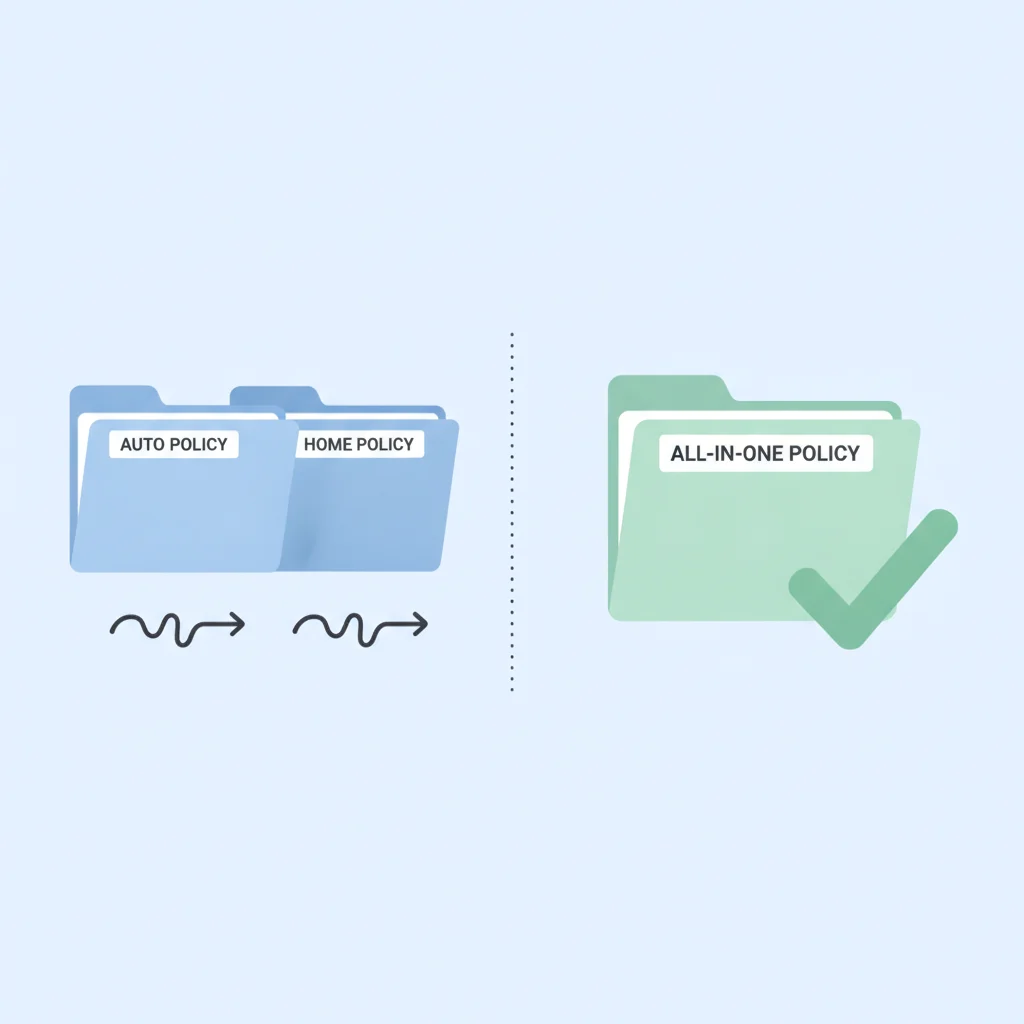
A practical approach: get quotes both ways. Price your multi-car auto policy standalone, then price it bundled with your home or renters coverage. Compare the all-in annual cost, not just the discount percentage.
When Consolidating Actually Costs You More
Multi-car discounts save most households money — but not every household. There are real scenarios where keeping separate policies is the smarter financial move.
One Driver Has a Significantly Worse Record
If one household member has multiple speeding tickets, an at-fault accident, or a DUI, their risk profile can drag up the premium for everyone on a consolidated policy. The surcharge may exceed the multi-car discount. In this case, isolating that driver on their own policy protects the other drivers' rates.
One Vehicle Qualifies for Specialty Discounts Elsewhere
Certain vehicles unlock niche discounts that a general carrier can't match. A classic car insured through a specialty carrier, or an EV insured through a company with strong EV-specific pricing, might come out cheaper on its own than lumped into a general multi-car policy at a standard carrier.
Loyalty Isn't Cheap at Your Current Carrier
Some carriers offer generous multi-car discounts but charge above-market base rates. The discount percentage looks impressive on paper but the starting point is inflated. Always compare your consolidated quote against competitors' standalone quotes. reading two auto insurance quotes side by side helps you make that comparison without getting confused by different line items and coverage structures.
How to Actually Claim the Discount
Getting the multi-car discount is procedurally simple, but there are a few practical steps that can affect the outcome.
Step 1: Gather Vehicle and Driver Information Upfront
Before you call or go online, have the VIN, current mileage, and primary driver assignment for each vehicle. Insurers use all of this to calculate the base premium before applying the discount. Inaccurate driver assignments can result in a quote that changes at bind — or a policy that pays out differently than expected after a claim.
Step 2: Get the Multi-Car Quote in Writing Before Canceling Anything
If you're consolidating from two separate policies at different carriers, don't cancel the existing policies until the new multi-car policy is active. Gaps in coverage — even 24 hours — can create problems. Confirm the effective date on the new policy before you make any changes.
Step 3: Check Mid-Term Addition Options
If you're buying a second car during an existing policy term, call your insurer immediately. Most carriers let you add the vehicle the same day — sometimes even before you drive it off the lot — and will apply the multi-car discount retroactively to the policy's renewal date or pro-rate it from the addition date depending on their rules.
Garaging Address Matters More Than You Think
If household members live part-time at different addresses — a college student, a military member, or someone with a second residence — the garaging address on each vehicle affects which state's rate tables apply and whether the multi-car discount is valid. Always declare the actual primary garaging location, even if it differs from the policy's main address. Misrepresenting this can void a claim.
Mid-Term Additions and Coverage Timing
When adding a newly purchased vehicle to an existing policy mid-term, most insurers provide a short grace period — typically 14 to 30 days — during which the new car is automatically covered under your existing policy terms. However, this grace period is not universal and some carriers require you to call before driving the vehicle. Confirm your carrier's specific rule before assuming coverage is in place.
Step 4: Review Coverage on Both Vehicles Independently
Consolidation is a good moment to audit coverage. Many people discover they're overinsured on an older car (carrying collision on a vehicle worth less than the deductible) or underinsured on a newer one. Adjust coverage levels per vehicle based on current value and loan status — don't copy-paste the same limits across both cars.
If you want to go deeper on evaluating what you're actually buying, optional add-ons like roadside assistance and gap insurance are worth reviewing to make sure you're not paying for overlapping protection.
Comparing Quotes the Right Way for Multi-Car Households
The single biggest mistake multi-car households make is assuming their current carrier automatically offers the best consolidated price. The multi-car discount is a retention tool — but it doesn't guarantee competitive pricing.
When shopping, get multi-car quotes from at least three carriers. Compare the total annual premium for all vehicles combined, not the per-vehicle discount percentage. A carrier offering a 20% multi-car discount on a high base rate may cost more than a carrier offering 12% on a lower base rate.
Also consider the insurer's claims service reputation, financial strength ratings, and any state-specific restrictions. A great price from a carrier with poor claims handling is a false economy — you'll find out at the worst possible moment.
Stack Multi-Car and Bundling Discounts Together
If your insurer also writes home or renters coverage, ask specifically whether both the multi-car discount and the bundling discount can apply simultaneously. Many policyholders claim one but not the other simply because they didn't ask. Stacking both can push total auto premium savings past 30% in some cases.
Set a Calendar Reminder to Re-Shop at Renewal
Multi-car pricing shifts as insurers adjust base rates and discount structures. What was the most competitive price two years ago may not be today. Set a reminder 30 to 45 days before your renewal date to get competing multi-car quotes — that's enough lead time to switch without a coverage gap if you find a better deal.
Finally, revisit your multi-car pricing at each renewal. Insurers regularly adjust base rates and discount structures. A carrier that was competitive two years ago may not be today. The comparison process isn't a one-time event — it's a recurring maintenance task that can save hundreds of dollars per year if you stay on top of it.

All claims are backed by peer-reviewed research. Sources on request.