
Key Takeaways
Why Combining Policies Isn't Always an Automatic Win
The conventional wisdom is straightforward: get married, combine your auto insurance, save money. And often that is exactly what happens. Multi-car discounts, marriage-based rate adjustments, and the elimination of duplicate fees can meaningfully reduce what a household pays for coverage. But the process is messier than most people expect, and the decisions you make in the first few weeks after your wedding can affect your premiums and coverage for years.
Marriage is one of the life events that should trigger an auto insurance policy review, and for good reason. You are not just adding a name to a policy — you are merging two driving histories, two vehicles, two sets of coverage preferences, and potentially two very different insurers. Done right, the consolidation saves real money and simplifies your financial life. Done carelessly, it can leave gaps, raise your rates, or tie you to the wrong carrier at the wrong limits.
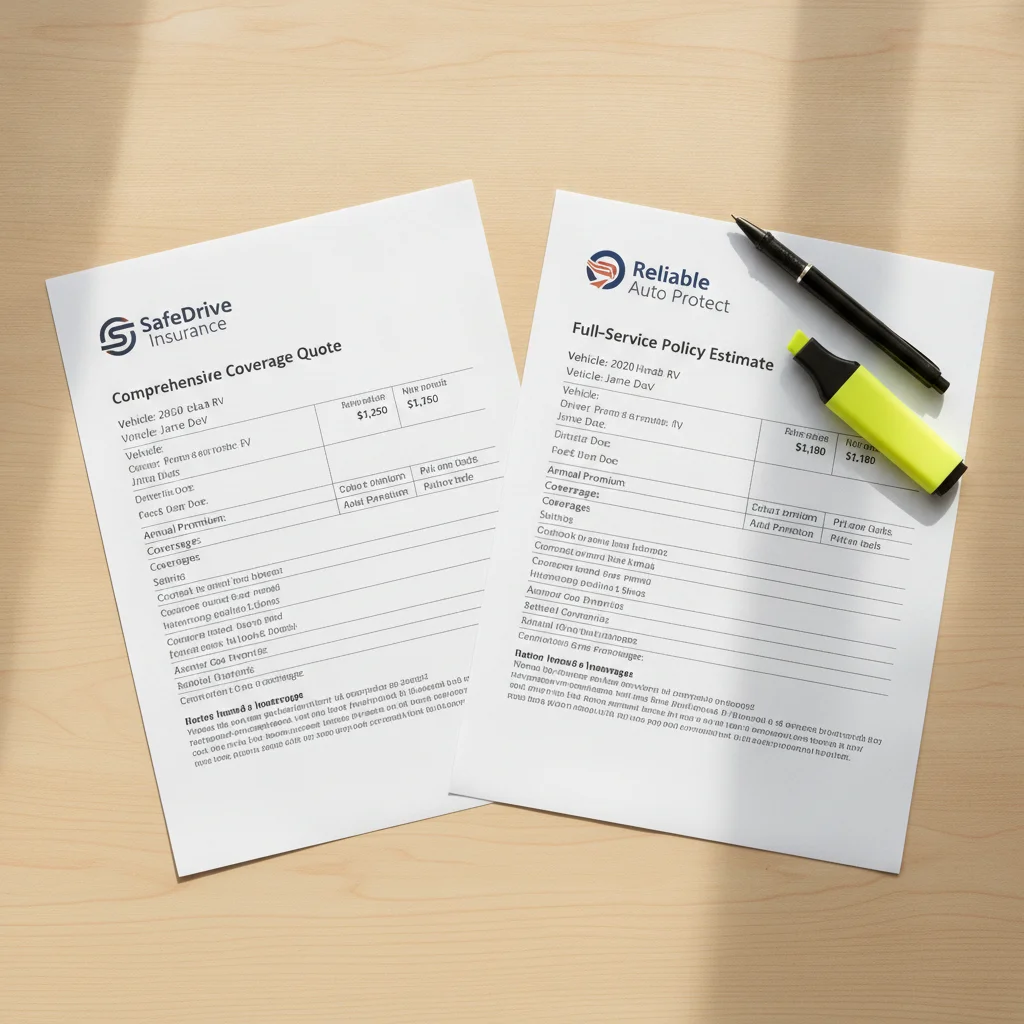
Before you do anything, you need a clear picture of what each of you currently has. Pull out both declarations pages and lay them side by side. What are the liability limits? What deductibles are you carrying? Do either of you have add-ons like roadside assistance, gap insurance, or rental reimbursement? If comparing two policies feels overwhelming, our guide on how to read two auto insurance quotes at the same time gives you a structured method for doing exactly that.

This article walks you through the full process — from auditing your existing coverage through canceling the policy you no longer need — so nothing falls through the cracks.
What You Need Before You Start
Combining policies involves real-time decisions about coverage and cost. Coming in unprepared means you will either rush the process or end up on the phone with an agent without the information needed to make good choices. Gather the following before making any calls or starting any online quote sessions.
What you will need
Auto insurance declarations pages
Documents your current coverage limits, deductibles, and add-ons — the baseline for every comparison and decision in this process.
Online insurance comparison tool
Allows you to pull multiple quotes simultaneously on a combined two-vehicle policy without calling each insurer individually.
Spreadsheet or comparison table
Helps you align coverage types and limits across quotes so you are comparing equivalent policies rather than getting misled by a lower-premium, lower-coverage option.
Marriage certificate
Required by some insurers to formally document marital status and unlock marriage-based discounts at policy binding.
Vehicle registration documents
Confirms the VIN and title ownership details that insurers require when adding a vehicle to a policy.
Lender or lease agreement
Specifies any minimum coverage requirements (typically comprehensive and collision with a deductible cap) for financed or leased vehicles.
Step-by-Step: How to Combine Your Auto Insurance After Marriage
Follow these steps in order. Each one feeds into the next, and skipping ahead — particularly canceling a policy before confirming new coverage — is how people end up with lapses that show up as red flags on future insurance applications.
Pull Both Declarations Pages and Document Your Current Coverage
Before making any changes, document exactly what each of you has right now. This is your baseline. For each policy, note:
- The insurer name and policy number
- The coverage types and limits (liability, collision, comprehensive, uninsured/underinsured motorist)
- The deductible amounts for each coverage
- Any optional add-ons (roadside assistance, rental reimbursement, gap insurance, new car replacement)
- The current monthly or semi-annual premium
- The policy expiration date
If you no longer have the declarations page, call your insurer or log into your online account — most carriers make this document available immediately in the customer portal.
Gather the Documents You Will Need to Provide
When you call an insurer or complete an online quote for a combined policy, you will be asked for information about both drivers and both vehicles. Have the following ready to avoid stopping mid-process:
- Driver's license numbers for both spouses
- Vehicle identification numbers (VINs) for both cars
- Current odometer readings (approximate is fine)
- Your marriage certificate or a copy — some insurers require proof of marital status to apply the discount
- Both spouses' driving histories for the past three to five years (accidents, tickets, claims)
- Current insurance information including policy numbers and insurer names
Decide Whether to Update an Existing Policy or Shop for a New One
You have three basic options here:
- Add your spouse to your existing policy and cancel theirs
- Add yourself to your spouse's existing policy and cancel yours
- Cancel both and get a new combined policy from either an existing carrier or a new one
Option 1 or 2 is often the path of least resistance, but it may not produce the best rate. Marriage is one of the few life events where shopping the full market genuinely pays off — insurers re-underwrite the combined risk from scratch, and the spread between what your current carrier charges and what a competitor offers can be $300–$700 per year or more. Get at least three quotes on the combined household before making a decision.
Get Quotes on a Combined Two-Vehicle Policy
Request quotes from at least three insurers. When entering information, be accurate about both drivers' records — insurers run driving history checks during underwriting, and discrepancies between what you report and what they find can delay binding or, in rare cases, lead to a policy being voided. For each quote, make sure you are comparing apples to apples:
- Use the same liability limits across all quotes (100/300/100 is a common starting benchmark for households with assets worth protecting)
- Use the same deductible amounts
- Include any add-ons you actually want — roadside, rental, gap — in every quote
Once you have the quotes, compare them against what your combined current premiums are. Factor in any mid-term refund you would receive from canceling the policy you are dropping.
Choose a Policy and Confirm the Effective Date
Once you have selected the best combined policy — whether that is with an existing carrier or a new one — bind the coverage and get the effective date in writing before taking any further action. The effective date should be:
- On or before the date you plan to cancel the existing standalone policy, and
- As close as possible to your current policy renewal date (if you are mid-term, you will receive a pro-rated refund, but some insurers charge a short-rate cancellation fee that slightly reduces that refund)
Request a copy of the declarations page immediately. Do not rely on a verbal confirmation or a quote summary — you need the actual policy document showing both names, both vehicles, and the coverage details.
Cancel the Policy You Are Dropping
Once your new combined policy is confirmed and you have the declarations page in hand, cancel the policy being dropped. Best practice:
- Cancel in writing — email to your insurer's customer service address creates a time-stamped record
- Specify the exact cancellation date (the effective date of your new combined policy)
- Ask the agent to confirm in writing when the refund will be processed and how it will be issued (check, ACH, or credit card reversal)
- If the old policy was set to auto-renew, explicitly confirm the auto-renewal has been turned off
Mid-term cancellations typically result in a pro-rated refund for the unused premium. This can range from a few dollars to several hundred depending on how far you are from the renewal date.
Check Your State's Rules on Credit-Based Rating
In most U.S. states, your credit-based insurance score affects your auto insurance premium. If one spouse has significantly weaker credit, adding them to the other's policy — or combining onto a new policy — may increase the rate. Ask insurers how they handle credit scoring on multi-driver policies in your state before binding coverage.
Mid-Term Cancellations May Carry a Short-Rate Fee
While most cancellations result in a pro-rated refund of unused premium, some insurers apply a short-rate fee — a percentage deducted from the refund as a cancellation penalty. Ask your current insurer about their cancellation policy before you decide whether to cancel mid-term or wait until the renewal date.
Marriage Is a Qualifying Life Event for Mid-Term Changes
You do not have to wait until your policy renewal date to make changes. Marriage is a qualifying life event that allows you to update or switch policies mid-term without penalty from most insurers. Most carriers ask you to notify them within 30 days of the marriage date to apply the change retroactively to that date.
Review Your Add-Ons When Consolidating
When two policies merge into one, optional coverages do not always transfer automatically — especially if you switch carriers entirely. Walk through each line of the new declarations page and explicitly confirm that coverages like roadside assistance, rental reimbursement, and gap insurance appear as intended. The <a href="/car-insurance/coverage-types/optional-add-ons">optional add-ons section</a> covers what each of these does and whether it makes sense on a combined household policy.
Ask About Future Savings Milestones
When you speak with your insurer, ask what milestones will further reduce your combined rate. Many carriers offer additional discounts when a driver completes three or five years claim-free, when a financed vehicle is paid off and coverage requirements ease, or when both drivers install telematics monitoring. Knowing the roadmap helps you plan.
Factors That Could Raise Your Combined Rate
Not every combination produces savings. Several factors specific to one or both spouses can push the combined premium higher than what you were each paying separately. Knowing these in advance lets you have a realistic conversation with your agent rather than a surprised one.
Driving Record Disparities
If one spouse has recent accidents, speeding tickets, or an at-fault claim in the last three to five years, adding them to a clean-record policyholder's coverage will typically raise that policy's rate. Insurers rate all listed drivers, not just the primary driver of each vehicle. The good news: most violations age off after three years, and some insurers use accident forgiveness programs that blunt the impact.
Credit Score Differences
In most states, insurers use a credit-based insurance score as part of their rating formula. If one partner has significantly weaker credit, that can affect the blended household rate on a combined policy. This varies by state — California, Hawaii, and Massachusetts ban the use of credit in auto insurance pricing — but elsewhere it is a real factor.
Vehicle Value and Coverage Requirements
If one spouse is financing or leasing their vehicle, the lender likely requires comprehensive and collision coverage with a specific deductible ceiling. If the other spouse drives a paid-off older car and was carrying liability-only, the combined policy will need to accommodate both coverage levels, which means a higher total premium than either standalone policy alone.

When Separate Policies Might Still Make Sense
If one partner has a significantly blemished record that would substantially penalize the other's clean-record rate, running separate policies — at least until that record improves — can actually be the cheaper option. Run the numbers both ways before committing. The multi-car discount math sometimes doesn't overcome the surcharge from a poor driving record.
Never Let Coverage Lapse During the Transition
A gap in auto insurance coverage — even a single day — creates a lapse that insurers treat as a risk signal. Many carriers apply a surcharge for any lapse in the 12 to 36 months prior to a new application. Confirm your new combined policy is active and documented before canceling either existing policy. If in doubt, let the policies briefly overlap — a few days of double coverage costs far less than the rate penalty from a gap.
Maximizing Savings When You Combine
If the math works in your favor — and most of the time it does — there are several levers you can pull to push your savings further.
Shop the Combined Policy, Don't Just Update an Existing One
The easiest path is calling your current insurer and adding your spouse. But easiest is rarely cheapest. Use your marriage as a genuine trigger to shop the market. Get at least three quotes on a combined two-vehicle policy. Insurers price multi-car households differently, and the spread between the highest and lowest quote for the same coverage can be substantial. Our guide to comparing auto insurance policies can help you organize that process.
Ask Specifically About Multi-Car and Marriage Discounts
Do not wait for the agent to volunteer discounts — ask directly. Say: "What multi-car discount applies here, and is there a marriage discount available?" Some insurers advertise these prominently; others apply them quietly in the rating algorithm without ever calling them out on the quote.
Consider Bundling Homeowners or Renters Insurance
If you are now sharing a home — renting or owning — adding your property insurance to the same carrier can unlock an additional multi-policy discount. This can be meaningful: bundling discounts often run 5–25% on the auto portion alone. That said, bundling isn't always the right call. Our analysis of when bundling home and auto insurance is actually worth it and when bundling savings are real will walk you through how to evaluate the true value of multi-policy discounts before you commit.
Review Optional Add-Ons Carefully
When two policies merge, coverage details don't always follow automatically. Confirm that any optional add-ons you value — such as roadside assistance, rental reimbursement, or gap insurance on a financed vehicle — are explicitly listed on the new combined policy. Do not assume they carried over.
Marriage Is a Qualifying Life Event for Mid-Term Changes
You do not have to wait until your policy renewal date to make changes. Marriage is a qualifying life event that allows you to update or switch policies mid-term without penalty from most insurers. Most carriers ask you to notify them within 30 days of the marriage date to apply the change retroactively to that date.
Review Your Add-Ons When Consolidating
When two policies merge into one, optional coverages do not always transfer automatically — especially if you switch carriers entirely. Walk through each line of the new declarations page and explicitly confirm that coverages like roadside assistance, rental reimbursement, and gap insurance appear as intended. The <a href="/car-insurance/coverage-types/optional-add-ons">optional add-ons section</a> covers what each of these does and whether it makes sense on a combined household policy.
Ask About Future Savings Milestones
When you speak with your insurer, ask what milestones will further reduce your combined rate. Many carriers offer additional discounts when a driver completes three or five years claim-free, when a financed vehicle is paid off and coverage requirements ease, or when both drivers install telematics monitoring. Knowing the roadmap helps you plan.
After You Combine: Confirming Everything Is in Order
Once the new policy is active, do a final verification pass before you close out the old one. This is a five-minute step that can prevent months of headaches.
- Both vehicles listed: Confirm both VINs appear on the declarations page.
- Both drivers listed: Both spouses should appear as listed drivers, not just the primary policyholder.
- Coverage limits confirmed: Check that liability limits, deductibles, and any required lender minimums are accurately reflected.
- Effective date verified: The new policy's start date must be on or before the date the old policy is canceled — not a day after.
- ID cards in hand: Download or photograph your new proof-of-insurance cards immediately. Keep one in each vehicle.
- Old policy canceled: Cancel the old policy in writing (email is fine), request written confirmation of the cancellation date, and note any refund amount and expected timeline — typically two to four weeks.
If anything looks off on the declarations page, call your insurer immediately. Errors in listed drivers or vehicle details are surprisingly common when policies are changed by phone or online, and they can affect coverage if you ever need to file a claim.

All claims are backed by peer-reviewed research. Sources on request.