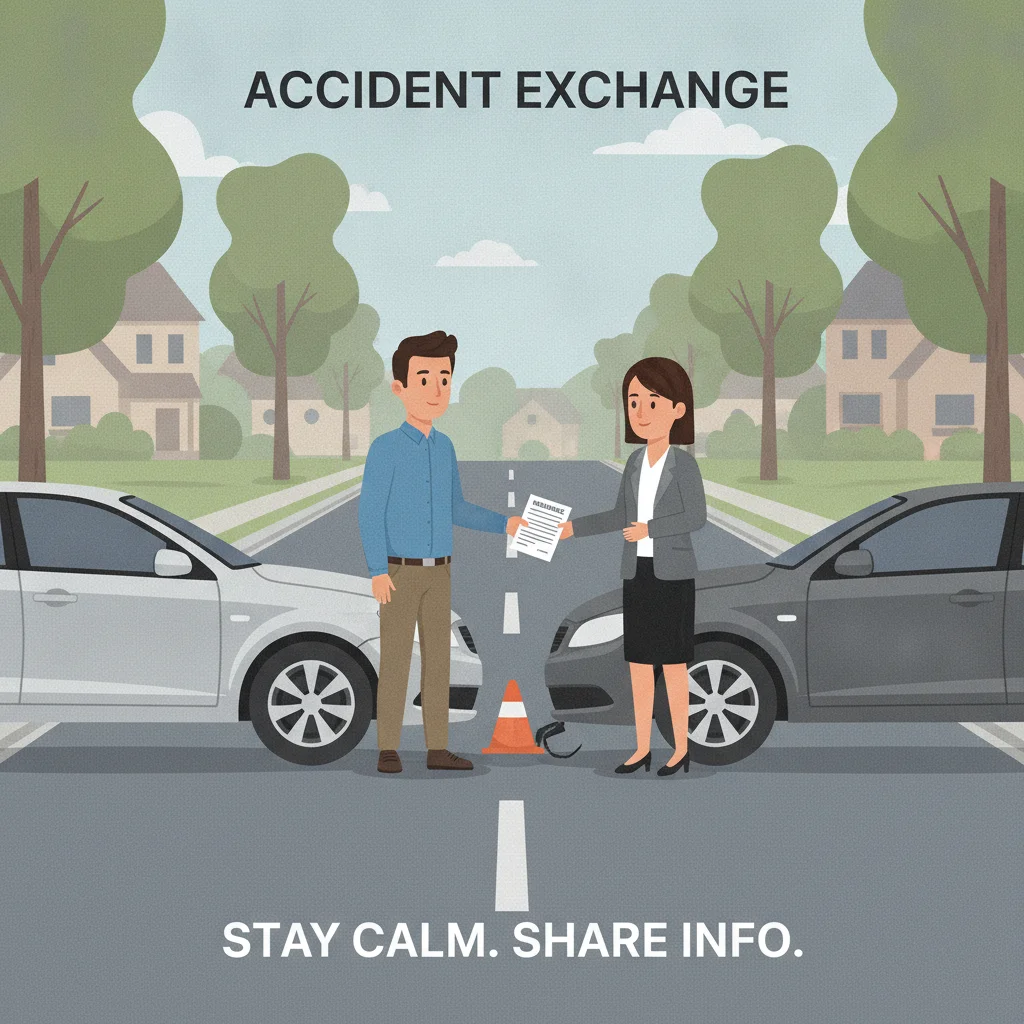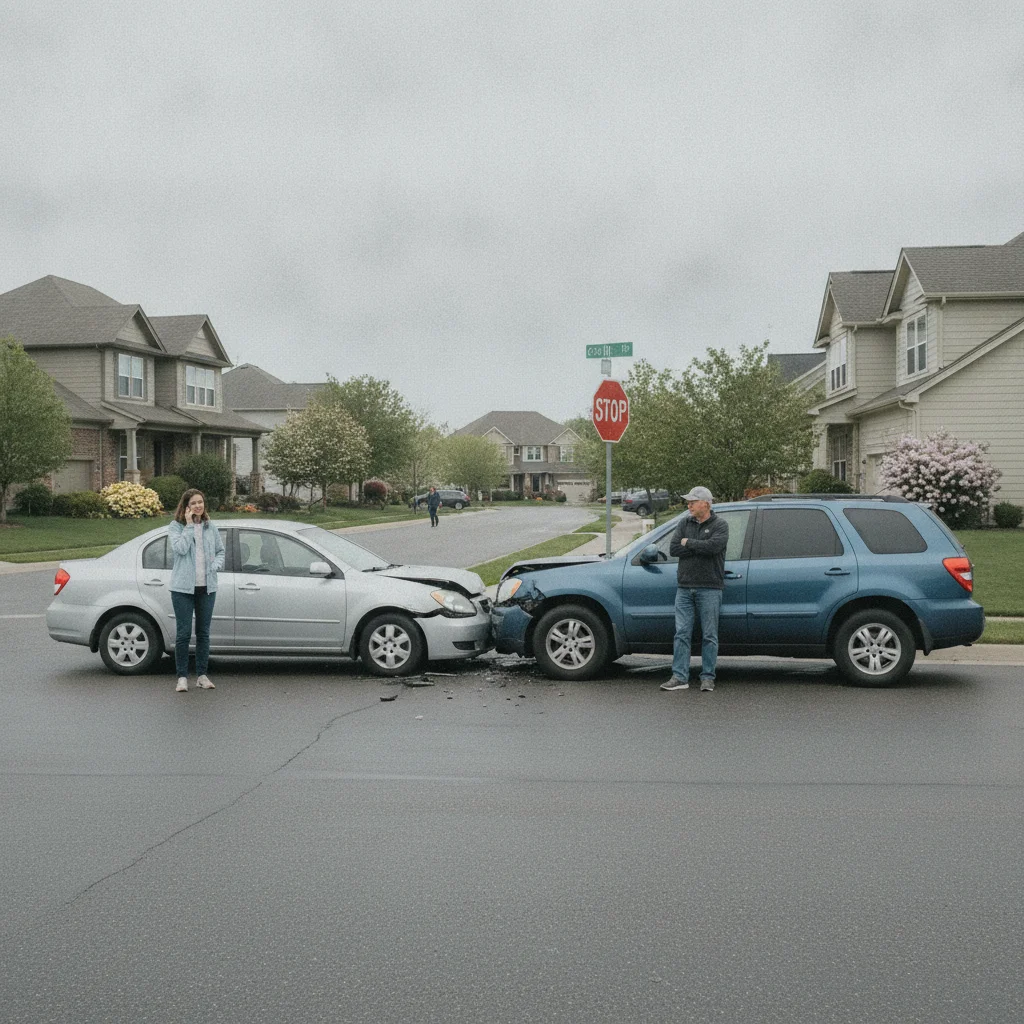
Key Takeaways
Liability Insurance for Pedestrian & Cyclist Injuries
When your vehicle injures a pedestrian or cyclist, your auto liability insurance steps in to cover the financial consequences — including the injured person's medical bills, lost wages, and pain and suffering claims. Liability coverage is split into two components: bodily injury liability (for injuries to other people) and property damage liability (for damage to their belongings). Together, these coverages form your primary financial shield when you cause an accident involving someone outside your vehicle.
Bodily injury liability limits are expressed as per-person and per-accident maximums (e.g., 50/100 means $50,000 per injured person and $100,000 per accident). If costs exceed your limits, you are personally responsible for the difference.
Why Pedestrian and Cyclist Accidents Are High-Stakes Liability Events
Accidents involving pedestrians or cyclists tend to be among the most financially and legally consequential collisions a driver can be involved in. Unlike a fender-bender between two cars where metal absorbs some of the impact, a person on foot or on a bike has almost no protection from a vehicle. Injuries are frequently severe — broken bones, traumatic brain injuries, and spinal damage are common outcomes — and the resulting medical bills can climb into the hundreds of thousands of dollars.
That severity is exactly why understanding your liability coverage before an accident happens is so important. Your policy's bodily injury liability limits were set at some point in the past, possibly when you were focused on keeping your premium low rather than imagining a worst-case scenario. If those limits are modest and the injuries are serious, the gap between what your insurer pays and what a court awards can become your personal financial burden.
This article walks through exactly how liability coverage responds in these situations — what it pays, what it doesn't, and where your exposure lies if your limits fall short. If you want a broader foundation first, see what liability car insurance actually covers before diving deeper here.
What Bodily Injury Liability Actually Pays
Bodily injury (BI) liability is the portion of your auto policy that responds when someone outside your vehicle is physically hurt because of your driving. When that someone is a pedestrian or cyclist, the coverage works the same way it would in any at-fault accident — but the dollar amounts involved are often much larger.
Here is what bodily injury liability typically covers for the injured person:
- Emergency medical treatment: Ambulance transport, ER visits, surgeries, hospitalization
- Ongoing medical care: Follow-up appointments, physical therapy, rehabilitation, specialist visits
- Lost wages: Income the injured party cannot earn while they are recovering
- Future lost earning capacity: If the injury creates long-term or permanent disability affecting their ability to work
- Pain and suffering: Non-economic damages for physical pain, emotional distress, and diminished quality of life
- Wrongful death damages: If the pedestrian or cyclist does not survive, their family may file a wrongful death claim covered under your BI liability
Pain and Suffering Claims Can Be Substantial
Non-economic damages — pain, emotional trauma, loss of enjoyment of life — are often the largest component of a serious pedestrian or cyclist injury claim. Unlike medical bills, there is no fixed formula for calculating them. In jury trials, these awards can be unpredictable and far exceed the economic damages alone. Your liability limits need to reflect this reality.
Household Member Exclusions Are a Real Gap
Most personal auto policies explicitly exclude liability claims made by members of your own household. If a family member is injured by your vehicle, liability coverage will not respond. For these situations, health insurance becomes the primary resource. Review your policy's exclusions section or ask your agent to clarify who is covered as a third party.
Pain and suffering is often where costs escalate significantly beyond the medical bills themselves. Courts may award substantial non-economic damages in pedestrian and cyclist cases, especially when the injured party is young, permanently disabled, or when the accident was deemed particularly preventable.
Your insurer's claims team will evaluate and negotiate these claims, but the limits on your policy cap how much they can actually pay.
“The biggest mistake drivers make is assuming their state minimum liability limits are adequate. They're not. State minimums were set decades ago and don't reflect today's medical costs or litigation realities.”
— Janet Ruiz, Director of Strategic Communication, Insurance Information Institute
Property Damage Liability: Paying for the Bike and Beyond
While bodily injury liability handles the human cost of an accident, property damage (PD) liability pays for physical items belonging to the other party that you damage or destroy. In a cyclist scenario, this most obviously applies to the bicycle itself — which, for road bikes, commuter bikes, or e-bikes, can easily represent a loss of $1,000 to $10,000 or more.
Property damage liability can also cover:
- A helmet, cycling computer, or panniers damaged in the collision
- Clothing or personal electronics carried by a pedestrian
- Any other personal property the injured party can document as damaged
Property damage claims in these scenarios are usually smaller relative to the bodily injury side, but they are still part of the total claim picture. Your PD coverage limit applies separately from your BI limits, so having both at adequate levels matters.
Consider Raising Your Liability Limits Now
Increasing bodily injury liability from $25,000/$50,000 to $100,000/$300,000 often costs less than $10 per month. For the added protection in a serious pedestrian or cyclist accident, that premium difference is one of the best values in auto insurance. Ask your agent to run a quote comparison.
Price Out an Umbrella Policy
If you have assets worth protecting — a home, savings, retirement accounts — a personal umbrella policy is worth pricing. For most drivers, $1 million in additional coverage costs well under $300 per year. It sits above your auto liability limits and activates when those limits are exhausted.
Legal Defense: What Happens If They Sue You
One of the most valuable — and often overlooked — benefits of liability insurance is the legal defense it provides. If the injured pedestrian or cyclist (or their family) decides to sue you, your insurer is required under most standard policies to hire an attorney to defend you and manage the litigation on your behalf.
This matters enormously in pedestrian and cyclist cases because lawsuits are common. The injured party's attorney may pursue maximum damages, and the case can drag on for months or years. Without insurance-provided legal defense, you would be paying those attorney fees yourself.
That said, there are some important boundaries to understand. Your insurer controls the defense strategy — they decide whether to settle or litigate, and their primary obligation is to resolve the claim within your policy limits. If a settlement offer exceeds your limits, the insurer may settle at the cap and leave you exposed to any remaining judgment. For a deeper look at this dynamic, read how liability coverage and legal defense actually work together.
It is also worth knowing that legal defense costs are typically paid in addition to your liability limits under most standard auto policies — meaning attorney fees do not come out of your BI or PD coverage buckets. However, this varies by policy, so confirming with your insurer is worth a few minutes of your time.
7,522
Pedestrian traffic deaths in the U.S. in 2022
According to the National Highway Traffic Safety Administration (NHTSA), 2022 saw the highest number of pedestrian fatalities in the U.S. since 1981.
$99,000+
Average cost of a pedestrian injury claim
The Insurance Research Council estimates that serious pedestrian injury claims regularly exceed $99,000, with catastrophic injury cases reaching several hundred thousand dollars or more.
76%
Pedestrian fatalities occurring outside intersections
NHTSA data indicates most pedestrian fatalities happen mid-block or in non-intersection areas, where drivers may not anticipate foot traffic.
$150–$300
Typical annual cost of a $1M umbrella policy
According to the Insurance Information Institute, most consumers can add $1 million in umbrella liability protection for under $300 per year — a modest cost relative to the risk it covers.
When Your Limits Aren't Enough: The Real Risk
Here is the scenario that keeps insurance professionals awake at night on behalf of their clients: you carry state minimum liability limits — say $25,000 per person — and you seriously injure a cyclist who requires three surgeries, months of rehabilitation, and is left with permanent nerve damage affecting their career as a professional tradesperson. The total damages could easily reach $400,000 or more.
Your insurer pays $25,000. The other $375,000 is potentially coming from you.
This is not a scare tactic — it is the actual legal exposure created by low policy limits. Courts do not cap judgments to match your insurance. The plaintiff's attorney will pursue your personal assets: savings, home equity, future wages. Unless you have a personal umbrella policy, there is limited protection once your auto liability limits are exhausted.
An umbrella policy typically provides $1 million to $5 million in additional liability protection above your auto and home policy limits. For most drivers, a $1 million umbrella costs between $150 and $300 per year — a modest expense relative to the protection it provides in a high-injury scenario.
Consider Raising Your Liability Limits Now
Increasing bodily injury liability from $25,000/$50,000 to $100,000/$300,000 often costs less than $10 per month. For the added protection in a serious pedestrian or cyclist accident, that premium difference is one of the best values in auto insurance. Ask your agent to run a quote comparison.
Price Out an Umbrella Policy
If you have assets worth protecting — a home, savings, retirement accounts — a personal umbrella policy is worth pricing. For most drivers, $1 million in additional coverage costs well under $300 per year. It sits above your auto liability limits and activates when those limits are exhausted.
To understand what happens step by step once a liability claim is filed, see how liability insurance responds after an at-fault accident.
Fault, Shared Fault, and State Rules That Affect Payouts
Liability coverage only pays when you are at fault — or at least partially at fault. If a pedestrian darts into traffic against the signal, or a cyclist blows through a stop sign, the question of fault gets more complicated.
Most states use some form of comparative negligence, which allows fault to be divided between parties. If you are 70% at fault and the cyclist is 30% at fault, the cyclist's total damages award is reduced by 30%. Your liability coverage would then pay 70% of those damages, subject to your limits.
A small number of states still use contributory negligence rules, where any fault on the part of the injured party can bar them from recovery entirely. This is a minority position, but it can significantly affect outcomes if you live in one of those states.
Your insurer's claims adjusters and attorneys navigate these fault determinations. Documenting the scene thoroughly — photos, witness contacts, police report details — helps your insurer build the most accurate picture of what actually happened. For a full guide on what to do from the accident scene forward, follow the steps for filing a liability claim from accident scene to settlement.
Coverage Gaps to Know About
Even a solid liability policy has limits on what it pays. Being aware of these gaps ahead of time helps you make informed decisions about your overall coverage picture.
Your own injuries
Liability pays for the pedestrian's or cyclist's injuries — not yours. If you are hurt in the same accident, you need Medical Payments (MedPay) coverage or Personal Injury Protection (PIP) to cover your own treatment. These are optional in some states and required in others.
Intentional acts
If an accident was intentional rather than negligent, liability coverage will not respond. This is rarely relevant in pedestrian and cyclist accidents, but it is worth noting that coverage is designed for accidents — not deliberate actions.
Business use exclusions
If you were driving for a rideshare, delivery service, or other commercial purpose at the time of the accident, your personal auto policy may exclude coverage. Commercial auto or rideshare endorsements exist for this reason.
Family members in your household
Liability coverage generally does not pay claims made by members of your own household. If a family member is riding their bike and you accidentally hit them in your driveway, this is a coverage gap scenario that requires careful review with your insurer.
Pain and Suffering Claims Can Be Substantial
Non-economic damages — pain, emotional trauma, loss of enjoyment of life — are often the largest component of a serious pedestrian or cyclist injury claim. Unlike medical bills, there is no fixed formula for calculating them. In jury trials, these awards can be unpredictable and far exceed the economic damages alone. Your liability limits need to reflect this reality.
Household Member Exclusions Are a Real Gap
Most personal auto policies explicitly exclude liability claims made by members of your own household. If a family member is injured by your vehicle, liability coverage will not respond. For these situations, health insurance becomes the primary resource. Review your policy's exclusions section or ask your agent to clarify who is covered as a third party.
It is also worth distinguishing liability coverage from collision and comprehensive coverage. Collision and comprehensive protect your own vehicle — not the other party. They are completely separate from the liability side of your policy and serve a different purpose entirely.
How to Make Sure Your Coverage Is Actually Adequate
Reviewing your liability limits is one of the most practical things you can do after reading this. The state minimums that your policy may be set to were designed to meet a legal threshold — not to protect you from a serious pedestrian or cyclist injury claim.
A few questions worth asking yourself or your agent:
- What are my current per-person and per-accident bodily injury limits? If they are at or near your state minimum, consider raising them.
- Do I have a personal umbrella policy? If not, and you have assets worth protecting, it is worth pricing one out.
- Am I covered when driving for any commercial purpose? If you do rideshare or delivery work, clarify your coverage with your insurer.
- Do I have MedPay or PIP for my own injuries? Your liability covers others — make sure something covers you too.

Liability coverage does not feel urgent until the moment it becomes absolutely necessary. The good news is that adjusting your limits is usually inexpensive, and the peace of mind it provides in high-stakes scenarios like pedestrian and cyclist accidents is real. If you want to understand a single-vehicle scenario by comparison, see how fault and liability still apply in single-car accidents — it rounds out the picture of when and how your coverage responds across different situations.

All claims are backed by peer-reviewed research. Sources on request.