Key Takeaways
Single-Car Accident
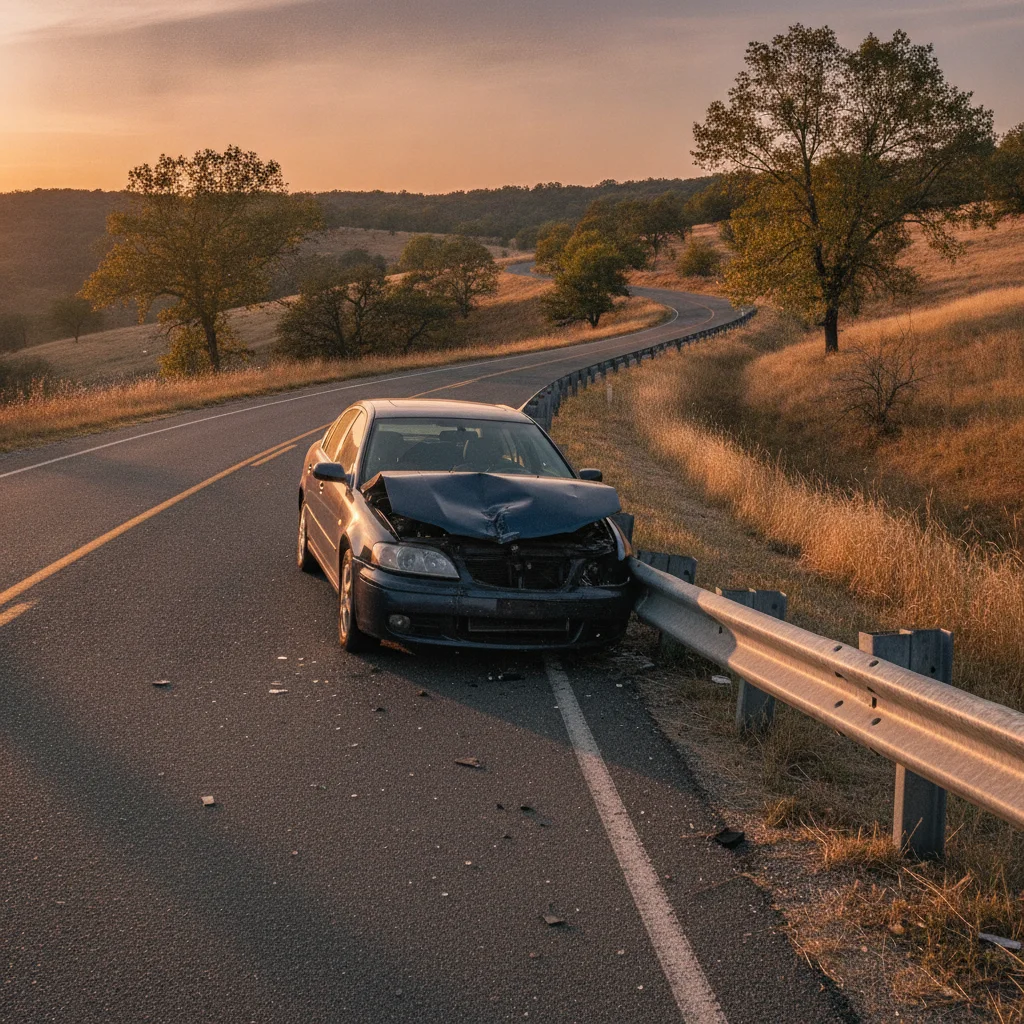
A single-car accident is any collision or incident in which only one vehicle is involved — hitting a guardrail, sliding off an icy road, striking a deer, or rolling over without another driver making contact. Despite the absence of a second driver, fault and insurance coverage still apply. Your own policy — not someone else's — is the primary financial safety net.
In insurance and legal contexts, 'single-vehicle accident' and 'single-car accident' are used interchangeably. Some incidents that appear to involve only one car may still give rise to third-party liability claims against road authorities, vehicle manufacturers, or other negligent parties.
Why 'No Other Driver' Doesn't Mean 'No Fault'
The common assumption after a solo crash is that because no one else was involved, the concept of fault doesn't apply. That's wrong on two levels. First, fault still determines whether and how your insurance pays out. Second, there are situations where your single-car accident generates liability exposure toward passengers, pedestrians, or even property owners.
Insurance companies assess every claim — including single-vehicle ones — to determine what happened and why. If you were speeding, distracted, or driving under the influence, you are at fault, full stop. That finding affects your premium, your coverage applicability in certain situations, and your legal exposure to anyone who was harmed.
Understanding the how fault is determined after a crash is foundational knowledge — even when the crash involves only your car. The framework your insurer uses doesn't disappear just because no second driver filed a claim.
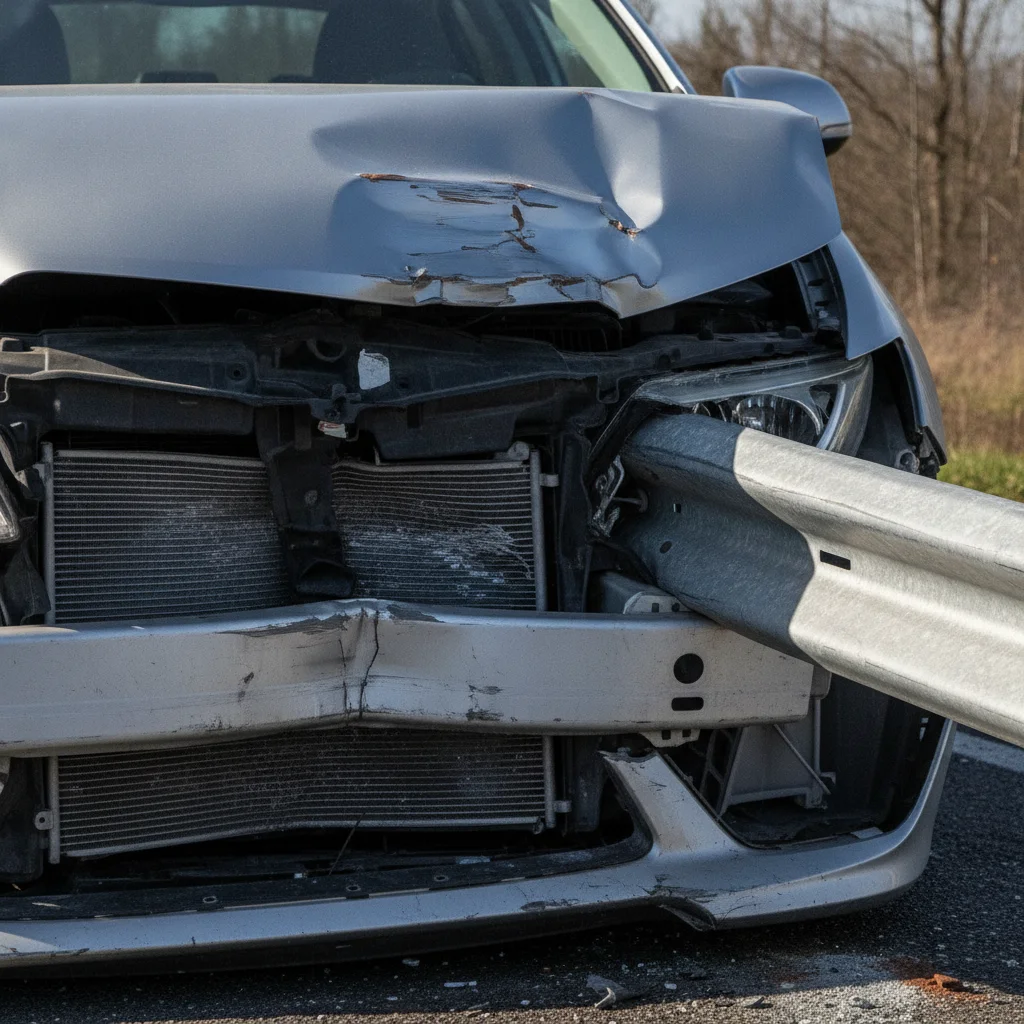
There's also a subtler point: some incidents that look like single-car accidents on the surface actually involve an indirect third party. A driver who cut you off and sped away, a municipality that failed to repair a crumbling road edge, or a tire manufacturer whose defective product caused a blowout — all of these can shift liability off the driver entirely or introduce additional parties into the claim.
Which Insurance Coverage Actually Pays
This is where many drivers get tripped up. After a single-car accident, your coverage portfolio works very differently than it would in a two-car collision. Here's how each major coverage type responds:
Collision Coverage
Collision is the coverage you need when your car makes contact with something — a guardrail, a tree, a concrete barrier, or the ditch itself. If you have collision coverage, your insurer pays for repairs to your vehicle minus your deductible. If the car is totaled, you receive the actual cash value. Without collision coverage, you're paying out of pocket. This is the most commonly relevant coverage in a single-car accident scenario.
Learn more about how collision and comprehensive coverage work together to protect your vehicle — they're often bundled but cover very different events.
Comprehensive Coverage
Comprehensive applies when your car is damaged by something other than a direct collision — a deer, a hailstorm, a falling tree limb, flooding, or fire. If you swerve to avoid a deer and hit nothing, then slide into a ditch, you may find yourself in a gray zone: the initial trigger was comprehensive (the deer), but the impact was collision. Insurers will evaluate what caused the actual damage.
Liability Coverage
Your liability coverage doesn't pay for your own vehicle damage. But it becomes very relevant if a passenger in your car was injured, or if your car struck someone's fence or mailbox before coming to rest. Bodily injury liability covers medical costs and legal fees for injuries you caused to others. Property damage liability covers repairs to property you damaged.
See how liability insurance responds after an at-fault accident — the same sequence applies even in single-car scenarios involving injured passengers or damaged property.
~52%
Of all crash fatalities are single-vehicle accidents
According to the National Highway Traffic Safety Administration (NHTSA), single-vehicle crashes consistently account for roughly half of all fatal traffic accidents in the U.S.
$4,700+
Average collision claim payout
The Insurance Information Institute reports that average collision claim payouts have risen steadily, reflecting increasing vehicle repair costs driven by sensor and camera-equipped components.
30–40%
Typical rate increase after an at-fault claim
Rate analysis by the Insurance Information Institute indicates at-fault accidents can increase annual premiums by 30 to 40 percent or more, depending on insurer and state regulations.
30–90 days
Typical window to file a road-defect claim
Most states require a formal notice of claim against a government entity within 30 to 90 days of the incident — missing this deadline typically bars recovery entirely.
Medical Payments / PIP
If you or your passengers are injured, Medical Payments (MedPay) or Personal Injury Protection (PIP) coverage handles those medical bills regardless of fault. In no-fault states, PIP is mandatory and becomes the first-payer for injury costs. In at-fault states, you may still elect MedPay for this purpose. See how at-fault vs. no-fault state rules change your options when medical costs enter the picture.
When a Third Party Can Still Be Liable
Just because you're the only driver doesn't mean you bear 100% of the legal blame. Three common scenarios shift or share fault with a party outside your car:
Road and Infrastructure Defects
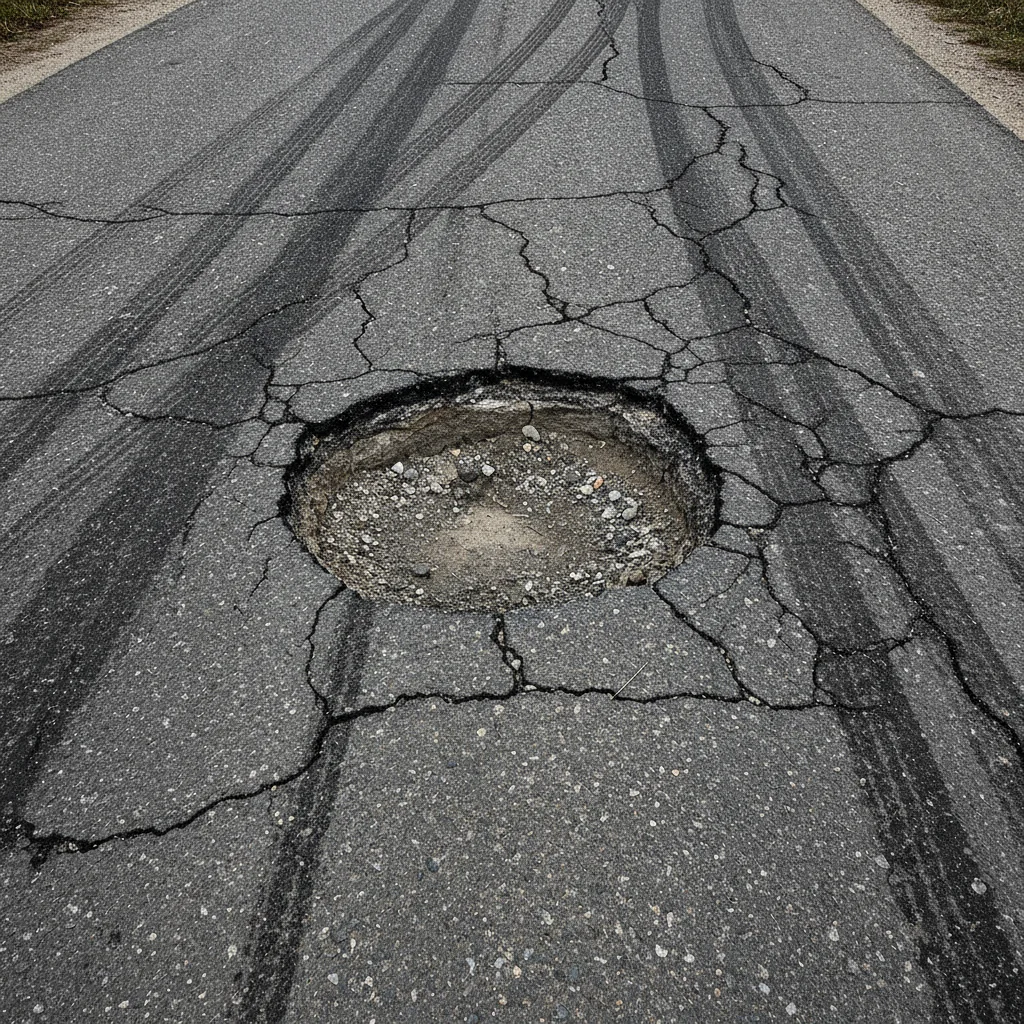
Potholes, missing signage, poorly engineered curves, washed-out shoulders, and absent guardrails can all contribute to a single-car accident. When they do, the government entity responsible for maintaining that road — state DOT, county, or municipality — may bear liability. Pursuing these claims is not simple: you typically have to file a notice of claim within a short window (often 30 to 90 days), and government immunity rules vary by state. Document everything immediately: photograph the road defect, get a police report noting the conditions, and preserve dashcam footage.
Vehicle Defects and Product Liability
A sudden blowout from a defective tire, a brake failure, a faulty steering component — these manufacturing or design defects can cause a crash that looks like driver error but isn't. If a mechanical failure contributed to your accident, preserve the vehicle and its parts. Don't authorize a total-loss salvage until you've consulted an attorney. Product liability claims against manufacturers are complex, but they do happen and they do succeed.
Another Driver's Negligence
You swerved to avoid a vehicle that ran a red light. You lost control after someone merged into your lane without signaling. You spun out after a truck's unsecured cargo fell on the road ahead of you. In each case, the 'single-car' label is misleading — another driver's negligence triggered the event. If that driver fled, you're looking at a potential uninsured motorist claim, and the documentation you gathered at the scene determines whether that claim succeeds. Our guide to hit-and-run claims and your options walks through the specific steps for that scenario.
Indirect Causation Is Still Causation
If another driver's behavior — an aggressive merge, running a light, or dropping debris — forced your evasive action and subsequent crash, that driver may bear legal responsibility even if they never made contact with your vehicle. Pursuing this requires evidence: dashcam footage, witness accounts, and a police report noting what you described. Without documentation, insurers have no basis to reclassify the claim.
No-Fault States: PIP Pays First, But Fault Still Matters
In no-fault insurance states, your Personal Injury Protection (PIP) coverage pays your medical bills after any accident regardless of who caused it — including a single-car crash. However, fault still determines what happens to your vehicle (collision coverage applies the same way) and can still expose you to liability claims that exceed PIP thresholds. No-fault does not mean fault-free.
Admitting Fault Can Foreclose Third-Party Claims
If you tell the police officer 'this was entirely my fault' before investigating whether a road defect or vehicle malfunction contributed, you may have weakened a legitimate third-party claim. Be accurate and factual at the scene, but reserve definitive fault judgments until you've had time to assess all contributing factors. Insurers and courts make fault determinations — that's not your job at the scene.
Passenger Liability: The Exposure Most Drivers Overlook
Here's a liability scenario that catches drivers off guard: you crash your car, your passenger is injured, and they sue you. This is legally straightforward and more common than people expect. If the crash was caused by your negligence — distraction, speeding, running a stop sign — your passenger has a valid claim against you, regardless of the fact that no other vehicle was involved.
Your bodily injury liability coverage is the financial buffer here. The claim is filed against your policy the same way an injured third-party driver would file after a two-car collision. Your insurer handles the defense and pays damages up to your limits.
“Passengers often assume they have no recourse after a single-car accident because there's no 'other driver' to blame. In reality, if the driver was negligent, the passenger has a straightforward claim — and it goes through the driver's own liability policy.”
— Amy Bach, Executive Director, United Policyholders, consumer insurance advocacy organization
The risk escalates when passengers are seriously injured or when your liability limits are low. Medical costs from a serious accident can easily exceed a 50/100 policy (fifty thousand per person, one hundred thousand per accident). Anything above your limits becomes your personal financial exposure. This is one of the strongest arguments for carrying higher bodily injury limits — not just to protect strangers, but to protect people you voluntarily put in your car.
If the passenger was a family member living in your household, standard liability may not respond — some policies exclude household members from bodily injury claims on the theory that they can access MedPay or health insurance instead. Read your declarations page carefully, and ask your agent how your policy handles this exact scenario.
Consider Higher Liability Limits Before You Need Them
Many drivers carry minimum state-required liability limits without realizing how quickly medical costs can exceed them. If you regularly drive passengers, consider increasing your bodily injury limits to at least 100/300. The premium difference is often smaller than people expect — sometimes $10–20 per month for significantly more protection.
Document the Scene Before Moving Your Car
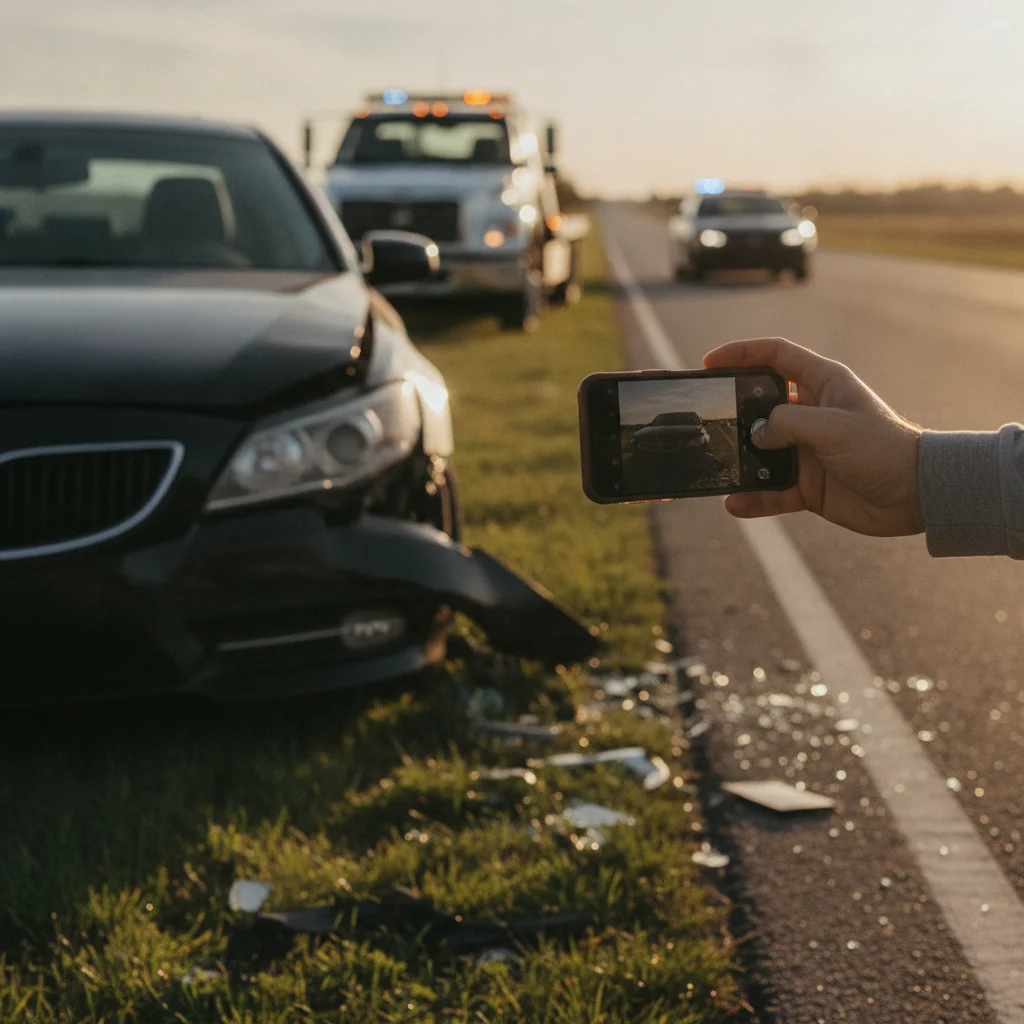
If it's safe to do so, photograph your car's position, the road surface, any obstacles, and surrounding signage before moving the vehicle. Once you move it, the evidentiary window closes. This documentation is especially critical if you plan to argue that a road defect or another driver contributed to the crash.
Immediate Steps After a Single-Car Accident
The actions you take in the first 30 minutes affect your claim outcome, your legal position, and your physical safety. Follow this sequence:
- Get safe first. If the car is drivable and creating a hazard, move it off the roadway. Turn on hazard lights. If you're on a highway or high-speed road, get behind the guardrail and away from traffic before doing anything else.
- Check for injuries. Assess yourself and any passengers. Call 911 if anyone is injured or if the vehicle is blocking traffic. Even if injuries seem minor, get checked — adrenaline masks pain, and some injuries appear hours later.
- Call the police. Request a police report even if you think one isn't required. The report documents road conditions, weather, your account of events, and any observable road defects. This record is invaluable if fault is later disputed or if you pursue a third-party claim.
- Document the scene thoroughly. Photograph your car from multiple angles, the road surface, skid marks, debris, nearby signage, and anything that might have contributed to the crash. If there's a pothole or a missing guardrail, get multiple photos with something in frame for scale.
- Gather witness information. If other drivers stopped, get their names and phone numbers. Witnesses who saw road conditions, another driver's behavior, or the sequence of events can be critical later.
- Notify your insurer promptly. Call your insurance company as soon as possible. Most policies require timely reporting, and delays can complicate or void a claim. Be factual and accurate — don't speculate about fault on the call.
- Don't admit fault prematurely. Especially if you suspect road defects or a vehicle malfunction contributed, avoid making definitive fault statements before a full investigation. Admitting fault when you might not be fully responsible limits your recovery options.
Consider Higher Liability Limits Before You Need Them
Many drivers carry minimum state-required liability limits without realizing how quickly medical costs can exceed them. If you regularly drive passengers, consider increasing your bodily injury limits to at least 100/300. The premium difference is often smaller than people expect — sometimes $10–20 per month for significantly more protection.
Document the Scene Before Moving Your Car
If it's safe to do so, photograph your car's position, the road surface, any obstacles, and surrounding signage before moving the vehicle. Once you move it, the evidentiary window closes. This documentation is especially critical if you plan to argue that a road defect or another driver contributed to the crash.
How Your Claim Gets Filed and What to Expect
Filing a claim for a single-car accident follows the same basic process as any other auto claim, with a few important nuances:
Collision Claim Against Your Own Policy
Contact your insurer, describe the incident, and provide documentation. An adjuster will inspect the vehicle and estimate repair costs or declare it a total loss. You pay your deductible; your insurer covers the rest up to the car's actual cash value. The claim is recorded as an at-fault incident unless evidence points to a qualifying exception — most insurers won't classify a guardrail strike as not-at-fault without clear documentation of an external cause.
Comprehensive Claim
For deer strikes, weather events, or other non-collision damage, the process is similar but typically results in a not-at-fault classification. Comprehensive claims generally carry a lower rate impact than collision claims, though this varies by insurer.
Third-Party Claims
If you believe a road defect or another driver caused your accident, you — or your attorney — initiate the claim against the responsible party. Your own insurer may pay you first through collision coverage (subrogation) and then pursue the third party to recover its costs. Or you may choose to pursue the third party directly, particularly if your deductible is high or you lack collision coverage.
Rental and Gap Coverage
If your policy includes rental reimbursement, you're covered for a rental vehicle while your car is being repaired. If you're financing or leasing and the car is totaled, gap coverage pays the difference between what the insurer pays (actual cash value) and what you still owe on the loan. Without gap, you could be left paying a loan on a car you no longer have.
For context on how liability claims unfold across different accident types — from single-car to multi-vehicle — the coverage limits in multi-car accidents article shows how quickly limits can be exhausted under pressure.
Rate Impact and Your Insurance Record
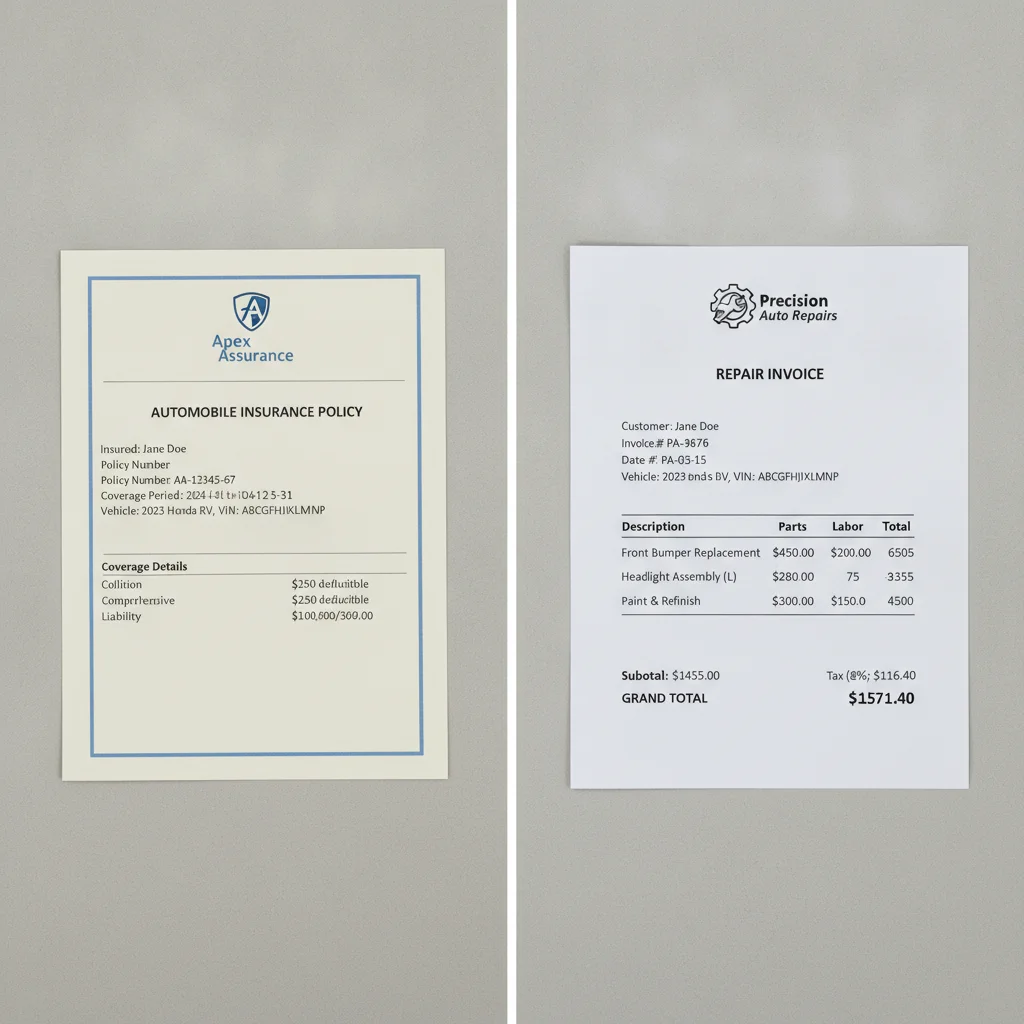
Single-car accidents almost always count as at-fault events in your insurance history. That means a surcharge at renewal, which can last three to five years depending on your state and insurer. The exact premium increase varies — minor incidents may add 10–15%, while more severe crashes or those involving injuries can push increases to 30–40% or higher.
A few scenarios where the rate impact may be reduced or avoided:
- Accident forgiveness: Some policies include a first-accident forgiveness provision that shields one at-fault incident from triggering a rate increase. This is usually an earned feature tied to years without claims.
- Claim below deductible: If repair costs are lower than your deductible, filing a claim is counterproductive. Pay out of pocket and no claim hits your record.
- Not-at-fault determination: If you successfully establish that a road defect or another driver caused the crash, your insurer may reclassify the incident as not-at-fault. This is harder to achieve but worth pursuing with solid documentation.
- Comprehensive classification: Deer strikes and weather events that qualify as comprehensive claims are typically treated differently from at-fault collisions — check your insurer's specific policy, but rate surcharges are less common on comprehensive incidents.
Shopping your coverage after a single-car accident is legitimate and sometimes smart. Rate increases aren't uniform across insurers, and you may find competitive pricing even with an at-fault claim on your record. Just be aware that other insurers will see the claim history too — misrepresenting it is grounds for policy cancellation.
Indirect Causation Is Still Causation
If another driver's behavior — an aggressive merge, running a light, or dropping debris — forced your evasive action and subsequent crash, that driver may bear legal responsibility even if they never made contact with your vehicle. Pursuing this requires evidence: dashcam footage, witness accounts, and a police report noting what you described. Without documentation, insurers have no basis to reclassify the claim.
No-Fault States: PIP Pays First, But Fault Still Matters
In no-fault insurance states, your Personal Injury Protection (PIP) coverage pays your medical bills after any accident regardless of who caused it — including a single-car crash. However, fault still determines what happens to your vehicle (collision coverage applies the same way) and can still expose you to liability claims that exceed PIP thresholds. No-fault does not mean fault-free.
Admitting Fault Can Foreclose Third-Party Claims
If you tell the police officer 'this was entirely my fault' before investigating whether a road defect or vehicle malfunction contributed, you may have weakened a legitimate third-party claim. Be accurate and factual at the scene, but reserve definitive fault judgments until you've had time to assess all contributing factors. Insurers and courts make fault determinations — that's not your job at the scene.

All claims are backed by peer-reviewed research. Sources on request.