Key Takeaways
Liability Car Insurance
Liability car insurance pays for injuries and property damage that you cause to other people in an accident. If you rear-end another driver, your liability coverage steps in to pay their medical bills and repair their vehicle. It is the most basic form of auto insurance and is legally required in nearly every U.S. state.
Liability coverage is split into two components: bodily injury liability (BI) and property damage liability (PD), each with its own per-person, per-accident, and per-occurrence limits expressed as a split-limit or combined single limit.
The Core Idea: It's About Protecting Other People
When most drivers think about car insurance, they picture protection for themselves — their car, their injuries, their property. Liability insurance works differently. Its entire purpose is to pay for harm you cause to other people when you're at fault in an accident.
Think of it as a financial buffer between your mistake behind the wheel and another person's losses. Without it, those losses would fall directly on you — out of your own pocket, potentially through a lawsuit.
That's why liability coverage is the foundation of every personal auto policy in the United States, and why states require it as a legal minimum. It's not just about protecting you from financial ruin — it's about ensuring that innocent parties aren't left holding the bill for someone else's error.
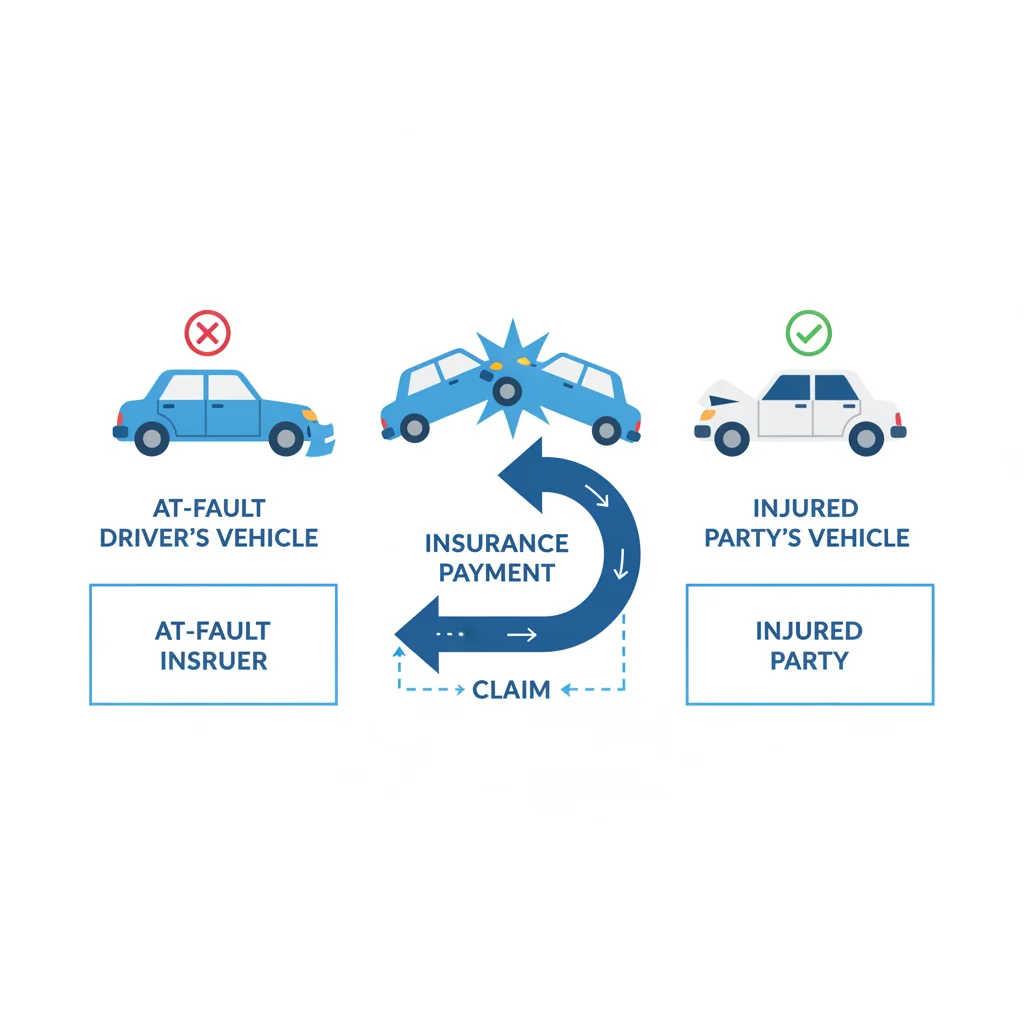
There are two distinct parts to liability coverage, and understanding each one matters. The first is bodily injury liability, which pays for injuries to other people. The second is property damage liability, which pays for damage to other people's property — most commonly, their vehicle. You can learn more about how these two components work in our detailed guide on bodily injury vs. property damage liability.
What Liability Coverage Actually Pays For
Once you're found at fault in an accident — or even just accused of being at fault — your liability coverage gets to work covering the losses of the other party. Here's a clear breakdown of what typically falls within scope:
Bodily Injury Expenses
- Emergency medical care for injured occupants of the other vehicle
- Hospital stays, surgery, and rehabilitation costs
- Lost wages if the injured person can't work due to their injuries
- Pain and suffering damages, which can be significant in serious accidents
- Funeral expenses in fatal accidents
Property Damage Expenses
- Repair or replacement of the other driver's vehicle
- Damage to other property — fences, mailboxes, storefronts, utility poles
- Loss of use — rental car costs for the other driver while their car is being repaired, in some cases
“The purpose of liability insurance isn't to protect the person who caused the accident — it's to make the person who was harmed whole again. Understanding that distinction changes how most people think about how much coverage they really need.”
— J. Robert Hunter, Former Insurance Commissioner and Director of Insurance at the Consumer Federation of America
It's worth noting that your insurer only pays up to the limits you purchased. If you carry $50,000 per-accident bodily injury coverage and the other driver's medical bills reach $120,000, you're personally on the hook for the $70,000 gap. That's one of the most important things to understand about how limits work in practice.
~$45,000
Average bodily injury liability claim
According to the Insurance Research Council, the average bodily injury liability claim payout has risen steadily, highlighting the importance of carrying adequate limits.
49 of 50
U.S. states requiring liability insurance
Nearly every state mandates minimum liability coverage, with New Hampshire being the primary exception — though drivers there must still prove financial responsibility.
$5,000–$10,000
Common state minimum property damage limits
Many state minimums for property damage liability are as low as $5,000–$10,000 — far below the average cost of a new vehicle repair or replacement.
13%
U.S. drivers estimated to be uninsured
The Insurance Research Council estimates roughly 1 in 8 drivers on U.S. roads carries no insurance, making adequate liability limits even more important for protecting your assets.
What Liability Coverage Does NOT Include
Just as important as knowing what liability covers is knowing where it stops. Many drivers are surprised to discover these gaps — sometimes at the worst possible moment.
State Minimums Are Often Insufficient
Every state sets its own minimum liability requirements, but these minimums were often established decades ago and haven't kept pace with the rising cost of medical care or vehicle repair. Carrying only the state minimum can leave you personally exposed to significant financial liability after a serious accident. It's worth reviewing your limits annually to make sure they still reflect your financial situation and risk.
Your Insurer Controls the Defense Strategy
While your insurer provides legal representation at no cost to you, they also retain the right to decide whether to settle a claim or take it to trial. Their interests (limiting their payout) and yours (protecting your reputation or contesting fault) don't always perfectly align. If a case involves unusually high stakes, consulting your own attorney in addition to the insurer-provided one can be worthwhile.
Your Own Vehicle Damage
Liability insurance will not pay a single dollar toward fixing your own car. If you cause an accident and your bumper is destroyed, that repair comes out of pocket — unless you also carry collision coverage. These are entirely separate products. For a full explanation, see our overview of collision and comprehensive coverage.
Your Own Medical Bills
Your bodily injury liability coverage pays for other people's injuries. Your own medical expenses after a fault accident are covered through different channels: your health insurance, personal injury protection (PIP), or medical payments coverage (MedPay), depending on what you carry and what state you're in.
Intentional Acts
If an accident wasn't actually an accident — if you deliberately used your vehicle to cause damage — your liability policy will not pay. Insurance is designed for unforeseen events, not deliberate harm.
Business Use and Certain Excluded Drivers
If you're using your personal vehicle for commercial purposes (delivery, rideshare, etc.) at the time of an accident, your personal liability policy may not respond. Similarly, if a household member is explicitly excluded from your policy and they cause an accident while driving your car, coverage may be denied.
Curious about exactly where the myths end and the facts begin? Our article on common misconceptions about liability coverage walks through the most frequent misunderstandings in detail.
Understanding Your Liability Limits
Every liability policy comes with coverage limits, and reading them correctly is an essential skill for any car owner. You'll typically see them expressed as three numbers, like 25/50/25 or written out in full. Here's what each number means:
| Number | What It Represents | Example |
|---|---|---|
| First | Bodily injury limit per person (in thousands) | $25,000 per injured person |
| Second | Bodily injury limit per accident (in thousands) | $50,000 total per accident |
| Third | Property damage limit per accident (in thousands) | $25,000 for property damage |
So a 25/50/25 policy would pay no more than $25,000 for any single injured person, no more than $50,000 for all bodily injuries in one accident, and no more than $25,000 for all property damage in one accident.
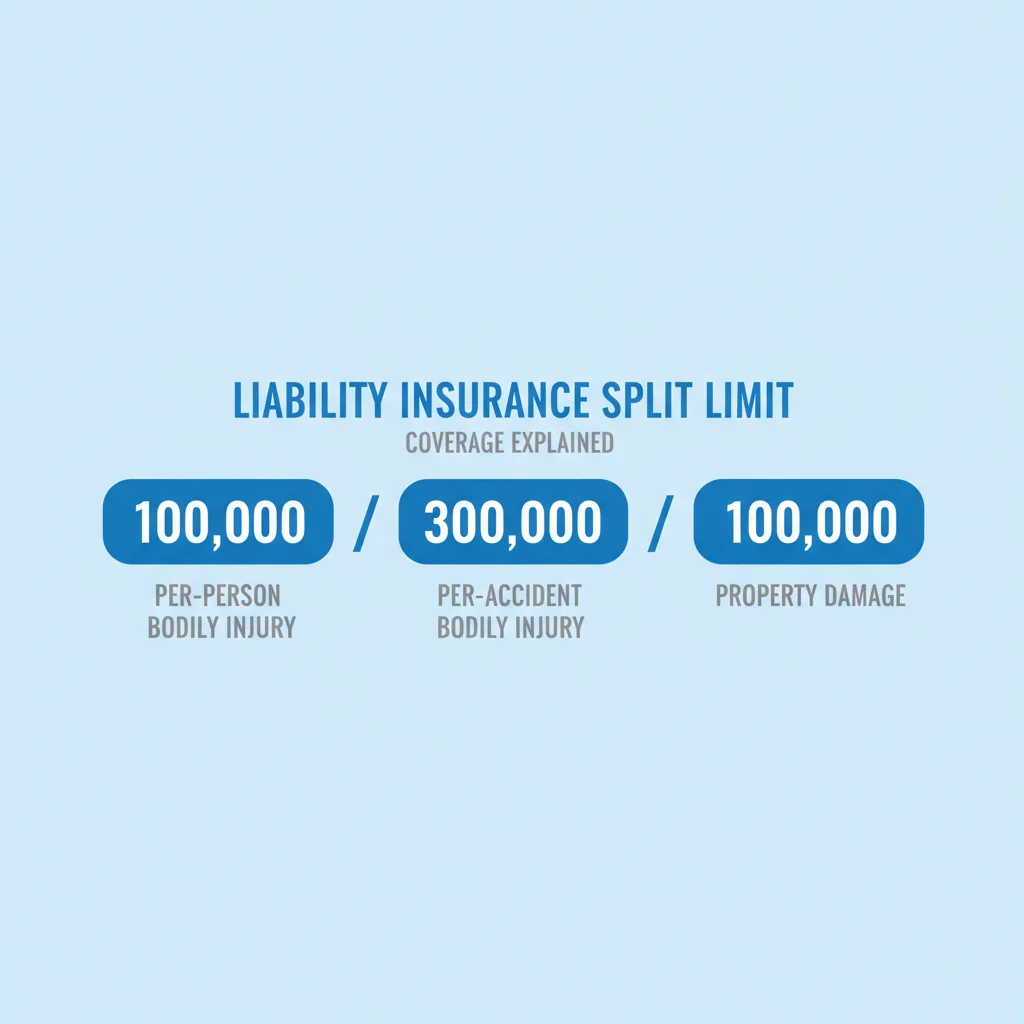
State minimums are often far lower than what you'd actually need in a serious accident. A single hospitalization can exceed $100,000. A multi-car pileup could involve multiple injured parties. Many financial advisors and insurance professionals recommend carrying at least 100/300/100 limits — or exploring an umbrella policy for additional protection above your auto limits.
Buy More Than the State Minimum
State-required minimums often cover only a fraction of real-world accident costs. A single emergency room visit can exceed $30,000, and a multi-vehicle accident involving injuries can quickly reach six figures. Upgrading your limits from a minimum to 100/300/100 often costs surprisingly little — sometimes just a few extra dollars per month — and offers dramatically more protection for your personal assets.
Review Your Full Coverage Package Annually
Life circumstances change — you may have acquired more assets, changed vehicles, or added a household driver. An annual review of your full policy, not just your liability limits, ensures your coverage still matches your actual exposure. Ask your insurer or agent to walk through each coverage type and explain what it does and doesn't protect.
Legal Defense: A Benefit Worth Understanding
One aspect of liability coverage that many drivers don't realize they have is legal defense. When you're involved in a serious accident and the other party sues you, your insurer doesn't just write checks — they also provide and pay for legal representation on your behalf.
This is a meaningful benefit. Attorney fees alone in a personal injury lawsuit can run into the tens of thousands of dollars, even if you ultimately prevail. Under a standard liability policy, those costs are handled by the insurer, typically outside of and in addition to your coverage limits.
That said, there are a few things worth knowing. Your insurer controls the defense strategy — they decide whether to settle or fight a claim. You don't have the final say, even though you're the one being sued. For a thorough look at how this works in practice, see our guide on liability coverage and legal defense.
State Minimums Are Often Insufficient
Every state sets its own minimum liability requirements, but these minimums were often established decades ago and haven't kept pace with the rising cost of medical care or vehicle repair. Carrying only the state minimum can leave you personally exposed to significant financial liability after a serious accident. It's worth reviewing your limits annually to make sure they still reflect your financial situation and risk.
Your Insurer Controls the Defense Strategy
While your insurer provides legal representation at no cost to you, they also retain the right to decide whether to settle a claim or take it to trial. Their interests (limiting their payout) and yours (protecting your reputation or contesting fault) don't always perfectly align. If a case involves unusually high stakes, consulting your own attorney in addition to the insurer-provided one can be worthwhile.
When Liability Follows You Beyond Your Own Car
One useful feature of liability coverage is that it often extends beyond your own vehicle. In most cases, your personal auto liability policy provides coverage when you drive a borrowed or rented vehicle — though with some important conditions.
If you borrow a friend's car and cause an accident, their liability coverage is typically primary, and your own policy may kick in as secondary coverage. The details depend on both policies involved and the specific circumstances. For a complete breakdown of how this works, read our article on does liability insurance cover you when someone else drives your car.
For rental cars, your personal liability coverage usually carries over for domestic rentals used for personal purposes. This means you may not need to purchase the rental company's liability product at the counter — though confirming with your insurer first is always a smart move. Explore the full picture in our guide on liability coverage for rental cars.
How Liability Fits Into Your Overall Coverage Picture
Liability coverage is the base layer of your auto insurance policy — required by law and fundamental to financial protection. But it's not the whole picture. Once you understand what liability does and doesn't cover, you can make smarter decisions about what else you might need.
If you have a newer or financed vehicle, collision and comprehensive coverage fill in the gaps for your own car's physical damage. If you frequently drive in areas with a lot of uninsured motorists, uninsured/underinsured motorist coverage provides a critical safety net. And if you want coverage for roadside assistance, rental reimbursement after a covered loss, or gap protection on a financed vehicle, those are all available as add-ons. Our overview of optional coverage add-ons explains what's available and when each might be worth adding.
The key is building a policy that matches your actual risk exposure — not just checking the legal minimum box and hoping for the best. Liability limits that feel adequate today could fall dangerously short in a serious accident. Taking the time to understand your coverage now is far less stressful than discovering its limits after a claim.
Buy More Than the State Minimum
State-required minimums often cover only a fraction of real-world accident costs. A single emergency room visit can exceed $30,000, and a multi-vehicle accident involving injuries can quickly reach six figures. Upgrading your limits from a minimum to 100/300/100 often costs surprisingly little — sometimes just a few extra dollars per month — and offers dramatically more protection for your personal assets.
Review Your Full Coverage Package Annually
Life circumstances change — you may have acquired more assets, changed vehicles, or added a household driver. An annual review of your full policy, not just your liability limits, ensures your coverage still matches your actual exposure. Ask your insurer or agent to walk through each coverage type and explain what it does and doesn't protect.

All claims are backed by peer-reviewed research. Sources on request.