Key Takeaways
Per-Accident Liability Limit
Your auto liability policy has two bodily injury caps: one that limits how much any single injured person can collect, and a second, larger cap that limits the total your insurer will pay out across all injured people in one accident. In a multi-car crash, that second cap — your per-accident limit — is the ceiling that all claimants must share. Once it's reached, your insurer stops paying, and any remaining damages become your personal financial responsibility.
Most U.S. policies express these as split limits, written in shorthand like 25/50/25. The middle figure is your per-accident bodily injury cap. Some policies use a single combined single limit (CSL) instead, which applies to both property damage and bodily injury together.
Why Multi-Car Accidents Are a Different Kind of Financial Risk
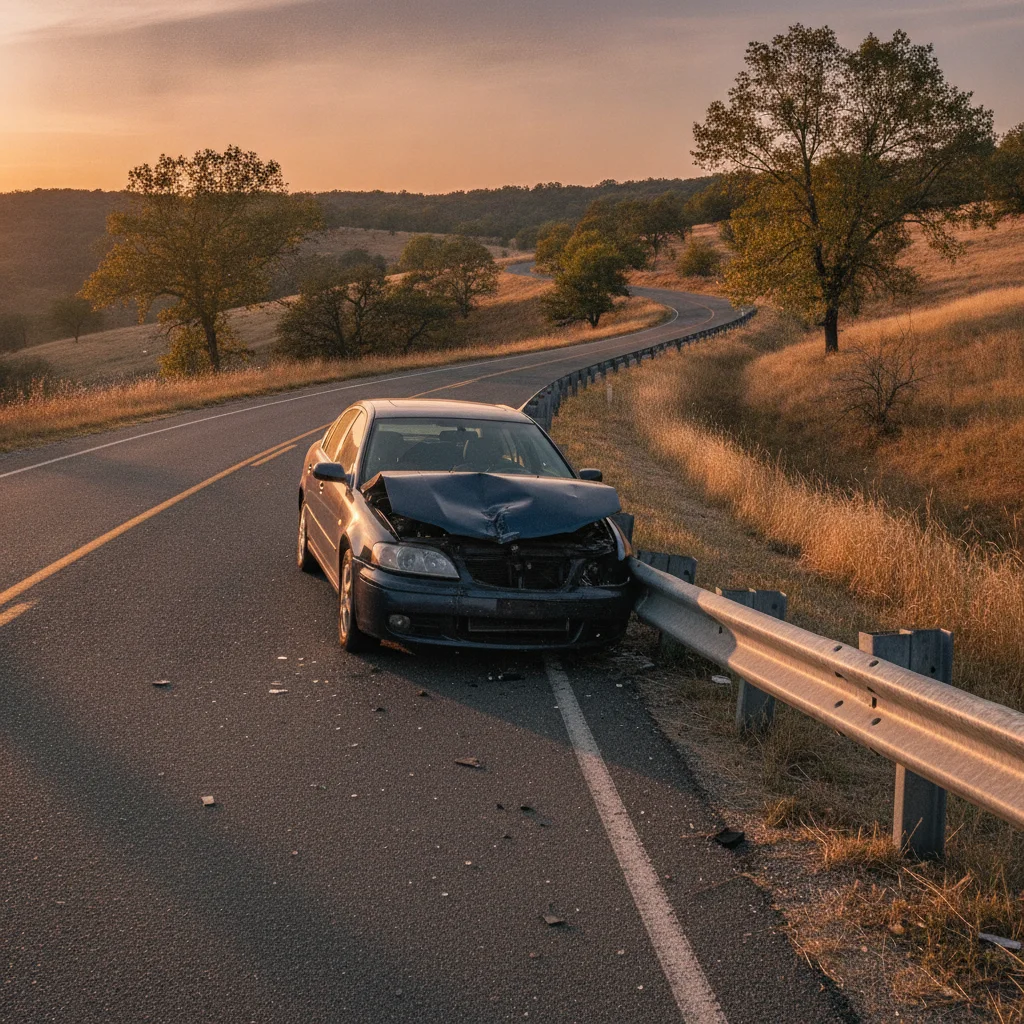
Most drivers mentally picture a two-car fender-bender when they think about liability insurance. One at-fault driver, one injured party, one claim. That mental model is reassuring but dangerously incomplete. Multi-vehicle accidents — chain-reaction rear-enders on the freeway, intersection pile-ups, or winter-weather chain collisions — create a fundamentally different liability math problem.
In a multi-car crash where you're found at fault, every injured occupant of every other vehicle has the right to file a bodily injury claim against your policy. A crash involving two other cars with two occupants each suddenly means four claimants — all competing for a share of the same per-accident limit on your declarations page.
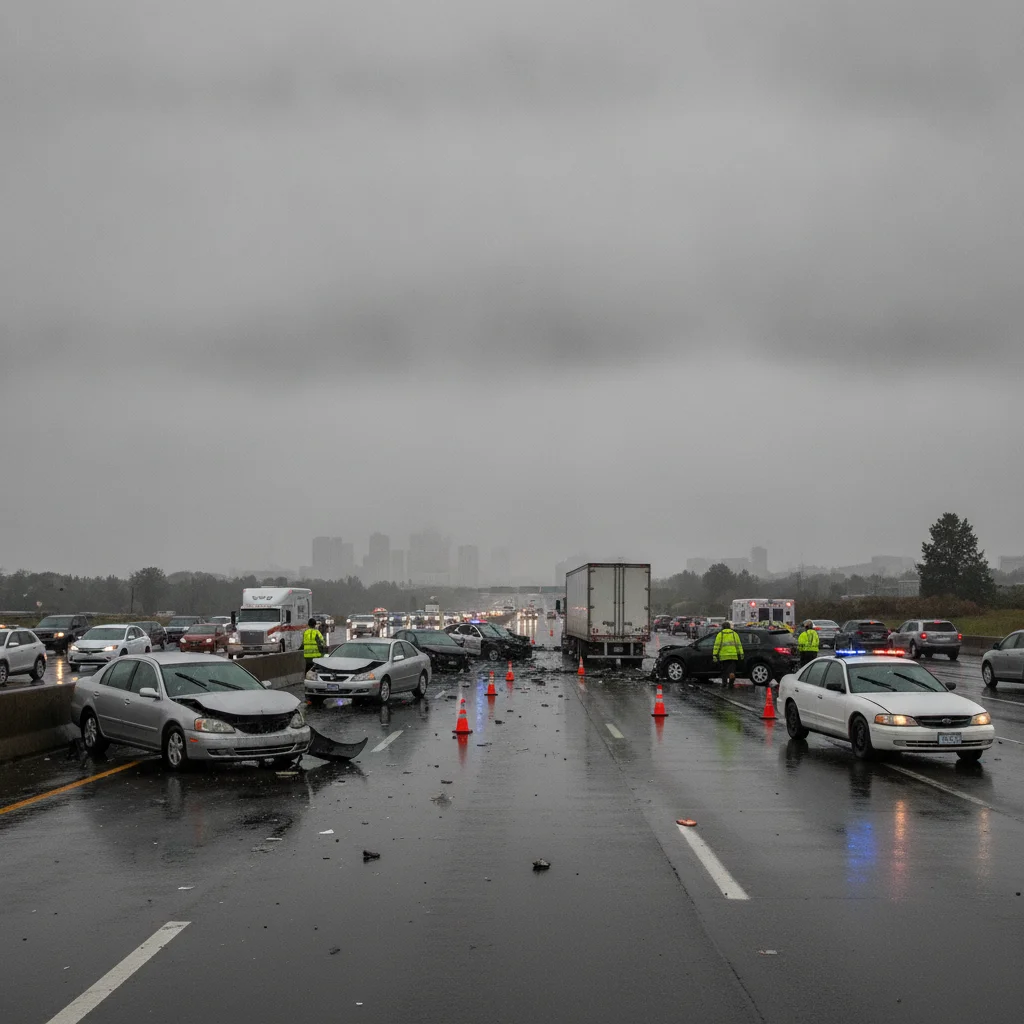
The hard truth is that liability insurance doesn't multiply to accommodate more victims. The per-accident cap is fixed at whatever amount you chose when you bought the policy. Understanding how that limit gets divided — and what happens when it runs out — is one of the most important things any driver can learn about their coverage.
For contrast, it's worth noting that even single-car accidents can generate liability claims under certain circumstances. But nothing stretches a liability limit quite like multiple injured claimants pulling from the same fixed pool.
How the Math Actually Works: A Real-World Walk-Through
Let's make this concrete. Suppose you carry a liability policy written as 50/100/50 — a common mid-tier limit. That middle number, $100,000, is your per-accident bodily injury maximum. The first number, $50,000, caps what any single claimant can receive.
Now imagine you rear-end a car at a stoplight, which pushes it into the car ahead. Here's the claimant breakdown:
- Vehicle 2 (car you struck directly): Driver with a herniated disc — medical bills and lost wages totaling $60,000.
- Vehicle 3 (car pushed forward): Driver with a broken wrist — $18,000 in medical costs.
- Vehicle 3, Passenger: Soft-tissue injuries — $14,000 in medical costs.
Total claims: $92,000. That fits under your $100,000 per-accident cap, but Vehicle 2's driver is capped at $50,000 per person — meaning they can only collect $50,000 from your policy despite $60,000 in losses. They could pursue you personally for the remaining $10,000.
$60,000+
Average cost of a hospitalized injury per person
According to the Insurance Information Institute, the average bodily injury claim in the U.S. regularly exceeds $20,000, while hospitalized injuries can cost far more depending on severity and recovery time.
30/60
Minimum bodily injury limit in several U.S. states
Multiple states still allow drivers to operate legally with per-accident bodily injury limits as low as $30,000–$60,000 — often insufficient for a single seriously injured claimant.
$200/yr
Typical annual cost of a $1M umbrella policy
The Insurance Information Institute estimates most personal umbrella policies providing $1 million in additional liability coverage cost between $150 and $300 annually for most drivers.
38%
Multi-vehicle crashes as share of all fatal crashes
NHTSA data consistently shows that roughly one in three fatal motor vehicle crashes involves multiple vehicles, underscoring how common — not rare — multi-claimant liability scenarios truly are.
100/300
Recommended minimum bodily injury limits by most insurers
Most major insurers and consumer advocates recommend at least 100/300 bodily injury limits as a baseline for drivers with any meaningful personal assets to protect.
Now add one more seriously injured passenger to Vehicle 2 with $45,000 in medical bills. Suddenly total claims are $137,000 — $37,000 more than your per-accident ceiling. Your insurer pays out $100,000 across all claimants according to negotiated settlement priorities. The rest falls on you.
This is precisely the kind of scenario that understanding per-person versus per-accident limits prepares you for. The interaction between both caps determines not just how much each person collects, but how much exposure you carry personally.
Combined Single Limit Policies Work Differently
Some drivers carry a combined single limit (CSL) policy instead of split limits. A CSL applies one total dollar amount across all bodily injury and property damage claims in a single accident — for example, $300,000 total. In a multi-claimant scenario, this can actually be more flexible than split limits because there's no per-person sub-cap restricting individual payouts. However, the total ceiling still applies, and the same exhaustion risk exists if total claims exceed that amount.
Umbrella Policies Have Their Own Exclusions
A personal umbrella policy extends your liability protection significantly, but it isn't without gaps. Most umbrella policies exclude intentional acts, business-related driving (common for rideshare or delivery drivers), and certain high-risk activities. Always review an umbrella policy's exclusions carefully and ask your agent specifically about your driving habits before assuming full coverage.
When to Reassess Your Limits
Major life changes — buying a home, growing retirement savings, receiving an inheritance, or taking a higher-paying job — all increase the personal assets at risk in a civil judgment. These events are natural triggers to revisit your liability limits and consider whether your current coverage still makes sense. A 20-minute conversation with your agent costs nothing and could matter enormously.
State Minimums: Why They Fall Apart in Pile-Ups
Every state requires drivers to carry some form of liability coverage, but minimum requirements were largely set decades ago and haven't kept pace with medical inflation, legal costs, or the reality of serious accidents. Many states require limits as low as 15/30 or 25/50 for bodily injury.
Run the numbers on a 30/60 bodily injury limit in a three-car accident with five injured occupants. Your insurer will pay no more than $60,000 total — roughly $12,000 per person if distributed evenly. A single emergency room visit, ambulance ride, and follow-up MRI can exceed that for one person alone.

The gap between minimum limits and real-world accident costs is not a gray area — it's a financial chasm. Drivers carrying state minimums in states with high population density, frequent highway congestion, or severe winter weather face the greatest exposure.
Check Your State's Minimum Requirements First
Before assuming your coverage is adequate, look up your state's minimum liability requirements and compare them to what you actually carry. If you're currently at or near state minimums, even a modest increase — say, from 25/50 to 50/100 — can dramatically reduce your personal exposure in a multi-car accident for a relatively small premium increase.
Ask About Umbrella Before You Increase Auto Limits
If you're considering a significant liability limit increase, first get a quote on a personal umbrella policy. You may find that meeting the umbrella's required underlying auto limits and adding the umbrella itself costs less than dramatically increasing your standalone auto liability limits — while also covering home-related liability exposures at the same time.
For a plain-language guide to what those three numbers on your policy actually mean, decoding your split-limit liability coverage is a good place to start before you call your agent to discuss a limit increase.
What Happens When Your Limit Is Exhausted
This is the part most drivers never think about — and it's the part that matters most. When your per-accident limit is exhausted, your insurance company has fulfilled its contractual obligation. They stop paying. What happens next depends entirely on the injured parties and their attorneys.
In most states, claimants who weren't fully compensated by your policy can pursue a civil judgment against you personally. That judgment can lead to:
- Wage garnishment in states that permit it
- Bank account levies on liquid assets
- Liens against property, including your home
- Seizure of non-exempt assets, depending on state law
Your insurer is typically required to defend you up to your policy limits — meaning they'll provide legal defense as long as potential damages are within range of your coverage. But once a judgment exceeds your limits, that defense obligation ends and you're on your own.
“Your insurance policy is a contract with a ceiling. The ceiling doesn't rise because the accident was worse than expected. Knowing exactly where that ceiling sits — and what's above it — is the difference between being protected and being exposed.”
— J. Robert Hunter, Former Federal Insurance Administrator and Director of Insurance, Consumer Federation of America
It's also worth understanding that collision and comprehensive coverage don't help here — those cover damage to your own vehicle, not injuries to other people. The distinction between collision and comprehensive versus liability is fundamental: liability is the coverage that protects other people when you're at fault.
How Insurers Allocate Payments Among Multiple Claimants
When multiple claimants are competing for a limited pool of money, your insurer doesn't simply divide the pot equally. The allocation process involves negotiation, legal strategy, and sometimes litigation — and it's largely out of your hands once it begins.
Typically, adjusters will attempt to negotiate settlements with each claimant that stay within the per-person and per-accident limits. They'll evaluate injury severity, medical documentation, liability exposure, and the likelihood of a claimant accepting a settlement versus going to court.
In some cases, insurers will file what's called an interpleader — a legal action where they deposit the policy limit with the court and let the claimants sort out distribution among themselves. This protects the insurer from paying out more than the limit while also protecting you from being sued directly by the insurer for exceeding the policy.
What you should understand as the policyholder: you have limited control over how your insurer negotiates these settlements. You can provide information and cooperate, but the strategic decisions about how to allocate limited funds among multiple claimants are made by your insurer's claims team — not by you.
Umbrella Coverage: The Practical Answer to Limit Exhaustion
A personal umbrella policy is designed precisely for this scenario. It sits above your primary auto (and home) liability limits and activates once your underlying policy is exhausted. Most umbrella policies start at $1 million in additional coverage and cost between $150 and $300 per year — a surprisingly low price for a significant amount of additional protection.
To carry an umbrella policy, insurers typically require you to maintain certain minimum liability limits on your underlying auto policy — often 100/300 or 250/500. That requirement actually works in your favor, since it forces you off the riskier low-limit territory before you layer on umbrella coverage.
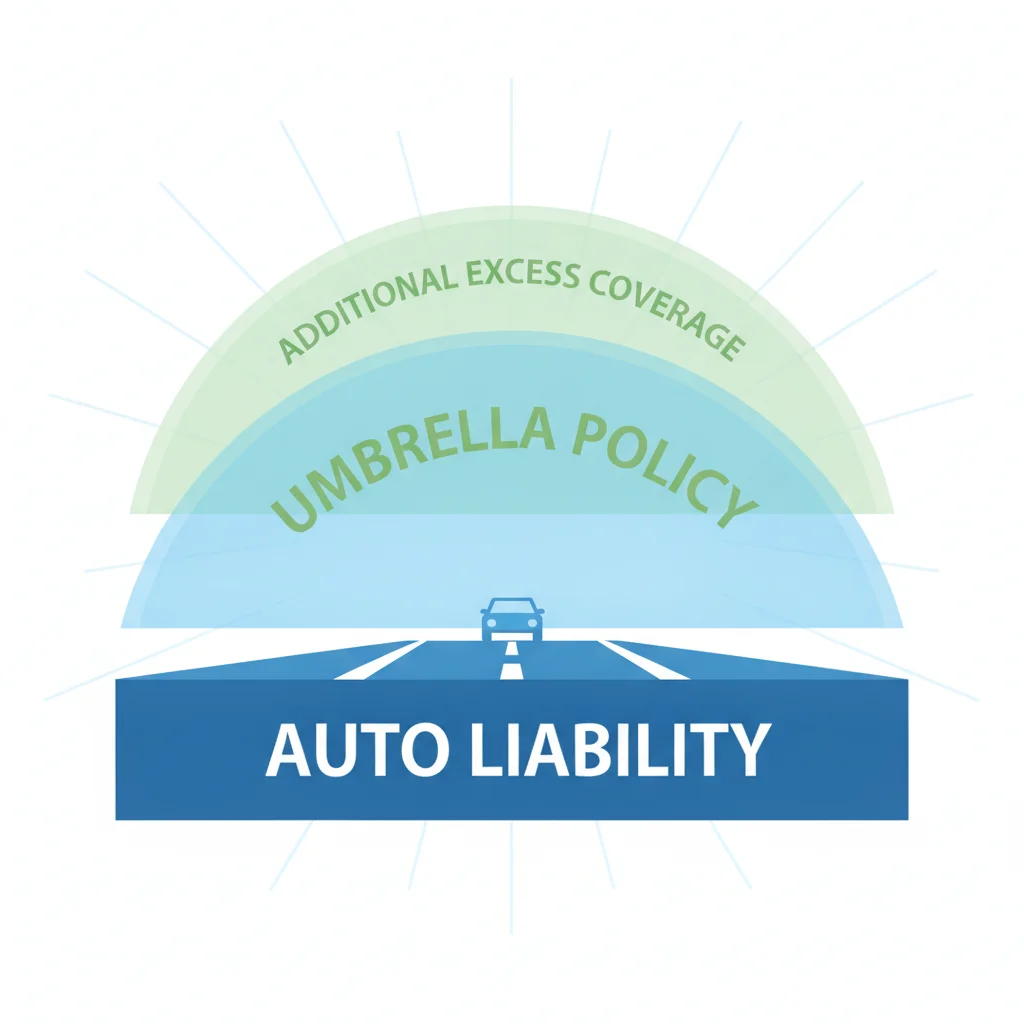
Consider the cost-benefit arithmetic: a driver with a home, retirement savings, and moderate income who causes a serious multi-car accident faces potentially catastrophic personal financial exposure under a 50/100 auto policy. Adding a $1 million umbrella for $200/year essentially purchases a large buffer between a bad day on the road and financial ruin.
Check Your State's Minimum Requirements First
Before assuming your coverage is adequate, look up your state's minimum liability requirements and compare them to what you actually carry. If you're currently at or near state minimums, even a modest increase — say, from 25/50 to 50/100 — can dramatically reduce your personal exposure in a multi-car accident for a relatively small premium increase.
Ask About Umbrella Before You Increase Auto Limits
If you're considering a significant liability limit increase, first get a quote on a personal umbrella policy. You may find that meeting the umbrella's required underlying auto limits and adding the umbrella itself costs less than dramatically increasing your standalone auto liability limits — while also covering home-related liability exposures at the same time.
Reviewing Your Own Policy Before It Matters
The best time to understand your liability limits is well before an accident happens. Pull up your declarations page and locate your bodily injury liability limits — they'll appear as two numbers, often written in thousands (e.g., 100/300 means $100,000 per person, $300,000 per accident).
Then ask yourself a few honest questions:
- If I caused a three-car accident with four injured people, could my per-accident limit realistically cover their medical costs, lost wages, and pain-and-suffering claims?
- Do I have assets — savings, a home, retirement accounts — that could be targeted in a civil judgment if my limits are exhausted?
- Do I drive frequently in high-traffic areas, long highway commutes, or winter-weather conditions where multi-car accidents are more likely?
If your honest answers point toward meaningful personal exposure, the conversation to have with your agent isn't complicated: ask what it costs to increase your bodily injury limits to 100/300 or higher, and get a quote on adding a personal umbrella policy. The incremental premium is almost always smaller than drivers expect.
Combined Single Limit Policies Work Differently
Some drivers carry a combined single limit (CSL) policy instead of split limits. A CSL applies one total dollar amount across all bodily injury and property damage claims in a single accident — for example, $300,000 total. In a multi-claimant scenario, this can actually be more flexible than split limits because there's no per-person sub-cap restricting individual payouts. However, the total ceiling still applies, and the same exhaustion risk exists if total claims exceed that amount.
Umbrella Policies Have Their Own Exclusions
A personal umbrella policy extends your liability protection significantly, but it isn't without gaps. Most umbrella policies exclude intentional acts, business-related driving (common for rideshare or delivery drivers), and certain high-risk activities. Always review an umbrella policy's exclusions carefully and ask your agent specifically about your driving habits before assuming full coverage.
When to Reassess Your Limits
Major life changes — buying a home, growing retirement savings, receiving an inheritance, or taking a higher-paying job — all increase the personal assets at risk in a civil judgment. These events are natural triggers to revisit your liability limits and consider whether your current coverage still makes sense. A 20-minute conversation with your agent costs nothing and could matter enormously.
Liability coverage isn't something most people think about until they need it. But the structure of how limits work in multi-car accidents — shared pools, per-person caps, personal exposure beyond the limit — is worth understanding clearly, because the financial stakes are real and the protection is entirely within your control to improve.

All claims are backed by peer-reviewed research. Sources on request.