Key Takeaways
Why Physical Damage Coverage Is More Complicated Than It Looks
Most drivers understand, at least loosely, that their auto insurance policy covers damage to their car. But the details — which events are covered, how payouts are calculated, and what deductibles actually mean in practice — tend to stay murky until a claim forces the issue. By then, the gaps are expensive.
Physical damage coverage breaks into two primary components: collision, which pays for damage your vehicle sustains from an impact with another car or object, and comprehensive, which covers losses from theft, weather, fire, vandalism, and animal strikes. Neither is legally required in any U.S. state, though lenders typically mandate both when a vehicle is financed or leased. Together, they form the backbone of protection for the car itself — not the people in it, not other drivers, just your vehicle.
The trouble is that drivers routinely make decisions about these coverages based on incomplete information: choosing deductibles by guessing, dropping coverage based on a rough sense that the car is "old," or assuming a payout will cover a replacement when it won't. Those decisions look fine on paper — lower premiums, a tidier budget — until a hailstorm totals a car with a $4,000 market value and a $2,500 outstanding loan.
Collision coverage myths are more common than insurers like to admit, and they compound these structural misunderstandings. This article focuses on the physical damage mistakes that lead to real financial losses — and exactly how to avoid them.

The Most Costly Physical Damage Mistakes Drivers Make
The errors below aren't obscure technicalities. They're patterns that claims adjusters see regularly, and they consistently result in drivers absorbing costs their policies could have covered — or walking away from claims with far less than they expected.
Choosing a deductible based on premium savings rather than actual affordability.
Why it happens: When shopping for insurance, a higher deductible immediately lowers the quoted premium, making it an appealing lever to pull — even when the out-of-pocket amount selected isn't one the driver could realistically cover after an accident.
Dropping comprehensive coverage too early on an aging vehicle.
Why it happens: Drivers commonly use the car's age as a proxy for value, assuming an older vehicle isn't worth insuring. But age and market value don't move in lockstep, and comprehensive covers scenarios — theft, hail, flooding — that can represent a total loss even on a modestly valued car.
Failing to carry gap insurance on a financed or leased vehicle.
Why it happens: Many drivers assume their collision coverage will handle a total loss fully. In reality, collision pays ACV — and in the first two to three years of a loan, ACV can be thousands of dollars below the outstanding balance, leaving the driver responsible for the difference.
Misunderstanding actual cash value and expecting replacement-cost payouts after a total loss.
Why it happens: The term 'insurance' implies being made whole, so many drivers assume a total-loss payout will cover what they'd need to spend on a comparable replacement. Standard policies don't work that way — depreciation is subtracted, and market replacement cost is not the insurer's obligation.
Skipping rental reimbursement coverage and absorbing out-of-pocket rental costs after a claim.
Why it happens: Rental reimbursement feels like a premium add-on until the moment a car is in the body shop for 10 days and daily rental costs are adding up. Drivers often skip it during policy setup because the immediate premium impact is visible and the future rental need feels hypothetical.
Conflating collision and comprehensive — and not knowing which coverage applies to a given loss.
Why it happens: Both coverages deal with vehicle damage, and the distinction isn't intuitive. Drivers with only one type of coverage sometimes discover after a loss that the event they experienced falls under the type they dropped.
Not reviewing or updating physical damage coverage after major life or vehicle changes.
Why it happens: Insurance is easy to set and forget. After the initial purchase decision, many drivers don't revisit coverage terms until a renewal notice arrives — and even then, they often renew without changes.
~20%
First-year vehicle depreciation rate
Industry data consistently shows new vehicles lose approximately 15–20% of their value in the first year, creating an immediate gap between loan balance and ACV.
$3,300
Average collision claim payout (U.S.)
According to the Insurance Information Institute, the average collision claim in recent years has been approximately $3,300 — a figure many high-deductible holders would absorb entirely out of pocket.
1 in 88
Odds of a vehicle theft claim annually
The National Highway Traffic Safety Administration data suggests roughly 1 in 88 insured vehicles experiences a theft-related claim each year — a risk comprehensive coverage directly addresses.
$1,600+
Average comprehensive claim payout
The Insurance Information Institute reports average comprehensive claims have exceeded $1,600, with weather-related total losses and theft driving the higher end significantly above that figure.
40%
Drivers without gap insurance on financed vehicles
Industry surveys suggest a substantial share of financed vehicle owners lack gap coverage, leaving them exposed to loan deficiency balances after a total-loss settlement.
The ACV Problem: Why Your Payout Rarely Equals Replacement Cost
One of the most persistent sources of post-claim frustration is the gap between what a driver expects to receive and what their insurer actually pays. The root cause, almost always, is a misunderstanding of actual cash value (ACV).
Standard collision and comprehensive policies pay out on an ACV basis — meaning the market value of your car at the moment of loss, not what it would cost to buy a comparable replacement. Depreciation is baked in. A three-year-old sedan that cost $28,000 new might carry an ACV of $16,000. If it's totaled, that's the check you receive, minus your deductible. Whether you can actually replace that car for $16,000 in the current used market is a separate question the insurer isn't obligated to answer.
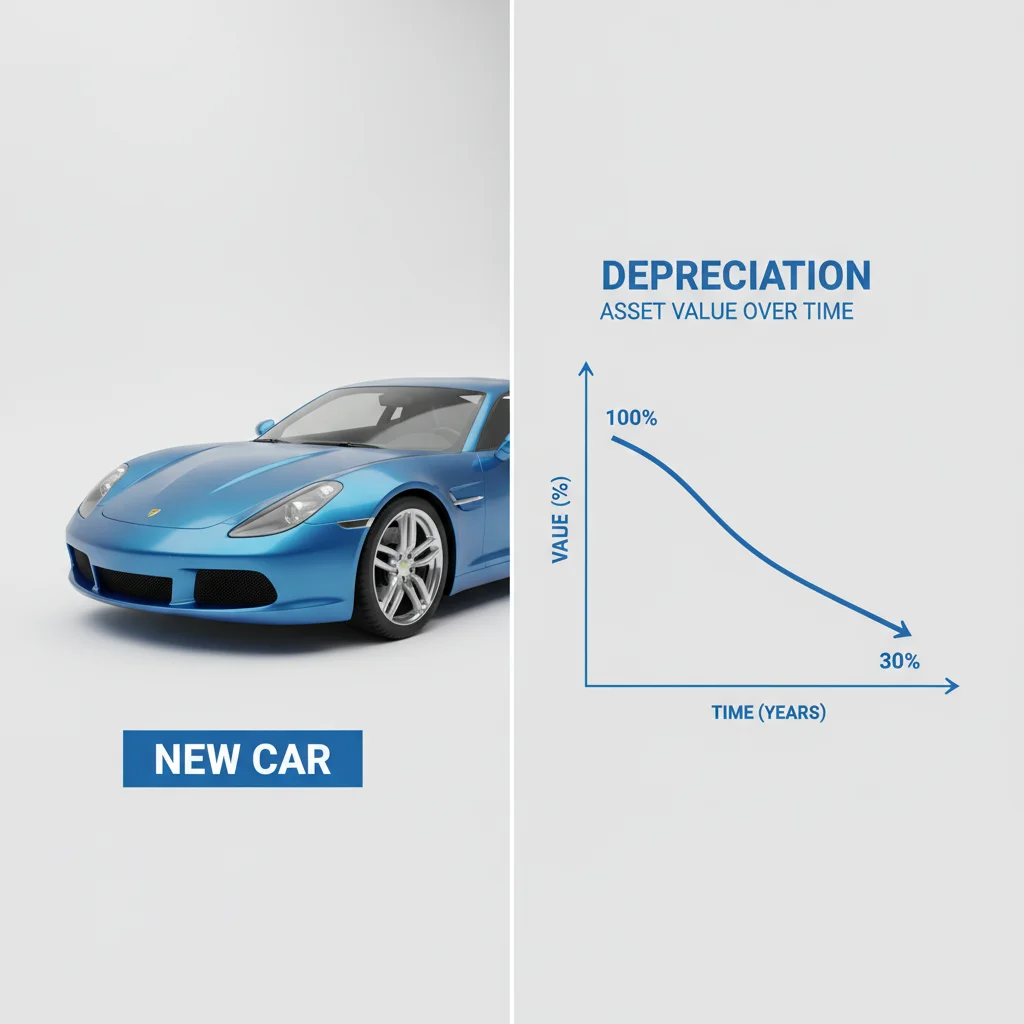
There are ways to narrow this gap. Some insurers offer new car replacement endorsements for vehicles within one or two model years of purchase — worth asking about when you buy. More broadly, gap insurance (or a loan/lease payoff add-on) covers the difference between ACV and your outstanding loan balance, which is the scenario that otherwise leaves drivers making payments on a car they no longer own.
Why your claim payout came in lower than expected is worth reading before you file — depreciation, deductibles, and policy limits all chip away at settlements in ways most drivers don't anticipate until after the fact.
ACV Can Be Lower Than Current Market Prices
Insurers calculate ACV using proprietary tools that may value your vehicle below what comparable cars are selling for in your local used market. You have the right to dispute an ACV determination — and providing market comparables from local dealer listings or platforms like CarGurus can strengthen your position. Don't accept the first offer as final without verification.
Gap Insurance Becomes Less Valuable Over Time
Gap coverage is most critical in the first two to three years of a loan, when depreciation outpaces loan payoff. Continuing to pay for gap insurance on a vehicle where your loan balance has dropped below its ACV is unnecessary. Check the math annually and cancel when the numbers cross.
Filing Small Claims Can Raise Future Premiums
Not every covered loss is worth claiming. Insurers track claims history, and a pattern of small payouts can trigger premium increases at renewal that exceed what you recovered. Before filing any claim, compare the payout minus your deductible against the potential multi-year premium impact. <a href="/car-insurance/claims-and-policies/filing-a-claim/the-hidden-costs-of-filing-a-small-claim">Small claim hidden costs</a> are real and frequently underestimated.
If you're uncertain whether your current coverage aligns with your vehicle's actual value and your loan balance, a quick call to your insurer to request an ACV estimate costs nothing and can clarify exactly where you stand.
When to Keep — and When to Drop — Physical Damage Coverage
The conventional wisdom that you should drop collision and comprehensive once a car reaches a certain age is both broadly correct and dangerously oversimplified. The standard rule of thumb — drop coverage when the annual premium exceeds 10% of the car's value — gives you a starting point, but it ignores several variables that can make coverage worth keeping far longer than the formula suggests.
First, consider what comprehensive actually costs relative to collision. For many drivers, comprehensive runs $100–$200 per year — a comparatively modest premium for protection against theft, hail damage, flooding, and deer strikes. Even on a car worth $5,000, a total-loss theft or a hailstorm that destroys the roof can represent a meaningful financial hit. Dropping comprehensive to save $15 a month is rarely the slam-dunk savings calculation it appears to be.
Second, consider your financial cushion. If you can absorb a $5,000 loss without disrupting your finances, self-insuring an older vehicle is a defensible choice. If that same loss would force you to finance a replacement vehicle or drain an emergency fund, the coverage is earning its keep.
Auto insurance policy management mistakes frequently involve dropping coverage too early — a pattern that's especially costly when it happens in the same year the vehicle sustains a major weather event or theft. Timing matters, and market conditions matter. Used car values have remained elevated since 2021, meaning many vehicles carry higher ACVs than their age alone would suggest.
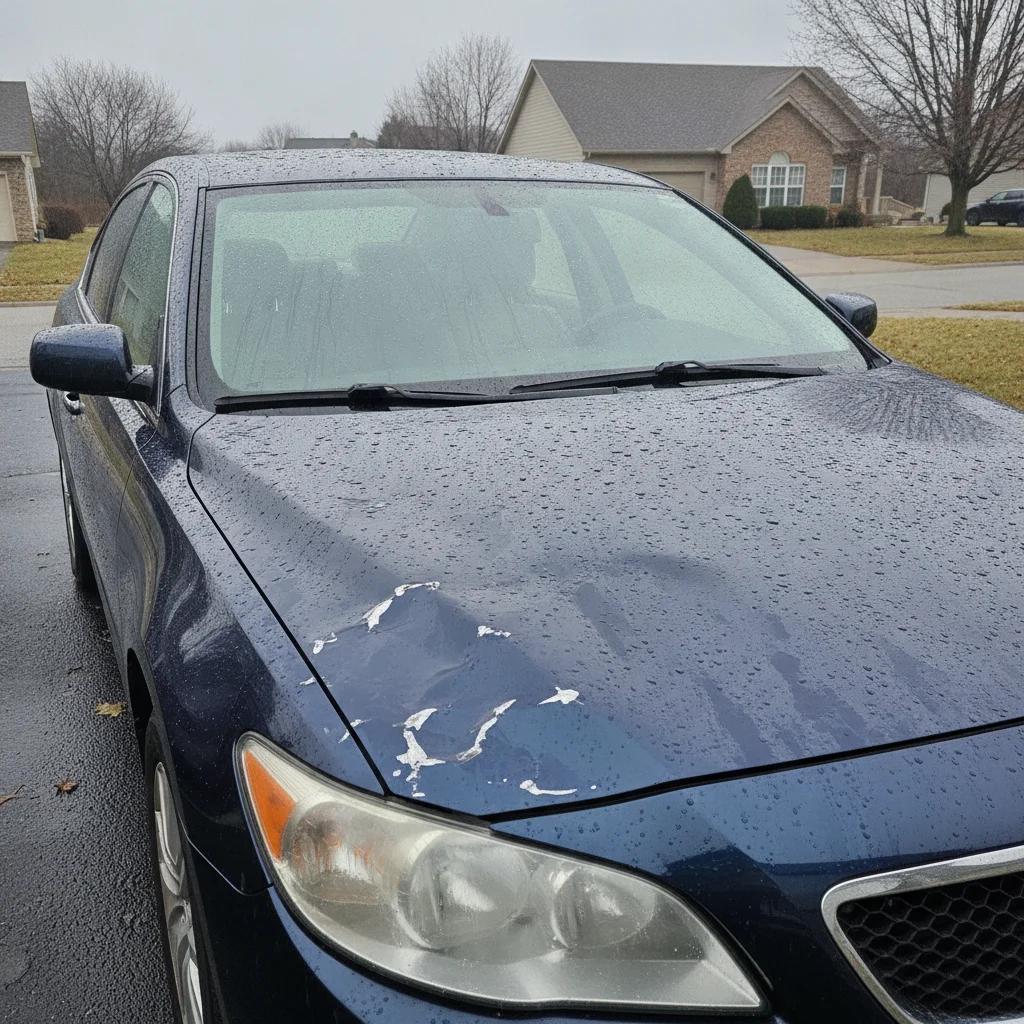
A practical approach: revisit your coverage at every policy renewal, pull a current market value estimate from a source like Kelley Blue Book or Edmunds, and make the coverage decision with current numbers rather than assumptions.
Comprehensive and Collision Are Not Interchangeable
Drivers who carry only collision and experience a theft, flood, or animal strike have no coverage for the vehicle loss — those events fall exclusively under comprehensive. Conversely, a driver who keeps only comprehensive and hits a guardrail has no coverage for the resulting collision damage. Understand which coverage applies before deciding which to drop. Carrying one without the other is a deliberate risk that should be made consciously, not by default.
Your Loan Servicer May Require Both Coverages
If your vehicle is financed or leased, dropping collision or comprehensive coverage without paying off the loan may violate your loan agreement. Lenders can — and do — force-place coverage on your behalf when they detect a lapse, typically at a significantly higher premium than you'd pay on your own policy. Always verify lender requirements before making changes to physical damage coverage on a financed vehicle.
Deductibles, Add-Ons, and Getting the Full Picture Right
Physical damage coverage doesn't operate in isolation. The deductible you choose, the endorsements you add or skip, and the way you handle claims all affect your net financial outcome after a loss.
Deductible misalignment is common in both directions. Drivers who set a $100 or $250 deductible to minimize out-of-pocket exposure at claim time end up paying meaningfully higher premiums year after year — often more than they'd ever recover from a low-deductible claim. Conversely, a $2,000 deductible looks attractive on a premium quote but can make minor collision damage — a cracked bumper, a dented quarter panel — not worth filing, effectively functioning as no coverage at all for routine incidents.
The sweet spot for most drivers is somewhere between $500 and $1,000, with the choice calibrated to what you can genuinely afford to pay out-of-pocket without financial strain. That number should be a real budget figure, not an aspirational one.
On the add-on front, optional add-ons like rental reimbursement and roadside assistance are easy to overlook when building a policy but conspicuously absent after a claim leaves your car in a body shop for two weeks. Rental reimbursement coverage typically costs a few dollars a month and can cover $30–$50 per day in rental costs — a straightforward value calculation most drivers don't run until they're already in the rental counter line.
Gap insurance deserves a specific mention for anyone financing a new or near-new vehicle. In the first year of ownership, a car can depreciate 15–20% while the loan balance declines much more slowly. That gap — sometimes $3,000 to $8,000 on a mid-priced vehicle — is entirely your exposure without gap coverage. Dealers offer it at a markup; your insurer typically offers it for a fraction of that cost.
The hidden costs of filing a small claim is another factor worth understanding — not every loss is worth claiming, and a pattern of small claims can raise your premium enough to offset the payout over subsequent renewal periods.

Finally, if you've recently purchased an electric vehicle, the physical damage calculus shifts considerably. Battery replacement costs, specialized repair networks, and higher baseline vehicle values mean the stakes of underinsurance are materially higher. The true cost of underinsuring an electric vehicle breaks down exactly where EV owners face the most exposure.
Getting physical damage coverage right isn't a one-time decision. It's an annual recalibration — adjusting deductibles as your savings grow, reassessing add-ons as your life circumstances change, and keeping your coverage aligned with what your vehicle is actually worth rather than what you paid for it years ago. The drivers who do that work consistently are the ones who don't end up surprised at the claims counter.
Comprehensive and Collision Are Not Interchangeable
Drivers who carry only collision and experience a theft, flood, or animal strike have no coverage for the vehicle loss — those events fall exclusively under comprehensive. Conversely, a driver who keeps only comprehensive and hits a guardrail has no coverage for the resulting collision damage. Understand which coverage applies before deciding which to drop. Carrying one without the other is a deliberate risk that should be made consciously, not by default.
Your Loan Servicer May Require Both Coverages
If your vehicle is financed or leased, dropping collision or comprehensive coverage without paying off the loan may violate your loan agreement. Lenders can — and do — force-place coverage on your behalf when they detect a lapse, typically at a significantly higher premium than you'd pay on your own policy. Always verify lender requirements before making changes to physical damage coverage on a financed vehicle.

All claims are backed by peer-reviewed research. Sources on request.