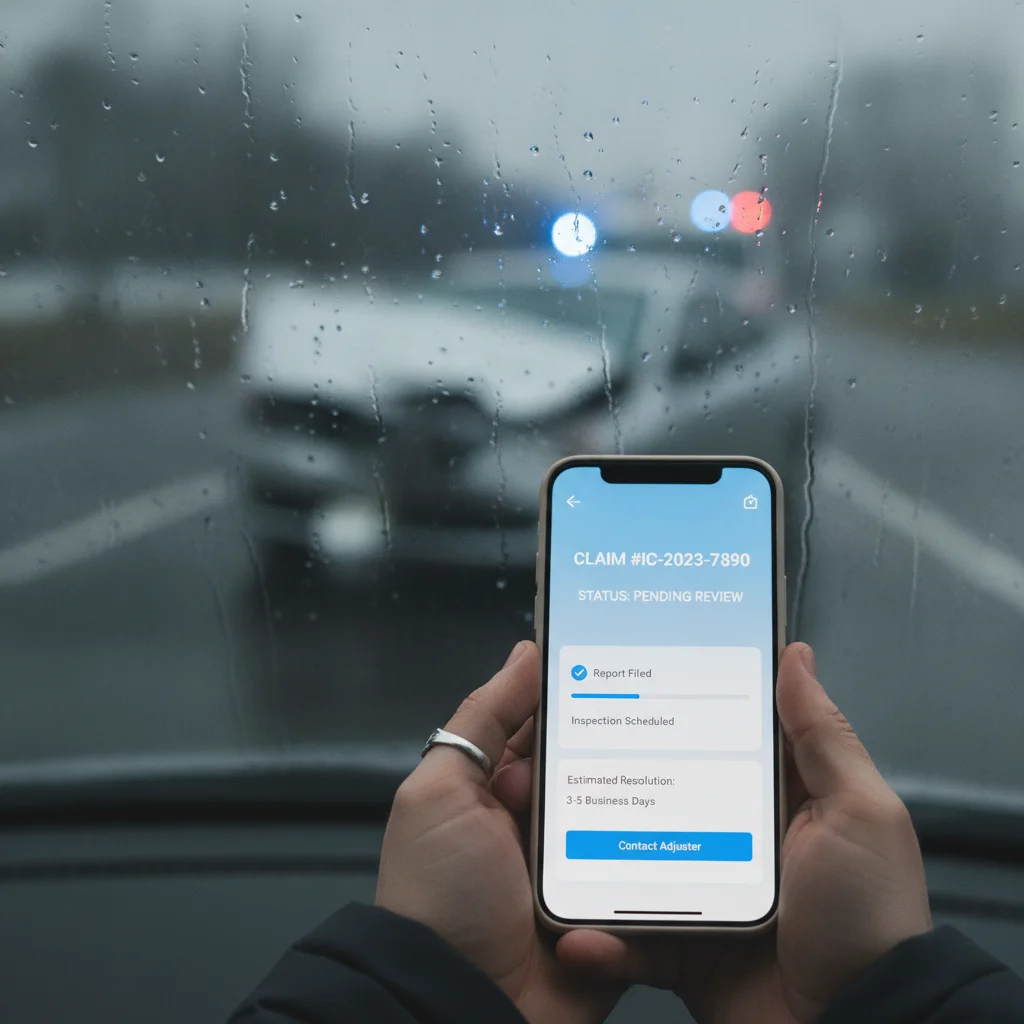
| Typical acknowledgment window | 10–15 calendar or working days (State insurance codes, majority of states) |
| Typical investigation window | 15–45 days (State insurance codes, 2024) |
| Typical settlement window | 15–30 days after proof of loss (State insurance codes, 2024) |
| States with fastest settlement deadline | Texas (5 business days after agreement) (Texas Insurance Code §542.058) |
| States with longest settlement window | Florida (up to 90 days) (Florida Statutes §627.4265) |
| What triggers most settlement clocks | Submission of formal proof of loss (Standard across most state regulations) |
| Where to file a complaint if deadlines are missed | Your state's Department of Insurance |
| Extensions allowed? | Yes, if insurer provides written notice with reason (Common provision in most state codes) |
Why State Deadlines Matter More Than You Think
When you file an auto insurance claim, it can feel like the process is entirely in your insurer's hands. But that's not quite true. Every state has a set of regulations — known as unfair claims settlement practice laws — that require insurance companies to acknowledge your claim, begin their investigation, and reach a resolution within specific timeframes. Missing those deadlines isn't just a procedural slip; it can expose the insurer to fines, bad-faith litigation, and regulatory penalties.
Understanding these timelines won't speed up every claim automatically, but it does give you leverage. If you know your insurer was supposed to acknowledge your claim within 10 days and it's been three weeks without a word, you know exactly what to say when you call — and who to contact if they don't respond.
This reference guide walks you through the three key claim milestones most states regulate, explains how those windows typically work in practice, and gives you a state-by-state overview so you can look up what applies where you live.
| Typical acknowledgment window | 10–15 calendar or working days (State insurance codes, majority of states) |
| Typical investigation window | 15–45 days (State insurance codes, 2024) |
| Typical settlement window | 15–30 days after proof of loss (State insurance codes, 2024) |
| States with fastest settlement deadline | Texas (5 business days after agreement) (Texas Insurance Code §542.058) |
| States with longest settlement window | Florida (up to 90 days) (Florida Statutes §627.4265) |
| What triggers most settlement clocks | Submission of formal proof of loss (Standard across most state regulations) |
| Where to file a complaint if deadlines are missed | Your state's Department of Insurance |
| Extensions allowed? | Yes, if insurer provides written notice with reason (Common provision in most state codes) |
For a fuller picture of what happens between each milestone, see what actually happens after you file an auto insurance claim.
The Three Regulatory Milestones Every Driver Should Know
Most state insurance codes break the claims process into three measurable checkpoints. Knowing these gives you a mental framework so the process doesn't feel like a black box.
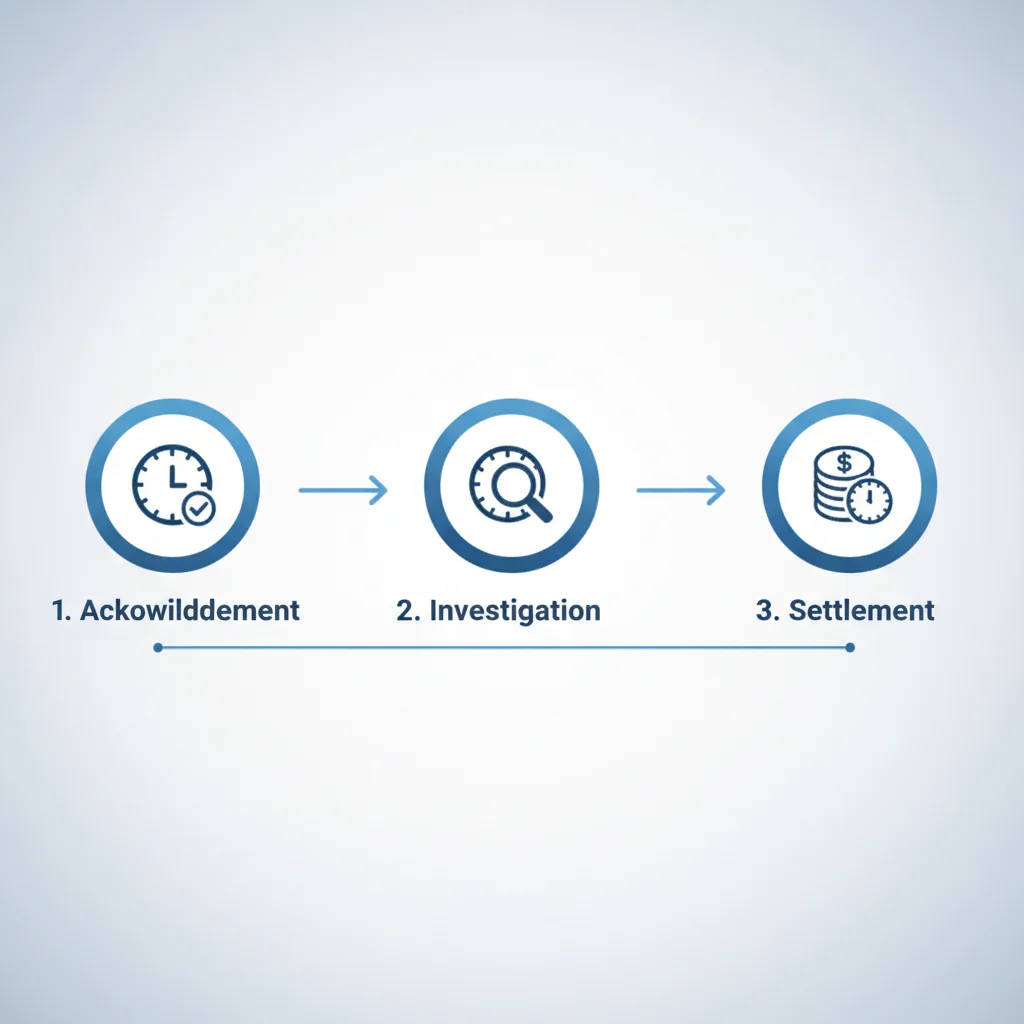
1. Acknowledgment
This is how quickly your insurer must confirm they received your claim — usually in writing or by phone. Typical windows range from 10 to 15 days in most states. Some states require acknowledgment within as few as 3 business days. This step matters because it starts the official clock on everything else.
2. Investigation Completion
After acknowledgment, the insurer has a set number of days to complete their investigation — reviewing the police report, inspecting the vehicle, interviewing witnesses, and assigning liability. This window is usually 15 to 45 days, though some states allow extensions if the insurer notifies you in writing with a legitimate reason.
3. Decision or Settlement
Once the investigation is wrapped up, the insurer must either accept your claim and issue payment, or deny it with a written explanation. Many states tie this deadline to the completion of proof of loss paperwork — typically 15 to 30 days after all required documents are submitted.
Extensions Are Legal — But Must Be Disclosed
Most states allow insurers to extend their investigation or settlement deadlines if they have a legitimate reason and notify you in writing before the original deadline expires. What they cannot do is go silent. If your insurer needs more time, you should receive written communication explaining why and when they expect to complete the review. Silence past a statutory deadline is a potential bad-faith trigger.
Proof of Loss Is Not Always a Separate Document
In practice, many insurers accept a combination of a recorded statement, signed repair estimates, and the accident report as functional proof of loss for standard collision claims. However, for complex claims — especially theft, total loss, or uninsured motorist claims — a formal signed proof of loss form may be required. Ask your adjuster early in the process so you're not inadvertently delaying your own settlement clock.
It's worth noting that these are minimum regulatory floors, not service targets. A well-run insurer will often move faster, especially for straightforward fender-bender claims. Complex collisions, disputed liability, or total-loss determinations routinely take longer — but your insurer is still required to keep you informed during any delay.
State-by-State Claims Timeline Reference
The table below summarizes the key regulatory deadlines for all 50 states and the District of Columbia. Deadlines are given in calendar days unless otherwise noted. Where a state specifies "business days," that is indicated. Laws change — always verify current requirements with your state's Department of Insurance.

| State | Acknowledgment | Investigation | Settlement / Decision |
|---|---|---|---|
| Alabama | 10 days | 15 days | 15 days after proof of loss |
| Alaska | 10 working days | 30 days | 30 days after proof of loss |
| Arizona | 10 working days | 15 working days | No statutory limit specified |
| Arkansas | 10 days | 15 days | 15 days after agreement |
| California | 15 days | 40 days | 30 days after agreement |
| Colorado | 10 working days | Not specified | 60 days |
| Connecticut | 10 working days | 45 days | 45 days |
| Delaware | 10 days | 30 days | 15 days after proof of loss |
| District of Columbia | 10 days | 15 days | 30 days after proof of loss |
| Florida | 14 days | 30 days | 90 days |
| Georgia | 10 days | 15 days | 15 days after proof of loss |
| Hawaii | 10 working days | 15 working days | Not specified |
| Idaho | 10 working days | 15 working days | 15 working days after proof of loss |
| Illinois | Not specified | Not specified | Not specified (IDOI guidance: 30 days) |
| Indiana | 10 working days | Not specified | 15 business days after agreement |
| Iowa | 10 days | 30 days | 30 days after proof of loss |
| Kansas | 10 working days | 30 days | 30 days after proof of loss |
| Kentucky | 10 working days | Not specified | Not specified |
| Louisiana | 14 days | 30 days | 30 days after proof of loss |
| Maine | 10 days | 15 days | 15 days after proof of loss |
| Maryland | 10 days | 30 days | 30 days after proof of loss |
| Massachusetts | 7 days | 21 days | 15 days after agreement |
| Michigan | Not specified | Not specified | 30 days after proof of loss |
| Minnesota | 10 working days | Not specified | Not specified |
| Mississippi | 10 days | 25 days | 25 days after proof of loss |
| Missouri | 10 working days | Not specified | Not specified |
| Montana | 10 working days | 30 working days | 30 working days after proof of loss |
| Nebraska | 10 working days | Not specified | 15 business days after agreement |
| Nevada | 20 days | 30 days | 30 days after proof of loss |
| New Hampshire | 10 working days | Not specified | 20 days after agreement |
| New Jersey | 10 business days | Not specified | 30 days after proof of loss |
| New Mexico | 10 working days | 40 days | 30 days after proof of loss |
| New York | 15 business days | Not specified | 35 business days after proof of loss |
| North Carolina | 10 days | 30 days | 30 days after proof of loss |
| North Dakota | 10 working days | Not specified | 15 days after agreement |
| Ohio | 15 days | 21 days | 21 days after proof of loss |
| Oklahoma | 10 working days | 45 days | 45 days after proof of loss |
| Oregon | 10 working days | 30 days | 30 days after proof of loss |
| Pennsylvania | 10 days | 15 days | 15 days after agreement |
| Rhode Island | 10 working days | 15 days | 15 days after proof of loss |
| South Carolina | 10 working days | Not specified | 15 days after agreement |
| South Dakota | 10 working days | Not specified | Not specified |
| Tennessee | 10 working days | Not specified | 15 business days after agreement |
| Texas | 15 days | 15 days | 5 business days after agreement |
| Utah | 10 days | Not specified | 15 days after proof of loss |
| Vermont | 10 working days | Not specified | Not specified |
| Virginia | 10 working days | 45 days | 45 days after proof of loss |
| Washington | 10 working days | 30 days | 15 days after proof of loss |
| West Virginia | 10 working days | Not specified | 15 days after agreement |
| Wisconsin | 10 working days | 30 days | 30 days after proof of loss |
| Wyoming | 10 working days | Not specified | Not specified |
Sources: State insurance codes and Department of Insurance regulations, current as of 2024. Data reflects statutory minimums; individual policies and claim complexity may extend timelines. Always confirm with your state's Department of Insurance.
What 'Proof of Loss' Actually Means — and Why It Starts the Clock
You'll notice that many settlement deadlines are tied to proof of loss rather than the date you first reported the accident. That's an important distinction. Proof of loss is a formal, often written statement you submit to your insurer that details what happened, what was damaged or lost, and the dollar amount you're claiming. Until that document is properly submitted, the settlement clock hasn't started — which is why some claims that feel slow are actually waiting on paperwork from the policyholder's side.
Proof of loss
A formal, written statement submitted by the policyholder that details the circumstances of a loss and the dollar amount being claimed. In many states, the insurer's settlement deadline doesn't begin until this document is properly received.
Unfair claims settlement practices
A category of state insurance regulations that prohibit insurers from engaging in deceptive or unreasonably slow claims handling. These laws establish the minimum timelines insurers must meet for acknowledgment, investigation, and payment.
Acknowledgment deadline
The maximum number of days an insurer has to confirm receipt of your claim after it is filed. Most states require this within 10 to 15 days of first notice of loss.
Investigation window
The period during which the insurer gathers evidence, inspects the vehicle, reviews documentation, and determines liability. Extensions are generally allowed if the insurer provides written notice.
First notice of loss (FNOL)
The initial report you make to your insurer notifying them that an accident or damage has occurred. This is the event that formally starts the claims process and triggers regulatory deadlines.
Bad faith claim
A legal claim made against an insurer for failing to honor the terms of a policy or for unreasonably delaying or denying a legitimate claim. Proven bad faith can result in damages beyond the original claim amount.
Total loss
A determination by the insurer that the cost of repairing a vehicle exceeds a set percentage of its actual cash value. Total-loss claims typically take longer to resolve than straightforward collision claims.
Public adjuster
A licensed professional who represents the policyholder — not the insurance company — in negotiating a claim settlement. They are typically paid a percentage of the final settlement and are most useful in complex or disputed claims.
Your insurer's claims adjuster will typically tell you when they need a formal proof of loss. For many straightforward collision claims, a signed repair estimate and a recorded statement serve as a functional equivalent. But in states like Florida or New York — where settlement windows are longer and tied explicitly to proof of loss — understanding this distinction can significantly affect how quickly you see a check.
To make sure you have everything ready before the adjuster asks, see the auto insurance claim checklist every driver should keep in their glove box.
Extensions Are Legal — But Must Be Disclosed
Most states allow insurers to extend their investigation or settlement deadlines if they have a legitimate reason and notify you in writing before the original deadline expires. What they cannot do is go silent. If your insurer needs more time, you should receive written communication explaining why and when they expect to complete the review. Silence past a statutory deadline is a potential bad-faith trigger.
Proof of Loss Is Not Always a Separate Document
In practice, many insurers accept a combination of a recorded statement, signed repair estimates, and the accident report as functional proof of loss for standard collision claims. However, for complex claims — especially theft, total loss, or uninsured motorist claims — a formal signed proof of loss form may be required. Ask your adjuster early in the process so you're not inadvertently delaying your own settlement clock.
When Your Claim Is Running Behind Schedule
Even with statutory deadlines in place, claims sometimes stall. The most common culprits are missing documentation, disputed liability between multiple drivers, backlogs in the adjuster's caseload, and delays from body shops or third-party inspection services. Most of these are resolvable — but only if you stay engaged.
85%
Claims closed within 30 days
According to industry data from the Insurance Research Council, the majority of straightforward auto claims are resolved within one month.
18 days
Average claim cycle time (U.S.)
J.D. Power's 2023 Auto Claims Satisfaction Study found the average claim takes approximately 18 days from first notice to final payment.
3x
Longer resolution for disputed liability claims
Claims where fault is contested between two or more drivers can take three times as long to resolve as single-vehicle claims, per industry adjuster estimates.
Top 3
Complaint triggers at Departments of Insurance
Delayed settlements, unsatisfactory offers, and denial without explanation consistently rank as the top three reasons drivers file complaints with state regulators.
50+
Separate state regulatory frameworks
Because auto insurance is regulated at the state level, every state — plus D.C. — maintains its own set of claims-handling deadlines and enforcement mechanisms.
Here's a practical approach if your claim feels stuck:
- Check your state's deadline first. Use the table above to confirm whether your insurer has actually missed a regulatory window, or whether the timeline is still within the legal limit.
- Contact your adjuster directly. Ask for a specific reason for the delay and a revised timeline in writing. Vague answers are a yellow flag.
- Escalate within the company. Request a supervisor or ask to speak with the claims manager if your adjuster is unresponsive.
- File a complaint with your state's Department of Insurance. This is free, documented, and taken seriously by insurers. Most states have an online portal for this.
- Consult a public adjuster or attorney. For high-value claims or outright denial, professional representation may be warranted.
For a deeper dive into what causes claims to stall and how to push them forward, see reasons claims get delayed and how to keep yours moving. And if you're still sorting out when you needed to report the accident in the first place, how long you have to report an accident to your insurance company walks through those deadlines clearly.

The most important thing you can do is stay organized and keep a paper trail. Note every date you call, every document you send, and every name you speak with. That log is your strongest tool if a dispute ever escalates.
Using This Reference Alongside the Full Claims Roadmap
State deadlines are one piece of the puzzle, but they don't tell you what's actually happening inside your claim at each stage. The regulatory clock tracks insurer behavior — not your repair timeline, your rental car reimbursement, or whether a total-loss valuation is fair.
For the complete picture, the complete roadmap to filing an auto insurance claim covers every phase from the accident scene through final settlement, including what to do if your payout offer seems too low. That guide pairs well with this one — use this page to understand your rights, and use the roadmap to understand the process.
Auto insurance claims rarely feel smooth in the moment, but they are predictable. Once you know the stages, the deadlines, and what you're responsible for, the process gets a lot less stressful. Your insurer is working within a regulated framework — and so are you.
Your State's Department of Insurance
Every state maintains a Department of Insurance with a consumer complaint portal, agent lookup, and FAQ on claims rights. Search '[your state] Department of Insurance' to find yours — it's the fastest way to verify current deadlines and file a complaint if needed.
National Association of Insurance Commissioners (NAIC)
The NAIC publishes consumer guides and model regulations that underpin most state insurance laws. Their Consumer Information Source tool lets you look up insurer complaint ratios, helping you evaluate carriers before and after a claim.
Insurance Research Council (IRC)
The IRC publishes annual data on auto claims trends, settlement times, and dispute rates. Useful for understanding national benchmarks and how your claim experience compares to industry norms.
Complete Claims Roadmap
Our in-depth guide walks through every phase of the auto insurance claims process — from the accident scene to final settlement — so you know what to expect and when to act.
Glove Box Claim Checklist
A ready-to-use checklist of everything you need to document, who to call, and what deadlines to track. Print it and keep it in your car so you're prepared before an accident ever happens.

All claims are backed by peer-reviewed research. Sources on request.