| Typical CPO Age Limit | 5–6 years old (varies by brand) (Manufacturer program guidelines, 2024) |
| Typical CPO Mileage Limit | Under 80,000 miles at certification (Manufacturer program guidelines, 2024) |
| Average CPO Price Premium | $500–$3,500 above comparable non-certified used (Edmunds Used Car Report, 2023) |
| Common Powertrain Coverage Duration | Up to 100,000 total miles or 7 years from original sale (Brand-specific; Toyota, Honda, Hyundai benchmarks) |
| Typical Deductible Range | $0–$200 per repair visit (Industry average across major manufacturer CPO programs) |
| Roadside Assistance Inclusion | Included in most manufacturer CPO programs (Major OEM CPO program disclosures, 2024) |
Why CPO Terminology Matters Before You Sign
The words in a certified pre-owned program agreement carry real financial weight. Whether a warranty is exclusionary or inclusionary, whether your deductible is $0 or $200 per visit, whether roadside assistance is bundled or sold separately — each of these details changes the actual value of what you're buying. Yet most buyers walk into CPO negotiations without a working vocabulary for these terms.
This glossary gives you the language to read any CPO program document clearly, compare programs across brands, and hold the finance office accountable to specifics rather than sales language. Before we dive in, here are the core numbers you should keep in mind when evaluating any CPO deal:
| Typical CPO Age Limit | 5–6 years old (varies by brand) (Manufacturer program guidelines, 2024) |
| Typical CPO Mileage Limit | Under 80,000 miles at certification (Manufacturer program guidelines, 2024) |
| Average CPO Price Premium | $500–$3,500 above comparable non-certified used (Edmunds Used Car Report, 2023) |
| Common Powertrain Coverage Duration | Up to 100,000 total miles or 7 years from original sale (Brand-specific; Toyota, Honda, Hyundai benchmarks) |
| Typical Deductible Range | $0–$200 per repair visit (Industry average across major manufacturer CPO programs) |
| Roadside Assistance Inclusion | Included in most manufacturer CPO programs (Major OEM CPO program disclosures, 2024) |
For a broader look at what's actually covered once you own the vehicle, see how CPO warranty coverage actually works — this glossary pairs directly with that breakdown. And when you're ready to review the paperwork itself, our guide to CPO contracts and extra paperwork walks through every document you'll be asked to sign.
Certification and Eligibility Terms
Before a vehicle can be sold as CPO, it has to qualify. These are the terms that define who gets in and who doesn't.
Certified Pre-Owned (CPO)
A used vehicle that has passed a manufacturer-defined inspection process and qualifies for a factory-backed warranty extension. CPO status is granted only by franchised dealerships affiliated with the vehicle's brand, not independent lots.
Powertrain Warranty
Coverage limited to the engine, transmission, and drivetrain components — the parts responsible for generating and transferring power to the wheels. Most CPO programs lead with powertrain coverage, though the duration and exact component list vary by brand.
Bumper-to-Bumper Warranty
A comprehensive warranty that covers nearly all vehicle components from front to rear, excluding wear items like brake pads and tires. It is sometimes called an 'exclusionary' warranty because it's easier to list what's excluded than what's included.
Deductible
The fixed dollar amount you pay out of pocket each time you bring the vehicle in for a covered warranty repair. CPO deductibles typically range from $0 to $200 per visit; zero-deductible programs are a meaningful selling point.
Inspection Checklist
The standardized list of vehicle systems and components a technician evaluates before certifying a used car. The number of inspection points — which brands advertise as anywhere from 50 to over 200 — varies widely and is not a reliable proxy for thoroughness.
Reconditioning
Repairs or replacements made to a vehicle during the CPO certification process to bring it up to the manufacturer's standards. Reconditioned items are not the same as newly manufactured parts, so ask what was replaced versus adjusted.
Remaining Factory Warranty
The unused portion of the original new-car warranty that transfers to a CPO buyer. For a vehicle still within its factory coverage period, this stacks on top of the CPO extension, giving you two layers of coverage simultaneously.
Trip Interruption Coverage
A benefit that reimburses expenses such as lodging and meals if your CPO vehicle breaks down a specified distance from home — typically 100 miles or more. Coverage limits per incident and maximum daily reimbursements vary by program.
Exclusionary Coverage
A warranty structure that covers everything except a named list of excluded items. Exclusionary coverage is generally broader than inclusionary (named-component) coverage and is the structure used for bumper-to-bumper plans.
Inclusionary (Named-Component) Coverage
A warranty that covers only the specific parts listed in the contract. If a component isn't explicitly named, it isn't covered — making it critical to read the component list carefully before assuming coverage.
Certified Pre-Owned Premium
The price markup above comparable non-certified used vehicles that reflects the cost of the inspection, reconditioning, and warranty coverage. Premiums typically range from $500 to $3,500 depending on brand and vehicle value.
Vehicle History Report
A documented record of a vehicle's title history, accident reports, odometer readings, and service records, compiled from state DMV data and insurance claims. Required for CPO eligibility by most manufacturers; commonly sourced from Carfax or AutoCheck.
The distinction between a manufacturer-certified vehicle and a dealer-certified vehicle is one of the most important — and most commonly blurred — in the CPO world.
Manufacturer CPO vs. Dealer-Certified: Not the Same
Some dealerships use the phrase 'dealer-certified' to describe vehicles that passed an in-house inspection but carry no factory-backed warranty. Only vehicles certified through the manufacturer's official CPO program come with the brand's warranty extension. Always ask who is backing the warranty — the manufacturer or the dealership — before treating the certification as meaningful.
Inspection Point Count Is Marketing, Not a Quality Guarantee
Brands advertise anywhere from 50 to 200+ inspection points, but the number alone tells you little. A 172-point inspection that checks tire tread in three separate line items is not necessarily more thorough than a 100-point inspection that evaluates each system once. Focus on which systems are inspected and what standards must be met, not the total count.
CPO Financing Rates Can Be a Hidden Perk
Manufacturers occasionally offer below-market APR financing exclusively on CPO vehicles, similar to new-car incentives. These rates are time-limited and model-specific, so they won't always be available — but when they are, they can offset a portion of the CPO premium in actual borrowing cost. Ask the finance office specifically about CPO-designated loan rates before accepting a standard used-car rate.
Age and mileage thresholds are the front-line eligibility filters. A vehicle that's two years old with 85,000 miles may be disqualified purely on mileage, even though it's relatively new. Conversely, a five-year-old vehicle with 45,000 miles might qualify comfortably. Programs publish these limits, so always check the current model year's eligibility rules directly with the manufacturer, since they can change year to year.
Vehicle history is the second gate. Most programs require a clean title — meaning no flood damage, no salvage designation, no frame damage on record. A single-owner vehicle with one minor fender-bender may still qualify; a two-owner vehicle with a rebuilt title almost certainly won't. The vehicle history report tells the story, and the dealer is required to pull one before certifying.

For context on how these documents carry over into the actual purchase transaction, the paperwork and contracts hub covers the full documentation ecosystem for car buying.
Warranty Structure Terms: Knowing What's Actually Covered
This is where most buyers get into trouble. Two programs can both advertise '7-year/100,000-mile coverage' and cover dramatically different sets of components. The structure of the warranty — exclusionary versus inclusionary — determines the practical scope of your protection.
Exclusionary vs. Inclusionary Coverage
Think of it this way: an exclusionary warranty is a whitelist approach in reverse — everything is covered unless it's specifically named as excluded. An inclusionary warranty is a whitelist — only the named components are covered. For the buyer, exclusionary coverage is generally superior because it's harder for a claims administrator to deny coverage by arguing a part isn't on the list.
When reading a CPO agreement, look for a section titled something like 'What Is Not Covered' or 'Exclusions.' If the coverage limits section lists specific parts (fuel injectors, alternator, water pump), you're likely looking at an inclusionary structure. If the coverage section says something like 'all components except those listed below,' you have exclusionary coverage.
Powertrain vs. Bumper-to-Bumper
Many CPO programs layer two warranties: a shorter bumper-to-bumper period followed by a longer powertrain-only period. For example, a program might offer 1 year of bumper-to-bumper coverage from the date of CPO purchase, then extend powertrain-only coverage to 7 years or 100,000 miles from the original in-service date.
The critical phrase here is 'from the original in-service date' — not from your purchase date. If you buy a 3-year-old vehicle under a 7-year/100,000-mile powertrain program, you have 4 years of remaining coverage at most, not 7. Always ask the finance manager to calculate your exact coverage end date based on the vehicle's original sale date.
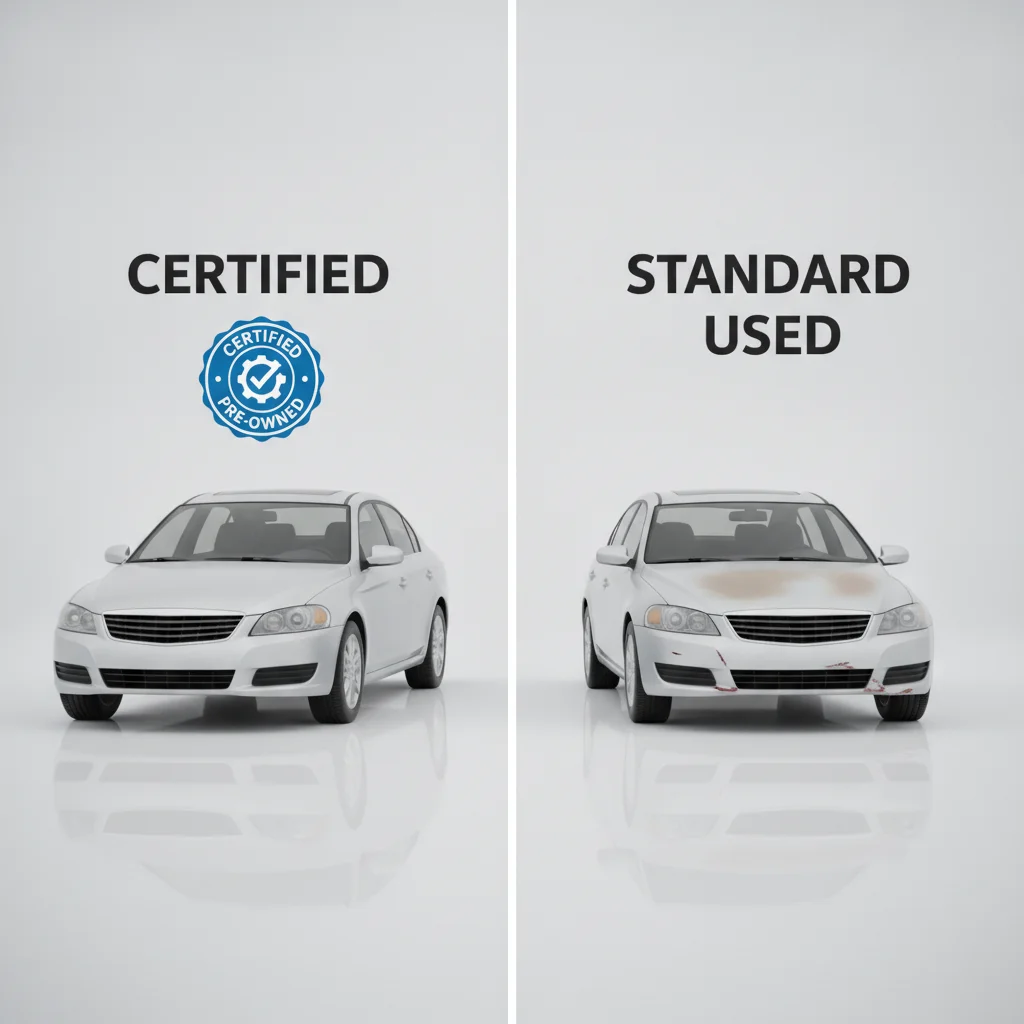
See the full breakdown of CPO warranty mechanics for real-world examples of how these structures play out in claims scenarios.
The Deductible
A $0 deductible means every covered repair costs you nothing out of pocket at the dealership service counter. A $200 deductible means you pay $200 per visit regardless of whether the repair costs $400 or $4,000. Over several warranty claims, this adds up. A program with a $200 deductible and three covered repairs effectively costs you $600 more than the same program with a $0 deductible — subtract that from your assessment of the CPO premium's value.
3.1M+
CPO vehicles sold in the U.S. annually
According to Autodata Corporation, certified pre-owned sales have consistently exceeded 3 million units per year since 2019.
$1,700
Average CPO premium paid over non-certified equivalent
Edmunds data from 2023 shows buyers pay a median of roughly $1,700 more for manufacturer-certified vehicles versus non-certified equivalents of the same model year and mileage.
76%
CPO buyers who did not read the full warranty document
A Cox Automotive consumer study found that fewer than one in four CPO buyers reviewed the complete warranty agreement before signing the purchase contract.
50–200+
Inspection points advertised across programs
Manufacturer CPO programs vary enormously in the number of inspection checkpoints they advertise, ranging from around 50 to over 200 depending on the brand.
Perks and Benefits Terms: The Value-Add Layer
Beyond the core warranty, most manufacturer CPO programs bundle a set of ownership benefits. These are worth understanding in detail because they're often the tie-breaker between two otherwise similar vehicles at similar prices.
Roadside Assistance
Nearly every manufacturer CPO program includes roadside assistance — towing, flat tire service, jump-starts, lockout help, and fuel delivery. What varies is the duration (tied to your warranty period or a fixed term), the towing distance limit, and whether it's available 24/7. Some programs use the manufacturer's own roadside network; others subcontract to third-party providers like Agero or Allstate Roadside.
For a detailed comparison of what's bundled across major brands, CPO roadside assistance and perks: what most buyers overlook lays out the specifics program by program.
Trip Interruption Coverage
This benefit activates when your CPO vehicle breaks down more than a set distance from your home — commonly 100 miles — and requires an overnight stay while repairs are completed. The program reimburses hotel costs, meals, and sometimes transportation costs up to a per-day limit (often $100–$200/day) and a per-incident maximum (often $500–$1,000). Check both caps before assuming this benefit is substantial.
Loaner Vehicle / Rental Car Reimbursement
Some programs provide a loaner car at the dealership while your vehicle is in for covered warranty work; others reimburse rental car costs up to a daily rate. The distinction matters: a loaner is free and immediate; rental reimbursement means you pay upfront and submit receipts. Look for whether there's a daily dollar cap and a maximum number of reimbursable days per claim.
When evaluating whether these perks justify the CPO premium, factor in what you'd pay for comparable standalone coverage. A roadside assistance membership from AAA runs roughly $50–$120/year; trip interruption insurance through a travel card or auto club membership might add another $30–$80/year. If a CPO program bundles both for the life of the warranty, that's meaningful accumulated value against a $1,700 premium.
Manufacturer CPO vs. Dealer-Certified: Not the Same
Some dealerships use the phrase 'dealer-certified' to describe vehicles that passed an in-house inspection but carry no factory-backed warranty. Only vehicles certified through the manufacturer's official CPO program come with the brand's warranty extension. Always ask who is backing the warranty — the manufacturer or the dealership — before treating the certification as meaningful.
Inspection Point Count Is Marketing, Not a Quality Guarantee
Brands advertise anywhere from 50 to 200+ inspection points, but the number alone tells you little. A 172-point inspection that checks tire tread in three separate line items is not necessarily more thorough than a 100-point inspection that evaluates each system once. Focus on which systems are inspected and what standards must be met, not the total count.
CPO Financing Rates Can Be a Hidden Perk
Manufacturers occasionally offer below-market APR financing exclusively on CPO vehicles, similar to new-car incentives. These rates are time-limited and model-specific, so they won't always be available — but when they are, they can offset a portion of the CPO premium in actual borrowing cost. Ask the finance office specifically about CPO-designated loan rates before accepting a standard used-car rate.
Financial Terms Specific to CPO Deals
CPO purchases involve a few financial mechanics that don't appear in standard used-car transactions. Understanding these upfront prevents surprises at the finance desk.
The CPO Premium
The CPO premium is simply the price difference between a certified vehicle and an otherwise comparable non-certified one. On a $25,000 CPO sedan, a $1,500 premium means you're paying $1,500 for the warranty, inspection, reconditioning, and perks package. Whether that's worth it depends on the vehicle's reliability record, how long you plan to keep it, and the actual scope of coverage — not on whether the number sounds big or small in isolation.
A useful test: get a quote from a third-party extended warranty provider for comparable coverage on the same vehicle. If the CPO program is priced similarly and comes from the manufacturer rather than a third-party administrator, it's generally the better choice — manufacturer warranty claims are settled at dealerships without the approval friction that third-party contracts often introduce.
CPO and Gap Insurance
If you're financing a CPO vehicle, gap insurance covers the difference between what you owe on the loan and what the vehicle is worth if it's totaled. CPO vehicles depreciate somewhat more slowly than non-certified used cars because the certification process filters out lower-quality inventory, but they're not immune to the loan-balance-exceeding-value problem — especially with low down payments and 60–72 month loan terms.
Before deciding on gap coverage, review how insuring a CPO car differs from a standard used vehicle to understand how CPO status interacts with your insurance decisions.
Transferability
A CPO warranty is transferable if it follows the vehicle rather than the buyer. If you sell your CPO car two years into the coverage period, the remaining warranty transfers to the new owner — which is a legitimate resale value argument. Not all CPO warranties are transferable, and some charge a transfer fee ($0–$50 typically). Confirm transferability in writing before you sign, not after.
Manufacturer CPO vs. Dealer-Certified: Not the Same
Some dealerships use the phrase 'dealer-certified' to describe vehicles that passed an in-house inspection but carry no factory-backed warranty. Only vehicles certified through the manufacturer's official CPO program come with the brand's warranty extension. Always ask who is backing the warranty — the manufacturer or the dealership — before treating the certification as meaningful.
Inspection Point Count Is Marketing, Not a Quality Guarantee
Brands advertise anywhere from 50 to 200+ inspection points, but the number alone tells you little. A 172-point inspection that checks tire tread in three separate line items is not necessarily more thorough than a 100-point inspection that evaluates each system once. Focus on which systems are inspected and what standards must be met, not the total count.
CPO Financing Rates Can Be a Hidden Perk
Manufacturers occasionally offer below-market APR financing exclusively on CPO vehicles, similar to new-car incentives. These rates are time-limited and model-specific, so they won't always be available — but when they are, they can offset a portion of the CPO premium in actual borrowing cost. Ask the finance office specifically about CPO-designated loan rates before accepting a standard used-car rate.
Understanding these terms fully before you visit the finance office will also help you evaluate the additional paperwork that comes with any CPO purchase. For a walkthrough of every document involved, see the guide to CPO contracts and extra paperwork. For context on the broader title and documentation picture, the paperwork and title hub is a useful reference whether you're buying or eventually planning to sell.
Putting It All Together: Reading a CPO Agreement
Armed with this vocabulary, here's a practical sequence for evaluating any CPO program agreement before you commit:
- Confirm who backs the warranty. It should be the manufacturer, not the dealership or a third-party administrator. The warranty document will name the obligor — the party legally responsible for paying claims.
- Identify the coverage structure. Locate the exclusions section. If it lists specific covered components, you have inclusionary (named-component) coverage. If it lists only what's excluded, you have exclusionary coverage.
- Calculate your actual coverage window. Take the original in-service date, add the warranty term (e.g., 7 years), and confirm the mileage cap. That's your outer boundary. Subtract your purchase date to find your remaining time. Write both dates on your copy of the agreement.
- Note the deductible amount and structure. Is it per-visit or per-repair? A per-visit deductible means one deductible even if multiple systems are repaired simultaneously — which is better for you.
- List the included perks. Roadside assistance, trip interruption, loaner vehicle, rental reimbursement — note the dollar caps and duration for each.
- Check transferability. Ask whether the warranty follows the vehicle or the buyer, what the transfer fee is, and whether there's a process to register the transfer with the manufacturer.
The goal isn't to find a reason to walk away from every CPO deal — most manufacturer programs are legitimate and genuinely useful. The goal is to know exactly what you're getting so you can compare it fairly against the premium being charged and make the decision that fits your financial situation.
For the next step after this glossary, see how CPO warranty coverage actually works — a section-by-section guide to reading the warranty document you'll be handed at the dealership.

All claims are backed by peer-reviewed research. Sources on request.