Key Takeaways
CPO Contract Paperwork
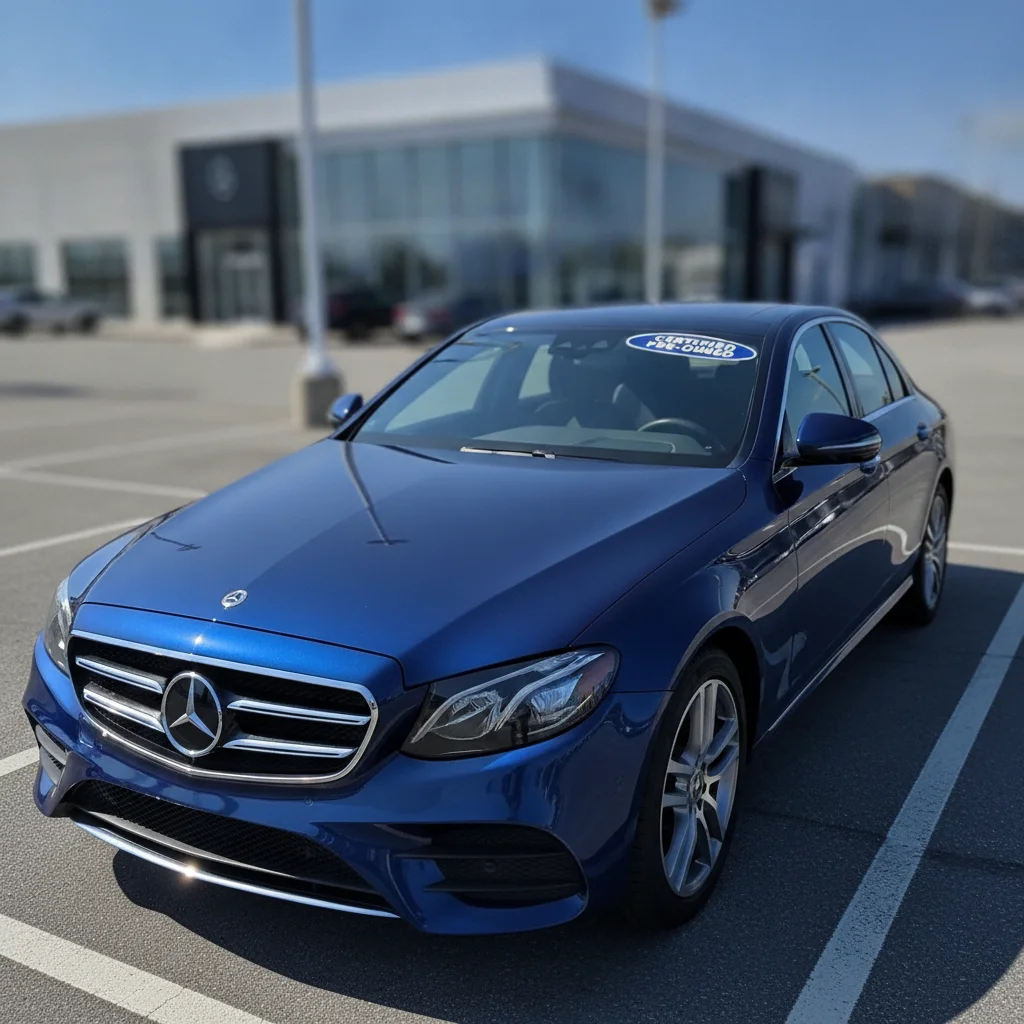
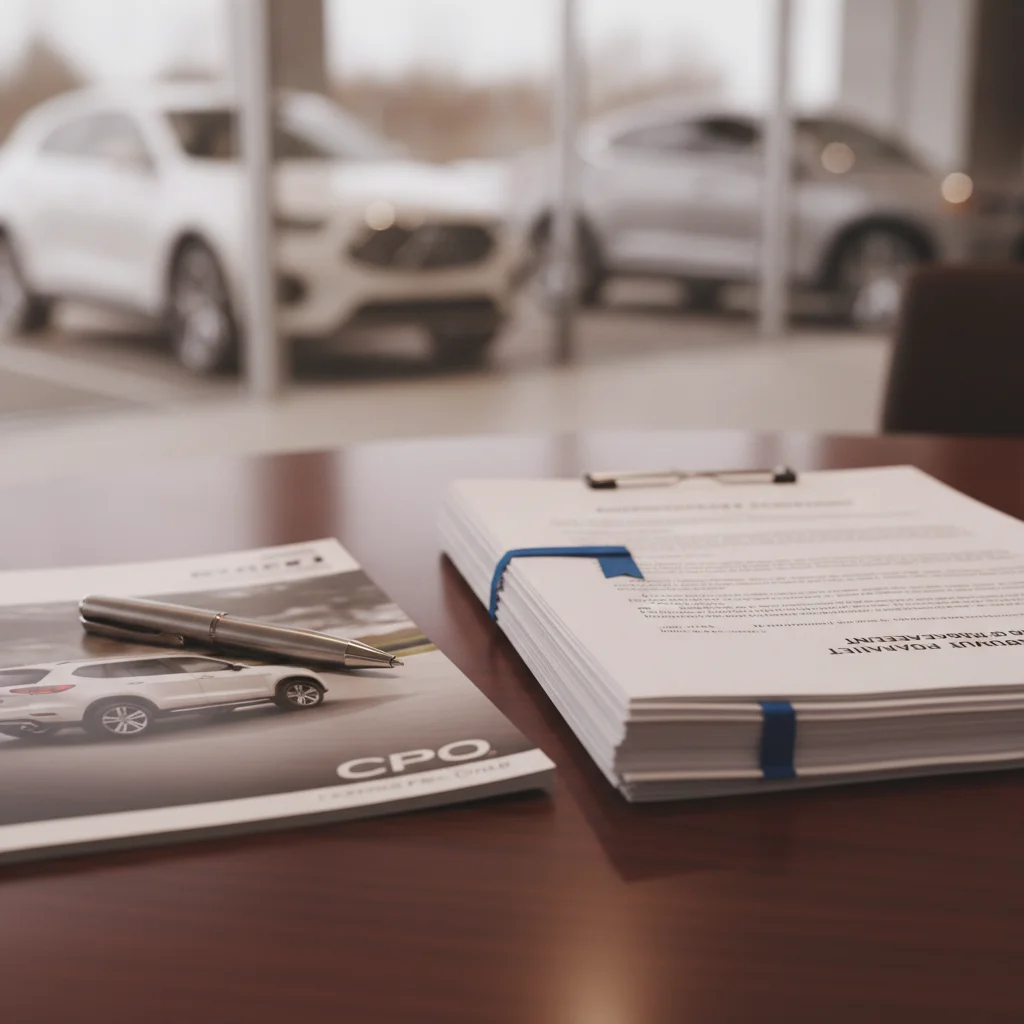
When you buy a certified pre-owned (CPO) vehicle, the dealership adds several documents to the standard purchase package that specifically cover the manufacturer-backed warranty, the inspection certification, and any program-specific benefits. These extra forms go beyond the usual bill of sale and financing agreement. They are what legally activate your CPO coverage and spell out exactly what the manufacturer will — and won't — fix.
CPO warranty documents are separate legal instruments from the dealership's retail installment contract. The warranty is a manufacturer obligation, not a dealer obligation, which has important implications if the dealership closes or changes ownership.
Why CPO Deals Generate More Documents Than a Standard Used Car Purchase
Buying a regular used car from a dealership produces a familiar set of documents: a purchase agreement, a bill of sale, possibly a retail installment contract if you're financing, and a title reassignment form. That's the core stack.
A certified pre-owned purchase adds a second layer. Because CPO vehicles carry a manufacturer-backed warranty and have been evaluated against an official inspection standard, the manufacturer requires its own paperwork to activate and record that coverage. The dealer can't simply announce "it's certified" — there are documents that legally constitute the certification.
Understanding what CPO actually means is the foundation here. The extra paperwork isn't bureaucratic filler — each form does a specific job, and a gap in your document set could mean a gap in your coverage when you need it most.
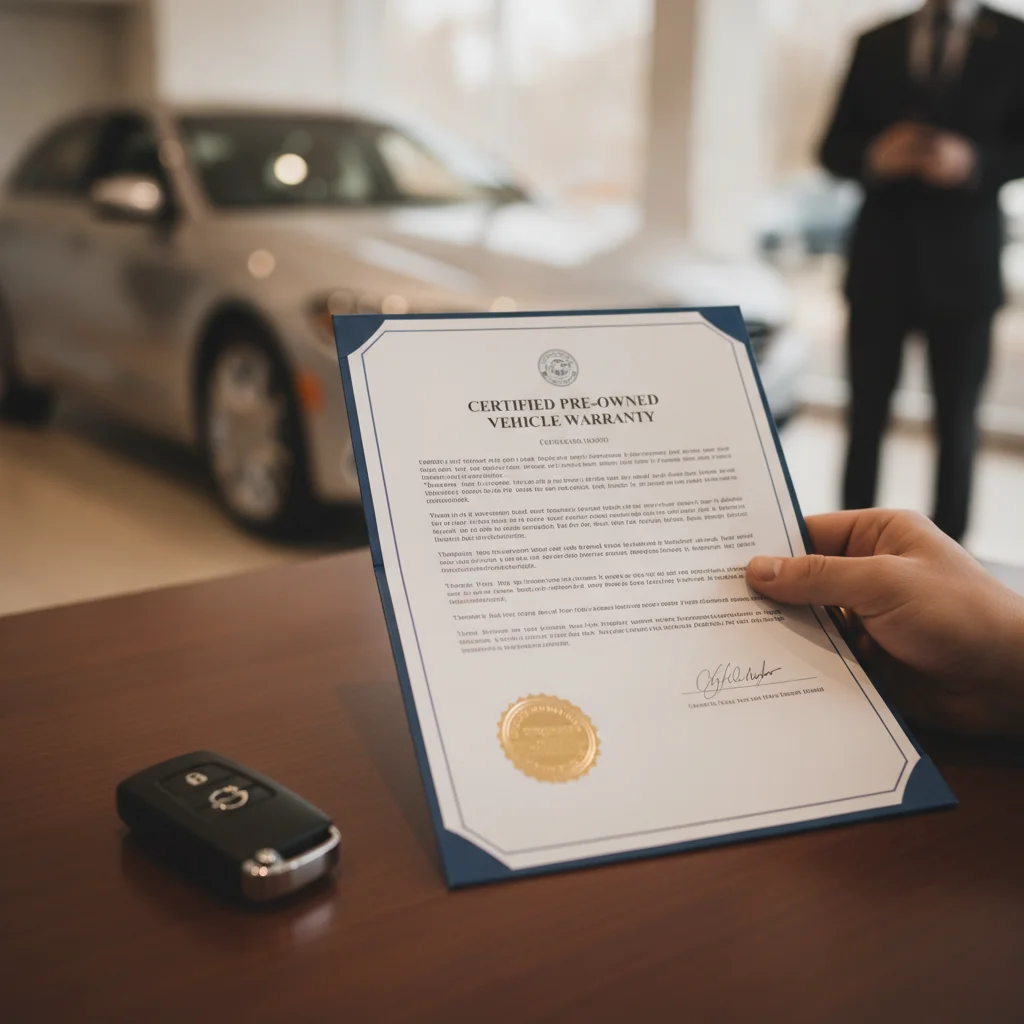
Here's a breakdown of every document type you should expect at a CPO closing, what each one contains, and what to verify before you sign.
The Standard Purchase Stack (What Every Used Car Deal Includes)
Before diving into CPO-specific forms, it helps to know the baseline. Every used car transaction at a licensed dealership should produce these documents:
- Purchase agreement: Lists the vehicle (year, make, model, VIN), the agreed sale price, any trade-in credit, dealer fees, and taxes. This is the master financial record of the transaction.
- Retail installment contract (if financing): The loan agreement between you and the financing entity — whether a bank, credit union, or captive lender. Contains your interest rate (APR), loan term, monthly payment, and total finance charge.
- Title reassignment: The existing certificate of title with the seller's (dealer's) signature transferring ownership to you. You'll use this to register the vehicle in your name at the DMV.
- Odometer disclosure statement: Required by federal law for any vehicle under ten years old. Certifies the recorded mileage at the time of sale.
- Arbitration agreement (if applicable): Many dealers require buyers to waive their right to a jury trial in disputes. This is separate from the purchase agreement and sometimes easy to miss.
All of the above applies equally to a standard used car and a CPO vehicle. The CPO-specific forms are added on top of this foundation.
170+
Average CPO inspection points checked
Major manufacturer CPO programs such as Toyota and BMW typically evaluate between 150 and 200+ vehicle components before granting certification.
$1,100
Average CPO price premium over non-certified used
According to iSeeCars analysis, CPO vehicles command a roughly $1,100 average premium over comparable non-certified used cars, reflecting the cost of inspection and warranty backing.
2.4M+
CPO vehicles sold in the U.S. annually
Autodata and industry tracking groups report that U.S. CPO sales have consistently exceeded 2.4 million units per year in recent pre-pandemic periods.
$0–$200
Typical CPO warranty deductible per repair visit
Deductible amounts vary by manufacturer program; some brands like Mercedes-Benz and Lexus offer $0 deductible CPO warranties, while others charge per visit.
The Manufacturer Warranty Certificate: The Most Important CPO Document
The centerpiece of CPO paperwork is the manufacturer warranty certificate. This is not the same as the generic new-car bumper-to-bumper warranty, though it follows a similar structure. Think of it as a formal contract between you and the manufacturer — the dealer is largely just the delivery vehicle for this commitment.
The warranty certificate should clearly state:
- Coverage type: Is it bumper-to-bumper (comprehensive) or powertrain-only? Many CPO programs offer both tiers — a longer powertrain warranty and a shorter comprehensive warranty running concurrently.
- Coverage start date and mileage: Some CPO warranties start from the original in-service date of the vehicle; others start from the date of your CPO purchase. This distinction can dramatically affect how much coverage remains.
- Coverage end date and mileage cap: Coverage typically expires at whichever threshold — time or mileage — comes first. Know both numbers.
- What's excluded: Wear items like brake pads, wiper blades, and tires are almost always excluded. So are damage from accidents, misuse, or owner modifications. Read the exclusions as carefully as the inclusions.
- Deductible amount: Many CPO programs have a per-visit deductible — typically $0 to $200. Confirm this number before you have a repair need.
- Authorized repair network: Manufacturer CPO warranties are generally honored at any franchised dealership in the brand's network, not just the selling dealer. Confirm this — it matters when you're traveling or if you move.
Warranty Start Date vs. Purchase Date
The single most common CPO warranty misunderstanding involves the start date. Many manufacturer programs (Toyota, Honda, Ford) start the warranty clock from the vehicle's original in-service date — not the date you buy it. A car that was first sold three years ago under a seven-year CPO warranty may only have four years of coverage remaining when you purchase it. Always ask for the original in-service date and do the math against the warranty certificate.
Dealer Service Contracts Are Not CPO Warranty Documents
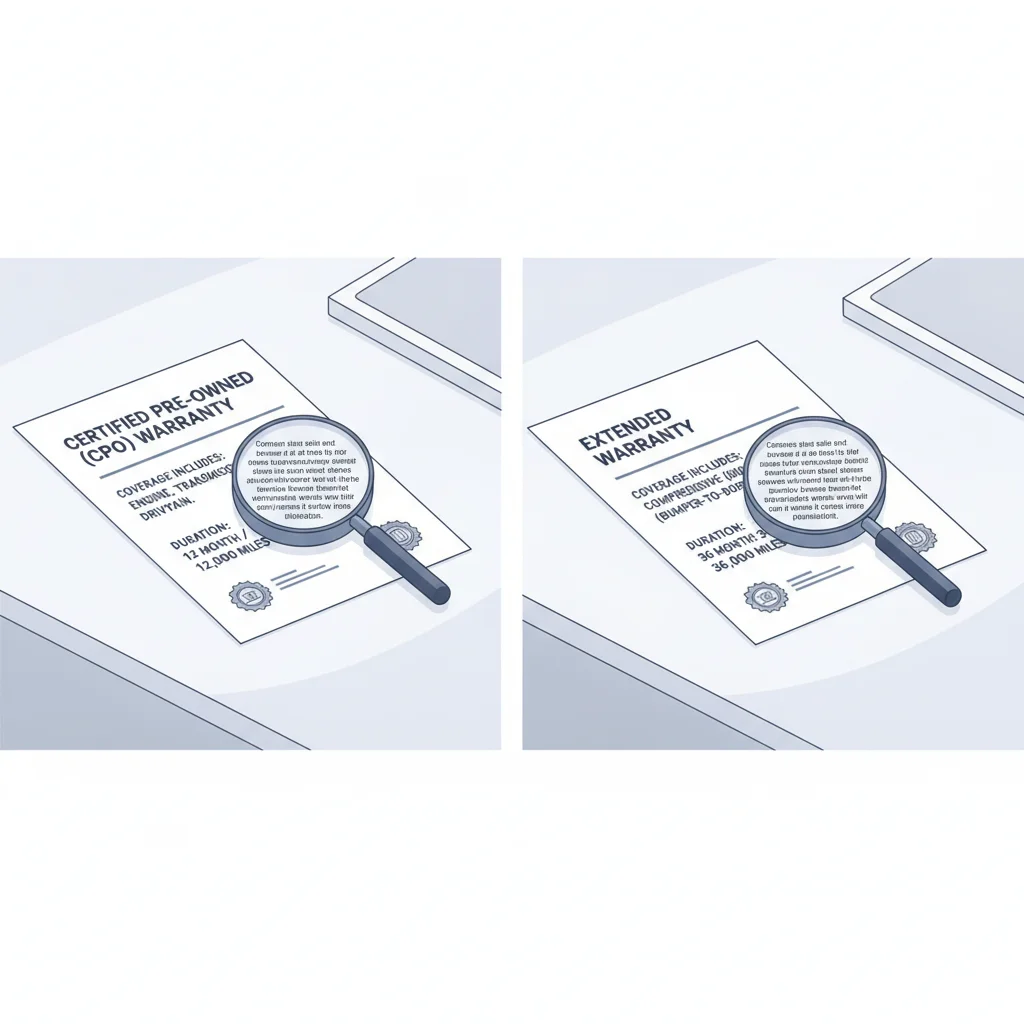
A vehicle service contract (VSC) or extended warranty sold by the dealer's finance office is backed by the dealer or a third-party administrator — not the manufacturer. These products are optional, priced separately, and negotiable. If you're unsure whether a document in front of you is a manufacturer CPO form or a dealer add-on, ask the F&I manager to identify who backs the coverage. Manufacturer documents will name the manufacturer as the obligor.
Keep this document with your vehicle title and insurance card. If you ever need a warranty repair, the service department will want to see it or verify coverage by VIN — but having the physical document protects you if there's a records dispute.
The Multi-Point Inspection Report: Proof the Car Earned Its Label
Every CPO program requires that the vehicle pass a formal inspection before certification. The multi-point inspection report (sometimes called the certification checklist) is the physical record of that process.
This document should list every component evaluated — typically ranging from 100 to 200+ items depending on the manufacturer — along with the result for each: pass, fail, or repaired. If a component failed and was repaired to pass, that repair should be noted.

When reviewing this form, focus on three things:
- Date of inspection: How long ago was the car inspected? If months have passed since certification and the car sat on the lot, that's relevant context — particularly for items like tire tread depth or battery condition.
- Technician identification: Reputable programs require the inspecting technician to be manufacturer-certified. The report should include a technician ID, certification number, or at minimum a legible signature and dealership stamp.
- Blanks or skipped items: Every line should be completed. A blank where a result should be is a red flag — ask the dealer to explain or re-inspect that component.
The inspection report is also useful for understanding the vehicle's condition history. Comparing a CPO car to a standard used car often comes down to this document — a standard used car has no equivalent record.
Ask for the Inspection Report Before the Test Drive
You don't have to wait until the signing table to see the multi-point inspection report — ask for it before you even test drive the vehicle. Reviewing it early lets you ask targeted questions during the test drive and gives you time to research any items that were repaired. A dealer who resists sharing this document before purchase is a yellow flag.
Photograph Every Document at the Dealership
Before leaving the finance office, use your phone to photograph every document in your package — front and back. This creates a timestamped digital backup that's accessible even if the physical copies are lost or damaged. Store the images in cloud storage separate from the device so they're retrievable in any scenario.
Program Benefits Addenda: Roadside Assistance, Loaners, and Extras
Many manufacturer CPO programs bundle additional benefits beyond the mechanical warranty. These are often disclosed in a separate addendum or benefits summary — and they're easy to overlook in the shuffle of signing documents.
Common CPO program extras documented in addenda include:
- 24-hour roadside assistance
- Covers towing, flat tire service, battery jump-start, and lockout assistance for the duration of the CPO warranty period. The addendum should list the phone number to call and any mileage or service limits.
- Rental car or loaner coverage
- Some programs provide a rental car while your vehicle is being repaired under warranty. The addendum specifies the daily rate cap, the maximum number of days, and which repair types qualify.
- Trip interruption protection
- If your CPO vehicle breaks down more than a set distance (often 100 miles) from home, some programs reimburse hotel and meal expenses. The reimbursement caps and documentation requirements should appear in this addendum.
- Satellite radio or connected services trial
- Some brands include a complimentary subscription trial as part of the CPO package. While lower-stakes, confirm the enrollment period and what happens when it expires.
These benefits are manufacturer obligations, not dealer offers. If the dealer says "we don't do that here," ask them to show you where the program documentation excludes it — often, the answer is that the staff member is simply unfamiliar with the program details.
“The warranty certificate is where the manufacturer makes its actual promise to you. Everything else in that signing package is between you and the dealer — the warranty certificate is between you and the brand. Treat it accordingly.”
— Dara Flemming, Consumer finance journalist and auto loan specialist
Dealer Add-Ons vs. Manufacturer CPO Documents: Telling Them Apart
This is where buyers most often get confused — and where dealerships sometimes blur the lines. A manufacturer CPO warranty and a dealer-sold extended warranty or service contract are entirely different products.
Here's how to tell them apart at the document level:
| Document Type | Issued By | Backed By | Required for CPO? |
|---|---|---|---|
| Manufacturer warranty certificate | Manufacturer | Manufacturer | Yes |
| Multi-point inspection report | Dealer (on behalf of manufacturer) | Manufacturer standards | Yes |
| Program benefits addendum | Manufacturer | Manufacturer | Yes (if benefits exist) |
| Dealer service contract / VSC | Dealer or third-party | Dealer or administrator | No — optional upsell |
| Paint/fabric protection addendum | Dealer | Dealer | No — optional upsell |
If a finance manager presents you with a service contract at the F&I desk and implies it's necessary to complete the CPO purchase, that's inaccurate. The manufacturer CPO warranty comes with the vehicle. A dealer service contract is an add-on you can decline.
CPO warranties and extended warranties can work together, but that's a separate decision — one you shouldn't make under pressure at the signing table.
Warranty Start Date vs. Purchase Date
The single most common CPO warranty misunderstanding involves the start date. Many manufacturer programs (Toyota, Honda, Ford) start the warranty clock from the vehicle's original in-service date — not the date you buy it. A car that was first sold three years ago under a seven-year CPO warranty may only have four years of coverage remaining when you purchase it. Always ask for the original in-service date and do the math against the warranty certificate.
Dealer Service Contracts Are Not CPO Warranty Documents
A vehicle service contract (VSC) or extended warranty sold by the dealer's finance office is backed by the dealer or a third-party administrator — not the manufacturer. These products are optional, priced separately, and negotiable. If you're unsure whether a document in front of you is a manufacturer CPO form or a dealer add-on, ask the F&I manager to identify who backs the coverage. Manufacturer documents will name the manufacturer as the obligor.
Vehicle History Report and Title Documentation
Most manufacturer CPO programs require a clean title history as a condition of certification — no salvage, flood, or rebuilt title designations. The vehicle history report (typically CARFAX or AutoCheck) is the documentary evidence of that clean history.
You should receive a copy of this report with your purchase documents. Before accepting it, do three things:
- Match the VIN: Confirm the VIN on the history report matches the VIN on the purchase agreement, the dashboard VIN plate (visible through the windshield), and the door jamb sticker.
- Review accident entries: A minor accident may still allow CPO certification if repairs were completed properly. But you should know about it, and the inspection report should reflect that the repaired areas were re-evaluated.
- Check ownership count: CPO programs often cap the number of prior owners (commonly one to two). Verify this aligns with what the program and the salesperson described.
On the title side, the title reassignment process for a CPO vehicle is no different from any other used car — but confirm there are no open liens recorded on the title before you take delivery. A clean title is a prerequisite of certification, and your lender (if you're financing) will verify this independently, but it's worth a personal check as well.
For a fuller overview of what title documents to expect in any vehicle transaction, the Paperwork & Title hub covers the complete documentation chain.
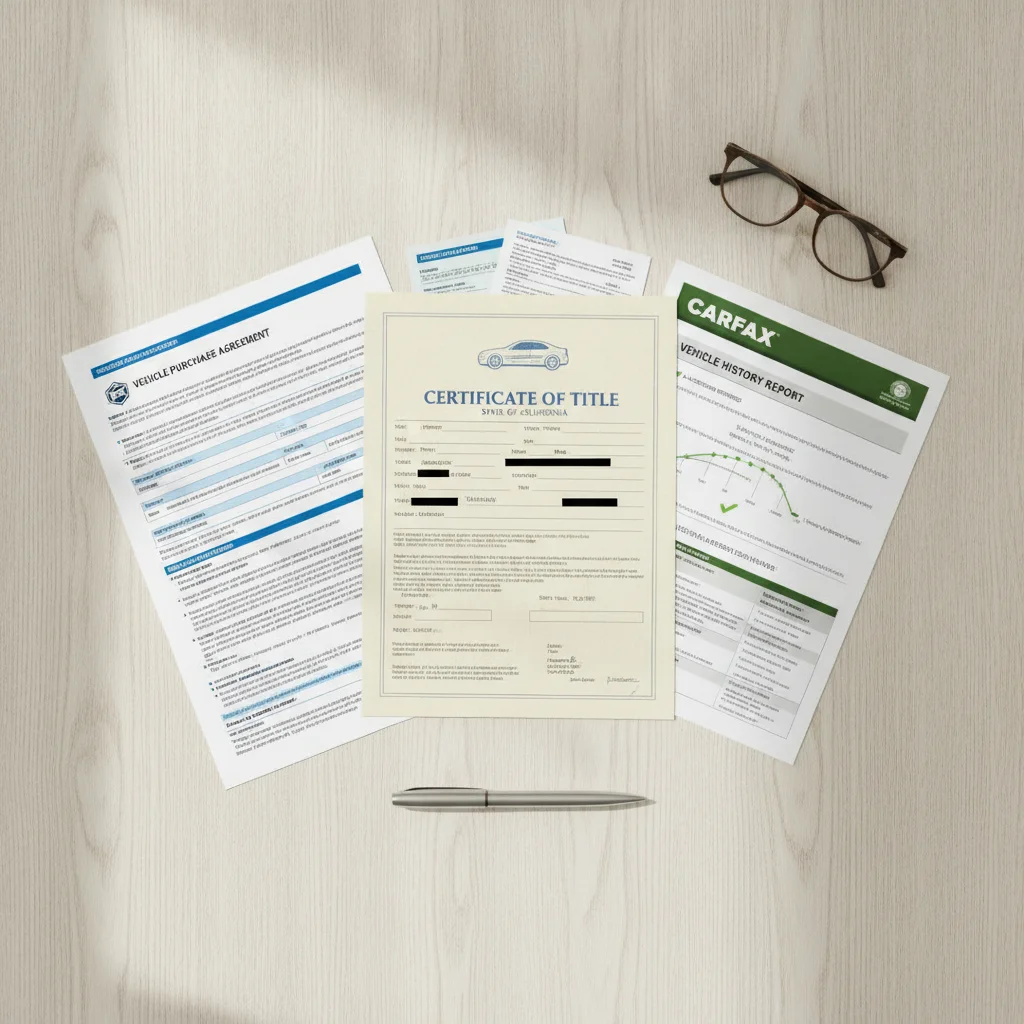
Your CPO Document Checklist: What to Collect Before You Drive Away
Leaving the dealership with an incomplete document set is a common mistake — one that's much harder to correct after the fact. Use this checklist to confirm you have everything before handing over your keys or signing the final delivery acknowledgment.
- ✓ Signed purchase agreement with the final sale price, all fees itemized, and your signature
- ✓ Retail installment contract (if financing) with APR, term, monthly payment, and total of payments clearly shown
- ✓ Manufacturer CPO warranty certificate with coverage type, start date/mileage, end date/mileage cap, deductible, and exclusions
- ✓ Multi-point inspection report with all items marked, dated, and technician-identified
- ✓ Program benefits addendum covering roadside assistance, rental coverage, and any other included services
- ✓ Vehicle history report (CARFAX or AutoCheck) with VIN verified
- ✓ Title reassignment or, if the state processes electronically, a written confirmation of the title-in-transit process
- ✓ Odometer disclosure statement
- ✓ Copies of any dealer add-ons purchased (service contracts, protection packages) — or written confirmation of declines
Photograph every document with your phone before leaving. Store the physical originals in a safe place at home — not in the glove compartment, where they're vulnerable to theft or vehicle loss.
The complete CPO buying roadmap covers the full purchase process, from program research through delivery — the paperwork phase is just the final mile.
Ask for the Inspection Report Before the Test Drive
You don't have to wait until the signing table to see the multi-point inspection report — ask for it before you even test drive the vehicle. Reviewing it early lets you ask targeted questions during the test drive and gives you time to research any items that were repaired. A dealer who resists sharing this document before purchase is a yellow flag.
Photograph Every Document at the Dealership
Before leaving the finance office, use your phone to photograph every document in your package — front and back. This creates a timestamped digital backup that's accessible even if the physical copies are lost or damaged. Store the images in cloud storage separate from the device so they're retrievable in any scenario.

All claims are backed by peer-reviewed research. Sources on request.