Key Takeaways
CPO Mileage Limits
Certified pre-owned (CPO) programs set two distinct mileage thresholds: an eligibility cutoff that determines whether a used vehicle can even be certified, and a warranty mileage cap that defines when the CPO coverage ends. If a vehicle already has too many miles at purchase, it won't qualify for certification. If it's close to the warranty cap, the coverage you're paying a premium for may last only a few thousand miles. Understanding both numbers is essential before you pay more for a CPO label.
Eligibility cutoffs typically range from 60,000 to 80,000 miles depending on the manufacturer, while powertrain warranty caps can extend coverage to 100,000 miles or beyond from the original in-service date — not the purchase date.
Two Mileage Numbers Every CPO Buyer Must Know
When shoppers hear "certified pre-owned," they often focus on the warranty — the promise that a manufacturer stands behind the vehicle. What receives far less attention is that two separate mileage numbers govern how valuable that warranty actually is. Miss either one, and you could end up paying a CPO premium for coverage that's already nearly gone.
The first number is the eligibility cutoff: the maximum odometer reading a vehicle can show and still qualify for certification. The second is the warranty mileage cap: the total odometer limit (or a combination of age and miles) at which the CPO warranty expires. A car can sit right below the eligibility cutoff, qualify for certification, but have only a thin sliver of warranty coverage remaining.
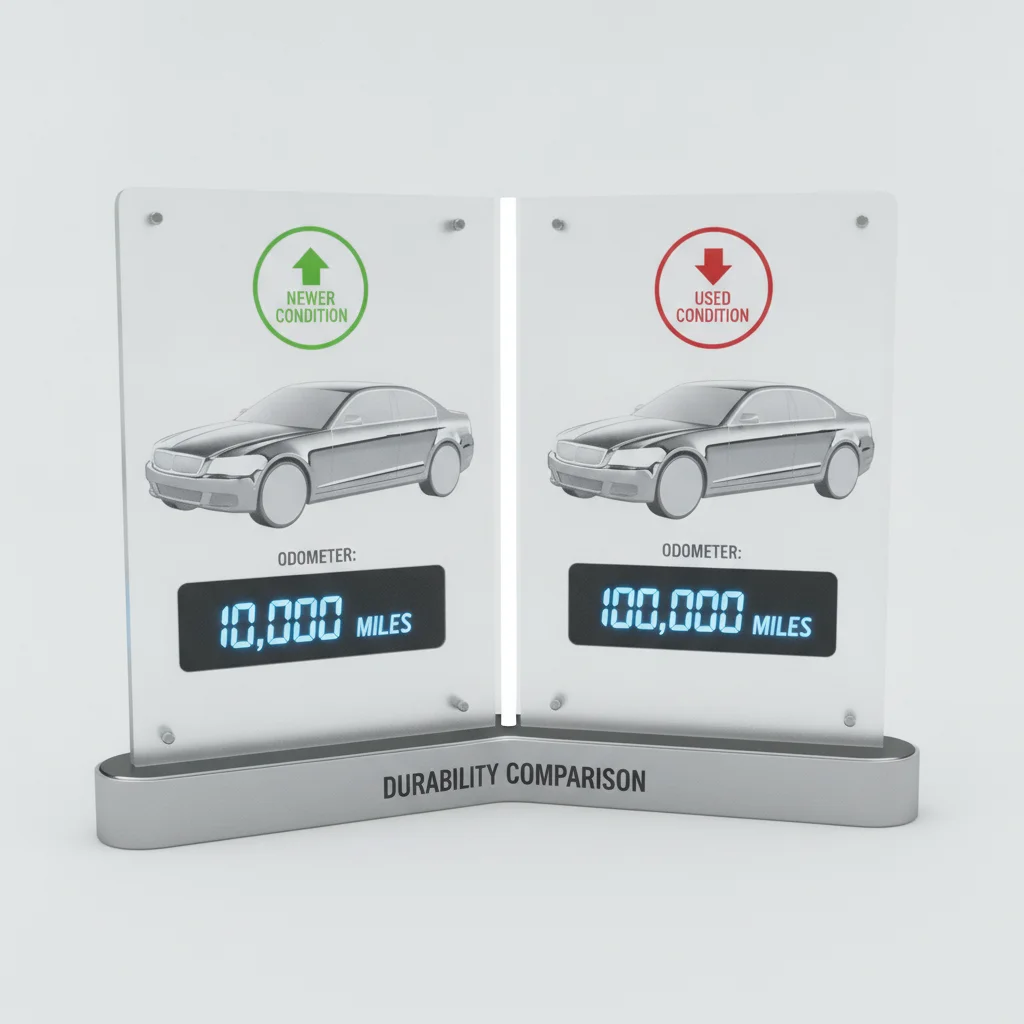
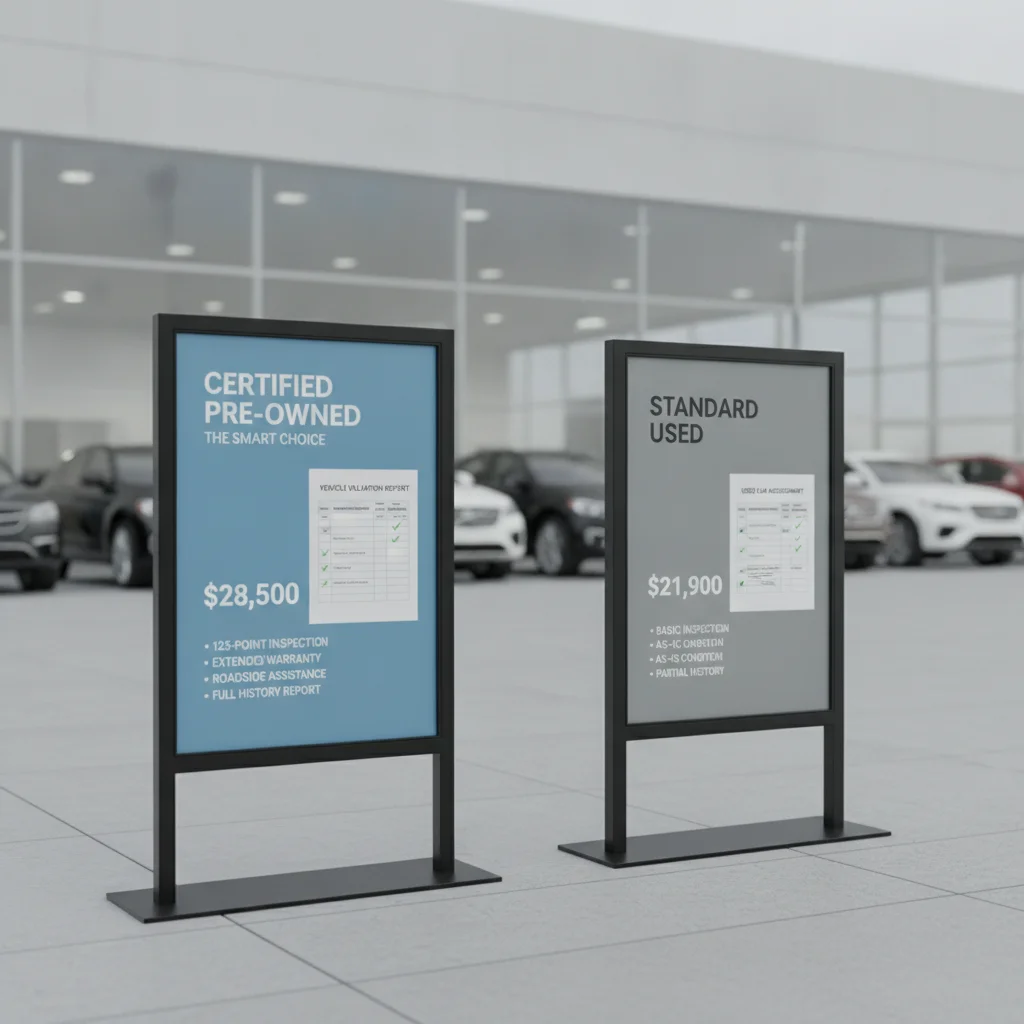
Here's a concrete illustration. Toyota's CPO program (as of recent model years) certifies vehicles with fewer than 85,000 miles. The powertrain coverage extends to 100,000 miles from the original in-service date. Buy a Toyota CPO vehicle at 80,000 miles, and you have just 20,000 miles of powertrain protection — less than two years of average driving. Meanwhile, a similar non-certified used Toyota at 80,000 miles might cost $1,500 to $2,500 less. You're effectively paying that premium for 20,000 miles of warranty. Whether that's a good deal depends entirely on your math.
Manufacturer vs. Dealer CPO Programs
Not all "certified" vehicles carry manufacturer-backed CPO status. Some dealerships apply their own in-house certification labels to vehicles that don't qualify for — or weren't submitted to — a manufacturer's program. These dealer-certified vehicles may come with a limited lot warranty, but they lack the manufacturer's backing, inspection standards, and coverage depth. Always ask explicitly whether the certification is manufacturer-sponsored before assuming you're getting full CPO protections.
How the Warranty Clock Actually Starts — and Why It Matters
One of the most misunderstood mechanics of CPO programs is when the warranty clock starts ticking. For most manufacturer CPO programs, coverage is calculated from the vehicle's original in-service date — the day the first owner took delivery of a new car — not the day you purchase it as a CPO buyer.
This matters enormously. Consider a compact SUV purchased new in January 2021. By January 2024, it's three years old with 45,000 miles and gets traded in at a dealership. The dealer certifies it under a CPO program that offers "5-year/60,000-mile" powertrain coverage. On the surface, that sounds like you're getting five years of protection. In practice, three of those five years have already elapsed. You're actually getting roughly two years of coverage from the moment you sign the paperwork — not five.
12,000
Average miles driven per year by U.S. motorists
According to the Federal Highway Administration, U.S. drivers average approximately 12,000–13,500 miles annually, making it a reliable baseline for calculating how quickly a CPO warranty window will be consumed.
~$1,500
Typical CPO premium over standard used car pricing
Industry estimates from Edmunds and iSeeCars suggest CPO vehicles command a $1,000–$2,500 premium over comparable non-certified used vehicles, varying by brand and model.
60,000–85,000
Miles: typical CPO eligibility cutoff range
Manufacturer CPO programs generally require vehicles to fall below this odometer range at the time of certification, with luxury brands typically setting lower thresholds.
100,000
Miles: common powertrain warranty cap for most CPO programs
Most mainstream and luxury manufacturer CPO programs cap powertrain coverage at 100,000 miles from the original in-service date, though some programs combine mileage with age limits.
This is why savvy CPO buyers always ask for the vehicle's original sale date alongside the current mileage. Use both to calculate what's genuinely left, not what's advertised in the program's headline numbers. See our guide to how CPO warranty coverage actually works for a breakdown of how different brands structure their terms.
Some programs — particularly luxury brands — do offer a "from the date of CPO purchase" extension component, which adds genuine additional coverage on top of the original factory warranty. These are the most buyer-friendly structures, and they're worth actively seeking out.
Always Ask for the Warranty Certificate Upfront
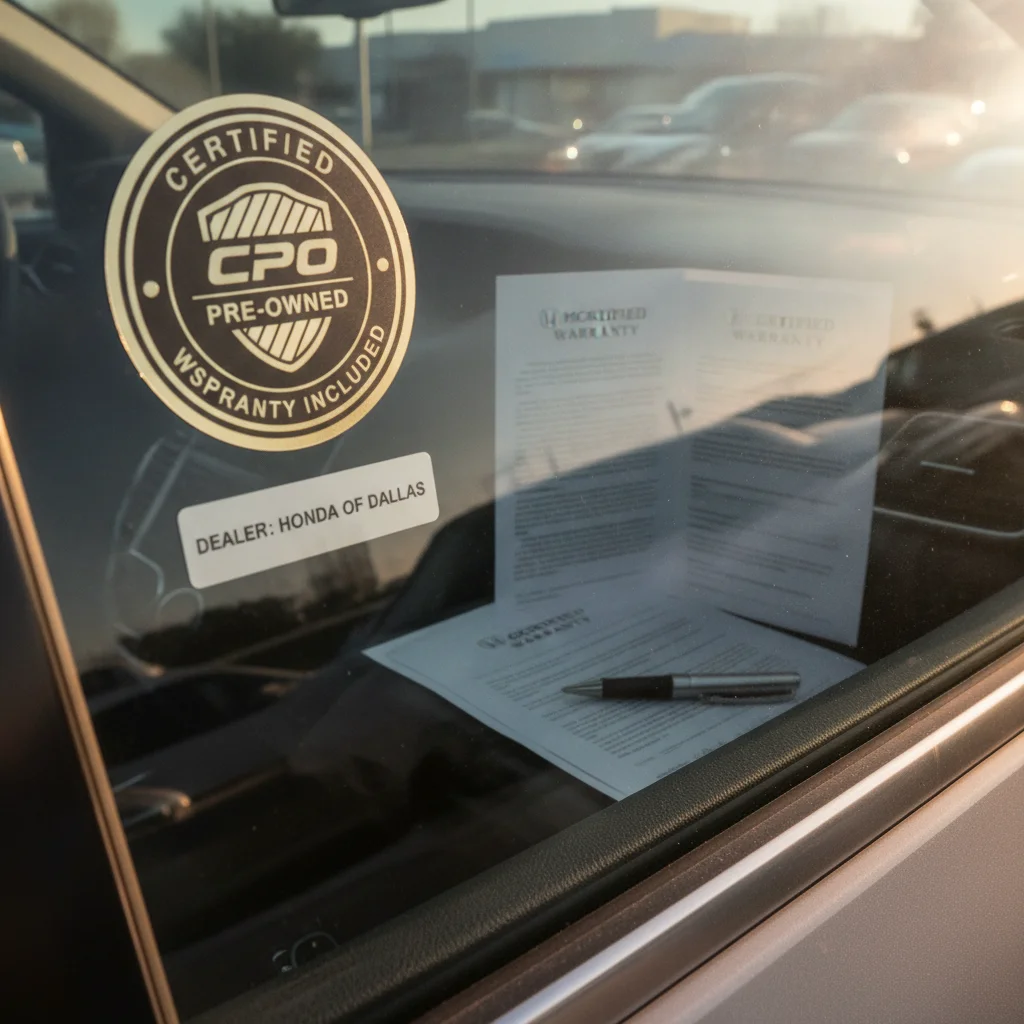
Before test driving or negotiating, ask the dealer to show you the actual CPO warranty certificate for the specific vehicle. This document lists the original in-service date, the mileage at certification, and the precise expiration conditions. Calculating your real coverage before you're emotionally invested in a car helps you negotiate from a position of clarity rather than assumption.
Use the VIN to Look Up Warranty Status Directly
Most manufacturers provide a VIN-based warranty lookup tool on their websites. Enter the vehicle identification number to see exactly what factory and CPO warranty coverage remains — independently of anything the dealer tells you. This takes two minutes and removes ambiguity from one of the most important value calculations in a CPO purchase.
Where Mileage Cutoffs Sit Across Major Brands
Not all CPO programs draw the line in the same place. Eligibility cutoffs and warranty caps vary significantly by manufacturer, and the gap between mainstream and luxury programs can be substantial. The table below shows approximate figures for several major programs — always verify current terms directly with the manufacturer, as programs are updated periodically.
| Brand | Eligibility Cutoff | Powertrain Warranty Cap | Coverage Start |
|---|---|---|---|
| Toyota | ~85,000 miles | 100,000 miles | Original in-service date |
| Honda | ~80,000 miles | 100,000 miles | Original in-service date |
| Ford | ~80,000 miles | 100,000 miles | Original in-service date |
| BMW | ~60,000 miles | 100,000 miles or 6 years | Original in-service date |
| Mercedes-Benz | ~75,000 miles | 100,000 miles | CPO purchase date (1-year extension) |
| Lexus | ~70,000 miles | 100,000 miles | Original in-service date |
Notice that most mainstream brands share a similar powertrain cap (100,000 miles) but differ in their eligibility thresholds. A Ford CPO car at 79,000 miles technically qualifies — but with only 21,000 miles of powertrain protection remaining, you're in very different territory than a Ford at 40,000 miles with 60,000 miles of coverage still ahead.
Luxury brands like BMW set lower eligibility cutoffs (60,000 miles), which means CPO vehicles in those programs tend to have more coverage remaining proportionally. That tighter eligibility window is one reason luxury CPO programs often deliver better warranty value per dollar, even when the sticker prices are higher. For a deeper look at how this factors into pricing, see how CPO status should influence valuations.

The Real Cost of Buying Near the Mileage Cutoff
Buying a CPO car close to its eligibility cutoff might seem like a bargain — the purchase price is lower than a lower-mileage example, and you still get the CPO badge. But the economics often don't hold up under scrutiny.
Let's walk through a realistic scenario with round numbers. Say a 3-year-old midsize sedan has two examples on the same dealership lot:
- Example A: 38,000 miles, certified, $26,500. CPO powertrain coverage extends to 100,000 miles — 62,000 miles of remaining coverage.
- Example B: 74,000 miles, certified, $21,500. CPO powertrain coverage extends to 100,000 miles — 26,000 miles of remaining coverage.
The price gap is $5,000. But Example B's warranty covers 36,000 fewer miles. If you drive 12,000 miles per year, Example B's warranty expires in roughly 2 years; Example A's lasts more than 5 years. To put it another way: you're paying $5,000 less but potentially absorbing years of powertrain risk yourself if something goes wrong after the coverage ends.
That calculation changes if you plan to resell the car before either warranty runs out — but resale value tells its own story. A car approaching 100,000 miles depreciates more steeply, and buyers at resale will notice the remaining warranty gap. The mileage thresholds where resale value drops sharply apply whether or not the car is CPO certified.
The bottom line: always calculate the effective cost per covered mile of the CPO premium before assuming a lower-priced, higher-mileage CPO car is the smarter buy.
“A warranty is only as valuable as what it covers during the time you actually own the car. Buyers should calculate remaining covered miles, not recite the program's advertised headline figure.”
— Phil Reed, Senior consumer advice editor and long-time automotive finance writer
How to Evaluate CPO Mileage Value Before You Sign
The good news is that evaluating mileage-related CPO value doesn't require specialized knowledge — just a structured set of questions to ask at the dealership and a few quick calculations. Here's a practical framework:
- Get the original in-service date. Ask the dealer or pull the vehicle history report. This tells you how much of the warranty period has already been consumed by time, independent of mileage.
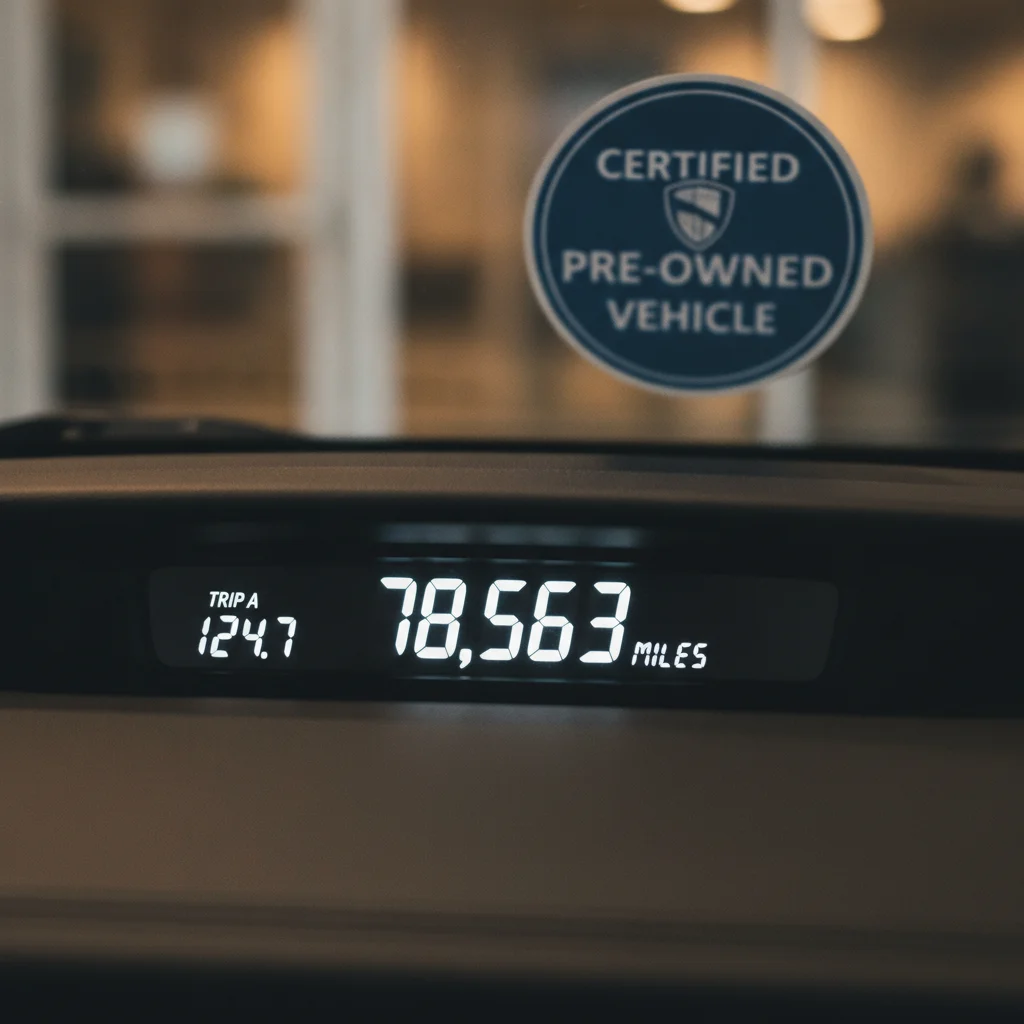
- Calculate remaining warranty miles. Subtract the current odometer reading from the warranty mileage cap. That's your actual coverage window, not the headline figure in the program brochure.
- Check both expiration conditions. Most warranties expire at whichever comes first — miles or years. A car that's five years old may have already timed out on a "5-year/100,000-mile" program, even if the odometer is at 55,000 miles.
- Compare against a non-CPO equivalent. Price the same vehicle without CPO certification using standard valuation tools. The difference is the CPO premium you're paying. Divide that premium by remaining warranty miles to get your cost-per-covered-mile.
- Ask about what the inspection actually covered. CPO certification requires a multi-point inspection, but the depth varies by brand. Request the inspection checklist. Some programs check 150+ points; others check far fewer.
Always Ask for the Warranty Certificate Upfront
Before test driving or negotiating, ask the dealer to show you the actual CPO warranty certificate for the specific vehicle. This document lists the original in-service date, the mileage at certification, and the precise expiration conditions. Calculating your real coverage before you're emotionally invested in a car helps you negotiate from a position of clarity rather than assumption.
Use the VIN to Look Up Warranty Status Directly
Most manufacturers provide a VIN-based warranty lookup tool on their websites. Enter the vehicle identification number to see exactly what factory and CPO warranty coverage remains — independently of anything the dealer tells you. This takes two minutes and removes ambiguity from one of the most important value calculations in a CPO purchase.
Also consider your driving habits. If you drive 18,000 miles per year, a 30,000-mile warranty window lasts less than two years. If you drive 8,000 miles annually, the same window gives you nearly four years of coverage. Mileage limits interact directly with how you use the car — there's no universal answer.
To understand how warranty coverage interacts with insurance decisions — particularly gap insurance and comprehensive coverage levels — see our article on insuring a CPO car compared to a standard used vehicle.
When the CPO Premium Is — and Isn't — Worth It
The CPO premium is easiest to justify when remaining warranty coverage is generous, the vehicle falls well within the eligibility mileage window, and the brand's CPO program has a strong track record of honoring claims. In those conditions, you're buying real protection against expensive repairs during a period when you'll actually own the car.
It's harder to justify when:
- The car is within 15,000–20,000 miles of the warranty cap at the time of purchase.
- The original in-service date means most of the time-based warranty window has already elapsed.
- The brand's powertrain warranty was already robust from the factory (some brands offer 5-year/60,000-mile bumper-to-bumper and 10-year/100,000-mile powertrain coverage on new cars — CPO may add little incremental protection).
- A comparable non-CPO vehicle from the same model year and mileage range is available at a price significantly below the CPO example.
There's also a secondary value dimension worth considering: CPO vehicles often carry a resale premium when you go to sell. Buyers in the used car market pay attention to CPO history, and a car that was certified by the manufacturer signals a cleaner, better-inspected vehicle. This resale benefit persists even after the warranty expires — though it diminishes over time. For a longer-term view on which CPO purchases hold value best, see why some CPO cars are a better long-term investment than others.

Finally, remember that CPO isn't a monolith. A manufacturer-backed program from Toyota or Honda is structurally different from a dealer-certified program with no manufacturer involvement. Always confirm you're looking at the former before paying a premium for the label. And once you've made the purchase, see how to maximize the long-run value of a CPO purchase to protect the investment you've made.

All claims are backed by peer-reviewed research. Sources on request.