

Key Takeaways
Why Paperwork Errors Happen More Than You'd Think
The finance office at a car dealership is designed to move fast. By the time you sit down to sign, you've spent hours negotiating, test-driving, and making decisions. You're tired, excited, and ready to get the keys. That's precisely when errors — whether accidental or not — are most likely to slip past you.
Dealership paperwork typically involves five to twelve separate documents, and each one carries fields that must be filled in accurately: your name, address, Social Security number, Vehicle Identification Number (VIN), purchase price, interest rate, loan term, trade-in value, and more. A transposed digit, a checkbox left unchecked, or a number copied from the wrong line on a prior deal can create problems that take weeks or months to surface.
Before we get into the specific mistakes to watch for, it's worth reading every document you'll sign at a dealership so you know what each piece of paper is actually asking you to agree to. Understanding the purpose of each document makes spotting errors far easier.

The errors below aren't hypothetical edge cases. Consumer finance attorneys and state DMVs see them regularly. The good news: most are entirely preventable if you know what to look for.
The Most Common Paperwork Mistakes — and How to Catch Them
Each of the mistakes below has a pattern: it tends to happen for a predictable reason, it often goes unnoticed at signing, and it can create real legal or financial consequences later. Work through this list before your pen touches anything.
Accepting a transposed or mistyped VIN on any contract document.
Why it happens: VINs are 17 characters long and must be manually entered in some dealer systems. Finance managers may copy from a prior screen or worksheet and transpose characters without noticing.
Signing a retail installment contract with an interest rate higher than what was agreed.
Why it happens: Dealers often have discretion to mark up the rate above what the lender approves, pocketing the difference as dealer reserve. Buyers rarely check the math independently and may not realize the rate changed.
Allowing add-on products to appear in the financed amount without explicit agreement.
Why it happens: Finance managers are trained to present GAP coverage, extended warranties, and protection packages as near-essential items. Some are added to the contract by default and require buyers to actively opt out — which many don't realize.
Failing to verify the trade-in payoff amount is current and accurate.
Why it happens: Payoff quotes from lenders expire — typically within 10 to 30 days. If the deal is delayed or the dealer used an older quote, the actual payoff may be higher than what's listed in your contract, leaving a gap balance you're responsible for.
Signing an addendum that references documents or terms not physically present in the signing package.
Why it happens: Addenda are sometimes prepared in batches and may reference exhibits or attachments that weren't printed or included. Buyers sign without noticing that the referenced document is missing.
Leaving the dealership without copies of all signed documents.
Why it happens: In the excitement of completing a purchase, many buyers accept verbal assurances that copies will be mailed or emailed later — and sometimes those copies never arrive or arrive incomplete.
Overlooking a wrong loan term — especially one that's longer than agreed.
Why it happens: Finance managers sometimes extend loan terms to lower the monthly payment and make additional products seem more affordable. Buyers focused on the monthly payment number may not notice the term changed from 60 to 72 months.
Not confirming that your personal information — name, address, date of birth, and SSN digits — is entered correctly.
Why it happens: These fields are populated from the credit application, which may have been filled in quickly on a tablet or over the phone. Typos in your name or address can cause title issuance delays or lender account mismatches.
1 in 4
Car buyers who report contract discrepancies
A 2022 Consumer Reports survey found roughly one in four car buyers identified at least one discrepancy between what was verbally agreed and what appeared in their final contract.
$1,300+
Average cost of unwanted dealer add-ons
The Consumer Financial Protection Bureau has noted that undisclosed or unconsented F&I products can add more than $1,300 to a vehicle purchase price on average.
17 characters
VIN length — every one matters
A single transposed character in a VIN can prevent title issuance, trigger insurance claim denials, or flag a vehicle as mismatched in state DMV databases.
72 months
Most common auto loan term in 2024
Experian's 2024 State of the Automotive Finance Market report found 72-month loans are now the single most common new-vehicle loan term, up from 60 months a decade ago — making term errors more consequential.
If you discover a discrepancy after you've already signed, you're not necessarily stuck — but your options narrow considerably. See what happens if you find an error in your contract after signing for a clear breakdown of what's fixable and when you may have legal recourse.
The VIN Problem: Small Digits, Large Consequences
The Vehicle Identification Number is a 17-character string that appears on your buyer's order, the retail installment contract, the title application, and sometimes a separate odometer disclosure statement. That means there are multiple places where a single transposed character can cause a mismatch.
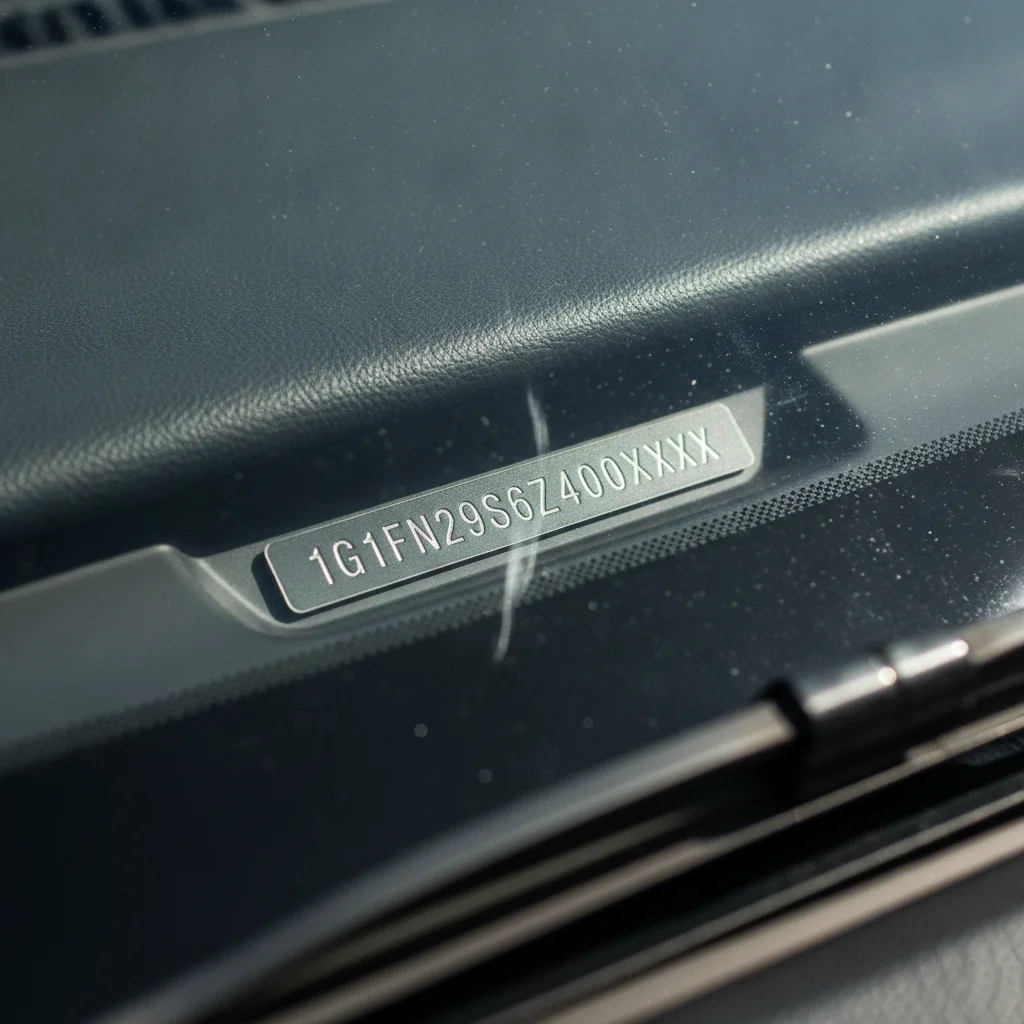
Why does this matter so much? Your lender, your insurer, and your state DMV all use the VIN to identify the specific vehicle tied to a transaction. If your contract says the VIN ends in 8JK4 but the actual vehicle ends in 8KJ4, your title may be issued for a vehicle that doesn't legally match your loan. Insurance claims on the wrong VIN can be denied. Lien releases can be delayed. In rare cases, DMVs have flagged mismatched VINs as potential fraud indicators, triggering registration holds.
The fix is simple but requires discipline: locate the VIN on the vehicle itself (it's visible through the windshield on the driver's side dash, and it also appears on the door jamb sticker) and compare it character by character to every document before you sign. Don't skim — read each character individually.
VIN Mismatches Can Delay Your Registration for Months
If a VIN error makes it into your title application, your state DMV may reject the title or issue one for the wrong vehicle. Correcting it typically requires notarized affidavits from both the buyer and dealer, and some lenders require a corrected title before releasing the lien. The process can take 30 to 90 days and may prevent you from legally registering the vehicle in the meantime.
Yo-Yo Financing Often Hides in Unsigned Paperwork
If a spot delivery agreement or conditional delivery addendum isn't fully executed — or contains language you didn't read — a dealer may have the ability to call you back and renegotiate loan terms after you've taken the car home. This practice, sometimes called yo-yo financing, is enabled directly by paperwork gaps. Learn more about <a href="/buying-a-car/car-buying-process/paperwork-and-contracts/the-truth-about-yo-yo-financing-and-how-the-paperwork-enables-it">how yo-yo financing works and how to protect yourself</a>.
Rate, Term, and Payment: Where the Numbers Get Muddled
Your Annual Percentage Rate (APR), loan term in months, and monthly payment are the three numbers most buyers focus on — and ironically, they're also the numbers most commonly entered incorrectly on the retail installment contract (RIC).
Here's a scenario that happens more often than most buyers realize: you negotiated a 60-month term at 6.9% APR with the sales manager. By the time the finance manager prints the RIC, the system still has a prior deal's 72-month term loaded, or the rate reflects a dealer markup above what the lender actually approved. You get handed a document showing a slightly different monthly payment, you assume it's just rounding, and you sign.
The math check is your best defense. If your loan amount is $28,000 at 6.9% APR over 60 months, your payment should be approximately $551. Pull up any loan calculator on your phone and verify before signing. If the numbers don't match, ask for an explanation — not an assurance, an explanation. Dealers sometimes add optional products (GAP insurance, extended warranties) to the financed amount, which raises your payment legitimately, but those additions should be itemized separately and you should have agreed to each one.
Verbal agreements about rates and terms are also notoriously unreliable. If you were quoted a rate before reaching the finance office, understand that verbal promises made on the lot rarely make it into the contract — and the written contract is what controls.
Never Sign a Blank or Incomplete Document
Some buyers are asked to sign documents before all fields are filled in, with assurances that the blanks will be completed later. This is never acceptable. A document with unfilled fields can be completed with terms you never agreed to, and your signature still makes it legally binding. If a document is incomplete, wait until it's fully filled in before signing — no exceptions.
Your Right to Review Is Protected — Use It
Federal and most state consumer protection laws give you the right to read any document before signing it. A finance manager who pressures you to sign quickly, dismisses your questions, or refuses to let you review a page is a red flag. You can slow down, ask for clarification, or pause the signing entirely without losing your deal. If the pressure continues, it may signal a deeper problem with how the contract is structured.
Trade-In Payoffs, Add-On Products, and Unsigned Addenda
Three categories of errors often cluster together in the final paperwork stack: trade-in payoff handling, dealer add-on products, and the addenda that attach to your main contract.
Trade-In Payoff Errors
If you're trading in a vehicle with an outstanding loan balance, the dealer must obtain a payoff quote from your current lender and apply it correctly in the deal structure. Two common errors occur here. First, the dealer uses a payoff figure that's already expired — lenders issue payoff quotes that are good for a specific number of days, and if the deal closes after that window, the actual payoff is higher. Second, the net trade-in value (what you're being credited) is listed before the payoff is subtracted, making your equity look larger than it is. Confirm that the payoff amount on your buyer's order is current, and confirm separately with your lender that the amount is accurate.
For a deeper look at how hidden charges inflate the cost of a deal, see the hidden costs in used car dealer paperwork.
Dealer Add-On Products
GAP coverage, paint protection, tire-and-wheel plans, and extended service contracts are all optional — legally, they cannot be required as a condition of financing (though some dealers imply otherwise). The error pattern here is that these products appear in the financed amount without being clearly itemized, or a product you verbally declined still shows up in the contract. Check the itemization on your RIC against what you agreed to. If you see a line item you don't recognize, ask what it is and how to remove it before signing.
Unsigned and Undated Addenda
Many deals include addenda — supplemental documents covering things like as-is disclaimers, arbitration agreements, or dealer-installed accessories. These are legally part of your contract, but they're easy to rush through. An addendum that's missing your signature, missing a date, or references a product that isn't attached creates legal ambiguity — and in some cases, that ambiguity gets resolved against you. Flip through every page of the packet and confirm that every signature line that should be signed is signed by both you and the dealer representative.
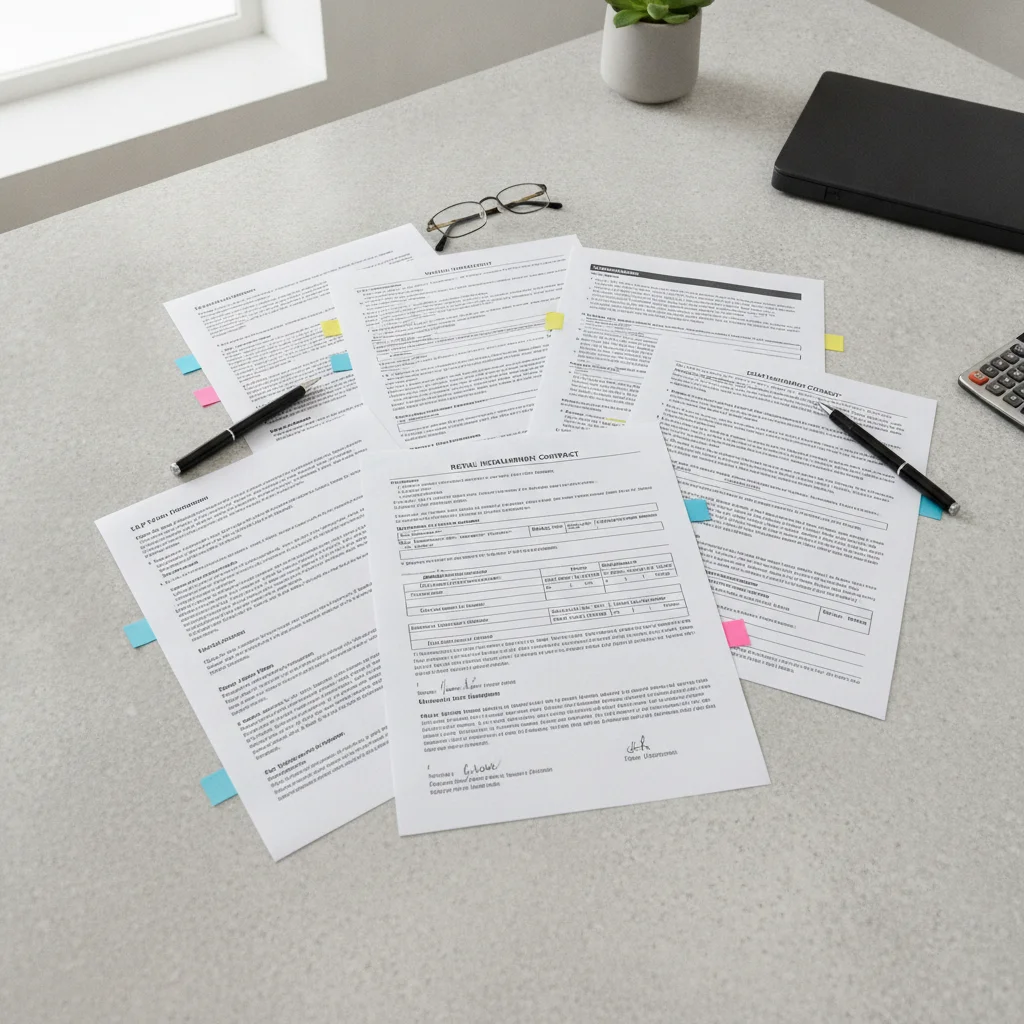
If spot delivery is part of your deal — meaning you're taking the car before financing is fully finalized — unsigned addenda become even riskier. Learn why in our guide to spot delivery vs. completed financing.
What to Do Before You Leave the Finance Office
The single most effective thing you can do is slow down. Finance managers are trained to move through documents efficiently — that's not malicious, it's just the nature of the process. But you have the right to read every page before signing, and a legitimate dealership will allow that.
Here's a practical approach:
- Request copies of your documents before you start signing. Some dealers will print everything, walk through it, and then have you sign. That's ideal. If they won't, at minimum ask to see the RIC before anything else.
- Verify the VIN on every document against the vehicle. Check the dash, check the door jamb, then check the paper.
- Run the payment math yourself. Loan amount × APR × term. A phone calculator takes 30 seconds.
- Confirm every add-on product you agreed to — and only those. If something appears that you didn't agree to, don't sign until it's removed and the document is reprinted.
- Check the trade-in payoff figure against your last lender statement. If there's a discrepancy, ask for the payoff quote document the dealer obtained.
- Count the signature lines and make sure all are completed. Both your signature and the finance manager's or dealer representative's.
For a complete pre-signing checklist you can bring with you, see our pre-signing checklist for car purchase contracts. It covers every field worth verifying in the order you'll encounter them.

Finally, keep copies of everything you sign. Dealers are required to give you copies, but some buyers leave without them in the excitement of getting the keys. Those documents are your legal record. If an error surfaces later — a wrong address causing title issues, a rate that doesn't match your lender's records — your copies are what you'll need to resolve it. And if your title documentation ever becomes the issue, understanding which paperwork errors can void a title will help you act quickly.
Never Sign a Blank or Incomplete Document
Some buyers are asked to sign documents before all fields are filled in, with assurances that the blanks will be completed later. This is never acceptable. A document with unfilled fields can be completed with terms you never agreed to, and your signature still makes it legally binding. If a document is incomplete, wait until it's fully filled in before signing — no exceptions.
Your Right to Review Is Protected — Use It
Federal and most state consumer protection laws give you the right to read any document before signing it. A finance manager who pressures you to sign quickly, dismisses your questions, or refuses to let you review a page is a red flag. You can slow down, ask for clarification, or pause the signing entirely without losing your deal. If the pressure continues, it may signal a deeper problem with how the contract is structured.

All claims are backed by peer-reviewed research. Sources on request.