Key Takeaways
Our Verdict
NHTSA and IIHS aren't competitors — they're complements. NHTSA sets the federal baseline and covers a broad range of vehicles, while IIHS pushes the envelope with stricter tests and clear pass/fail criteria that manufacturers actually respond to. If you can only look up one, go IIHS — but ideally, check both databases before signing anything.
| Best for | Recommended |
|---|---|
| Buyers who want the quickest, most universal safety check | NHTSA 5-Star Safety Ratings |
| Buyers prioritizing the most rigorous crash and headlight testing | IIHS Top Safety Pick / Top Safety Pick+ |
| Buyers comparing multiple trims and packages for safety differences | IIHS (tests trim-specific headlights and optional ADAS) |
| Buyers researching insurance discounts tied to vehicle safety | Both NHTSA and IIHS ratings together |
Why Two Separate Safety Rating Systems Exist
Most car buyers assume there's one official safety score — maybe they've seen the stars on a window sticker or heard a friend mention "IIHS Top Safety Pick" — but they treat it all as the same thing. It isn't. NHTSA and IIHS are fundamentally different organizations with different missions, different funding sources, and different test criteria. Understanding that distinction is the first step to actually using safety data to your advantage.
NHTSA (National Highway Traffic Safety Administration) is a federal government agency. Its New Car Assessment Program (NCAP) has been rating vehicles since 1978. NHTSA's mandate is broad: it oversees vehicle recalls, sets federal safety standards, and publishes crash ratings that appear on window stickers by law. Its ratings are a regulatory floor — they tell you whether a car clears the government's minimum safety bar.
IIHS (Insurance Institute for Highway Safety) is a nonprofit funded by auto insurers. That funding source matters. Insurers pay claims when cars crash, so they have a direct financial incentive to push for safer vehicles. IIHS launched its own testing program in the 1990s and has consistently used more demanding protocols than federal requirements. Because it's independent, IIHS can change its tests faster than a government agency can update regulations.
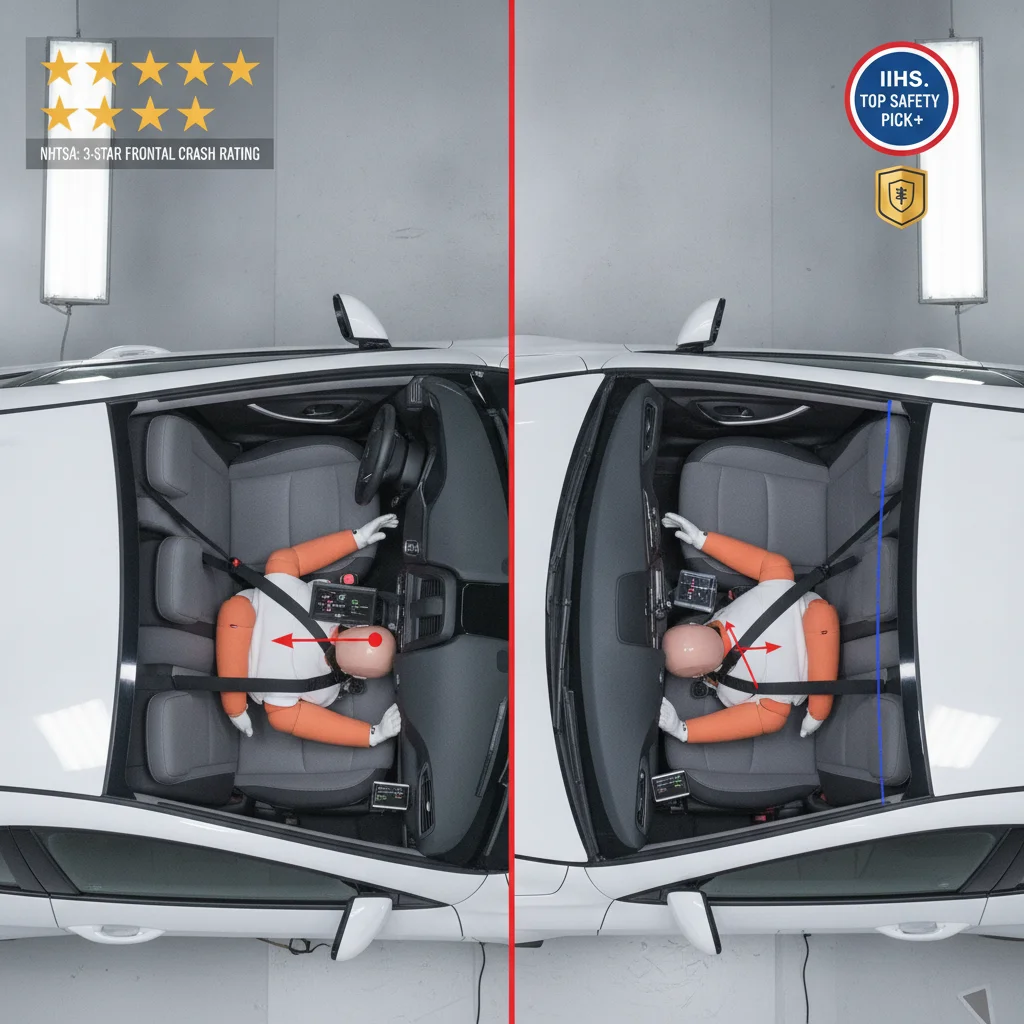
The practical result: a car can earn five stars from NHTSA and simultaneously receive a Poor rating from IIHS on a specific test. That's not a data error — it reflects two different questions being asked of the same vehicle. Use both to get the full picture, the same way you'd cross-reference reliability ratings from multiple sources before committing to a purchase.
How NHTSA Tests and Scores Vehicles
NHTSA's rating system is built around three core categories, each producing a star score from one to five. The overall vehicle rating is a weighted composite of all three.
Frontal Crash (Full-Width Barrier Test)
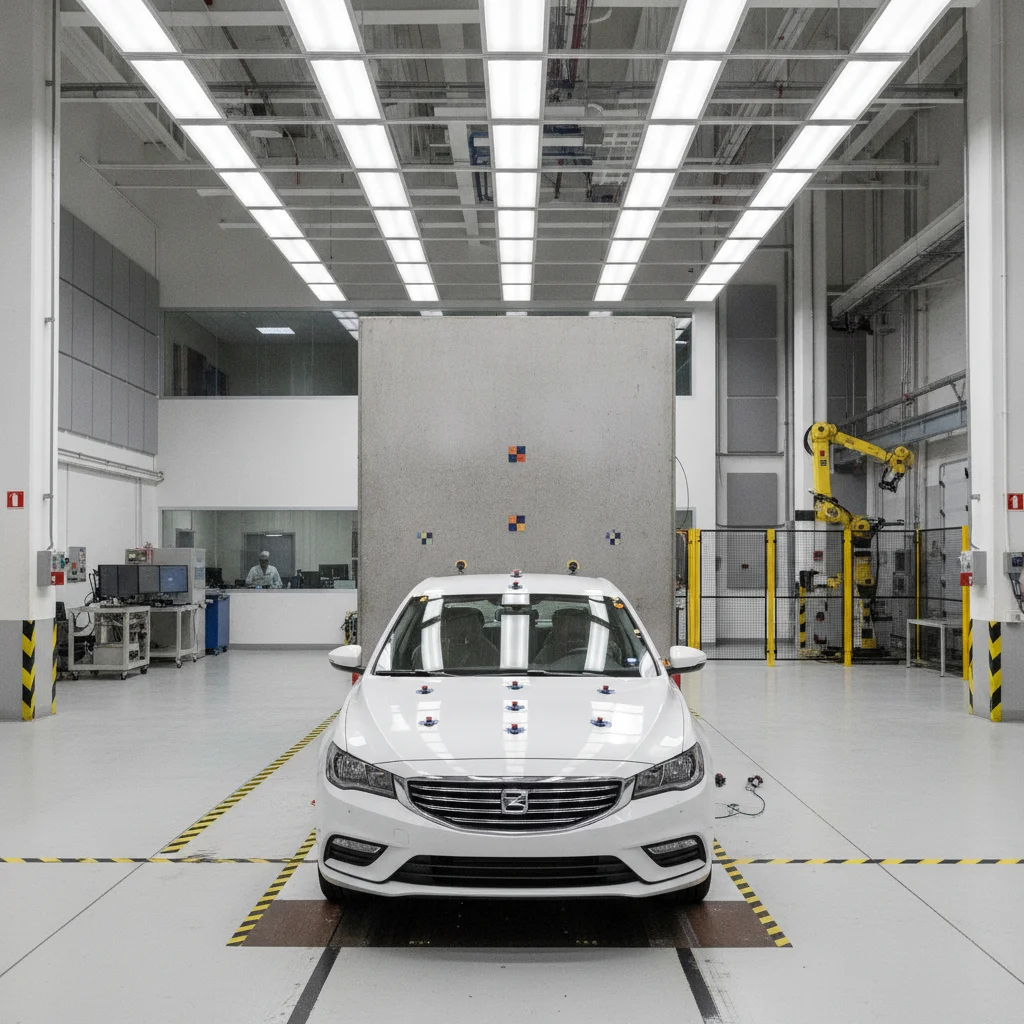
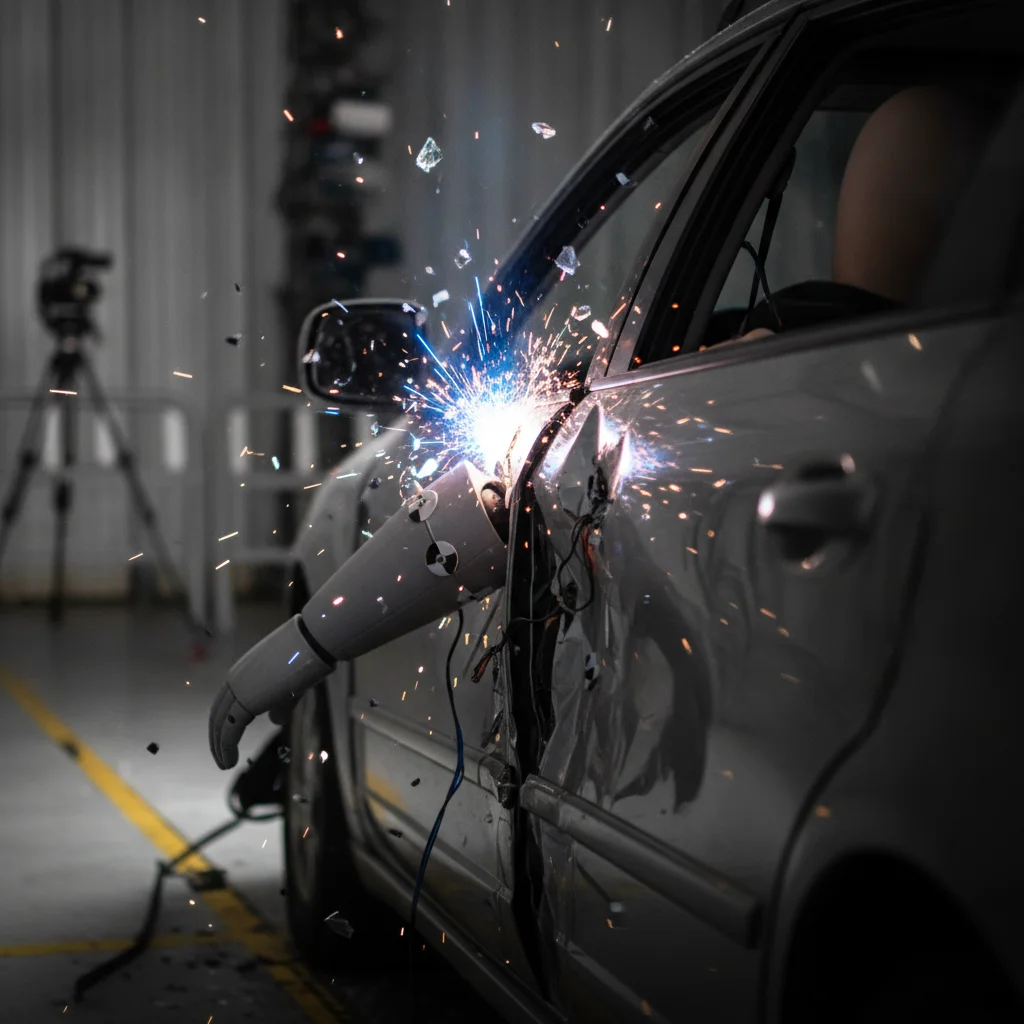
The vehicle strikes a rigid full-width barrier at 35 mph — simulating a head-on collision between two similar vehicles. Sensors in crash test dummies measure forces on the head, neck, chest, and legs of both driver and front passenger. This is a severe but straightforward scenario, and most modern vehicles perform well here.
Side Crash
Two tests cover side impacts. The first uses a barrier representing another vehicle striking the driver's door at 38.5 mph. The second is a pole test — a narrow 10-inch pole at the vehicle's B-pillar, simulating a tree or utility pole impact. The pole test in particular has been a differentiator, since it concentrates force on a small area that airbags must address precisely.
Rollover Resistance
Rather than a physical rollover crash, NHTSA calculates a Static Stability Factor (SSF) based on the vehicle's track width and center of gravity height. It also conducts a dynamic "fishhook" maneuver to observe electronic stability control response. SUVs and trucks historically score lower here due to higher centers of gravity.
25%
Overlap in IIHS's small overlap front test
IIHS introduced the 25% small overlap test in 2012, revealing structural weaknesses in vehicles that had already earned top NHTSA ratings.
4,200 lbs
Updated IIHS side barrier weight (2021)
IIHS increased its side impact barrier weight by nearly 900 lbs in 2021 to reflect the growing prevalence of heavy SUVs and trucks on U.S. roads.
40%
Reduction in pedestrian fatalities from AEB
IIHS research found that automatic emergency braking with pedestrian detection reduced pedestrian crash rates by approximately 40% in real-world studies.
4×
Roof strength ratio for IIHS Good rating
A Good IIHS roof strength rating requires the roof to support at least four times the vehicle's curb weight before deflecting five inches.
5–15%
Typical insurance discount for qualifying safety tech
Many major insurers offer premium discounts in this range for vehicles equipped with standard automatic emergency braking, based on claim frequency reductions.
One important limitation: NHTSA tests a single configuration of each vehicle, often the base trim. If you're buying a higher trim with different structure or a different roof configuration, you may be looking at data that doesn't precisely match your car.
5 Stars Doesn't Mean Safe in Every Crash
NHTSA's 5-star rating reflects performance in specific federal test scenarios — not all crash types. A vehicle can earn 5 stars and still perform poorly in IIHS's small overlap front test or earn a Poor headlight rating. Never use NHTSA stars as a substitute for checking IIHS results. Both ratings together give you a meaningfully more complete picture than either one alone.
How IIHS Tests and Scores Vehicles
IIHS uses a four-tier rating system: Good, Acceptable, Marginal, and Poor. To earn a Top Safety Pick (TSP) or Top Safety Pick+ (TSP+) designation, a vehicle must clear multiple thresholds across different test categories simultaneously — it's not enough to ace one test and fail another.
Small Overlap Front (Driver and Passenger Sides)
This is the test that exposed the biggest gap between NHTSA and IIHS standards. Introduced in 2012, it simulates a vehicle striking a rigid barrier with only 25% of its front end — the driver's corner. When IIHS first ran this test, several vehicles with 5-star NHTSA ratings earned Poor scores because their frontal structures weren't designed to handle off-center impacts. IIHS later added a passenger-side small overlap test because some manufacturers strengthened only the driver's side.
Moderate Overlap Front
A 40% overlap barrier test at 40 mph — comparable in concept to NHTSA's frontal test but at higher speed and partial overlap.
Side Impact
IIHS updated its side test in 2021, increasing the striking barrier's weight from 3,300 lbs to 4,200 lbs to better represent the current fleet of heavier SUVs and trucks on U.S. roads. Many vehicles that previously earned Good side ratings were retested and scored lower.
Roof Strength
A hydraulic ram pushes down on the roof until it collapses. IIHS measures how much force the roof withstands relative to vehicle weight. A Good rating requires the roof to support at least four times the vehicle's weight before crushing five inches — directly relevant to rollover survivability.
Headlights
Added in 2016 and expanded since, this evaluation has become one of IIHS's most impactful tests. Poor-rated headlights illuminate so little road that drivers face a significantly elevated crash risk at night. IIHS tests headlights by trim level and option package, meaning the same model can score differently depending on which headlights are installed. This is critical if you're choosing between trim levels.
ADAS and Crash Avoidance
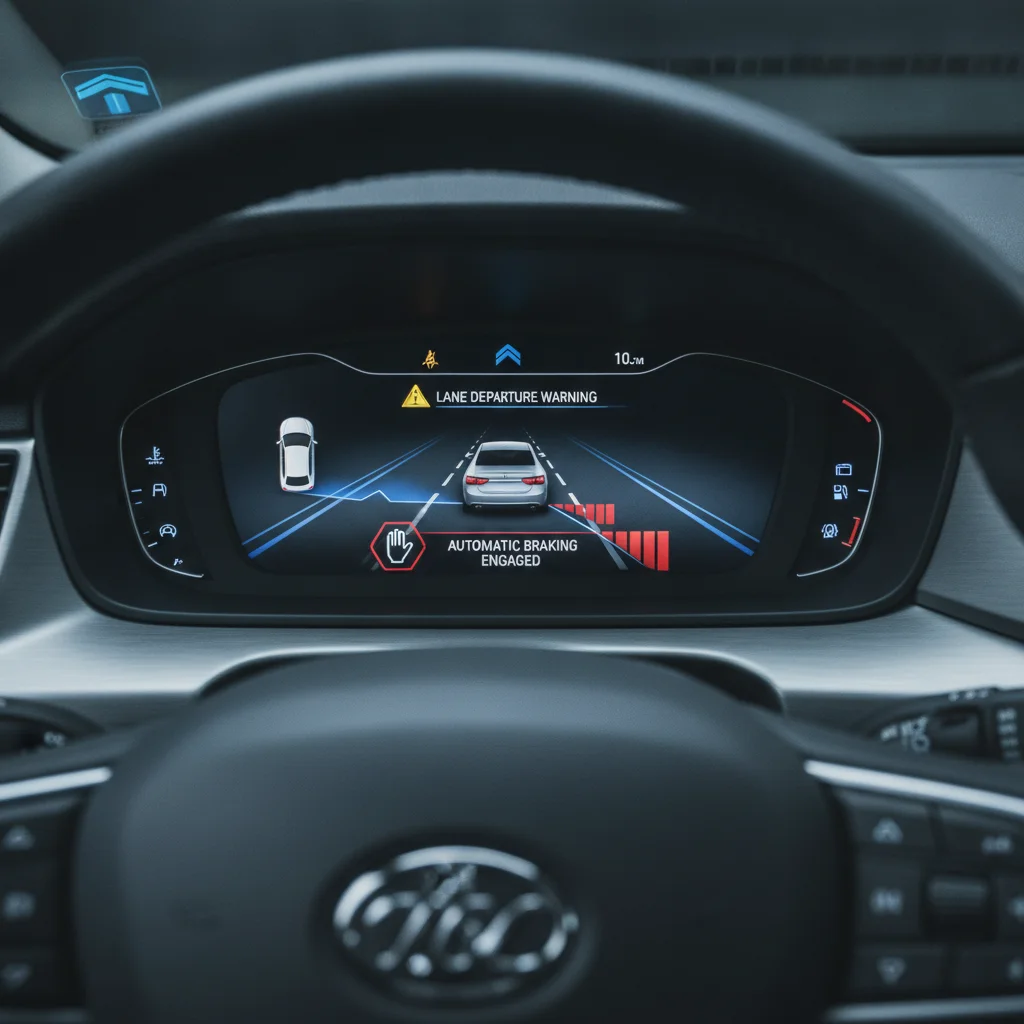
IIHS evaluates front crash prevention systems (vehicle-to-vehicle and vehicle-to-pedestrian), lane departure warning, and other active safety features. These systems are tested and rated separately, and some are required for TSP+ status. See what the research shows about which safety tech actually reduces crashes for a deeper breakdown of which ADAS features deliver real-world results.
| NHTSA | IIHS | |
|---|---|---|
| Organization type | Federal government agency | Independent nonprofit (insurer-funded) |
| Rating scale | 1–5 stars (5 best) | Good / Acceptable / Marginal / Poor |
| Top designation | 5-Star Overall Safety Rating | Top Safety Pick+ (TSP+) |
| Frontal crash test type | Full-width rigid barrier (35 mph) | 40% overlap (40 mph) + 25% small overlap (both sides) |
| Side impact barrier weight | 3,015 lb MDB at 38.5 mph | 4,200 lb MDB (updated 2021) |
| Headlight testing | Not evaluated | Tested by trim and option package |
| Rollover resistance | Static Stability Factor + dynamic test | Roof crush strength test (4× vehicle weight) |
| ADAS / crash avoidance | Evaluated separately (not in star score) | Required for TSP+ designation |
| Appears on window sticker | Yes — legally required | No — must look up independently |
| Test vehicle selection | High-volume models prioritized | Based on market share and insurer claim data |
Where the Ratings Diverge — and Why It Matters
The clearest way to see the gap between these systems is in real examples. When IIHS introduced the small overlap front test, some pickups and SUVs with excellent NHTSA ratings earned Poor IIHS scores. That's not a bug — it's an accurate reflection of the fact that NHTSA wasn't testing that crash mode at all. The structural engineering required to survive an off-center impact is genuinely different from what's needed in a full-width barrier test.
Similarly, IIHS's updated side impact test (heavier barrier) has downgraded vehicles that seemed fine under the old protocol. A vehicle earning Good in IIHS side testing in 2019 might earn Acceptable or Marginal under 2022 criteria. Always check when the test was conducted.
Headlights represent perhaps the most actionable divergence. An otherwise excellent vehicle can earn TSP but not TSP+ solely because of its standard headlights, while the same model with an upgraded headlight package earns TSP+. If you're comparing a base trim to a mid-level trim, the IIHS headlight scores can be a legitimate deciding factor — not just a luxury upgrade. Check the IIHS website's vehicle ratings page, which breaks scores down by configuration.
Headlights Can Be a Trim-Level Decision
IIHS rates headlights by trim and option package, and the differences can be substantial — sometimes the gap between Poor and Good headlights is a single $500 upgrade package. Before assuming your target trim has adequate headlights, look up its specific headlight rating on iihs.org. Driving at night with Poor-rated headlights is a measurable safety risk, not just a comfort issue.
Build Your Safety Research Checklist
Before visiting a dealer or finalizing an online order, pull up both NHTSA.gov and IIHS.org for the exact model year and trim you're considering. Note the test date on IIHS results — protocols change every few years. If a test was run more than three years ago, the current version of that model may have been retested under stricter criteria. Always look for the most recent data available.
It's also worth noting that neither agency tests every vehicle. NHTSA prioritizes high-volume sellers. IIHS selects vehicles based on market share and injury claim data from its member insurers. Niche models, low-volume imports, and some commercial vehicles may have no rating from either organization — a meaningful data gap if you're considering something off the mainstream path.
Safety Ratings and Your Insurance Premium
Here's where safety data stops being academic and starts affecting your monthly payment. Insurers use crash test results — alongside repair costs, theft rates, and claim history — to set rates for individual models. A vehicle with strong IIHS ratings and good structural performance in real-world crashes typically generates lower bodily injury and property damage claims, and insurers price that in.
Many carriers offer specific discounts for vehicles equipped with advanced safety technology, particularly automatic emergency braking (AEB), which IIHS data shows meaningfully reduces rear-end crashes. These discounts vary by insurer but can run 5–15% on certain coverages. Because IIHS is funded by insurers, its test results flow directly into actuarial models at many of those same companies.
How safety ratings shape your insurance discount eligibility goes deeper into this relationship — it's worth reading before you finalize a purchase decision, because the delta in insurance cost between a TSP+ vehicle and one with poor ratings can add up significantly over a loan term.
One practical note: insurance discounts for safety tech are often tied to whether the feature is standard or optional equipment. A vehicle where AEB is only available on upper trims may not qualify for the same discount as one where it's standard across the lineup. Verify with your insurer before assuming the discount applies to the specific trim you're buying.
How to Use Both Databases Before You Buy
Neither NHTSA nor IIHS is the definitive source alone. Here's a practical workflow for using both before you commit to a vehicle.
- Start with IIHS (iihs.org): Look up the specific model year you're considering. Check the overall rating, but also drill into individual test scores — especially the small overlap front (both sides), the updated side test, and headlights. Note whether the headlight rating changes by trim or option package.
- Cross-check with NHTSA (nhtsa.gov): Search the same model year. Note the overall star rating and any individual category scores that are below 4 stars. Pay special attention to rollover resistance if you're buying an SUV or truck.
- Verify the test year: IIHS updates its protocols periodically. A 2019 test result may not reflect current standards. Filter by the most recent data available for your model year.
- Compare by trim: If you're debating between trim levels, use IIHS's trim-specific headlight ratings to see whether the upgrade pays off in safety terms, not just aesthetics.
- Check recall history: NHTSA's database also includes recall information. A vehicle with no open recalls is a cleaner buy than one with pending safety issues, regardless of its crash test scores.
Pairing this safety research with a thorough test drive and physical inspection rounds out your due diligence. Crash test scores tell you how the car performs in a lab — your test drive tells you how it performs for you.

For a complete picture of a vehicle's long-term value, you'll also want to understand how safety ratings interact with resale value — vehicles with strong safety credentials often command a premium at resale, a factor worth considering alongside the valuations from KBB, Edmunds, and NADA when you're comparing total cost of ownership.
Headlights Can Be a Trim-Level Decision
IIHS rates headlights by trim and option package, and the differences can be substantial — sometimes the gap between Poor and Good headlights is a single $500 upgrade package. Before assuming your target trim has adequate headlights, look up its specific headlight rating on iihs.org. Driving at night with Poor-rated headlights is a measurable safety risk, not just a comfort issue.
Build Your Safety Research Checklist
Before visiting a dealer or finalizing an online order, pull up both NHTSA.gov and IIHS.org for the exact model year and trim you're considering. Note the test date on IIHS results — protocols change every few years. If a test was run more than three years ago, the current version of that model may have been retested under stricter criteria. Always look for the most recent data available.
All claims are backed by peer-reviewed research. Sources on request.