
Key Takeaways
Protection against major unexpected repair bills
A single powertrain failure — transmission, engine, or transfer case — can cost $3,000–$8,000 out of pocket. A good extended warranty converts that unpredictable expense into a fixed monthly or upfront cost.
Peace of mind for complex, repair-prone vehicles
European luxury brands and vehicles with turbocharged or high-tech powertrain systems have significantly higher average repair costs. Coverage on these vehicles can pay for itself in a single claim.
Budget predictability for stretched buyers
For buyers on tight monthly budgets, a warranty converts the risk of a $4,000 surprise into a predictable, smaller payment. That financial smoothing has real value even if the warranty never pays a claim.
Transferability can increase resale value
Many manufacturer-backed extended warranties are transferable to the next owner, making the vehicle more attractive at resale and potentially supporting a higher asking price.
Roadside assistance and rental coverage often included
Many plans bundle towing, roadside assistance, and rental reimbursement — benefits that provide value independent of whether you ever make a mechanical repair claim.
Pre-existing condition exclusions swallow most claims
Warranty companies on used cars routinely deny claims by arguing a condition was pre-existing at time of purchase. Without a thorough pre-purchase inspection and written documentation, buyers have little recourse.
Third-party companies can and do go out of business
Several large extended warranty administrators have declared bankruptcy mid-contract, leaving policyholders with no coverage and no refund. Unlike manufacturer-backed plans, there's no backstop.
Inclusionary contracts cover far less than they appear to
Named-component contracts only cover what's explicitly listed. Seals, gaskets, sensors, and wiring harnesses — which often fail first — may not be listed even in plans marketed as "comprehensive."
Repair shop restrictions limit your options
Many third-party contracts require pre-authorization and restrict which shops can do warranty work. If your trusted mechanic isn't on the approved list, you're either stuck using an unfamiliar shop or paying out of pocket.
High deductibles erode the value of smaller claims
A $200 per-repair deductible on a $350 repair means the warranty saves you only $150. After factoring in monthly premiums, many buyers would have been better off paying out of pocket.
Maintenance neglect clauses are aggressively interpreted
If a failed component can be even loosely connected to a missed oil change or a coolant service not done on schedule, many warranty administrators will deny the claim — even when the link is tenuous.
High-mileage vehicles face higher premiums and narrower coverage
Once a vehicle is over 75,000–100,000 miles, warranty premiums climb, exclusions broaden, and the maximum claim caps often drop — making the cost-benefit math significantly worse for the buyer.
Our Verdict
Extended warranties on used cars can deliver real financial protection — but only if you buy from a reputable provider, read every exclusion carefully, and match the coverage level to the actual risk profile of the vehicle. For late-model, low-mileage used cars with documented service history, a manufacturer-backed or dealer-backed warranty can provide genuine peace of mind. For high-mileage vehicles or deals from sketchy third-party sellers, the math rarely works in the buyer's favor.
Best for buyers purchasing used vehicles between 2–5 years old with 30,000–80,000 miles who want protection against major powertrain or electrical failures and can afford to be selective about contract terms.
What Extended Warranties on Used Cars Actually Are
First, a terminology correction that matters legally: most of what dealers and third-party sellers call "extended warranties" are actually service contracts. A true warranty is a seller's promise included in the purchase price. A service contract is a separate paid agreement — and that distinction changes how consumer protection laws apply to you.
On a used car, you may encounter three types of coverage:
- Manufacturer-backed extended warranties: Sold through franchised dealerships, backed by the automaker's financial resources. These typically offer the most reliable claims experience.
- Dealer-backed plans: Administered by a third party but sold and often partially funded by the dealership. Quality varies significantly by dealer.
- Third-party service contracts: Purchased through independent warranty companies, often marketed online or by mail. These are the highest-risk category.
For context on how factory coverage compares, see what new car warranties actually cover — used car coverage typically picks up where that original coverage ends, if it hasn't already lapsed.

Before evaluating any warranty, get the full written contract — not a brochure summary. The contract is the only document that legally defines what you're buying.
What's Typically Covered (and at What Level)
Extended warranties on used cars generally fall into two structural types: inclusionary and exclusionary.
- Exclusionary ("bumper-to-bumper" style)
- Lists what is not covered. Everything else is theoretically covered. This is the better structure for buyers, but the exclusion list can still be long.
- Inclusionary ("named components")
- Lists only what is covered. If a part isn't named, it's not covered — no matter how expensive the repair. These are cheaper for a reason.
Common covered components across most mid-tier plans include:
- Engine internals (pistons, crankshaft, bearings)
- Transmission and drivetrain components
- Front and rear axles
- Transfer case (on AWD/4WD vehicles)
- Cooling system (water pump, thermostat — but often not the radiator itself)
- Fuel delivery components (fuel pump, injectors — varies widely)
What even "comprehensive" plans frequently exclude:
- Wear items: brakes, tires, wiper blades, belts, hoses, filters
- Cosmetic damage, interior wear, glass
- Rust, corrosion, and environmental damage
- Emissions components (in some plans)
- Pre-existing conditions — a huge category in used car contracts
- Problems caused by overheating or neglected maintenance
Pre-Existing Condition Language: Read It Carefully
Nearly every used car service contract contains a pre-existing condition exclusion. Some contracts define "pre-existing" as any condition detectable by a licensed mechanic at time of purchase — even if you, the buyer, had no way of knowing about it. A pre-purchase inspection by an independent mechanic, done before you sign the warranty, creates a baseline record of the vehicle's condition that can support your position if a claim dispute arises.
State Regulations Vary on Service Contracts
Service contracts are regulated differently from state to state. In some states, they must be backed by a licensed insurance company or a funded reserve. In others, requirements are minimal. Before buying a third-party plan, check whether the provider is registered with your state's Department of Insurance — and whether your state has a guaranty fund that would cover you if the company becomes insolvent.
Self-Insuring: A Legitimate Alternative
If you're a disciplined saver and your vehicle has a reasonably strong reliability record, setting aside the equivalent of your warranty premium into a dedicated repair fund can work in your favor. The key is treating it as a non-negotiable monthly expense — not a discretionary savings line. Most used car buyers who self-insure on reliable vehicles come out ahead financially over a 5-year ownership window.
Understanding contract language before you sign is critical. Read how service agreement language differs from buyer expectations — the gap between what you assume and what the contract actually says is where claims get denied.
The Real Pros of Extended Coverage on a Used Car
Extended warranties aren't inherently bad deals — they're just frequently oversold on vehicles and buyers where the math doesn't work. Here's where they genuinely add value:
Protection against major unexpected repair bills
A single powertrain failure — transmission, engine, or transfer case — can cost $3,000–$8,000 out of pocket. A good extended warranty converts that unpredictable expense into a fixed monthly or upfront cost.
Peace of mind for complex, repair-prone vehicles
European luxury brands and vehicles with turbocharged or high-tech powertrain systems have significantly higher average repair costs. Coverage on these vehicles can pay for itself in a single claim.
Budget predictability for stretched buyers
For buyers on tight monthly budgets, a warranty converts the risk of a $4,000 surprise into a predictable, smaller payment. That financial smoothing has real value even if the warranty never pays a claim.
Transferability can increase resale value
Many manufacturer-backed extended warranties are transferable to the next owner, making the vehicle more attractive at resale and potentially supporting a higher asking price.
Roadside assistance and rental coverage often included
Many plans bundle towing, roadside assistance, and rental reimbursement — benefits that provide value independent of whether you ever make a mechanical repair claim.
$1,800
Average annual car repair and maintenance cost
According to AAA's 2023 Your Driving Costs study, average repair and maintenance spending for vehicle owners was approximately $1,800 per year.
55%
Extended warranty buyers who never file a claim
Industry estimates from Consumer Reports surveys suggest roughly half of extended warranty buyers never use the coverage for a qualifying repair during the contract term.
$3,800
Average transmission replacement cost
RepairPal data shows the average cost of a transmission replacement ranges from $2,800 to $5,500 depending on vehicle make, with the midpoint around $3,800.
The strongest case for an extended warranty on a used car is when you're buying a vehicle known for expensive repairs — German luxury brands, high-end American trucks, or any vehicle with a known problematic component (e.g., specific transmission generations or turbocharged engines with known failure modes). A single transmission replacement on a German luxury sedan can run $4,000–$8,000. One covered claim can pay for years of warranty premiums.
The Real Cons: Where Extended Warranties on Used Cars Fall Short
The used car warranty market has more bad actors than almost any other segment of the automotive finance industry. Even well-intentioned contracts often disappoint at claim time. Here's where buyers get burned:
Pre-existing condition exclusions swallow most claims
Warranty companies on used cars routinely deny claims by arguing a condition was pre-existing at time of purchase. Without a thorough pre-purchase inspection and written documentation, buyers have little recourse.
Third-party companies can and do go out of business
Several large extended warranty administrators have declared bankruptcy mid-contract, leaving policyholders with no coverage and no refund. Unlike manufacturer-backed plans, there's no backstop.
Inclusionary contracts cover far less than they appear to
Named-component contracts only cover what's explicitly listed. Seals, gaskets, sensors, and wiring harnesses — which often fail first — may not be listed even in plans marketed as "comprehensive."
Repair shop restrictions limit your options
Many third-party contracts require pre-authorization and restrict which shops can do warranty work. If your trusted mechanic isn't on the approved list, you're either stuck using an unfamiliar shop or paying out of pocket.
High deductibles erode the value of smaller claims
A $200 per-repair deductible on a $350 repair means the warranty saves you only $150. After factoring in monthly premiums, many buyers would have been better off paying out of pocket.
Maintenance neglect clauses are aggressively interpreted
If a failed component can be even loosely connected to a missed oil change or a coolant service not done on schedule, many warranty administrators will deny the claim — even when the link is tenuous.
High-mileage vehicles face higher premiums and narrower coverage
Once a vehicle is over 75,000–100,000 miles, warranty premiums climb, exclusions broaden, and the maximum claim caps often drop — making the cost-benefit math significantly worse for the buyer.
One particularly dangerous scenario: buying a high-mileage vehicle (100,000+ miles) and adding an inclusionary service contract. The per-year cost, combined with a high deductible and a list of named components that doesn't include half the things that actually fail, often means you'd be better off keeping that premium money in a dedicated repair fund. See how this comparison plays out on new car deals — the math is even more unfavorable on used vehicles.
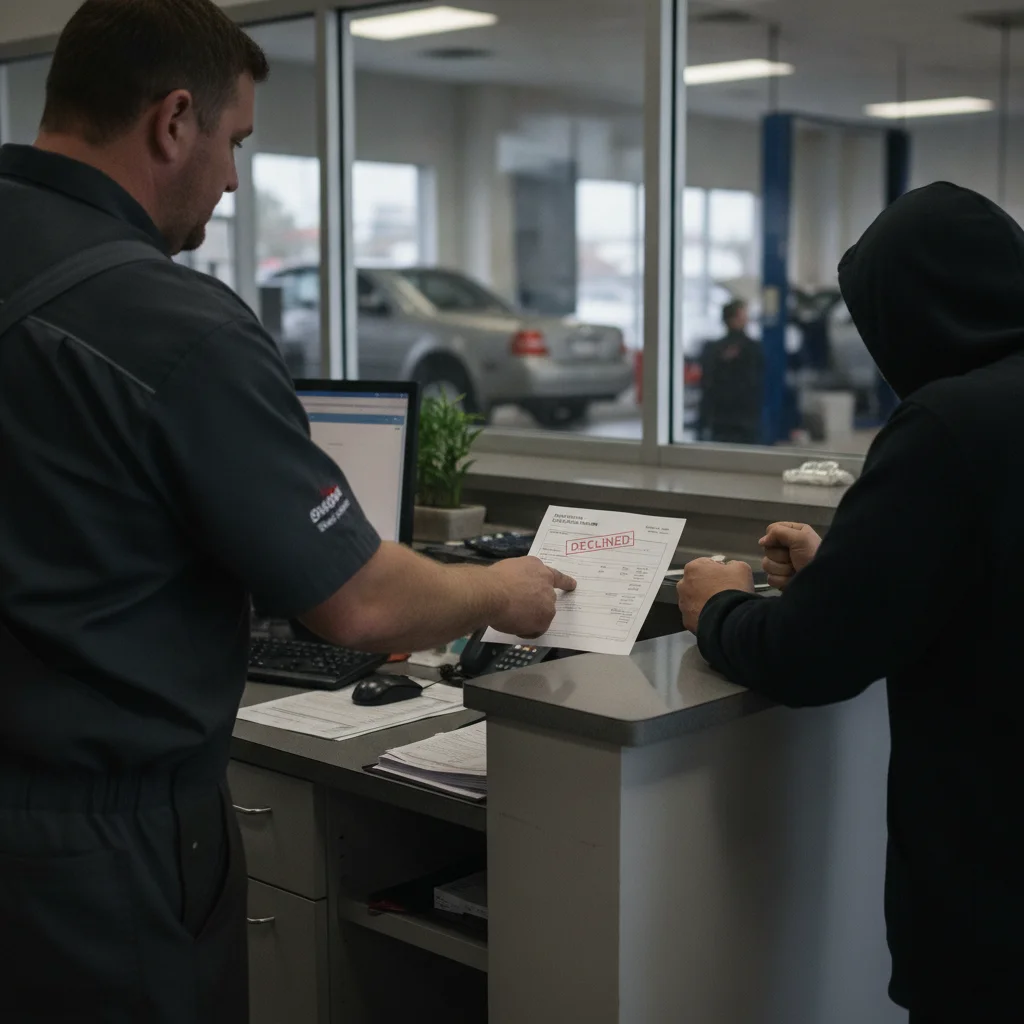
How to Vet a Used Car Extended Warranty Before Signing
Most buyers spend more time picking floor mats than evaluating a warranty contract that could cost $1,500–$3,500. Don't be that buyer. Run through this checklist before signing anything:
- Get the full contract in writing — not a highlights sheet. If a company won't provide the full terms before purchase, walk away.
- Confirm the administrator's financial backing — look up the administrator (not just the seller) on your state's Department of Insurance website. Some third-party companies have failed mid-term, leaving customers with worthless contracts.
- Check the repair shop restrictions — some contracts require you to use specific shops or get prior authorization before any repair. "Tear-down" inspection fees (where a shop disassembles to diagnose, then gets denied) can leave you owing the shop for labor you didn't expect.
- Understand the deductible structure — is it per-visit or per-repair? A per-repair deductible on a multi-system failure could mean paying $100–$200 for each separate component diagnosed in the same visit.
- Ask about cancellation and refund policy — reputable plans are pro-rated and refundable. Contracts that can't be cancelled are a red flag.
- Look up the company name + "complaints" or "denied claim" — the BBB and state attorney general complaint databases are imperfect but useful filters.
Understanding all the paperwork involved in a car purchase is the foundation of any smart used car transaction — the warranty contract is one of the most consequential documents in that stack.
Pre-Existing Condition Language: Read It Carefully
Nearly every used car service contract contains a pre-existing condition exclusion. Some contracts define "pre-existing" as any condition detectable by a licensed mechanic at time of purchase — even if you, the buyer, had no way of knowing about it. A pre-purchase inspection by an independent mechanic, done before you sign the warranty, creates a baseline record of the vehicle's condition that can support your position if a claim dispute arises.
State Regulations Vary on Service Contracts
Service contracts are regulated differently from state to state. In some states, they must be backed by a licensed insurance company or a funded reserve. In others, requirements are minimal. Before buying a third-party plan, check whether the provider is registered with your state's Department of Insurance — and whether your state has a guaranty fund that would cover you if the company becomes insolvent.
Self-Insuring: A Legitimate Alternative
If you're a disciplined saver and your vehicle has a reasonably strong reliability record, setting aside the equivalent of your warranty premium into a dedicated repair fund can work in your favor. The key is treating it as a non-negotiable monthly expense — not a discretionary savings line. Most used car buyers who self-insure on reliable vehicles come out ahead financially over a 5-year ownership window.
CPO Warranties vs. Aftermarket Plans: A Critical Comparison
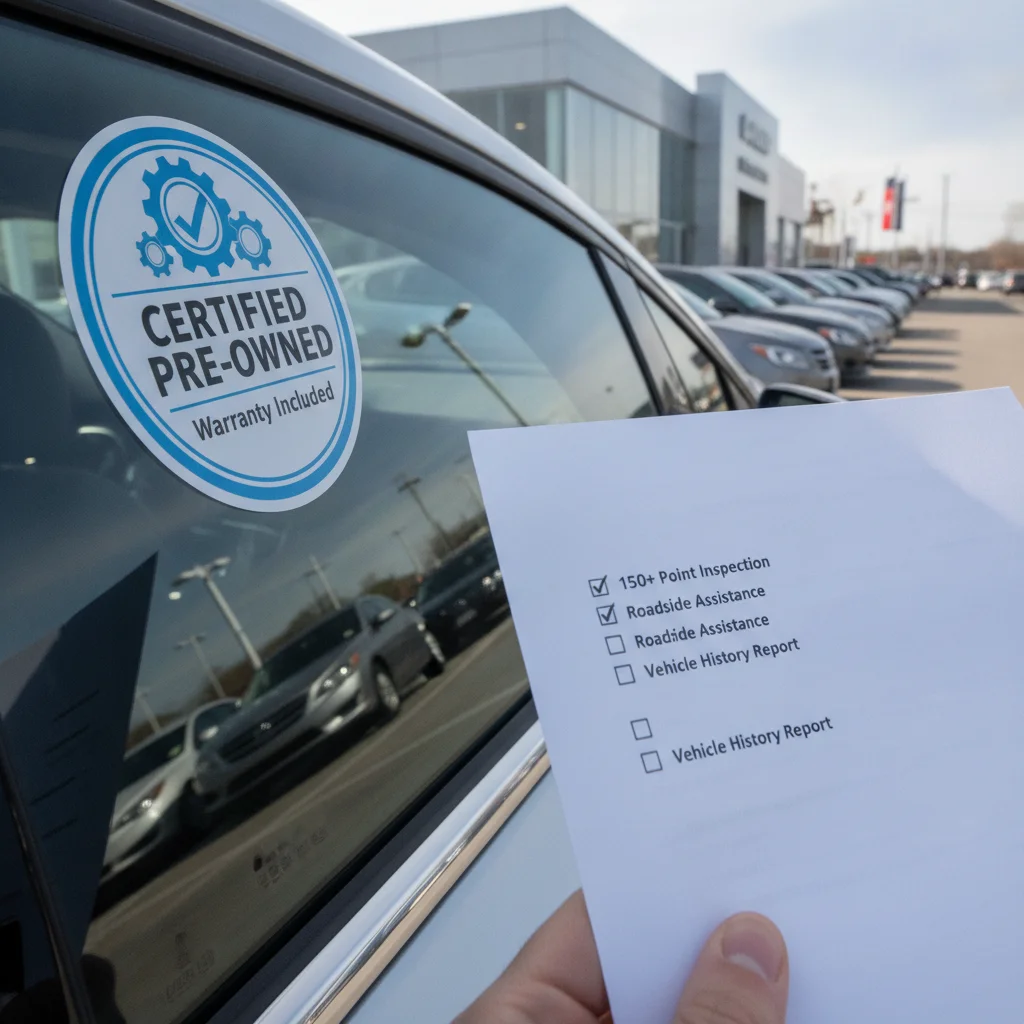
If you're buying a used car from a franchised dealership and the vehicle qualifies for certified pre-owned (CPO) status, the manufacturer-backed CPO warranty is almost always a better baseline than any third-party plan. CPO programs typically include:
- A multi-point inspection (150+ points at most major brands)
- Powertrain coverage of 5–7 years from original sale, or 100,000+ miles
- Roadside assistance and rental car coverage
- Claims honored at any franchised dealer of that brand nationwide
The question of whether to add an aftermarket extended warranty on top of a CPO vehicle is more nuanced. Understand when layering CPO and extended coverage makes financial sense — for most buyers, it's redundant during the CPO term but can make sense as a gap-filler for the post-CPO period.
One alternative worth knowing: mechanical breakdown insurance (MBI), available through some insurers (most notably GEICO), functions similarly to an extended warranty but is regulated as insurance — meaning stronger consumer protections and no risk of the provider going out of business. Compare MBI and extended warranties side by side before committing to either.
When to Skip the Warranty Entirely
There are specific situations where buying an extended warranty on a used car is almost certainly not worth it:
- High-mileage vehicles (100,000+ miles): Premiums are higher, exclusions are broader, and pre-existing condition clauses are applied more aggressively.
- Vehicles with unclear service history: No maintenance records means claims are easier to deny on "neglect" grounds.
- Short ownership windows: If you plan to sell or trade within 2 years, the odds of recouping the cost are low.
- Older vehicles where parts availability is limited: Some contracts allow them to pay out "actual cash value" rather than repair cost if parts aren't available.
- Financially stable buyers with a repair fund: Self-insuring — setting aside the equivalent of 12 monthly premiums in a dedicated savings account — is a legitimate strategy that puts you in control.
The self-insurance math: if a comprehensive third-party warranty costs $2,400 over 3 years ($67/month), and you instead save that money, you'd accumulate $2,400 in a repair fund. Most used car repairs fall well under that threshold. The warranty makes sense primarily as a hedge against catastrophic, low-probability failures — not routine maintenance or typical wear.
Pre-Existing Condition Language: Read It Carefully
Nearly every used car service contract contains a pre-existing condition exclusion. Some contracts define "pre-existing" as any condition detectable by a licensed mechanic at time of purchase — even if you, the buyer, had no way of knowing about it. A pre-purchase inspection by an independent mechanic, done before you sign the warranty, creates a baseline record of the vehicle's condition that can support your position if a claim dispute arises.
State Regulations Vary on Service Contracts
Service contracts are regulated differently from state to state. In some states, they must be backed by a licensed insurance company or a funded reserve. In others, requirements are minimal. Before buying a third-party plan, check whether the provider is registered with your state's Department of Insurance — and whether your state has a guaranty fund that would cover you if the company becomes insolvent.
Self-Insuring: A Legitimate Alternative
If you're a disciplined saver and your vehicle has a reasonably strong reliability record, setting aside the equivalent of your warranty premium into a dedicated repair fund can work in your favor. The key is treating it as a non-negotiable monthly expense — not a discretionary savings line. Most used car buyers who self-insure on reliable vehicles come out ahead financially over a 5-year ownership window.
Mechanical breakdown insurance fills gaps that warranties miss — in some cases, MBI is available at lower cost and with better consumer protections than a traditional service contract.

All claims are backed by peer-reviewed research. Sources on request.