Key Takeaways
Extended Warranty (Service Contract)
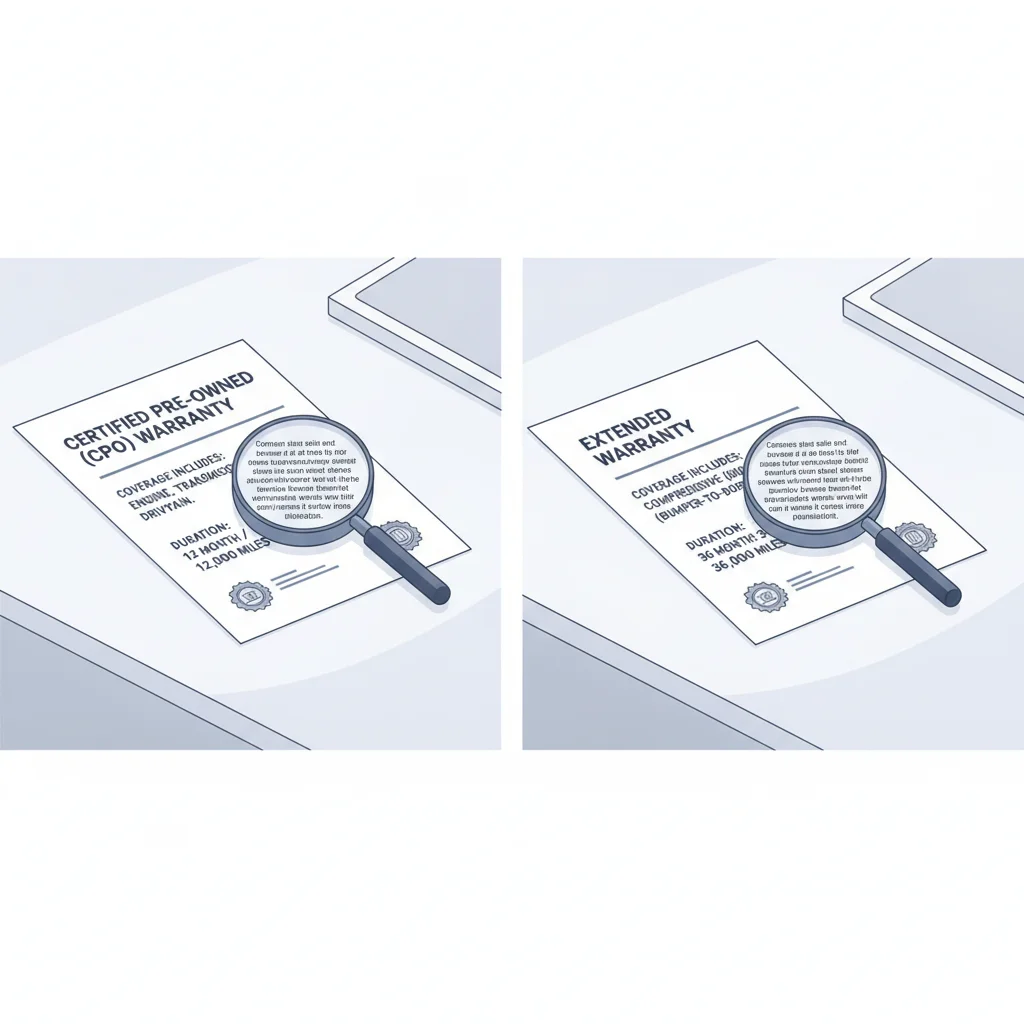
An extended warranty — more accurately called a service contract — is an optional agreement you purchase that covers the cost of certain mechanical repairs after your factory warranty expires. Unlike a manufacturer's warranty, which comes with the car, a service contract is a separate financial product sold by the dealership, the automaker, or a third-party administrator. What it actually covers depends entirely on the specific contract language, not on what a salesperson tells you verbally.
Under the Magnuson-Moss Warranty Act, service contracts are legally distinct from warranties. They are regulated as financial products in many states, which means cancellation rights, refund terms, and administrator insolvency protections can vary significantly by state law.
Why the Salesperson's Description Rarely Matches the Contract
By the time you reach the finance and insurance (F&I) office at a dealership, you've likely already made the big decisions about the car itself. The F&I manager's job is to present add-ons quickly and confidently, often using phrases like "bumper-to-bumper protection" or "total peace of mind" to describe service contracts. These descriptions are marketing language. The actual service contract sitting on the desk may say something very different.
This gap between the verbal pitch and the written terms is the source of most extended warranty disputes. A buyer hears "everything is covered" and later discovers that the transmission control module, the water pump, or the turbocharger requires a separate rider they didn't know to ask about. The contract governs, not what was said in the room.
The most important habit you can develop in the F&I office is this: ask to take the actual contract language home before signing. Dealers are not legally required to allow this in all states, but many will provide a sample copy or direct you to the administrator's website. If a dealer refuses to show you the full contract before you commit, that resistance itself is a signal worth paying attention to.
Service Contracts Are Regulated Differently by State
Unlike manufacturer warranties, service contracts are regulated at the state level, and consumer protections vary significantly. Some states require administrators to be licensed and maintain reserves; others have minimal oversight. Before purchasing a third-party contract, check whether your state's Department of Insurance lists the administrator as licensed and in good standing. This takes less than five minutes and can protect you significantly.
Pre-Authorization Is Not Optional
Most service contracts require you to contact the administrator for repair authorization before work begins — not after. Emergency exceptions exist in some contracts but are narrowly defined. If you allow a shop to complete a repair without calling the administrator first, the claim can and often will be denied regardless of whether the repair would otherwise have been covered.
See our guide to add-ons hidden in car contracts for a broader look at what else may be bundled into your paperwork without clear disclosure.
Exclusionary vs. Inclusionary Coverage: The Most Important Distinction
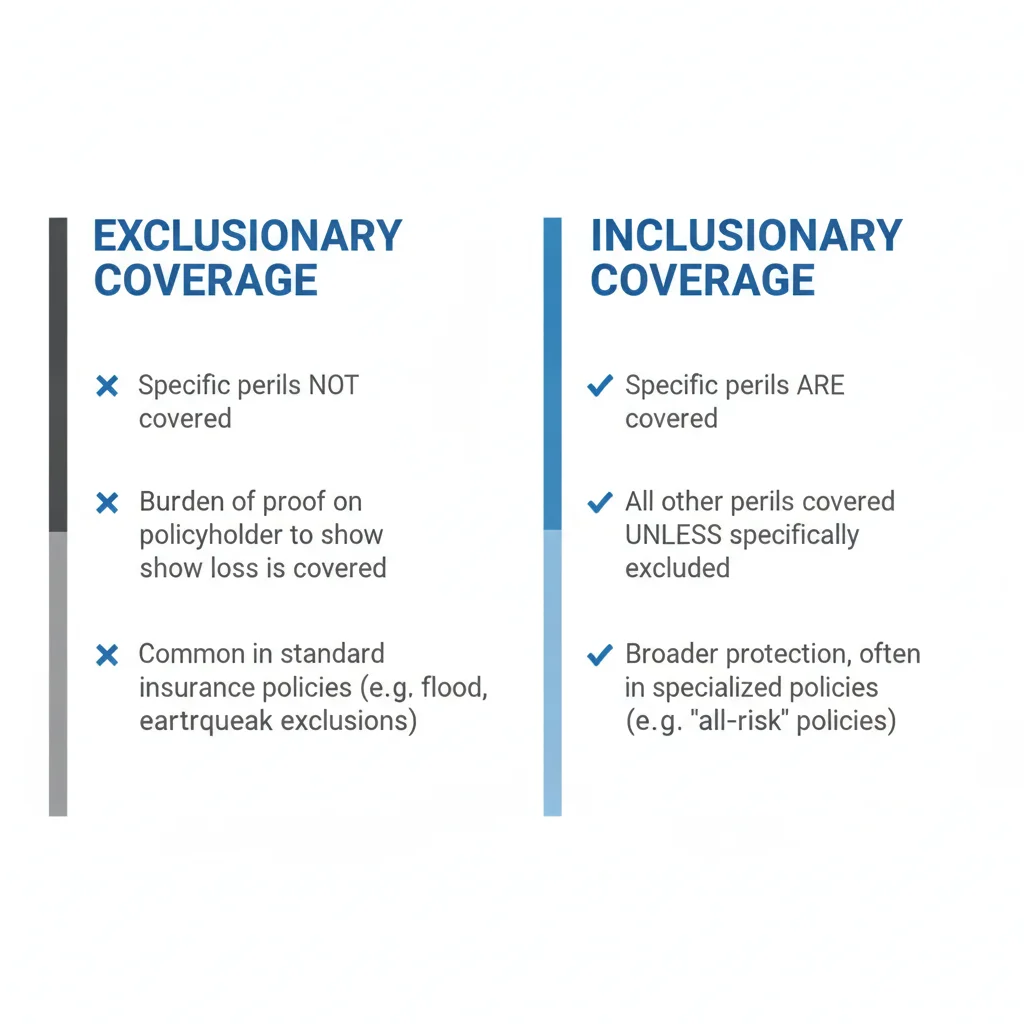
Service contracts come in two structural forms, and understanding which type you're being offered changes how you should evaluate it.
Exclusionary Coverage
An exclusionary contract — sometimes marketed as "comprehensive" or "exclusionary bumper-to-bumper" — covers every mechanical and electrical component of the vehicle except those listed in the exclusions section. Think of it as coverage that starts broad and carves out specific exceptions. These contracts offer the widest protection, but the exclusions list still deserves careful reading. Common exclusions include:
- Wear and maintenance items: brake pads, rotors, filters, belts, spark plugs, wiper blades
- Cosmetic damage: upholstery, trim, paint, glass
- Tires and wheels
- Pre-existing conditions at the time of purchase
- Damage resulting from misuse, accidents, or flood
- Failures caused by lack of maintenance (deferred oil changes, for example)
Inclusionary (Stated Component) Coverage
An inclusionary contract only covers the parts that are explicitly named. If the contract lists "engine block, pistons, connecting rods, crankshaft" but doesn't mention the timing chain tensioner, a failed timing chain tensioner is not covered — even though it's physically inside the engine. These contracts are common at lower price points and on older used vehicles.
When reviewing an inclusionary contract, don't just skim the components list. Cross-reference it against the vehicle's known failure points for that make and model. Online owner forums and reliability databases can help you identify which specific components are most likely to fail.
Ask for the Full Contract Before Signing
Request the actual service agreement document — not a brochure or summary sheet — before agreeing to purchase. Legitimate administrators publish their full contract language, and reputable dealers will provide it. If you need time to review it, say so. A service contract offer does not expire at the end of the signing appointment.
Pay for Service Contracts Separately When Possible
Financing a service contract into your auto loan means paying interest on it for the loan's entire term. If you've decided a contract makes sense, negotiate the price and pay for it separately to avoid this hidden cost. You can often get a better price by shopping directly through the automaker's website or a competitive third-party administrator.
Save the Administrator's Claims Number Immediately
The moment you sign a service contract, photograph the claims authorization number and procedure page and save the administrator's contact information to your phone. The most common reason for claim denial isn't a coverage gap — it's a buyer who didn't call for pre-authorization before approving a repair.
Key Contract Sections You Must Read Before Signing
Every service contract, regardless of administrator or price tier, contains several standard sections. Here's what each one actually governs and what to look for.
Definitions Section
This section defines terms used throughout the contract. Pay close attention to how "mechanical breakdown," "failure," and "pre-existing condition" are defined. Some contracts define a failure as a sudden, complete breakdown — meaning a part that's degrading but still functioning may not qualify for coverage until it stops working entirely.
Coverage Section
This is where exclusionary or inclusionary terms appear. Read it against the vehicle's specific components, not in the abstract. If you're buying a turbocharged vehicle, verify that the turbocharger is covered and under what conditions.
Exclusions Section
Even on exclusionary contracts, this section can be long. Look specifically for language about:
- Consequential damage: If a covered part fails and damages another part, some contracts won't cover the secondary damage.
- Fluids and lubricants: Many contracts exclude fluids even when a fluid flush is part of a legitimate repair.
- High-tech components: Infotainment systems, navigation, driver-assist sensors, and camera systems are sometimes excluded or require a separate technology rider.
Claims and Authorization Procedure
Most service contracts require you to contact the administrator before authorizing any repair. If you approve a repair without calling for pre-authorization — even in an emergency — the claim can be denied. Understand the exact steps required and save the authorization phone number in your phone the day you sign.
Cancellation and Refund Terms
The cancellation section specifies your window for a full refund (often 30 days), the prorated refund formula after that window, any cancellation fees, and who processes the refund — the dealer or the administrator. If you financed the contract into your loan, a refund goes to the lender first, not to you.

Service Contracts Are Regulated Differently by State
Unlike manufacturer warranties, service contracts are regulated at the state level, and consumer protections vary significantly. Some states require administrators to be licensed and maintain reserves; others have minimal oversight. Before purchasing a third-party contract, check whether your state's Department of Insurance lists the administrator as licensed and in good standing. This takes less than five minutes and can protect you significantly.
Pre-Authorization Is Not Optional
Most service contracts require you to contact the administrator for repair authorization before work begins — not after. Emergency exceptions exist in some contracts but are narrowly defined. If you allow a shop to complete a repair without calling the administrator first, the claim can and often will be denied regardless of whether the repair would otherwise have been covered.
The Hidden Cost of Financing a Service Contract
One of the most consequential decisions in the F&I office isn't whether to buy a service contract — it's whether to finance it. When a $2,500 service contract is rolled into a 72-month auto loan at 7% interest, the total cost of that contract climbs closer to $3,600 by the time the loan is paid off.
55%
Service contract owners who never file a claim
According to Consumer Reports analysis of extended warranty usage data, more than half of buyers who purchase service contracts never use them.
$1,200–$3,500
Typical dealer markup on service contracts
Industry estimates suggest dealers routinely mark up administrator base prices by $1,000 or more, with higher-tier contracts carrying the largest margins.
72 months
Common loan term that inflates add-on costs
A service contract financed into a 72-month loan accumulates significant interest, effectively increasing its cost by 30–50% depending on the loan rate.
30 days
Typical full-refund cancellation window
Most service contracts allow a full refund within 30 days of purchase; after that, refunds are prorated and subject to cancellation fees per contract terms.
Dealers benefit from financing service contracts because it reduces the perceived cost ("it's only $35 more a month") while increasing total revenue. The contract price also becomes a less visible line item once it's folded into a monthly payment.
If a service contract genuinely makes sense for your situation, the better approach is to pay for it separately — either out of pocket or with a low-interest personal loan — rather than adding it to your vehicle financing. This also makes it easier to cancel later, since the refund doesn't have to be routed back through a lender.
For a broader view of how loan length and total cost interact, see our loan terms explained hub for a breakdown of what financing decisions actually cost over time.
Ask for the Full Contract Before Signing
Request the actual service agreement document — not a brochure or summary sheet — before agreeing to purchase. Legitimate administrators publish their full contract language, and reputable dealers will provide it. If you need time to review it, say so. A service contract offer does not expire at the end of the signing appointment.
Pay for Service Contracts Separately When Possible
Financing a service contract into your auto loan means paying interest on it for the loan's entire term. If you've decided a contract makes sense, negotiate the price and pay for it separately to avoid this hidden cost. You can often get a better price by shopping directly through the automaker's website or a competitive third-party administrator.
Save the Administrator's Claims Number Immediately
The moment you sign a service contract, photograph the claims authorization number and procedure page and save the administrator's contact information to your phone. The most common reason for claim denial isn't a coverage gap — it's a buyer who didn't call for pre-authorization before approving a repair.
Who Is Actually Standing Behind the Contract?
When you sign a service contract at a dealership, you're not necessarily entering an agreement with the dealer or the automaker. Most service contracts are administered by third-party companies that specialize in vehicle protection products. The dealer is the seller; the administrator is the party responsible for paying claims.
This distinction matters enormously if the administrator goes out of business. Dealer-sold third-party contracts have historically been a point of consumer harm — when administrators become insolvent, policyholders are often left without coverage or refunds, and the dealer typically has no obligation to honor the contract on the administrator's behalf.
What to Check Before You Sign
- Administrator name and contact information: It should be clearly identified in the contract, not just the dealer's name.
- State licensing: Many states require service contract administrators to be licensed. Verify the administrator is licensed in your state through your state's Department of Insurance or consumer protection office.
- Financial backing: Some contracts are backed by insurance policies, which means a licensed insurer guarantees claims even if the administrator fails. Look for language like "this contract is insured by" followed by an insurance company name and policy number.
- Reputation: Search the administrator's name with terms like "complaints," "BBB," and "claims denied" before committing.
Manufacturer-backed service contracts — sold directly by automakers like Ford, Toyota, or Honda — carry stronger institutional guarantees, since the automaker's own dealer network is typically authorized to perform covered repairs. They also tend to cost more, but the counterparty risk is lower.
“The service contract is a financial product, not a handshake promise. The administrator's willingness to pay your claim is only as good as their financial reserves and the clarity of the contract language you agreed to. Buyers should treat reading that document the same way they'd treat reading a lease — every line has a consequence.”
— Rosemary Shahan, President, Consumers for Auto Reliability and Safety (CARS)
How Service Contracts Interact With Factory and CPO Warranties
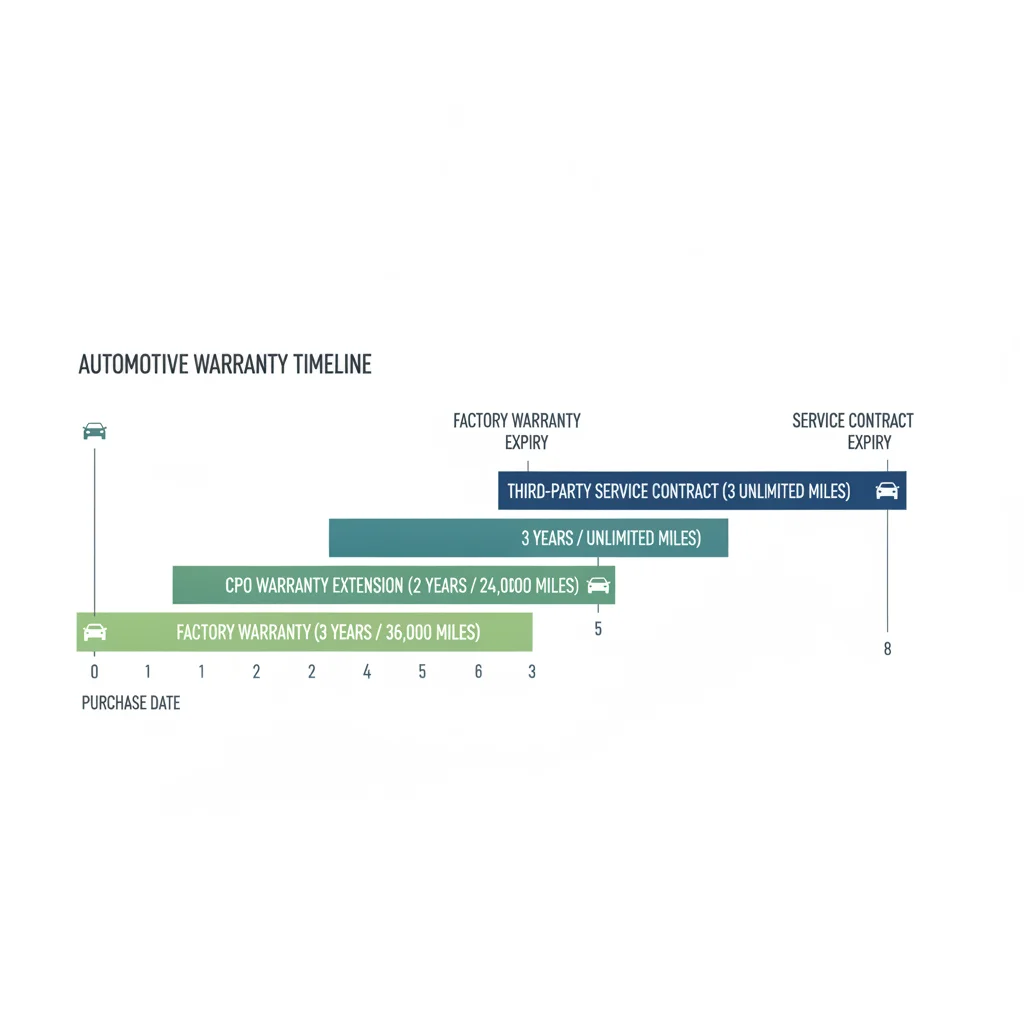
Buying a service contract on a vehicle that still has factory warranty coverage can result in paying for protection you don't yet need. Most factory warranties already cover powertrain and major mechanical failures for a defined period — adding a service contract on top means two sets of coverage for overlapping components, with the service contract sitting dormant until the factory coverage lapses.
For certified pre-owned (CPO) vehicles, the interaction is more nuanced. CPO warranties are typically extensions of the factory warranty and come with their own exclusions. A service contract layered on top of CPO coverage may fill gaps, but it may also simply duplicate what you already have. Understanding when CPO and extended warranties overlap is essential before spending money on additional coverage.
On used vehicles purchased without CPO status, a service contract may provide genuine value — particularly on higher-mileage vehicles or makes with known reliability concerns. But the quality of that value depends entirely on the coverage tier, the exclusions, and the administrator's claims-paying track record. Our detailed guide on extended warranties on used cars walks through how to evaluate specific contract terms against the vehicle's risk profile.
One additional concern: some service contracts require that all maintenance be performed on schedule and documented. If you can't produce records showing oil changes, fluid flushes, and other required services at the intervals specified in the contract, a claim related to those systems can be denied. This is separate from the question of where you have service performed — federal law gives you the right to use independent shops for routine maintenance without voiding coverage, a fact many buyers don't know. See our piece on the myth that dealer-only service is required for a clear breakdown of your rights.
Practical Steps to Evaluate Any Service Contract Before You Sign
Rather than accepting or declining a service contract based on how it's described in the moment, use a repeatable checklist to evaluate the actual document.
- Identify the contract type: Is it exclusionary or inclusionary? If inclusionary, pull up the components list and compare it against the vehicle's known failure points.
- Find the administrator: Who is responsible for paying claims? Is the contract backed by a licensed insurance policy? Is the administrator licensed in your state?
- Read the exclusions in full: Focus on consequential damage clauses, technology exclusions, and maintenance-related failure language.
- Understand the claims process: What is the pre-authorization requirement? Is there a deductible per visit or per repair? Who do you call first when something goes wrong?
- Review cancellation terms: What is the full-refund window? What is the prorated formula? Are there cancellation fees? If financed, how is the refund processed?
- Calculate the true cost: If financed, use a loan calculator to determine the total interest cost of including the contract in your loan balance.
- Compare alternatives: Can you buy a comparable contract directly from the automaker or a highly-rated third-party administrator after leaving the dealership? Factory warranty extensions are often available until the original warranty expires.

If the F&I manager pressures you to decide immediately, that pressure is itself informative. Legitimate service contract offers don't expire the moment you leave the lot. You can almost always purchase equivalent coverage later, often at a better price, once you've had time to compare terms without the urgency of a closing room.
For vehicles where the sale itself involved complex contract paperwork, it's also worth reviewing what other terms may have been bundled into your agreement. Our overview of as-is clauses and implied warranties explains how foundational sale terms interact with any add-on protection you layer on top.

All claims are backed by peer-reviewed research. Sources on request.