Key Takeaways
Dealer Trade-In Value
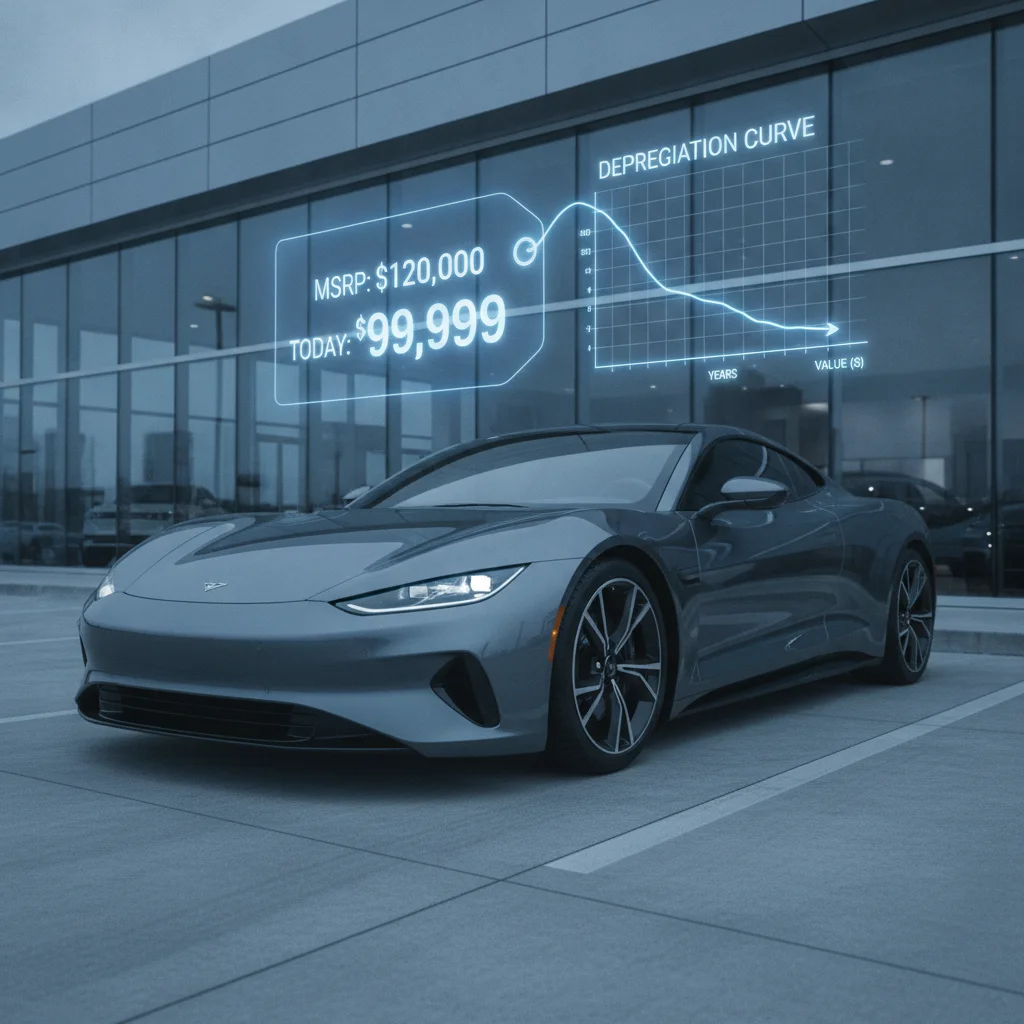
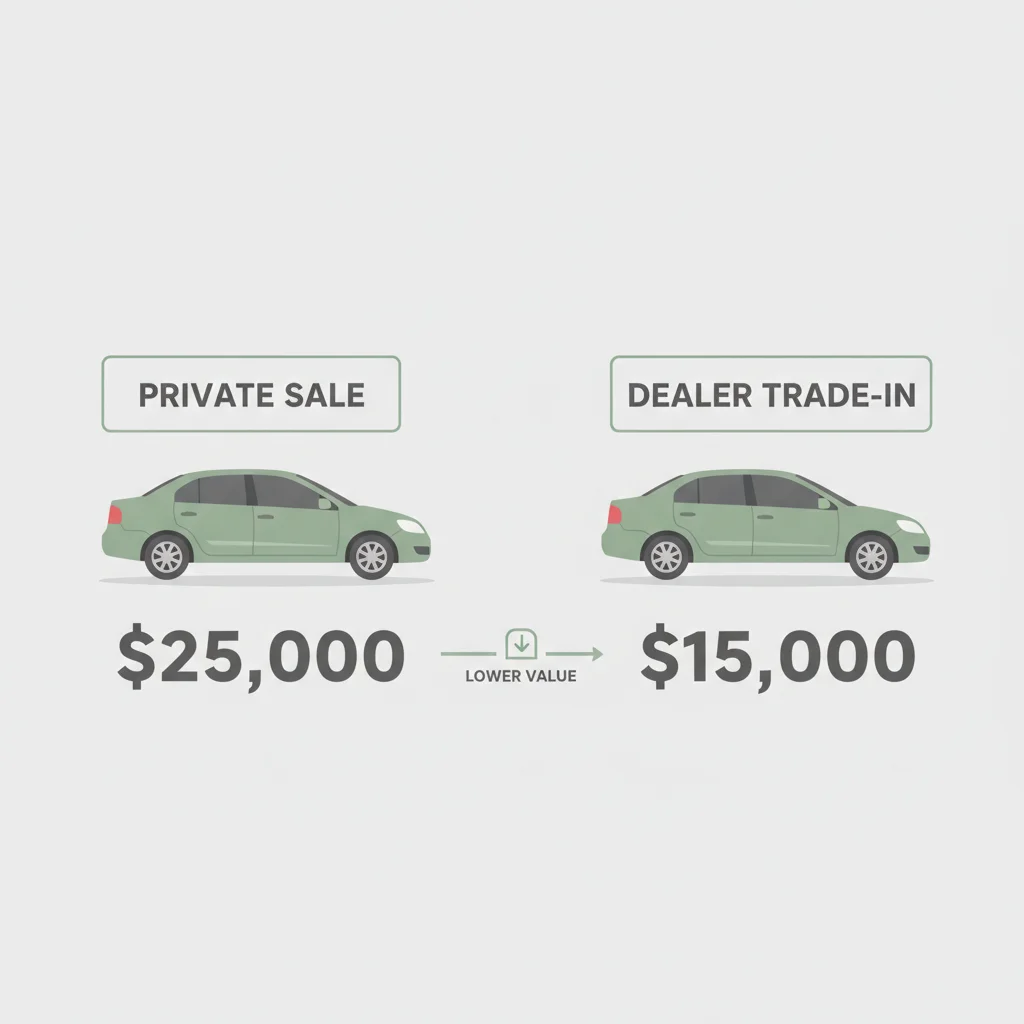
A dealer trade-in value is the price a dealership offers to purchase your current vehicle when you buy or lease another car from them. It is almost always lower than what the car would sell for on the private market, because the dealer needs room to recondition the vehicle, absorb auction risk, and earn a profit on resale. The gap between what a dealer offers and what your car is actually worth on the open market is where depreciation — real and inflated — shows up most visibly.
Dealers typically anchor trade-in offers to wholesale auction data (e.g., Manheim Market Report or Black Book), then subtract estimated reconditioning costs and a profit margin of $1,000–$3,000 or more, depending on the vehicle's demand category.
The Number on the Table Isn't What Your Car Is Worth
You walk into a dealership expecting a fair trade-in offer. The appraiser drives your car around the lot, taps something into a tablet, and comes back with a number that feels insultingly low. It's not random — but it's also not a neutral reflection of your car's value. It's a depreciation estimate filtered through a dealer's profit calculation.
Understanding why that number lands where it does requires understanding two things: how depreciation actually works over a car's life, and how dealers translate that depreciation into a wholesale bid with margin built in. Once you can see both layers, the offer stops feeling arbitrary and starts making financial sense — even if it still frustrates you.
Dealer Trade-Ins are one of the most misread transactions in car buying. Most sellers treat the offer as a verdict on their car. It's really just the opening position of someone who needs to make money reselling it.
How Depreciation Actually Works — and Why the First Three Years Hit Hardest
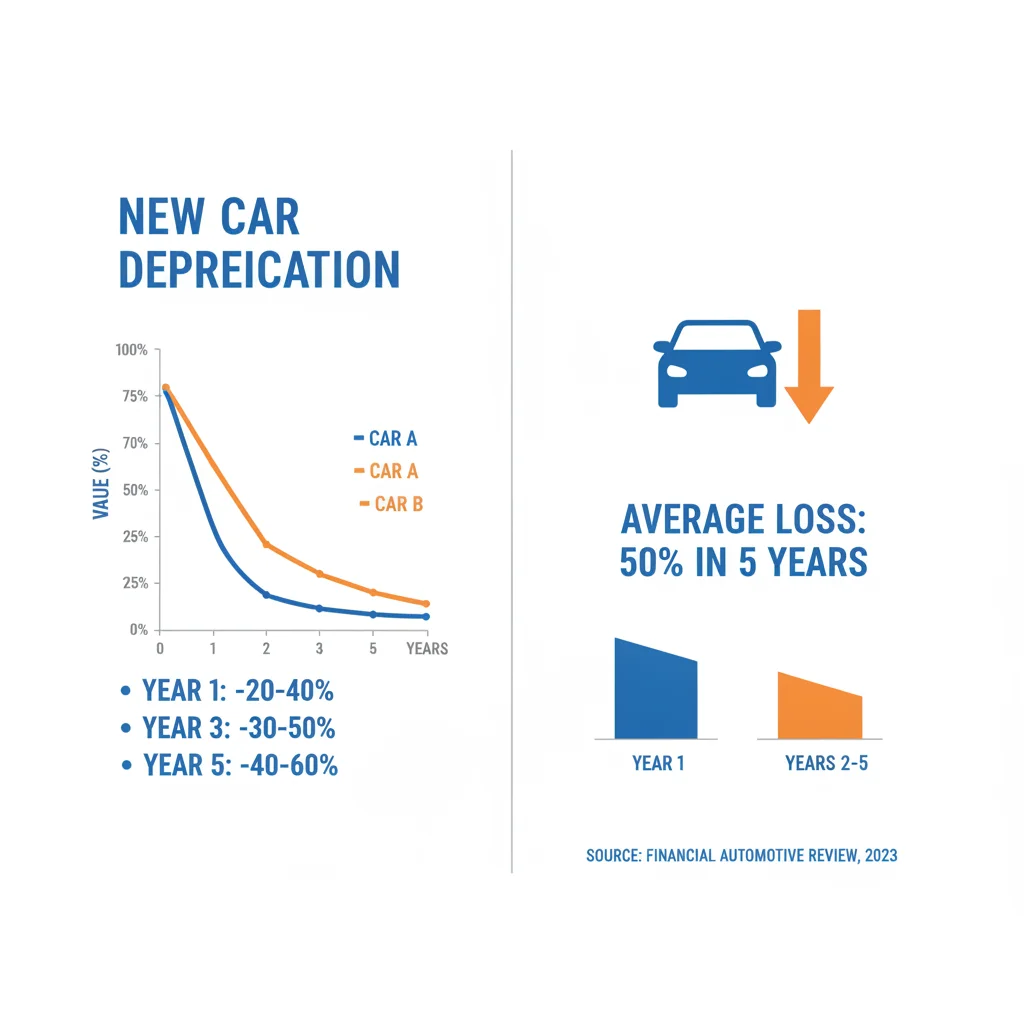
Depreciation isn't linear. A car doesn't lose the same dollar amount each year; it loses the most value early, then slows. The curve is steep at first and gradually flattens. Here's a general approximation for a typical mainstream vehicle:
| Year of Ownership | Approximate Value Retained | Cumulative Value Lost |
|---|---|---|
| End of Year 1 | ~80% | ~20% |
| End of Year 2 | ~68% | ~32% |
| End of Year 3 | ~58% | ~42% |
| End of Year 4 | ~50% | ~50% |
| End of Year 5 | ~40% | ~60% |
These numbers shift by brand, model, and market conditions — luxury vehicles can depreciate faster, trucks and SUVs often hold value better — but the shape of the curve is consistent across segments. The first three years are where owners take the largest hit.
Why? Because a new car carries a premium that evaporates the moment it's titled. Dealers can no longer sell it as new, which instantly repositions it in a lower demand tier. Manufacturer warranties begin ticking down. And new model-year releases make the previous version less desirable. All of that hits the odometer reading you've accumulated.
20%
Average value lost in first year of ownership
Industry data consistently shows new vehicles lose approximately 15–20% of value in the first 12 months, according to Edmunds depreciation research.
~42%
Cumulative value lost by end of year three
A mainstream vehicle purchased new for $35,000 is typically worth around $20,000–$22,000 at the three-year mark based on historical depreciation averages.
$1,000–$3,000
Typical dealer profit margin on retail trade resale
Dealers subtract a profit buffer from the wholesale auction price before making a trade-in offer, according to industry appraisal practices.
15–25%
Typical gap between trade-in offer and market value
Consumer pricing platforms like Kelley Blue Book show the trade-in range consistently falls 15–25% below private party values for the same vehicle in similar condition.
$1,500–$3,000
Value impact of excess mileage on trade-in offer
A vehicle with 20,000–30,000 miles above average annual use can draw an offer $1,500–$3,000 lower than the same vehicle at average mileage, per Manheim auction trend data.
This is exactly what dealers are reading when they appraise your car. They're not guessing — they're looking at auction data that reflects where cars like yours actually clear the market. See how lease residual values reveal depreciation projections for a related view of how the industry forecasts these curves in advance.
What Dealers Are Actually Looking At When They Appraise Your Car
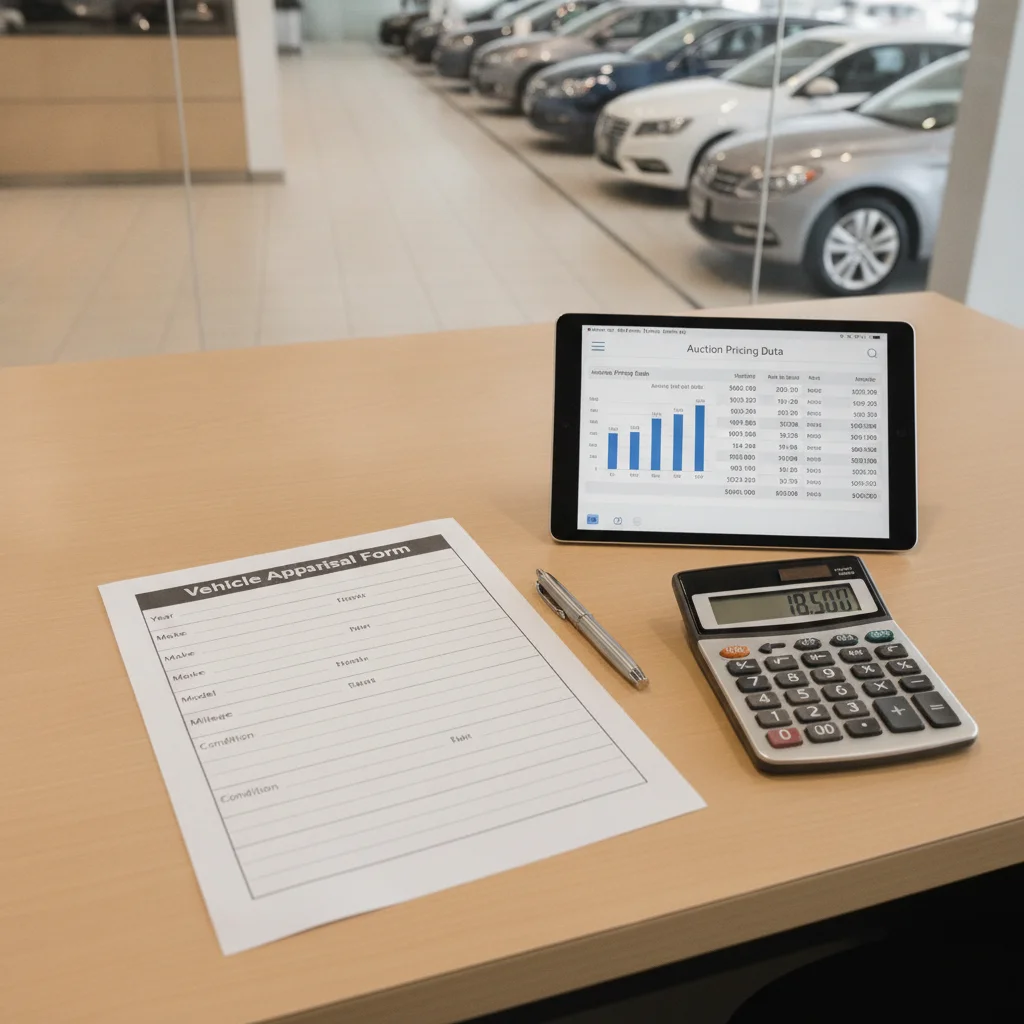
The appraisal isn't just a visual inspection. Dealers pull data from one or more wholesale pricing sources — Manheim Market Report, Black Book, and ADESA auction data are the most common — to establish what your car is likely to fetch at auction in your region. That wholesale price is their ceiling, not their floor.
From that number, they subtract:
- Reconditioning costs: Paint correction, mechanical repairs, interior cleaning, and any deferred maintenance they estimate the car needs to be retail-ready. Even a car in excellent condition may get a $500–$1,200 estimate applied.
- Dealer profit margin: The spread between what they pay you and what they'll sell the car for. This is typically $1,000–$3,000 on a vehicle they plan to retail on their own lot.
- Auction risk buffer: If your car doesn't fit their lot's profile — wrong segment, too old, too high mileage — they'll likely send it to auction. That adds fees ($200–$500) and price uncertainty, both of which reduce your offer.
- Market days supply: How quickly similar vehicles are selling in your area. A car with 60+ days of supply is harder to move, which lowers what a dealer will risk paying for it.
The hidden math behind your trade-in offer covers this cost breakdown in more detail. Understanding it changes how you interpret any number you're given.
“The appraisal is not an opinion of your car — it's a calculation of how much profit we need to make when we sell it. If you understand that, you understand the whole process.”
— Brian Benstock, General Manager, Paragon Honda — frequently quoted auto industry veteran and dealer operations expert
The takeaway: the offer you receive is a calculated bid, not an assessment of your car's real-world market value. It's designed to leave room for the dealer to profit on resale — which means it will almost always feel lower than what you think your car is worth.
The Mileage and Condition Variables Dealers Weight Most
Two inputs move a trade-in offer more sharply than most sellers expect: mileage and condition. Both interact directly with depreciation, and dealers are precise about how they apply each.
Mileage
The industry standard for "average" annual mileage is roughly 12,000–15,000 miles. Every mile above that threshold accelerates depreciation in the dealer's eyes, because it shrinks the pool of retail buyers willing to pay a premium. A three-year-old midsize sedan at 55,000 miles will draw a noticeably lower offer than the same car at 28,000 miles — the difference could easily be $1,500–$3,000 on a $20,000 vehicle.
Conversely, very low mileage doesn't always produce a proportional premium. Dealers know that sub-10,000-mile vehicles can be harder to certify or finance, and some buyers are wary of cars that weren't driven regularly. Don't expect a dollar-for-dollar reward for every mile under average.
Condition
Dealers assign vehicles to one of several condition tiers — Clean, Average, Rough — and the jump between tiers can mean $800–$2,000 on a mid-priced car. The catch: dealers almost universally appraise at "Average" or below unless the car is truly exceptional. Their logic is that they need a margin cushion in case they're wrong about repair costs.
Bring Your Service Records to the Appraisal
A folder of documented oil changes, brake jobs, and dealer-performed maintenance is concrete evidence that your car was cared for. Dealers appraise conservatively by default — your records give them a factual reason to rate the condition higher. Even a one-tier condition upgrade can add $500–$1,500 to the offer on a mid-priced vehicle.
Address Minor Cosmetics Before the Appraisal
Small scratches, scuffed bumpers, and stained interior surfaces create an impression of neglect that dealers price into the condition rating. A $150 professional detail and minor paint touch-up can shift a dealer's condition assessment — and potentially justify a higher offer. Just don't overspend; repairs costing more than a few hundred dollars rarely return dollar-for-dollar in trade value.
This is where sellers frequently leave money on the table. If your car has full service records, recent tires, no accident history, and only minor cosmetic wear, you have a factual basis for pushing the condition rating upward. Bring documentation. It shifts the conversation from opinion to evidence.
For a breakdown of how dealers use specific language to justify low appraisals, see signs a dealer is undervaluing your trade-in.
How to Use Depreciation Data to Set Your Own Floor
Instead of walking in and reacting to the dealer's number, walk in with your own number — one built from the same data sources dealers use, or close to it. Here's how to construct a realistic expectation before any conversation starts.
- Start with market value, not MSRP: Look up your car on Kelley Blue Book, Edmunds, and CarGurus. Use the trade-in range, not the private party value. These tools reflect actual transaction data, not aspirational asking prices.
- Get a competing offer first: CarMax, Carvana, and Vroom will give you a written offer without any obligation to sell. These are wholesale-adjacent bids, but they're firm and they're real money. They serve as your baseline and your leverage.
- Apply a realistic depreciation adjustment: If you bought your car two years ago for $32,000 and it's a mainstream segment vehicle, expect roughly 30–35% depreciation to date — putting fair market value around $20,800–$22,400. A dealer offer 10–15% below that range is in the normal zone. An offer 25%+ below should prompt a counter.
- Separate the trade-in from the purchase negotiation: Dealers bundle these conversations intentionally because it obscures the real numbers. Negotiate your trade-in value first, get it in writing, then shift to the purchase price.
Knowing what your car is actually worth before you walk in is the single most effective preparation you can do. It transforms the appraisal from a moment of uncertainty into a negotiation you're ready for.
Your State's Tax Credit Can Narrow the Gap
In most U.S. states, you only pay sales tax on the difference between the new vehicle's price and your trade-in value. On a $35,000 purchase with a $15,000 trade-in, you're taxed on $20,000 — not $35,000. In a state with 8% sales tax, that's a $1,200 savings that partially offsets the difference between a trade-in offer and a private sale. Factor this in before concluding that a private sale is strictly superior.
Online Instant Offers Are Real Money
CarMax, Carvana, and Vroom provide written purchase offers that are valid for a set period — usually 7 days. These aren't estimates; they're firm bids. Bringing one of these to a dealer negotiation changes the dynamic significantly, because the dealer knows you have an alternative that requires no additional negotiation.
If you want to understand the full spectrum of trade-in strategies available to you, including timing, competing offers, and private sale alternatives, our hub covers each approach with the depth each deserves.
When a Trade-In Makes Sense — and When It Costs You Too Much
Even with a full understanding of depreciation and dealer math, there are situations where trading in is the pragmatic choice. The key is knowing the cost of that convenience before you accept it.
Trade-In Makes Sense When:
- You're in negative equity and need to roll a balance into a new loan seamlessly (though this comes with its own risks).
- The time cost of a private sale — fielding inquiries, coordinating test drives, handling payment securely — exceeds the financial difference.
- Your car is in rough condition and a private buyer would discount it as much as the dealer does.
- Your state offers a sales-tax credit on trade-ins, which can reduce the tax you owe on the new vehicle purchase and partially close the value gap.
Trade-In Likely Costs You Too Much When:
- Your car is in strong condition, has low miles, and is in high regional demand — these factors favor private buyers who will pay closer to retail.
- The dealer's offer is more than 20% below your independent valuations and they won't negotiate.
- You have the time and patience to manage a private sale process properly.
For the full picture of what happens to your car after you hand over the keys — and why that matters for your negotiation — read why dealers lowball trade-ins and what you can do about it.
Also worth reviewing before you sign anything: trade-in documentation and what the dealership puts in writing. Trade-in values appear in the contract in ways that can obscure the real exchange, and verifying those numbers is a step many sellers skip to their detriment.
The dealer trade-in process isn't designed to serve you first — it's designed to serve the dealer's inventory and margin goals. That's not a criticism; it's just the economic reality of the transaction. The more clearly you see how depreciation and dealer math interact to produce that number, the better positioned you are to respond to it on your own terms.

All claims are backed by peer-reviewed research. Sources on request.