Key Takeaways
Our Verdict
If getting the most money out of your current vehicle is the priority, selling to a third-party buyer almost always wins. Dealer trade-ins make sense when speed, simplicity, or a meaningful tax-offset benefit in your state outweighs the financial loss. For most sellers, splitting the difference — getting a third-party quote first and using it as leverage at the dealership — is the smartest play.
| Best for | Recommended |
|---|---|
| Sellers who prioritize speed and zero hassle | Dealer Trade-In |
| Sellers who want maximum payout for their vehicle | Third-Party Buyer (CarMax, Carvana, etc.) |
| Those buying a new car and living in a trade-in tax-credit state | Dealer Trade-In |
| Sellers with high-mileage, older, or problem vehicles | Dealer Trade-In or Instant Offer Service |
The Real Gap Between Dealer Trade-Ins and Third-Party Buyers
When you walk into a dealership to trade in your car, you're not just selling a vehicle — you're also buying one. That combination is exactly where dealers make their money, and it's why trade-in appraisals consistently come in below what you'd get anywhere else. The dealer's goal is to acquire your car at wholesale cost and resell it at retail. The spread between those two numbers is their profit.
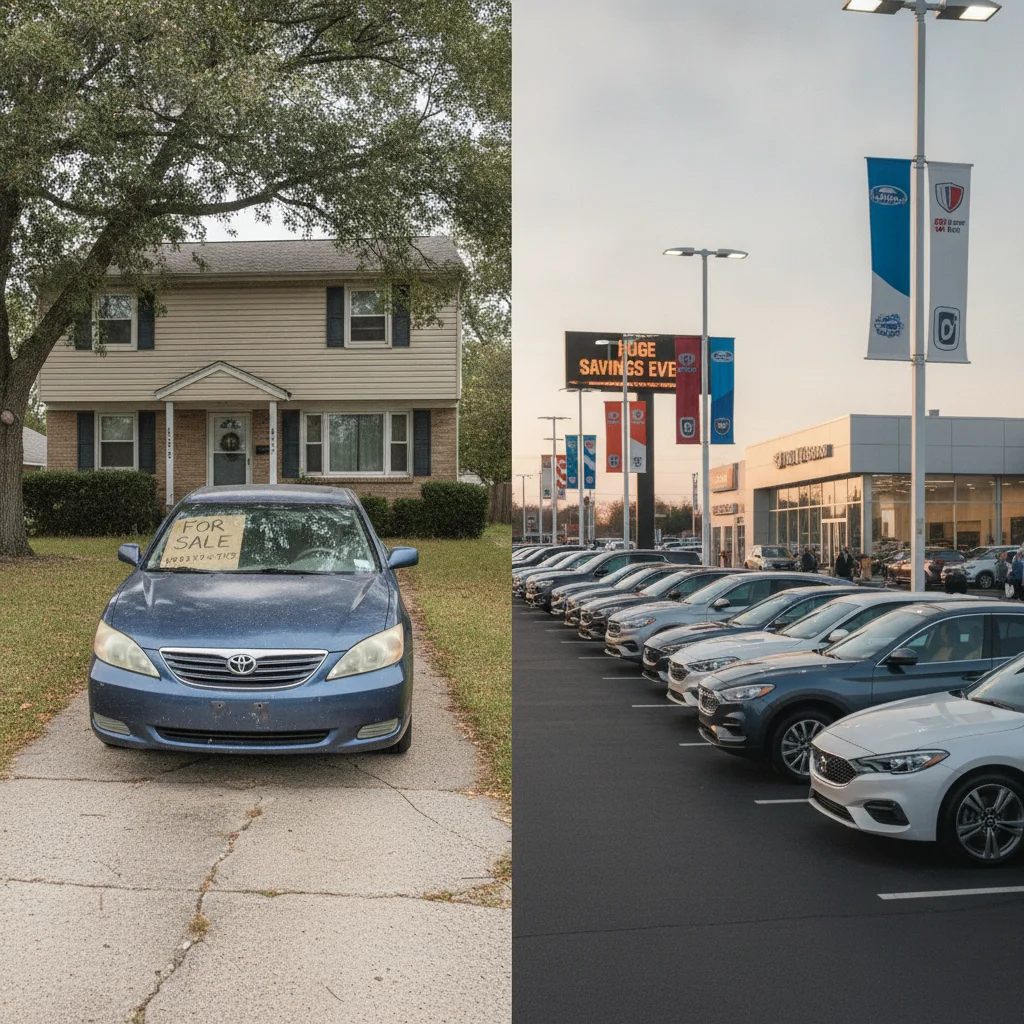
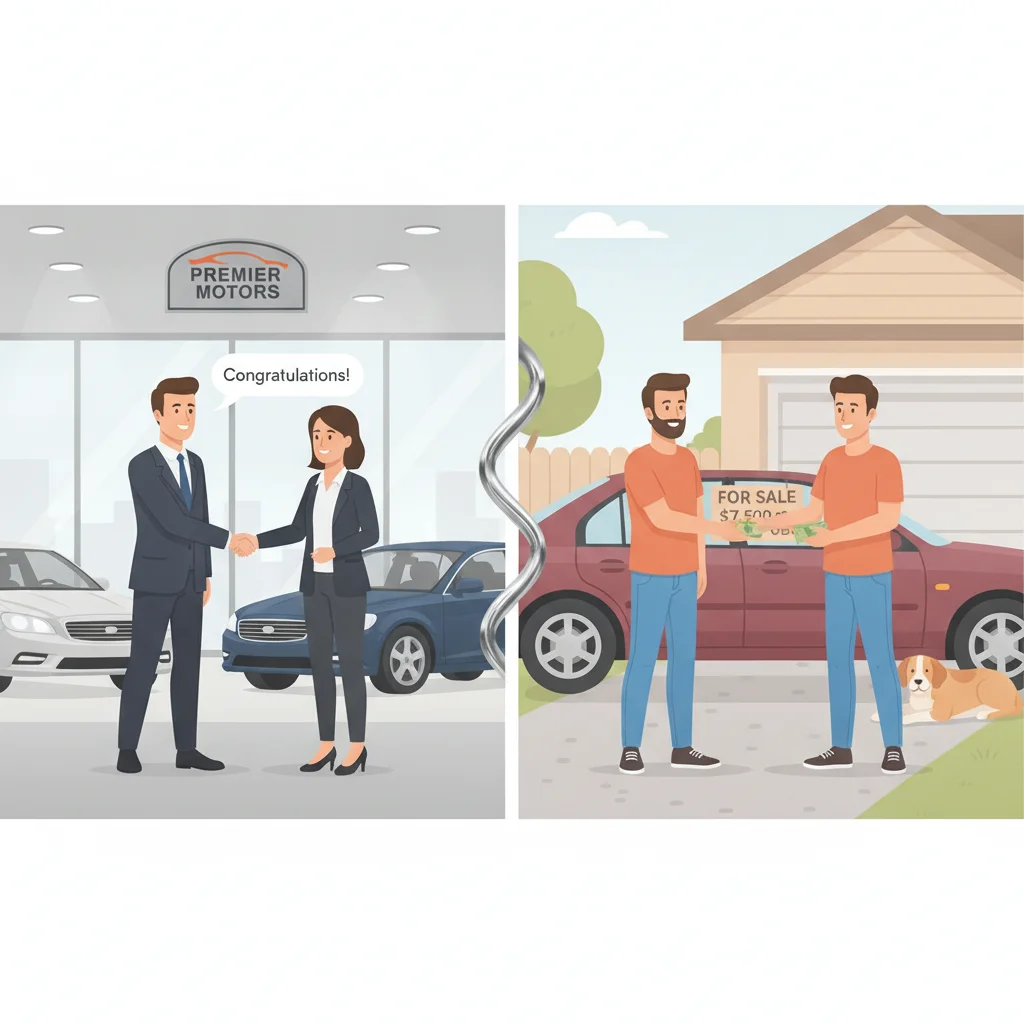
Third-party buyers — services like CarMax, Carvana, Vroom, and local independent buyers — operate differently. They're not trying to bundle your trade against a new-car deal. They're making you a straight offer on your vehicle, which typically lands meaningfully higher than a dealer's appraisal.
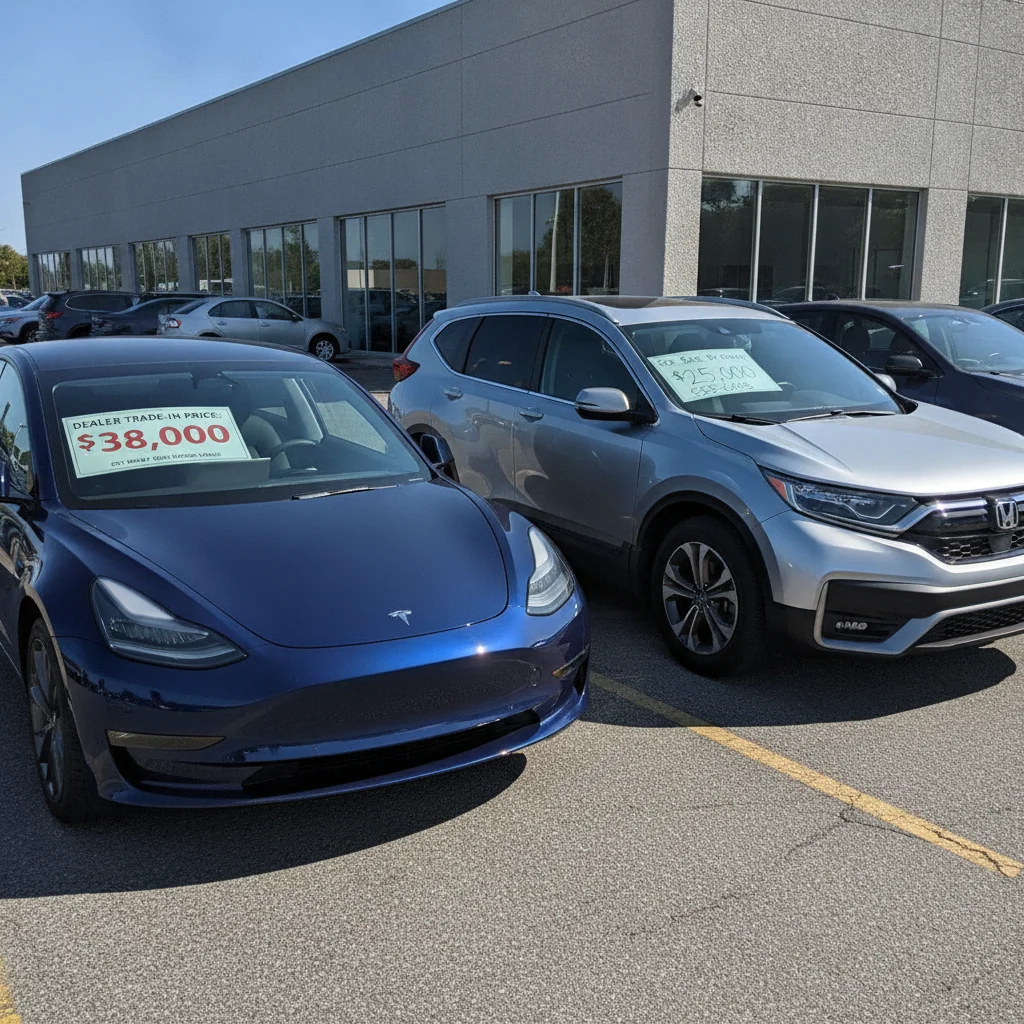
According to Edmunds data, dealers pay an average of 10 to 20 percent below what you'd receive selling independently. On a $25,000 vehicle, that gap can easily be $2,500 to $5,000. But the story doesn't end there — several factors can widen or narrow that gap, and in some cases, the dealer route legitimately makes financial sense.
The right choice depends on your state's tax laws, how much your time is worth, your vehicle's condition, and whether you're simultaneously buying another car. Let's break down each factor so you can run the math for your own situation.
How Dealer Trade-In Appraisals Actually Work
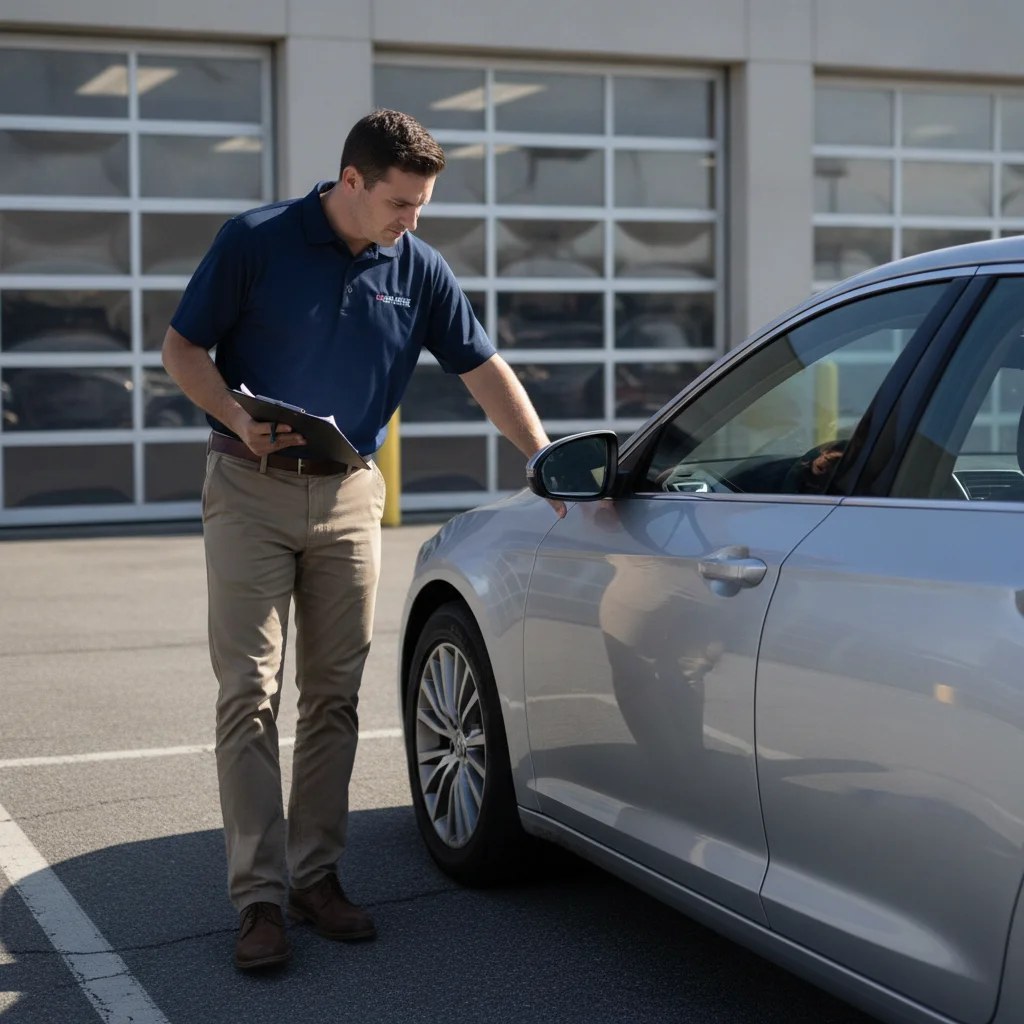
Here's what happens behind the scenes during a trade-in appraisal: a used car manager — not the salesperson you're talking to — walks your vehicle, checks for mechanical issues, runs a history report, and compares it against current wholesale auction data. Their offer is based on what they believe they can resell it for, minus reconditioning costs, plus their desired margin.
What the salesperson tells you and what's actually driving the number are two different things. Dealers often frame a low appraisal as a result of market conditions or your car's flaws, but the real anchor is their internal profit target.
Separate the Trade from the Purchase Negotiation
Never disclose your trade-in until you've agreed on the out-the-door price of the vehicle you're buying. Ask the dealer to commit to a purchase price in writing first. Once that number is locked, then introduce the trade-in. This prevents the classic tactic of padding the trade-in offer while quietly inflating the purchase price — the two numbers cancel out and you feel like you won something you didn't.
Use Competing Quotes to Move the Dealer's Number
Print or screenshot your CarMax and Carvana quotes before your dealership visit. When the used car manager presents their appraisal, lay your competing offers on the table. Many dealers will meet or beat a verifiable written offer rather than lose the new-car deal entirely. Even a $500–$800 improvement on the trade is worth the 30 minutes it took to get the online quotes.
One tactic that's nearly universal: the salesperson will ask about your trade-in at the very start of the conversation. Experienced buyers know to deflect. If you reveal your trade early, the dealer can structure numbers across both the trade and the new-car price to obscure where you're winning or losing. Keep the transactions separate — negotiate the purchase price first, then introduce the trade.
See the full dealer negotiation playbook for tactics on keeping deal components separated during a purchase.
Dealers also know your car's auction history, recent comparable sales, and local demand in real time. You typically don't — which is an information asymmetry that works entirely in their favor. Closing that gap starts with knowing your car's value before you walk in.
10–20%
Average discount on dealer trade-in vs. market value
According to Edmunds analysis, dealers typically pay 10–20% below what sellers can obtain through independent sales channels.
$2,000+
Average trade-in tax savings in a high-tax state
In states with sales tax rates above 8%, the trade-in tax offset can reduce the financial gap between dealer and third-party offers by $1,500–$3,000 or more depending on vehicle price.
7 days
Typical validity window for third-party instant offers
CarMax, Carvana, and most instant-offer platforms hold their quotes for approximately 7 days before requiring a reassessment.
Third-Party Buyers: Who They Are and How They Price
The third-party buyer category has expanded significantly in recent years. You now have several distinct options:
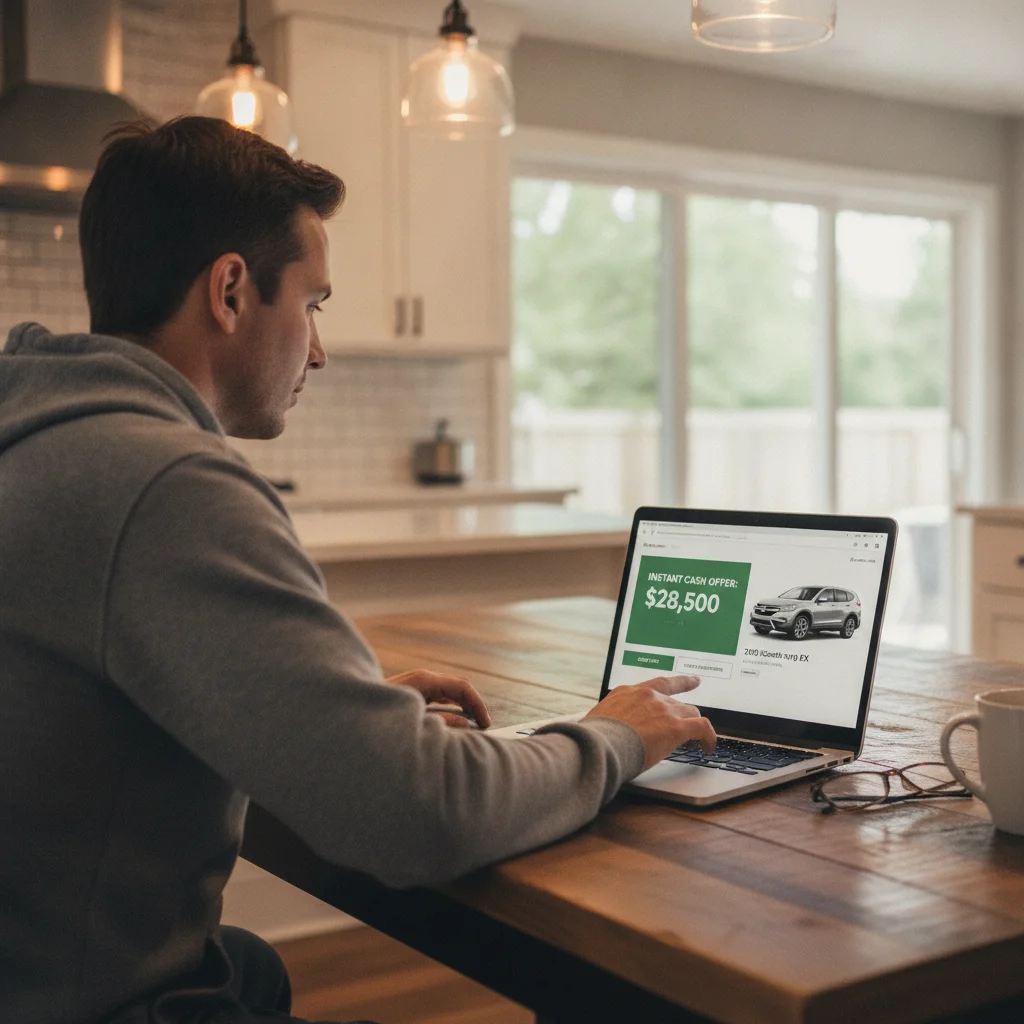
- National instant-offer platforms (Carvana, CarMax, Vroom, AutoNation): Submit your VIN and basic vehicle details online, get an offer within minutes, and — if you accept — schedule a pickup or drop-off. Payment usually arrives within 24–48 hours.
- Auction-based platforms (Manheim, ADESA through dealers): Less common for private sellers, but some platforms now offer consumer-direct auctions where dealers bid on your vehicle.
- Local independent dealers and used car lots: These buyers often pay more than franchise dealers because they can retail the vehicle directly without the overhead of a large operation. Worth calling three or four in your area.
- Specialty buyers: If you have a collector car, high-performance vehicle, or exotic, specialty buyers and auction houses (Bring a Trailer, Barrett-Jackson) often yield far better results than any general buyer.
The key with all third-party buyers is that they're making a clean offer — no financing package, no new-car deal, no trade-in credit to obscure what you're actually receiving. That transparency is the core advantage.
For a deeper look at how the private party sale channel compares, see Dealer Trade-In vs. Private Party Sale.
Watch Out for Rolled-In Negative Equity
If you owe more on your current vehicle than the trade-in offer, dealers will offer to 'take care of it' by rolling the difference into your new loan. This is one of the most damaging moves in auto finance — it means you're financing your old car's debt into a new 60- or 72-month loan, often at a higher interest rate. Before agreeing to any trade, know your exact loan payoff amount and compare it to every offer you receive.
Third-Party Offers Can Expire or Change on Inspection
An online instant offer is conditional on the vehicle matching what you disclosed. If the buyer discovers undisclosed damage, mechanical issues, or a salvage title history upon pickup, the offer will be revised downward — sometimes significantly. Be fully accurate when submitting your vehicle details, and don't expect the quoted number to survive an in-person inspection if the car has hidden problems.
The Tax Offset Benefit: When Dealer Trade-Ins Narrow the Gap
The single biggest reason a dealer trade-in can compete financially with a third-party sale — and often beats it — is the trade-in tax credit. In most U.S. states, when you trade in a vehicle at the dealership, you only pay sales tax on the difference between the new car's price and your trade-in value.
Here's what that looks like in practice:
- New car price: $40,000
- Dealer trade-in offer: $18,000
- Taxable amount: $22,000
- At 8% sales tax: you owe $1,760 in tax
If you sold that same car to CarMax for $20,500 (10% more than the dealer) and then paid full sales tax on the $40,000 new car, your tax bill jumps to $3,200 — a $1,440 difference. In that scenario, the third-party buyer's $2,500 premium shrinks to roughly $1,060 in actual take-home benefit once taxes are factored in.
The math shifts based on your state's tax rate, the spread between dealer and third-party offers, and the purchase price of your new vehicle. In high-tax states like California (7.25%+ combined), Tennessee (9.55%), and Louisiana (9.55%), this offset can be significant. In states like Oregon, Montana, New Hampshire, and Delaware, which have no sales tax, the offset doesn't exist and third-party sales are almost always better.
Run the numbers before you decide. The dealer trade-in resource hub includes guidance on how to calculate the tax offset for your state.
Side-by-Side: Dealer Trade-In vs. Third-Party Buyer
Use this comparison to assess where each option wins and loses based on the factors that matter most to your situation.
| Criterion | Dealer Trade-In | Third-Party Buyer | |
|---|---|---|---|
| Typical payout vs. market value | 70–85% of market value | 85–95% of market value | |
| Speed of transaction | Same day, during new-car purchase | 1–3 days for payment after pickup | |
| Convenience level | Very high — one stop for both transactions | High — fully online with vehicle pickup | |
| Tax offset benefit | Yes — in most U.S. states | No — pay full sales tax on new vehicle | |
| Negotiability of offer | Yes — with competing quotes | Limited — mostly fixed pricing | |
| Paperwork handled for you | Yes — dealer manages title transfer | Yes — platform manages title transfer | |
| Works for problem vehicles | Yes — most conditions accepted | Varies — some won't accept salvage/damage | |
| Leverage in new-car negotiations | Low — bundled with purchase | High — can use offer as counter at dealer |
The table above captures the structural differences. What it can't capture is the negotiating leverage a third-party offer gives you even if you ultimately trade in at the dealer. Getting a CarMax or Carvana quote before your dealership visit puts a number on paper that the used car manager has to beat — or at minimum justify why they can't. That competitive pressure alone often nudges dealer appraisals upward by several hundred dollars.
Vehicles That Don't Fit the Standard Playbook
Most of the conventional wisdom around trade-ins applies to late-model, mainstream vehicles in reasonable condition. But a significant portion of sellers fall outside that category:
High-mileage or older vehicles
If your car has over 100,000 miles or is more than 10 years old, many franchise dealers will appraise it very low or send it straight to auction — meaning their offer already reflects wholesale auction price. At that point, you have little to gain by selling privately versus trading in. The hassle-to-dollar ratio tips toward accepting the trade-in. Independent lots and wholesalers sometimes pay slightly more for older vehicles they can retail directly.
Vehicles with damage, liens, or title issues
Dealers handle these routinely. A private buyer or third-party platform may reject a vehicle outright if it has a salvage title, undisclosed flood damage, or an unresolved lien. If your car has complications, a dealer trade is often the only practical path — though be aware the appraisal will be lower to account for reconditioning and title work.
In-demand vehicles
During supply shortages — like the 2021–2023 chip shortage — dealers were paying retail or near-retail for certain used vehicles because they had nothing to sell. Those conditions shift with inventory cycles. When dealer lots are thin, their appetite for used vehicles spikes. Check current used car inventory levels at local dealers before assuming their offer will be low — sometimes you'll be pleasantly surprised.
For context on where to buy versus sell used cars, see Private Seller vs. Dealership.
The Smartest Strategy: Get Multiple Offers Before Committing
The single most effective tactic for any seller is to arrive at the dealership with competing offers already in hand. Here's how to execute this in practice:
- Pull your baseline values: Check Kelley Blue Book (KBB), Edmunds, and NADA Guides. These aren't offers — they're reference points. Dealers know these numbers and price their appraisals relative to them.
- Get at least two instant quotes: Submit your VIN to CarMax, Carvana, and one local buyer. These are real offers with expiration windows (typically 7 days). They cost you nothing and take under 30 minutes total.
- Calculate your state's tax offset: Run the math above to determine how much the tax credit is worth given your state's rate and the price of the vehicle you're buying.
- Visit the dealer with your offers printed: Don't lead with them, but don't hide them either. Once the dealer presents their trade-in offer, show your competing quotes and ask them to match or beat it. Some will. Others won't budge — which tells you exactly what to do.
- Know your walk-away number: Decide in advance what the minimum you'll accept is, factoring in tax savings. If the dealer can't hit it, take your car to CarMax on the way home.
Separate the Trade from the Purchase Negotiation
Never disclose your trade-in until you've agreed on the out-the-door price of the vehicle you're buying. Ask the dealer to commit to a purchase price in writing first. Once that number is locked, then introduce the trade-in. This prevents the classic tactic of padding the trade-in offer while quietly inflating the purchase price — the two numbers cancel out and you feel like you won something you didn't.
Use Competing Quotes to Move the Dealer's Number
Print or screenshot your CarMax and Carvana quotes before your dealership visit. When the used car manager presents their appraisal, lay your competing offers on the table. Many dealers will meet or beat a verifiable written offer rather than lose the new-car deal entirely. Even a $500–$800 improvement on the trade is worth the 30 minutes it took to get the online quotes.
This process is covered in detail — including how to use a competing offer as leverage without tipping your hand — in Trading In vs. Selling Privately: Which Gets You More Money?.
One last point that often gets overlooked: the speed of closure matters. If you're carrying two car payments, storing a vehicle, or moving across the country, the faster you close, the more the convenience is worth. Assign a dollar value to your time and stress, and factor it into the equation honestly.
Common Mistakes Sellers Make — And How to Avoid Them
After years on the finance desk, I've watched sellers cost themselves thousands through predictable errors. Here's what to avoid:
Disclosing the trade-in too early
The moment you mention a trade-in before settling on the new-car price, you've handed the dealer a tool to obscure the real numbers. Monthly payment figures become the shell game. Nail down the out-the-door price on the new vehicle first — get it in writing — then bring up the trade.
Assuming the dealer's appraisal is objective
It isn't. The same car can get different appraisals at different stores on the same day. The number is a negotiating position, not an assessment. Treat it accordingly.
Accepting the first offer without countering
Dealers expect some negotiation on the trade. A used car manager's first offer often has $500–$1,500 of cushion built in. A counter with competing quotes in hand almost always moves the number at least somewhat.
Forgetting about loan payoff on a trade
If you still owe money on the vehicle, the dealer will pay off your loan — but if you're upside down (owing more than the car is worth), the negative equity gets rolled into your new loan. This is how buyers end up $5,000 underwater from day one on a new vehicle. Know your payoff amount before you walk in.
Watch Out for Rolled-In Negative Equity
If you owe more on your current vehicle than the trade-in offer, dealers will offer to 'take care of it' by rolling the difference into your new loan. This is one of the most damaging moves in auto finance — it means you're financing your old car's debt into a new 60- or 72-month loan, often at a higher interest rate. Before agreeing to any trade, know your exact loan payoff amount and compare it to every offer you receive.
Third-Party Offers Can Expire or Change on Inspection
An online instant offer is conditional on the vehicle matching what you disclosed. If the buyer discovers undisclosed damage, mechanical issues, or a salvage title history upon pickup, the offer will be revised downward — sometimes significantly. Be fully accurate when submitting your vehicle details, and don't expect the quoted number to survive an in-person inspection if the car has hidden problems.
If you're buying used instead of new, compare your options with our guide to franchise dealers vs. independent lots.
Finally, clean your car before any appraisal — dealer or third-party. A detailed interior, working lights, and no obvious damage signals to the appraiser that the car has been maintained. A dirty, cluttered vehicle anchors them to a lower number before they even check the mileage.

All claims are backed by peer-reviewed research. Sources on request.