Key Takeaways
Run your car through KBB's instant cash offer AND their trade-in range tool — they pull from different datasets. The gap between the two tells you how much room exists in your negotiation.
KBB's instant cash offer reflects what partnered dealers will actually pay; the trade-in range shows theoretical value. Knowing both prevents you from anchoring to the wrong number.
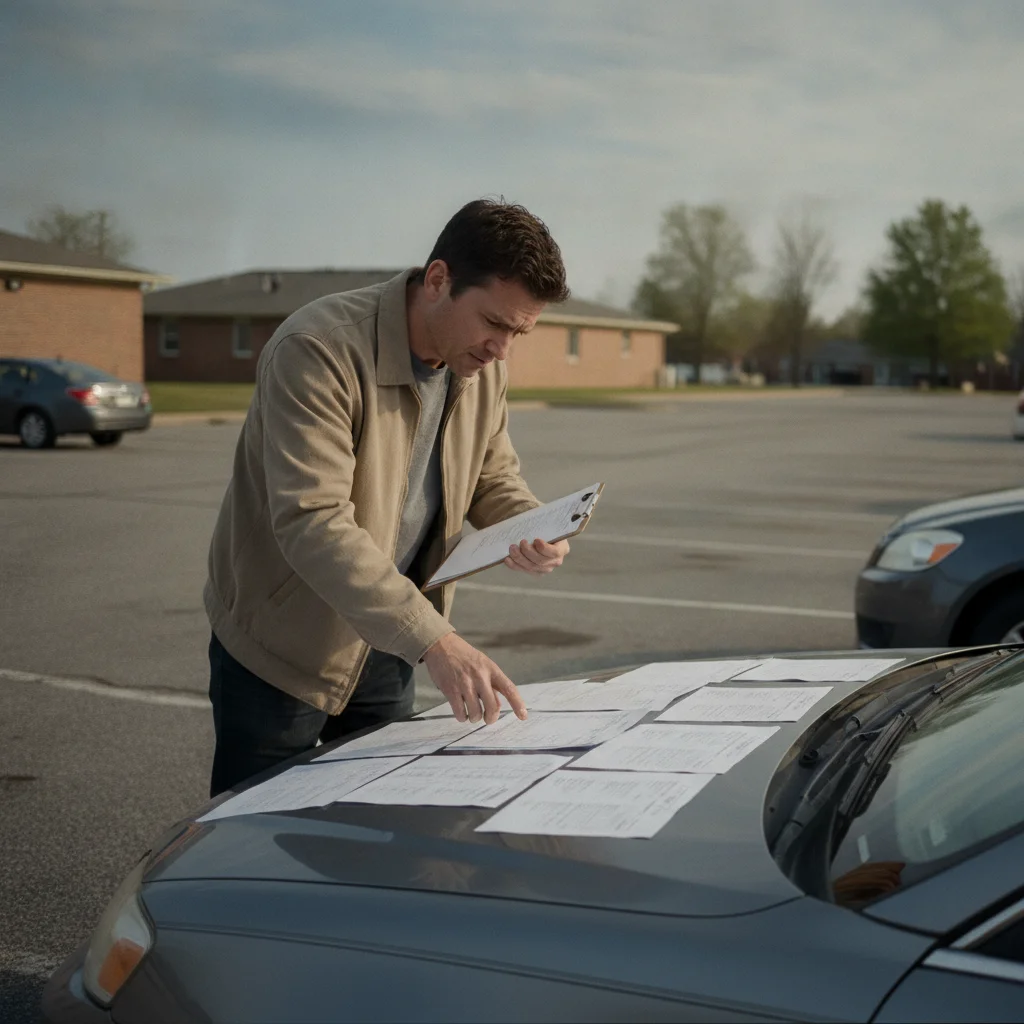
Before your appraisal, spend $60 at an independent shop for a diagnostic scan and a basic safety inspection. Bring the printed report showing no codes and no safety flags.
Appraisers add a risk premium for mechanical unknowns. A clean shop report eliminates that premium and gives you a document to push back with if they cite mechanical concerns.
Never tell a salesperson you're trading in a car until after you've agreed on the price of the vehicle you're buying. Reveal the trade-in last.
Dealers mentally bucket the deal as a whole. If they know about the trade-in from the start, they can adjust the purchase price, the trade-in allowance, or both simultaneously — making it impossible to know where you actually stand.
Why Most Sellers Leave Money on the Table
The average American seller walks into a dealership with no competing offers, no documentation stack, and no understanding of what the appraiser is actually measuring. They accept a number that feels reasonable because they have nothing to compare it to. Dealerships have refined this information gap into a science.
I spent years on the finance side of the showroom floor. I watched appraisers shave $1,500 off a car's value because the seller didn't clean the carpet mats. I watched managers blend the trade-in allowance into a monthly payment quote so the buyer couldn't see what they were actually being paid for their vehicle. These aren't isolated incidents — they're standard playbook moves.
This guide is the counter-playbook. It covers every phase of the trade-in process: researching real market value, prepping your car correctly, building a documentation stack, collecting competing offers, and sitting across the table from an F&I manager without flinching. Follow it and you will walk away with a materially better offer than the average seller.

The dealer trade-in process is not inherently unfair — but it rewards preparation aggressively. The sellers who do the work outlined here routinely outperform those who don't by $1,000 to $3,000 on the same vehicle.
Know Your Car's Real Market Value Before Anyone Else Does
Before you talk to a single appraiser, you need a defensible number. Not a number you like — a number the market will support. There's a difference, and conflating the two is a common mistake that makes sellers look uninformed during negotiations.
The Tools That Matter
- Kelley Blue Book (KBB) Trade-In Range: Use the "Fair" to "Good" condition range as your floor. KBB's trade-in values reflect what dealers typically pay, not what private buyers pay.
- Edmunds True Market Value (TMV): Edmunds pulls real transaction data and often skews slightly higher than KBB for trade-ins. Run both.
- Black Book and Manheim: These are the wholesale auction tools dealers use. You won't get direct access, but some credit unions and online estimators use Manheim data. If you can see a Manheim average, you're seeing what your car is worth at the auction your dealer would send it to.
- Live listings: Search your car's year, make, model, trim, mileage, and color on AutoTrader and Cars.com within 100 miles. If dealers near you are retailing cars like yours at $18,000, they paid somewhere between $13,500 and $15,500 at trade-in or auction. Work backward from retail to understand the margin they need.
$1,000–$3,000
Typical gap between prepared and unprepared sellers
Industry estimates suggest well-prepared sellers with competing offers consistently outperform unresearched sellers by this margin on similar vehicles.
7 days
CarMax written offer validity window
CarMax's written purchase offer is valid for seven days, giving you time to shop it against dealer offers without pressure.
$200–$400
Deduction for missing second key on push-button start vehicles
Programming a new key fob for modern vehicles costs dealers this amount in parts and labor, and they deduct it directly from your trade-in offer.
7%
Average state sales tax rate on new car purchases
At the national average sales tax rate, a $15,000 trade-in generates approximately $1,050 in tax savings — a critical factor when comparing trade-in versus private sale net proceeds.
30 min
Time to get a CarMax appraisal
A CarMax in-person appraisal typically takes about 30 minutes and produces a no-obligation written offer you can use as leverage at any dealer.
Condition Matters More Than Sellers Realize
Every valuation tool asks you to self-report condition. Be honest — appraisers see every scratch and CEL. If you claim "Excellent" and the appraiser finds wear consistent with "Good," they'll use your overstatement against you as a negotiation chip. Run through KBB's condition quiz honestly and you'll get a more accurate baseline.
Run your car through KBB's instant cash offer AND their trade-in range tool — they pull from different datasets. The gap between the two tells you how much room exists in your negotiation.
KBB's instant cash offer reflects what partnered dealers will actually pay; the trade-in range shows theoretical value. Knowing both prevents you from anchoring to the wrong number.
Before your appraisal, spend $60 at an independent shop for a diagnostic scan and a basic safety inspection. Bring the printed report showing no codes and no safety flags.
Appraisers add a risk premium for mechanical unknowns. A clean shop report eliminates that premium and gives you a document to push back with if they cite mechanical concerns.
Never tell a salesperson you're trading in a car until after you've agreed on the price of the vehicle you're buying. Reveal the trade-in last.
Dealers mentally bucket the deal as a whole. If they know about the trade-in from the start, they can adjust the purchase price, the trade-in allowance, or both simultaneously — making it impossible to know where you actually stand.
The Pre-Appraisal Prep Work That Actually Pays Off
There's a temptation to spend $200 on a full detail before your appraisal. In most cases, that money won't come back to you dollar-for-dollar. Appraisers are not emotionally moved by a shiny interior — they're running a mental reconditioning estimate. What matters is eliminating the items that inflate that estimate.
What's Worth Doing
- Wash and vacuum the car yourself. A clean car signals you cared for it. It costs $15 and takes an hour. The first impression matters — a grimy car gets flagged immediately.
- Fix small chips and cracks. Windshield chips that haven't spread can often be filled for under $50. A cracked windshield can cost the appraiser $300–$500 to fix, and they'll deduct every dollar plus margin.
- Address any warning lights. A check engine light is the most expensive thing on your dashboard during a trade-in. Appraisers assume the worst. A $60 diagnostic scan might reveal a loose gas cap. Fix the easy stuff; at minimum, know what the code is so you can address it honestly.
- Replace missing or broken trim pieces. Dealers get hit on cosmetics at auction. A broken mirror cap or missing splash guard will show up in the reconditioning estimate.
- Inflate the tires correctly. Under-inflated tires during a test drive will flag suspension concerns in an appraiser's mind.
What's Not Worth Doing
- Professional paint correction or ceramic coating
- New tires (unless they're dangerously worn)
- Major mechanical repairs — you'll almost never recoup the cost
- Reupholstering seats or replacing carpets
For a deeper breakdown of what prep steps actually move the needle on appraisal day, see what to do before you drive to the dealership.
The $15 Prep That Beats a $200 Detail
A hand wash, a thorough vacuum, and a $10 bottle of interior cleaner will do more for your appraisal than a professional detail. Appraisers aren't grading shine — they're grading condition. Eliminate visible neglect, not every microscopic imperfection.
Pull Your Own Carfax Before the Dealer Does
If your vehicle history report shows an accident or title issue, you need to know about it before the appraiser does. Surprises during an appraisal always cost the seller money. Review your own report, prepare your documentation, and address any flags proactively.
The Documentation Stack: What to Bring to Every Appraisal
Documentation is silent negotiation. Walking in with a complete folder tells the appraiser that you're organized, that you know your car's history, and — critically — that you know what it's worth. It changes the dynamic before a word is exchanged.
Your Essential Documents
- Title (lien-free or with payoff letter)
- If you still owe on the car, call your lender and get a 10-day payoff quote in writing. Bring it. Dealers will calculate the equity equation themselves, but having the number eliminates delays and prevents them from using an inflated payoff figure to create artificial negative equity.
- Service records
- Every oil change receipt, every recall completion, every tire rotation — if you have it, bring it. A documented maintenance history is worth real money. It tells the appraiser (and their auction team, if it gets that far) that the car was maintained. Dealers can also use service records as a selling point when they retail the car, which increases their margin and their willingness to pay more at trade-in.
- Vehicle history report (Carfax or AutoCheck)
- Pull your own report before the appraisal. Know what's on it. If there's a minor accident report for a fender bender you had repaired at a certified shop, be prepared to address it with repair documentation. Surprises during appraisal cost you money.
- Two sets of keys and all remotes
- A missing second key is a $200–$400 deduction on most modern vehicles with push-button start. Dig through your junk drawer before the appointment.
- Owner's manual and floor mats
- Small items, small deductions, but they add up across a negotiation.
About Tax Savings on Trade-Ins
In most U.S. states, when you trade in a vehicle, you only pay sales tax on the net difference between the new car price and the trade-in value. This means a $15,000 trade-in on a $35,000 car saves you taxes on $15,000 — potentially $700–$1,200 depending on your state rate. This tax benefit is a real dollar advantage of trading in vs. selling privately, and it should always be factored into your comparison.
Negative Equity Changes the Math
If you owe more on your current car than it's worth, you have negative equity (commonly called being 'underwater'). Dealers will often roll this into the new car loan, which means you're financing the deficit. This is legal but costly — you'll pay interest on the negative equity for the life of the new loan. Know your exact payoff amount before entering any negotiation.
How to Collect Competing Offers and Use Them as Leverage
A single trade-in offer is not a market — it's a dealer's opinion. You need at least three offers to understand where your car actually lands. More importantly, competing written offers are the most powerful documents you can bring to a negotiation.
Where to Get Offers
- CarMax: Their appraisal is free, takes about 30 minutes, and produces a written offer valid for seven days. They buy in volume, which makes their offers competitive and consistent. Use this as your floor.
- Carvana / Vroom / Shift: Online offers take 10–15 minutes and give you a number without leaving the house. These can be surprisingly strong, particularly for cars that skew to younger buyers (they pull from a national pool of buyers).
- Dealers carrying your make: A used BMW sells for more on a BMW lot than at a Honda store. Bring your car to a dealer who can actually retail it. A Honda dealer appraising your BMW is pricing for auction — a BMW dealer is pricing to put it on their used car lot at a premium.
- Independent dealers: Don't overlook smaller independent used car operations. They often pay closer to retail because they don't have the overhead of a large franchise and can move your vehicle through their retail channel faster.
The process of running this circuit efficiently — and using the resulting offers as negotiation currency — is covered step by step in our guide to getting multiple trade-in offers before you buy.
How to Use Competing Offers in the Room
Don't volunteer offers until you have the dealer's number on the table. Once they give you a figure, place the competing offer(s) in front of them. Say: "CarMax offered me $X. That offer is valid through . What can you do?" You're not bluffing — you're presenting evidence. A dealer who wants your trade will respond. One who won't budge close to CarMax is telling you their reconditioning estimate doesn't work at that number, which means they're also telling you to sell it to CarMax.
Never Show a Competing Offer Too Early
If you show CarMax's offer before the dealer gives you their number, they'll simply match it by a dollar and stop there. Let them commit to a number first — then use the competing offer to push above it. Revealing your hand early eliminates your leverage.
Online Offers Are Subject to In-Person Verification
Carvana and Vroom online quotes are based on what you tell them about the car's condition. If the vehicle inspector finds undisclosed damage or mechanical issues at pickup, the offer will be revised downward. Disclose accurately up front to avoid a painful last-minute renegotiation.
Inside the Dealer Appraisal: What They're Actually Doing
When an appraiser walks your car, they're running a mental spreadsheet. Understanding their calculation gives you the ability to address each line item before they ever write a number down.
The Appraiser's Mental Spreadsheet
| Line Item | What They're Looking For | Your Counter |
|---|---|---|
| Auction value (MMR/Black Book) | What the car brings at wholesale right now | Know this number from your research |
| Reconditioning estimate | Cost to make the car retail-ready | Minimize it with prep; document repairs done |
| Transportation / flipping cost | Cost if they send to auction vs. retail themselves | Target dealers who will retail your car on their lot |
| Market days supply | How long your car type sits on lots locally | Time your trade-in to when your segment moves fast |
| Desired gross profit | Their margin target on resale | Competing offers reduce the negotiable margin |
The appraiser's goal is to buy your car at the lowest number that keeps you in the room. They're not being malicious — this is their job. Your job is to close the gap between their opening offer and the real market value you've established through research and competing offers.
“The single biggest mistake sellers make is treating the trade-in appraisal as a passive event. You are not a spectator — you should be presenting evidence, not waiting to react to a number.”
— Desmond Kimathi, Former dealership finance professional and consumer auto advocate
Red Flags During the Appraisal
- The appraiser mentions the monthly payment before they've given you a trade-in number — they're trying to blend the negotiation.
- They ask if you're also buying a car today before appraising your trade — this affects how they structure the deal.
- They give you the trade-in number only as part of a "difference" figure (e.g., "Your new car is $35,000 and we'll give you $12,000 for your trade, so you owe $23,000") — demand a standalone trade-in value.
Negotiate Trade-In and Purchase Separately — Always
The single most exploited mistake in car buying is allowing the dealer to combine your trade-in negotiation with your purchase price negotiation into one monthly payment conversation. When these are blended, dealers can adjust one variable to offset the other and you'll never know which deal you're actually getting. Insist on a written, standalone trade-in offer before any discussion of a new vehicle purchase begins. This is non-negotiable.
Read Every Line of the Purchase Agreement
Verbal agreements at the negotiation table are worth nothing. The number that matters is the one written in the trade-in allowance line of the purchase contract. Before you sign, verify that the trade-in allowance matches what was agreed, that no unauthorized add-ons have appeared, and that the payoff figure on your trade-in loan matches your lender's 10-day quote. Discrepancies discovered after signing are extremely difficult to unwind.
Negotiating the Trade-In: Tactics That Work
Every experienced buyer knows the cardinal rule: negotiate the trade-in separately from the purchase price of any new or used car you're buying. Dealers profit from blending these negotiations because they can give with one hand and take with the other. You won't know which hand you're watching.
The Separation Rule in Practice
When you arrive at a dealership, tell them you'd like to get your trade-in appraised and discuss that transaction first — separately from any vehicle you might purchase. If they push back, hold the line. If they refuse entirely, leave. A dealership that won't give you a clean, standalone trade-in offer is one that relies on blending to make its margins. That's not a dealer you want to do business with.
Once you have a standalone offer, use this sequence:
- Let them give their number first.
- Counter with your highest competing offer plus 5–10%.
- Present your documentation: service records, clean Carfax, second key, and the competing offer in writing.
- Ask specifically what's driving the reconditioning estimate if their number is far below your comp.
- Negotiate that estimate line by line. If they say the car needs new brakes and you had them replaced six months ago with a receipt, show the receipt.
For a step-by-step walkthrough of the exact order of operations when you're also purchasing a vehicle at the same time, see our guide to negotiating trade-in value on a new car purchase.
Run your car through KBB's instant cash offer AND their trade-in range tool — they pull from different datasets. The gap between the two tells you how much room exists in your negotiation.
KBB's instant cash offer reflects what partnered dealers will actually pay; the trade-in range shows theoretical value. Knowing both prevents you from anchoring to the wrong number.
Before your appraisal, spend $60 at an independent shop for a diagnostic scan and a basic safety inspection. Bring the printed report showing no codes and no safety flags.
Appraisers add a risk premium for mechanical unknowns. A clean shop report eliminates that premium and gives you a document to push back with if they cite mechanical concerns.
Never tell a salesperson you're trading in a car until after you've agreed on the price of the vehicle you're buying. Reveal the trade-in last.
Dealers mentally bucket the deal as a whole. If they know about the trade-in from the start, they can adjust the purchase price, the trade-in allowance, or both simultaneously — making it impossible to know where you actually stand.
When to Walk and When to Take the Deal
If the best offer the dealer can produce is still $500–$800 below your highest competing offer after negotiation, do the math on the tax advantage of trading in. In most states, you only pay sales tax on the difference between the new car price and the trade-in value. On a $15,000 trade-in at a 7% tax rate, that's $1,050 in tax savings. A $500 gap between the dealer's offer and CarMax's may still favor the dealer trade-in when you factor in tax.
Use the trade-in negotiation checklist to make sure you haven't missed any steps before you sign.
Timing Your Trade-In for Maximum Value
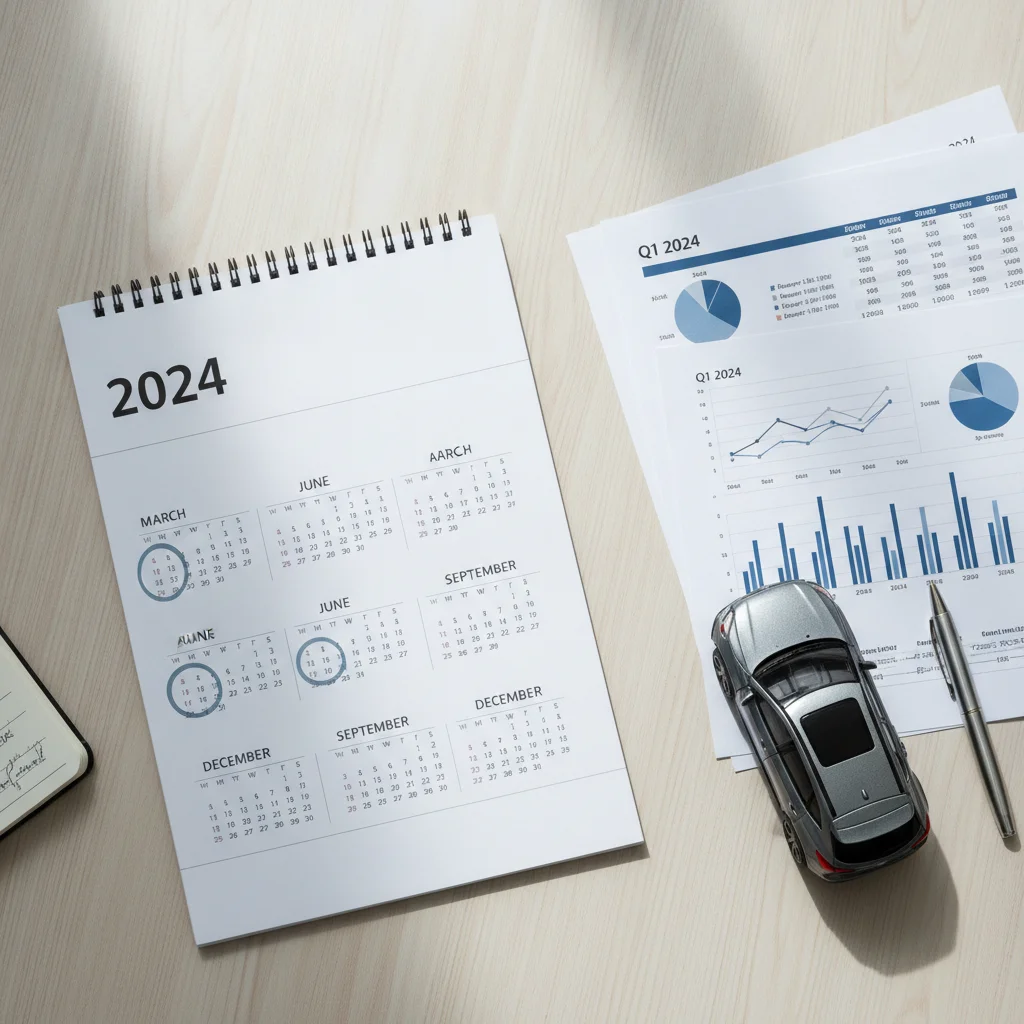
Trade-in values are not static. They move with seasonal demand, fuel prices, regional weather patterns, and broader used car market conditions. Sellers who understand these cycles can time their trade-in to coincide with peak demand for their specific vehicle type.
Seasonal Patterns
- Convertibles and sports cars peak in late winter and early spring (February–April) as buyers anticipate warm weather. Trading one in October means trading into low demand.
- Trucks and SUVs hold value well year-round but see upticks in late summer (August–September) as construction season winds down and fall buyers enter the market.
- AWD and 4WD vehicles spike in October–November ahead of winter in cold-weather regions. A Subaru or truck with 4WD traded in September will frequently outperform the same vehicle traded in January.
- Fuel-efficient cars and hybrids surge when gas prices spike. A hybrid traded when gas is $4.50/gallon will fetch more than the same car traded at $3.00/gallon.
Market-Level Timing
The used car market went through extraordinary volatility post-2020. Values that spiked during the chip shortage have since softened considerably. Monitor the Manheim Used Vehicle Value Index (publicly available as a monthly report) to understand whether the broader market is appreciating or depreciating. Trading into a declining market costs you money — if your car is still in good condition and you can wait six months, sometimes it's worth waiting.
Trade-In vs. Private Sale: Making the Right Call
The private sale will almost always net you more money than a dealer trade-in. The gap can range from $1,000 to $5,000 on a $15,000–$25,000 vehicle. The question is whether that gap is worth the friction of a private sale to you personally.
When to Sell Privately
- Your car is in excellent condition with full service records and no accident history.
- You're not in a hurry to get into the next vehicle.
- Your car is a desirable model with strong private market demand (certain trucks, off-road capable SUVs, enthusiast vehicles).
- The gap between your best trade-in offer and the private market value exceeds $2,000 after accounting for the tax savings of a trade-in.
When a Trade-In Makes More Sense
- Your car has high mileage, accident history, or deferred maintenance that would make private buyers cautious and reduce your pool of buyers significantly.
- You need a clean transaction with minimal time investment.
- The tax savings on your new purchase vehicle largely close the gap between private sale and trade-in value.
- You owe more than the car is worth — a dealer can sometimes roll the process into one transaction more smoothly than a private buyer situation allows.
About Tax Savings on Trade-Ins
In most U.S. states, when you trade in a vehicle, you only pay sales tax on the net difference between the new car price and the trade-in value. This means a $15,000 trade-in on a $35,000 car saves you taxes on $15,000 — potentially $700–$1,200 depending on your state rate. This tax benefit is a real dollar advantage of trading in vs. selling privately, and it should always be factored into your comparison.
Negative Equity Changes the Math
If you owe more on your current car than it's worth, you have negative equity (commonly called being 'underwater'). Dealers will often roll this into the new car loan, which means you're financing the deficit. This is legal but costly — you'll pay interest on the negative equity for the life of the new loan. Know your exact payoff amount before entering any negotiation.
Finalizing the Deal Without Getting Rolled
You've done the research, prepped the car, collected competing offers, and negotiated a strong trade-in number. The final stage is making sure that number survives the finance office intact.
Watch for These Moves at the Desk
Dealers are adept at recapturing margin at the finance stage. The most common tactics that affect your trade-in outcome:
- Adjusting the trade-in value downward in the contract after a verbal agreement. Read the purchase agreement line by line. The trade-in allowance must match what was agreed verbally.
- Adding dealer-installed accessories or documentation fees that effectively neutralize the value of your trade-in negotiation. Ask for a full fee breakdown before signing.
- Payoff discrepancy: If you have a lien, verify that the payoff amount listed in the contract matches your lender's 10-day payoff quote. A $200 discrepancy in their favor adds up.
- Trade-in value absorbed into monthly payment framing: Demand an out-the-door price that itemizes the purchase price, trade-in allowance, taxes, and fees separately. If the salesperson can only speak in monthly payments, that's a red flag.
Before you finalize anything, run through the trade-in negotiation checklist one last time. Print it out and bring it to the desk if necessary.

Know When to Walk Out
If the numbers in the contract don't match the numbers you agreed to and the finance manager can't reconcile them clearly, walk out. Every signature in a car deal is binding. The dealership needs the deal more than they're showing — they've already spent hours with you. Walking to the door resolves discrepancies faster than any argument at the desk. For a comprehensive breakdown of every phase of the dealer process from the seller's perspective, see the full dealer trade-in playbook. And if you want to understand the dealership negotiation dynamics from the purchase side as well, that context will make you a sharper buyer at every stage of the deal.
Negotiate Trade-In and Purchase Separately — Always
The single most exploited mistake in car buying is allowing the dealer to combine your trade-in negotiation with your purchase price negotiation into one monthly payment conversation. When these are blended, dealers can adjust one variable to offset the other and you'll never know which deal you're actually getting. Insist on a written, standalone trade-in offer before any discussion of a new vehicle purchase begins. This is non-negotiable.
Read Every Line of the Purchase Agreement
Verbal agreements at the negotiation table are worth nothing. The number that matters is the one written in the trade-in allowance line of the purchase contract. Before you sign, verify that the trade-in allowance matches what was agreed, that no unauthorized add-ons have appeared, and that the payoff figure on your trade-in loan matches your lender's 10-day quote. Discrepancies discovered after signing are extremely difficult to unwind.
Trade-in negotiation is not adversarial by nature — it's informational. The buyers who get the best outcomes are the ones who show up with better data, better documentation, and a clearer sense of their walk-away number. That's the entire playbook. Use it.

All claims are backed by peer-reviewed research. Sources on request.