Key Takeaways
Why Competing Offers Change Everything
Here's what I watched happen on the dealership floor for years: a buyer drives in with a trade-in, mentions they're hoping to get around $12,000 for it, and the used-car manager appraises it at $9,500. The buyer, with nothing to compare it to, talks it up to $10,200 and walks away thinking they won. In reality, CarMax down the street would have paid $12,800 — and the dealer knew it.
That information gap is the entire source of the dealer's leverage on trade-ins. The moment you walk in with a written, competing offer, that gap closes. The dealer either matches it, beats it, or you hand your keys to the other buyer. There's nothing complicated about the math — the complication is that most buyers skip this step because it feels like extra work.
It isn't. Collecting three solid offers takes two to three hours total, most of it done from your phone or laptop before you set foot on a lot. That time routinely translates into an extra $1,000 to $4,000 in your pocket. No other pre-purchase task has a better return on the hours you put in.
This process also works hand-in-hand with your broader negotiation strategy. The Trade-In Playbook covers every phase of the dealer trade-in conversation in detail — treat this article as the upstream step that happens before you walk through that dealer's door.
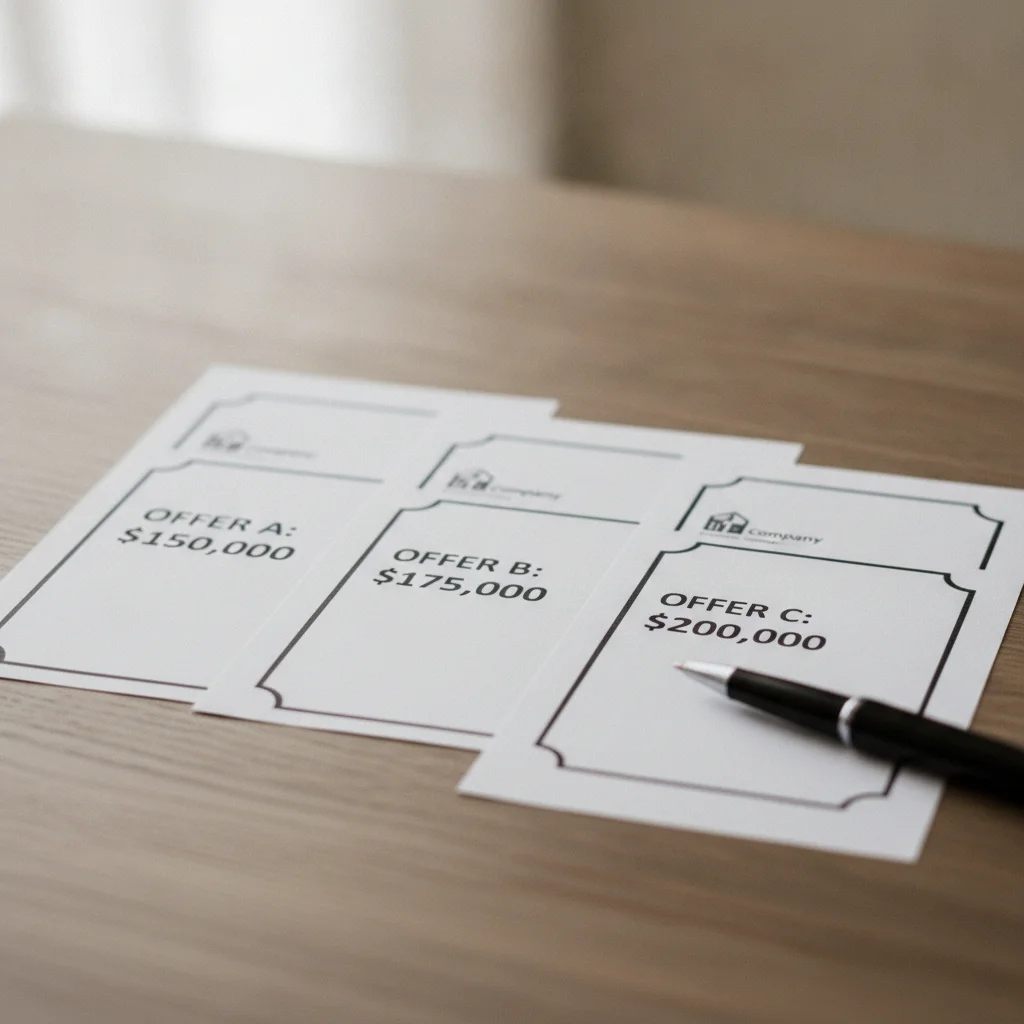
The other thing competing offers do is give you a credible exit. Dealers respond to buyers who demonstrate they will actually leave. A printed offer from Carvana or CarMax is proof of that willingness — it signals you've done the homework and won't be talked out of your number with vague reassurances about "what we can do on the back end."
What You Need Before You Start
Running this process efficiently requires a bit of preparation. Rushing into quote requests with incomplete information will slow you down or produce offers that later get revised downward at inspection — which is a frustrating and avoidable problem.
What you will need
One note on vehicle condition: be honest with yourself before you're honest with the buyers. Walk around your car in daylight. Check the tires, look at the paint under different lighting, sit in every seat, and run the air conditioning. If you discover a known issue — a check-engine light, a cracked windshield, worn brakes — the instant-offer platforms will catch it during in-person inspection and revise their offer down. Disclosing upfront keeps your offers accurate and saves you a wasted trip.
CarMax Instant Offer
Generates a binding written offer valid for 7 days that you can redeem at any CarMax location or use as leverage with dealers.
Carvana Online Quote
Provides a competing written offer from one of the largest online car buyers, often valid 7 days with at-home pickup available.
KBB Instant Cash Offer
Generates offers from a network of local dealers via Kelley Blue Book, useful for benchmarking regional dealer demand.
Vroom or Driveway
Additional instant-offer platforms that occasionally outpay the primary two for specific makes and model years.
Smartphone with camera
For photographing your vehicle's condition, VIN, and any existing damage — required by most instant-offer platforms.
If your car has aftermarket modifications — lift kits, non-stock wheels, performance exhaust — understand that most large buyers and dealers will price those items at zero or negative value. They appeal to a narrow resale audience. Factor that in before you set your expectations.
Step-by-Step: Running the Multi-Offer Process
Follow these steps in order. The sequence matters — specifically, complete your online quotes before you visit any dealer for an in-person appraisal, and hold your trade-in card until after you've locked the purchase price on your new vehicle.
Pull your baseline value from two independent sources
Before you ask anyone to buy your car, you need to know what it's worth in the current market — not what you paid for it, not what you feel it's worth. Use both Kelley Blue Book and Edmunds True Market Value to get a trade-in range for your specific vehicle. Enter the VIN, exact mileage, trim level, and be precise about condition.
Write down the trade-in range (not the private-party range) from each source. If KBB says $11,200–$12,800 and Edmunds says $11,600–$13,100, your working target is roughly $12,000–$13,000 for a well-maintained example. This is your benchmark — not your floor, but your sanity check against obviously low offers.
Get your CarMax quote online
Go to CarMax.com and use the "Get an Offer" tool. Enter your VIN and answer their condition questions honestly. The online process takes roughly 15–20 minutes. CarMax will present an offer that's valid for seven days and redeemable at any CarMax location.
Print this offer or save it as a PDF. Note the expiration date. CarMax's offer is typically one of the most reliable benchmarks because they have a large, consistent buying appetite and they publish binding numbers rather than estimates.
Get your Carvana quote online
Go to Carvana.com and enter your VIN in the "Sell My Car" section. The process asks similar condition questions and typically generates an offer within 10–15 minutes. Carvana offers free vehicle pickup in most metro areas, which is worth factoring in if you're not purchasing a replacement immediately.
Save this offer in the same format as your CarMax quote. If the two offers differ by more than $500–$1,000, that gap tells you something about how the market reads your specific vehicle. A higher Carvana offer often means your make and model is popular in their current inventory demand cycle.
Add a third offer from KBB Instant Cash Offer or Vroom
A third data point solidifies your understanding of the market. Use KBB's Instant Cash Offer tool (which routes your information to local dealers in their network) or get a quote from Vroom.com. Either adds roughly 15–20 minutes to your process.
Three offers give you a genuine range and identify the high end. You're not going to use all three in negotiations — you're going to use the highest written offer as your anchor. The other two are backup confirmation that your number is real.
Get an in-person dealer appraisal (without mentioning your outside offers yet)
Visit one franchised dealer — ideally one that sells your vehicle's brand or a close competitor — and ask for a trade-in appraisal. Tell them you're shopping for a new vehicle and want to understand your trade-in value before you commit. Do not mention your CarMax or Carvana offers yet.
Let their used-car manager walk the vehicle and present a number. This is critical intelligence. If the dealer comes in at $13,500 and your best online offer is $12,800, you've discovered the dealer will be your best buyer. If the dealer comes in at $10,200, you now know exactly how far apart you are — and you have written proof of a better number.
Negotiate your new vehicle purchase price first — then introduce the trade
When you're ready to buy, negotiate the out-of-pocket price of the new vehicle to a number you're satisfied with. Frame it as a cash or financed purchase with no trade. Once that number is confirmed in writing, then say: "I also have a trade-in I'd like to apply. I have a written offer from [CarMax/Carvana] for $X — can you match or beat that?"
This sequence matters enormously. Dealers who know you have a trade-in early will build a combined deal that feels fair on both ends but extracts margin in whichever component you're less focused on. Separating the transactions forces them to compete on each element independently.
Accept the best total-transaction offer and close
Compare your options holistically: the dealer's trade-in offer applied to your purchase (including any state sales-tax credit on the trade), versus selling to an instant-offer platform separately and purchasing the vehicle for cash or with outside financing.
In most states, a dealer trade-in reduces your taxable purchase price — which means a $12,000 trade-in credit may save you an additional $700–$1,000 in sales tax on a $40,000 purchase compared to selling outright for $12,500. Run that calculation before assuming the higher gross number always wins.
Once you've made your decision, move quickly. Your outside offers have expiration dates, and any delay gives the dealer room to re-appraise or revise. Close the deal in the same visit where you present your competing offer.
Once you've executed all steps, you'll have a documented, competitive floor price. At that point, the negotiation conversation with the dealer becomes straightforward: your number is on paper, and it came from a buyer who will actually write a check for it today.
Don't Let a Dealer 'Beat' a Phantom Number
Some dealers will ask to see your competing offers before they make their own appraisal. Decline politely. Give them the car to appraise cold. If you show your Carvana offer first, their appraisal will come back at exactly $200 more — which is not real competition, it's anchoring. Get their independent number, then reveal the competing offer.
Online Offers Can Be Revised at Inspection
Every instant offer from CarMax, Carvana, or Vroom is conditional on in-person inspection. If the car has undisclosed issues — frame damage, worn tires, active warning lights — the final offer will be lower than the online quote. Know your car's actual condition before you start the process, not after.
Which Buyers Tend to Pay the Most — and When
Not every buyer is right for every vehicle. Understanding which channel is likely to pay the most for your specific car helps you prioritize where to invest time.
| Vehicle Type | Best Buyer Channel | Why |
|---|---|---|
| Late-model, low-mileage mainstream brands | CarMax, Carvana, or franchised dealer | High resale demand; all three compete aggressively for certified pre-owned inventory |
| Luxury or near-luxury models | Franchised dealer of the same brand | Brand dealer can retail it as CPO; independent buyers have to wholesale it |
| Older vehicles (8+ years, 100k+ miles) | CarMax or independent dealer | Carvana and Vroom have tighter age/mileage cutoffs and often decline or lowball older units |
| Trucks and popular SUVs | Any channel; consider regional dealers | Strong wholesale demand means all channels compete; a regional dealer may need your exact spec |
| High-mileage economy cars | CarMax or private party | Dealers have little margin; CarMax buys anything driveable |
The table above is a starting point, not a rule. Regional market conditions shift constantly — a franchised Toyota dealer in a high-demand market may pay more than CarMax for a used Camry simply because they're short on inventory that week. That's exactly why you run all three quotes instead of assuming.
For a deeper comparison of online buying platforms on payout, speed, and process, the Instant Offer Platforms hub walks through how each major service operates. And if you're curious about the side-by-side process for getting online quotes alone — without a simultaneous dealer purchase — see Getting Multiple Instant Offers Before You Commit.
Time Your Quotes to the Same Week
Market conditions and dealer inventory needs can shift week to week. Running all your quotes within a 5–7 day window ensures you're comparing apples to apples. Starting Monday and finishing by Friday puts you in the ideal window — your offers are still fresh when you walk into the dealership, and you have the weekend as backup if negotiations run long.
Trucks and SUVs Attract Premium Dealer Offers
If you're trading in a pickup truck or a popular SUV, franchised dealers in your region are often starved for clean used inventory and will compete aggressively against CarMax and Carvana. Get the in-person dealer appraisal early in your process — you may find your best offer isn't online at all.
Document Everything in Writing
Every offer you receive should be saved as a PDF or printed hard copy with the offer amount, expiration date, and the issuing company's name visible. A screenshot alone isn't sufficient — dealers will ask to see the actual offer document, and a blurry phone photo of a webpage won't carry the same weight as a clean printout.
Common Mistakes That Kill Your Leverage
Knowing the process is one thing. Knowing where buyers consistently lose ground is just as important.
Revealing your trade-in before the purchase price is set
This is the single most common mistake, and dealers count on it. The moment you mention you have a trade-in, the F&I manager mentally starts building a blended deal where they can give on the trade while taking back on the price — or vice versa. Negotiate the purchase price as if you're paying cash. Lock that number. Then introduce the trade. For a full breakdown of how to use your competing quotes strategically at that moment, see The Complete Playbook for Maximizing Your Car's Trade-In Value.
Letting online quotes expire before using them
Most offers from CarMax, Carvana, and similar platforms are valid for seven days. If you let them lapse and then try to show a dealer a screenshot of an old offer, they'll call it out immediately — and they'll be right. Run your quotes and visit the dealer within the same week.
Accepting a verbal dealer appraisal without a written offer
A sales manager saying "I think we can get you around $11,500" means nothing. A written appraisal sheet with a number and a signature means something. Always ask for the offer in writing before any further discussion. Dealers will sometimes float a high number verbally, then let it quietly shrink during paperwork.
Only getting one outside quote
One offer gives you a data point. Two gives you a pattern. Three gives you confidence. If CarMax offers $11,000, Carvana offers $11,800, and your franchised dealer offers $10,200, you now know the market range for your vehicle and you know exactly which number to walk in with. That's the difference between guessing and knowing.
Never Negotiate Trade-In and Purchase Price Together
This is the foundational rule of trade-in negotiation. Dealers are trained to blur these two numbers together because it gives them twice the surface area to work with. A dealer who offers you $2,000 more on your trade while quietly adding $2,000 to the purchase price has done nothing for you. Insist on agreeing on the purchase price first — in writing, on a buyer's order — before trade-in discussions begin. If a salesperson pushes back, ask to speak with the sales manager directly and repeat the request.
Assuming the highest offer is always the best deal
A $12,500 offer from Carvana that requires you to ship the car, wait ten days for title processing, and handle your new purchase separately may net you less total value than a $12,000 dealer trade-in that's applied instantly to a purchase you're already making. Do the math on the full transaction, including any sales-tax advantages your state provides on trade-in credits. In many states, a trade-in reduces the taxable purchase price — so $12,000 applied as a trade may be worth more than $12,500 in cash after taxes. Using competing dealer quotes as a negotiation tool covers this calculation in detail for the purchase side of the transaction.
Managing the Process Without Burning Relationships
If you're considering selling to a private buyer alongside your dealer and instant-offer quotes, the logistics of managing multiple interested parties require a different kind of care. You're not just comparing numbers — you're making commitments to real people who've invested time. The same principle applies here: be transparent about your process without revealing your hand prematurely.
Tell each buyer you're collecting competitive offers. Don't promise exclusivity to anyone before you've made your decision. Most professional buyers — CarMax, Carvana, franchised dealers — are accustomed to this and won't pressure you. A dealer who gets aggressive about a competing offer is usually a dealer who knows they're not competitive. That reaction is useful information.
For private-party situations specifically, How to Manage Multiple Interested Buyers Without Burning Bridges gives a detailed framework for staying fair while still closing the best deal.
Once you have your offers in hand, the endgame is simple: take your highest written offer into the dealer where you're buying your next car. Show it matter-of-factly, not as a threat — "I have a written offer here for $12,800; I'd prefer to do this as a one-stop transaction if you can match it." Most dealers will either match or come within a few hundred dollars rather than lose the deal. Some will beat it to win your business. Either way, you win — and you win because you did the work upfront.


All claims are backed by peer-reviewed research. Sources on request.