
Key Takeaways
Model Year Changeover
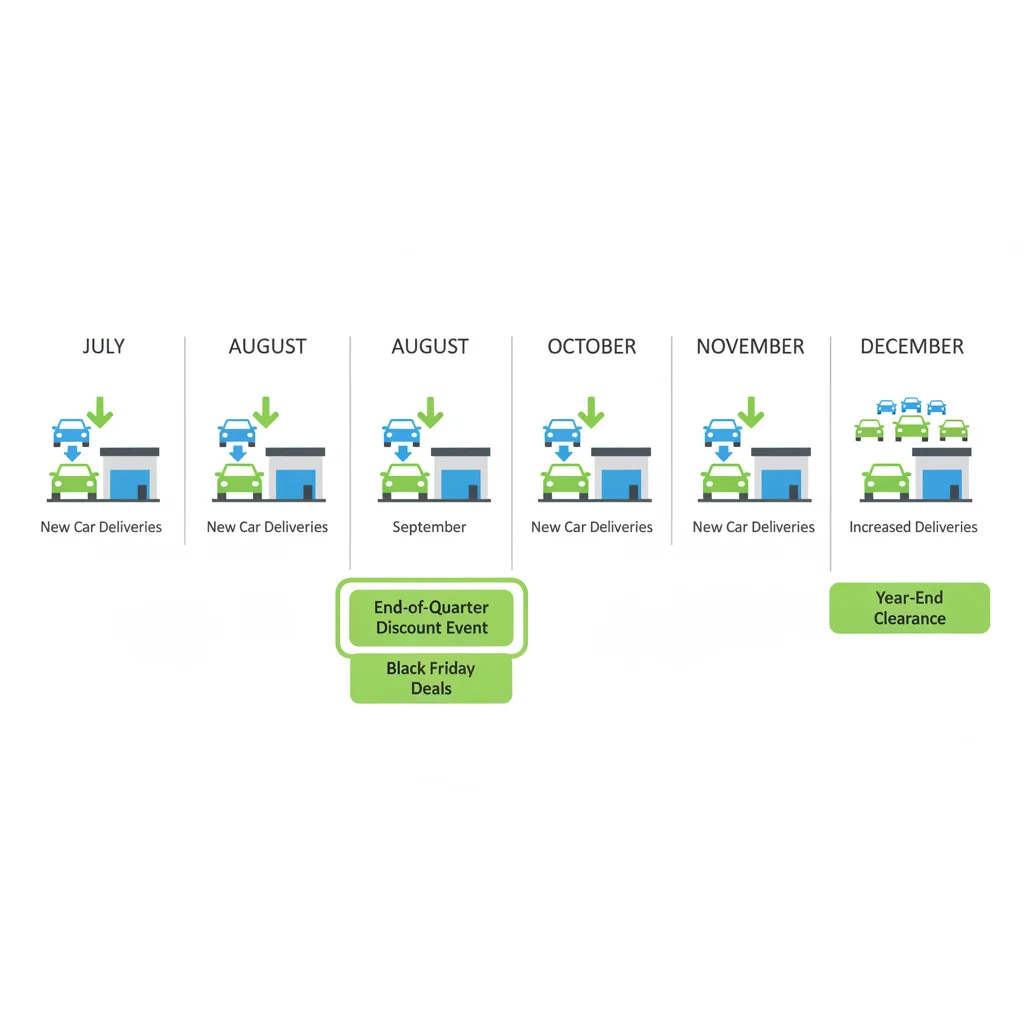
A model year changeover is the period when an automaker begins shipping the next year's vehicles to dealerships, making the current year's inventory 'outgoing.' During this window, dealers are motivated to clear space and move older units, often leading to meaningful discounts on cars that are otherwise identical to what was on the lot weeks before. It typically starts earlier than most buyers expect — often in summer — and lasts only a few months.
A vehicle's model year is set by the manufacturer, not the calendar year; a '2026 model year' vehicle can legally be produced and sold as early as January 1, 2025, under NHTSA guidelines, meaning the changeover window can open well before the new calendar year begins.
Why the Calendar and the Model Year Are Two Different Things
Most car buyers assume the 2026 model year begins on January 1, 2026. That assumption costs them money every single year.
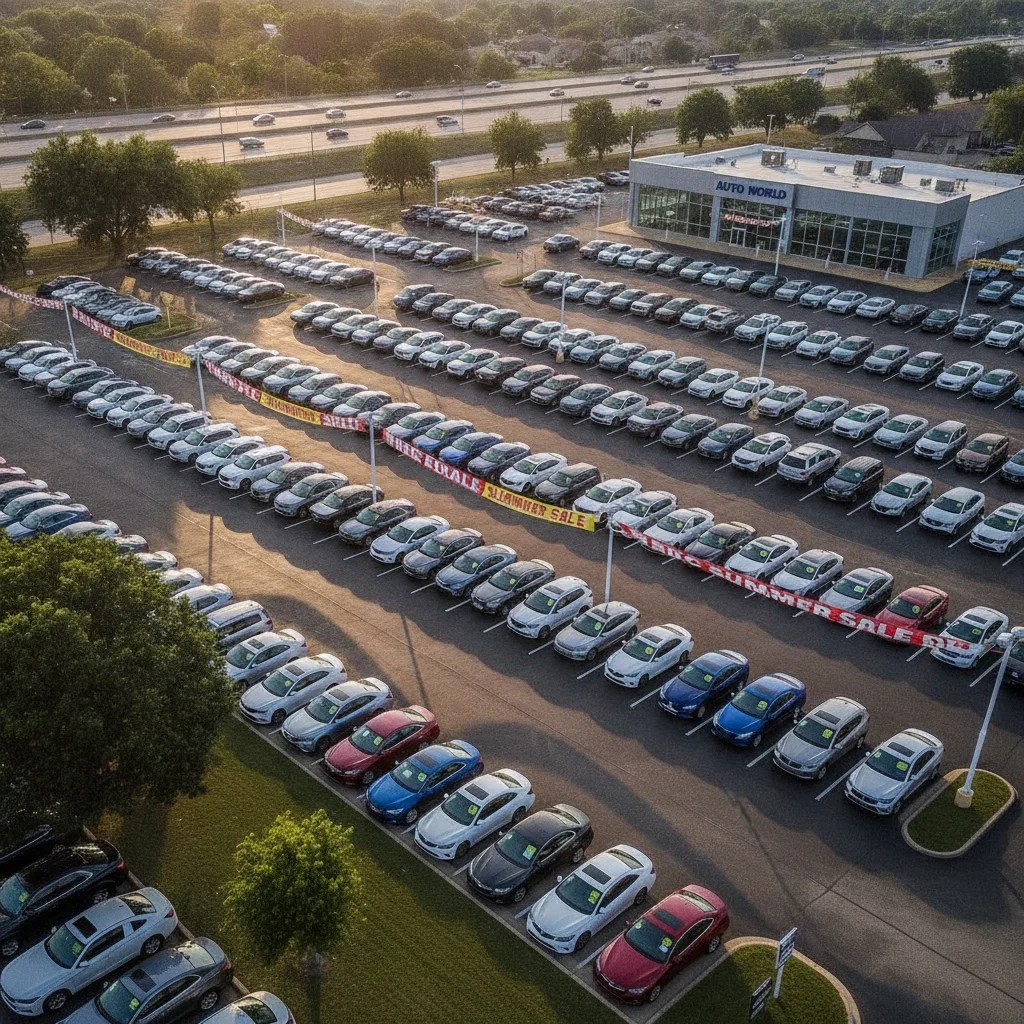
Automakers set their own production schedules, and a new model year vehicle can be manufactured — and delivered to dealers — as early as the summer of the preceding calendar year. A 2026 Honda Accord, for example, could be sitting on a dealer lot in August 2025. At that exact moment, the 2025 Accord parked two spaces over becomes outgoing inventory.
This is the changeover window. It is the period between when the new model year arrives and when the old model year is completely sold off. It is also one of the most reliably favorable windows for buyers in the entire calendar.

Understanding why this window exists — and why dealers behave differently during it — is the first step to using it to your advantage.
The Dealer's Problem: Floor Plan Financing and Carrying Costs
To understand the discount pressure, you need to understand how dealers actually own their inventory. Most franchised dealerships do not pay cash for the vehicles sitting on their lots. Instead, they use a revolving line of credit called floor plan financing. The dealer borrows money from a lender (often a manufacturer's captive finance arm) to pay for each vehicle, and they pay interest on that loan every day the vehicle sits unsold.
When a new model year arrives, two things happen simultaneously:
- The outgoing vehicle's perceived market value drops in buyers' minds, making it harder to sell at full price.
- The dealer continues paying daily interest on a depreciating asset.
This is a genuine financial squeeze. A dealer carrying 30 outgoing units at an average loan balance of $35,000 each is paying floor plan interest on over $1 million in inventory. The faster they move those units, the less interest they hemorrhage. That urgency is the source of your leverage.
5%–12%
Typical discount range on outgoing model year vehicles
Industry data from Cox Automotive and Edmunds consistently shows outgoing inventory discounts in this range during the changeover window, with deeper cuts on slow-selling or redesigned models.
~$1,200
Average annual floor plan interest per vehicle unit
At a 7% floor plan rate on a $35,000 vehicle, dealers pay roughly $2,450 per year in carrying costs — creating strong motivation to move aging inventory quickly.
July–October
Peak model year changeover arrival window
According to manufacturer production and release schedules tracked by automotive trade publications, most domestic and Asian brands begin delivering next-model-year vehicles during this period.
$3,800+
Combined savings possible with discounts plus incentives
When negotiated price reductions are stacked with manufacturer dealer cash and consumer cash-back offers, total savings on outgoing model year units frequently exceed $3,800 on mid-size vehicles.
Manufacturer support amplifies this pressure. Automakers frequently offer dealer cash — direct payments to the dealership for each outgoing unit sold — and additional consumer incentives like low-APR financing or cash-back offers on prior model year vehicles. These are separate from any price negotiation you do yourself, and they can be stacked.
Manufacturer Incentives Are Separate From Your Negotiation
Dealer cash and consumer cash-back offers from the manufacturer are separate from any discount you negotiate on the vehicle price. Always research current manufacturer incentives on sites like Edmunds or the manufacturer's own website before visiting a dealer. These incentives can be stacked with negotiated discounts to deepen your total savings during the changeover window.
Not All Model Year Changes Are Equal
A 'new model year' can mean anything from a minor color palette update to a full platform redesign. Before dismissing the outgoing model, verify exactly what changes in the incoming year. If the 2026 version only adds a new exterior color, the 2025 outgoing vehicle at a 7% discount is almost certainly the better financial choice. If the 2026 adds substantive safety features or a new powertrain, the calculus is more complex.
What the Changeover Window Actually Looks Like in Practice
The changeover does not happen all at once, and it does not happen on the same date for every brand. Here is a rough breakdown of how the calendar typically plays out:
| Brand Category | New Model Year Typically Arrives | Peak Outgoing Discount Window |
|---|---|---|
| Domestic (Ford, GM, Stellantis) | July – September | August – October |
| Japanese brands (Toyota, Honda, Nissan) | August – October | September – November |
| European/Luxury brands | September – November | October – December |
| Korean brands (Hyundai, Kia) | August – October | September – November |
These ranges are generalizations — individual models within each brand can vary significantly. A redesigned model might arrive months earlier than a carryover model in the same lineup. This is why timing a purchase around a specific model's release cycle requires checking that model's schedule, not just the brand's general pattern.
The window closes when outgoing inventory sells out. For popular models, that can happen within weeks of the new model year arriving. For slower sellers or models facing a significant redesign, leftover units can linger well into the following year — sometimes all the way to February or March — at increasingly deep discounts.
Check the Window Sticker Before You Negotiate
Every new vehicle sold in the U.S. is required by law to display a Monroney sticker, which lists the model year explicitly. Before entering price negotiations, verify the model year on that sticker. Dealers occasionally represent older units ambiguously, and confirming the model year upfront ensures you're negotiating from the correct baseline.
Set Inventory Alerts for Your Target Model
Sites like Cars.com, Autotrader, and TrueCar let you set alerts when new inventory matching specific criteria — including model year — appears at dealers near you. Setting an alert for your target model in the summer months means you'll know the moment outgoing inventory starts to accumulate, often weeks before the deals are widely advertised.
How Much Money Are We Actually Talking About?
Let's put concrete numbers on this. Suppose you're looking at a mid-size SUV with an MSRP of $42,000.
- At full MSRP (new model year, peak demand): You pay $42,000 plus taxes and fees.
- During changeover on the outgoing model year: A 7% discount gets you to $39,060. That's nearly $3,000 saved before you've negotiated a single dollar.
- With additional manufacturer incentives stacked on top: If the manufacturer is offering $1,500 in dealer cash or consumer cash-back on the outgoing model, your effective price drops to around $37,560 — an $4,440 reduction from MSRP without aggressive haggling.
That gap widens further if the incoming model year includes a significant redesign. When a new generation of a vehicle launches, buyers are willing to pay a premium for the freshness, which means the outgoing generation needs to be priced considerably lower to stay competitive. Leftover previous-year inventory often carries deep discounts in these situations — sometimes 10–15% off MSRP.
“The consumers who consistently get the best deals on new cars are the ones who understand that a car's sticker price is a starting point, not a destination — and that the calendar itself is one of the most powerful negotiating tools available.”
— Ivan Drury, Director of Insights, Edmunds
On the financing side, these dynamics also matter. A lower purchase price means a smaller loan principal, which reduces your monthly payment and the total interest you pay over the life of the loan — even if your rate stays the same. Saving $3,000 upfront on a 60-month loan at 7% APR reduces your interest cost by roughly $330 and drops your monthly payment by about $59.
The Resale Trade-Off: Does the Older Model Year Hurt You?
This is the most common objection to buying an outgoing model year vehicle, and it deserves a direct answer.
Yes, you will be selling or trading a vehicle that is officially one model year older than it could have been. At the three-year mark, that older model year designation may cost you a few hundred dollars in resale or trade-in value. But here is the math that matters:
- You paid $3,000–$5,000 less at purchase.
- You lose, at most, a few hundred dollars in resale value at the three-year mark.
- Net result: You are still thousands of dollars ahead.
The exception is if you plan to sell the vehicle within 12 months. In that short window, the model year gap in the used market is felt most acutely. If you're a frequent flipper or know you'll be selling quickly, this trade-off needs more careful analysis for your specific vehicle and market.
One more consideration: if the incoming model year introduces a significant upgrade — new safety tech, a new powertrain, a full redesign — the outgoing model may depreciate faster than normal because buyers on the used market will actively prefer the newer generation. Understanding what's at stake on both sides of a model update can help you assess this risk before you commit.
How to Use This Window Without Getting Burned
Knowing the window exists is half the battle. Using it correctly requires a few tactical moves:
1. Research the Incoming Model Year First
Before targeting an outgoing vehicle, confirm what's actually changing in the new model year. If the 2026 version of your target vehicle adds standard automatic emergency braking, a larger infotainment screen, or improved fuel economy, the outgoing model is a worse value proposition at any price. If the changes are cosmetic or minor, the outgoing model is effectively the same car at a lower price.
2. Verify the Model Year of Every Unit You Test Drive
Dealerships sometimes mix model years on the lot without making it obvious. Always ask the salesperson to confirm the model year of any specific vehicle and verify it against the window sticker (the Monroney label). The model year is listed there explicitly.
3. Get Competing Offers From Multiple Dealers
Outgoing inventory creates urgency for dealers, but it also means multiple dealers may have the same unit. Use that to your advantage by getting written out-the-door price quotes from at least two or three competing dealerships. This is especially effective in the late stages of the window when inventory is dwindling — dealers become more competitive, not less.
4. Separate the Trade-In Negotiation
If you have a vehicle to trade in, do not let the dealer bundle that negotiation with the new vehicle purchase. Negotiate the outgoing vehicle's price to its floor first, then introduce the trade-in. Mixing the two allows dealers to give with one hand and take with the other. For more on this, see trade-in strategies that apply when buying another car.
5. Time Your Trade-In Sale Separately If Possible
If your current vehicle is the same model you're replacing with an outgoing version, consider selling it privately or trading it in before the new model year arrives — not after. The moment dealers and private buyers see the new version on the lot, used values for the outgoing model soften. Timing your private listing ahead of that depreciation wave can protect hundreds or even thousands in retained value.
Check the Window Sticker Before You Negotiate
Every new vehicle sold in the U.S. is required by law to display a Monroney sticker, which lists the model year explicitly. Before entering price negotiations, verify the model year on that sticker. Dealers occasionally represent older units ambiguously, and confirming the model year upfront ensures you're negotiating from the correct baseline.
Set Inventory Alerts for Your Target Model
Sites like Cars.com, Autotrader, and TrueCar let you set alerts when new inventory matching specific criteria — including model year — appears at dealers near you. Setting an alert for your target model in the summer months means you'll know the moment outgoing inventory starts to accumulate, often weeks before the deals are widely advertised.
Putting It All Together: A Buyer's Timeline
Here is a practical sequence for a buyer who wants to take full advantage of the model year changeover window:
- 4–6 months before your target purchase date: Identify the specific make, model, and trim you want. Research when that model's new model year typically arrives at dealers. Check manufacturer news and automotive press for any planned changes in the incoming year.
- 2–3 months out: Start monitoring inventory at local dealers. Track the model year of available units. Set alerts on inventory aggregator sites for that specific model. If you have a vehicle to trade or sell, begin preparing it for sale.
- When the new model year arrives at dealers: This is your activation point. Outgoing units are now officially 'old stock.' Begin reaching out to dealers, request out-the-door quotes, and compare aggressively.
- Within 6–8 weeks of the new model year's arrival: This is typically the peak discount window. Inventory is still available but dealers are feeling the pressure. Manufacturer incentives are usually at their highest during this period.
- After the window closes: Outgoing inventory thins out. The remaining units may still carry discounts, but selection is limited. If you missed the main window, you may need to wait for end-of-year sales events or consider other timing strategies for new car purchases instead.
The model year changeover is one of the most predictable, repeatable pricing events in the automotive calendar. Unlike holiday sales or end-of-month quota pushes, it runs on a reliable schedule driven by manufacturing logistics — not marketing. That makes it one of the most dependable levers a prepared buyer can pull. Timing your purchase around model-year changeovers and other calendar events consistently gives buyers more negotiating leverage than almost any other single tactic.
Manufacturer Incentives Are Separate From Your Negotiation
Dealer cash and consumer cash-back offers from the manufacturer are separate from any discount you negotiate on the vehicle price. Always research current manufacturer incentives on sites like Edmunds or the manufacturer's own website before visiting a dealer. These incentives can be stacked with negotiated discounts to deepen your total savings during the changeover window.
Not All Model Year Changes Are Equal
A 'new model year' can mean anything from a minor color palette update to a full platform redesign. Before dismissing the outgoing model, verify exactly what changes in the incoming year. If the 2026 version only adds a new exterior color, the 2025 outgoing vehicle at a 7% discount is almost certainly the better financial choice. If the 2026 adds substantive safety features or a new powertrain, the calculus is more complex.

All claims are backed by peer-reviewed research. Sources on request.