
Key Takeaways
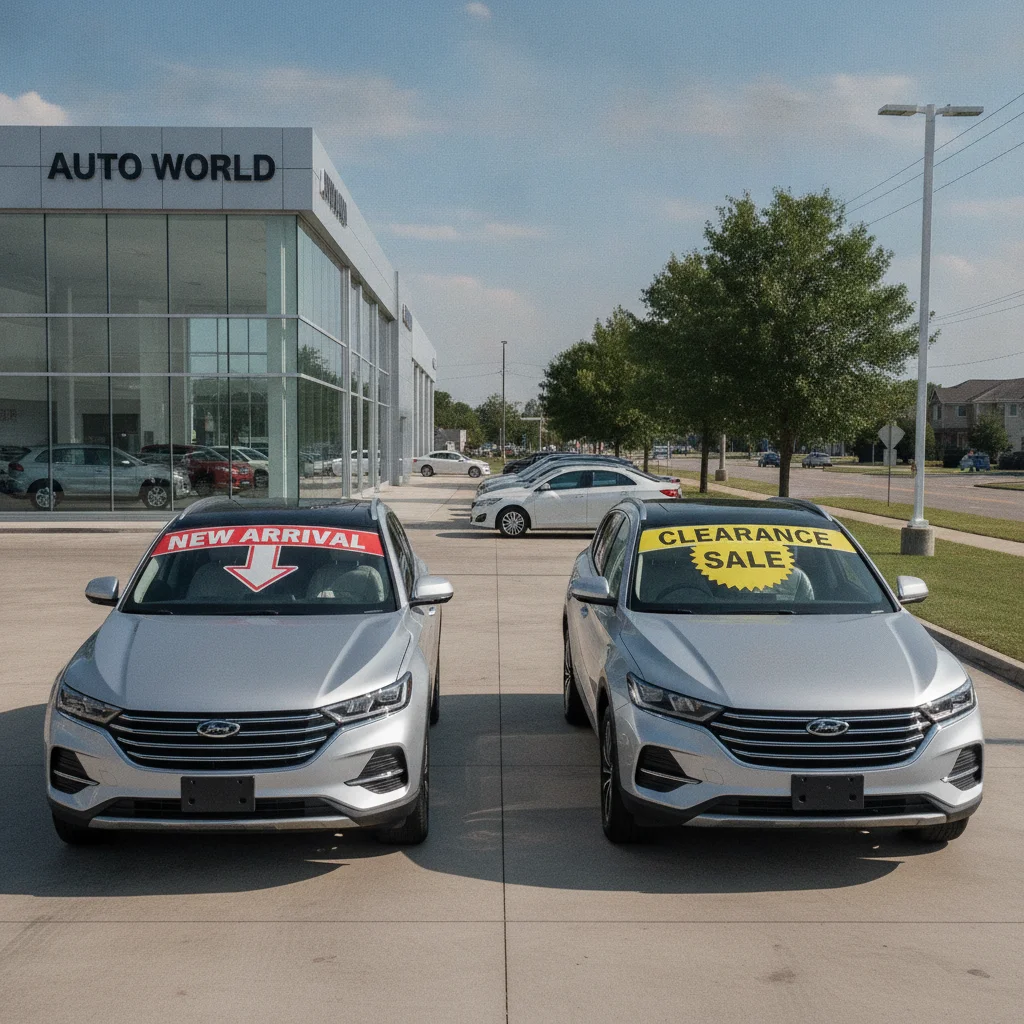
Option A
Current-Year Model
The latest version with full availability and financing perks.
Best for: Buyers who want the newest features, full warranty coverage, and access to manufacturer incentive programs.
Option B
Previous-Year Model
The proven choice at a meaningful discount.
Best for: Value-focused buyers who can tolerate limited inventory selection and a slightly older model year on the title.
If you want the lowest possible purchase price on a reliable mainstream model
Previous-Year Model
Leftover inventory discounts of 8–12% off MSRP are real and negotiable. On a $35,000 vehicle, that's $2,800–$4,200 in immediate savings before you negotiate a single dollar.
If the model was just redesigned or received a major refresh
Current-Year Model
Buying the outgoing generation after a redesign accelerates depreciation sharply. The resale penalty can wipe out any upfront discount within two years.
If you plan to finance and want the best interest rate
Current-Year Model
Manufacturer subvented financing — including 0% APR promotions — is almost exclusively reserved for current model-year inventory.
If you drive high miles and keep cars long-term (7+ years)
Previous-Year Model
Long ownership horizons absorb the model-year depreciation gap. The upfront discount translates to real long-term savings when resale timing is far off.
If safety ratings or new technology features matter to your decision
Current-Year Model
Automakers often add or upgrade driver-assistance systems on current-year vehicles. IIHS and NHTSA ratings can also differ between adjacent model years.
How Model-Year Pricing Actually Works
Most consumers assume that a car's model year and the calendar year it's sold in are the same thing. They're not — and that gap is where pricing opportunities live.
Automakers typically begin selling the next model year's vehicles in the summer or early fall of the preceding calendar year. A 2026 Honda CR-V, for example, might start arriving at dealerships as early as August 2025. That means a 2025 CR-V sitting on the same lot instantly becomes previous-year inventory — even though it's a brand-new, undriven vehicle with full plastic on the seats.
Dealers know this creates a problem. Floor-plan financing — the loan dealers use to stock inventory — costs money every month a car sits unsold. When the 2026 models arrive, every 2025 on the lot is accruing interest and depreciating simultaneously. The dealer's motivation to move that unit spikes hard. That's the window buyers should target.
What 'Model Year Changeover' Actually Means for Your Wallet breaks down exactly when this window opens by brand — the timing varies more than most shoppers realize.
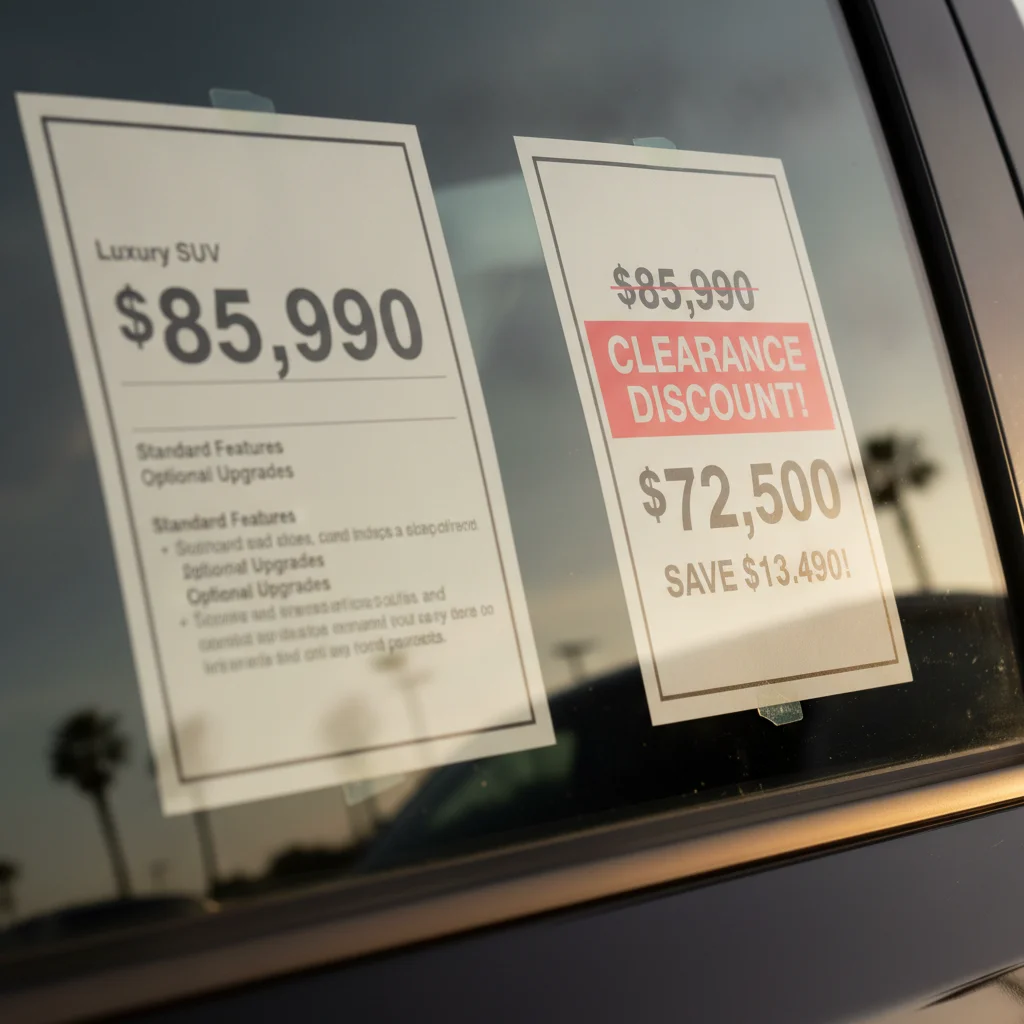
The core pricing dynamic is simple: manufacturers set MSRP for the new model year, and dealers are under pressure to clear the old one. The result is a negotiating environment that's unusually favorable for buyers willing to accept last year's model designation on their title.
The Real Numbers: Discounts vs. Depreciation Trade-Off
Here's where you need to think like a lender, not just a buyer. The discount on a previous-year vehicle is real — but so is the depreciation penalty, and they don't always cancel each other out.
The Discount Side
Dealer discounts on leftover inventory typically range from 5% to 12% off MSRP depending on the brand, segment, and how long the vehicle has sat. Domestic truck and SUV brands tend to offer the deepest cuts. On a $40,000 pickup, a 10% discount means $4,000 off before you negotiate on trade-in or add-ons.
Manufacturers sometimes layer on cash-back incentives specifically for prior model-year inventory — these show up as "bonus cash" or "clearance allowances" and stack on top of any dealer discount. Check manufacturer websites in August–November for these programs.
8–12%
Average dealer discount on prior-year truck inventory
Industry analysis from Edmunds and TrueCar consistently shows domestic truck and SUV leftovers receive the deepest clearance discounts during model changeover season.
$5,580
Interest cost difference on a $36,000 loan at 5.9% vs. 0% APR
Calculated over a standard 60-month loan term — illustrating how subvented financing can neutralize a previous-year purchase price discount.
3–6%
Resale value gap between adjacent model years at trade-in
According to Black Book and J.D. Power used-vehicle valuation data, the model year on the title consistently influences wholesale and retail trade-in offers.
Aug–Nov
Peak window for prior-year inventory discounts
Most new model-year vehicles begin arriving at dealerships in summer, creating a 90–120 day window when prior-year clearance incentives are at their deepest.
The Depreciation Side
When you buy a previous-year model, you start the clock on depreciation one model year behind. If you bought a 2025 model in October 2025 (when 2026 models are on the lot), you'll sell or trade it in as a 2025 — not a 2026 — for the entire time you own it. That typically costs you 3–6% of resale value relative to owning the equivalent current-year vehicle, according to used-car valuation data from J.D. Power and Black Book.
On that same $40,000 truck, a 5% resale penalty in year three might cost you $1,500–$2,000 at trade-in. If your upfront discount was $4,000, you're still ahead — but the math compresses significantly if the model was refreshed or redesigned. Buying Before vs. After a Mid-Cycle Refresh explains precisely how a refresh shifts that resale calculation.
| Criterion | Current-Year Model | Previous-Year Model |
|---|---|---|
| Typical discount off MSRP | 2–5% (negotiated) | 5–12% (plus clearance cash) |
| Manufacturer financing offers | Full access (0% APR eligible) | Limited or excluded |
| Inventory selection | Wide — full trim and color range | Narrow — whatever remains on lots |
| Factory warranty term | Full term from purchase date | Full term if untitled; verify in writing |
| Resale value trajectory | Standard depreciation curve | 3–6% lower at equivalent ownership age |
| Latest safety tech availability | Guaranteed (current standards) | Varies — check model year changes |
| Best timing window to buy | Any time; peaks Jan–March | August–November only |
| Risk if model was redesigned | Low — you have the new generation | High — resale penalty is steep |
Financing: Where Current-Year Models Pull Ahead
Purchase price isn't the only number that determines your monthly payment — financing terms matter just as much, and this is where the current-year model has a structural advantage most buyers overlook.
Manufacturer-subsidized financing (often called "subvented rates") is a tool automakers use to move current inventory. When Ford Motor Credit offers 0% APR for 60 months, that deal is extended specifically on current model-year vehicles. When a car becomes prior-year inventory, it typically loses access to those subvented rates. Financing shifts to standard bank rates or dealer-markup rates, which in a normal interest-rate environment run 1–3 percentage points higher.
Here's what that means in dollars: On a $36,000 loan at 0% APR for 60 months, your payment is $600/month and you pay zero in interest. At 5.9% APR on the same loan, your payment climbs to $693/month and you pay $5,580 in total interest over the loan term. That single difference can erase the entire purchase-price discount you negotiated on the previous-year model.
Credit Union Financing Can Change the Math
If you're pre-approved through a credit union or community bank at a competitive rate, the subvented financing advantage of current-year models shrinks significantly. Credit unions routinely offer new-vehicle rates below 5% to members with good credit — sometimes competitive with or better than floor rate manufacturer offers. Run your credit union quote before assuming the manufacturer's financing deal is the best option available to you.
Certified Pre-Owned Is a Third Option Worth Considering
If previous-year inventory is scarce in your area, don't overlook manufacturer-certified pre-owned (CPO) programs. A one- or two-year-old vehicle with low miles, a CPO warranty, and a manufacturer-backed financing rate can sometimes offer better total value than either a leftover new unit or a current-year MSRP purchase. Compare all three before committing.
The financing gap is most pronounced during high-incentive periods — typically end of calendar year and when inventory is high. End-of-Month vs. End-of-Year Car Buying walks through how those two timing windows compare in terms of both discount depth and financing offers.
If you plan to pay cash or have secured financing independently through a credit union, the subvented rate disadvantage disappears — giving you a cleaner reason to pursue the previous-year discount.
What Changes Between Model Years (and What Doesn't)
Not every model year is created equal. Sometimes the difference between a 2025 and 2026 model is cosmetic — a new color option and a slightly revised infotainment menu. Other times, the gap is significant: new safety systems, a powertrain change, a full exterior redesign, or revised crash-test ratings.
Understanding what actually changed between model years is the most important research step a buyer can take before deciding which year to pursue.
When the Previous-Year Model Is Essentially Identical
- Carryover year with no mechanical or structural changes
- Safety ratings unchanged (same IIHS Top Safety Pick status)
- Feature content identical at your target trim level
- No new driver-assistance technology added to current year
In this scenario, the previous-year discount is largely free money. You're buying the same vehicle with an older number on the title.
When the Current-Year Model Justifies the Premium
- Full redesign or generation change (happens every 5–8 years for most models)
- New or upgraded standard safety features (automatic emergency braking upgrades, blind-spot monitoring added)
- Powertrain improvement: better fuel economy, new hybrid option, revised transmission
- Known reliability issue corrected in the new model year
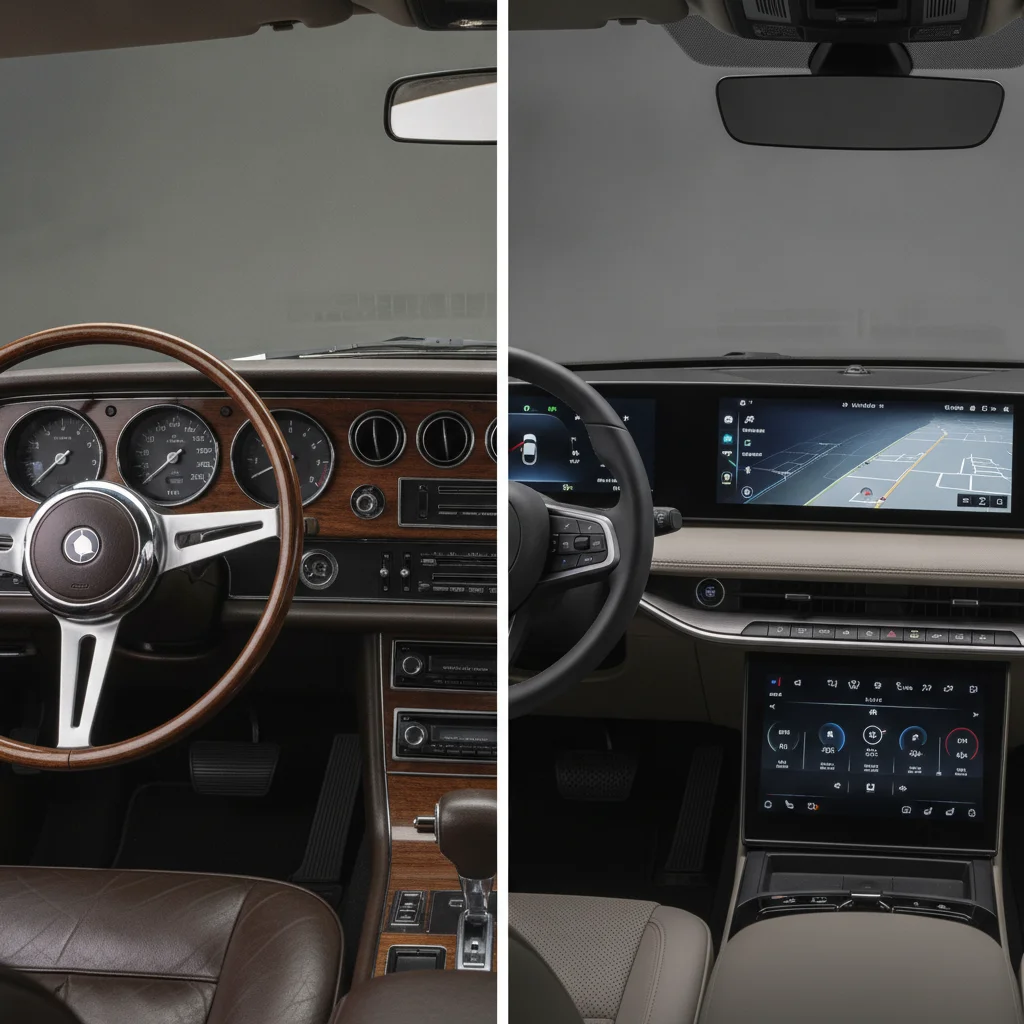
Timing a Car Purchase Around a New Model Release provides a framework for reading manufacturer product cycles so you can assess whether a given model is due for a redesign soon — critical context when weighing this decision.
Tools like Car and Driver's model year comparison pages and the NHTSA safety ratings database let you check side-by-side what changed. Make that comparison before you walk into any dealership negotiation.
Negotiating the Previous-Year Deal: Tactics That Work
Knowing the previous-year discount exists is one thing. Actually capturing it requires a specific approach at the dealership.
Start with Inventory Research
Use the manufacturer's own dealer locator and third-party inventory aggregators (Cars.com, AutoTrader) to identify which local dealers still have previous-year units in stock. The more units a dealer has, the more motivated they are. A dealer sitting on eight leftover 2025 models when 2026s are filling the lot is in a very different negotiating position than one with a single unit remaining.
Anchor to Invoice, Not MSRP
Get the dealer invoice price for the previous-year unit — not the current year's invoice. Previous-year vehicles often carry additional factory-to-dealer incentives that aren't public, called "dealer cash" or "stair-step incentives." When you negotiate from invoice down, those hidden incentives become profit cushion that dealers can share with aggressive buyers.
Stack the Savings
Combine three layers when they're available: (1) the negotiated price below MSRP, (2) any manufacturer clearance cash on prior model-year inventory, and (3) your own pre-approved financing rate from a credit union if the subvented rate on the current year doesn't apply. Each layer adds up independently.
Timing Your New Car Purchase to Get a Better Deal covers how to layer these timing and negotiation strategies for maximum effect — worth reading before your next dealership visit.
Don't Forget the Warranty Clock
On a previous-year vehicle, confirm when the factory warranty starts. Some manufacturers start the bumper-to-bumper warranty clock at the original sale date; others start it at delivery to the first retail customer. If the previous-year vehicle was never titled (i.e., it's been sitting at the dealer unsold), your warranty typically starts at your purchase — you lose nothing. Verify this in writing before signing.
The Bottom Line: Running Your Own Numbers
The previous-year vs. current-year decision isn't a universal answer — it's a math problem with variables specific to your situation. Here's the three-part calculation every buyer should run before committing.
Step 1: Calculate the True Purchase Price Difference
Get a real out-the-door price for both model years at the same trim level. Include all fees. The difference is your gross savings from buying previous-year.
Step 2: Calculate the Financing Cost Difference
If the current-year model carries a subvented rate and the previous-year does not, calculate total interest paid over your loan term at both rates. Subtract the previous-year financing premium from your gross savings. This is your net purchase advantage.
Step 3: Estimate the Resale Impact
Look up the same model one year older on used-car valuation tools (Edmunds TMV, KBB Instant Cash Offer). Compare a three- or four-year-old example to a two- or three-year-old equivalent. The value gap is a rough proxy for what the model-year difference will cost you at resale. Subtract that from your net purchase advantage.
If the final number is still positive, the previous-year deal makes financial sense. If it's close to zero or negative — especially after a redesign year — the current-year model is the smarter buy.
Buying New Cars is a useful reference hub if you're still weighing the broader new vs. used decision alongside the model-year timing question.
One honest caveat: timing matters as much as math. The previous-year discount window is narrow. By December or January, most leftover prior-year inventory is gone, and so is the leverage. If you're in the market between August and November, the opportunity is real. Outside that window, you're chasing a deal that largely doesn't exist anymore.

All claims are backed by peer-reviewed research. Sources on request.