

Key Takeaways
Our Verdict
Buying before a mid-cycle refresh makes sense when dealers are discounting aggressively and you plan to keep the vehicle long-term. Buying after the refresh is the smarter move if resale value or near-term trade-in timing is a priority. Neither option is universally better — the right call depends on how long you'll own the car and how much the specific updates matter to you.
| Best for | Recommended |
|---|---|
| Long-term owners who plan to keep the car 7+ years | Buying Before the Refresh |
| Buyers prioritizing resale value and a 3–5 year ownership window | Buying After the Refresh |
| Budget-focused buyers who need the lowest possible purchase price | Buying Before the Refresh |
| Buyers who want the latest safety tech and infotainment features | Buying After the Refresh |
What a Mid-Cycle Refresh Actually Is
A mid-cycle refresh — sometimes called a mid-cycle enhancement (MCE) or facelift — is an update automakers apply roughly halfway through a vehicle's generation lifecycle, typically every four to five years. It's different from a full redesign, which replaces the underlying platform, body structure, and often the powertrain entirely.
In a refresh, the manufacturer keeps the existing architecture and makes targeted improvements. Common changes include:
- Exterior tweaks: Revised front fascia, new headlight signatures, updated wheel designs, refreshed taillights
- Interior upgrades: Larger infotainment screens, new trim materials, updated instrument clusters
- Technology additions: New or expanded driver-assistance features, wireless Apple CarPlay/Android Auto, updated software platforms
- Powertrain adjustments (occasionally): Modest horsepower bumps, new transmission options, or hybrid system tuning
The point is to keep an aging model competitive without the billion-dollar investment of a ground-up redesign. From a buyer's perspective, the refresh creates a fork in the road: purchase the outgoing version at a discount, or wait a few months and pay up for the updated model.
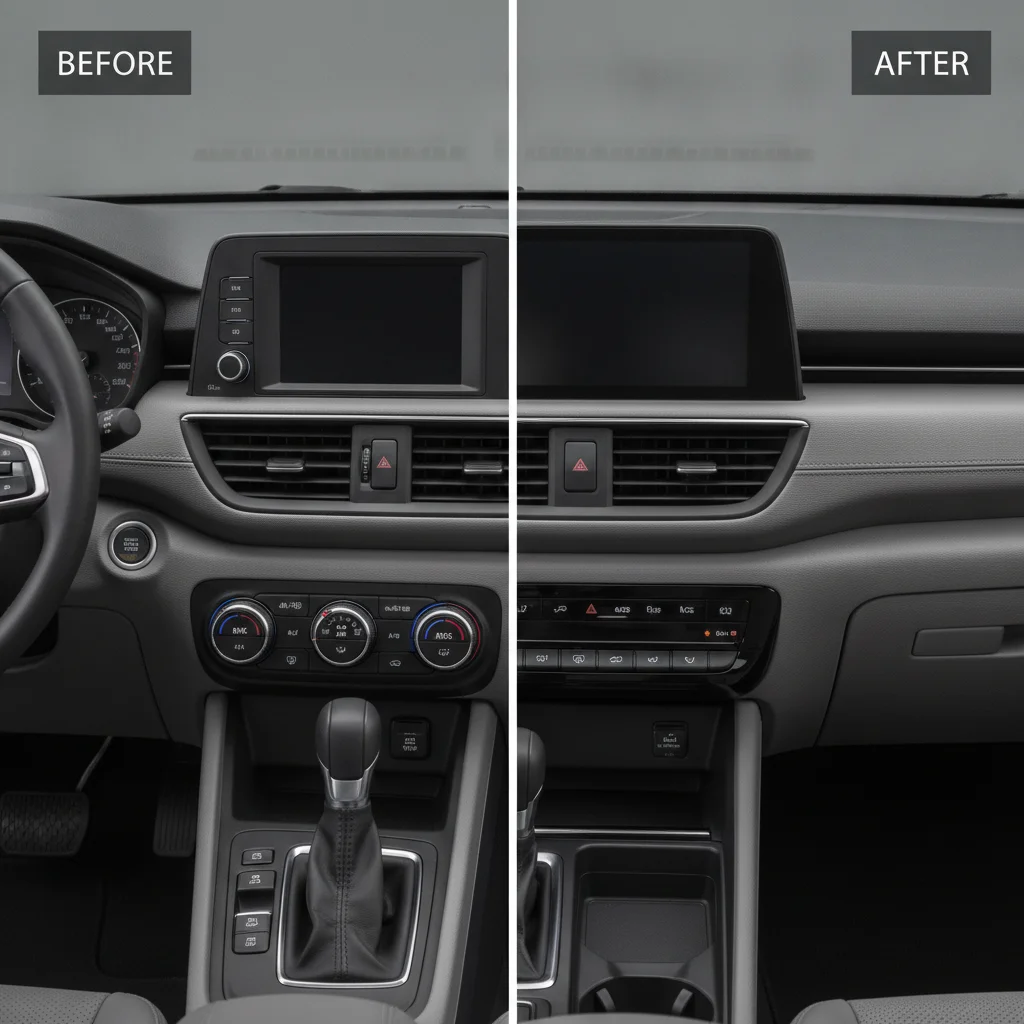
Understanding exactly where a given model sits in its cycle is the starting point for making a smart timing decision. Resources like automaker press releases, automotive industry calendars, and enthusiast forums often signal a refresh 6–12 months before it arrives at dealerships. Once you know a refresh is coming, you can weigh the tradeoffs with real numbers.
For broader context on how automakers structure their product cycles and what that means for pricing, see our guide on timing a car purchase around a new model release.
The Case for Buying Before the Refresh
When word gets out that a refresh is coming, something predictable happens at dealerships: inventory of the outgoing model starts to pile up, and dealers become motivated to move it. That motivation translates into real money off the purchase price — if you know how to position yourself.
Discount Potential
In the months leading up to a refresh launch, dealer discount behavior typically follows a pattern:
- 3–6 months before: Manufacturers begin offering increased incentives — cash back, low APR financing, or lease support — to help dealers clear inventory. Discounts of 5–8% off MSRP are common at this stage.
- 1–3 months before: As the new model nears dealer lots, discounts deepen. Buyers willing to negotiate assertively can often achieve 10–15% below MSRP on popular mainstream models. On a $40,000 vehicle, that's $4,000–$6,000 in savings at signing.
- Overlap period: Once both versions sit on the same lot, discounts on the outgoing model can be even steeper — sometimes matching end-of-model-year clearance dynamics.
Stack Your Research Before Visiting a Dealer
Before setting foot in a showroom, confirm the refresh status of the model you're considering using at least two independent sources — an automotive news site and a manufacturer press release or investor presentation. Dealers benefit from buyers who don't know a refresh is coming, so arriving informed is a direct financial advantage. Knowing the timeline means you can use it as a negotiating point: 'I know the updated version arrives in Q1 — what can you do on the current model today?'
Wait 90 Days After a Refresh Launches
If you've decided the refreshed model is the right choice, there's rarely a good reason to be among the first buyers. Initial production runs often carry higher transaction prices and occasionally surface early-build quality issues with new components or software. Waiting 90 days lets inventory normalize, early reviews accumulate, and dealer motivation to negotiate grow. You'll pay the same MSRP but likely get a better out-the-door deal.
Run the Actual Numbers for Your Holding Period
The difference between 'buy before' and 'buy after' often comes down to a few hundred dollars per year when you do the math honestly. Use your expected holding period, the actual discount available on the pre-refresh model, and estimated resale values for both versions in your local market. A spreadsheet with these three inputs will give you a clearer answer than any rule of thumb.
The outgoing model often represents excellent value on an absolute basis. The vehicle hasn't suddenly become worse — it's the same car that was getting positive reviews a year ago. If the refresh adds features you genuinely don't need (say, a larger touchscreen when you're perfectly happy with the current one), the discount on the pre-refresh version is pure financial gain.
Financing Advantage
Automakers frequently sweeten the deal with manufacturer-subsidized low-APR loans on outgoing inventory. A 0% or 1.9% financing offer on the pre-refresh model versus a standard market rate (say, 6–7%) on the new version can be worth thousands over a 60-month loan term. Run that comparison carefully before assuming the new model is the better deal.
For more on how model-year transitions create these pricing windows, see what model year changeover actually means for your wallet.
Who Benefits Most
Buying before the refresh makes the most financial sense for:
- Buyers planning to own the vehicle for 7 years or longer, where purchase-price savings outweigh any resale disadvantage
- Budget-constrained buyers where a $4,000–$6,000 discount meaningfully affects monthly payment or loan-to-value ratio
- Buyers for whom the refreshed features are irrelevant — e.g., a work truck buyer who doesn't care about interior styling updates
8–15%
Typical pre-refresh discount off MSRP
Industry pricing data consistently shows dealer discounts deepening in the 1–3 months before a refreshed model reaches showrooms.
~52%
3-year resale retention for refreshed models
According to iSeeCars and Edmunds historical data, refreshed model versions typically retain 5–8 percentage points more of their value than the pre-refresh generation over a three-year period.
5 years
Average new-car ownership duration (U.S.)
According to IHS Markit automotive data, the average American keeps a new car approximately 5 years — making the resale value impact of a refresh a significant financial consideration.
$2,000–$4,000
Net cost difference after resale (3-yr window)
After accounting for purchase-price savings and accelerated depreciation, the real out-of-pocket difference between buying pre- and post-refresh over three years often narrows to this range on a $40,000 vehicle.
The Case for Buying After the Refresh
The refreshed model costs more at the point of sale — that's almost always true. But the financial story doesn't end at the dealer. If you factor in resale value, depreciation trajectory, and feature relevance, buying the updated model often comes out ahead for buyers with a typical 3–5 year ownership window.
The Resale Value Equation
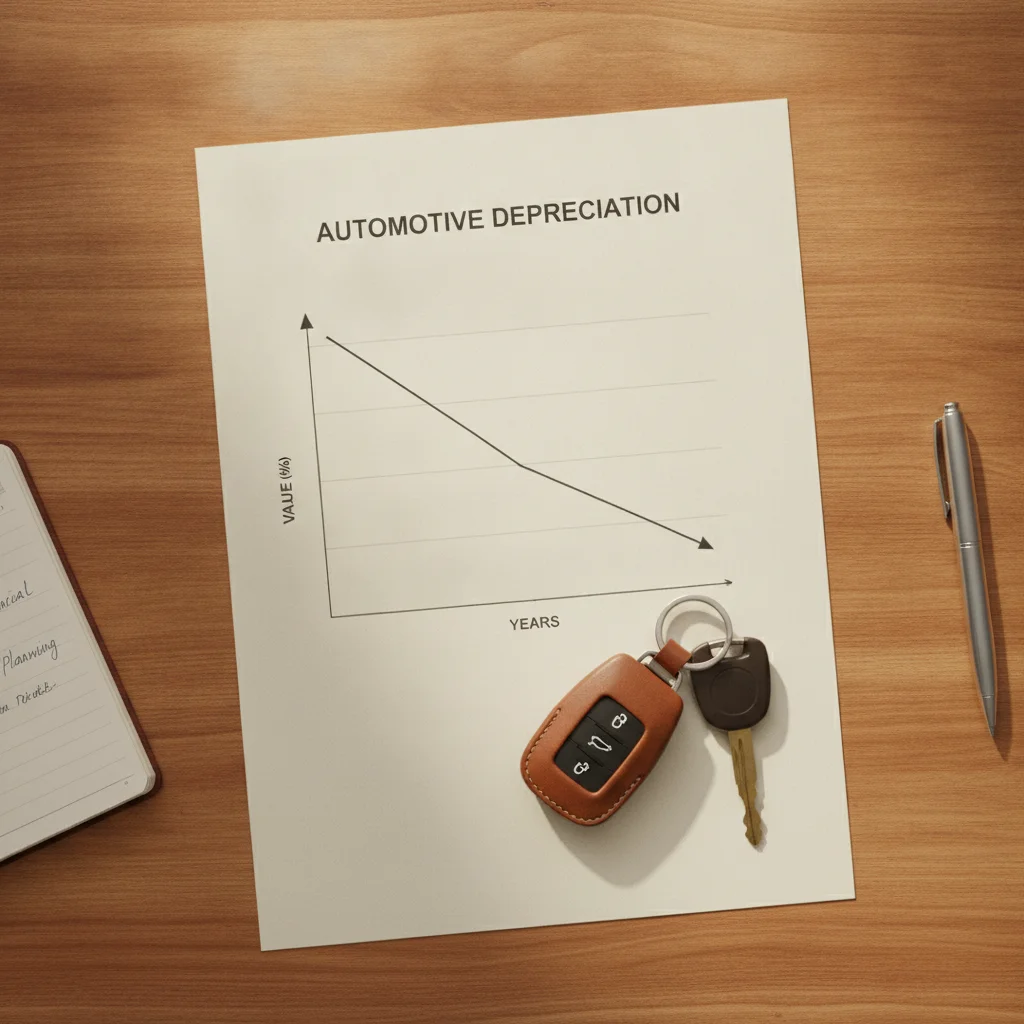
Here's the core mechanic: the moment a refreshed model hits showrooms, the pre-refresh version is officially "old." Used-car buyers, lessees returning vehicles, and trade-in appraisers all know it. That awareness accelerates depreciation on outgoing-generation vehicles in a predictable way.
Consider a concrete example. Suppose you buy a pre-refresh midsize SUV for $38,000 (after a $4,000 discount from MSRP) versus paying $42,000 for the refreshed version. After three years:
- The pre-refresh SUV might retain 45% of its original MSRP ($42,000 × 45% = $18,900)
- The refreshed SUV might retain 52% of its MSRP ($42,000 × 52% = $21,840)
The refreshed model's resale advantage in this scenario: approximately $2,940. You paid $4,000 more upfront but recovered nearly $3,000 of that at trade-in, making your net out-of-pocket difference only about $1,060 over three years — roughly $30 per month. For many buyers, that's a reasonable premium for owning the more current vehicle.
Feature Currency Matters
Mid-cycle refreshes increasingly target infotainment and driver-assistance technology, where three-to-four-year gaps can feel significant. A pre-refresh model might lack:
- Hands-free highway driving assistance
- Over-the-air software update capability
- USB-C ports and wireless phone charging
- Updated automatic emergency braking with pedestrian/cyclist detection
These aren't trivial comfort items — some are safety-critical, and all affect buyer demand on the used market. If a refreshed competitor offers these features as standard and your pre-refresh vehicle doesn't, you'll feel that gap every time you try to sell or trade.
Insurance Considerations After a Refresh
A refreshed model with new safety technology can actually affect your insurance premiums. Vehicles with advanced driver-assistance systems often qualify for lower collision or comprehensive rates. However, the newer tech also means higher repair costs for sensors and cameras, which can offset those savings. Worth a call to your insurer before deciding — and if you're thinking about broader insurance timing questions, the dynamics around mid-term policy changes vs. waiting for renewal follow a similar logic of weighing short-term cost against long-term positioning.
Don't Assume a Refresh Means the Old Model Is Defective
Some buyers interpret heavy discounting on a pre-refresh model as a signal that something is wrong with it. In most cases, the vehicle is the same reliable product it was before the update was announced — it's the market context, not the machine, that has changed. Make sure your buying decision is based on the vehicle's objective qualities and your financial math, not on misread discount signals.
Watch Out for Stale Inventory on a Hot Option
Pre-refresh models sitting on lots for 90+ days were often the trims or configurations that didn't sell quickly — sometimes because of unappealing option packages or unusual color combinations. If a deal seems exceptional, check the build sheet carefully. Make sure the vehicle matches what you actually want rather than what the dealer needs to move.
How Depreciation Curves Differ Between the Two Versions
Depreciation is where the math gets most revealing. Both versions of a vehicle share the same underlying platform and long-term reliability profile, but their depreciation curves diverge significantly in the first three years after a refresh launches.
| Criterion | Buying Before the Refresh | Buying After the Refresh | |
|---|---|---|---|
| Purchase Price | Lower — discounts of 8–15% common | Higher — near or at MSRP initially | |
| Resale Value (3–5 yr) | Lower — accelerated depreciation post-refresh | Higher — current generation retains value better | |
| Feature Currency | Older tech, infotainment, ADAS | Latest safety and convenience features | |
| Financing Incentives | Often stronger (0% or low APR offers) | Market-rate financing, fewer subsidies | |
| Negotiating Leverage | Strong — dealer motivated to clear stock | Weaker — demand supports full pricing | |
| Best Ownership Window | 7+ years to maximize purchase savings | 3–5 years to protect resale value | |
| Risk of Early Depreciation | Higher — refresh arrival triggers rapid drop | Lower — you own the current version | |
| First-Year Availability | Ample inventory, easy to shop | May be limited at initial launch |
The steepest depreciation hit on the pre-refresh model typically comes in years one and two after the refreshed model arrives. That's when the used-car market resets its price expectations for the entire model line. By year four or five, both versions often depreciate at roughly the same rate — the gap has largely already been priced in.
This is why the holding-period question is so important. If you buy the pre-refresh model and hold it for ten years, you've almost certainly saved money overall (deep purchase discount + similar long-run depreciation rate). If you hold it for three years, the accelerated early depreciation may wipe out your purchase-price savings entirely.
Certified Pre-Owned as a Third Path
It's worth noting that once a refresh arrives, pre-refresh models hitting the CPO market often represent strong value. A two-to-three-year-old pre-refresh vehicle, manufacturer-certified with a warranty extension, may have already absorbed most of its refresh-related depreciation penalty. You get a lower purchase price, warranty coverage, and a vehicle that still has years of useful life. This is a different calculation from buying pre-refresh new — but worth considering as part of your overall market timing strategy. Our overview of buying new cars covers how to compare new and certified pre-owned options side by side.
How to Read the Signals: Is a Refresh Coming?
You can't time the market if you don't know the clock is ticking. Here's how to identify whether a model is approaching a mid-cycle update:
Check the Model's Age
Most mid-cycle refreshes happen 3–4 years into a generation. If the current model was introduced or fully redesigned 3 or more years ago, you should at least investigate whether a refresh is in the pipeline.
Follow Industry Publications
Automotive journalism sites, enthusiast forums, and trade publications like Automotive News typically report on upcoming refreshes 12–18 months before they reach dealers. Spy shots of camouflaged test vehicles are often the first public signal.
Watch for Incentive Patterns
When a manufacturer suddenly increases cash-back offers or 0% financing on a model that hasn't historically needed heavy incentives, that's often a sign inventory needs to move ahead of an incoming update. Tracking incentive data through resources like Edmunds or TrueCar can surface these patterns before they're widely reported.

Talk to Dealers — But Read Between the Lines
Dealers often know what's coming and won't volunteer it. Ask directly: "Are there any significant changes planned for next model year?" A vague or evasive answer is itself informative. You can cross-reference with your own research to calibrate how forthcoming the salesperson is being.
For context on how model-year transitions and incoming updates interact with each other, buying a current-year vs. previous-year model is a useful companion read — especially if the refresh coincides with a model-year changeover.
Stack Your Research Before Visiting a Dealer
Before setting foot in a showroom, confirm the refresh status of the model you're considering using at least two independent sources — an automotive news site and a manufacturer press release or investor presentation. Dealers benefit from buyers who don't know a refresh is coming, so arriving informed is a direct financial advantage. Knowing the timeline means you can use it as a negotiating point: 'I know the updated version arrives in Q1 — what can you do on the current model today?'
Wait 90 Days After a Refresh Launches
If you've decided the refreshed model is the right choice, there's rarely a good reason to be among the first buyers. Initial production runs often carry higher transaction prices and occasionally surface early-build quality issues with new components or software. Waiting 90 days lets inventory normalize, early reviews accumulate, and dealer motivation to negotiate grow. You'll pay the same MSRP but likely get a better out-the-door deal.
Run the Actual Numbers for Your Holding Period
The difference between 'buy before' and 'buy after' often comes down to a few hundred dollars per year when you do the math honestly. Use your expected holding period, the actual discount available on the pre-refresh model, and estimated resale values for both versions in your local market. A spreadsheet with these three inputs will give you a clearer answer than any rule of thumb.
Negotiating Strategy on Each Side of the Refresh
Knowing which side of the refresh you're on shapes your entire negotiating approach. The leverage and tactics differ meaningfully.
Negotiating the Pre-Refresh Model
Your leverage is time and inventory. The dealer needs to move these units before the new model cannibalizes their appeal. Use that:
- Anchor on invoice price, not MSRP. Then subtract any manufacturer-to-dealer incentives (available via third-party pricing tools) before you start negotiating. On a pre-refresh model, dealers have more room and more motivation to deal.
- Play multiple dealers against each other. With refresh-era excess inventory, the same outgoing model may be sitting at four dealerships within 50 miles. Get competing out-the-door quotes in writing.
- Ask about stacked incentives. Sometimes you can combine a manufacturer cash-back offer with a dealer discount. Confirm in writing what incentives apply before you finalize.
- Evaluate the financing offer separately. A 0% APR offer sounds great, but confirm whether accepting it requires you to forgo a cash-back discount. Do the math on which is worth more over your loan term.
Negotiating the Post-Refresh Model
Your leverage is thinner on a freshly launched refresh, but it's not zero:
- Be patient. Refreshed models typically carry full or above-MSRP pricing for the first 60–90 days. If you can wait 3–4 months after launch, dealer enthusiasm often softens and inventory normalizes.
- Focus on trade-in value. If you're trading in a vehicle, the post-refresh period is usually a good time to argue for a higher trade value — your pre-owned car is entering a market with solid used-car demand.
- Watch for first-year production constraints. Some refreshes arrive with limited initial inventory. In those cases, waiting for supply to stabilize is both a financial strategy and a practical one (you avoid being an early adopter of freshly launched software or hardware).
Don't Assume a Refresh Means the Old Model Is Defective
Some buyers interpret heavy discounting on a pre-refresh model as a signal that something is wrong with it. In most cases, the vehicle is the same reliable product it was before the update was announced — it's the market context, not the machine, that has changed. Make sure your buying decision is based on the vehicle's objective qualities and your financial math, not on misread discount signals.
Watch Out for Stale Inventory on a Hot Option
Pre-refresh models sitting on lots for 90+ days were often the trims or configurations that didn't sell quickly — sometimes because of unappealing option packages or unusual color combinations. If a deal seems exceptional, check the build sheet carefully. Make sure the vehicle matches what you actually want rather than what the dealer needs to move.
For context on how market timing affects both sides of the transaction — buying new and selling or trading your current vehicle — it's worth understanding the seasonal and supply dynamics at play simultaneously.
Side-by-Side: Pre-Refresh vs. Post-Refresh at a Glance
All the considerations above condense into a set of criteria that vary systematically between the two options. The table below captures where each approach wins, loses, or breaks even — use it alongside the specific vehicle you're evaluating.
| Criterion | Buying Before the Refresh | Buying After the Refresh | |
|---|---|---|---|
| Purchase Price | Lower — discounts of 8–15% common | Higher — near or at MSRP initially | |
| Resale Value (3–5 yr) | Lower — accelerated depreciation post-refresh | Higher — current generation retains value better | |
| Feature Currency | Older tech, infotainment, ADAS | Latest safety and convenience features | |
| Financing Incentives | Often stronger (0% or low APR offers) | Market-rate financing, fewer subsidies | |
| Negotiating Leverage | Strong — dealer motivated to clear stock | Weaker — demand supports full pricing | |
| Best Ownership Window | 7+ years to maximize purchase savings | 3–5 years to protect resale value | |
| Risk of Early Depreciation | Higher — refresh arrival triggers rapid drop | Lower — you own the current version | |
| First-Year Availability | Ample inventory, easy to shop | May be limited at initial launch |
No single row in that table is decisive on its own. Your ownership timeline is the master variable. Run the numbers using your expected holding period, your estimated annual mileage, and the actual discount available on the pre-refresh model in your market — those three inputs will tell you more than any general rule.
Making the Call: A Step-by-Step Decision Framework
Rather than defaulting to intuition, use this structured process to reach a decision that's right for your specific situation:
- Confirm the refresh timeline. Is the update confirmed for the next model year, or is it speculative? A rumored refresh in two years is very different from a confirmed one arriving in four months.
- Quantify the pre-refresh discount. Get real out-the-door quotes — not MSRP-based estimates — from at least two dealers. This is your actual purchase-price advantage.
- Estimate the resale impact. Use current trade-in values for 2–3-year-old examples of the existing model versus older generations of the same vehicle to estimate how much the refresh historically affects depreciation. Sites like Carfax, Edmunds, and KBB provide this data.
- Define your ownership timeline. If you genuinely don't know, assume five years — that's roughly the national average for new-car ownership. Shorter than that, lean toward post-refresh. Longer, the pre-refresh discount becomes more defensible.
- Audit the refreshed features. List the specific changes the refresh brings. Cross off any you don't care about. If the remaining list is short, the pre-refresh model is a stronger candidate.
- Factor in financing. Compare the full cost of any manufacturer-subsidized financing on the pre-refresh model against market-rate financing on the refreshed version. Use a loan amortization calculator with real numbers.
- Account for your trade-in. If you're trading in a vehicle, consider that your trade-in value may be higher now (pre-refresh arrival) if the used-car market is strong, versus a few months from now when supply shifts.

The decision tree above won't tell you which car to buy — but it will tell you whether the timing argument is actually worth the premium or the discount in your specific case. Most buyers who skip this analysis either overpay for newness they don't need or undersell themselves on resale value they should have protected.
If you're working through this decision for a vehicle that's changing model years at the same time as the refresh, the overlapping dynamics are explained in detail in our piece on what model year changeover actually means for your wallet.

All claims are backed by peer-reviewed research. Sources on request.