Key Takeaways
Why Inventory Levels Are a Pricing Signal, Not Just a Curiosity
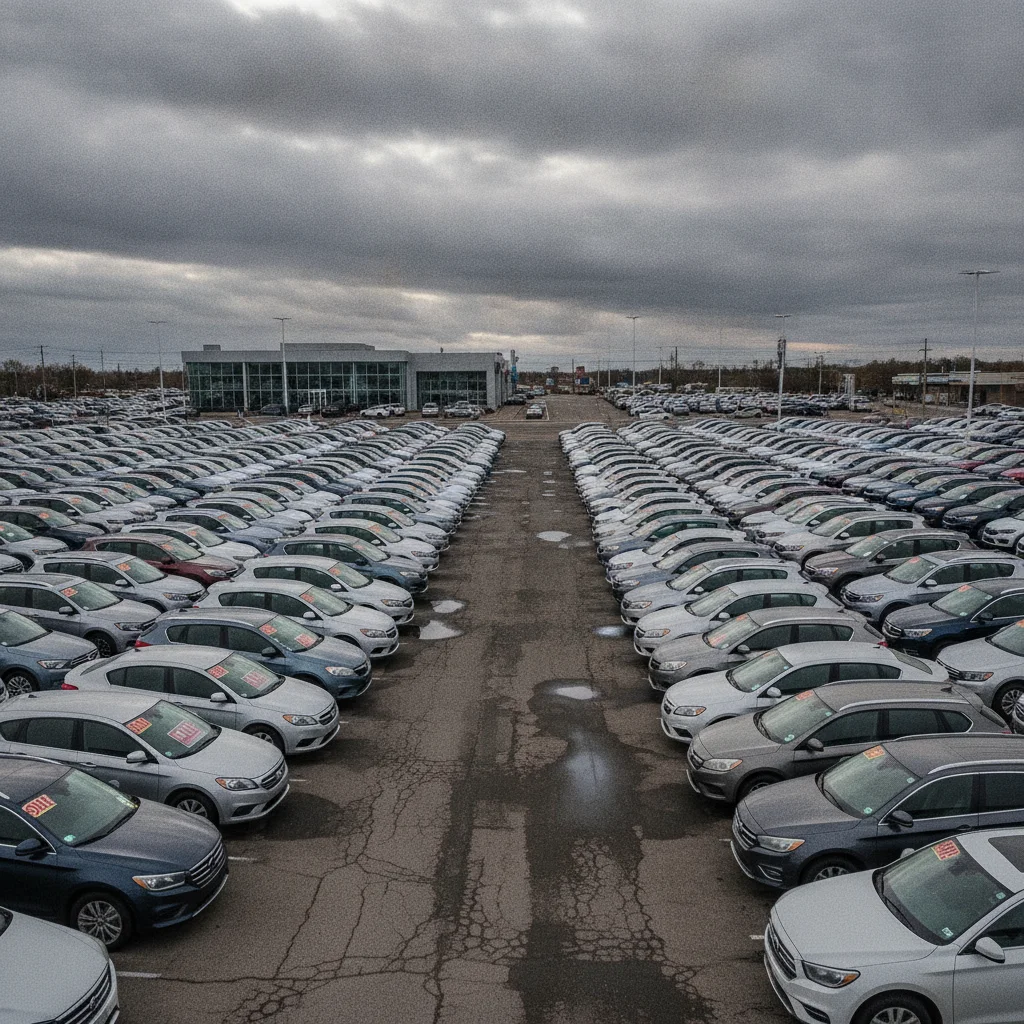
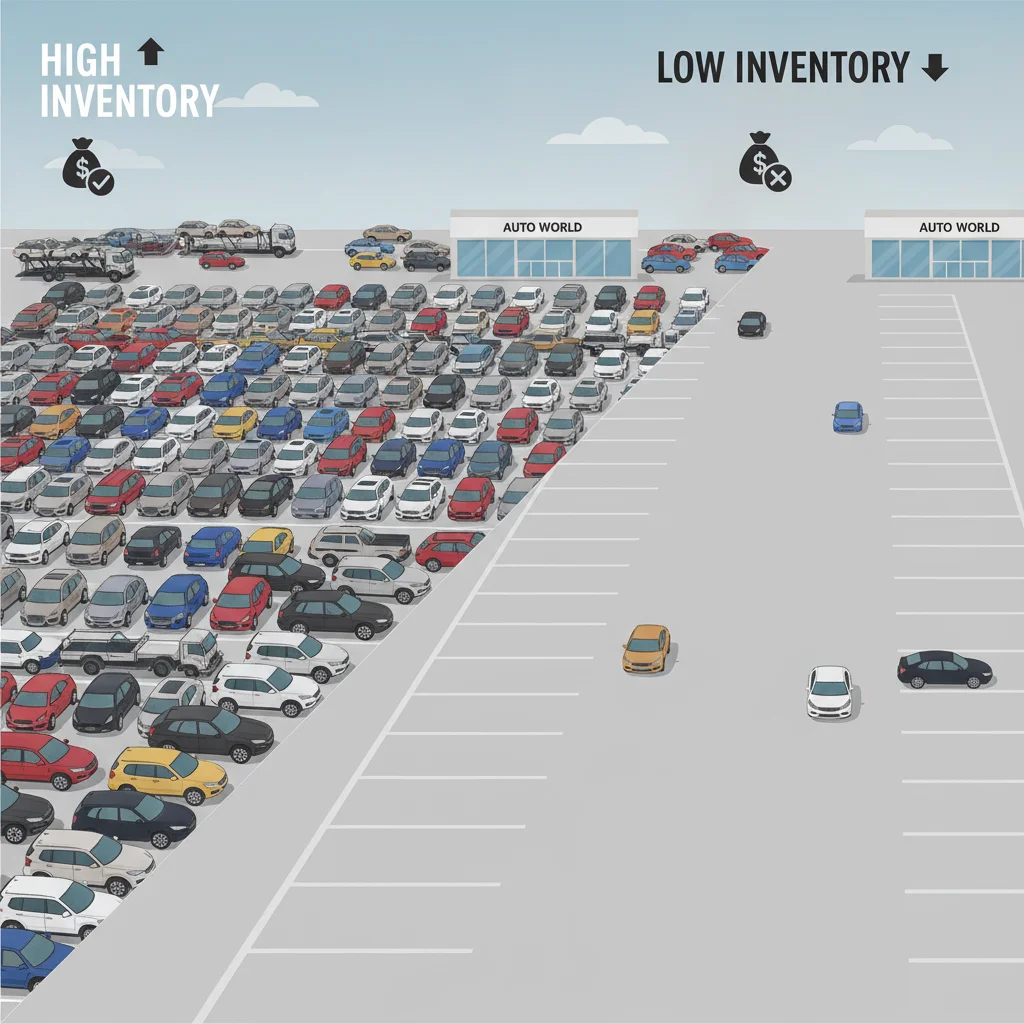
Car dealerships operate on a carrying-cost model. Every vehicle sitting on a lot is financed — usually through a line of credit called a floorplan — and that financing accrues interest daily. A dealer paying floorplan interest on 300 vehicles feels the pressure differently than one with 80 cars turning quickly. That pressure flows directly into how willing a salesperson is to accept a lower offer.
This is why inventory levels are a pricing signal, not just background noise. When a dealer has excess stock, their cost to hold each unit is climbing every week. Selling at a smaller margin beats carrying costs and frees up capital. When inventory is lean, the dealer has the pricing power — demand is outpacing supply and another buyer is likely behind you.
The relationship applies to both new and used vehicles, but it plays out slightly differently in each segment. New car inventory is driven by manufacturer production schedules, incentive programs, and regional allocation decisions. Used car inventory is shaped by trade-in volume, auction prices, lease returns, and rental fleet sales. Understanding which segment you're shopping in — and reading the supply signals accordingly — changes your entire negotiation stance.
For context on how these dynamics intersect with your trade-in value, see how dealer inventory gaps create better trade-in moments. And if you want a broader framework before committing to a purchase date, the pre-purchase timing checklist covers inventory alongside rate environment and incentive schedules.
Where to Find Reliable Inventory Data Before You Visit a Lot
You don't need industry-insider access to read inventory conditions. Several publicly accessible sources give you a solid picture within 30 minutes of research.
What you will need
National and Regional Data Sources
- Cox Automotive / Kelley Blue Book Market Reports: Cox publishes monthly new vehicle days-supply figures by segment. A days-supply figure above 60 for a segment you're shopping generally indicates a buyer's market. Below 40 signals tightness.
- Edmunds Market Insights: Edmunds tracks average transaction prices, incentive spending per unit, and inventory trends by make and model. Their free reports show whether a given model is selling above or below MSRP.
- Manufacturer Incentive Pages: Automakers publish active incentives — cash back, low-APR offers, lease support — on their own sites. Stacked incentives on a model often signal the manufacturer knows inventory is high and dealers need help moving units.
- CarGurus and Cars.com Listings: Both platforms show how long individual vehicles have been listed. CarGurus even assigns a price rating (great deal, good deal, fair, overpriced) based on comparable listings in your area. This gives you local context that national averages can miss.
On-the-Ground Observation
Drive past the dealership before you're ready to buy. A lot with overflow inventory pushed to secondary lots, side streets, or storage areas is a dealer under floorplan pressure. A sparse, well-organized lot with premium placements suggests healthy turn rates and less urgency to deal.
CarGurus
Search local listings, view days-on-market for individual vehicles, and see deal ratings based on regional price comparisons.
Edmunds Market Insights
Access free monthly reports on average transaction prices, incentive levels, and inventory days-supply by model.
Cox Automotive / Kelley Blue Book Market Reports
Track national new vehicle days-supply figures by segment to identify buyer versus seller market conditions.
Manufacturer Incentives Page
View active cash-back, low-APR, and lease support offers that signal elevated inventory on specific models.
Cars.com
Cross-reference local inventory counts and listing ages to identify high-DOL vehicles in your area.
Vehicle History Report Service (Carfax or AutoCheck)
Verify the history of any long-sitting used vehicle before making an offer, since extended DOL can sometimes indicate hidden issues.
For a deeper look at how wholesale auction trends feed into retail pricing — which helps you understand why inventory cycles the way it does — see reading wholesale auction trends before you set your asking price.
Seasonal and Market-Cycle Patterns Every Buyer Should Know
Inventory doesn't move randomly. It follows predictable seasonal rhythms that, once you understand them, let you plan your purchase timing months in advance.
The Model-Year Changeover Window (August–October)
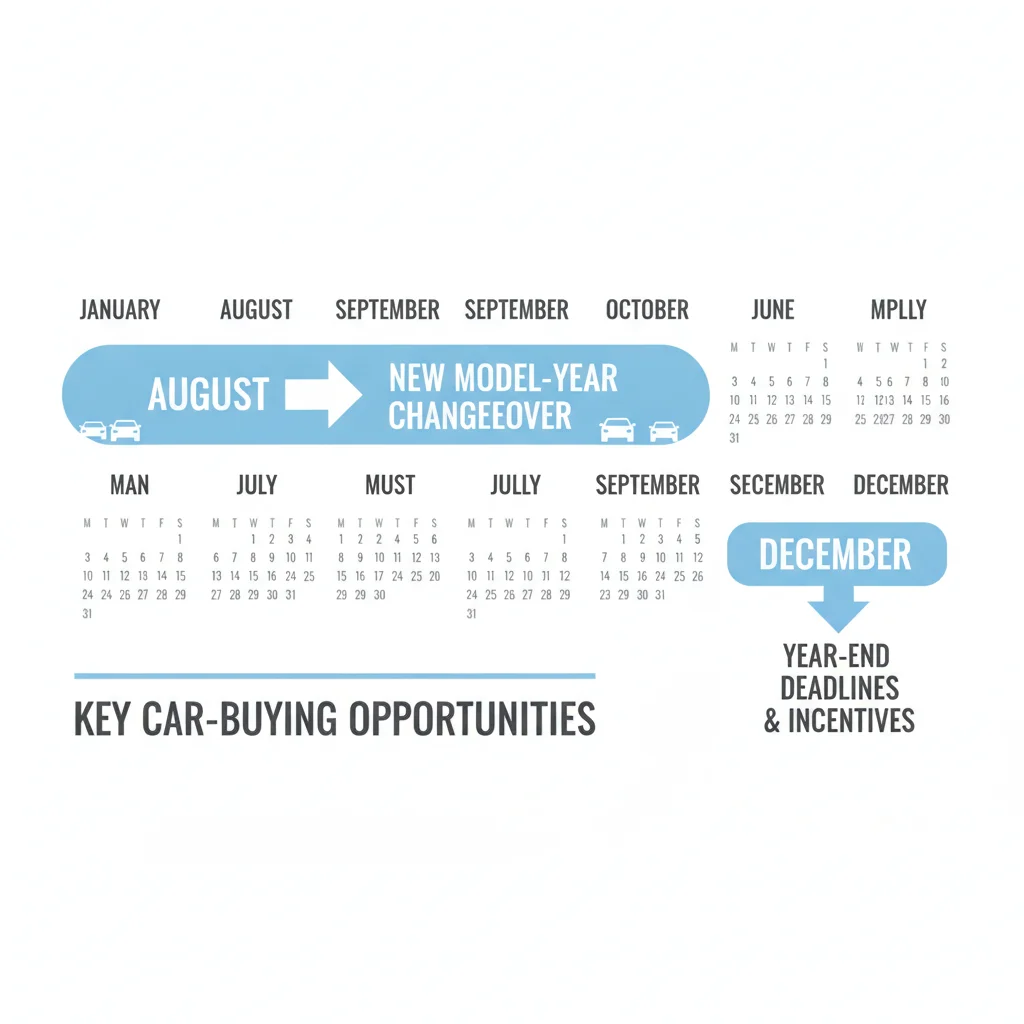
When a manufacturer introduces the new model year — typically arriving at dealerships between August and October — the prior model year becomes dated inventory overnight. A 2024 model sitting on a lot the day a 2025 arrives is now a year-old car in buyers' minds, even if it's brand new. Dealers know this and are highly motivated to clear outgoing-year stock. Discounts of $2,000–$5,000 below MSRP on prior-model-year vehicles during this window are common, and sometimes significantly more on slower-selling models.
Year-End and Quarter-End Pushes
Manufacturers set volume targets for dealers. Dealers who hit those targets earn bonuses — called dealer cash or stair-step incentives — that can amount to thousands of dollars per vehicle. The last week of any calendar quarter (March, June, September, December) is when dealers are most likely to be chasing those thresholds. December is the most powerful because it's both quarter-end and year-end simultaneously. If you can buy in the final three to five business days of December, you're timing your purchase to intersect with maximum dealer motivation.
Winter Slowdowns for Seasonal Products
Convertibles, sports cars, and trucks in warm-climate body styles see demand drop in northern markets during winter. Inventory sits longer. Buying a convertible in January in the Midwest means shopping against almost no competition — which is leverage in your favor. Conversely, all-wheel-drive crossovers and 4WD trucks spike in demand as winter arrives, and inventory tightens accordingly.
Tax Refund Season (February–April)
The arrival of tax refunds historically drives a demand surge, particularly in the used car segment. Dealers know it's coming and price accordingly. If your timeline is flexible, buying just before this window — in January or early February — often gets you softer pricing before dealers recalibrate to meet incoming demand.
Tax Refund Season Inflates Used Car Prices
The February-to-April tax refund surge is well-documented in dealer pricing data. Used vehicle asking prices typically climb 3–6% during peak refund season as demand spikes. If you're shopping used cars and your timing is flexible, completing your purchase in January — before refunds arrive — or waiting until May, when the surge fades, can meaningfully reduce what you pay.
Incentives Don't Always Combine With Discounts
Manufacturer cash-back incentives and dealer discounts are sometimes mutually exclusive. A dealer may offer a below-MSRP price that already absorbs the manufacturer incentive rather than passing it to you separately. Always ask: 'Is the manufacturer cash back included in this price, or is it in addition to this price?' The answer will reveal how the math actually works.
How to Read Days-on-Lot as a Negotiation Signal
Days on lot (DOL) is arguably the single most actionable inventory signal available to individual buyers. It tells you not just whether inventory is high, but whether this specific vehicle has been sitting long enough that the dealer is motivated to move it.
Here's a rough framework for interpreting DOL on new vehicles:
| Days on Lot | What It Signals | Negotiation Implication |
|---|---|---|
| 0–30 days | Fresh arrival, likely in demand | Limited room; expect to pay closer to MSRP |
| 31–59 days | Normal turn rate, some softness | Modest discount possible; ask for add-ons |
| 60–89 days | Dealer carrying cost is mounting | Real negotiating room opens up; push harder |
| 90+ days | Stale inventory; floorplan cost is significant | Aggressive offers are reasonable; dealer likely to deal |
For used vehicles, the threshold shifts slightly lower — used cars typically move faster, so a 45-day-old used vehicle may signal the same pressure that 75 days would on a new car.
See how to track a vehicle's days on lot to gauge dealer motivation for a full walkthrough on finding this data using listing sites and direct inquiry tactics.
Use CarGurus Alerts to Track Price Drops
CarGurus allows you to save a search and receive email alerts when prices drop on saved vehicles. Set an alert for your target model and trim, then monitor for 30–45 days before visiting. Price reductions are a direct signal that a dealer is feeling carrying-cost pressure — and that your negotiating position is strengthening without you doing anything.
Quarter-End Timing Is Underrated
Most buyers focus on December as the prime buying month, and it is strong — but the final days of March, June, and September are nearly as powerful for volume-motivated dealers. These windows get far less foot traffic than December because fewer buyers know about them, which means you're negotiating with less competition in the showroom.
Check Inventory at Multiple Dealers for the Same Model
Inventory pressure isn't uniform across dealers even within the same metro. One dealer may have seven units of your target model and be desperate to move them; another five miles away may have two and feel no urgency at all. Calling ahead to ask how many units are in stock — before you visit — takes two minutes and tells you which lot to prioritize.
Step-by-Step: How to Use Inventory Signals in Your Buying Process
The following steps walk you through the complete process — from initial research to your showroom visit — using inventory data as your guide. Each step builds on the previous one so that by the time you sit down with a salesperson, you're equipped with context most buyers don't have.
Identify Your Target Vehicle and Segment
Before checking any inventory data, narrow your search to a specific vehicle type — ideally a make, model, and trim. Inventory conditions vary enormously by segment. Full-size pickup trucks, luxury sedans, and compact SUVs each have different supply cycles driven by different production volumes and demand patterns.
If you're open to multiple options, rank them. Knowing your first, second, and third choices lets you pivot to a better-supply option if your primary target is in a tight inventory environment.
Check National Days-Supply for Your Target Segment
Search for the most recent Cox Automotive or Edmunds inventory report for your model. Look specifically for the days supply figure — this represents how many days of inventory are on hand at the current sales rate.
- Under 40 days: Seller's market. Expect to pay at or above MSRP. Incentives will be minimal.
- 40–60 days: Balanced market. Some room to negotiate, but don't expect large discounts.
- 60–90 days: Buyer's market developing. Dealers are under pressure to move units.
- 90+ days: Strong buyer's market. This is when aggressive negotiating is most productive.
Search Local Listings and Count Available Units
Go to CarGurus, Cars.com, or the manufacturer's inventory locator and search for your target vehicle within a 50-mile radius. Count how many units are available. Compare that to what you find at 100 miles and 150 miles.
A large number of local listings relative to typical population density suggests excess inventory in your market. Note how many listings are flagged as great deal or good deal by CarGurus — this is a proxy signal for which specific vehicles have been sitting long enough to generate pricing pressure on the dealer side.
Identify High-DOL Vehicles Within Your Search Results
Sort your listing results by listing age or days on market. Focus on vehicles that have been listed for 60 or more days. These are your highest-leverage targets.
Cross-reference the listing price against the average transaction price you found in Step 2. If a vehicle has been listed for 75 days and is priced at MSRP while comparable units are transacting below sticker, that dealer has room — they're either holding firm on price or haven't updated the listing. Either way, it's an opening.
Check Active Manufacturer Incentives
Visit the manufacturer's official website and look for the current incentives page. Look for three things: (1) cash back offers, (2) low-APR financing promotions, and (3) lease support. Any combination of these signals that the manufacturer is propping up demand because inventory is elevated at the retail level.
Stacked incentives — for example, $2,500 cash back plus 0% APR for 36 months — are a strong signal that a model has excess supply and the automaker is pushing dealers to clear it. These incentives typically run for a calendar month and reset. Buying in the final week of an incentive window, before it potentially lapses, adds urgency on the dealer's side to close deals.
Map Your Visit to a High-Inventory Timing Window
Combine everything you've found: segment days-supply, local unit count, individual vehicle DOL, and incentive activity. Use this picture to choose when to visit the dealership.
Optimal windows, in order of negotiating advantage:
- Last 3–5 business days of December (year-end + quarter-end)
- August–October during model-year changeover (prior-year clearance)
- End of any calendar quarter (March, June, September)
- Any month when days-supply for your segment exceeds 75
Visit on a weekday if possible. Weekends bring higher foot traffic, which means salespeople have less time per customer and less pressure to close any single deal. A Tuesday or Wednesday afternoon gives you the most unhurried negotiating environment.
Enter the Negotiation Armed With Your Inventory Data
When you sit down with a salesperson, you don't need to announce that you've done inventory research — but you should be prepared to reference it if the negotiation stalls. Phrases that work:
- "I see this vehicle has been on the lot for about 80 days. What's the best number you can put on paper today?"
- "The days supply on this model is running high nationally. I'm not in a rush, but I'd rather close here than keep looking."
- "I noticed the manufacturer has $2,000 cash back on this model right now. Is that reflected in your asking price, or is that on top?"
Each of these signals that you're an informed buyer without being adversarial. The goal is to create an environment where the salesperson understands they can't obscure market conditions — which puts honest numbers on the table faster.
Once you've completed these steps, you'll be in a position to apply the pressure inventory data enables. For the specific questions to ask once you're across the table, see questions that reveal how much room a dealer has to move. And if you're deciding between ordering from the factory or buying off the lot — particularly relevant when local inventory is thin — ordering a car from the factory vs. buying off the lot lays out that trade-off clearly.
What Low Inventory Means — and How to Adapt
Not every market condition will favor you. The 2021–2022 inventory crisis — driven by semiconductor shortages that crippled production — was a stark example of what happens when supply collapses. Dealers were selling vehicles above MSRP, sometimes by $5,000 to $20,000 on popular models. The traditional negotiation tactics simply didn't apply.
If you find yourself shopping in a low-inventory environment, here's how to adapt:
- Widen your search radius. Inventory conditions vary significantly by region. A model that's tight in one metro may be available at normal pricing 150 miles away. Online searches make this easy to check before driving.
- Consider a factory order. When lot inventory is thin, ordering exactly the configuration you want at MSRP — with no dealer markup — is often the cleaner path. Lead times are typically 6–12 weeks, but you avoid paying a premium for someone else's spec.
- Shift to a less-constrained segment. Demand is rarely uniform. If full-size trucks are commanding $4,000 over sticker, midsize trucks might be sitting at MSRP. Flexibility on vehicle type often unlocks pricing leverage that isn't available in your first-choice segment.
- Wait it out strategically. If your current vehicle is functional and you have no urgency, monitoring inventory trends over 60–90 days can reveal when conditions shift. Cox Automotive and Edmunds both publish monthly inventory reports you can track for free.
For a fuller picture of how supply, demand, and interest rates interact to shape your real negotiating position in any environment, see how market conditions shape your negotiating position. The relationship between new car inventory and used vehicle values also cuts both ways — if new lots are full, used vehicle prices often soften simultaneously, which is explained in detail in how new car inventory levels affect what you can get for your used vehicle.

Low Inventory Markets Require a Different Mindset
The tactics in this guide are most effective when inventory is elevated. In a supply-constrained market — where days-supply is under 40 and vehicles are transacting above MSRP — aggressive negotiating rarely works and can cost you a vehicle you want. Recognize the market environment first, then calibrate your approach. Pushing hard for a $2,000 discount when a dealer has three units and a waiting list will simply result in the next buyer getting the car.
Ultimately, reading inventory is a skill that compounds. The more familiar you become with the seasonal rhythms, the national days-supply numbers, and the local lot conditions in your area, the better your instincts get for when to push and when to walk. Pair this with the used car buying strategies that dealers prefer you don't know and you're operating from a position of genuine informational advantage. That's what separates buyers who pay market rate from those who beat it.

All claims are backed by peer-reviewed research. Sources on request.