Key Takeaways
Capitalize on model-year clearance discounts
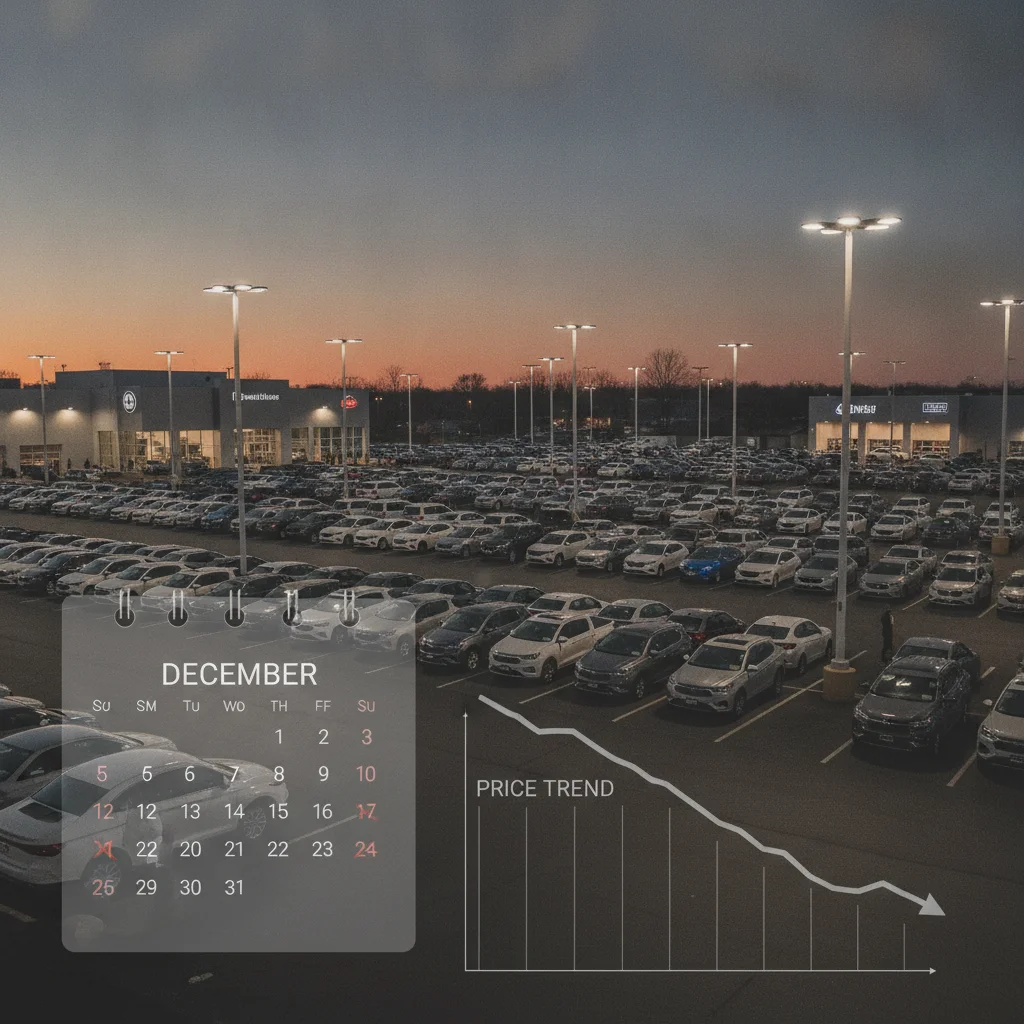
As new model-year vehicles arrive, dealers discount outgoing inventory aggressively. Buyers who time their purchase to this window often save 8–12% off MSRP compared to peak-demand periods.
Lock in lower rates if monetary policy is easing
When the Federal Reserve is in a rate-cutting cycle, waiting even a few months can reduce your auto loan rate by a full percentage point or more, saving hundreds to thousands over the loan term.
Cross a credit score tier and earn a lower rate
Auto loan rates step down at specific score thresholds. Waiting 30–60 days to move from 680 to 720, for example, can cut your rate by 2–4 points and save over $1,000 in interest on a typical loan.
Rising inventory shifts negotiating leverage to buyers
When dealer inventory climbs and units sit longer, sellers become flexible on price, trade-in value, and add-ons. Monitoring local inventory trends lets you identify exactly when this shift is occurring.
End-of-year incentives stack for maximum savings
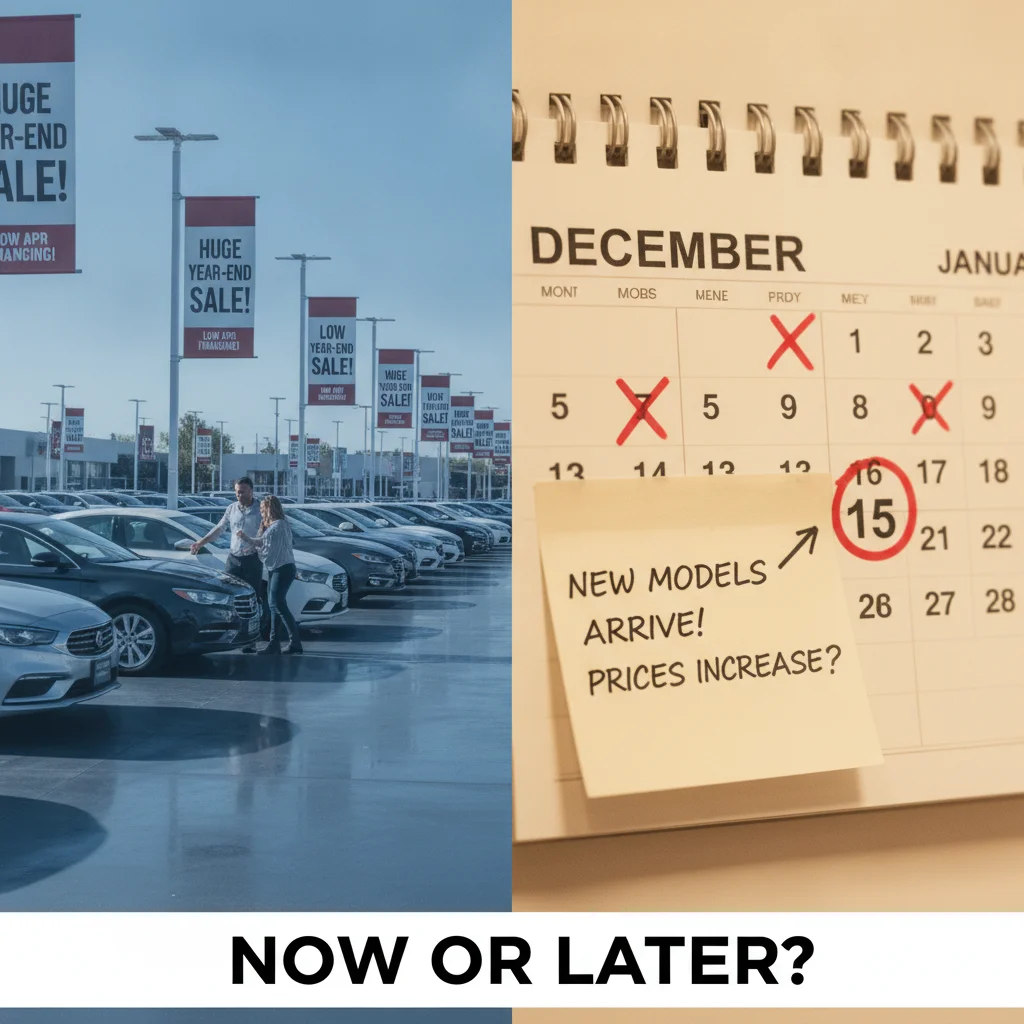
November and December combine annual quota pressure with manufacturer bonus cash, sometimes stacking $3,000–$6,000 in total incentives on certain models. Buyers who plan ahead for this window consistently report the best deals.
Rising interest rates can erase any price savings
A 2-point rate increase on a $35,000 60-month loan adds roughly $1,900 in total interest. If you waited expecting a price drop and rates rose instead, you likely paid more overall.
Trade-in depreciation is an ongoing monthly loss
A mainstream sedan loses roughly 1–1.5% of its current market value every month. Three months of waiting can cost more in trade-in erosion than the discount you were chasing.
Repair bills on an aging vehicle accumulate quickly
If your current vehicle averages $200+ per month in unplanned repairs, a 6-month wait generates $1,200+ in maintenance exposure — often more than the anticipated deal improvement.
Best inventory sells early in incentive windows
Popular trims, colors, and configurations move in the first half of any promotional period. Waiting until the final days of an incentive window typically means choosing from leftovers.
Pre-approval rate locks expire in 30–45 days
A favorable pre-approval offer has a shelf life. Delaying your purchase past that expiration means reapplying under potentially different rate conditions, eliminating the locked-in advantage.
Used vehicle prices can spike unpredictably
The 2021–2022 supply disruption showed how quickly used car values can rise 30–40%, punishing buyers who waited for prices to normalize and rewarding those who acted when trade-in values were peaking.
Our Verdict
Waiting for a better deal is not always the patient, disciplined move — sometimes it actively costs you money through rising rates, continued depreciation on your trade-in, or escalating repair bills on an aging vehicle. Buying now is the right call when you have a confirmed incentive, a deteriorating financial situation, or solid evidence that market conditions favor buyers today. The smartest approach is to set a clear decision deadline, define the specific signals you're watching, and act when those signals align rather than chasing an elusive perfect moment.
Best suited for buyers who are within 60 to 90 days of a purchase decision and want a clear, fact-based framework for evaluating whether to act now or hold for better conditions.
Why This Decision Is Harder Than It Looks
On the surface, the logic of waiting seems bulletproof: hold out a little longer and the price will drop, rates will improve, or a better deal will materialize. But the calculus is rarely that simple. Every week you wait, your current vehicle depreciates further if you're planning to trade it in, repair costs on an older car keep accumulating, and market conditions can shift in either direction.
The real challenge is that car buyers are not trying to time a stock market — they're navigating a market shaped by manufacturer incentive schedules, dealer inventory cycles, Federal Reserve rate decisions, and seasonal demand patterns. Each of those variables moves on its own timeline.
This article gives you a structured way to think through both sides of the decision. We'll look at the concrete advantages of waiting — and the real costs of it — so you can set a clear threshold rather than leaving the call to gut feeling.

Before diving in, it's worth understanding one foundational principle: timing strategy and negotiating strategy are not the same thing. You can pick the perfect calendar window and still leave money on the table by walking in unprepared. See our pre-purchase timing checklist for the full set of signals to evaluate before committing to a purchase date.
The Case for Waiting: When Patience Has Real Payoff
Waiting is not always passive. When the right conditions are approaching on the horizon, holding your position is an active, disciplined strategy that can save a meaningful amount of money. Here are the scenarios where waiting clearly wins.
Capitalize on model-year clearance discounts
As new model-year vehicles arrive, dealers discount outgoing inventory aggressively. Buyers who time their purchase to this window often save 8–12% off MSRP compared to peak-demand periods.
Lock in lower rates if monetary policy is easing
When the Federal Reserve is in a rate-cutting cycle, waiting even a few months can reduce your auto loan rate by a full percentage point or more, saving hundreds to thousands over the loan term.
Cross a credit score tier and earn a lower rate
Auto loan rates step down at specific score thresholds. Waiting 30–60 days to move from 680 to 720, for example, can cut your rate by 2–4 points and save over $1,000 in interest on a typical loan.
Rising inventory shifts negotiating leverage to buyers
When dealer inventory climbs and units sit longer, sellers become flexible on price, trade-in value, and add-ons. Monitoring local inventory trends lets you identify exactly when this shift is occurring.
End-of-year incentives stack for maximum savings
November and December combine annual quota pressure with manufacturer bonus cash, sometimes stacking $3,000–$6,000 in total incentives on certain models. Buyers who plan ahead for this window consistently report the best deals.
Model-Year Changeovers Create Genuine Urgency for Dealers
When a new model year hits the lot — typically between July and October — dealers need to clear the prior-year inventory. They can't finance new stock efficiently while older units sit unsold. That pressure translates directly into larger dealer discounts and manufacturer-to-dealer cash incentives. If the new model year is 6 to 10 weeks out, waiting often yields 8–12% off MSRP on outgoing models.
Our guide on timing your new car purchase breaks down exactly which months produce the sharpest discounts by vehicle segment.
Rising Inventory Shifts Negotiating Power to Buyers
When dealer lot days-on-market metrics rise above 60 days for a given model, dealers become notably more flexible. Tracking inventory levels at two or three local dealers over a few weeks gives you a real-time read on supply pressure. If stock is building, a 2–4 week wait can shift an adversarial negotiation into a collaborative one.
A Credit Score Threshold Is Within Reach
Interest rate tiers are not continuous — they step up at specific credit score bands. Moving from a 680 to a 720 score, for example, can drop your rate by 2–4 percentage points on a 60-month loan. On a $35,000 loan, that difference is roughly $1,400 in total interest paid. If you're 30–60 days away from crossing a meaningful score threshold, the math usually favors waiting. The full trade-off analysis on credit score timing walks through this calculation in detail.
Score Tiers Vary by Lender
Not every lender uses the same credit score bands for rate tiers. Before assuming a specific score improvement will unlock a lower rate, ask your target lender or credit union exactly where their rate tiers begin and end. Some set tiers at 660, 700, and 740; others use 680, 720, and 760. Knowing the exact threshold for your specific lender makes the waiting calculation far more precise.
Pre-Approval Expiration Is a Real Deadline
Many buyers treat a pre-approval as an indefinite backstop, but most offers expire in 30–45 days. If you received a competitive rate offer and are waiting for better market conditions, track the expiration date carefully. Letting a favorable pre-approval lapse and reapplying under changed rate conditions is one of the most avoidable timing mistakes in the car buying process.
Buy Now, Refinance Later: Know the Break-Even
Refinancing an auto loan typically involves a new application, a hard credit inquiry, and occasionally small processing fees. Before adopting a buy-now-refinance-later strategy, calculate the break-even point: divide total refinancing costs by monthly payment savings to see how many months until you net ahead. For loans under $20,000 or with fewer than 36 months remaining, the math often doesn't favor refinancing.
The Case for Buying Now: When Delay Costs You More Than You Save
The argument for buying now is often undersold because people underestimate the accumulating costs of delay. These costs are real, measurable, and compound over time.
Rising interest rates can erase any price savings
A 2-point rate increase on a $35,000 60-month loan adds roughly $1,900 in total interest. If you waited expecting a price drop and rates rose instead, you likely paid more overall.
Trade-in depreciation is an ongoing monthly loss
A mainstream sedan loses roughly 1–1.5% of its current market value every month. Three months of waiting can cost more in trade-in erosion than the discount you were chasing.
Repair bills on an aging vehicle accumulate quickly
If your current vehicle averages $200+ per month in unplanned repairs, a 6-month wait generates $1,200+ in maintenance exposure — often more than the anticipated deal improvement.
Best inventory sells early in incentive windows
Popular trims, colors, and configurations move in the first half of any promotional period. Waiting until the final days of an incentive window typically means choosing from leftovers.
Pre-approval rate locks expire in 30–45 days
A favorable pre-approval offer has a shelf life. Delaying your purchase past that expiration means reapplying under potentially different rate conditions, eliminating the locked-in advantage.
Used vehicle prices can spike unpredictably
The 2021–2022 supply disruption showed how quickly used car values can rise 30–40%, punishing buyers who waited for prices to normalize and rewarding those who acted when trade-in values were peaking.
Rising Rates Outrun Any Dealer Discount You're Waiting For
Between early 2022 and late 2023, the average new car loan rate climbed from roughly 4% to over 8%. A buyer who delayed 12 months hoping for a lower sticker price typically lost far more in interest cost than they saved on the purchase price. If rate trends are upward and your credit profile is already strong, locking in now protects you.
Trade-In Depreciation Is an Ongoing Tax on Waiting
Every additional month you drive a vehicle you plan to trade, it loses residual value. A 3-year-old mainstream sedan loses roughly 1–1.5% of its current market value per month. Waiting 3 months to save $500 on the purchase price while your trade-in loses $600 in value is a net loss of $100 before you account for any other costs.
Confirmed, Short-Window Incentives Don't Last
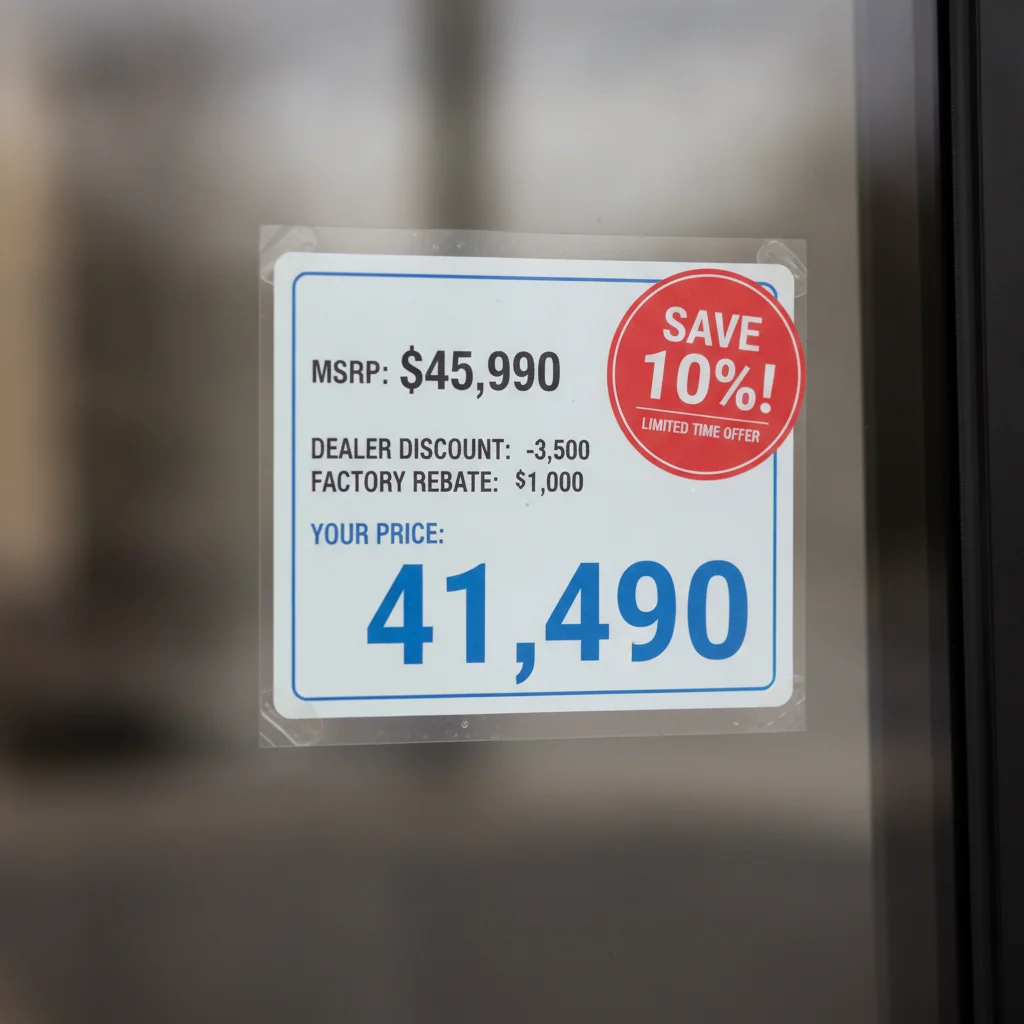
Manufacturer incentive programs have firm end dates, and the best inventory — popular trims, desirable colors — disappears early in a promotion window. Research consistently shows that waiting until the final days of an incentive period nets the same discount but on leftover inventory. Our analysis on why buying early in a promotion often beats waiting for the last day explains the inventory dynamics in detail.
Key Metrics to Watch Before Making Your Call
Rather than relying on instinct, use a short checklist of observable signals. Each one is either favorable to buying now or favorable to waiting. Tally them up before you decide.
8–12%
Typical discount on prior model-year vehicles
Based on industry transaction data tracking dealer discounts during model-year changeover periods, typically July through October.
$1,900
Extra interest from a 2-point rate increase
Calculated on a $35,000 loan at 60 months; illustrates how rate movement can outweigh price savings from waiting.
30–45 days
Typical pre-approval rate lock window
Most bank and credit union auto loan pre-approvals expire within this window, creating a soft deadline for buyers who have secured competitive rates.
1–1.5%
Monthly depreciation on trade-in value
Approximate monthly value erosion for a mainstream 3-year-old sedan based on used vehicle market valuation trends.
60 days
Days on lot signaling dealer flexibility
When average days-on-market for a specific model exceeds 60 days, dealers typically show meaningful price flexibility to move aging inventory.
| Signal | Favors Waiting | Favors Buying Now |
|---|---|---|
| Fed rate direction | Rates trending down | Rates trending up |
| Dealer inventory (days on lot) | Rising, above 60 days | Shrinking, below 30 days |
| Model-year changeover | Within 8 weeks | Just completed |
| Your credit score trajectory | 30–60 days from next tier | Already at peak tier for you |
| Trade-in market | Used prices rising | Used prices falling |
| Current vehicle repair costs | Under $100/month average | Over $200/month average |
| Confirmed manufacturer incentive | None currently active | Active with firm end date |
If four or more signals point in the same direction, you have a clear answer. If the signals are split evenly, the tiebreaker is usually your personal financial situation — specifically whether your current vehicle situation is sustainable for another 60–90 days.
For a structured version of this evaluation, work through the market conditions checklist before scheduling dealer visits.
Seasonal Windows: The Calendar Signals That Consistently Deliver
Not all months are created equal for car buyers. Decades of transaction data point to a handful of consistent seasonal windows where buyer conditions improve measurably.
End of Month
Sales quotas reset monthly. Dealers and salespeople who are short of their monthly targets in the last 3–5 business days of a month are noticeably more flexible. This is one of the most reliable and repeatable timing advantages available to any buyer, regardless of the broader market environment.
End of Quarter (March, June, September, December)
Quarterly targets compound the end-of-month pressure. The last week of March, June, September, and December combines monthly and quarterly quota pressure simultaneously, creating the most acute dealer motivation to close deals.
November Through December
Year-end is the most well-known buying window for good reason. Dealers are working against annual quotas, manufacturers often add year-end bonus cash incentives, and incoming model inventory is already on the lot. The year-end buying playbook maps out the specific sequence of events from November through December and how to position yourself at each stage.

Model Changeover Season (July–October)
This window varies by brand and model but typically runs from late summer through early fall. Prior model-year vehicles at this stage carry the highest discount potential — often combined with low-rate financing offers from manufacturers eager to clear prior-year production. The key risk: selection narrows quickly as the best configurations sell first.
For a deeper breakdown of how these windows compare historically, see our guide on timing a new car purchase.
When Waiting Backfires: The Hidden Costs Most Buyers Miss
The psychological pull of waiting is strong — it feels disciplined, even shrewd. But waiting has a real cost structure that buyers routinely undercount.
Opportunity Cost of Continued Repairs
A vehicle averaging $250/month in unplanned repair costs over 6 months costs $1,500 before you factor in any inconvenience or risk of being stranded. If the deal you're waiting for would save you $800, you need to ask whether saving $800 six months from now is worth $1,500 in near-term repair exposure.
Used Car Market Volatility
Used vehicle values can shift sharply and unpredictably. During the 2021–2022 supply crunch, used car prices rose 30–40% in under 18 months. Buyers who waited for prices to normalize in late 2020 missed a window where their trade-in was worth significantly more — effectively subsidizing a new purchase. The market timing dynamics for used vehicles hub covers how to read these cycles.
Rate Lock Risk on Pre-Approvals
Pre-approval offers from banks and credit unions typically expire in 30–45 days. If you received a favorable pre-approval rate and then delayed your purchase past the expiration date, you may need to reapply under changed rate conditions. Lock in credit before you shop, and treat the pre-approval expiration date as a soft deadline.
Score Tiers Vary by Lender
Not every lender uses the same credit score bands for rate tiers. Before assuming a specific score improvement will unlock a lower rate, ask your target lender or credit union exactly where their rate tiers begin and end. Some set tiers at 660, 700, and 740; others use 680, 720, and 760. Knowing the exact threshold for your specific lender makes the waiting calculation far more precise.
Pre-Approval Expiration Is a Real Deadline
Many buyers treat a pre-approval as an indefinite backstop, but most offers expire in 30–45 days. If you received a competitive rate offer and are waiting for better market conditions, track the expiration date carefully. Letting a favorable pre-approval lapse and reapplying under changed rate conditions is one of the most avoidable timing mistakes in the car buying process.
Buy Now, Refinance Later: Know the Break-Even
Refinancing an auto loan typically involves a new application, a hard credit inquiry, and occasionally small processing fees. Before adopting a buy-now-refinance-later strategy, calculate the break-even point: divide total refinancing costs by monthly payment savings to see how many months until you net ahead. For loans under $20,000 or with fewer than 36 months remaining, the math often doesn't favor refinancing.
Setting Your Personal Decision Deadline
Open-ended waiting rarely resolves cleanly. Without a defined endpoint, buyers tend to keep deferring as each new potential improvement appears on the horizon. The fix is to set a structured decision deadline using this three-step process.
- Define your trigger conditions. Write down the specific signals you're waiting for — a rate drop to X%, a model-year clearance event, a credit score crossing a specific threshold. Vague waiting is not a strategy.
- Set a hard deadline. Choose a date 30–90 days out. If your trigger conditions have not materialized by that date, you commit to buying within the next two weeks regardless. This prevents indefinite deferral.
- Track your holding costs. Every week, log what your current vehicle is costing you in repairs, rental cars, and lost reliability. Compare this running total against your estimated savings from waiting. When holding costs exceed projected savings, the decision is made for you.
This framework converts a stressful, open-ended question into a time-bounded evaluation with a defined outcome. It also protects you from the emotional trap of always believing a better deal is just around the corner.

If you already own a vehicle and are also weighing the timing of when to list it for sale, the analysis of short-term versus long-term timing strategies for maximizing sale price is directly relevant — the dynamics of buyer and seller timing interact closely.
Refinancing as an Alternative to Waiting
One often-overlooked option for buyers who feel the market conditions today aren't ideal: buy now at the best rate available, then refinance if rates drop significantly within the next 12–24 months. This approach eliminates the depreciation and repair-cost exposure of waiting while preserving the ability to capture a better rate later.
The strategy works best when: your credit profile is already strong, the rate spread between today and an anticipated future environment is at least 1.5–2 percentage points, and the loan balance will still be large enough that refinancing transaction costs are worthwhile.
For a full read on when refinancing makes financial sense, the when to refinance hub covers the key signals and break-even calculations in detail.
Score Tiers Vary by Lender
Not every lender uses the same credit score bands for rate tiers. Before assuming a specific score improvement will unlock a lower rate, ask your target lender or credit union exactly where their rate tiers begin and end. Some set tiers at 660, 700, and 740; others use 680, 720, and 760. Knowing the exact threshold for your specific lender makes the waiting calculation far more precise.
Pre-Approval Expiration Is a Real Deadline
Many buyers treat a pre-approval as an indefinite backstop, but most offers expire in 30–45 days. If you received a competitive rate offer and are waiting for better market conditions, track the expiration date carefully. Letting a favorable pre-approval lapse and reapplying under changed rate conditions is one of the most avoidable timing mistakes in the car buying process.
Buy Now, Refinance Later: Know the Break-Even
Refinancing an auto loan typically involves a new application, a hard credit inquiry, and occasionally small processing fees. Before adopting a buy-now-refinance-later strategy, calculate the break-even point: divide total refinancing costs by monthly payment savings to see how many months until you net ahead. For loans under $20,000 or with fewer than 36 months remaining, the math often doesn't favor refinancing.
This buy-now-then-refinance approach is not a workaround for a weak credit profile. If your score is genuinely close to a meaningful rate-tier threshold, waiting to cross it before purchasing usually beats buying and refinancing later — the math on that specific situation is covered in the credit score timing trade-off analysis.

All claims are backed by peer-reviewed research. Sources on request.