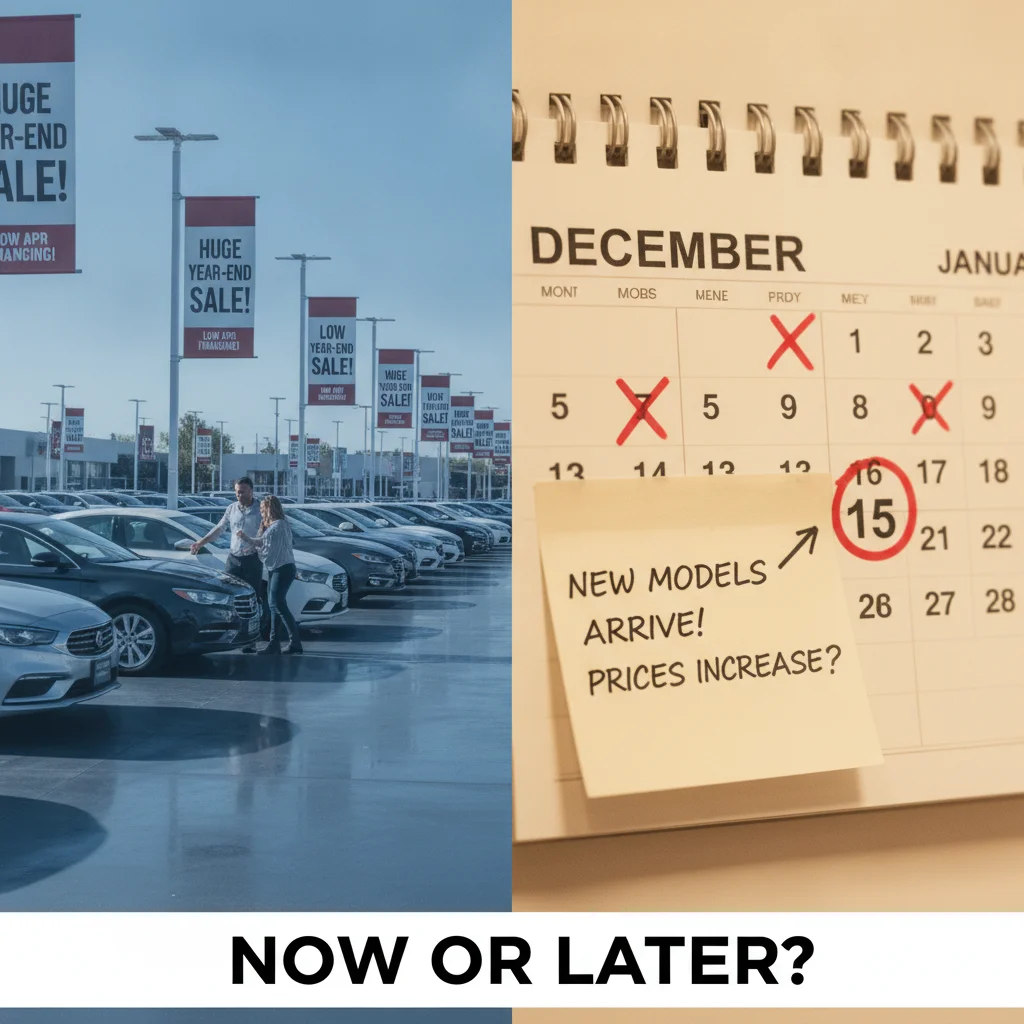
Key Takeaways
Promotional Window Timing
A promotional window is the scheduled period during which a manufacturer or dealer offers special incentives — cash back, low APR financing, or lease deals — on specific vehicles. Buying early in that window means you shop when the full incentive is still active but inventory hasn't yet been picked over by other shoppers. You capture the same savings as a last-day buyer while facing far less competition for the exact trim and color you want.
Manufacturer incentives (often called 'subvented' rates or 'conquest cash') are typically loaded into dealer systems on the first of the month and expire at month-end or on a date set by the OEM. The discount amount does not increase as the deadline approaches — only inventory decreases.
The Myth of the Last-Day Deal
There is a persistent belief in car buying that the best deal appears in the final hours of a sale or promotional period — that dealers, desperate to hit a deadline, will cut prices to the bone if you show up at 5 p.m. on the last day of the month. The grain of truth in that story has been repeated so often that it has grown into an assumption that simply is not supported by how manufacturer incentives actually work.
Here is the reality: the incentive amount — the $2,500 cash back, the 0% APR offer, the $299 lease payment — is determined by the automaker weeks before the promotion launches. It does not change based on how many days are left. A buyer who walks into the dealership on day one of a 30-day offer captures exactly the same manufacturer discount as a buyer who waits until the final day.
What does change over the course of a promotion is inventory. Every day that passes, other shoppers are configuring, test driving, and purchasing the vehicles you want. By the time the deadline arrives, the most desirable trims, colors, and option packages are frequently gone. You may still get the advertised discount — but on whichever unit is left, not the one you actually wanted.
Incentive Timing Varies by Manufacturer
While most domestic and import brands refresh incentives on the first of the calendar month, some manufacturers operate on fiscal quarters or tie promotions to specific model-year production cycles. Honda and Toyota, for example, occasionally run incentives that span six weeks rather than a single month. Always verify the exact start and end date of any promotion before planning your purchase timing around it.
Factory Orders Preserve Selection but Require Lead Time
If you are shopping early in a promotional period and the exact configuration you want is not on the lot, ask whether the manufacturer's incentive can be locked in on a factory order. Some OEMs allow buyers to secure a current promotion on a build-to-order vehicle if the order is placed within the incentive window. Lead times typically run six to twelve weeks, so this option works best when you have flexibility on delivery date.
That asymmetry is the core argument for early-window buying: the savings are identical, but the selection is not. Acting early lets you have both.
How Manufacturer Promotions Are Actually Structured
To understand why timing matters, it helps to know how a promotional offer moves from an automaker's headquarters to the sticker on a windshield.
- OEM decision. Weeks before a promotion launches, the manufacturer's marketing and finance teams set the terms: the qualifying models, the incentive type (cash allowance, subvented APR, or lease support), the amount, and the start and end dates.
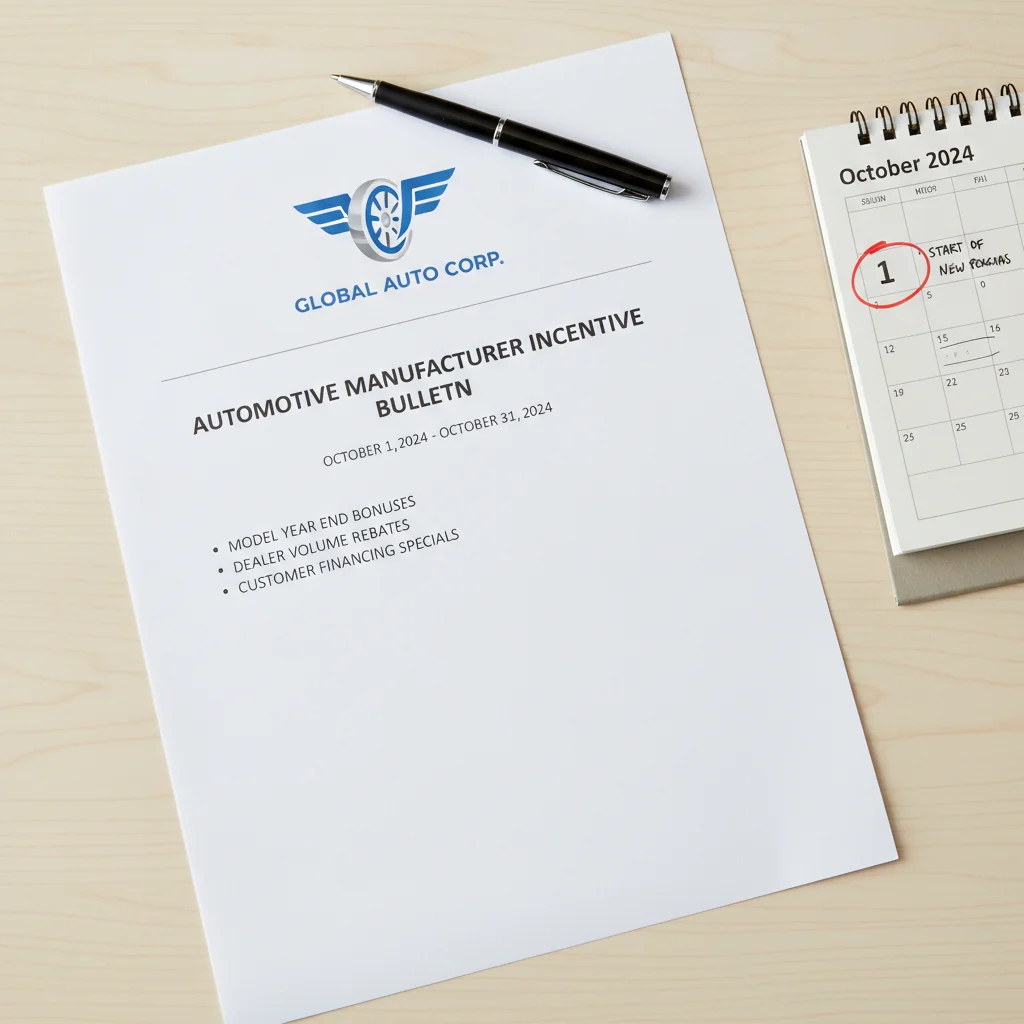
- Dealer bulletin. On the launch date — usually the first of the month — dealers receive an official incentive bulletin detailing every active program. The amounts are fixed; dealers cannot unilaterally increase them.
- Consumer-facing advertising. Dealers and the manufacturer begin advertising the offer. Inventory on the lot is now subject to the published incentive for all qualifying buyers equally.
- Promotion closes. At month-end or the specified date, the offer expires. Any vehicle purchased after that point does not qualify, regardless of when the buyer first visited the lot.
Notice that nowhere in that sequence does the incentive amount grow because a deadline is approaching. The dollar figure is baked in from day one. This is why the conventional wisdom of waiting for a last-minute surge in dealer generosity is largely a fantasy — at least when it comes to the manufacturer portion of the discount.
Dealer-funded discounts (price negotiation below MSRP) are a separate layer, and those can shift based on end-of-month quota pressure. We will return to that distinction in a moment, because it is the one legitimate reason some buyers wait.
Check Inventory Online Before Your First Visit
Most dealership websites show real-time inventory with trim levels, option packages, and colors. Spend 20 minutes searching the inventory of the two or three closest dealers to your home before you set foot on a lot. This lets you confirm which promotional units are still available and prioritize your visits — saving hours and avoiding the disappointment of arriving to find your target vehicle already sold.
Ask for the Incentive Bulletin in Writing
Before you spend time negotiating, ask the sales consultant to show you the manufacturer's current incentive bulletin for the vehicle you are considering. This document lists every active offer by model, trim, and VIN eligibility. Reviewing it early prevents a common finance-desk surprise where a promotional rate or cash-back amount turns out not to apply to the specific unit you selected.
The Inventory Depletion Curve
Picture a dealership that starts a promotional month with 40 units of a popular compact SUV across four trim levels and 10 exterior colors. On day one, every one of those 40 vehicles is available. By day 15, roughly half have sold. By day 25, the remaining 8 or 10 units are likely concentrated in the less popular configurations — the base trim in the color nobody chose, or the top-of-the-line package that most buyers could not afford even with the incentive.
~22 days
Average days' supply before popular trims sell out during promotions
Industry inventory tracking data consistently shows that the top two or three trim configurations of high-demand vehicles during promotional events sell within the first three weeks of a monthly incentive window.
65%
Share of promotional-period sales occurring in first and last week
Dealership sales patterns show roughly a third of monthly volume in the opening week and another third in the final week, with the middle two weeks accounting for the remainder — confirming a bimodal buying pattern.
$1,200+
Average cost of dealer-installed alternatives to factory options
Buyers who settle for a lower trim and attempt to replicate missing factory features through dealer accessories typically spend $800 to $2,000 more than the factory option premium, with lower resale impact, according to automotive accessory pricing surveys.
0%
Increase in manufacturer cash-back amount as deadline approaches
OEM incentive amounts are contractually fixed at program launch and do not escalate as the offer period closes; only inventory availability changes materially over the promotional window.
3–5 days
Optimal early-window buying period to maximize selection
Shopping within the first three to five days of a new incentive period captures full inventory depth while still allowing time to research, negotiate, and confirm offer terms before committing.
That depletion curve is not linear. Promotions often spike sales in the first week as buyers who have been watching the market pounce immediately. There is a lull in the middle weeks, and then another spike at month-end as deadline-focused buyers arrive. The first spike removes the best inventory. The second spike happens after the damage is already done.
For a buyer who arrives on day 28, the practical consequence is settling — accepting a color you did not want, skipping a feature package you would have paid for, or switching to a different model entirely. None of those outcomes are reflected in the advertised savings amount, but they have real cost: you may pay more for dealer-installed options to approximate the package you wanted, or you drive a car for five years in a color you find merely tolerable.
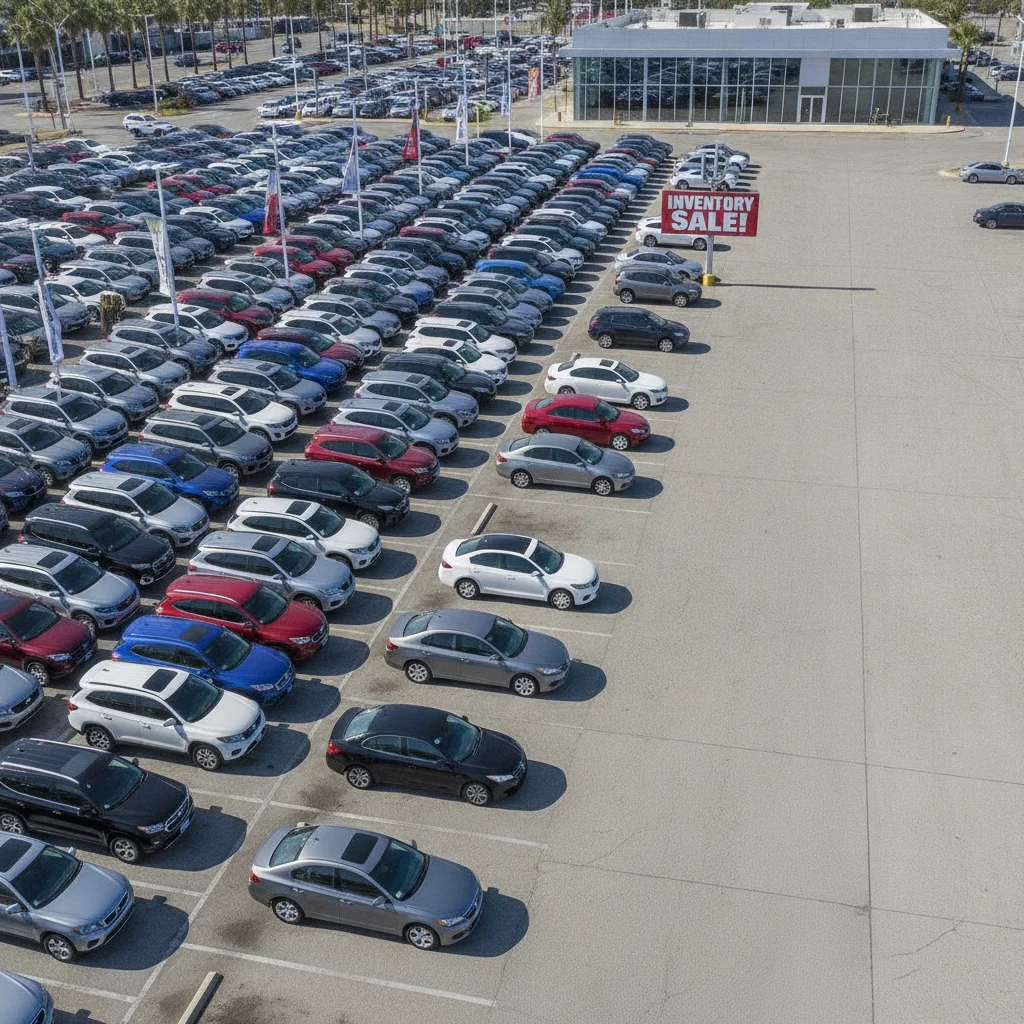
Early buyers sidestep this entirely. On day one or two of a promotion, you can cross-shop between multiple qualifying units on the same lot, request a dealer trade with a nearby store that also has full inventory, or order a factory build if the model allows it — all while the full incentive is still active.
The One Real Advantage of Waiting — and Its Limits
To be fair, last-day buying does have one genuine argument in its favor: dealer quota pressure. Most dealerships operate on monthly sales targets tied to manufacturer bonuses called stair-step incentives. If a dealer is 10 units short of a bonus threshold on the 29th of the month, the sales manager may approve below-invoice deals on individual vehicles to push the total over the line. That bonus can be worth tens of thousands of dollars, making a $500 discount per unit a rational trade.
The problem is that this dynamic is invisible to you as a buyer. You cannot call a dealership and ask, "Are you behind on your quota?" You can try to read the room — a lot full of inventory and a slow Saturday afternoon is a soft signal — but you are essentially guessing. You are accepting the certainty of depleted inventory in exchange for the possibility of marginally better negotiating leverage.
“The consumer who waits for the very last day of a sale to get a 'desperate' dealer is usually disappointed. The dealer's desperation, if it exists at all, doesn't outweigh the cost of having no inventory left to choose from. Selection is worth money.”
— Ivan Drury, Director of Insights, Edmunds
For most buyers, that trade is not worth making. The combination of a confirmed manufacturer incentive and a full selection of vehicles is a known quantity. The extra $300 or $400 you might negotiate at month-end is a variable that depends on factors entirely outside your control.
If squeezing every possible dollar matters most to you, consider a middle path: shop early in the promotional window to identify the exact vehicle you want and confirm the incentive in writing, then return in the final days of the same month to negotiate the selling price. You preserve selection because the dealer knows you are a committed buyer, and you arrive at end-of-month with specific leverage rather than vague hope. See our detailed breakdown of month-end versus year-end timing to understand how these pressures stack up differently across those two windows.
Practical Steps to Buy Early Without Leaving Money Behind
Buying early does not mean walking in unprepared and paying whatever the sticker says. Here is a step-by-step approach that captures the full benefit of early-window timing while still giving you negotiating position.
Step 1: Track incentive calendars before the promotion launches
Manufacturer websites publish current incentive offers, and automotive research sites aggregate them by make and model. Set a calendar reminder for the first of each month if you are in active shopping mode. When an offer appears that matches the vehicle you want, you have confirmed savings in hand — no speculation required.
Step 2: Get pre-approved for financing before you visit the lot
Pre-approval from your bank or credit union gives you two advantages: you know your rate before the dealer's finance office quotes you one, and you can close a deal quickly if you find the right vehicle on day one. Speed matters when inventory is full — the buyer behind you in the queue has the same information you do.
Step 3: Research trim levels and option packages in advance
Know exactly which features are must-haves versus nice-to-haves before you arrive. When you are standing in front of a lot with 30 qualifying vehicles, you need to be able to evaluate them efficiently. Buyers who arrive underprepared spend their time doing homework that could have been done at home, and they leave without purchasing — giving the inventory another day to deplete.
Step 4: Negotiate the selling price separately from the incentive
The manufacturer incentive is applied after the selling price is agreed upon. Treat them as two separate transactions. First negotiate the best price on the vehicle itself — aim for invoice or below depending on demand — then confirm that all applicable manufacturer incentives are applied on top of that negotiated price. Dealers sometimes blur these lines; keeping them separate protects you.
Step 5: Confirm the incentive terms in writing before signing
Ask the sales consultant to print the manufacturer's current incentive bulletin or pull it up on-screen. Verify that your specific trim level and VIN qualify. Promotions sometimes exclude certain packages or apply only to in-stock units. Confirming this early prevents a last-minute reveal at the finance desk.
Check Inventory Online Before Your First Visit
Most dealership websites show real-time inventory with trim levels, option packages, and colors. Spend 20 minutes searching the inventory of the two or three closest dealers to your home before you set foot on a lot. This lets you confirm which promotional units are still available and prioritize your visits — saving hours and avoiding the disappointment of arriving to find your target vehicle already sold.
Ask for the Incentive Bulletin in Writing
Before you spend time negotiating, ask the sales consultant to show you the manufacturer's current incentive bulletin for the vehicle you are considering. This document lists every active offer by model, trim, and VIN eligibility. Reviewing it early prevents a common finance-desk surprise where a promotional rate or cash-back amount turns out not to apply to the specific unit you selected.
For a complete checklist of market signals to review before committing to a purchase date, see our pre-purchase timing checklist. It covers inventory levels, incentive schedules, and the rate environment in one place.
How This Applies Across Different Promotion Types
Not all promotional windows work on exactly the same timeline, so it is worth calibrating your early-buying strategy to the type of offer you are targeting.
Model-year clearance events
When a new model year arrives — typically late summer through fall — dealers are motivated to clear prior-year inventory. These promotions can run for weeks or even months, and the inventory pool is literally finite: once those units sell, no more are coming. Early-window buying is especially critical here. The best-equipped prior-year units disappear within days of a clearance event launching. Buyers who arrive in week three are choosing from leftovers.
Holiday weekend sales events
Presidents' Day, Memorial Day, Fourth of July, Labor Day, and Black Friday are traditional manufacturer promotion windows. These events are heavily advertised and draw high foot traffic, which means inventory can deplete in a single weekend. If you plan to shop a holiday event, arriving on the first day — or even the evening before if the dealer holds a preview — gives you first access. Arriving on the final day of a three-day event often means the promotional units that were advertised are already sold.
Low-APR financing windows
Subvented financing offers (0% or 1.9% APR, for example) apply to any qualifying in-stock unit regardless of when in the month you buy. Inventory depletion still matters, but these offers are slightly less vulnerable to last-day scarcity because the financing rate itself does not disappear — only the vehicles do. That said, the same logic applies: the rate is fixed, the inventory is not, so earlier is better.
For more context on how broader timing factors — including seasonal patterns and economic conditions — interact with promotional windows, see our guide to timing a new car purchase.
The Hidden Cost of Settling for the Wrong Vehicle
There is a financial dimension to inventory depletion that rarely gets discussed: the cost of accepting the wrong vehicle. When you settle for a trim you did not want because the one you wanted sold three weeks ago, you are not just inconvenienced — you may be paying more in indirect ways.
Consider a buyer who wanted a mid-tier trim with a moonroof and heated seats, but arrived on the last day of a promotion to find only the base trim and the top-of-line package remaining. The base trim lacks the features they want; the top-of-line package costs $4,500 more. The manufacturer's $2,000 cash-back offer applies to both, so the effective out-of-pocket increase is $4,500 minus nothing — the incentive did not grow to compensate for the forced upgrade.
Alternatively, a buyer who settles for the base trim and pays a dealer to install aftermarket heated seats and a sunroof might spend $1,800 to $2,500 on accessories that add little to resale value, compared with factory options that appraisers account for at trade-in time. Either way, the late arrival costs money that the promotional savings do not recover.
Incentive Timing Varies by Manufacturer
While most domestic and import brands refresh incentives on the first of the calendar month, some manufacturers operate on fiscal quarters or tie promotions to specific model-year production cycles. Honda and Toyota, for example, occasionally run incentives that span six weeks rather than a single month. Always verify the exact start and end date of any promotion before planning your purchase timing around it.
Factory Orders Preserve Selection but Require Lead Time
If you are shopping early in a promotional period and the exact configuration you want is not on the lot, ask whether the manufacturer's incentive can be locked in on a factory order. Some OEMs allow buyers to secure a current promotion on a build-to-order vehicle if the order is placed within the incentive window. Lead times typically run six to twelve weeks, so this option works best when you have flexibility on delivery date.
Early buyers avoid this math entirely. They choose the vehicle that matches their needs, pay the negotiated price plus applicable incentives, and drive away in the right car. That outcome is worth more than the speculative leverage of showing up at closing time.
If you are weighing whether to buy now under current conditions or hold out for a future promotion, the analysis in waiting versus buying now walks through the key signals that clarify that decision.

All claims are backed by peer-reviewed research. Sources on request.