Key Takeaways
Summary
22 items · 25–45 minutes
Why Timing a Car Purchase Is a Financial Skill Worth Developing
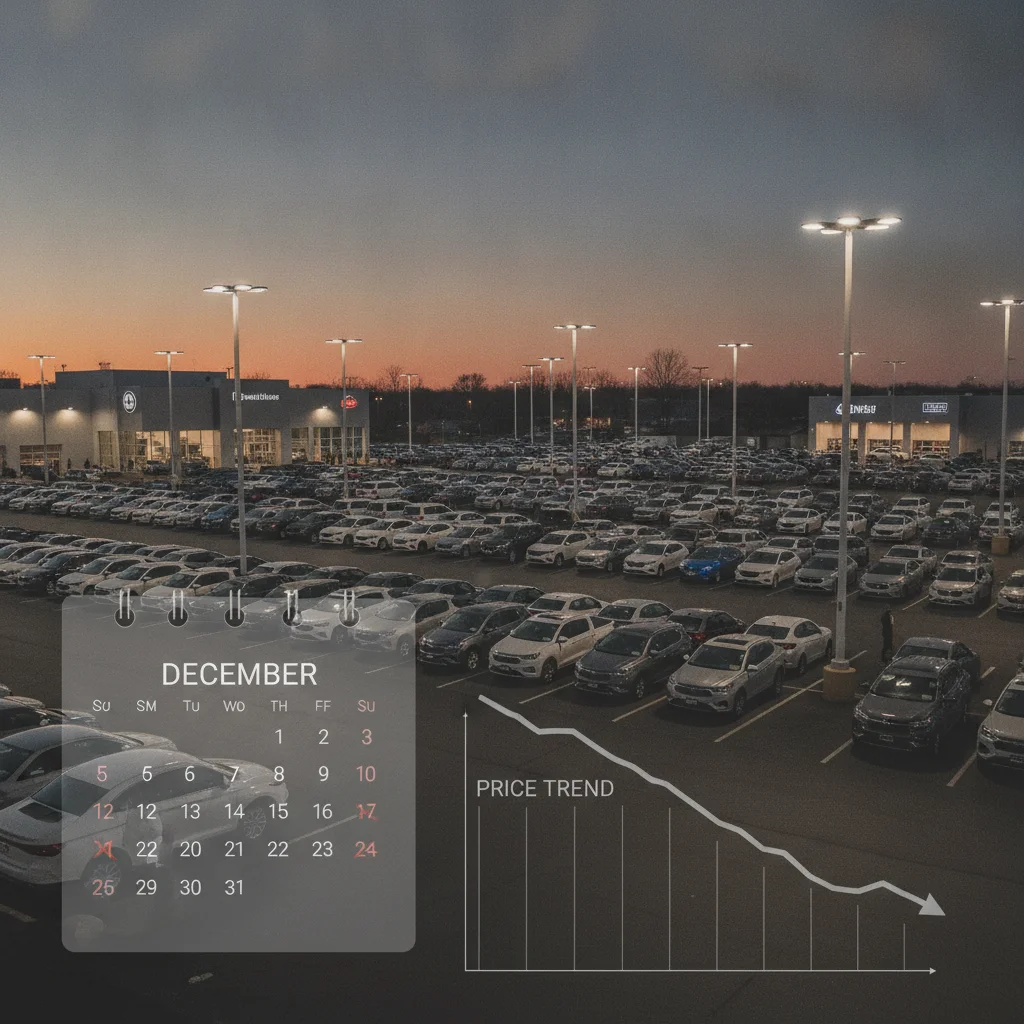
Most buyers treat the question of when to buy a car as an afterthought — something dictated by necessity rather than strategy. That's understandable. Life events like a sudden breakdown or a growing family don't wait for ideal market conditions. But for the majority of buyers who have even a 30- to 90-day window of flexibility, timing the purchase thoughtfully can realistically mean $1,500 to $4,000 in savings on a mid-range vehicle, without any aggressive negotiation tactics.
The key is knowing which signals actually matter. Not every piece of automotive news affects your deal. What you need to track is a short list of measurable, predictable indicators: inventory levels at the specific dealer you're targeting, the manufacturer's active incentive calendar, the direction of auto loan interest rates, and the seasonal demand cycle for your vehicle type and region.
This checklist walks you through each of those categories systematically. Work through it before you commit to a purchase date, and you'll enter the dealership knowing whether conditions favor you or favor the seller — and by roughly how much. If you're still weighing whether to act now or wait, see our guide on waiting vs. buying now for a framework that complements this checklist.

Tools You'll Need to Run This Checklist
Before diving in, gather these resources. Most are free and take only a few minutes to access.
GoodCarBadCar (goodcarbadcar.net)
Tracks monthly U.S. vehicle sales data by model, helping you calculate approximate days' supply and spot inventory trends.
Edmunds True Market Value (TMV)
Provides transaction price data showing what buyers in your area are actually paying, along with current manufacturer incentives and historical price trends.
Your Bank or Credit Union Auto Loan Portal
Use this to obtain a pre-approved auto loan rate before visiting any dealership, giving you a concrete financing benchmark.
Federal Reserve FOMC Statement Archive (federalreserve.gov)
Read the latest Federal Open Market Committee meeting statement to understand whether interest rates are rising, holding, or falling.
Manufacturer's Official Website (Incentives Section)
Check current cash-back offers, low-APR specials, and loyalty bonuses directly from the source to avoid outdated third-party information.
AnnualCreditReport.com
Pull your credit reports from all three bureaus for free to check your score tier before applying for financing.
Cars.com or CarGurus Dealer Inventory Search
Search local dealer inventory by trim, color, and days-on-lot to identify which specific vehicles have been sitting longest.
IRS Clean Vehicle Credit Tool (irs.gov)
Verify current federal EV and PHEV tax credit eligibility for your target vehicle before factoring incentives into your total cost calculation.
The Full Pre-Purchase Timing Checklist
Work through each group below in order. Items marked must are non-negotiable checks — skipping them leaves significant money on the table. Items marked should are strongly recommended. Nice-to-have items are optimization steps that take extra effort but can sharpen your advantage further.
Inventory & Supply Signals
Manufacturer Incentive Calendar
Interest Rate Environment
Seasonal & Regional Demand Timing
Don't Let "Waiting for Perfect" Cost You
This checklist is designed to prevent bad timing, not to find a mythical perfect moment. If you check this list and eight or more signals are favorable, delaying further in search of marginal additional savings often backfires — inventory sells, incentives expire, and rates can reverse. Use the checklist to avoid clearly bad windows, then act decisively when conditions are solidly in your favor.
Manufacturer APR Offers Have Eligibility Strings Attached
Low-APR financing specials from manufacturers almost always require strong credit — typically a FICO score of 720 or higher — and may be limited to specific trim levels or loan terms. Always confirm your eligibility before factoring a promotional rate into your budget calculations. A dealer who quotes you a 1.9% APR before running your credit may have to revise that number significantly.
Regional Inventory Data Can Be Stale
Third-party inventory aggregator sites sometimes lag real-time dealer stock by 24 to 72 hours. Always verify availability directly with the dealer before driving to the lot, especially for high-demand trims or low-inventory models. Confirming a specific VIN is still on the lot takes one phone call and prevents wasted trips.
Reading the Signals: How to Interpret Your Results
Inventory Level Interpretation
Days' supply is the single most useful number you'll look at. Here's a simple way to read it:
| Days' Supply | Market Condition | Typical Pricing Impact |
|---|---|---|
| 0–30 days | Seller's market | MSRP or above; limited leverage |
| 31–59 days | Balanced market | Small discounts possible; 1–3% below MSRP |
| 60–89 days | Buyer's market | Meaningful discounts; 3–6% below MSRP |
| 90+ days | Strong buyer's market | Aggressive discounts; 6–10%+ below MSRP possible |
Keep in mind that days' supply varies by trim level and color. A popular trim in a common color may sit at 25 days while an unpopular spec on the same lot sits at 110. Always ask the sales manager for inventory age on the specific vehicle you're considering.
Incentive Calendar Interpretation
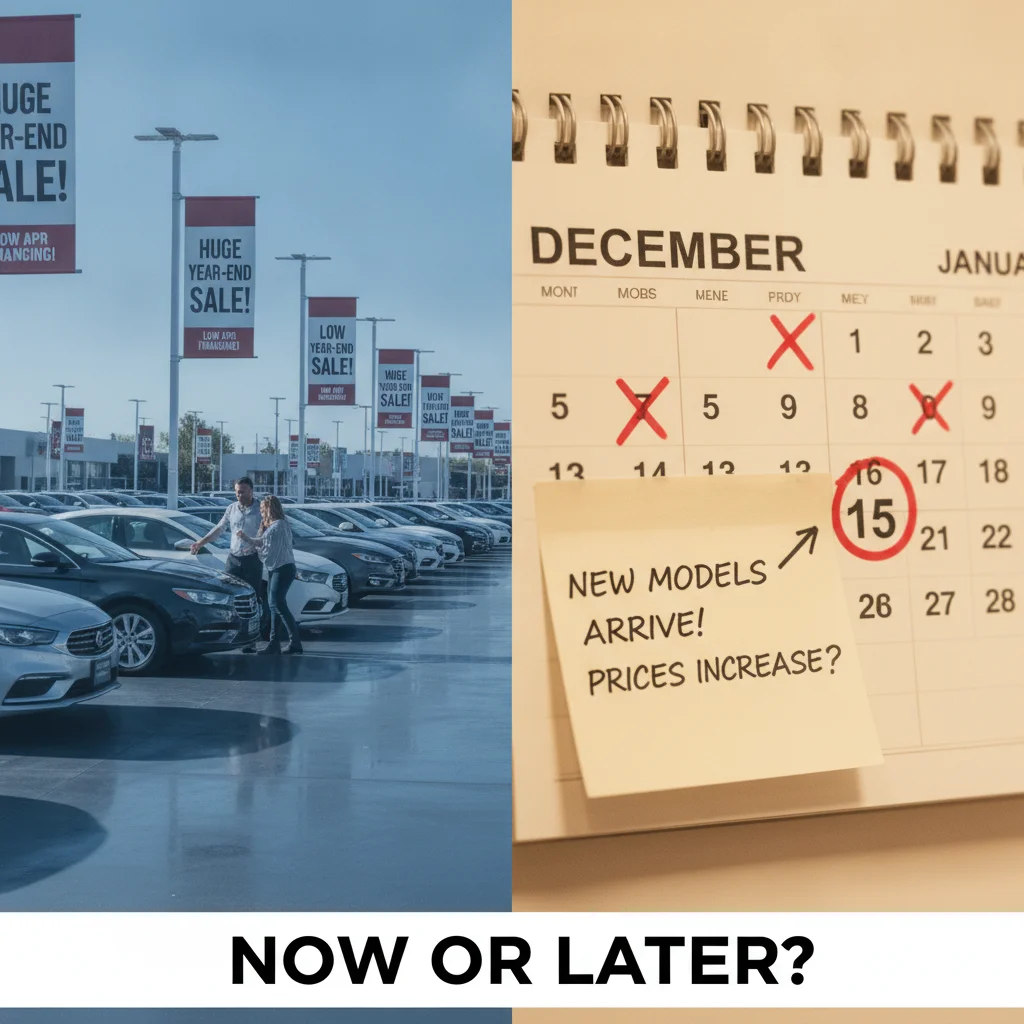
Manufacturer cash-back and low-APR offers run on a monthly cycle, typically expiring on the last day of the month. If you check on the 5th and an offer expires on the 31st, you have runway to negotiate. If you check on the 28th and a major offer just expired, waiting for the new cycle to start — usually within a day or two — may be worth it. For the most lucrative annual timing windows, see our year-end car buying playbook, which maps out the November–December opportunity in detail.
Interest Rate Interpretation
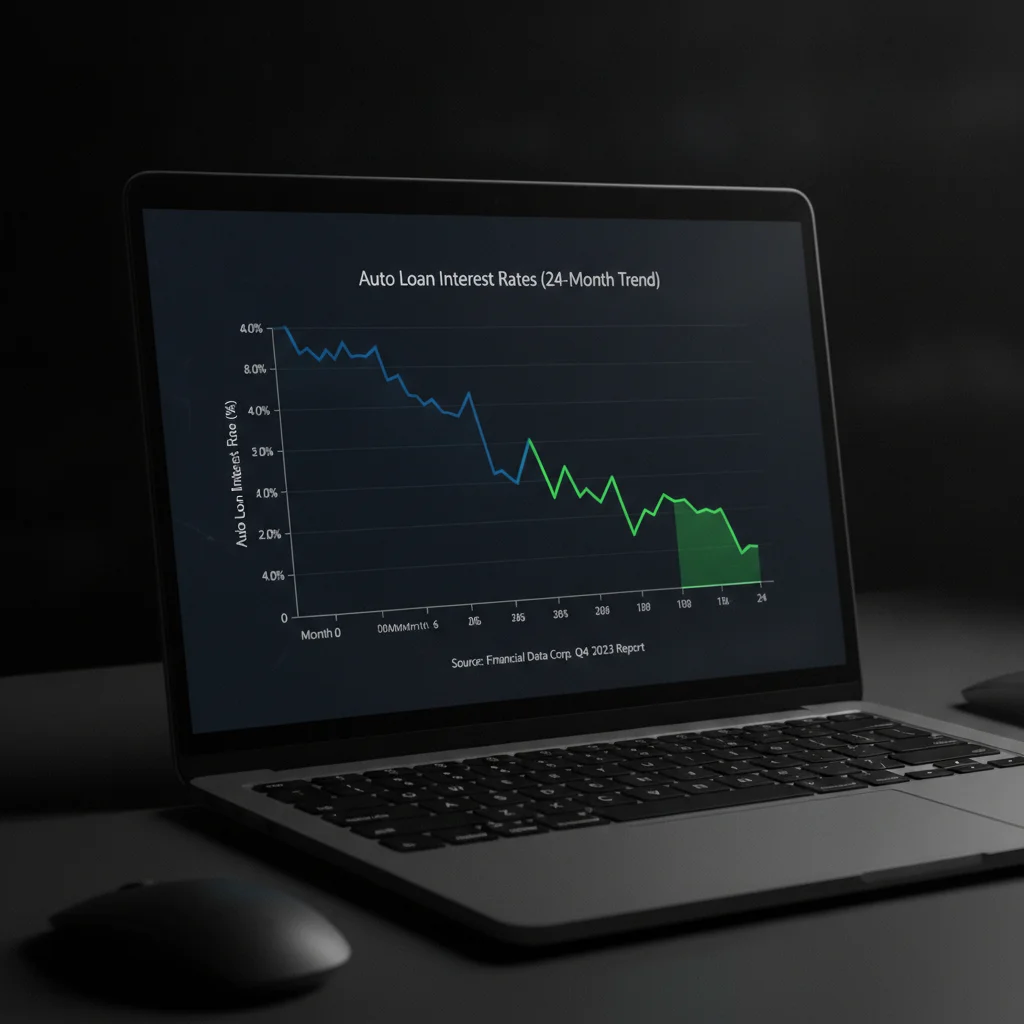
Auto loan rates tend to lag Federal Reserve policy changes by one to three months. If the Fed has already cut rates once and is expected to cut again, you're in a declining rate environment — which rewards patience. Locking in during a peak rate period is the most common timing mistake buyers make. Even a 1-percentage-point difference on a $35,000 loan over 60 months is roughly $970 in total interest. Check rates from at least two sources — your bank or credit union and an auto-specific lender — before visiting any dealer.
Regional and Seasonal Interpretation
National timing averages can be misleading. A convertible that sits on lots in Minnesota in November is a bargain; the same model in Phoenix may sell briskly year-round. For a detailed breakdown of how climate, local economy, and regional preferences shift the optimal buying month, see our regional market timing guide. The core principle: shop for the vehicle type that is out of season in your specific geography.
Never Sign Without a Pre-Approved Rate in Hand
Walking into a dealership without a pre-approved auto loan rate from an outside lender is the single most costly mistake buyers make. Without a benchmark, you have no way to evaluate whether the dealer's financing offer is competitive or padded with hidden margin. Get pre-approved first — it takes 15 minutes online with most banks or credit unions — and you immediately transform the financing conversation from a leap of faith into a straightforward comparison.
Model-Year Changeover Is the Highest-Value Window of the Year
When new model-year vehicles begin arriving on dealer lots — typically between July and October depending on the brand — outgoing model-year units must move quickly to free up floor space. This window combines the highest manufacturer cash-back offers, the most motivated dealers, and the longest average days-on-lot figures of the entire year. If your target vehicle is available in the outgoing model year and the changes in the new year are minor, this is the single best timing opportunity you will encounter. See our <a href="/buying-a-car/negotiating-and-deals/timing-your-purchase/year-end-car-buying-a-complete-timing-playbook">year-end buying playbook</a> to map out this window precisely.
Scoring Your Checklist and Deciding Whether to Buy Now
How to Total Your Signals
After completing all four groups, count how many favorable signals you identified — conditions that objectively favor the buyer. Use this rough scoring guide:
- 0–4 favorable signals: Conditions favor the seller. Unless you have an urgent need, consider delaying 30–90 days and re-running this checklist.
- 5–9 favorable signals: Mixed conditions. You can likely get a fair deal, but extraordinary savings are unlikely. Negotiate assertively and consider waiting for one or two additional signals to turn favorable.
- 10+ favorable signals: Strong buyer's market. Move with confidence. Combine dealer inventory pressure, active manufacturer incentives, and pre-approved financing to maximize leverage.
The Decision Rule That Simplifies Everything
If inventory is above 60 days on your specific vehicle and an active manufacturer incentive is running and you have a pre-approved loan rate from an outside lender — buy now. Those three conditions together create the highest-probability environment for a great deal. Any one missing can still yield a solid purchase; all three missing suggests waiting.
Remember that timing is just one lever. Your credit score, down payment size, and negotiation approach are equally important. If your credit profile needs work, improving your score by 40–60 points before purchasing can lower your rate by one to two percentage points — often more savings than any single timing advantage. And once you own the vehicle, keep an eye on rate trends; our refinancing timing hub can help you capture savings after the fact if rates drop further.

One Final Note on Perfect Timing
No checklist can guarantee you hit the absolute bottom of the market. Dealers who know you're overly fixated on timing can use that against you. Use these signals as guardrails — to avoid buying at a clearly bad time — rather than as a search for the single perfect day. Most of the financial benefit from timing comes from simply avoiding the worst windows (post-stimulus buying surges, shortage environments, rising-rate peaks) rather than finding the mythical optimal moment.
If you're also planning to sell or trade in a current vehicle, the timing math runs in the opposite direction — see our market timing guide for sellers to understand how to coordinate both sides of the transaction for maximum net benefit.

All claims are backed by peer-reviewed research. Sources on request.