Key Takeaways
Regional Market Timing
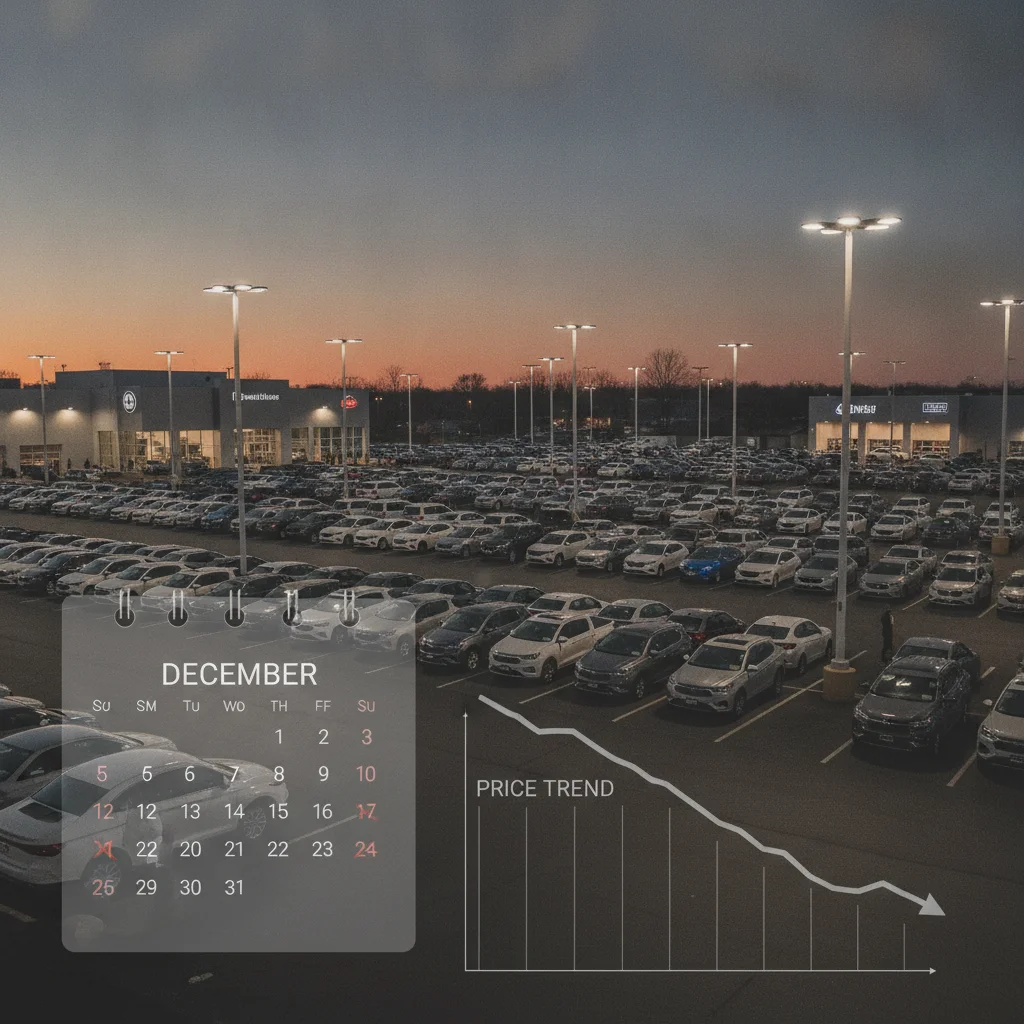
Regional market timing is the practice of choosing when to buy a car based on local demand cycles, seasonal weather patterns, regional economic conditions, and geographic inventory trends rather than relying solely on national averages. The idea is that a slow month for car sales in Minneapolis looks nothing like a slow month in Phoenix or Miami. By understanding your local market, you can shop when dealer inventory is high and buyer competition is low — a combination that reliably produces better prices.
Dealer incentive structures and manufacturer allocations are national, but floor traffic and competitive bidding pressure are local. That mismatch is where regional timing creates real pricing leverage for informed buyers.
Why National Timing Advice Often Misleads Local Buyers
Every year, personal finance publications run the same headline: "December is the best month to buy a car." And every year, buyers in Miami, Phoenix, and Seattle follow that advice — even when their local market tells a completely different story.
National averages are built from data across thousands of dealerships in wildly different markets. When you average a snowstorm-driven demand spike in Cleveland with a sunny January in San Diego, the result is a number that may not describe either city accurately. Regional market timing corrects for that by anchoring your strategy in local conditions.
The core principle is straightforward: prices drop when supply exceeds local demand. What drives that balance — and when it tips in a buyer's favor — depends heavily on where you live.
National Incentives Still Apply Locally
Manufacturer incentive programs — cash back, low-APR financing, lease support — are set nationally and run on their own schedule, often tied to model year transitions or sales volume targets. These national incentives don't replace regional timing, but they layer on top of it. When a strong regional buying window coincides with an active national incentive, the combined effect on your out-of-pocket cost can be substantial. Always check the manufacturer's current incentives page before negotiating.
EV Timing Has a Federal Dimension
If you're buying an electric vehicle, federal tax credit timing adds another variable beyond regional seasonality. The IRS Clean Vehicle Credit structure under the Inflation Reduction Act ties eligibility to vehicle MSRP caps, buyer income limits, and North American assembly requirements. These rules can change with new legislation or IRS guidance. Shopping in your regional slow season is still relevant for EVs, but confirm current credit availability before factoring it into your budget math.
Seller Timing and Buyer Timing Are Mirror Images
The same regional demand patterns that help buyers identify slow periods are the exact windows that sellers should avoid listing their vehicles. If you're planning to sell a vehicle before buying, understanding both sides of the regional timing equation can help you sequence transactions to maximize what you receive on the sale while minimizing what you pay on the purchase. For the seller's perspective on this dynamic, see <a href="/selling-your-car/pricing-your-car/market-timing/market-timing-for-car-sellers-everything-you-need-to-know">Market Timing for Car Sellers: Everything You Need to Know</a>.
For a broader look at how national calendar-based timing strategies work, see Timing Your New Car Purchase to Get a Better Deal. Then use this article to layer your local market on top of those national patterns.
The Four Regional Archetypes and Their Timing Windows
While every local market is unique, most U.S. car-buying markets fall into one of four broad regional archetypes. Understanding which one applies to you is the starting point for smart timing.
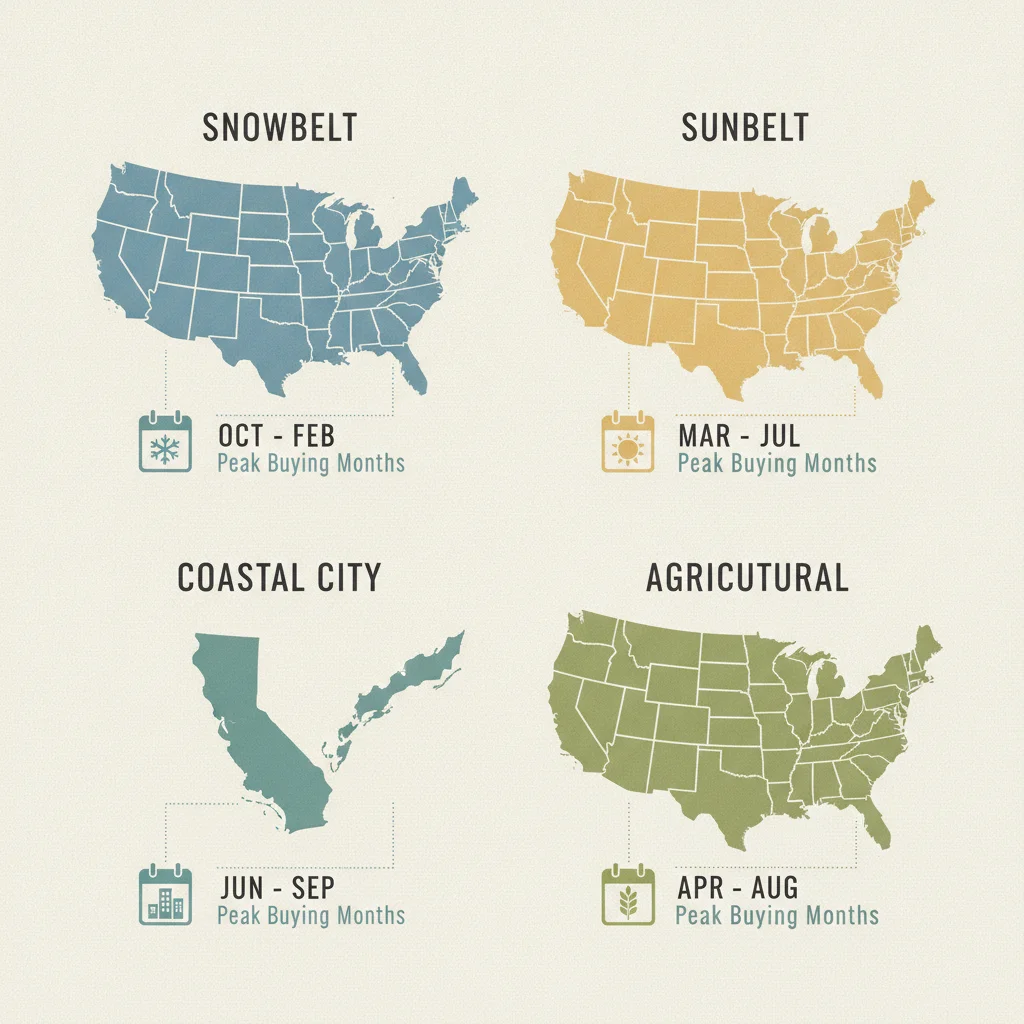
1. The Snowbelt Market (Midwest, Northeast, Mountain West)
In cities like Chicago, Detroit, Minneapolis, Buffalo, and Denver, weather creates sharp seasonal demand. Buyers rush to purchase AWD crossovers, trucks, and SUVs in September and October before winter hits. That rush tightens inventory and gives dealers pricing power heading into fall.
The flip side: January through March is a buyer's paradise in snowbelt markets. Foot traffic in dealerships drops sharply. Dealers who stocked up on winter-ready vehicles now have units sitting in freezing lots with financing costs accruing daily. That creates urgency to deal — especially on prior-year models and leftover inventory.
2. The Sunbelt Market (Southeast, Southwest, Gulf Coast)
Markets like Dallas, Houston, Atlanta, Phoenix, and Orlando don't experience the same weather-driven demand cycles. Trucks sell year-round in Texas. Convertibles and sports cars don't hibernate in Florida. This compressed seasonality means the traditional winter buying window is less dramatic — but it doesn't disappear entirely.
In sunbelt markets, July and August are often the best buying months. Summer heat keeps shoppers home, and dealers experience a genuine foot-traffic slump. That slump — combined with end-of-model-year inventory pressure — creates pricing flexibility that rivals what snowbelt buyers see in winter.
3. The Coastal City Market (Pacific Coast, Mid-Atlantic Urban Centers)
Los Angeles, San Francisco, Seattle, New York, and Washington D.C. are high-cost, high-competition markets with unique vehicle mix demands. Fuel-efficient sedans, hybrids, and EVs sell relatively steadily year-round. Pickup trucks move slowly compared to national averages.
In these markets, end-of-quarter timing often matters more than seasonal timing. March, June, September, and December all bring quota pressure on sales teams. Pairing an end-of-quarter visit with a slow local weekend — say, a holiday weekend when many buyers are traveling — can produce surprising results.
4. The Agricultural and Rural Market (Great Plains, Appalachia, Rural South)
In markets tied closely to agriculture — think Omaha, Tulsa, Fresno, or Boise — truck demand follows crop cycles and commodity prices. After harvest seasons, when farmers and ranchers have liquidity, demand for heavy-duty pickups and work trucks spikes. Late winter and early spring, before planting season, tend to be softer demand periods in agricultural regions — which can translate into more room to negotiate.
~8%
Average price premium during peak regional demand periods
Automotive market analysis by iSeeCars has shown vehicles in high regional demand can carry 6–10% price premiums versus the same models listed during local slow seasons.
60+ days
Days on lot that signal strong dealer motivation to deal
Industry standard floor-plan financing means dealer carrying costs on unsold inventory compound beyond 60 days, creating measurable incentive to accept below-sticker offers.
12–15%
Seasonal demand swing for trucks in snowbelt markets
According to Cox Automotive data, pickup truck demand in northern states can vary by 12–15% between peak fall months and the winter valley in January and February.
4–6 weeks
Optimal purchase window length to allow negotiating flexibility
Consumer finance advisors recommend targeting a 4–6 week window centered on your regional slow season rather than a single date, to allow for walking away and returning with leverage intact.
$1,200–$3,500
Estimated savings from aligned regional and calendar timing
Buyers who combine regional slow-season timing with end-of-month dealer pressure report average negotiated savings in the $1,200–$3,500 range above standard transaction prices, per Edmunds transaction data.
Vehicle Type Layered On Top of Region
Regional timing interacts powerfully with vehicle category. The same geographic location can produce very different timing windows depending on what you're trying to buy.
| Vehicle Type | Best Buying Window (Snowbelt) | Best Buying Window (Sunbelt) |
|---|---|---|
| AWD SUV / Crossover | January–March | July–August |
| Pickup Truck | January–February | June–August |
| Convertible / Sports Car | November–February | September–November |
| Hybrid / EV | March–April (tax credit timing) | March–April (tax credit timing) |
| Minivan / Family Hauler | August–September (new model year clears prior) | August–September |
Notice that convertibles follow nearly opposite logic in snowbelt vs. sunbelt markets. In Chicago, nobody wants a two-seater roadster in February — which is exactly why February is the right time to buy one there. In Phoenix, convertibles are popular nearly year-round, so the pricing advantage is smaller, but still shows up in the early fall before Midwest transplants start thinking about top-down weather again.
For more on how geography shapes vehicle desirability across the calendar, see Regional Timing Differences: Why Peak Season Varies by Climate and Geography.
Use Listing Age as Your Best Negotiation Anchor
Before you step into any dealership, find out how long the specific vehicle you want has been listed. Sites like CarGurus and Autotrader display this information. If a vehicle has been sitting for 70 days, mention that you noticed it's been on the lot for a while — this signals to the salesperson that you've done your homework and immediately shifts the negotiation dynamic in your favor. Pair this with your regional slow season visit and you're negotiating from a position of genuine leverage.
Stack End-of-Month Visits Into Your Regional Window
Once you've identified your regional slow season, plan your dealership visits for the last three days of a month within that window. Sales teams are working against monthly quotas and are measurably more flexible on pricing in those final days. A visit on the 28th or 29th of a slow-season month combines two independent pressure points — regional demand trough and monthly quota pressure — into a single powerful negotiating context.
Track Prices Over Multiple Weeks Before Acting
Don't anchor your negotiation on the first price you see. Spend two to three weeks monitoring prices for your target vehicle within your local market before making any contact with a dealer. Use this data to establish a realistic floor for what units are actually transacting at locally. When you do negotiate, you can cite specific comparable listings — "I've seen similar trims listed at $X within 40 miles" — which is far more persuasive than a general appeal to get a better deal.
How to Read Your Local Market's Signals
Understanding your regional archetype is a starting point, but you need real-time local data to time your purchase precisely. Here are the four signals worth tracking in any local market.
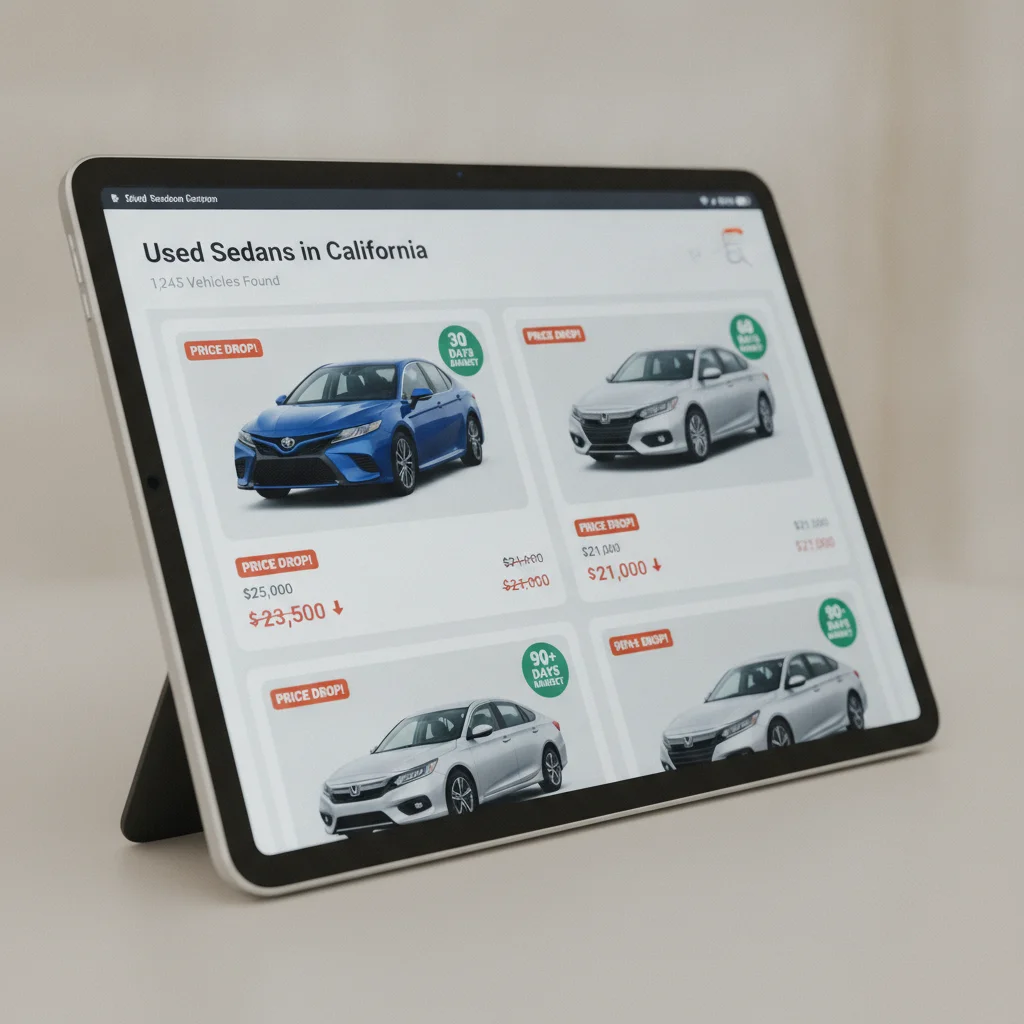
Signal 1: Days-on-Lot Data
The longer a vehicle sits on a dealer's lot, the more it costs the dealer in floor-plan interest (the loan they carry to finance inventory). Most dealers get uncomfortable when a car hits 60+ days unsold. Some listing sites, including CarGurus, show "days on market" for individual vehicles. A vehicle that has been listed for 75 days in your ZIP code is almost certainly negotiable — regardless of the national market conditions.
Signal 2: Local Inventory Count Trend
Pick the model and trim you want. Search your ZIP code on two or three listing sites with a 50-mile radius. Note the count today, then check again in two weeks. If inventory is growing, you have time and leverage. If it's shrinking fast, demand is rising and waiting may cost you.
Signal 3: Dealer Advertising Tone
Dealers advertise differently when inventory is stacking up. In buyer-friendly windows, you'll see "below invoice," "clearance event," and "take over payments" language in local advertising. When demand is high, ads shift to trim features and availability. Monitor your local dealership websites and email lists — their marketing language is a surprisingly honest real-time signal.
Signal 4: Local Economic Conditions
A major plant closure, a tech-sector layoff wave, or a drought that hurts agricultural income can soften local car-buying demand quickly — regardless of the season. These economic shifts create temporary buyer's windows that don't show up in any national seasonal guide. Local news and regional unemployment data can tip you off early.
“The mistake most buyers make is treating the car market as national when it's actually hyper-local. The same model in the same month can have a $2,000 price gap between markets 200 miles apart — purely because of local supply, local demand, and local dealer pressure.”
— Ivan Drury, Director of Insights, Edmunds
Stacking Regional Timing With Calendar-Based Strategies
The most powerful buying position comes from aligning your regional timing window with calendar-based pressure points. Think of it as stacking discounts — each factor alone moves the needle a little; combining two or three factors can move it significantly.
Here's how the stack works in practice:
- Identify your regional slow season (January–March in snowbelt; July–August in sunbelt).
- Find the end of a sales period within that window — end of month, end of quarter, or end of model year all work.
- Look for vehicles with elevated days-on-lot — 60 days or more in your local search results.
- Time your visit for a weekday, ideally a Tuesday or Wednesday, when salespeople have less foot traffic competing for their attention.
- Check for active manufacturer incentives — even if they're national, they layer on top of local dealer flexibility.
A concrete example: It's late January in Columbus, Ohio. You're shopping for a three-row SUV. The model year is two months old, meaning prior-year leftover units are still on lots. You find a 2023 model with 78 days on lot. You visit on a Wednesday at the end of January. The dealer is carrying floor-plan interest on a vehicle that's been sitting since early November. That's three overlapping pressure points working in your favor simultaneously.
For a structured checklist approach to evaluating whether conditions are aligned before you commit to a purchase date, see Pre-Purchase Timing Checklist: Are Market Conditions Right to Buy Now?.
Use Listing Age as Your Best Negotiation Anchor
Before you step into any dealership, find out how long the specific vehicle you want has been listed. Sites like CarGurus and Autotrader display this information. If a vehicle has been sitting for 70 days, mention that you noticed it's been on the lot for a while — this signals to the salesperson that you've done your homework and immediately shifts the negotiation dynamic in your favor. Pair this with your regional slow season visit and you're negotiating from a position of genuine leverage.
Stack End-of-Month Visits Into Your Regional Window
Once you've identified your regional slow season, plan your dealership visits for the last three days of a month within that window. Sales teams are working against monthly quotas and are measurably more flexible on pricing in those final days. A visit on the 28th or 29th of a slow-season month combines two independent pressure points — regional demand trough and monthly quota pressure — into a single powerful negotiating context.
Track Prices Over Multiple Weeks Before Acting
Don't anchor your negotiation on the first price you see. Spend two to three weeks monitoring prices for your target vehicle within your local market before making any contact with a dealer. Use this data to establish a realistic floor for what units are actually transacting at locally. When you do negotiate, you can cite specific comparable listings — "I've seen similar trims listed at $X within 40 miles" — which is far more persuasive than a general appeal to get a better deal.
Common Regional Timing Mistakes to Avoid
Even buyers who understand regional timing in theory often make one of these three mistakes in practice.
Mistake 1: Following National Headlines Into a Local Peak
If every personal finance article says December is the best month to buy, and you live in Phoenix, you may find yourself shopping during one of the busiest retail periods of the year in a market that doesn't have a hard winter slowdown. Meanwhile, a September visit — when summer heat has suppressed foot traffic for two months — might deliver better results with less competition.
Mistake 2: Ignoring Used Car Regional Dynamics
Used car pricing is even more locally sensitive than new car pricing because there's no manufacturer floor and no national invoice price. A used F-150 in rural Texas carries different demand dynamics than the same truck in suburban New Jersey. Valuation tools like KBB and Edmunds are useful benchmarks, but they reflect national or broad regional averages. Local listing data — what similar units are actually going for within 30 miles of your ZIP — should be your anchor.
Mistake 3: Waiting Too Long for the Perfect Window
Regional timing is a meaningful advantage, but it's not a reason to delay a purchase by six months when your current vehicle is failing or your needs have changed. If your regional slow season is three months away and your car needs a $2,000 transmission repair, the math on waiting rarely pencils out. Use timing as one input among several — not the only deciding factor.
Applying Regional Timing to Your Next Purchase
Here's a simple framework to translate everything above into an actionable buying timeline specific to your market.
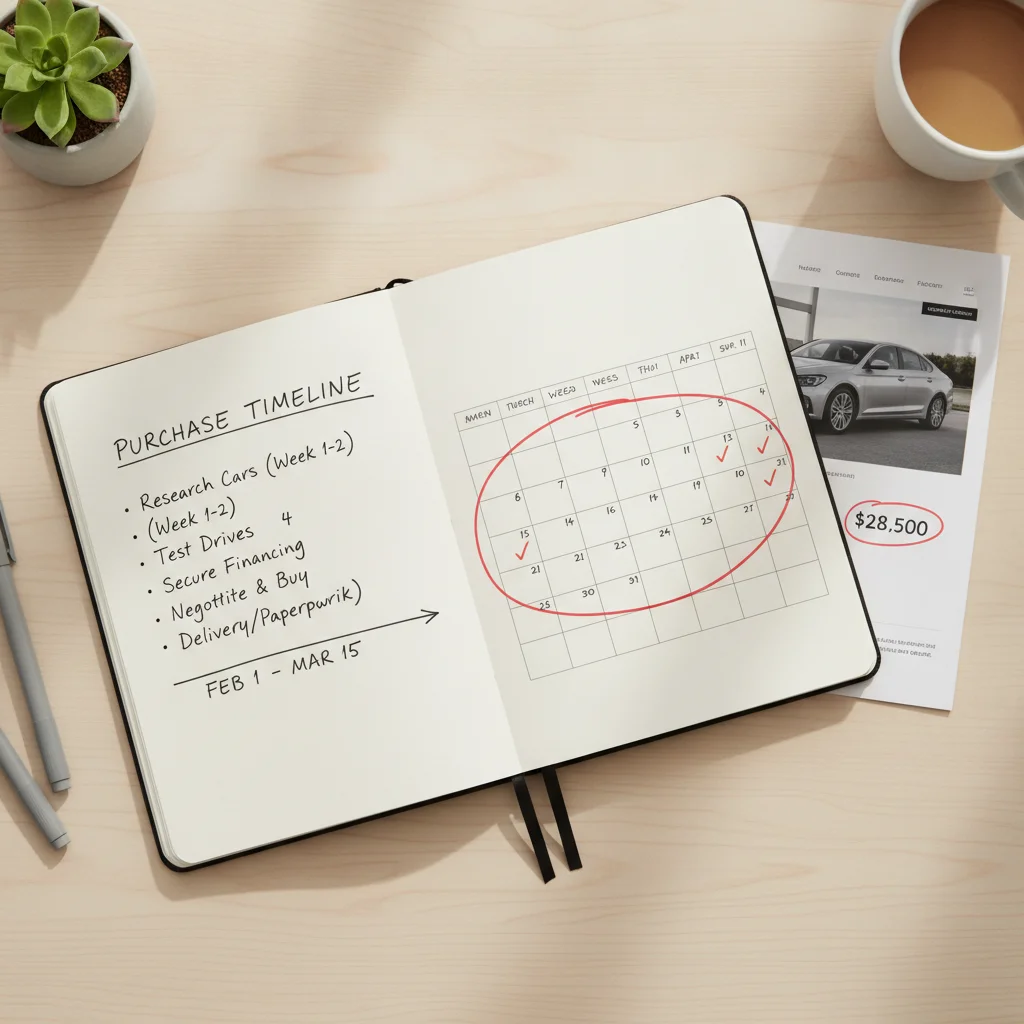
Step 1: Classify Your Market
Use the four archetypes above — snowbelt, sunbelt, coastal city, or agricultural/rural — to identify the broad seasonal rhythm of your local market. If you're in a border zone (Denver straddles snowbelt and mountain west characteristics; Nashville has both sunbelt warmth and seasonal variation), pick the archetype that best fits your recent weather patterns and local economy.
Step 2: Identify the Vehicle Category's Demand Curve in Your Region
Use the table in the earlier section as a starting guide. Then confirm it with a simple exercise: search your target vehicle on a local listing site and look at how many listings exist today versus what you see if you check month-over-month review tools like the Google Trends interest data for your vehicle's name in your state.
Step 3: Set a Target Purchase Window, Not a Fixed Date
Give yourself a 4–6 week window that brackets your regional slow season and overlaps with a calendar pressure point (end of month or quarter). This gives you flexibility to walk away from a bad deal and return without missing the window entirely.
Step 4: Monitor the Four Local Signals Weekly
Days on lot, local inventory count, dealer advertising tone, and local economic news. Set up a simple spreadsheet or notes page and check it weekly during your target window. When two or more signals align favorably, act.
The broader market timing principles that apply to sellers are mirror images of the buyer's timing strategy described here — understanding both sides of the transaction makes you a more informed negotiator at the table.
National Incentives Still Apply Locally
Manufacturer incentive programs — cash back, low-APR financing, lease support — are set nationally and run on their own schedule, often tied to model year transitions or sales volume targets. These national incentives don't replace regional timing, but they layer on top of it. When a strong regional buying window coincides with an active national incentive, the combined effect on your out-of-pocket cost can be substantial. Always check the manufacturer's current incentives page before negotiating.
EV Timing Has a Federal Dimension
If you're buying an electric vehicle, federal tax credit timing adds another variable beyond regional seasonality. The IRS Clean Vehicle Credit structure under the Inflation Reduction Act ties eligibility to vehicle MSRP caps, buyer income limits, and North American assembly requirements. These rules can change with new legislation or IRS guidance. Shopping in your regional slow season is still relevant for EVs, but confirm current credit availability before factoring it into your budget math.
Seller Timing and Buyer Timing Are Mirror Images
The same regional demand patterns that help buyers identify slow periods are the exact windows that sellers should avoid listing their vehicles. If you're planning to sell a vehicle before buying, understanding both sides of the regional timing equation can help you sequence transactions to maximize what you receive on the sale while minimizing what you pay on the purchase. For the seller's perspective on this dynamic, see <a href="/selling-your-car/pricing-your-car/market-timing/market-timing-for-car-sellers-everything-you-need-to-know">Market Timing for Car Sellers: Everything You Need to Know</a>.

All claims are backed by peer-reviewed research. Sources on request.