Key Takeaways
Trade-In Lowballing
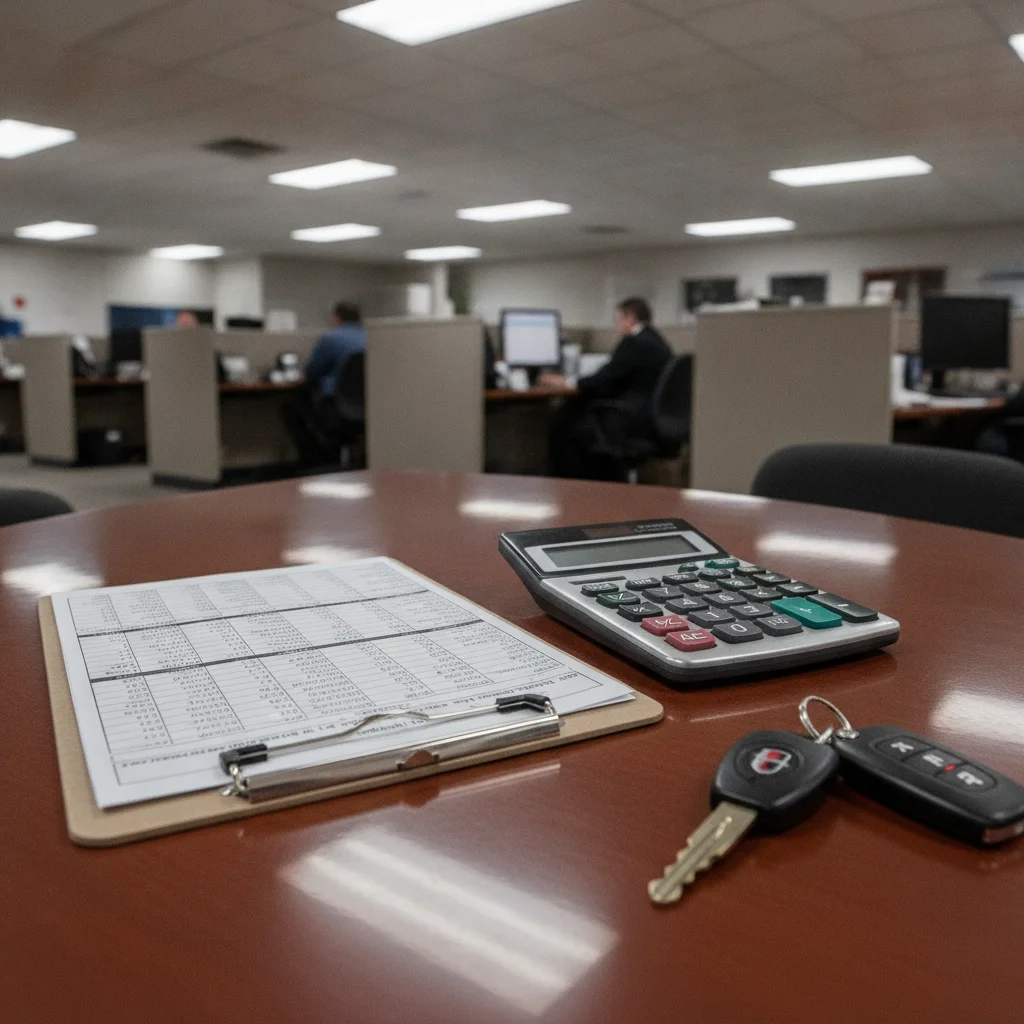
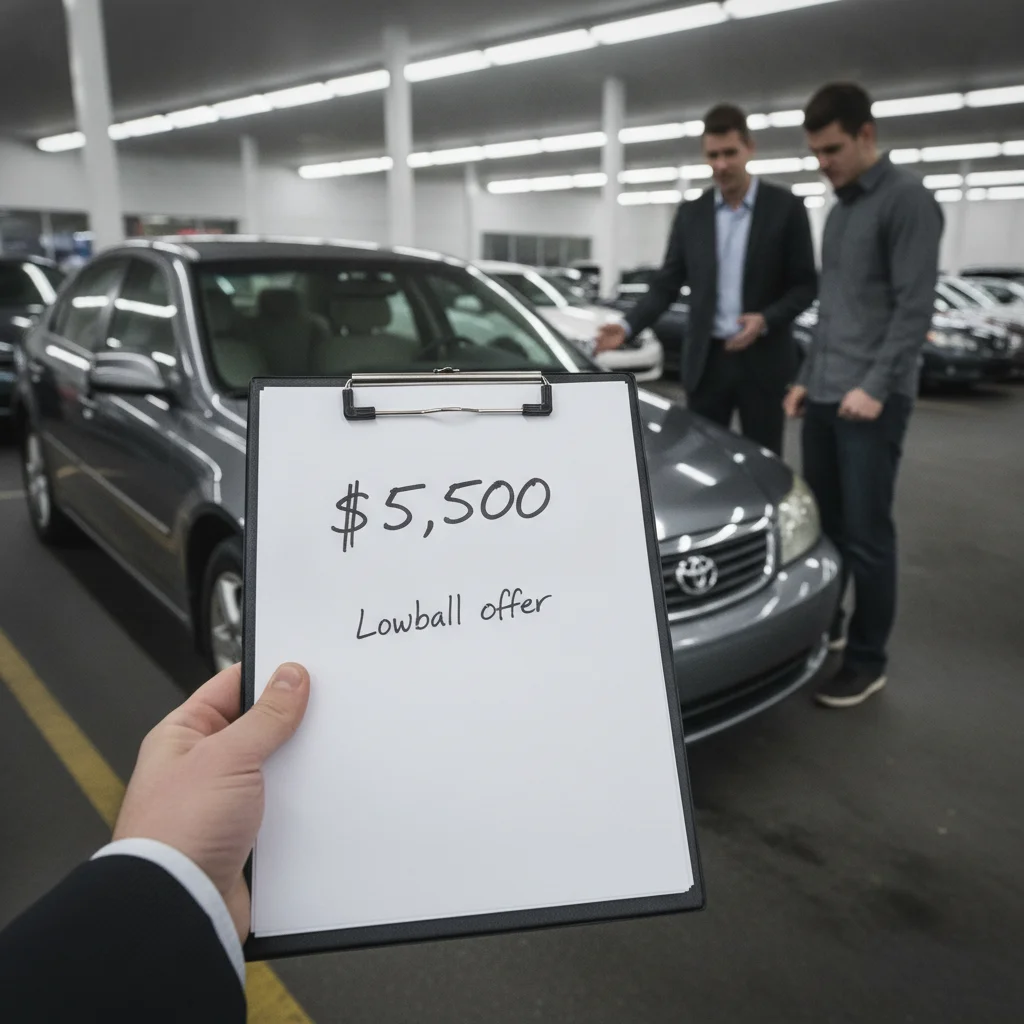
Trade-in lowballing is the practice of a dealership offering significantly less for your vehicle than its actual market value. It's a structured business strategy — not an accident — designed to maximize dealer profit on both the trade and the new vehicle sale. The gap between what a dealer offers and what your car is worth on the open market is called the trade-in spread.
Dealers typically price trade-ins using wholesale auction benchmarks (such as Manheim or ADESA data) then subtract reconditioning estimates, holding costs, and a profit buffer — all before making you an offer.
The Business Logic Behind Every Low Offer
Before you walk into a dealership expecting a fair trade-in appraisal, understand this: the dealer's goal and your goal are structurally opposed. You want maximum value for your vehicle. The dealer wants to acquire it at minimum cost so they can resell it at a profit — or wholesale it to an auction if it doesn't fit their inventory needs.
The appraisal process sounds objective. A manager walks around your car, checks the mileage, maybe runs a quick scan, then punches numbers into a screen. But that screen isn't giving you retail value. It's pulling wholesale auction data — what your car might fetch at a Manheim or ADESA sale — and working backwards from there.
Here's the internal math a dealer runs before naming a number:
- Wholesale auction benchmark — The floor price, based on what your vehicle would sell for if sent to auction today.
- Reconditioning deduction — An estimate (often padded) for detailing, mechanical repairs, and cosmetic work needed to put the car on their lot.
- Holding cost buffer — The longer a car sits on a lot, the more it costs the dealer. This risk gets priced into your offer.
- Profit margin reserve — A deliberate spread built in so the dealer makes money when they eventually sell your trade.
By the time those deductions stack up, a car worth $22,000 at retail might come in as a $15,500 offer. That's not an error — it's the system working exactly as designed. Understanding the hidden math behind your trade-in offer is the first step to pushing back effectively.

How Dealers Use the Negotiation Structure Against You
Even buyers who know their car's value often walk out with less than they should — not because they failed the appraisal, but because they lost control of the negotiation structure. The most common trap is the bundled deal.
A dealer will present your trade, the new car price, your financing terms, and any add-ons as a single monthly payment figure. This is the four-square method, and it's designed to make lowballing invisible. If they bump your trade-in value by $1,000 but quietly raise the new car price by $1,200, you're actually worse off — and the monthly payment math makes it nearly impossible to see in the moment.
“The monthly payment is the dealer's best friend. When you focus on what you pay per month, you lose track of what you're actually paying for everything. The only way to negotiate effectively is to break the deal into its components and work each one separately.”
— Philip Reed, Senior Consumer Advice Editor, Edmunds
The most effective countermove is simple: refuse to combine the negotiations. State clearly that you want to agree on the out-the-door price of the new vehicle first, before trade-in value enters the conversation at all. Dealers resist this because it removes their ability to shuffle profit between the two transactions. Stand firm.
Another structural tactic is timing. Appraisers often delay returning with your offer until you're emotionally invested in a specific new vehicle — you've taken a test drive, you're picturing the car in your driveway. The longer you wait, the more psychologically costly it feels to walk away over trade-in value. Dealers know this. The dealer tactics that eat into your trade-in value often operate below the level of conscious awareness, which is exactly what makes them effective.
Timing Your Visit Matters
Dealers are more motivated to compete for trade-ins at certain times — end of month, end of quarter, or when their used inventory is thin. If you have flexibility, visiting during these windows can improve your leverage. Checking a dealership's used car inventory online beforehand gives you a rough read on whether they're likely to want your specific vehicle.
Not All Low Offers Are Negotiating Tactics
Sometimes a low appraisal reflects genuine market conditions — your make and model may simply have weak regional demand, or recent auction prices may have dropped sharply. If multiple sources (CarMax, Carvana, and KBB) all return similar low numbers, the market is speaking, not the dealer. Adjust your expectations accordingly rather than treating every low offer as bad faith.
The Numbers Dealers Don't Want You to Know
10–20%
Typical gap between retail and trade-in value
Industry appraisal data consistently shows dealer trade-in offers running 10–20% below what the same vehicle would sell for on the retail market.
$2,500–$5,000
Average dollars lost on a typical trade-in
On a vehicle with a $25,000 retail value, most buyers leave between $2,500 and $5,000 on the table by accepting the first dealer trade-in offer.
62%
Buyers who don't research trade-in value beforehand
According to a Cox Automotive consumer study, nearly two-thirds of trade-in sellers arrive at the dealership without an independent valuation benchmark.
$1,000+
Typical improvement from a competing third-party offer
Buyers who present a written competing offer from services like CarMax or Carvana typically negotiate $1,000 or more above the dealer's opening trade-in appraisal.
7 days
Standard validity window for Carvana offers
Carvana's instant offer is typically valid for 7 days, giving buyers a practical window to use it as leverage during dealership negotiations.
Most buyers walk in knowing roughly what their car is worth in retail terms — they checked Kelley Blue Book or Edmunds. The problem is that retail value and trade-in value are different numbers, and dealers count on buyers conflating the two.
Retail value is what a dealer lists a used car for on their lot. Trade-in value is what they're willing to pay you to acquire it. The spread between those two numbers — often $3,000 to $6,000 on a mid-range vehicle — is a significant source of dealership profit. This isn't hidden; it's just not advertised.
What you should be looking at before any appraisal conversation:
- KBB Instant Cash Offer — Reflects what dealers in your market are actually paying, not theoretical retail.
- Edmunds True Market Value (Trade-In) — A realistic benchmark for private-party trade transactions.
- Carmax or Carvana quotes — Binding offers, good for several days, that function as a genuine floor price.
- Local private-party comparables — What similar vehicles are actually selling for between individuals in your area.
The gap between what you find in this research and what a dealer offers is your negotiating room. See also signs a dealer is undervaluing your trade-in to recognize when a low offer is based on inflated deductions rather than real market data.
Why Reconditioning Estimates Are Often Inflated
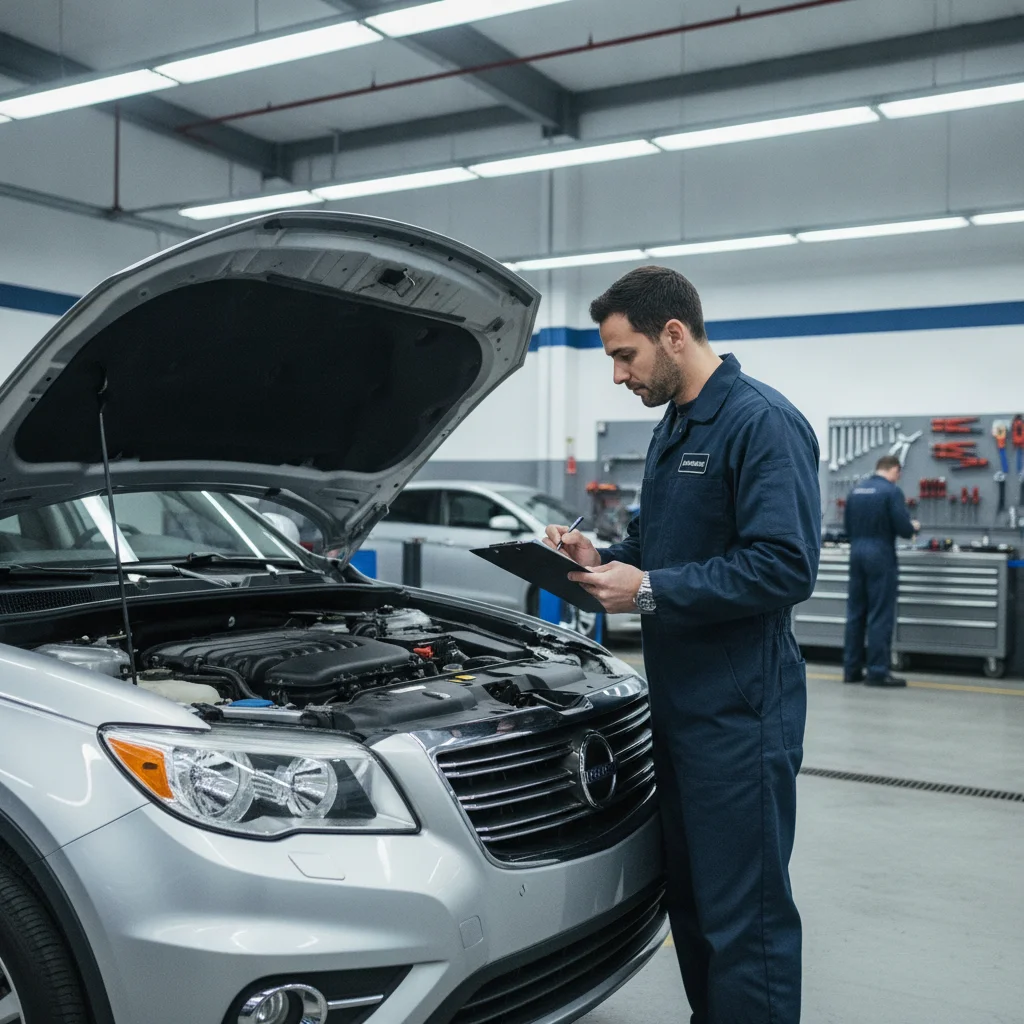
One of the most consistently abused levers in the appraisal process is the reconditioning cost estimate. Dealers deduct anticipated repair, detail, and cosmetic costs from your trade-in offer — and those estimates are rarely conservative.
A scratch that a body shop would fix for $150 might be written up as a $600 line item. Tires with 40% tread remaining may be called out as needing immediate replacement. A minor service interval gets flagged as a full inspection cost. Each deduction feels individually reasonable, but they compound quickly.
Here's what you can do about it:
- Get a pre-appraisal inspection — A third-party mechanic inspection costs $100–$150 and gives you a documented, independent assessment of your vehicle's condition. This undercuts inflated dealer estimates.
- Fix what's genuinely cheap to fix — Replace burned-out bulbs, address minor fluid issues, replace windshield wipers. Small investments that eliminate easy deduction lines.
- Ask for the reconditioning breakdown in writing — If a dealer is deducting $1,800 for reconditioning, ask them to itemize it. Many won't, or will reduce the number when pressed for specifics.
- Challenge with comparable quotes — If they claim $800 for a paint repair, have a body shop quote ready showing the realistic cost.
This level of preparation signals to the appraiser that you're not a passive target. It won't eliminate every deduction, but it typically results in a meaningfully better offer. For vehicles with significant mileage, see how to get a fair offer on a high-mileage trade-in — the reconditioning dynamics are amplified in those situations.
Get Three Offers Before You Walk In
Before visiting any dealership to discuss a trade, collect written offers from at least two third-party buyers — CarMax, Carvana, or Vroom are the most practical options. Bring the highest offer with you. This single step has more impact on your final trade-in value than any other preparation you can do.
Always Separate the Trade from the New Car Deal
Tell the finance manager upfront: you want to negotiate the out-the-door price of the new vehicle first, then discuss the trade-in separately. This isn't unreasonable — it's the only way to see clearly what you're actually receiving for your vehicle. Dealers may push back; hold the line.
Using Competing Offers as Leverage
The single most effective tool in a trade-in negotiation isn't knowing the right number — it's having a competing written offer in your hand. Third-party buyers like CarMax, Carvana, and Vroom have fundamentally changed the trade-in landscape by providing binding offers that are easy to obtain and function as genuine alternatives.
Walk into a dealership with a Carvana offer of $17,500 and the dealer's appraisal comes in at $14,800. You now have a simple, factual counter: "I have a written offer for $17,500 expiring in seven days. Can you beat it?" That's not aggressive — it's documented market data. The dealer either matches it, comes close enough to make the trade worthwhile, or loses the vehicle acquisition.
Dealers know these services exist. They also know their own wholesale costs and margins. A strong third-party offer often prompts a meaningful revision to an initial appraisal because the alternative for the dealer is losing the trade entirely — and potentially the new car sale with it.
Some things to keep in mind about third-party offers:
- They typically expire in 7 days (Carvana) or at the end of the day (CarMax), so time your dealership visit accordingly.
- The offer is subject to a physical inspection — condition issues discovered on-site can reduce it.
- These offers represent real transactions, not negotiating theater. If the dealer won't match or come close, selling directly to the third party is a legitimate path.
Why dealers almost always lowball the first offer breaks down why even dealers expect to negotiate from that initial number — understanding this should eliminate any hesitation about pushing back hard.
When to Walk Away — and When to Accept the Offer
Not every dealer trade-in is a bad deal. If the convenience is worth something to you, or if you're in a state where trading in reduces the sales tax on your new vehicle purchase, the math can shift in favor of accepting a dealer's offer even when it's below private-party value.
In many states, you only pay sales tax on the difference between the new car price and your trade-in value. On a $40,000 vehicle with a $15,000 trade-in, you're taxed on $25,000 instead of $40,000. At a 7% tax rate, that's a $1,050 tax savings — which could meaningfully offset a trade-in offer that's slightly below market.
Run this calculation before you decide the dealer's offer is unacceptable:
- Determine your state's sales tax rate on vehicle purchases.
- Calculate tax on the full new car price vs. tax on the price minus trade-in allowance.
- Factor the difference into your comparison between the dealer offer and a third-party sale.
- Add the value of your time and the hassle of a private sale.
If after all that the dealer's offer still falls significantly short — and a third-party alternative exists — walk away. The deal will still be there tomorrow, or a competing dealership will make a better offer. The worst negotiating position is believing you have no alternatives.
If you've already received an offer that feels wrong, what to do when your valuation is lower than expected gives you a concrete playbook for investigating and challenging the number before accepting.
Get Three Offers Before You Walk In
Before visiting any dealership to discuss a trade, collect written offers from at least two third-party buyers — CarMax, Carvana, or Vroom are the most practical options. Bring the highest offer with you. This single step has more impact on your final trade-in value than any other preparation you can do.
Always Separate the Trade from the New Car Deal
Tell the finance manager upfront: you want to negotiate the out-the-door price of the new vehicle first, then discuss the trade-in separately. This isn't unreasonable — it's the only way to see clearly what you're actually receiving for your vehicle. Dealers may push back; hold the line.
Finally, don't fall for the myth that there's no room to negotiate the trade. There almost always is. Common myths about trade-in value outlines the beliefs that make buyers passive when they should be pushing — and how to think differently going into the appraisal.
Timing Your Visit Matters
Dealers are more motivated to compete for trade-ins at certain times — end of month, end of quarter, or when their used inventory is thin. If you have flexibility, visiting during these windows can improve your leverage. Checking a dealership's used car inventory online beforehand gives you a rough read on whether they're likely to want your specific vehicle.
Not All Low Offers Are Negotiating Tactics
Sometimes a low appraisal reflects genuine market conditions — your make and model may simply have weak regional demand, or recent auction prices may have dropped sharply. If multiple sources (CarMax, Carvana, and KBB) all return similar low numbers, the market is speaking, not the dealer. Adjust your expectations accordingly rather than treating every low offer as bad faith.

All claims are backed by peer-reviewed research. Sources on request.