Key Takeaways
The Dropped Offer: What's Really Going On
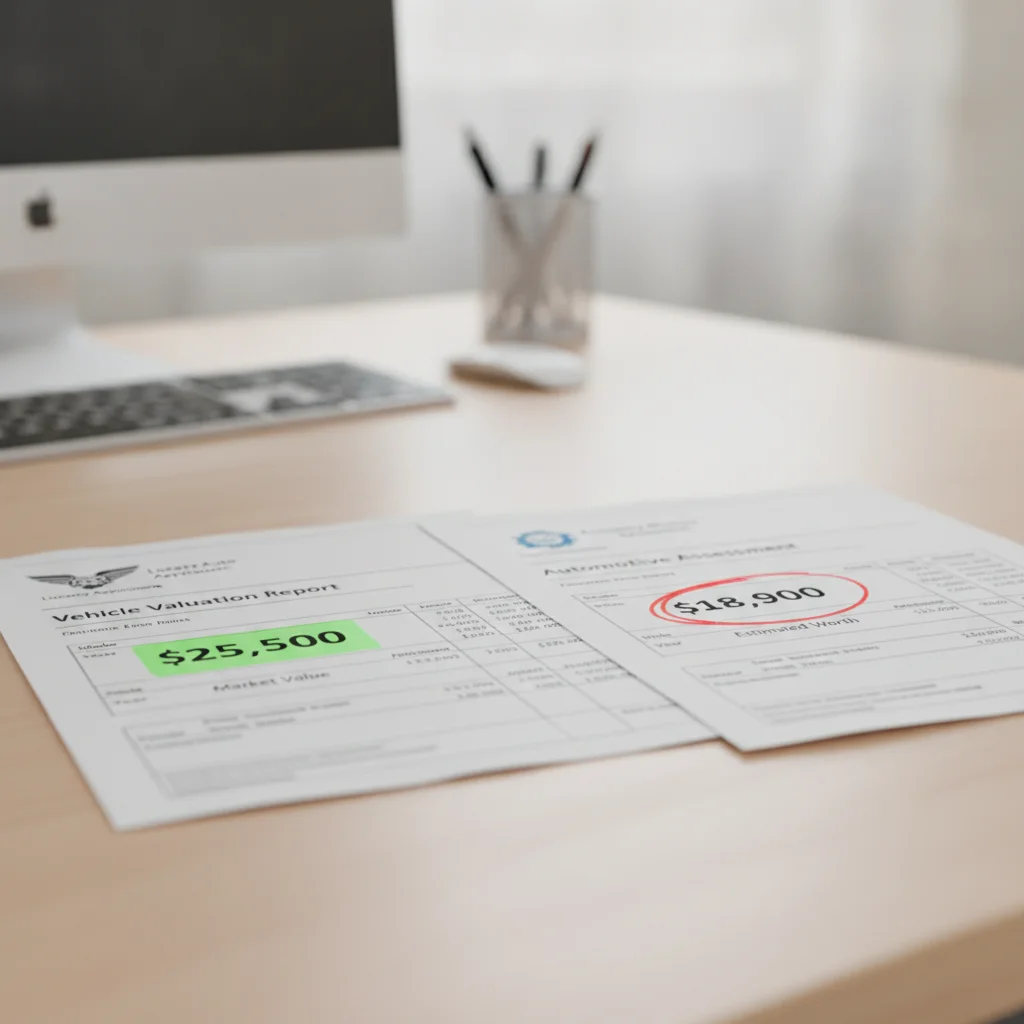
You came in with an online quote, maybe from the dealer's own website or a third-party tool like Kelley Blue Book. The number looked fair. You felt confident. Then the appraiser takes your car for a spin, spends twenty minutes in the service bay, and comes back with a figure that's $1,500 — sometimes $3,000 — lower than what you expected. Sound familiar?
Here's what I can tell you from years inside a dealership finance office: that drop is rarely a coincidence, and it's almost never purely objective. Appraisals involve real factors — mechanical condition, market demand, reconditioning costs — but the timing of how those factors get surfaced is often strategic. Dealers know that once you're three hours into a deal, emotionally attached to the new car in the showroom, your resistance to a lower trade-in number drops significantly.
That doesn't mean every dealer is acting in bad faith. Some legitimate issues only reveal themselves during a physical inspection. But buyers who understand the process protect themselves far better than those who walk in trusting the initial quote will hold. The dealer trade-in process has more moving parts than most people realize, and each one is an opportunity for the number to shift.

Let's walk through the most common reasons your offer dropped — and, more importantly, what you should have done (and can still do) at each stage.
Common Mistakes That Let Dealers Cut Your Trade-In Value
Most buyers don't lose money on their trade-in because they're naive — they lose it because they make a handful of very specific, very avoidable errors. These mistakes give the dealership legitimate-sounding justifications for a lower number.
Accepting the online quote as a guaranteed offer before the physical inspection.
Why it happens: Dealer websites and third-party tools present estimates in confident, dollar-specific language that feels binding. Buyers reasonably assume the number will hold unless something major is wrong.
Negotiating the trade-in and the new car purchase price at the same time.
Why it happens: Dealers deliberately blend both numbers into monthly payment discussions, which makes it impossible to tell if you're winning or losing on either transaction independently.
Disclosing the trade-in intention too early in the conversation.
Why it happens: It feels natural to mention you have a car to trade — it's part of the deal, after all. But mentioning it upfront gives the dealer room to build margin into the new car price knowing they can recover it on the trade.
Arriving without any competing written offers from third-party buyers.
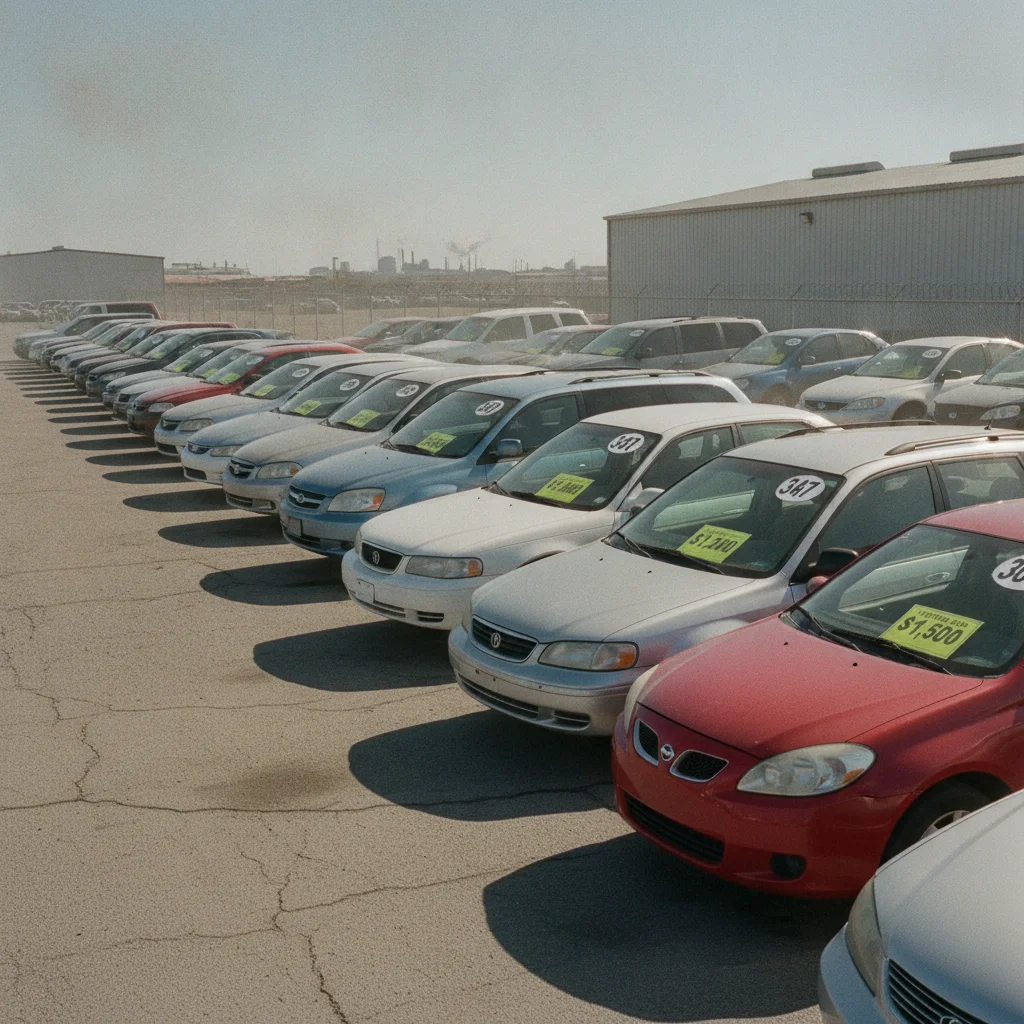
Why it happens: Most buyers don't realize CarMax, Carvana, or Vroom will buy their car outright without requiring a new car purchase. They assume trade-in only happens at dealerships.
Failing to disclose known issues upfront, then being caught off guard during inspection.
Why it happens: Buyers worry that mentioning problems will immediately lower the offer, so they say nothing and hope the appraiser misses it. That almost never happens.
Accepting a reconditioning deduction without requesting an itemized breakdown.
Why it happens: Dealers present reconditioning costs as a single opaque number — '$900 in reconditioning' — and most buyers don't realize they can challenge the individual line items.
Letting time pressure and emotional investment override financial judgment.
Why it happens: After hours at a dealership, excited about the new car, buyers feel that walking away means losing everything they've invested in the process. Dealers know this and time their revised offers strategically.
Understanding why these mistakes happen is just as important as knowing what they are. Dealers are trained negotiators who run this playbook dozens of times a month. You're doing it once every few years. That information asymmetry is the real gap to close — and closing it starts before you ever set foot in a showroom. For a deeper look at the tactics used to justify low numbers, see signs a dealer is undervaluing your trade-in.
$1,000–$3,000
Typical dealer trade-in margin over auction value
Industry estimates suggest dealers routinely build $1,000 to $3,000 of margin into trade-in appraisals relative to what they expect to recoup at auction.
63%
Buyers who don't get competing trade-in offers
A Cox Automotive survey found that nearly two-thirds of trade-in sellers negotiate with only one dealer, significantly reducing their leverage.
$500+
Average gap between online quote and final offer
Consumer advocacy groups tracking dealership appraisals have found the final written offer frequently falls $500 to $1,500 below the initial online estimate after physical inspection.
Online Quotes Are Not Binding Offers
Every major dealer website and third-party valuation tool includes fine print stating that online estimates are subject to physical inspection. A quote you received on a dealer's website carries zero contractual weight until a manager signs a written appraisal form. Never allow the new car negotiation to proceed on the assumption that your online quote will hold.
Watch for the 'We Already Ran Your Plates' Tactic
Some dealers will pull your vehicle history report the moment you arrive and use any reported accident or service record to justify a lower number — even for minor incidents that have no real impact on value. If this happens, request the specific CarFax entry they're citing and compare it against market data showing how that type of incident actually affects resale prices in your region.
The Inspection and Test Drive: Where Offers Go to Die
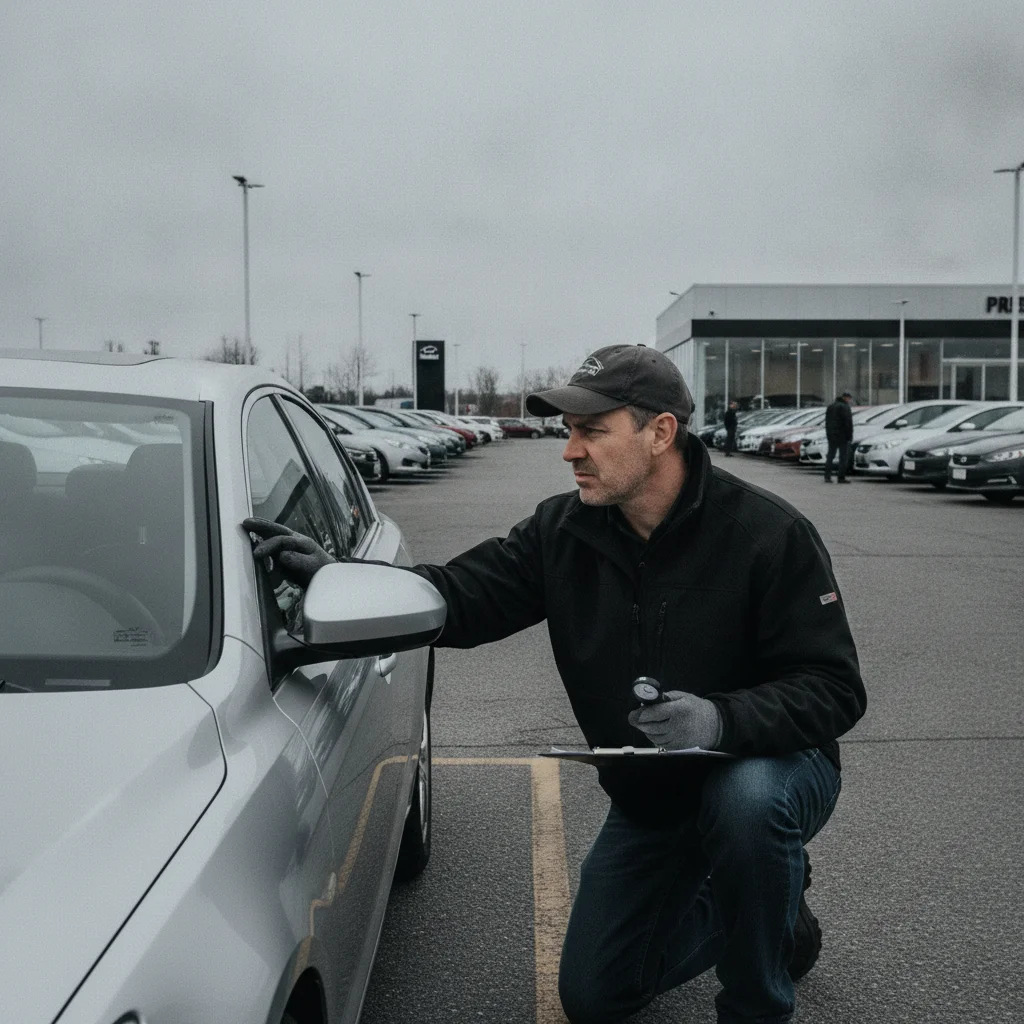
The physical appraisal is where most trade-in offers get renegotiated downward. Here's the sequence dealers follow: first, they generate goodwill by throwing out an encouraging number online or over the phone. Then the actual inspection — which includes the test drive — becomes the mechanism to walk that number back.
During the test drive, an experienced appraiser is listening for a lot more than engine noise. They're feeling for transmission hesitation, brake pulsation, suspension looseness, HVAC smells, and a dozen other things you've probably tuned out after years of driving the same car. Some of what they find is legitimate. A vibration you stopped noticing six months ago could represent a $400 wheel bearing job in reconditioning. That's real cost.
But here's where it gets slippery: reconditioning estimates are typically presented as fixed, non-negotiable facts. They're not. Dealers use internal labor rates and parts costs that are almost always higher than what you'd pay at an independent shop. A paint chip that would cost $80 at a body shop might be quoted internally at $250. Multiply that across five or six small items and you've explained most of the gap between your quote and the revised offer.
Get Everything in Writing Before You Negotiate the Car
The only trade-in offer that matters is one that is signed, dated, and on dealer letterhead. Verbal quotes, text messages, and printouts from a website are not offers — they are conversation starters. Once you have a written appraisal in hand, you have a number to negotiate from and a number you can take to a competitor. Without it, you have nothing to hold the dealer to.
The move that protects you here is simple: before your appointment, get your car inspected at a trusted independent mechanic. Ask for a written list of any issues and rough repair costs. Walk into the dealership knowing exactly what's wrong with the car and what it actually costs to fix. When the appraiser comes back with a $1,200 reconditioning deduction, you can respond with specifics instead of silence.
Also worth knowing: factors that quietly tank your trade-in value often have nothing to do with the test drive. Color, trim level, and regional market demand can all reduce your offer before the appraiser even turns the key.
How to Lock In Your Quote and Negotiate From Strength
The single biggest leverage shift you can make is getting a written, competing offer before you negotiate with any dealer. CarMax, Carvana, and Vroom will all buy your car outright and give you a written offer valid for seven days. That piece of paper is worth more than any verbal assurance a dealer gives you.
When you walk in with a $14,200 written offer from CarMax, the dealer's $12,800 revised appraisal becomes untenable. They know you can walk out and sell the car that afternoon. Most dealers will match or come within a few hundred dollars of a legitimate competing offer rather than lose the deal entirely — especially if you're also buying a new car from them.

Here's the negotiation sequence I'd recommend:
- Get three competing written offers before visiting any dealership. Use CarMax, Carvana, and at least one local independent dealer.
- Negotiate the new car price first, without mentioning your trade-in. Get that number agreed upon and in writing before you introduce the trade.
- Present your highest competing offer and ask the dealer to beat it. If they can't, sell privately or to the competing buyer.
- Request an itemized reconditioning estimate if they try to lower their number. Push back on any line item that seems inflated.
- Never let the dealer bundle the trade-in value into a monthly payment discussion. Keep every number separate.
On the topic of dealer negotiation more broadly: the same principle applies across every aspect of the deal. Dealers profit from complexity. Your job is to simplify — one number at a time, each agreed upon before you move to the next.
It also helps to understand what dealers actually do with trade-ins after you hand over the keys. Most don't retail them on the lot — they run them through auction or send them to wholesale buyers. What happens to your car after you trade it in explains this pipeline in detail and helps clarify why the dealer's reconditioning argument often doesn't hold up the way they present it.
When to Walk Away (and Where to Sell Instead)
Sometimes the right answer is not to trade in at all. If the gap between a dealer's revised offer and the private-party value of your car is more than $1,000 to $1,500, you should seriously consider selling it yourself. Platforms like Facebook Marketplace, Craigslist, and AutoTrader can get you retail money — but they require more time, more screening of buyers, and handling of paperwork.
The trade-in convenience premium is real, but it has a limit. Dealers typically build in $1,000 to $3,000 of margin on trade-ins. That's the price of convenience. If you're getting less than that — meaning the dealer is extracting $4,000 or $5,000 below market — you're not paying for convenience, you're subsidizing their profit on two transactions.

Also reconsider the timing of your trade-in relative to the market. Truck and SUV values spike seasonally, often in late fall as people prepare for winter. Convertibles and sports cars peak in spring. If you're trading in a truck in February and wondering why the offer seems low, part of the answer may simply be the calendar.
Finally, don't let sunk time pressure you into a bad deal. The fact that you've spent four hours at a dealership is not a reason to accept $1,800 less than your car is worth. Dealers are very good at making you feel like walking away means losing — it doesn't. It means going home with your car and returning another day, or selling it somewhere else entirely. The myths about trade-in value that keep buyers trapped often center on exactly this feeling — that the dealer's offer is uniquely authoritative and final. It isn't.
A dropped trade-in offer is almost always negotiable. The buyers who recover that money are the ones who come prepared, stay calm, and treat every number as a starting point rather than a verdict.

All claims are backed by peer-reviewed research. Sources on request.